Corruption in China’s military is no excuse for American complacency中国军方的腐败并非美国自满的借口。
Opinion: American policymakers should not bet on corruption to hamstring PLA modernization.
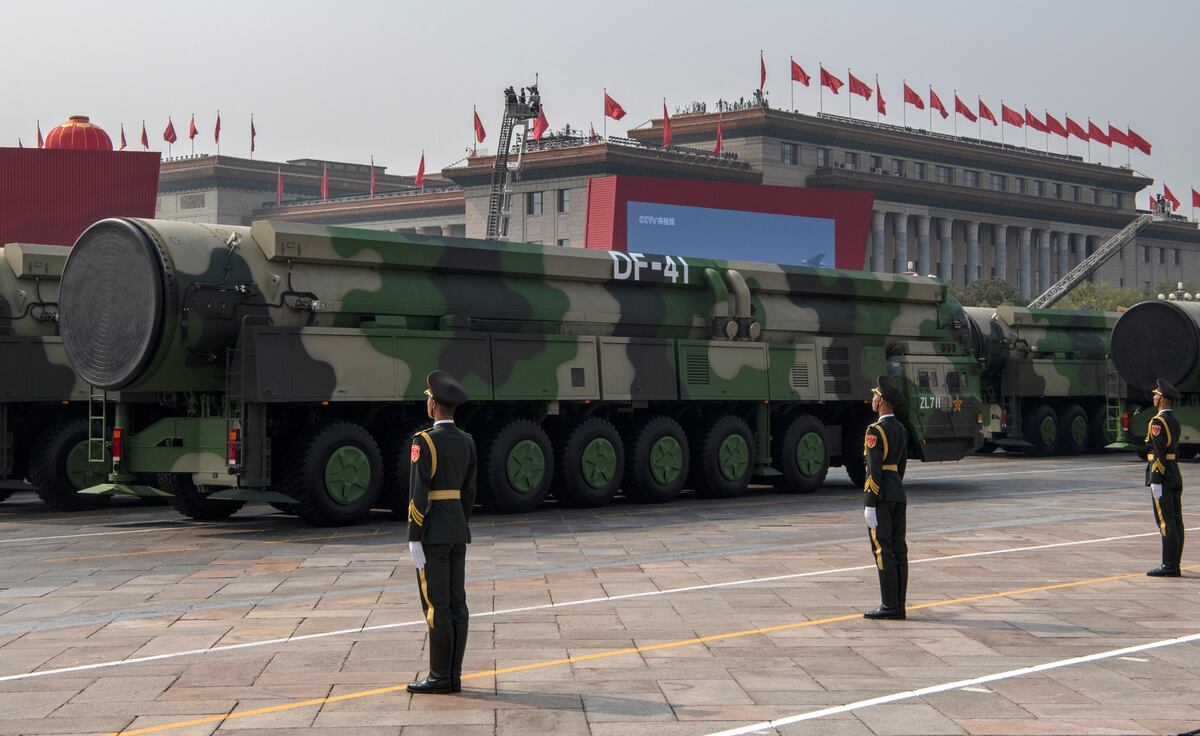
We now have new revelations of corruption in the Chinese People’s Liberation Army resulting in, among other things, “missiles filled with water instead of fuel” and missile silos “with lids that don’t function.” According to U.S. officials, this latest bout of corruption “led to an erosion of confidence in the [PLA’s] overall capabilities” and made President Xi Jinping “less likely to contemplate major military action.” Xi responded by purging at least a dozen PLA leaders implicated in the scandal.
This report is a reminder that the PLA faces significant challenges — and that the United States should use every opportunity to exacerbate those difficulties. But the United States should not use this episode as an excuse to grow complacent.
The preponderance of evidence shows China’s military is still modernizing rapidly, regardless of corruption. Moreover, even if Xi’s confidence in the PLA took a hit last year, he is clearly committed to correcting deficiencies as quickly as possible, and there is a good chance he will succeed.
Mao Zedong said “power grows out of the barrel of a gun,” and Xi Jinping clearly agrees. According to CIA Director William Burns , Xi has directed the PLA to be ready to seize Taiwan by 2027, and he has invested China’s resources accordingly. Not only did China prioritize defense spending over other investments during the COVID-19 pandemic, but it also reportedly spends far more on defense than previously understood — perhaps as much as $700 billion per year . At the same time, Xi is personally invested in keeping PLA modernization on track and has significantly improved oversight of the PLA to that end.
The results are clear: The PLA is modernizing rapidly across warfighting domains. China’s air forces , for instance, will enjoy a significant numerical advantage near Taiwan and are increasingly capable , with improving threat sensors and post-processing capabilities, airborne early warning and control aircraft , fifth-generation fighters , and long-range air-to-air missiles .
Meanwhile, China’s naval force is the world’s largest , with highly capable warships and large paramilitary and civilian fleets at its disposal. It is also still growing — quickly — while the U.S. Navy shrinks by the year. Trends may also favor China in space , cyberspace and electronic warfare , and Chinese military exercises are increasingly sophisticated and realistic.
The PLA Rocket Force — the focus of the latest corruption scandal — is making strides, too. China already boasts a massive arsenal of ballistic and cruise missiles , while China’s nuclear forces are on track to nearly quadruple in size in the next decade. China is also at the forefront of missile technology, especially in hypersonics . In 2021, for instance, China shocked the world by testing a fractional orbital bombardment system armed with a hypersonic glide vehicle. According to the U.S. Defense Department, China is probably also developing an additional strategic hypersonic glide vehicle, more survivable intercontinental-range ballistic missiles and a conventional intercontinental missile.
These are impressive accomplishments by any objective measure, and they occurred despite the PLA’s ongoing problems with corruption. Consequently, shocking as these recent revelations are, American policymakers should not bet on corruption to hamstring PLA modernization, nor should they expect corruption or the effects of it to stay Xi’s hand. If they want to avoid war, they must instead take China seriously and prioritize investing in America’s ability to deter this powerful rival.
Unfortunately, the Biden administration has made clear it wants to focus less on China amid other geopolitical crises and the upcoming presidential election. To that end, the administration has routinely downplayed Chinese threats, from the Chinese spy balloon to the declassification of intelligence about the origin of COVID-19.
Indeed, the timing and content of the recent revelations suggest they are part of a similar campaign to ease pressure on the administration to confront China. But Beijing is not waiting.
The administration may not want to confront China, but Xi Jinping is clearly preparing for war with the United States. So long as the administration is determined to avoid doing what is required to deter China, then risk of conflict will only grow.
Alex Velez-Green is a senior policy adviser with the Allison Center for National Security at the Heritage Foundation think tank. He previously served as national security adviser to Sen. Josh Hawley, R-Mo.
如今,中国人民解放军内部又爆出新的腐败丑闻,其中包括“导弹被灌入水而非燃料”以及“导弹发射井的盖子无法正常使用”等。据美国官员称,这轮最新的腐败事件“导致人们对解放军整体能力的信心下降”,并使习近平主席“不太可能考虑采取重大军事行动”。作为回应,习近平清洗了至少十几名涉案的解放军领导人。
这份报告提醒我们,解放军面临着严峻的挑战——美国应该抓住一切机会加剧这些困难。但美国不应以此为借口而沾沾自喜。
大量证据表明,尽管存在腐败问题,中国军队仍在快速现代化。此外,即便习近平去年对解放军的信心有所动摇,但他显然致力于尽快纠正不足之处,而且很有可能取得成功。
毛泽东曾说“枪杆子里出政权”,习近平显然对此深表赞同。据美国中央情报局局长威廉·伯恩斯称,习近平已指示解放军做好在2027年前夺取台湾的准备,并据此投入了中国的资源。不仅在新冠疫情期间,中国将国防开支置于其他投资之上,而且据报道,其国防开支远超此前人们的预期——可能高达每年7000亿美元。与此同时,习近平亲自致力于推进解放军现代化建设,并为此显著加强了对解放军的监督。
结果显而易见:解放军正在各个作战领域迅速实现现代化。例如,中国空军在台湾附近将拥有显著的数量优势,并且随着威胁传感器和后处理能力的提升、空中预警和控制飞机、第五代战斗机以及远程空空导弹的出现,其作战能力也在不断增强。
与此同时,中国海军是世界上规模最大的海军,拥有性能卓越的战舰以及庞大的准军事和民用舰队。而且,中国海军仍在快速扩张,而美国海军的规模却逐年缩减。太空、网络空间和电子战领域的发展趋势也可能对中国有利,中国的军事演习也日益精细化和逼真。
解放军火箭军——最新腐败丑闻的焦点——也在取得长足进步。中国已经拥有庞大的弹道导弹和巡航导弹武库,而中国的核力量有望在未来十年内增长近四倍。中国在导弹技术领域也处于领先地位,尤其是在高超音速导弹领域。例如,2021年,中国测试了一种配备高超音速滑翔飞行器的部分轨道轰炸系统,震惊了世界。据美国国防部称,中国可能还在研发另一种战略高超音速滑翔飞行器、生存能力更强的洲际弹道导弹以及一种常规洲际导弹。
无论从哪个客观角度来看,这些成就都令人瞩目,而且是在解放军持续存在腐败问题的情况下取得的。因此,尽管这些近期披露的信息令人震惊,但美国决策者不应指望腐败能够阻碍解放军的现代化进程,也不应指望腐败或其影响能够阻止习近平的行动。如果他们想要避免战争,就必须认真对待中国,并将投资提升美国遏制这个强大对手的能力作为优先事项。
不幸的是,拜登政府已明确表示,鉴于其他地缘政治危机和即将到来的总统大选,它希望减少对中国的关注。为此,从中国间谍气球事件到解密新冠病毒起源情报,拜登政府一贯淡化中国的威胁。
事实上,近期披露信息的时机和内容表明,它们是旨在减轻美国政府对抗中国压力的类似行动的一部分。但北京方面并未坐以待毙。
美国政府或许不想与中国对抗,但习近平显然正在为与美国开战做准备。只要美国政府执意不采取必要的措施来遏制中国,冲突风险只会不断增加。
亚历克斯·维莱兹-格林是传统基金会智库艾莉森国家安全中心的资深政策顾问。他此前曾担任密苏里州共和党参议员乔什·霍利的国家安全顾问。