Anti-drone radars ready for ‘mass deployment’ in Taiwan, says vendor供应商称,反无人机雷达已准备好在台湾“大规模部署”。
Taiwan is wary of Chinese unmanned aerial vehicles that could come into play in the event of a military confrontation.
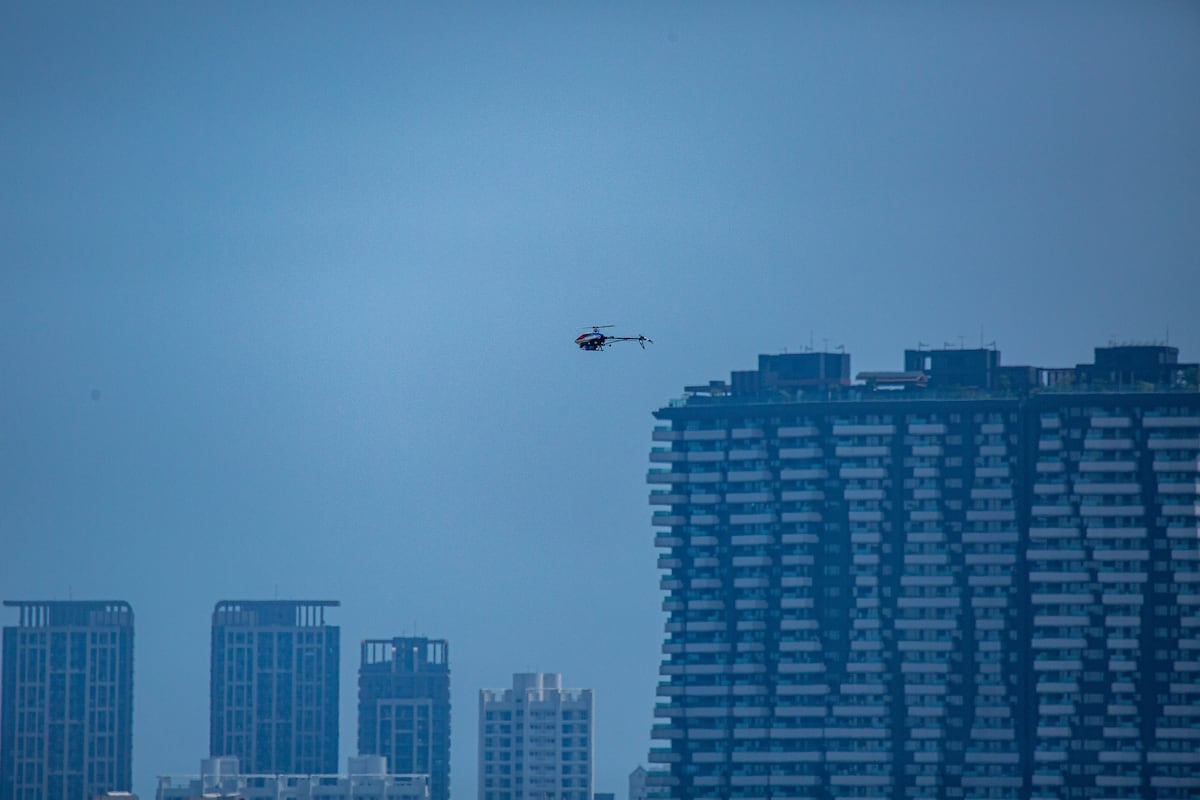
ABU DHABI, United Arab Emirates — The CEO of Taiwan-based company Tron Future, whose counter-drone radars are already used by the Taiwanese Army, says the systems are ready for mass deployment, eying a production rate of 100 per month for 2023 based on increased demand.
Tron Future is only four years old, but its T.Radar Pro technology has already found an extensive market both in Taiwan but also in the Middle East and South Asia. The active electronically scanned array (AESA) radar has a drone detection range up to 5 kilometers and a weight of only 15 kilograms, which is what CEO Yu-Jiu Wang says has appealed the most to customers.
“The design of the radar was born out of a need to create an air-layered defense for the protection of Taiwan against the ever-present threat of different types of Chinese drones,” Wang said in an interview here at the IDEX arms fair.
Its development followed four tenets, he explained: keeping it lightweight and small; equipping it with a 4D micro-doppler function to differentiate between multirotor drones and birds; low cost; and performance against small and low-flying targets in urban environments.
Threats from Chinese drones have increased in recent years. In January 2023, a Chinese military magazine emphasized the crucial role unmanned systems would have for targeted strikes in the event of a war across the Taiwan Strait.
Wang says that at the height of tensions, deployed radars detected as many as 100 Chinese drones conducting surveillance above Taiwan over the span of one week. Key features of the T.Radar Pro include an open architecture for an image recognition app, air traffic management as well as interfaces for hard-kill or soft-kill countermeasures. It has a power consumption of 250 Watts and a maximum signal bandwidth of 30 Megahertz.
Initially, the radars went into the service with the Taiwanese Army and were deployed above key islands, which is a challenging environment because the movement of waves in the ocean can create false targets.
Based on increased demand both at the domestic and international level, the company expects to produce 100 radars per month for the year ahead and is looking at opening a second production site in Taiwan. The T.Radar can either be sold separately or as part of Tron Future’s larger anti-drone system. The full setup also includes a drone-disabling jammer and an interceptor that the company website describes as offering “choices of explosive or non-destructive warheads dealing with different situations.” Together, the system creates defense protection dome measuring 5 kilometers in diameter, the company claims.
Wang stressed that Taiwanese forces are not looking to be the first ones to attack when facing China, as that could rapidly escalate to a full-scale war. The air-defense platform was designed with this in mind, where each different system represents a logical chain that attempts to initially avoid using a hard-kill countermeasure.
Elisabeth Gosselin-Malo was a Europe correspondent for Defense News. She covers a wide range of topics related to military procurement and international security, and specializes in reporting on the aviation sector. She is based in Milan, Italy.
阿联酋阿布扎比——总部位于台湾的创创科技股份有限公司(Tron Future)首席执行官表示,该公司生产的反无人机雷达已被台湾军队采用,并已准备好大规模部署。根据不断增长的需求,该公司预计到 2023 年,其产量将达到每月 100 套。
Tron Future公司成立仅四年,但其T.Radar Pro技术已在台湾、中东和南亚等地占据了广阔的市场。这款有源相控阵雷达(AESA)的无人机探测范围可达5公里,重量仅为15公斤,CEO王宇九表示,这正是它最吸引客户的地方。
王先生在IDEX防务展上接受采访时表示:“雷达的设计源于需要建立空中防御体系,以保护台湾免受各种中国无人机的持续威胁。”
他解释说,该无人机的研发遵循四个原则:保持轻巧;配备 4D 微多普勒功能,以区分多旋翼无人机和鸟类;低成本;以及在城市环境中对小型和低空飞行目标的高效性能。
近年来,来自中国无人机的威胁日益增加。2023年1月,一家中国军事杂志强调,一旦台海战争爆发,无人系统将在定点打击中发挥关键作用。
王先生表示,在局势高度紧张时期,部署的雷达在一周内探测到多达100架中国无人机在台湾上空进行监视活动。T.Radar Pro的主要特点包括用于图像识别应用程序、空中交通管理以及硬杀伤或软杀伤对抗措施接口的开放式架构。它的功耗为250瓦,最大信号带宽为30兆赫兹。
最初,这些雷达在台湾军队服役,并部署在重要岛屿上空,这是一个具有挑战性的环境,因为海洋中的波浪运动会产生虚假目标。
由于国内外需求不断增长,该公司预计未来一年每月将生产100部雷达,并正在考虑在台湾开设第二个生产基地。T.Radar雷达既可单独销售,也可作为Tron Future公司更大型反无人机系统的一部分。该系统还包括无人机干扰器和拦截器,公司网站称其“可根据不同情况选择爆炸性或非破坏性弹头”。该公司声称,该系统组合起来可形成直径5公里的防御防护罩。
王毅强调,台湾军队在面对中国时并不寻求率先发起攻击,因为这可能迅速升级为全面战争。防空平台的设计正是基于此考虑,其中每个不同的系统都代表着一个逻辑链,力求在初期避免使用硬杀伤性反制措施。
伊丽莎白·戈斯林-马洛曾任《防务新闻》欧洲通讯员。她的报道涵盖军事采购和国际安全等广泛领域,尤其擅长航空领域的报道。她常驻意大利米兰。