Reshoring does not mean ‘Buy America’ only回流并不意味着仅仅意味着“购买美国货”。
Protectionist efforts are wrong-headed because they are not strictly focused on the real problem in our industrial base, namely the dependencies on companies based in adversarial countries such as China.
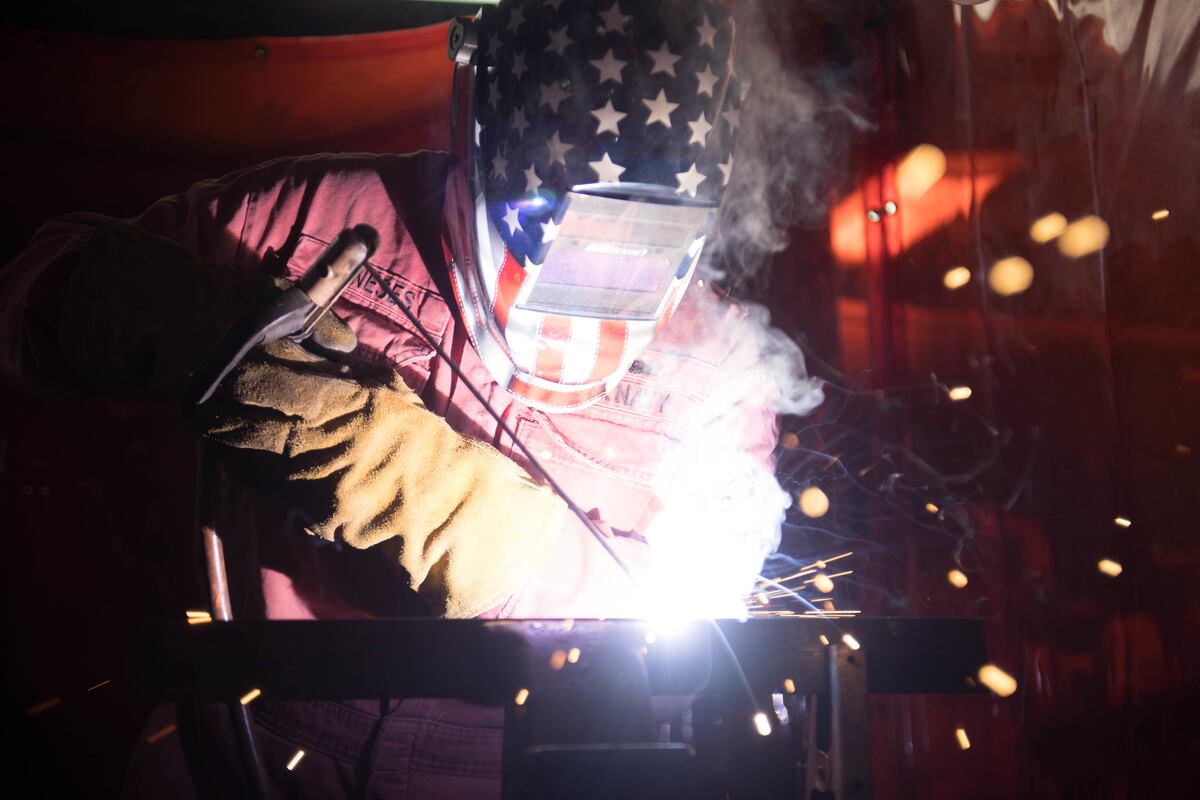
U.S. government officials have called for the “reshoring” of domestic industrial capacity in several areas in recent weeks. Whether it is the production of pharmaceuticals and personal protective equipment, or the development of microelectronics, specialty chemicals and materials, calls for a significant increase in U.S. manufacturing capabilities are coming through loud and clear. This makes complete sense, but how do we do this reshoring?
The solution is not an autarkic “Buy America”-only approach that would be counterproductive to our long-term economic health. Instead, we need to have a laser focus on getting out of the China business with respect to industrial capabilities critical to national security and, in many cases, doing that with a little help from our friends.
During the early days of the COVID-19 response, the administration and Congress quickly identified the principal tool to address industrial base weaknesses: the Defense Production Act. Congress appropriated $1 billion for the DPA fund in the Coronavirus Aid, Relief, and Economic Security Act. In mid-May, the administration revived a long-dormant DPA authority to provide loans under Title III to “take actions to create, maintain, protect, expand, and restore” domestic supply chains to respond to the pandemic. This loan authority, placed under the direction of the U.S. International Development Finance Corporation, received little attention until the July 28 IFDC announcement of a letter of interest for a $765 million loan with Kodak to build domestic capacity for pharmaceutical production.
Some are rightly questioning the sustainability and selection criteria of this still-in-progress deal, but the creation of this loan authority is an important advance because it is a straightforward and expeditious way to facilitate the expansion of U.S.-based production of PPE, pharmaceutical and defense capabilities.
Some congressional members and White House officials have argued that the COVID-19 pandemic calls for a dramatic increase in “ Buy America ” or “ Buy American ” efforts. This is not the right way to go for three principal reasons. Most importantly, protectionist efforts — such as the House provision of the National Defense Authorization Act sponsored by Rep. Donald Norcross, D-N.J. — focus on the wrong issue. Norcross’ provision would require that 75 percent and then 100 percent of the Defense Department’s major acquisition programs be manufactured and sourced in the United States by 2021 and 2026, respectively.
Because of existing regulations and national security priorities, defense systems are already one of the strongest domestic manufacturing sectors, and defense companies — with the partial exception of those companies with significant commercial aerospace exposure — have been least impacted by the pandemic. It is hard to see how it is beneficial to eliminate key international suppliers from our defense industrial base, many of whom have significant physical and economic presence here, not to mention the fact that the countries where these companies are based — mainly our NATO allies and close partners like Japan, Australia and Israel — buy billions of dollars of U.S. defense systems each year.
Protectionist efforts are also wrong-headed because they are not strictly focused on the real problem in our industrial base, namely the dependencies on companies based in adversarial countries such as China. Chinese companies are a threat in two main areas: the production of PPE and pharmaceuticals and in the lower tiers of the defense industrial base. With respect to the former, DPA efforts are focused on rebuilding domestic manufacturing capacity in critical public health areas such as N95 mask production and pharmaceutical production. For the latter, recent Govini analysis has shown the growing influence of Chinese suppliers in the lower tiers of the defense supply chain such as specialty chemicals, telecommunications equipment and electronic components.
These findings track with the major findings of and subsequent DPA projects resulting from the 2018 whole-of-government review of the defense and manufacturing industrial base. Additional cumbersome Buy America restrictions are not the answer; we have the tools we need.
Finally, Buy America initiatives are ultimately counterproductive. Almost all of the critical efforts underway to reduce Chinese dependencies require some sort of collaboration with our close partners and allies. One of the awardees of a recent project to reshore heavy rare earth processing capacity, for example, is a partnership between an Australian mining company and a Texas firm. Under Secretary of Defense for Acquisition and Sustainment Ellen Lord has further underscored the importance of “partners and allies supporting us as much as possible” in efforts to “reshore as much as possible” capabilities such as microelectronics fabrication and rare earth processing. In a little-known provision, DPA projects specifically identify Canadian firms as eligible for Title III project awards.
Furthermore, Congress expanded the national technology and industrial base in the fiscal 2016 NDAA, making the United States, the United Kingdom, Australia and Canada one industrial base . The Senate has a provision in the FY21 NDAA that would establish criteria for the expansion of the national technology and industrial base to other countries.
Finally, one of the administration’s major trade deals, the United States-Mexico-Canada Agreement, creates an additional opportunity to strengthen North American efforts to decrease dependencies on Chinese sources. These tools are practical ways to address critical needs for reshoring now.
It took us decades to get into this national mess with China. We are not going to reshore critical industrial capabilities through a Buy America only approach. Let’s fix this in the most cost-effective and timely manner, through domestic capacity building efforts and, where needed, with a little help from our friends.
Jerry McGinn, a former U.S. Defense Department official, is the executive director of the government contracting center in the School of Business at George Mason University.
近几周来,美国政府官员呼吁在多个领域将国内工业产能“迁回”美国。无论是药品和个人防护装备的生产,还是微电子产品、特种化学品和材料的研发,都强烈呼吁大幅提升美国的制造业能力。这完全合情合理,但我们该如何实现产能回流呢?
解决之道并非采取自给自足的“只买美国货”策略,那样反而会损害我们的长期经济健康。相反,我们需要重点关注如何摆脱对中国的依赖,尤其是在对国家安全至关重要的工业能力方面;而且在很多情况下,我们需要借助盟友的帮助才能做到这一点。
在新冠疫情应对初期,政府和国会迅速确定了解决工业基础薄弱问题的主要工具:《国防生产法》。国会在《新冠病毒援助、救济和经济安全法案》中拨款10亿美元用于《国防生产法》基金。5月中旬,政府重新启动了一项长期搁置的《国防生产法》授权,允许根据第三章提供贷款,用于“采取行动创建、维护、保护、扩大和恢复”国内供应链,以应对疫情。这项贷款授权由美国国际发展金融公司(IFDC)负责管理,但直到7月28日IFDC宣布与柯达公司签署了一份关于提供7.65亿美元贷款的意向书,用于提升国内药品生产能力时,才引起人们的关注。
有些人对这项仍在进行中的交易的可持续性和选择标准提出了质疑,这是理所当然的,但这项贷款授权的设立是一项重要的进步,因为它是一种直接而快捷的方式,可以促进美国扩大个人防护装备、药品和国防能力的生产。
一些国会议员和白宫官员认为,新冠疫情需要大幅加强“购买美国货”或“购买美国货”的力度。但这并非正确的做法,主要有三个原因。最重要的是,这种保护主义举措——例如众议员唐纳德·诺克罗斯(新泽西州)提出的《国防授权法案》众议院条款——关注的重点完全错误。诺克罗斯的条款要求国防部主要采购项目的75%和100%分别在2021年和2026年之前在美国制造和采购。
由于现行法规和国家安全优先事项,国防系统已是美国国内制造业最强劲的领域之一,而且除少数在商业航空航天领域拥有显著业务的公司外,国防企业受疫情影响最小。很难理解将关键的国际供应商从我们的国防工业基础中剔除有何益处,其中许多供应商在美国拥有重要的实体和经济影响力,更何况这些公司所在的国家——主要是我们的北约盟国和紧密伙伴,例如日本、澳大利亚和以色列——每年都会购买价值数十亿美元的美国国防系统。
保护主义举措也是错误的,因为它们并未严格聚焦于我国工业基础的真正问题,即对中国等敌对国家企业的依赖。中国企业在两个主要领域构成威胁:个人防护装备和药品生产,以及国防工业基础的下游环节。就前者而言,国防生产法(DPA)的重点在于重建国内在关键公共卫生领域(例如N95口罩和药品生产)的制造能力。就后者而言,戈维尼(Govini)近期的分析表明,中国供应商在国防供应链下游环节(例如特种化学品、电信设备和电子元件)的影响力日益增强。
这些发现与2018年政府对国防和制造业基础进行全面审查后,国防生产法(DPA)的主要结论及后续项目相符。增加繁琐的“购买美国货”限制并非解决之道;我们拥有所需的工具。
最后,“购买美国货”倡议最终会适得其反。几乎所有旨在减少对中国依赖的关键举措都需要与我们的紧密伙伴和盟友进行某种形式的合作。例如,最近一个旨在将重稀土加工能力迁回国内的项目,其中标方之一是一家澳大利亚矿业公司和一家德克萨斯州公司组成的合资企业。负责采购和保障的国防部副部长艾伦·洛德进一步强调了“伙伴和盟友尽可能地支持我们”的重要性,尤其是在“尽可能地将微电子制造和稀土加工等能力迁回国内”方面。鲜为人知的是,《国防生产法》的一项条款明确规定,加拿大公司有资格获得第三章项目奖励。
此外,国会在2016财年国防授权法案中扩大了国家技术和工业基础,将美国、英国、澳大利亚和加拿大合并为一个工业基础。参议院在2021财年国防授权法案中有一项条款,旨在制定将国家技术和工业基础扩展到其他国家的标准。
最后,本届政府的一项重要贸易协定——《美墨加协定》——为加强北美减少对中国资源依赖的努力提供了又一契机。这些工具是解决当前制造业回流关键需求的切实可行的方法。
我们花了数十年才陷入与中国的这场国家危机。我们不能仅仅依靠“购买美国货”的方式来恢复关键的工业能力。让我们以最具成本效益和最及时的方式解决这个问题,通过国内能力建设,并在必要时寻求盟友的帮助。
杰里·麦金恩曾是美国国防部官员,现任乔治·梅森大学商学院政府合同中心执行主任。