ICEYE to double radar-satellite capacity by late 2027 as demand surges为应对激增的需求,ICEYE计划在2027年底前将雷达卫星容量翻一番。
The company's goal is to ramp up production to two satellites a week as it responds to surging demand from European militaries.
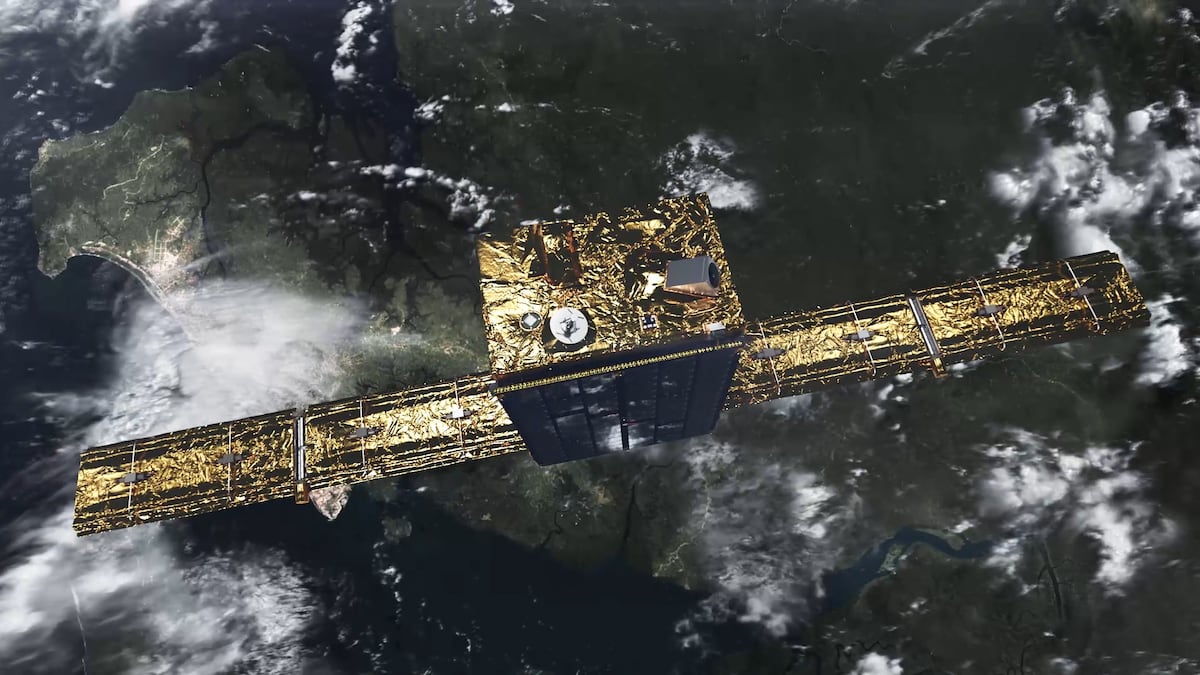
PARIS — Finland’s ICEYE expects to double global production to 100 radar satellites by the end of 2027, the company told Defense News in a clarification of comments by CEO Rafal Modrzewski at a defense-industry conference in Brussels on Tuesday.
ICEYE is currently manufacturing satellites at a pace of 50 per year, Modrzewski said at the European Defence & Security Summit in the Belgian capital, and the goal is to ramp up production to two satellites a week as the company responds to surging demand from European militaries.
The CEO said future constellations will be “in the hundreds of satellites,” pointing to the example of Elon Musk’s Starlink with its thousands of satellites. He said ICEYE’s planned manufacturing line for 100 satellites a year “is still too small, so we will keep on growing that production.”
European governments are trying to reduce their dependency on the United States for a number of critical defense enablers, including satellite intelligence, and ICEYE has benefited from efforts to close the gap. The company has said the U.S. halt of intelligence sharing in March 2025 really drove home the need in Europe for sovereign access to space-based intel .
The ICEYE CEO said Germany’s order for a 40-satellite constellation in December was “the first-ever European move to actually create a properly large tactical system in Europe.”
The company was founded in 2014 by Modrzewski and Pekka Laurila as a Finnish university spin-off, and it supplies Earth-observation data using synthetic aperture radar, or SAR for short, which ICEYE initially intended as a tool to help ships avoid sea ice.
ICEYE took less than 12 months from contract signature to deliver full radar-satellite systems to Poland, Greece and Portugal, according to Modrzewski, calling that a big change in an industry where one satellite used to take five years.
“Here we are talking about three different countries, each of which has received a constellation of five, six, seven within less than 12 months,” the CEO said. “Those are off-the-shelf satellites, that’s how crazy it got right now. And it is what we need in order to be responsive to the threats that are outside of our borders.”
Modrzewski said the cost of an ICEYE system is ten times lower than that of legacy systems, allowing the likes of Sweden, Finland and the Netherlands to own not just satellites but entire constellations.
He said ICEYE has delivered a four-satellite system to the Polish Armed Forces, adding that the country is continuing to grow its constellation, “and soon they will have high tactical capability which is fully sovereign to Poland.” The Finnish company signed an agreement in May 2025 to provide Poland with three SAR satellites, with an option for three more.
Modrzewski has been pushing a proposal for a system of 1,000 satellites called Constellation Europe that would combine space-based ground observation, space situational awareness and in-space defense capabilities. He said access to space-based surveillance to “know, react or act” has been a common thread in recent conflicts, and a capability that Europe is still missing.
“The war in Ukraine and the war in the Middle East, they differ in many ways, but they actually are extremely similar in the fact that the tactical access to satellite intelligence has proven to be critical for both sides,” Modrzewski said.
With a growing number of countries such as India, Japan and Australia trying to move away from a purely U.S.-based supply chain, there is “a massive opportunity for our European defense sector” as long as European firms can show credibility in their home markets, according to Modrzewski.
He said Constellation Europe would be a way for the European space industry to show it produces “capabilities which are equal or better to our counterparts,” and is happy share those capabilities to contribute to a “bigger, safer world” of middle powers.
He said Europe was previously able to jointly procured a satellite-navigation system with Galileo, and now needs to do the same for Earth observation.
“if we really want to catch up to this massive gap that’s developing between us and the United States, when it comes to space, we’ve got to start moving fast and acting now,” the ICEYE CEO said.
ICEYE raised €450 million (US$510 million) in a Series F funding round earlier this month that valued the satellite company at more than €10 billion, with the firm saying it will use the proceeds to expand its global footprint.
While the latest funding round was led by a U.S. investment firm, Modrzewski said the majority of the ICEYE board is European, the company’s technology was developed in Europe and being a European firm “is critical.”
“Them choosing to put money into European company actually is a statement of the fact that they see something more unique over here,” Modrzewski said. “So I consider this a win.”
Rudy Ruitenberg is a Europe correspondent for Defense News. He started his career at Bloomberg News and has experience reporting on technology, commodity markets and politics.
巴黎——芬兰 ICEYE 公司向《防务新闻》澄清了其首席执行官 Rafal Modrzewski 周二在布鲁塞尔举行的国防工业会议上的言论,该公司预计到 2027 年底,其全球雷达卫星产量将翻一番,达到 100 颗。
ICEYE 目前以每年 50 颗的速度生产卫星,Modrzewski 在比利时首都举行的欧洲防务与安全峰会上表示,随着欧洲军方需求的激增,该公司的目标是将产量提高到每周两颗卫星。
这位首席执行官表示,未来的卫星星座将“拥有数百颗卫星”,并以埃隆·马斯克的星链项目为例,该项目拥有数千颗卫星。他还表示,ICEYE计划每年生产100颗卫星的生产线“规模仍然太小,因此我们将继续扩大产能”。
欧洲各国政府正努力减少对美国在包括卫星情报在内的多项关键国防技术方面的依赖,而ICEYE公司也从弥合这一差距的努力中受益。该公司表示,美国将于2025年3月停止情报共享,这真正凸显了欧洲自主获取天基情报的必要性。
ICEYE 首席执行官表示,德国在 12 月份订购的 40 颗卫星星座是“欧洲有史以来第一次真正意义上在欧洲创建一个规模庞大的战术系统”。
该公司由 Modrzewski 和 Pekka Laurila 于 2014 年创立,是一家芬兰大学的衍生公司,它利用合成孔径雷达(简称 SAR)提供地球观测数据,ICEYE 最初将其视为帮助船舶避开海冰的工具。
据 Modrzewski 称,ICEYE 从合同签署到向波兰、希腊和葡萄牙交付完整的雷达卫星系统,只用了不到 12 个月的时间。他称,这在以往一颗卫星需要五年时间才能交付的行业中是一个巨大的变化。
“我们现在谈论的是三个不同的国家,每个国家都在不到12个月的时间里接收了五颗、六颗甚至七颗卫星组成的星座,”首席执行官说道。“这些都是现成的卫星,现在的情况就是这么疯狂。而这正是我们应对境外威胁所需要的。”
莫德热夫斯基表示,ICEYE 系统的成本比传统系统低十倍,这使得瑞典、芬兰和荷兰等国不仅可以拥有卫星,还可以拥有整个星座。
他表示,ICEYE已向波兰武装部队交付了一套四颗卫星的系统,并补充说,波兰正在继续扩大其卫星星座,“不久之后,他们将拥有完全自主的、高度强大的战术能力。”这家芬兰公司于2025年5月签署了一项协议,向波兰提供三颗合成孔径雷达(SAR)卫星,并可选择再增购三颗。
莫德热夫斯基一直力推一项名为“欧洲星座”的方案,该方案计划部署1000颗卫星,整合天基地面观测、空间态势感知和在轨防御能力。他表示,获取天基监视信息以“了解情况、做出反应或采取行动”的能力,是近期冲突中一个共同的主题,也是欧洲目前仍然缺乏的能力。
莫德热夫斯基说:“乌克兰战争和中东战争在很多方面都不同,但它们实际上非常相似,因为事实证明,战术性地获取卫星情报对双方都至关重要。”
莫德热夫斯基表示,随着印度、日本和澳大利亚等越来越多的国家试图摆脱完全以美国为中心的供应链,只要欧洲公司能够在本国市场展现出信誉,欧洲国防工业就“迎来了巨大的机遇”。
他表示,“欧洲星座计划”将成为欧洲航天工业展示其“拥有与同行同等或更优能力”的一种方式,并乐于分享这些能力,为构建一个由中等强国组成的“更大、更安全的世界”做出贡献。
他表示,欧洲之前能够与伽利略共同采购卫星导航系统,现在需要对地球观测系统也采取同样的做法。
“如果我们真的想缩小我们与美国在太空领域日益扩大的差距,我们就必须立即行动起来,”ICEYE 首席执行官表示。
ICEYE 在本月初的 F 轮融资中筹集了 4.5 亿欧元(5.1 亿美元),使这家卫星公司的估值超过 100 亿欧元。该公司表示,将利用这笔资金扩大其全球业务版图。
虽然最新一轮融资是由一家美国投资公司领投的,但 Modrzewski 表示,ICEYE 董事会的大多数成员都是欧洲人,公司的技术也是在欧洲开发的,因此成为一家欧洲公司“至关重要”。
莫德热夫斯基说:“他们选择投资欧洲公司,实际上表明他们认为这里拥有更独特的东西。所以我认为这是一次胜利。”
鲁迪·鲁伊滕贝格是《防务新闻》的欧洲记者。他的职业生涯始于彭博新闻社,拥有报道科技、大宗商品市场和政治方面的经验。