US testing Stryker-mounted lasers in Iraq amid Middle East drone boom美国在伊拉克测试“斯特瑞克”装甲车搭载的激光器,中东无人机热潮正值此背景下。
Laser and microwave weapons are considered critical elements of layered defense, or having different countermeasures ready to thwart different threats.
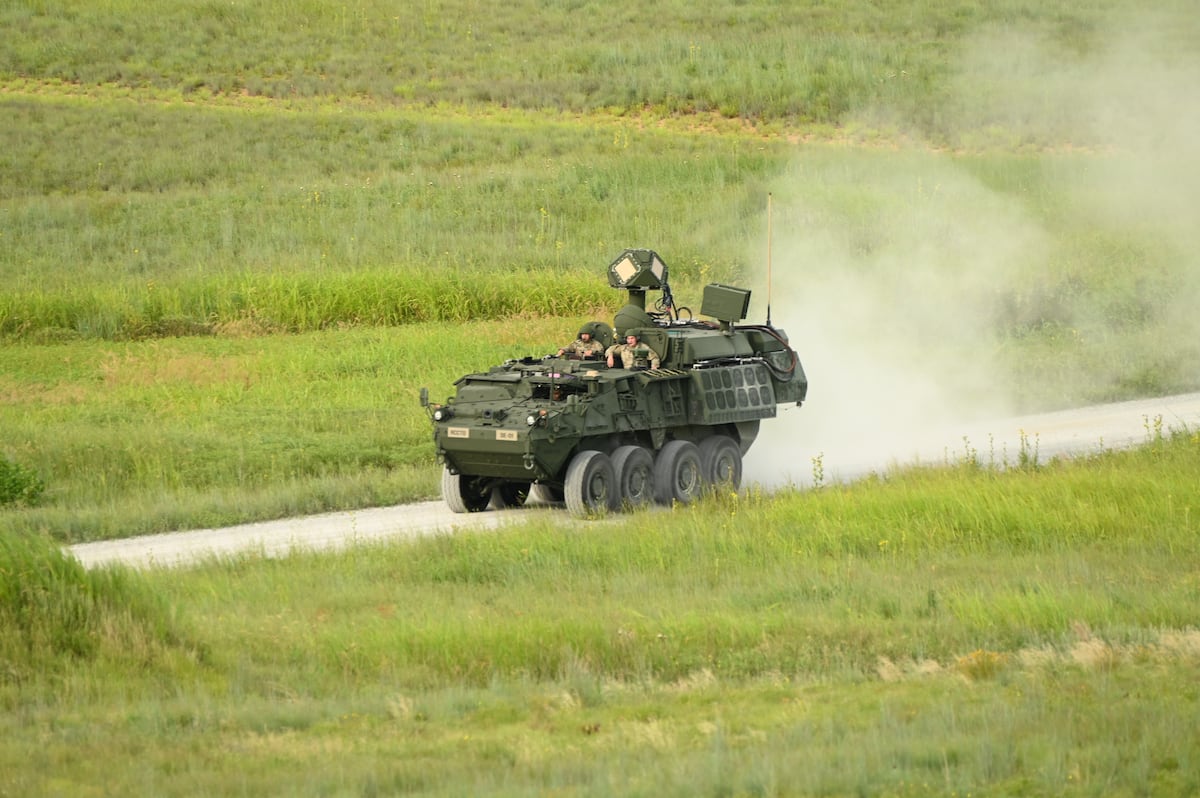
The U.S. military is tinkering with high-energy lasers in Iraq as part of a broader effort to refine directed-energy weapons and more effectively counter drones, according to the leader of Central Command.
The Army earlier this year sent several laser weapons mounted to Stryker combat vehicles to the Middle East. It was unclear at the time exactly where the prototypes were stationed, but the move was in advancement of the service’s short-range air defense goals.
Gen. Michael Kurilla, the CENTCOM boss, on March 21 told Congress he has “three 50-kilowatt lasers that are Stryker-based” inside Iraq “right now.” Experiments are underway, he added, to identify their best application. He did not disclose preliminary results. A request made to the command for additional information was not immediately answered.
High-energy lasers and related high-power microwave weapons are capable of downing incoming threats in unorthodox ways and at a fraction of the cost of traditional munitions. Lasers can fire at the speed of light and burn holes through material, but are susceptible to weather conditions and particles in the air, such as sand. Microwaves can fry electronics en masse, but their efficacy is stunted at greater distances.
Both are considered critical elements of layered defense, or having multiple countermeasures ready to thwart different threats in different situations.
“Directed energy is not the panacea,” Kurilla said at the House Armed Services Committee hearing. “What I tell all the services: Give me systems, we will experiment with them, and we will tell you if it works in a real, live environment.”
The Army is increasingly concerned with overhead threats, including unmanned aerial vehicles that can spy on troops, augment targeting and deliver explosives. A drone attack in late January killed three Americans at Tower 22 in Jordan, near the Syrian border.
U.S. Rep. Doug Lamborn, a Colorado Republican, urged Kurilla during the committee hearing to take advantage of directed energy wherever he can. At least 31 directed-energy initiatives are underway across the military, according to a National Defense Industrial Association study.
“I know it’s not perfected yet, but it has great capabilities against drones and things like that currently,” Lamborn said. “I’d hate to see a repeat of Tower 22, for instance.”
Colin Demarest was a reporter at C4ISRNET, where he covered military networks, cyber and IT. Colin had previously covered the Department of Energy and its National Nuclear Security Administration — namely Cold War cleanup and nuclear weapons development — for a daily newspaper in South Carolina. Colin is also an award-winning photographer.
据中央司令部司令称,作为改进定向能武器和更有效地对抗无人机的更广泛努力的一部分,美军正在伊拉克对高能激光器进行改进。
今年早些时候,美国陆军向中东地区运送了几套安装在“斯特瑞克”装甲车上的激光武器。当时尚不清楚这些原型武器的具体部署地点,但此举是为了推进陆军的短程防空目标。
美国中央司令部司令迈克尔·库里拉将军3月21日向国会表示,目前伊拉克境内部署了“三台基于斯特瑞克装甲车底盘的50千瓦激光武器”。他补充说,相关试验正在进行中,以确定这些武器的最佳应用场景。但他并未透露初步试验结果。记者向中央司令部提出的获取更多信息的请求尚未得到回复。
高能激光及相关高功率微波武器能够以非常规的方式击退来袭目标,且成本远低于传统弹药。激光可以以光速发射并穿透材料,但易受天气条件和空气中颗粒物(例如沙粒)的影响。微波可以大规模摧毁电子设备,但其效力会随着距离的增加而降低。
两者都被认为是多层防御的关键要素,即在不同情况下准备多种应对措施来挫败不同的威胁。
库里拉在众议院军事委员会听证会上说:“定向能武器并非万灵药。我对所有军种都说:给我们系统,我们会进行试验,然后告诉你们它在真实环境中是否有效。”
陆军越来越关注来自空中的威胁,包括能够侦察部队、增强目标定位和投放爆炸物的无人机。1月下旬,一架无人机袭击了位于约旦靠近叙利亚边境的22号塔楼,造成三名美国人死亡。
美国科罗拉多州共和党众议员道格·兰伯恩在委员会听证会上敦促库里拉尽可能利用定向能技术。据美国国防工业协会的一项研究显示,目前军方至少正在进行31项定向能项目。
“我知道它还没臻于完美,但目前它在对抗无人机之类的目标方面已经展现出强大的能力,”兰伯恩说。“我非常不希望看到像22号塔楼那样的悲剧重演。”
科林·德马雷斯特曾是C4ISRNET的记者,负责报道军事网络、网络安全和信息技术方面的新闻。此前,他曾为南卡罗来纳州的一家日报报道美国能源部及其下属的国家核安全管理局,主要关注冷战后的清理工作和核武器研发。科林还是一位屡获殊荣的摄影师。