US military must adapt as formations will be ‘hunted’ by autonomous systems, Caine says凯恩表示,美军必须做出调整,因为部队将受到自主系统的“猎杀”。
Technology, such as AI and autonomous systems, is changing the character of war, Joint Chiefs of Staff Chairman Gen. Dan Caine said.
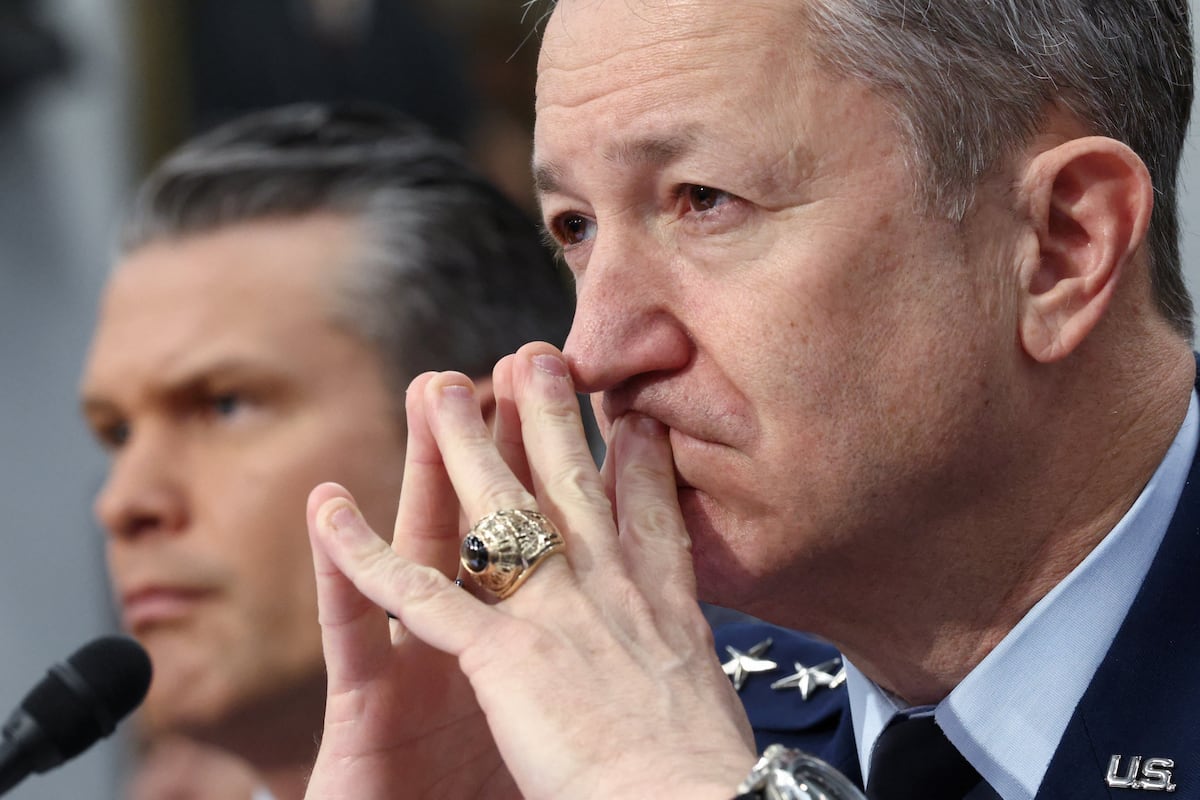
Gen. Dan Caine , chairman of the Joint Chiefs of Staff, emphasized that the joint force must prove readiness ahead of a conflict in a time when adversaries are becoming increasingly interconnected amid the changing character of war .
The force needs to be “clear-eyed” about the environment ahead as future conflicts will be progressively contested and defy simpler solutions, Caine said in a Wednesday keynote at the Air & Space Forces Association’s 2026 Air, Space & Cyber Conference .
“We have to assume from now on that our formations will be hunted by autonomous systems, jammed across the spectrum and tracked in real time,” Caine said in his speech.
“We have to transition the joint force to be prepared to fight and win our future wars by generating and delivering lethality at scale with an agile, optimized, high-low mix of combat capabilities to give the young members of the 2.8 million-member all-volunteer joint force the tools that they need before they need them,” he continued.
While calling the American military and their families the country’s “ultimate insurance policy,” Caine asserted that the joint force needs to be ready for a fight before it begins.
Even as the country’s adversaries are geographically dispersed, they are connected through sharing technology, intelligence, weapons and economic support, he said. As the military branches study past and present American battlefields, they are looking for new ways to challenge the advantage, demonstrating the necessity for readiness and investment in a range of military capabilities before a crisis begins.
Recently, Russia and Iran have deepened their military partnership with a technological feedback loop amid the Ukraine war and the conflict in the Middle East. Moscow is sending Iran upgraded munitions, satellite imagery and targeting data that have been used against American forces in the Middle East.
Tehran first supplied Russia with Shahed attack drones for use in Ukraine in 2022 and has since arranged a license to build the Iranian-designed drones on Russian territory.
“The character of war is changing, and time is of the essence,” Caine said, emphasizing how the way and speed in which countries fight is altering on the modern battlefield as artificial intelligence, cyber capabilities and autonomous systems develop.
The chairman noted that the modern battlefield today operates from the seabed to the cislunar space, highlighting that the advantage will go to whoever can see, understand, decide and act first as a learning organization.
Caine highlighted the June rescue of two Army soldiers by way of a remotely piloted Navy unmanned surface as an example of how the military is adapting and utilizing AI and autonomous tools.
He also referenced how these tools are being used to change the threat in contested electromagnetic interference environments, such as in Ukraine, with first-person view drones.
“Take it together, these examples from the Strait of Hormuz to the front lines in Ukraine show how quickly technology is changing the character of war,” he said.
Caine spotlighted that it will be young service leaders who will be the ones in charge of the subsequent conflicts in these environments and will have to be adaptive and understanding of their environment with a plethora of information.
As technology, networks and software continue to change, the need for capable and lethal leaders will not, he said. The nation can bring autonomy and better networks to the force but none of it will matter without trusted leaders that can work under pressure.
“We must move together because the window to build the force that we need is closing,” Caine said. “We can buy almost anything in life, but we cannot buy time.”
Cristina Stassis is a reporter covering stories surrounding the defense industry, national security, military/veteran affairs and more. She previously worked as an editorial fellow for Defense News in 2024 where she assisted the newsroom in breaking news across Sightline Media Group.
参谋长联席会议主席丹·凯恩将军强调,在战争性质不断变化、敌对双方联系日益紧密的当下,联合部队必须在冲突爆发前证明其战备状态。
凯恩在周三举行的空军与太空部队协会 2026 年航空、太空与网络会议上发表主旨演讲时表示,部队需要“清醒地认识到”未来的环境,因为未来的冲突将日益激烈,难以找到更简单的解决方案。
凯恩在演讲中说:“从现在开始,我们必须假设我们的编队将受到自主系统的追捕,受到全频谱干扰,并被实时跟踪。”
“我们必须对联合部队进行转型,使其做好准备,通过灵活、优化、高低结合的作战能力,大规模地产生和提供杀伤力,从而赢得未来的战争,让这支拥有280万成员的全志愿联合部队的年轻成员在需要之前就拥有所需的工具,”他继续说道。
凯恩称美国军人及其家属是国家的“终极保险”,并断言联合部队需要在战斗开始前做好战斗准备。
他表示,尽管美国的对手在地理位置上分散,但他们通过共享技术、情报、武器和经济支持而紧密相连。各军种在研究美国过去和现在的战场时,正在寻找挑战优势的新方法,这表明在危机爆发前做好充分准备并投资于各种军事能力至关重要。
近期,在乌克兰战争和中东冲突的背景下,俄罗斯和伊朗深化了军事伙伴关系,并建立了技术反馈机制。莫斯科向伊朗输送升级版弹药、卫星图像和目标定位数据,这些数据已被用于攻击驻中东美军。
德黑兰于 2022 年首次向俄罗斯提供“沙赫德”攻击无人机,用于在乌克兰作战,此后又安排了在俄罗斯境内建造伊朗设计的无人机的许可证。
“战争的性质正在发生变化,时间至关重要,”凯恩说道,他强调随着人工智能、网络能力和自主系统的发展,现代战场上各国作战的方式和速度正在发生变化。
主席指出,现代战场如今从海底一直延伸到地月空间,强调谁能率先看到、理解、决定并作为学习型组织采取行动,谁就能获得优势。
凯恩重点介绍了6月份海军遥控无人水面舰艇营救两名陆军士兵的行动,以此说明军队如何适应和利用人工智能和自主工具。
他还提到,这些工具正被用于改变乌克兰等电磁干扰环境(如乌克兰)中的威胁,例如使用第一人称视角无人机。
他说:“综合来看,从霍尔木兹海峡到乌克兰前线的这些例子表明,科技正在以惊人的速度改变战争的性质。”
凯恩强调,在这些环境中,负责后续冲突的将是年轻的军事领导人,他们必须适应环境并了解环境,同时还要掌握大量信息。
他表示,尽管技术、网络和软件不断发展变化,但对能力卓越、行动果断的领导者的需求却不会改变。国家可以为部队赋予自主权和更完善的网络,但如果没有能够在压力下有效工作的值得信赖的领导者,这一切都毫无意义。
凯恩说:“我们必须团结一致,因为凝聚我们所需力量的窗口正在关闭。生活中我们几乎可以买到任何东西,但我们买不到时间。”
克里斯蒂娜·斯塔西斯是一位记者,主要报道国防工业、国家安全、军事/退伍军人事务等领域的新闻。她曾于2024年在《防务新闻》担任编辑助理,协助Sightline媒体集团旗下新闻编辑室处理突发新闻。