Trump vows peace in chaotic Middle East. But fixing it won’t be easy.特朗普承诺为混乱的中东带来和平。但修复中东局势并非易事。
Donald Trump will return to the U.S. presidency as a brutal war in Gaza rages and Israel presses its offensive against the Hezbollah militant group.
新闻视频
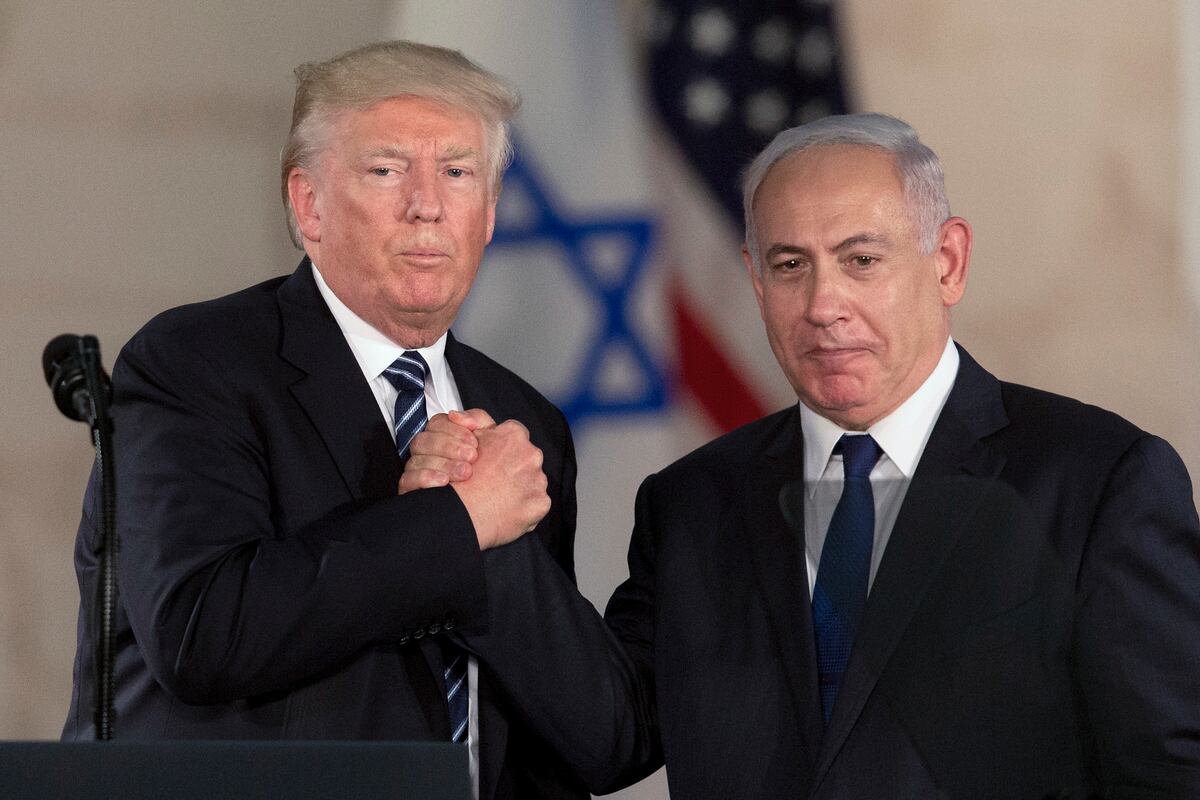
TEL AVIV, Israel — Donald Trump will return to the U.S. presidency at a time of unprecedented conflict and uncertainty in the Middle East. He has vowed to fix it.
But Trump’s history of strong support for Israel coupled with his insistence during the campaign that the war in Gaza should end quickly, the isolationist forces in the Republican party and his penchant for unpredictability raise a mountain of questions over how his second presidency will affect the region at this pivotal moment.
Barring the achievement of elusive cease-fires before the inauguration, Trump will ascend to the highest office in the country as a brutal war in Gaza still rages and Israel presses its offensive against the Lebanese Hezbollah militant group. A conflagration between Iran and Israel shows no signs of abating — nor do Israel’s conflicts with Iranian proxies in Iraq and Yemen — and Iran’s nuclear program remains a top concern for Israel.
Trump says he wants peace, but how?
Throughout his campaign, Trump has vowed to bring peace to the region.
“Get it over with and let’s get back to peace and stop killing people,” Trump said of the conflict in Gaza in an interview with conservative radio host Hugh Hewitt in April.
Israel launched the war in response to Hamas’ Oct. 7, 2023, attacks , when militants killed 1,200 people in Israel and kidnapped 250, with dozens still in Gaza . Israel’s offensive has killed more than 43,000 people, according to Gaza health officials, whose count does not distinguish between civilians and fighters, though they say more than half of the dead are women and children.
Palestinians evacuate a body from a site hit by an Israeli bombardment on Khan Younis, southern Gaza Strip, in July. Trump has repeatedly urged to Israel “finish the job” and destroy Hamas — but hasn’t said how. (AP Photo/Jehad Alshrafi, File)
The war has ignited a humanitarian catastrophe in Gaza, driven Israel into increasing international isolation, with two world courts examining charges of war crimes , and has sparked a wave of protests on American campuses that have fueled debate over the U.S. role as Israel’s key military and diplomatic supporter.
International mediators from the U.S., Egypt and Qatar have tried unsuccessfully to bring about a lasting cease-fire.
Yet Trump has repeatedly urged to Israel “finish the job” and destroy Hamas — but hasn’t said how.
“Does finish the job mean you have a free hand to act in dealing with the remnants of Hamas? Or does finish the job mean the war has to come to an end now?” asked David Makovsky, director of the program on Arab-Israel Relations at the Washington Institute for Near East Policy. “That’s part of the enigmas here.”
Netanyahu is pinning his hopes on a pro-Israel Trump administration
Uncertainty also shrouds how Trump will engage with Israeli Prime Minister Benjamin Netanyahu. During his first term, Trump offered broad support for the Israeli leader’s hard-line policies, including unilaterally withdrawing from a deal meant to rein in Iran’s nuclear program that Netanyahu long opposed.
Trump also recognized Jerusalem as Israel’s capital, bolstering its claim over the disputed city, and Israel’s annexation of the Golan Heights, captured from Syria in the 1967 Mideast war. He presented a peace plan with the Palestinians widely seen as favoring Israel. Settlement-building in the Israeli-occupied West Bank, seen as an obstacle to Palestinian statehood, surged under his presidency.
Trump also helped secure agreements between Israel and four Arab countries to normalize ties that were not contingent on progress toward Palestinian statehood — a major victory for Netanyahu. The Israeli leader hopes to replicate those successes with a deal with Saudi Arabia.
The leaders had a falling out after Netanyahu congratulated President Joe Biden following the 2020 elections — a move Trump viewed as a slight from his loyal ally, though Netanyahu visited Trump in Florida this year.
Under Biden, the U.S. has been critical at times and slowed some weapons deliveries in response to Israel’s conduct in Gaza. Netanyahu is likely hoping that Trump’s return will loosen any restraints on Israel to pursue its war goals. The American leader could also work to challenge a potential international war crimes arrest warrant for Netanyahu. And a smoother relationship with Washington could help improve the Israeli leader’s own popular support.
“He has the most pro-Israel record of any president,” said Michael Oren, a former Israeli ambassador to Washington. “The hope is here that there’ll be more of the same.”
Neither Netanyahu nor Trump has a clear vision for postwar Gaza
Netanyahu leads a far-right government whose key members have vowed to topple his rule if the war in Gaza ends with anything short of Hamas’ destruction. They support resettling Gaza and are enthusiastic about a Trump presidency — and their influence will only grow now that Netanyahu has fired his defense minister over his more pragmatic approach to the conflict.
Their grip on the government and over Netanyahu’s political future helps explain why Netanyahu has not spelled out a clear vision for a postwar Gaza .
Armed Israeli Air Force planes depart from an unknown location to attack Iran on Oct. 26. (Israeli Army via AP)
The Biden administration has favored having the war-ravaged territory governed by the Western-backed Palestinian Authority, which administers parts of the West Bank. Netanyahu has rejected that idea and insists on the right for the Israeli military to operate there.
Trump has not outlined a clear vision, although he has said developers could make Gaza “better than Monaco” because it has “the best location in the Middle East, the best water, the best everything.”
Diana Buttu, a former adviser to Palestinian leaders, said a lack of a firm U.S. vision for Gaza, coupled with a politically powerful Israeli far right, made the future for people in Gaza and for Palestinians in general grim.
“I don’t see this as a president who is going to care about Palestinians,” she said.
Will Trump help defend Israel against Iran or choose ‘America First’?
In Lebanon, Israel is battling the Iranian-backed Hezbollah with both a ground invasion and strikes on Hezbollah targets. The militant group has fired thousands of rockets and drones at Israeli communities, killing dozens and displacing 60,000. Israel’s offensive, meanwhile, has displaced over 1 million people in Lebanon and killed more than 3,000.
U.S. mediation efforts there too have been fruitless. Trump, who has a Lebanese-American son-in-law, recently posted on the social platform X that as president he would “stop the suffering and destruction in Lebanon.”
But a key question is how much Trump will be swayed by his America First instincts.
The U.S. has played a central role in diplomatic efforts throughout the war, and an even more robust role in helping Israel defend itself against Iran and its allies.
The U.S. has sent military assets to the region, helped Israel thwart two missile attacks by Iran and even has U.S. soldiers in Israel to operate a sophisticated air defense system. But any effective Israeli attack on Iran’s nuclear facilities, a target it avoided in its strike last month , will likely need greater U.S. military involvement.
Accusations that Iran has hacked campaign associates and concerns about the potential for Tehran to carry out violence against Trump or members of his administration could deepen his antipathy toward the country.
While Trump has indicated he will focus on domestic affairs, the Mideast could be an outlier.
He enjoys a wide base of support from evangelical Christians, who are staunchly pro-Israel, and his son-in-law and former adviser Jared Kushner was a prominent voice in support of the country in his first administration.
“As Trump is likely to navigate between those forces mostly based on his intuition,” said Udi Sommer, an expert on U.S.-Israel relations at Tel Aviv University, “uncertainty will likely define his approach.”
以色列特拉维夫——唐纳德·特朗普将在中东地区前所未有的冲突和动荡时期重返美国总统宝座。他誓言要解决这一问题。
但特朗普一贯对以色列的坚定支持,加上他在竞选期间坚持认为加沙战争应该尽快结束,共和党内的孤立主义势力以及他一贯的不可预测性,都引发了人们对他第二个总统任期将如何影响该地区这一关键时刻的诸多疑问。
除非在就职典礼前达成难以实现的停火协议,否则特朗普就任美国总统时,加沙地带的残酷战争仍在肆虐,以色列对黎巴嫩真主党武装组织的攻势仍在持续。伊朗和以色列之间的冲突丝毫没有缓和的迹象,以色列与伊朗在伊拉克和也门的代理人之间的冲突也未见缓和,而伊朗的核计划仍然是以色列最为关注的问题之一。
特朗普说他想要和平,但如何才能实现和平?
在整个竞选过程中,特朗普都誓言要为该地区带来和平。
“结束这一切,让我们回到和平,停止杀戮,”特朗普在四月份接受保守派电台主持人休·休伊特采访时谈到加沙冲突时说道。
以色列发动战争是为了回应哈马斯于2023年10月7日发动的袭击。当时,武装分子在以色列境内杀害了1200人,绑架了250人,另有数十人仍被困在加沙地带。据加沙卫生官员称,以色列的攻势已造成超过43000人死亡。他们的统计并未区分平民和武装人员,但他们表示,死者中超过一半是妇女和儿童。
7月,在加沙地带南部汗尤尼斯,巴勒斯坦人从以色列轰炸的地点移走一具遗体。特朗普多次敦促以色列“完成任务”,彻底摧毁哈马斯,但并未说明具体方法。(美联社照片/杰哈德·阿尔什拉菲,资料照片)
这场战争在加沙引发了人道主义灾难,使以色列在国际上日益孤立,两个世界法庭正在审查战争罪指控,并在美国校园引发了一波抗议浪潮,加剧了关于美国作为以色列主要军事和外交支持者的角色的辩论。
来自美国、埃及和卡塔尔的国际调解员曾试图促成持久停火,但均未成功。
然而,特朗普一再敦促以色列“完成任务”并摧毁哈马斯,但却没有说明具体方法。
“完成任务”是指可以自由处置哈马斯残余势力吗?还是说战争必须立即结束?”华盛顿近东政策研究所阿拉伯-以色列关系项目主任大卫·马科夫斯基问道,“这正是问题的关键所在。”
内塔尼亚胡将希望寄托于亲以色列的特朗普政府上。
特朗普将如何与以色列总理内塔尼亚胡互动也存在不确定性。在其第一任期内,特朗普曾广泛支持这位以色列领导人的强硬政策,包括单方面退出旨在遏制伊朗核计划的协议,而内塔尼亚胡长期以来一直反对该协议。
特朗普还承认耶路撒冷为以色列首都,强化了以色列对这座争议城市的主权声索,并承认以色列吞并了在1967年中东战争中从叙利亚手中夺取的戈兰高地。他提出的和平计划被普遍认为偏袒以色列。在他执政期间,被视为巴勒斯坦建国障碍的以色列占领的西岸定居点建设激增。
特朗普还促成了以色列与四个阿拉伯国家达成关系正常化协议,这些协议并不以巴勒斯坦建国进程取得进展为前提——这对内塔尼亚胡来说是一项重大胜利。这位以色列领导人希望与沙特阿拉伯达成协议,复制这些成功经验。
2020 年大选后,内塔尼亚胡向乔·拜登总统表示祝贺,此举导致两位领导人关系破裂——特朗普认为这是他忠实盟友的轻视,尽管内塔尼亚胡今年访问了佛罗里达州的特朗普。
在拜登执政期间,美国有时对以色列持批评态度,并因以色列在加沙的行为而放缓了部分武器交付。内塔尼亚胡可能希望特朗普的回归能够放松对以色列的约束,使其能够追求战争目标。这位美国领导人也可能试图挑战针对内塔尼亚胡的潜在国际战争罪逮捕令。此外,与华盛顿建立更融洽的关系也有助于提升这位以色列领导人的民意支持率。
“他是历任总统中最亲以色列的,”以色列前驻华盛顿大使迈克尔·奥伦说。“人们希望他能继续保持这种做法。”
无论是内塔尼亚胡还是特朗普,都没有为战后加沙制定清晰的愿景。
内塔尼亚胡领导的极右翼政府的核心成员誓言,如果加沙战争的最终结果未能彻底摧毁哈马斯,他们将推翻他的统治。他们支持重新安置加沙居民,并对特朗普当选总统充满热情——如今,内塔尼亚胡因国防部长在冲突问题上采取更为务实的态度而将其解雇,他们的影响力只会进一步扩大。
他们对政府和内塔尼亚胡政治前途的掌控,有助于解释为什么内塔尼亚胡没有为战后加沙提出明确的愿景。
10月26日,以色列空军战机从未知地点起飞,准备袭击伊朗。(以色列军方供图,美联社发布)
拜登政府倾向于由西方支持的巴勒斯坦权力机构管理这片饱受战争蹂躏的地区,该机构目前管理着约旦河西岸的部分地区。内塔尼亚胡拒绝了这一提议,并坚持以色列军队有权在该地区开展军事行动。
特朗普没有提出明确的愿景,尽管他曾表示,开发商可以将加沙“改造得比摩纳哥更好”,因为加沙“拥有中东最好的地理位置、最好的水源、最好的一切”。
巴勒斯坦领导人的前顾问戴安娜·布图表示,美国缺乏对加沙的明确愿景,再加上以色列极右势力的政治影响力,使得加沙人民以及巴勒斯坦人民的未来一片黯淡。
“我不认为这位总统会关心巴勒斯坦人,”她说。
特朗普会帮助以色列抵御伊朗的侵略,还是会选择“美国优先”?
在黎巴嫩,以色列正与伊朗支持的真主党交战,双方既有地面入侵,也有对真主党目标的空袭。该武装组织已向以色列居民区发射了数千枚火箭弹和无人机,造成数十人死亡,6万人流离失所。与此同时,以色列的攻势已导致黎巴嫩超过100万人流离失所,3000多人丧生。
美国在黎巴嫩的调解努力也毫无成效。特朗普有一位黎巴嫩裔美国女婿,他最近在社交平台X上发帖称,如果他当选总统,他将“制止黎巴嫩的苦难和破坏”。
但关键问题是,特朗普的“美国优先”理念会在多大程度上影响他的决策。
在整个战争期间,美国在外交努力中发挥了核心作用,并在帮助以色列抵御伊朗及其盟友方面发挥了更为强有力的作用。
美国已向该地区派遣军事力量,帮助以色列挫败了伊朗的两起导弹袭击,甚至还在以色列驻扎美军,负责操作一套先进的防空系统。但以色列若要对伊朗核设施发动有效打击(上个月以色列的袭击并未触及该目标),很可能需要美国更深入的军事介入。
伊朗被指控入侵竞选伙伴的电脑,以及人们对德黑兰可能对特朗普或其政府成员实施暴力袭击的担忧,可能会加深他对伊朗的反感。
虽然特朗普已表示他将专注于国内事务,但中东问题可能是一个例外。
他得到了福音派基督徒的广泛支持,这些基督徒坚定地支持以色列;他的女婿兼前顾问贾里德·库什纳在他第一届政府中是支持以色列的重要人物。
特拉维夫大学美以关系专家乌迪·索默表示:“由于特朗普很可能主要依靠直觉在这些力量之间周旋,因此他的策略很可能充满不确定性。”