India buys drones, air defense weapons following aerial Pakistan fight印度在与巴基斯坦空战后购买无人机和防空武器
Prime Minister Narendra Modi said: “Operation Sindoor is now the nation’s established policy in the fight against terrorism."
CHRISTCHURCH, New Zealand — Following a bitter aerial battle between India and Pakistan from May 7-10, Delhi has approved an emergency procurement of new equipment for air defense and counterterrorism.
The slaying of 26 civilians in Jammu and Kashmir on Apr. 22 had prompted India to attack Pakistan, whom it accused of harboring terrorists. Under Operation Sindoor, India initially struck nine alleged terrorist camps in Pakistani territory.
Pakistan’s response, which included drone attacks and shoot-downs of an unknown number of Indian fighter jets, has now encouraged Delhi to accelerate the acquisition of relevant equipment.
Accordingly, India’s Ministry of Defence signed 13 contracts totaling 19.82 billion rupees, or US$231.6 million.
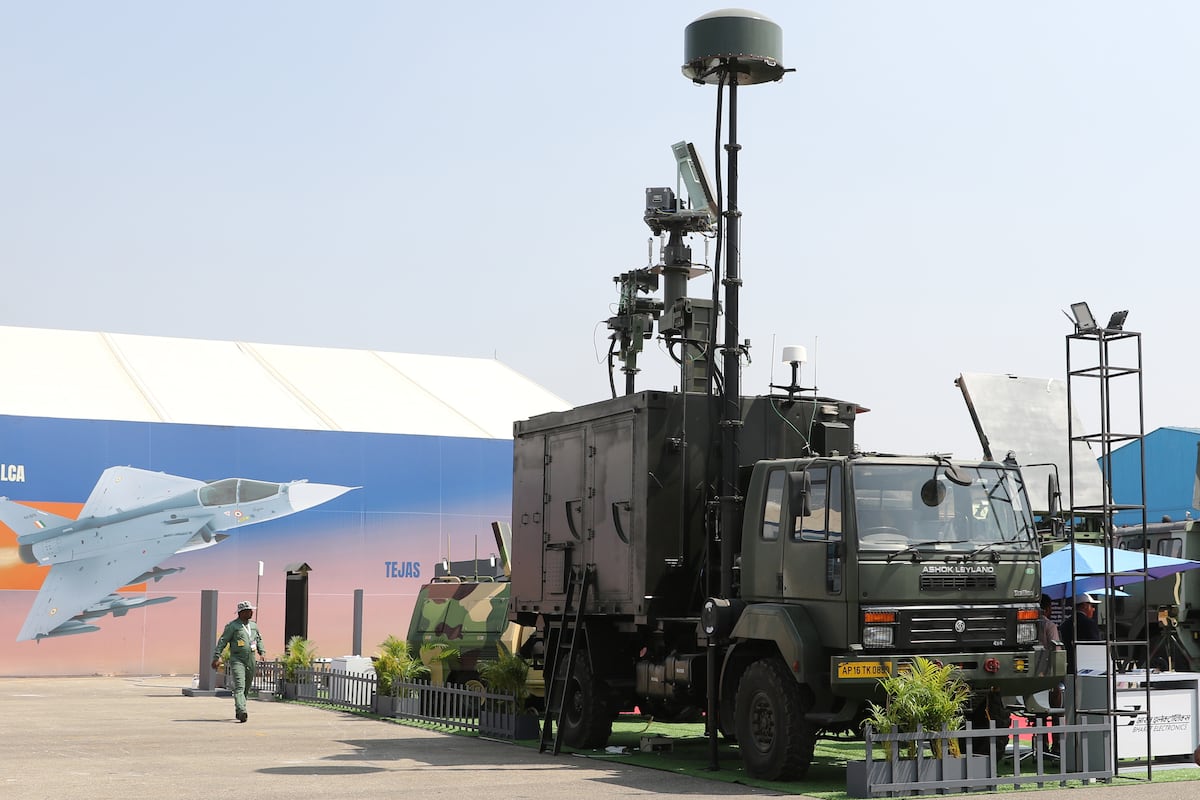
Chief among them are Integrated Drone Detection and Interdiction Systems (IDDIS), Low-Level Lightweight Radars (LLLR) and very-short-range air-defense launchers and missiles.
The IDDIS counter-drone system was credited with downing Pakistani drones during May’s conflict. Bharat Electronics Limited produces both IDDIS and the LLLR, the latter being a portable, 3D, active electronically scanned array radar. The LLLR is designed to detect aerial threats such as drones with low radar cross-sections.
Since the battle, India has captured drones flown across the Pakistan border carrying smuggled small arms. The increasing use of drones by non-state actors, as well as by Pakistan, requires tightly knit India counter-drone and air defenses.
Referring to the 13 contracts, the government said, “Executed through fast-track procedures under the emergency procurement mandate, the procurement aims to enhance situational awareness, lethality, mobility and protection for troops deployed in counterterrorism environments.”
Also on order are drones and loitering munitions. Known to be among them is ideaForge’s Hybrid Mini UAV that performs surveillance, and, according to Indian media, 450 Nagastra-1R loitering munitions from Solar Industries.
Since January, the Indian Army has issued no fewer than five requests for information for different types of drones, as the military boosts inventories. Unmanned systems are particularly useful for conducting surveillance and reducing casualties, especially in rough terrain demarcating the India-Pakistan border.
For Indian soldiers, the 13 contracts also include bullet-proof jackets, ballistic helmets, rifle night sights, and Tata 4x4 Quick-Reaction Fighting Vehicles. The Indian Army had received its first QRFVs in April 2022.
The MoD noted that all this equipment comes from domestic sources.
“The emergency procurement route continues to be a key enabler in bridging urgent capability gaps and ensuring timely induction of vital operational equipment,” officials said in a statement.
At least 80 terrorist and insurgency attacks have been reported in India since January. The military has responded with 536 counterinsurgency and counterterrorism operations.
Prime Minister Narendra Modi said: “Operation Sindoor is now the nation’s established policy in the fight against terrorism, marking a decisive shift in its strategic approach.”
Part of that policy shift is India no longer differentiating between terrorist operatives and the governments that shelter them. Such a posture ups the ante for additional potential clashes between India and Pakistan.
Gordon Arthur is an Asia correspondent for Defense News. After a 20-year stint working in Hong Kong, he now resides in New Zealand. He has attended military exercises and defense exhibitions in about 20 countries around the Asia-Pacific region.
新西兰基督城——在印度和巴基斯坦于 5 月 7 日至 10 日发生激烈的空战之后,德里已批准紧急采购新的防空和反恐设备。
4月22日,查谟和克什米尔地区发生26名平民被杀事件,促使印度对巴基斯坦发动攻击,指责巴基斯坦窝藏恐怖分子。在“辛杜尔行动”中,印度最初袭击了巴基斯坦境内的九个疑似恐怖分子营地。
巴基斯坦的回应,包括无人机袭击和击落数量不明的印度战斗机,促使德里加快了相关装备的采购。
据此,印度国防部签署了 13 份合同,总金额达 198.2 亿卢比,约合 2.316 亿美元。
其中最主要的包括综合无人机探测和拦截系统(IDDIS)、低空轻型雷达(LLLR)以及超短程防空发射器和导弹。
IDDIS反无人机系统在五月份的冲突中击落了多架巴基斯坦无人机,功不可没。印度巴拉特电子有限公司(Bharat Electronics Limited)同时生产IDDIS和LLLR雷达,后者是一款便携式三维有源相控阵雷达。LLLR雷达旨在探测雷达反射截面较小的空中威胁,例如无人机。
自那次冲突以来,印度已截获多架越过巴基斯坦边境、携带走私小型武器的无人机。非国家行为体以及巴基斯坦越来越多地使用无人机,这要求印度建立紧密协作的反无人机和防空体系。
政府在谈到这 13 份合同时表示:“这些合同是根据紧急采购授权,通过快速通道程序执行的,旨在提高部署在反恐环境中的部队的态势感知能力、杀伤力、机动性和防护能力。”
此外,订购的还有无人机和巡飞弹。已知其中包括ideaForge公司的混合动力迷你无人机,该无人机可执行侦察任务;据印度媒体报道,还包括Solar Industries公司提供的450枚Nagastra-1R巡飞弹。
自今年1月以来,印度陆军已就不同类型无人机发布了至少五份信息征询书,以扩充军备储备。无人系统在执行侦察任务和减少伤亡方面尤为有效,尤其是在印巴边境崎岖地形中。
对于印度士兵而言,这13份合同还包括防弹背心、防弹头盔、步枪夜视瞄准器和塔塔4x4快速反应战车。印度陆军于2022年4月接收了首批快速反应战车。
英国国防部指出,所有这些装备都来自国内。
官员们在一份声明中表示:“紧急采购途径仍然是弥合紧急能力差距和确保及时引进重要作战装备的关键推动因素。”
自今年1月以来,印度至少报告了80起恐怖袭击和叛乱事件。军方已开展了536次反叛乱和反恐行动。
印度总理纳伦德拉·莫迪表示:“‘朱砂行动’现已成为国家打击恐怖主义的既定政策,标志着国家战略方针的决定性转变。”
这一政策转变的部分原因在于,印度不再区分恐怖分子和庇护他们的政府。这种立场加剧了印巴之间潜在的冲突风险。
戈登·阿瑟是《防务新闻》的亚洲特派记者。在香港工作20年后,他现居新西兰。他曾到访亚太地区约20个国家,参加过军事演习和防务展览。