French, UK naval chiefs urge dramatic changes in warship design法国和英国海军高层敦促对军舰设计进行重大改革
“If you stay with your old doctrine, you will be dead very rapidly,” said French Navy Chief of Staff Adm. Nicolas Vaujour.
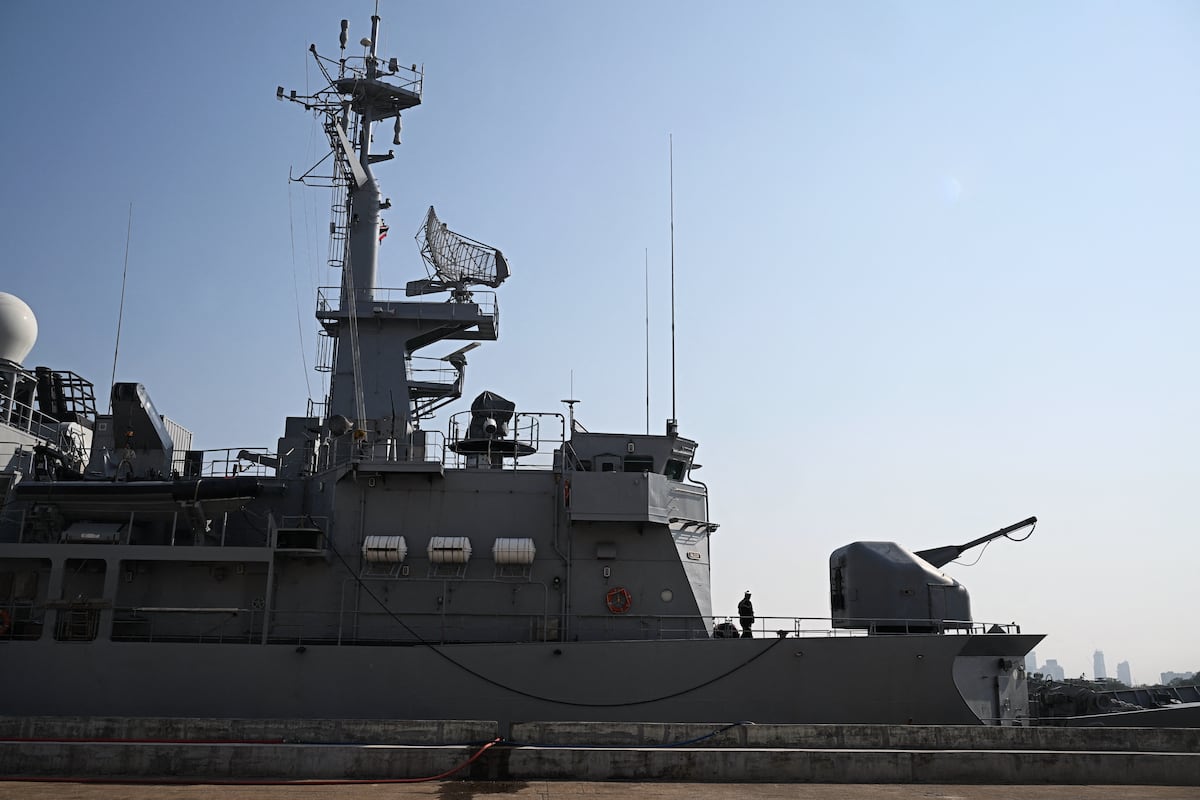
PARIS — The pace of change in maritime warfare requires Western navies to innovate faster and work more intimately with industrial partners to defeat evolving threats, the heads of the French and U.K. navies said.
Navies can no longer count on ships staying relevant over their 40-year lifespan, and weapon systems will change “dramatically” over such a period, French Navy Chief of Staff Adm. Nicolas Vaujour said at the Euronaval industry conference outside Paris on Monday. Weapon systems may need to be adapted as frequently as every year, requiring ship architecture that allows for systems to be plugged in and changed when needed, Vaujour said.
“We have to build adaptable by design,” Vaujour said. “You must build the ship to be adaptable during 40 years, which is quite tricky.”
Navies from the U.S., China and Russia, as well as France and the U.K., have been testing maritime weaponry ranging from swarming drones and lasers to hypersonic anti-ship missiles and rail guns in the past three years, while progress in artificial intelligence has allowed for increasingly autonomous unmanned vehicles.
Generational technology change is happening much faster than the time it takes to construct a ship, meaning navies need to implement new capabilities “far quicker than the speed at which we can build a hull,” according to Adm. Sir Ben Key, First Sea Lord and Chief of Naval Staff of the U.K.’s Royal Navy.
“So you have to detach the operational capability from the platform that’s going to take you there,” Key said. “That is quite a mindset change for us.”
Ukraine has been using missiles, unmanned aerial vehicles and seagoing drones to deny Russia access to much of the Black Sea, despite having little navy to speak of. In the Red Sea, Yemen’s Houthi rebels have targeted commercial vessels with drones and ballistic missiles, prompting freight traffic from Asia to Europe to reroute around Africa.
“If you stay with your old doctrine, you will be dead very rapidly,” Vaujour said. “What we saw in the Red Sea is that we have to adapt very quickly our system.”
The response of the French and British navies to the Houthi threat showed how learning accelerated when the urgency was understood, according to Key.
Both navies worked with MBDA to improve missile performance and software, and “learning time had to be dramatically reduced, because this was no longer a science project being done in the sea off Toulon or in the waters off Plymouth,” Key said.
The lesson was that forces need to be “much sharper” about focusing on the factors that really matter, rather than seeking a perfect solution that will be late, according to the British admiral. That will be a challenge, “because we’ve been brought up in the pursuit of perfection, and actually, we haven’t got time for that,” Key said.
Maritime warfare is experiencing a moment similar to the end of the Age of Sail, when engineers and deep-gunnery specialists became more important on board than the master of sail, according to Key. Going forward, key crew on board will be those able to tap into digital opportunities and needs, the British navy chief said.
“We’re living through kind of one of those moments of really significant change in the way we have to think about the application of power at sea, or maritime power,” Key said.
For the French, one lesson from the Red Sea was that facing a constant threat is “really hard” on crews, and the navy probably needs more people on board, according to Vaujour. “We make the bets to reduce the crew, and I came back from that.”
Systems will be used in ways outside of their design, and crews need “a lot of innovation bias” to come up with untested solutions, according to Vaujour. He cited the use by the French frigate Alsace of a helicopter to shoot down a Houthi drone in March, a scenario that had been tested just weeks earlier in Toulon.
Speeding up innovation will require closer cooperation with industry, according to both admirals. The French navy in coming weeks will start to bring industry engineers on board, particularly in the field of artificial intelligence, to help industrial partners understand the onboard needs and to accelerate innovation, Vaujour said. The admiral is also considering having a vessel dedicated for cutting-edge applications.
As the pace of equipment development accelerates, the U.K. navy is looking to its industrial partners to provide training, as well as for more risk sharing between both sides, Key said.
“What we’re seeing in the Black Sea, what we’re seeing in the southern Red Sea, the speed of development that we’re seeing by some of the navies further afield, requires us to have a much more agile mindset about the way we develop our capabilities,” Key said.
Rudy Ruitenberg is a Europe correspondent for Defense News. He started his career at Bloomberg News and has experience reporting on technology, commodity markets and politics.
巴黎——法国和英国海军司令表示,海上战争的变化速度要求西方海军加快创新步伐,并与工业伙伴更紧密地合作,以应对不断演变的威胁。
法国海军参谋长尼古拉斯·沃茹尔海军上将周一在巴黎郊外举行的欧洲海军工业会议上表示,海军不能再指望舰艇在其40年的服役期内保持性能不变,武器系统在这期间将发生“巨大”变化。沃茹尔指出,武器系统可能需要每年进行升级改造,这就要求舰艇架构能够根据需要随时更换和升级系统。
“我们必须从设计之初就考虑其适应性,”沃茹尔说。“你必须建造一艘能在40年内适应环境的船,这相当棘手。”
过去三年,美国、中国、俄罗斯以及法国和英国的海军一直在测试各种海上武器,从集群无人机和激光武器到高超音速反舰导弹和电磁炮,而人工智能的进步也使得无人驾驶车辆的自主性越来越强。
英国皇家海军第一海务大臣兼海军参谋长本·基爵士表示,技术变革的速度远超建造一艘舰船的速度,这意味着海军需要以“远超建造船体速度”的速度来实施新的能力。
“所以你必须将作战能力与带你到达目的地的平台分离,”基伊说。“这对我们来说是一个相当大的思维转变。”
尽管乌克兰海军实力薄弱,但它一直使用导弹、无人机和海上无人潜航器来阻止俄罗斯进入黑海的大部分海域。在红海,也门胡塞武装使用无人机和弹道导弹袭击商船,迫使从亚洲到欧洲的货运航线绕道非洲。
“如果你坚持旧教条,很快就会走向灭亡,”沃茹尔说。“我们在红海看到的情况是,我们必须迅速调整我们的体系。”
基伊表示,法国和英国海军对胡塞武装威胁的反应表明,当人们意识到形势的紧迫性时,学习速度会加快。
两国海军都与 MBDA 合作,改进导弹性能和软件。基伊说:“学习时间必须大幅缩短,因为这不再是像以前那样在土伦附近的海域或普利茅斯附近的水域进行科学项目了。”
这位英国海军上将表示,此次事件的教训是,各方需要“更加精准地”聚焦于真正重要的因素,而不是追求一个注定会失败的完美解决方案。基伊说,这将是一个挑战,“因为我们从小就被灌输追求完美的观念,但实际上,我们没有时间这样做。”
据基伊称,海战正经历着类似于帆船时代末期的转变,当时舰上的工程师和深水炮专家比帆船船长更为重要。这位英国海军司令表示,展望未来,舰上关键的船员将是那些能够把握数字化机遇并满足数字化需求的人员。
“我们正经历着一个意义重大的变革时刻,我们必须重新思考海上力量或海洋力量的运用方式,”基伊说道。
据沃茹尔称,法国人从红海事件中吸取的一个教训是,持续不断的威胁对船员来说“非常艰难”,海军可能需要增加舰上人员。“我们曾试图减少船员,而我正是从那次行动中吸取了教训。”
沃茹尔表示,系统将被用于超出其设计用途的方式,船员需要“强烈的创新意识”才能提出未经检验的解决方案。他举例说,今年3月,法国阿尔萨斯号护卫舰使用直升机击落了一架胡塞武装的无人机,而就在几周前,土伦海军基地刚刚对这一场景进行了测试。
两位海军上将均表示,加快创新步伐需要与业界更紧密的合作。沃茹尔上将称,法国海军将在未来几周内开始邀请业界工程师登舰,尤其是在人工智能领域,以帮助工业合作伙伴了解舰上需求并加速创新。他还表示,正在考虑建造一艘专门用于尖端应用的舰艇。
基伊表示,随着装备研发步伐加快,英国海军正寻求工业合作伙伴提供培训,并希望双方能够更多地分担风险。
“我们在黑海、红海南部看到的情况,以及一些更远地区海军的发展速度,都要求我们在发展自身能力方面采取更加灵活的思维方式,”基伊说。
鲁迪·鲁伊滕贝格是《防务新闻》的欧洲记者。他的职业生涯始于彭博新闻社,拥有报道科技、大宗商品市场和政治方面的经验。