Czechia’s quiet struggle for artillery shells holds lessons for Europe捷克为获得炮弹而进行的默默斗争,对欧洲具有借鉴意义。
Opinion: Prague has been leading a push to source Soviet-era ammunition for Ukraine from countries around the globe, but the initiative risks running out of money.
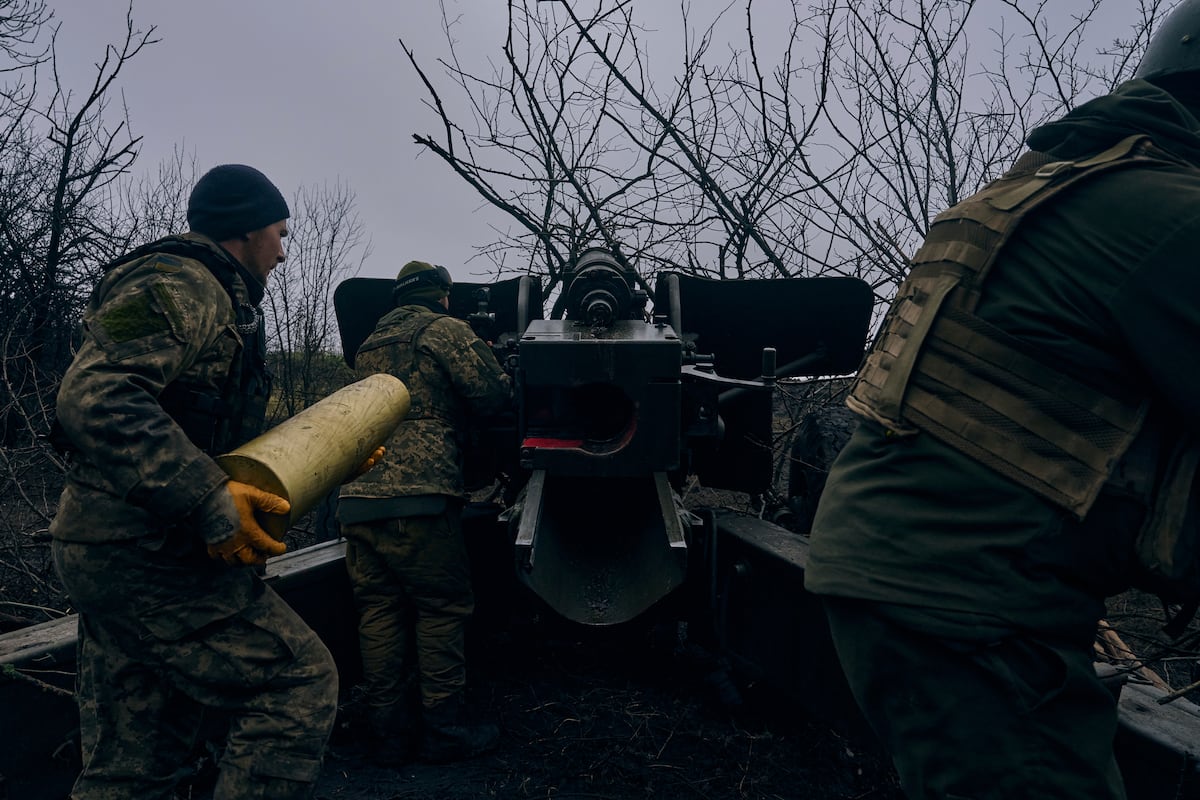
The battlefield conditions for Ukrainian defenders remain dire as the war enters its third year, with winter fast approaching. Over the past weeks, Ukraine has faced intense pressure from Russian forces, culminating in the strategic loss of Vuhledar, which exposed two critical vulnerabilities. First, Ukraine is grappling with a manpower shortage, exacerbated by recruitment challenges and low morale. In December, President Volodymyr Zelenskyy suggested that the military might need 500,000 additional personnel this year, though that figure appears to have been scaled back since.
Second, Ukraine faces a critical shortage of ammunition across the board. Despite the reduction in Russia’s ammunition advantage from 8:1 to 3:1, this gap remains significant, especially as Russia plans to increase defense spending by 25% in 2025, signaling better preparation for a protracted conflict. Ukraine requires around 4,800 anti-air missiles annually, drawing on the full production capacity of the U.S. and NATO, along with an additional 7,500 missiles to defend its cities and troops.
Western manufacturers may need to double output to meet demand. Further, 2.4 million artillery shells are required annually, while offensive operations could triple the demand for long-range rockets, estimated at 8,760 per year. Although U.S. production is expected to exceed 14,000 rockets by 2025, NATO’s capacity to supply deep-strike munitions remains uncertain.
The ammunition shortage is critical, as Ukraine must inflict around 1,000 Russian casualties daily to prevent a build-up of the 25,000 to 30,000 Russian troops arriving monthly. Without adequate supplies, Ukraine likely cannot degrade Russian forces effectively.
In February 2024, the Czech Republic responded to Ukraine’s needs with a plan to acquire artillery shells from non-EU sources. The initiative aims to procure 500,000 rounds of 155mm and 300,000 rounds of 122mm artillery, worth $3.2 billion. These shells are vital as Russia currently produces around 250,000 artillery rounds per month, vastly outpacing the U.S. goal of 100,000 rounds monthly by 2025.
However, seven months into the Czech initiative, problems have surfaced, particularly regarding the concealment of shell imports and verifying their technical reliability. These challenges could hinder efforts to meet Ukraine’s urgent demands.
In March, Czech President Petr Pavel stated that the Czech Republic secured enough money to buy 800,000 artillery shells for Ukraine. Immediately, Czech Prime Minister Petr Fiala put forward a different figure, claiming that they raised funds only for 300,000 rounds of ammunition. A few days later, Czech National Security Advisor Tomáš Pojar said that ammunition from the Czech ammunition initiative could be expected in Ukraine in June.
The Czech-led initiative delivered on the schedule outlined by Pojar, as the Ukrainian prime minister announced in June that around 50,000 pieces of 155mm rounds had arrived in Ukraine. According to the Czech officials, another delivery was expected in July and August. Soon after Czech Foreign Minister Jan Lipavský promised that deliveries would accelerate by September. Finally, the Ukrainian ambassador to the Czech Republic addressed the initiative in October, stating that Ukraine has received over one-third of the 500,000 shells expected to be delivered by the end of 2024.
So far, 18 countries have pledged their support, including for example the Netherlands, Denmark, Belgium, Canada, Norway or Germany as the top donor, which provided financing for the first batch of ammunition delivered to Ukraine in June. However, three countries have not provided their funds yet. In September, the Polish newspaper Gazeta Wyborcza claimed that Poland is one of those that have failed to deliver on what they promised.
Lipavský told journalists in July that it is still possible to deliver up to 800,000 artillery shells by the end of the year, as there is reportedly enough ammunition in the world market. However, the initiative needs to raise more funds to reach this goal. It has secured enough funds approximately $2.2 billion to provide half a million artillery shells so far, but it is about $1.1 billion short of buying 300,000 more rounds. Nevertheless, the three countries that have not provided funds yet are not responsible for the entire 300,000 pieces gap, according to Lipavský.
As outlined above, securing enough funds quickly is essential. This was highlighted by Tomáš Kopečný, the Czech government´s envoy for Ukraine and a key person behind the initiative, who stated that the slow pace of financial contributions poses the main obstacle to shipping ammunition to Ukraine faster while the Eastern European country would need about 200,000 rounds of large-caliber ammunition monthly. According to Pojar, it takes weeks to months for some states to issue the sums they promised.
Another problem is that delivering ammunition to Ukraine is a logistically complicated and time-consuming process. For example, the lengthy journey of the first shipment of ammunition to Ukraine that sailed the sea for a week until it reached an unspecified port in the Mediterranean. Then, the ammunition was transported by cargo trains that crossed several European countries until they reached Ukraine. It may be difficult to coordinate the availability of ships and trains, because they need to be pre-ordered several weeks prior. This becomes even more problematic when European transporters are short of available cargo trains, as they were in June when the first ammunition was being transported to Ukraine. At the same time, strict security measures and a high level of concealment must be in place to avoid potential intrusion of the operation.
It remains unclear from which countries the ammunition comes from, as these countries fear Russian retaliation. Although the current evidence suggests that specifically Turkey, South Africa, South Korea, Serbia, and probably Bosnia are providing artillery rounds to Ukraine via the Czech-led initiative. Furthermore, it appears that some Asian countries with stocks of Soviet-era ammunition wishing to maintain premium relations with Russia are also involved. Whatever these countries are, it takes some time to deliver large shipments of heavy ammunition from one part of the world to another, while the Russians are meant to not know about it.
Besides, some question the condition and technical reliability of delivered ammunition. In September, German business newspaper Handelsblatt reported that part of the ammunition delivered via the Czech-led initiative exploded prematurely on the battlefield. The CSG, a Czech industrial holding and a key private actor in the initiative, is currently struggling to provide replacements for flawed components of delivered ammunition. Recently, Pojar has pointed out, the initiative also seeks older ammunition. As these shells might be flawed, they need to be repaired before reaching Ukraine.
To sustain Ukraine’s defense capabilities through the coming year, Czech Defense Minister Jana Černochová announced a strategic extension to the current ammunition initiative with the launch of “Initiative 2025.” This project will build on existing mechanisms, strengthening Ukraine’s supply chain with critical munitions. Notably, Czechia’s intent to allocate a portion of revenue from frozen Russian assets toward these purchases marks a significant financial boost. This approach not only accelerates support for Ukraine but also ensures more robust, long-term supply pathways in the face of continued conflict.
It is crucial to note that the Czech initiative addresses just one of Ukraine’s pressing ammunition needs—the 155mm artillery rounds, which indeed have the potential to inflict significant damage on Russian forces. At this juncture, though, Ukraine’s needs are more comprehensive. Beyond artillery rounds, Ukraine is urgently requesting additional long-range missiles, such as ATACMS and Storm Shadow, to reach key military targets deep in Russian territory. Kyiv has also identified a critical need for enhanced air defense systems to counter sustained drone and missile assaults on its infrastructure. Alongside these, continued supplies of armored vehicles, HIMARS ammunition, and modern tanks remain pivotal for maintaining pressure on the eastern front, where Ukrainian forces face daily demands.
In this context, U.S. support is set to play a critical role in sustaining Ukraine’s defenses as European ammunition capacity struggles to meet the demand. Europe’s defense sector is in a vulnerable state, a reality underscored by the recent “Draghi Report.” The report identifies key weaknesses, noting that EU defense manufacturing remains highly fragmented, with nearly 80% of procurement spending directed outside the EU, primarily to the U.S.
An EU-wide industrial policy is urgently needed to improve coordination, aggregate defense demands and strengthen supply chain resilience. However, the EU’s decarbonization policies add complexity; they offer little incentive for the defense sector to scale up production, given the energy-intensive nature of ammunition manufacturing. Furthermore, European banks are often hesitant to finance defense companies due to reputational concerns, regulatory barriers, and dependency on unpredictable government contracts. Strict environmental, social and governance policies discourage investment in arms manufacturing, and compliance with arms trade laws compounds the challenge. These barriers particularly impact small and medium-sized defense firms, which frequently lack the collateral needed for financing high-capital projects. Consequently, defense companies increasingly rely on state-backed financial support to meet NATO-driven demand spikes, exposing a significant gap in Europe’s defense industry resilience.
Looking ahead, the Czech initiative is likely to encounter similar obstacles, with one of the most pressing issues being the inconsistent willingness of states to expedite funding for ammunition procurement. Given the lack of immediate resolution on this front, it’s crucial for nations to consider ways to maximize the impact of available resources.
Europe should focus on expanding its ammunition production capabilities and strengthening its defense industrial base. While there’s no shortage of ammunition for Ukraine on the global market, an increase in European production would drive down costs by adhering to basic supply and demand principles. By producing more shells domestically, European nations can optimize their spending, ultimately enabling them to supply Ukraine with a greater volume of artillery rounds.
Zdenek Rod is an assistant professor at the University of West Bohemia in Pilsen at the Department of Politics and International Relations and co-director of the Center for Security Consulting in Prague.
Michael Jarkovsky is academic assistant at the University of West Bohemia in Pilsen at the Department of Politics and International Relations.
随着战争进入第三年,冬季临近,乌克兰守军的战场处境依然严峻。过去几周,乌克兰承受着来自俄军的巨大压力,最终导致战略要地武赫列达尔的失守,暴露出两个关键弱点。首先,乌克兰正面临兵力短缺的困境,征兵困难和士气低落加剧了这一问题。去年12月,泽连斯基总统曾表示,乌克兰军队今年可能需要增援50万人,但此后这一数字似乎有所下调。
其次,乌克兰面临全面的弹药短缺。尽管俄罗斯的弹药优势已从8:1缩小到3:1,但这一差距仍然十分显著,尤其是在俄罗斯计划于2025年将国防开支增加25%的情况下,这表明俄罗斯正在为持久战做好更充分的准备。乌克兰每年需要约4800枚防空导弹,这需要动用美国和北约的全部产能,此外还需要7500枚导弹用于保卫其城市和军队。
西方制造商可能需要将产量翻一番才能满足需求。此外,每年需要240万枚炮弹,而进攻性作战可能会使远程火箭的需求量增加两倍,预计目前的需求量为每年8760枚。尽管预计到2025年美国火箭产量将超过14000枚,但北约的远程打击弹药供应能力仍然存在不确定性。
弹药短缺形势严峻,因为乌克兰每天必须造成约1000名俄军伤亡,才能阻止每月抵达的2.5万至3万俄军增援。如果弹药供应不足,乌克兰恐怕难以有效削弱俄军。
2024年2月,捷克共和国响应乌克兰的需求,提出一项从非欧盟国家采购炮弹的计划。该计划旨在采购50万发155毫米炮弹和30万发122毫米炮弹,总价值32亿美元。这些炮弹至关重要,因为俄罗斯目前每月生产约25万发炮弹,远远超过美国设定的到2025年每月生产10万发炮弹的目标。
然而,捷克倡议实施七个月后,问题开始显现,尤其是在隐瞒炮弹进口和验证其技术可靠性方面。这些挑战可能会阻碍满足乌克兰迫切需求的努力。
今年3月,捷克总统彼得·帕维尔表示,捷克已筹集到足够资金为乌克兰购买80万发炮弹。但捷克总理彼得·菲亚拉随即提出不同说法,称他们只筹集到了购买30万发炮弹的资金。几天后,捷克国家安全顾问托马什·波亚尔表示,捷克弹药援助计划提供的弹药预计将于6月运抵乌克兰。
由捷克主导的这项倡议按波亚尔制定的计划顺利完成。乌克兰总理波亚尔于6月宣布,约5万发155毫米炮弹已运抵乌克兰。据捷克官员称,预计7月和8月还将有另一批炮弹交付。此后不久,捷克外交部长扬·利帕夫斯基承诺,到9月交付速度将加快。最终,乌克兰驻捷克大使于10月就该倡议发表讲话,称乌克兰已收到预计在2024年底前交付的50万发炮弹的三分之一以上。
迄今为止,已有18个国家承诺提供支持,例如荷兰、丹麦、比利时、加拿大、挪威以及最大的捐助国德国。德国为6月份运抵乌克兰的首批弹药提供了资金。然而,仍有三个国家尚未提供资金。9月份,波兰《选举报》(Gazeta Wyborcza)声称,波兰是未能履行承诺的国家之一。
利帕夫斯基7月份告诉记者,由于据称世界市场上的弹药供应充足,年底前仍有可能交付多达80万发炮弹。然而,该计划需要筹集更多资金才能实现这一目标。目前,该计划已筹集到约22亿美元,足以提供50万发炮弹,但仍缺少约11亿美元来购买另外30万发炮弹。不过,利帕夫斯基表示,尚未提供资金的三个国家无需承担全部30万发炮弹的缺口。
如上所述,迅速筹集到足够的资金至关重要。捷克政府驻乌克兰特使、该倡议的关键人物托马什·科佩奇尼强调了这一点,他指出,资金到位缓慢是加快向乌克兰运送弹药的主要障碍,而这个东欧国家每月需要约20万发大口径弹药。据波亚尔称,一些国家需要数周甚至数月才能兑现其承诺的款项。
另一个问题是,向乌克兰运送弹药是一个后勤复杂且耗时的过程。例如,首批运往乌克兰的弹药经历了漫长的航程:它在海上航行了一周才抵达地中海的一个未公开港口。之后,这批弹药又通过货运列车穿越数个欧洲国家最终抵达乌克兰。由于需要提前数周预订,协调船舶和列车的可用性可能十分困难。当欧洲运输商的货运列车短缺时,问题会更加棘手,就像今年6月首批弹药运往乌克兰时那样。与此同时,必须采取严格的安全措施和高度隐蔽性,以避免行动遭到入侵。
目前尚不清楚这些弹药来自哪些国家,因为这些国家担心俄罗斯的报复。尽管现有证据表明,土耳其、南非、韩国、塞尔维亚,以及可能还有波斯尼亚,正通过捷克牵头的倡议向乌克兰提供炮弹。此外,一些拥有苏联时期弹药库存、希望与俄罗斯保持密切关系的亚洲国家似乎也参与其中。无论这些国家是谁,将大量重型弹药从世界一处运送到另一处都需要相当长的时间,而且俄罗斯方面对此毫不知情。
此外,一些人对已交付弹药的状况和技术可靠性提出质疑。9月,德国商业报纸《商报》(Handelsblatt)报道称,通过捷克主导的倡议交付的部分弹药在战场上提前爆炸。捷克工业控股公司CSG是该倡议的关键私营参与者,目前正努力为已交付弹药的缺陷部件提供替换件。波亚尔(Pojar)最近指出,该倡议还在寻求旧弹药。由于这些炮弹可能存在缺陷,因此需要在运抵乌克兰之前进行维修。
为保障乌克兰未来一年的国防能力,捷克国防部长雅娜·切尔诺霍娃宣布启动“2025倡议”,对现有的弹药援助计划进行战略性扩展。该项目将依托现有机制,通过关键弹药的供应加强乌克兰的供应链。值得注意的是,捷克计划将冻结俄罗斯资产的部分收益用于此次采购,这无疑是一笔重要的财政支持。此举不仅加快了对乌克兰的支持,也确保了在持续冲突的情况下,乌克兰能够获得更加稳健、长期的弹药供应。
值得注意的是,捷克的援助计划仅满足了乌克兰迫切的弹药需求之一——155毫米炮弹,这种炮弹确实有可能对俄军造成重大打击。然而,目前乌克兰的需求更为全面。除了炮弹之外,乌克兰还急需更多远程导弹,例如ATACMS和“风暴阴影”导弹,以便打击俄罗斯纵深的关键军事目标。基辅方面也意识到,为了应对持续不断的无人机和导弹袭击,乌克兰迫切需要加强防空系统。与此同时,持续供应装甲车辆、HIMARS导弹和现代化坦克对于维持东部战线的压力至关重要,乌克兰军队每天都面临着严峻的挑战。
在此背景下,由于欧洲弹药产能难以满足需求,美国的支持将在维持乌克兰国防方面发挥关键作用。欧洲国防工业处于脆弱状态,近期发布的“德拉吉报告”凸显了这一现实。该报告指出了关键弱点,并指出欧盟国防制造业仍然高度分散,近80%的采购支出流向欧盟以外,主要流向美国。
欧盟亟需制定一项全欧盟范围的产业政策,以改善协调、整合国防需求并增强供应链韧性。然而,欧盟的脱碳政策却使情况更加复杂;鉴于弹药制造的能源密集特性,这些政策几乎没有激励国防部门扩大生产规模。此外,由于声誉顾虑、监管壁垒以及对不可预测的政府合同的依赖,欧洲银行往往不愿为国防企业提供融资。严格的环境、社会和治理(ESG)政策抑制了对武器制造的投资,而遵守武器贸易法则加剧了这一挑战。这些壁垒对中小规模的国防企业影响尤为严重,因为它们往往缺乏为高资本项目融资所需的抵押品。因此,国防企业越来越依赖国家支持的财政援助来满足北约推动的需求激增,这暴露出欧洲国防工业韧性方面存在的巨大缺口。
展望未来,捷克的倡议很可能面临类似的障碍,其中最紧迫的问题之一是各国在加快弹药采购资金方面的意愿不一致。鉴于这一问题短期内无法得到解决,各国必须考虑如何最大限度地利用现有资源。
欧洲应着重提升弹药生产能力,并加强国防工业基础。尽管全球市场上乌克兰的弹药供应充足,但欧洲提高弹药产量,遵循基本的供需原则,将有助于降低成本。通过增加国内炮弹产量,欧洲各国可以优化支出,最终能够向乌克兰提供更多炮弹。
兹德涅克·罗德是比尔森西波西米亚大学政治与国际关系系的助理教授,也是布拉格安全咨询中心的联合主任。
Michael Jarkovsky 是比尔森西波西米亚大学政治与国际关系系的学术助理。