Taking The F-14A Tomcat On Cruise For My First Time第一次驾驶F-14A雄猫战斗机巡航
From chasing down SR-71 Blackbirds to having an engine explode beneath him, the life of a young Tomcat pilot was far from dull.
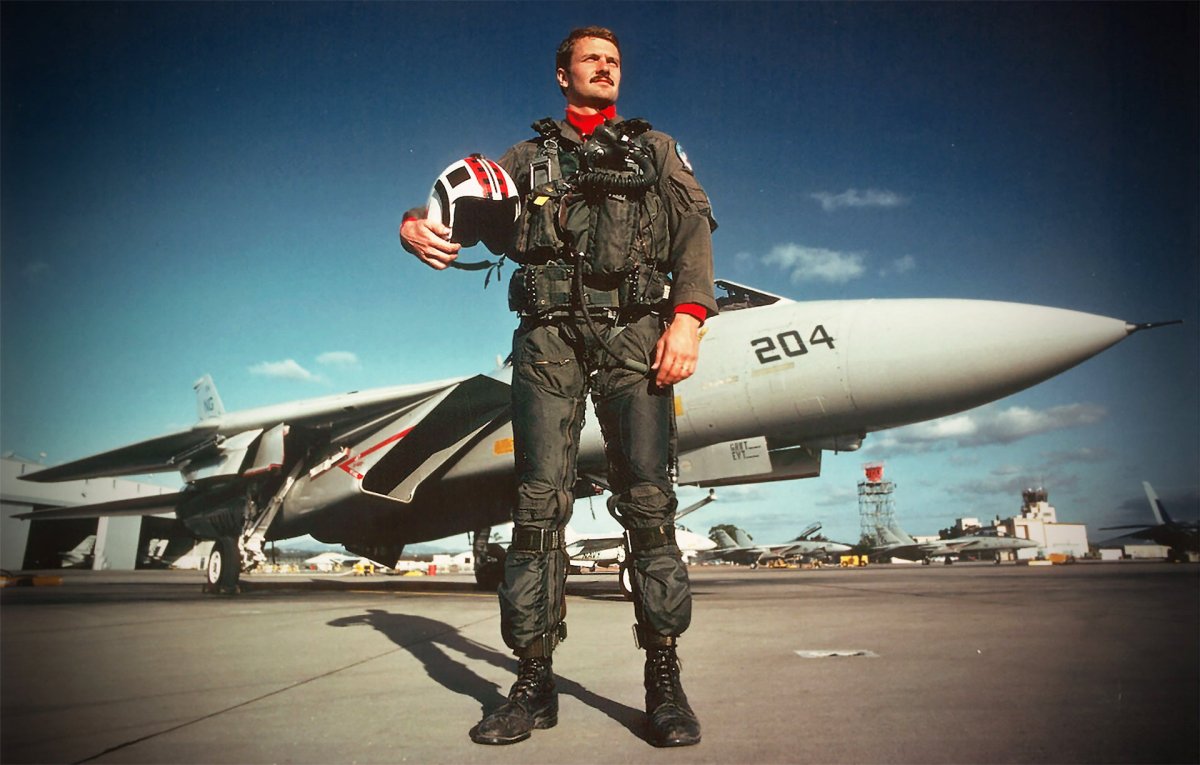
By Paul Nickell And Tyler Rogoway
Updated Jul 3, 2020 4:17 AM EDT
In 1982, Paul Nickell was a “nugget” Naval Aviator heading to his first fleet assignment with VF-24 “Renegades” at the now fabled Naval Air Station Miramar near San Diego—also known as Fighter Town USA. His mount was the still somewhat unpredictable but fiercely powerful Grumman F-14A Tomcat. Not long after arriving he would set sail aboard the USS Ranger for his first cruise. In this the third chapter of our multi-part series about Paul’s adventures flying Navy fighters in the 1980s—from chasing SR-71 Blackbirds to having an engine explode beneath him—he gives us an incredibly intimate view of what it was like for a pilot taking the still adolescent Tomcat to sea for their very first time.
I arrived at VF-24 in the fall of 1982. The Renegades had recently completed a Westpac cruise aboard the USS Constellation (CV-64) and were starting workups for their next deployment aboard USS Ranger (CV-61) which would begin in the summer of 1983. It was perfect timing for myself and a RIO from my Replacement Air Group (RAG) class. Arriving at the beginning of the turnaround meant that we would have the benefit of all of the workup training and “at sea” periods before we actually deployed. I was immediately impressed by the professionalism of the squadron, and at the same time the great spirit that the aircrews displayed.
Squadron life was unlike anything that I had experienced up to this point in my aviation career. I was no longer a student. Oh I had a tremendous amount to learn, but for the first time since I started flying, no one was filling out a grade sheet on me and debriefing my performance. That’s not to say that we didn’t debrief and learn from our training, but we focussed on what went well and what we could improve on, and to a large extent it was self critique. It was both refreshing and liberating!
Courtesy of Paul Nickell
Another new thing was that I now had a job within the squadron, as opposed to being just a student pilot. I was in charge of the “First Lieutenant Work Group.” I never knew where that name came from, but it was the group that kept our squadron spaces clean and well maintained. Additionally, since the squadron would be making it’s next deployment onboard Ranger , all of the spaces that we would inhabit when we went aboard had to be prepared for our arrival. The job definitely kept me busy, and during that time I worked closely with the squadron Executive Officer (XO) and got to know him very well. He was a Vietnam veteran, where he had flown the F-4 Phantom. He loved life, and lived it to the fullest. Unknown at the time, our paths would stay close together for the remainder of our time in the Navy.
Chasing Blackbirds and evading SAMs
Initially, the flight schedule was pretty slow for me, but it still provided more flights than the slow pace that the RAG had. The pace increased fairly quickly though as the squadron progressed through its turnaround. Our Operations Department, otherwise known as “Ops,” did a great job scheduling me on all sorts of varied training flights. On one mission with two Tomcats, we flew into the restricted areas northwest of Los Angeles and ran intercepts against SR-71 Blackbirds. It was great training for the Radar Intercept Officers (RIO) flying intercepts against very high and fast targets.
The speeds and altitude differences made the intercepts very challenging, arriving in valid missile launch parameters only for fleeting seconds. From a pilot’s perspective, I remember it being a very stressful flight because as wingman I spent a lot of time flying in close formation at night in the clouds (commonly referred to as ”in the goo”) as we transited back and forth to the restricted area.
Renegade into the vertical, USN
One mission that I really enjoyed was flying low level routes. It was generally an exercise in navigation and timing, and the Tomcat had a reasonably reliable navigation system to help out. However, we always had topographic charts with routes and timing drawn out on them as a backup. The great part was the sense of speed that you experienced at very low altitude, and also the sight seeing. The bad part was that there was very little margin for error, and very little time to recover if anything went wrong.
We also did low level intercept missions. I remember one in particular where we were in a restricted area in the Sierra Nevada Mountains with two Tomcats and we were running intercepts down through narrow gorges. It was like some of the video games that are available today, except the rocks were very real and the scenery was absolutely breathtaking. Other flights included going up to the Death Valley and Panamint Valley areas and practicing evading the surface to air missile (SAM) threats. It was fun for the pilots, but miserable for the RIO’s. Typically it involved all sorts of octoflugeron maneuvers in which only the pilot knew what was coming and the RIO was just along for the ride. In an actual SAM situation the RIOs would have been completely looking outside for missiles, but in this environment there were no real missiles, only electronic indications of missiles airborne.
Probably the bulk of our training flights were air combat maneuvering (ACM) missions. We would fight about any other type of aircraft available. Typical ACM flights were against A-4s and F-5s and were usually flown in the Socal area west of San Diego or just east of Yuma, Arizona. At other times we had the opportunity to fight Navy and Marine F-4s, and also hosted Air Force F-15s.
The one thing that we didn’t do was fight 1 versus 1 with other F-14s (1 V 1 similar). Shortly before my arrival at VF-24, the squadron had lost a Tomcat flying 1 V 1 similar. The problem with 1 V 1 similar is that since you were fighting aircraft of equal capabilities, it all boiled down to aircrew capabilities. Usually they would limit engagements to rear quarter missiles and guns, so the fights would often quickly degrade into groveling for a shot, and because of engine problems, that was not a good place for the F-14A.
At slow speed and high angle of attack, with the engines in full burner, the F-14A’s TF30 turbofan engines were prone to compressor stalls. Any air disturbance into the intakes, possibly caused by jet wash or yaw, could cause a compressor stall, and a compressor stall on one engine in this situation could lead to a flat spin due to thrust asymmetry. That’s what happened in the movie Top Gun , and that’s what happened to the Renegade F-14.
The Renegade crew actually recovered the aircraft from the spin, which may have been a first, but the motors had cooked themselves from being stalled for so long, and they would not restart. Eventually the crew had to eject. The end result was that in VF-24, we did not do 1 V 1 similar until several years after I joined the squadron, and after a very scripted 1 V 1 similar program was put into place.
Not long after I arrived at VF-24, one pilot and one RIO were selected to attend the Topgun Power Projection course. They were both in their first tour with VF-24, and both had completed the previous cruise aboard Constellation . They were chosen to attend the course by the squadron CO, based upon their performance in the squadron up to that time.
Depending upon available slots, most fighter squadrons got to send two crews through the course during a normal turnaround period between cruises. At the time, I knew very little about Topgun, other than that they provided adversary support. As the crew progressed through the course, I would see them passing through the squadron on their way to and from Topgun training missions. It quickly became obvious to me that the instruction they were receiving was far above anything I had ever been exposed to. Also they would soon become the leaders in VF-24 with respect to fighter tactics based upon their six weeks of exposure to the navy fighter tactics authorities (the Topgun staff). Although I wasn’t in any position to attend Topgun at the time, I set my sights on attending during the next squadron turnaround.
Spinning up for deployment
As our turnaround progressed, preparation for our next cruise intensified. We did a “Gun Det” at Miramar. “Det” was short for detachment, and detachments normally meant that you deployed to someplace other than your home base. Dets were always fun because they brought the squadron together and built great camaraderie. Unfortunately, because money was tight at the time, we were not able to deploy to another base, so we did all of our gunnery out over the Pacific, while operating from Miramar. If you couldn’t leave your home base, I’ll have to say that San Diego was a pretty good place to be stuck!
For the det, the squadron was divided up into four teams, which competed for the most target hits. We shot at towed airborne targets, and without going into all the details, we were able to get an accurate count on the hits for each pilot. At the end of each day, we would watch all of the day’s gun camera film and debrief from it. Although gunnery was to a large extent done by the pilots, the RIOs played an important role in monitoring the pattern being flown and locking up the target on each firing run.
Shooting the M-61 cannon in the F-14 was a kick in the pants. We were limited to 50 round bursts, and that only took half a second to complete. We were definitely slinging some lead! At the end of the det we had a kangaroo court with awards, both serious and humorous, and all in all, it was a great week of work. I had done a lot of rifle shooting in high school, and air to air gunnery in the F-14 came pretty naturally to me. I did well with it, and that would influence my future role in the navy.
Other dets included a two week Red Flag exercise at Nellis Air Force Base , and an air wing det to NAS Fallon, in Nevada. Unlike today, there was very little integration between the Air Force and Navy in the early ’80s. Red Flag was my first exposure to working with the Air Force, and it was definitely different. Red Flag was much bigger picture and larger scale training than I had ever experienced. It involved helos putting people on the ground, B-52s airborne, and everything in between . It seemed the biggest threat while we were there was getting sent home by the Air Force for flying into the wrong piece of airspace . We were constantly skirting around the Tonopah Test Range and Area 51 , using only topographic maps and landmarks. We constantly made light of all of the Air Force’s areas to avoid and all of their rules, but they were really serious about them. We were threatened a few times, but fortunately none of our aircrew were ever sent home.
Courtesy Paul Nickell
Soon after Red Flag, we went to NAS Fallon for two weeks with all of the squadrons in our air wing, Carrier Air Group 9 (CAG-9). CAG-9 was composed of one helo squadron, an E-2 squadron, an S-3 squadron, an A-6 squadron, an EA-6 squadron, two A-7 squadrons, and two F-14 squadrons. All of these squadrons would deploy together on our Ranger cruise. Fallon was a great place to fly out of, located in the high desert with high and rugged terrain to the east where the ranges were located. It also didn’t have all of the Air Force rules that Nellis did. The ranges were fully instrumented so that missions could be recorded for debriefing purposes and also simulated missile shots could be taken and recorded. It also had simulated surface to air missile threats available. Early on we did a lot of part task training, but as we progressed through the det, the scale of our exercises got larger until the end where we were conducting large scale coordinated strike missions.
“Paddles” in training
Intermixed with these detachments, we were starting to conduct at sea periods as an air wing aboard Ranger . Initially it simply involved going out to update our carrier qualification currency. Each pilot got several day and night traps , but other than the Landing Signal Officers (LSOs, but also sometimes referred to as “paddles”), none of the aircrew stayed aboard the ship. Following that we did a ten day at sea period, a five week at sea period, and then our final Operational Readiness Evaluation (ORE) for the carrier and air wing which lasted about a week. All of this was done in the waters off the coast of southern California.
When I checked into VF-24, I told the Operations Officer and the current squadron LSO that I was interested in becoming an LSO. I felt that seeing carrier type landings from the opposite perspective, on the ground watching the aircraft approach and land, had really helped me survive Tomcat carrier qualifications in the RAG. Becoming an LSO was a big undertaking, but I felt it would help me be the best carrier pilot that I could be, and also the squadrons were always looking for pilots interested in taking on that responsibility. Initially it involved working with the squadron LSO during field carrier landing practice (FCLP) periods, attending a two week LSO school, and then working with all of the air wing LSOs aboard the ship.
Paul and his LSO cadre standing on the LSO platform aboard Ranger . , Courtesy of Paul Nickell
Ultimately, once I was qualified as a squadron LSO, the performance of the entire squadron coming aboard the boat would be my responsibility, and it was a big one. During these workup at sea periods I began to get experience waving aircraft coming aboard. In CAG 9 the LSOs were divided into four teams, so we had LSO duty every fourth day. On our LSO days, we would be on the LSO platform for anywhere from five to seven aircraft recoveries of 15 to 20 aircraft each, and as a rule we did not fly on those days. The other 3 days we would fly and the schedulers were pretty good about keeping us up with everyone else for flights since we missed every fourth day.
There was always one of the two air wing (CAG) LSOs plus five to six LSOs from the different squadrons for each recovery. We would take turns waving the recoveries, under the eye of the CAG LSO. Also one of us would be the writer, and record the aircraft number, wire caught, grade, and LSO comments for every landing. Following each recovery, we would journey to all of the squadron ready rooms and debrief the pilots who had just come aboard on their landing.
Paul in his LSO vest standing in front of a Royal Navy Sea Harrier with a fresh “Zap” on its fuel tank. , Courtesy of Paul Nickell
I loved being on the LSO platform! Just standing out in the raw elements, on beautifully sunny days or pitch black star filled nights, watching those awesome machines maneuver their way aboard was absolutely amazing. Unlike landing the Tomcat, being an LSO seemed to come very naturally to me. I quickly developed an eye for what the proper airspeed and glideslope looked like for the different aircraft of the air wing, and progressed rapidly as an LSO during our workups. It didn’t hurt to be training under our squadron LSO, who was one of the best in the air wing. One of the biggest benefits of my LSO training was the impact it was having on my own landing performance. I wasn’t close to ace of the air wing, but my own landing performance was definitely improving.
Putting on the final touches
A great deal of the flying off of the ship during workups involved simulated defense of the battle group, and in particular the carrier. We had prepared for this back at Miramar while completing Fleet Air Superiority Training (FAST), which was run by Topgun. It involved a series of classroom lectures and then a number of simulator sessions. This was the height of the Cold War and the training focused on defending the battle group against Soviet Bear, Badger, and Backfire bombers and all of the air to surface missiles (ASM’s) that they could carry. It also involved a great deal of electronic warfare and electronic countermeasures.
The simulator was the perfect place to practice these missions. Once we were on workups, we would practice the command and control while aircraft from the beach would fly out and simulate attacks on the battle group assets. As part of the the training for the smaller ships, we were at times tasked with flying missile profiles against them. One of these missions was particularly memorable for me.
We were flying directly at the ship from about 50 miles away, starting at about 45,000 feet and mach 1.4. Passing through about 35,000 feet, all of a sudden I was slammed to the right side of the cockpit and it sounded as if someone was beating on the canopy with a sledge hammer, a couple of times per second. It was pretty intense for about five to ten seconds and I slowly started reducing the throttles back out of afterburner. It turned out to be a compressor stall in the left engine, and once I got it out of burner, the stall cleared and everything returned to normal. We were able to continue the profile and make a low supersonic pass at the fantail of the target ship, to the delight of a large group of sailors jumping up and down and waving.
One other thing that I got to do prior to my first cruise was a live missile shoot. On virtually all of our training missions we would carry AIM-9 Sidewinder missile simulators. The Sidewinder was a close in heat seeking missile. The simulator was a Sidewinder, but it had no warhead and no rocket motor. Unlike shooting the gun, we did not go out and shoot air to air missiles on a regular basis because of their expense. However, new missiles were shot at times evaluating different areas of their envelopes, and old missiles were shot for aircrew training as they approached the end of their shelf life. That was the case for my shoot.
It was over water northwest of LA, and it was a shot at a drone. Fortunately we were able to locate the drone with the radar, lock it up, get a good missile tone, and take the shot. I never saw the target. It was very small and from about a mile and a quarter straight behind it, I would have needed binoculars to acquire it. Once I had the tone, I squeezed the trigger and instantly the missile departed the right pylon with an audible whoosh, and a trail of white smoke. It actually rolled the aircraft to the left momentarily. It was a non-warhead shot, so there was no explosion. We returned to Miramar and were told that the shot was a success, with the Sidewinder passing very close to the drone. The shoot wasn’t overly exciting, but it was good to know what to expect if I ever had to fire a missile in combat.
With workups complete, we were ready to depart on cruise. Our cruise schedule was like a seven and a half month vacation. On a regular piece of typing paper, double spaced, the ports of call filled the page. We would be in Pearl Harbor in just over a week. After that we would go to the Philippines, Singapore, and Thailand before spending some time in the North Arabian Sea south of Iran. Since the Iran hostage crisis had begun, there had always been a US carrier in the North Arabian Sea. But the crisis had ended several years before our cruise, and the decision had been made that there would no longer be a US carrier continuously on station there.
We were to arrive there and relieve Midway, spend a couple of weeks on station, and then bolt for ports in Perth, Australia, Hobart, Tasmania, and Sydney, Australia. After that we would make our way back to the Philippines for a long Christmas stay, then on to Hong Kong, Korea, Hawaii and back to San Diego. It almost sounded like a luxury cruise! However, in the final few days before we departed, rumors were starting to spread about unrest in Nicaragua.
Ranger departed the pier at North Island early in the morning in mid July. All of the families at the pier waving goodbye knew something was up, but no one including those of us onboard knew exactly what it was. As soon as we got out to sea, things rapidly went south, literally and figuratively. The battle group turned left and headed for the coast of Nicaragua. On the second day out, a sailor on the flight deck was blown overboard, and his body was never recovered.
The next morning, we were awakened by the call of “General Quarters, General Quarters, all hands man your battle stations…this is not a drill.” It turned out that Ranger had been underway replenishing (UNREPing) with a supply ship, and had gotten too close to the supply ship. Once that happened, the venturi effect of the water passing between the hulls pulled the ships together, and the ships collided side to side. It was not a major collision, but did damage an aircraft elevator and do other damage to the starboard side of the ship, none of which would be repaired until we reached in the Philippines.
USS Ranger circa 1983, USN
We proceeded on south to the coast of Nicaragua, and assumed a station. For about the next month, we remained there on station, primarily bringing dignitaries out from all of the Central America countries and putting on airshows to demonstrate the power of a carrier air wing. It was a miserable time onboard Ranger .
The ship was supposed to be in the shipyard undergoing rework. However, the decision had been made to delay the rework and send it on another cruise. Ranger couldn’t make enough fresh water, so water was continuously being rationed. Just about the time you got all soaped up in the shower, the water, perfumed with a hint of jet fuel, would cut off. As a result, I always filled a five gallon bucket with water before I started soaping up, so I would have water for rinsing. Also, in the warm coastal Pacific waters, the engineering department couldn’t keep the ship cooled down. Our squadron had a 110 man bunk room for a large portion of the enlisted men. By 0100 to 0200 every morning, when the majority were trying to sleep, the room would be over 100 degrees. Most got very little sleep. As the First Lieutenant Officer I did everything I could do to make the situation bearable, but it was a losing battle.
Finally, President Reagan’s “Gunboat Diplomacy,” as Newsweek called it, was over and we headed west for Pearl Harbor. Soon we reached the cooler waters of the Pacific and the ship began to cool down. We arrived at Pearl a day or two short of our first “Beer Day” (45 days at sea without a port). It was a beautiful morning, just after sunrise, and manning the rails in summer whites was a sobering experience as we silently glided past the USS Arizona Memorial to our pier.
After a quick liberty in Honolulu, we were westbound in the Pacific, and well behind schedule. Flight ops on a carrier require the ship to turn into the wind, which may require the ship to turn 180 degrees and go opposite the direction it’s trying progress. As a result, while we headed for the Philippine Islands (PI), flight operations were limited. However, once west of Hawaii, the Tomcat squadrons began manning alerts any time flight operations were not being conducted.
Paul mans an Alert 5 jet, Courtesy of Paul Nickell
Normal alert duty lasted for four hours. Initially you would suit up in flight gear and remain in the ready room or wardroom for the first two hours on Alert 15, meaning you had 15 minutes to be airborne. After the first two hours, you would man up the Alert 5 aircraft and sit in it for the next two hours. The Alert 5 aircraft would be parked near a catapult and was required to be airborne within five minutes after the launch was called. It was very easy to doze off while sitting in the alert aircraft with your helmet on and visor down. All of a sudden the plane captain would start beating on the side of the aircraft to signal that they were launching the alert. The race was on between your aircraft and the other Tomcat squadron’s aircraft.
Lowering the canopy, starting engines, getting a final inertial navigation position, breaking down the chains and chocks and taxiing to the catapult were all done within three to four minutes. Five minutes after the first startling bang on the jet, you were hurling off the the catapult and accelerating on a hot vector for an unknown target. Talking about a rush, dreams to a cat shot in five minutes, it can’t get any better than that! Usually you had no idea why you were being launched. Sometimes it was to ID a ship, but often it was to intercept aircraft including Soviet Bear and Badger bombers. Usually they would be intercepted hundreds of miles from the battle group and escorted continuously until far from the carrier and departing the area.
A VF-24 Tomcat sits Alert 5, Courtesy of Paul Nickell
We slipped into port at Subic Bay, Philippines during the night. Probably before I had awaken, the Filipino workers had boarded and started attacking the mangled metal from our collision on the starboard side of the ship. We spent two weeks there, operating from Cubi Point Naval Air Station. The flying included work with the Air Force from Clark Air Force Base , and also doing night FCLP at Cubi Point to maintain landing currency.
Leaving the PI we were still well behind schedule, so our ports in Singapore and Thailand were cancelled, and we proceeded directly to the North Arabian Sea. The Midway was not allowed south of a certain latitude until we were north of it.
On station in the Middle East
We were now the on duty carrier in the North Arabian Sea. We spent the next several weeks flying a very full flight schedule. Because of all of the time we would have in ports in the latter part of the fourth quarter of the year, we had a lot of fuel money to burn now. Most of the flying involved escorting Iranian aircraft and checking out/photographing all of the ships transiting the area. Occasionally the Soviets would come out and checks us out, providing some higher profile escort missions.
Renegade on Bear escort duty, Courtesy of Paul Nickell
We also did several days of overland work with the Omani Air Force, flying Hawker Hunters and Jaguars. The pilots were British, they knew the country like the back of their hand, and they loved to fly low. No matter how low you flew, they were always below you, regardless of whether you were on level terrain, or in the canyons. It was a blast working with them.
On about October 21st, 1983 we said goodbye to the North Arabian sea, and started steaming southeast for Perth, Australia. October 23rd was a no fly day. We were in an All Officers Meeting (AOM) in the ready room when all of a sudden the ship started healing heavily, which meant we were turning hard. Immediately heads started turning, all of us looking at each other and shaking our heads. Everyone knew that something was up. Within 5 minutes, the captain came on the 1MC (ships PA system) and informed the crew that the Marine barracks in Beirut, Lebanon had just been bombed, and we had been ordered back to the North Arabian Sea—this time indefinitely.
A Omani Hawker Hunter circa 1983, Courtesy of Paul Nickell
It’s worth mentioning that communications in the early ’80s was nothing compared to what it is today. There were no internet, no email, no cell phones, and no personal computers. The turnaround on normal mail back to the states was about a month. If you asked a question of family back home, a month or so later you might have a reply. In port, you were able to make international long distance calls, but they were very expensive. In the PI, there was a small building full of phone booths that you would go into. You would give the clerk the phone number and then be sent to a booth. Eventually the phone would ring, and when you picked it up, you would be connected. Also there was no CNN and very limited news from back home. Consequently, we had very little idea of what was actually going on in the world. As soon as we left on cruise, we started doing contingency strike planning for the different areas of the world that we would be near. So over time, with the lack of outside information coming in, and the constant preparation for combat, you pretty much felt like you were on the brink of war. And at that point during the Cold War, any war could rapidly lead to World War III.
We quickly returned to the North Arabian Sea. Since it was generally believed that the barracks bombing had been instigated by Iran, contingency planning for strikes into Iran began in earnest. We started to fly rehearsals of entire strike missions, but all done over water as opposed to over land. On November 1st, we had another general quarters which was not a drill. A fire had broken out in the number four main machine room, and fire fighting went on for hours. Finally the fire was extinguished, but six sailors died and 35 were injured in the battle. This seven and a half month “vacation cruise” had very rapidly becoming a pretty dismal affair.
Ranger seen from Paul’s Tomcat, Courtesy of Paul Nickell
Eventually things settled back down to the normal North Arabian Sea ops. However, there was no end in sight. Soon the remainder of out port schedule began to fall apart. There was no relief carrier in sight, and after the barracks bombing, there was no way that the North Arabian Sea would be left without a carrier for the foreseeable future. Because our schedule had provided so many days in port, we had used up most of our fuel allocation early in the quarter. Now that the ports were rapidly going away, we were short on fuel money to fly, as were all of the squadrons in the air wing. The end result was that there were more no-fly days, and on the fly days the majority of the schedule was night flying so that pilots could maintain their night carrier landing currency of one night landing every seven days.
One bright spot was “beer day! ” Normally there was no alcohol on the ship, however if you went 45 days without a port, the ship had a beer day. Obviously it was a no-fly day! Everyone on the ship could have two beers, provided by the supply department. Another bright spot for the aircrew was flying. At least we got to leave the ship for a couple of hours when we flew. The poor non-aircrew never got away from it.
Landing aboard Ranger, Courtesy of Paul Nickell
The second “Beer Day” wasn’t as bright, as we had now been at sea for 90 days with no ports. In fact it was getting pretty depressing. Finally sometime after Christmas, rumors started circulating that the Midway was coming back to relieve us, and eventually those rumors came true. If we had been allowed to depart the North Arabian Sea a few days earlier, we would have been able to stop in Thailand or Singapore for a port call, but the powers that be would not let us transit south of that magic line of latitude until the Midway was north of it.
Standing on the flight deck as we passed Singapore for the second time this cruise without stopping, we at least could see the city and waved. The next morning we made a short detour south to cross the equator and then headed back to the north. With an all morning ceremony, those of us who had remained disgusting pollywogs for the entire cruise, were finally initiated into the ranks of the trusty shellbacks .
We made a brief stop in the PI, and then headed east for Pearl Harbor. We flew enough to remain night current, but kept the ship moving east as quickly as possible. Approaching Hawaii, we were finally able to stand down the alert 5/15 watches. In Hawaii we picked up the Tigers, family members who were allowed to ride the ship back to San Diego, based upon available space.
I was fortunate enough to have my dad along for the week. He was a Navy veteran of World War II, as a B-24 Liberator radioman in the Pacific theater. In his 4 years in the Navy, he had been on a ship once, transiting from San Diego to Hawaii. This Tiger Cruise allowed him to finally complete his round trip back to San Diego.
There was plenty to keep the Tigers busy during the week of sailing to San Diego. The air wing conducted an airshow just like the ones that had been conducted off the coast of Nicaragua early in the cruise. Also there were tours of all of the different parts of the ship. The day before Ranger arrived in San Diego, the air wing squadrons flew off to their respective Naval Air Stations. After a full squadron flyby at Miramar, we came back into the break in sections and got our first non arrested landing in a long time. What a tremendous feeling it was to finally be back home.
The next morning we were at the pier at NAS North Island as Ranger docked, and the ships company and Tigers came ashore. Concerning that full page port schedule we had received before we departed on cruise, two things happened as planned. We departed on cruise as scheduled, and seven and a half months later we returned as scheduled. Nothing else between those dates happened as scheduled, and most of the ports didn’t happen at all. But cruise was over—I had survived!
The turn around began. Veteran crews began to leave the squadron for shore duty, and newly trained crews began to arrive from the RAG. Shortly after our return, I was informed that two crews had been selected by the CO and Ops Officer to attend the Topgun Power Projection Course, and I would be one of the pilots. I had seen the difference that the course had made in the previous turn around’s Topgun graduates, and now that I was very comfortable in the Tomcat, I was up for the challenge. It was a dream come true!
After graduating from Topgun early in the turnaround, the remainder of the 15 month period went very much like my first VF-24 turnaround. Another Red Flag, another gun det (this time to NAF El Centro ), another NAS Fallon det, and a det to MCAS Yuma for Fighter Air Readiness Program (FARP) and the Fighter Derby were all a part of it.
Fighter Derby was a competition between all west coast F-14 squadrons for a year period of time. Each squadron would deploy to Yuma at some time during the year and fly their missions on the instrumented range east of Yuma. All of the missions were two F-14’s against four Topgun adversary aircraft plus a wildcard aircraft attempting to sneak in from behind during the intercept.
VF-24 had prepared extensively for Fighter Derby and developed tactics based upon the airspace, the threat, and their expected tactics. I was the section lead for one of our first sections to compete. We started the intercept accelerating to about Mach 1.1. The RIOs did a great job with the intercept, detecting the pincer tactic and spotting the wildcard attempting to sneak in from behind. With forward quarter shots, we took out the two lead bogies, blew through the trailers and flew to the southeast corner of the range. Decelerating, we cross turned back into the remaining bogies chasing us, and tried to reacquire them with radar and visually. Naturally the tiny bogies had no problem visually keeping track of the F-14s, known by adversary pilots as the “aluminum overcast” due to their size.
We immediately began to accelerate, and when we did reacquire the bogies, one was rolling in on our aircraft, and one on our wingman. We both started to turn defensively, but the way the geometry worked out, I was able to shoot the bogie off of my wingman, and shortly after that, he was able to kill the bogie that was attacking me. We immediately bugged out to the west and moments later, a “knock it off” was called.
Shortly after that my RIO asked, “what happened?” I was never quite sure if he didn’t understand why the knock it off had been called, or if I had put him to sleep with the Gs somewhere along the way and he was just waking up. I laughed for a long time over that.
Fighter Derby trophy and the VF-24 crews who won it., Courtesy of Paul Nickell
We proceeded back to Yuma, landed, and downed both aircraft for over-stress inspections. Our section got a perfect score for our engagement; four bogie kills, no fighter kills, and detecting the wildcard. A number of other Renegade sections did the same, and all did well. Our tactical game plan had worked. Eventually we learned that the Fighting Renegades were the 1984 Fighter Derby champs!
More engine surprises
In October of 1984 we manned up for an afternoon flight in the warning area off of San Diego. I don’t remember exactly what our mission was, but we were the flight lead for a section of Tomcats.
We were taking off from the shorter Runway 24 Left at Miramar. In VF-24 we did not do section takeoffs, where both aircraft rolled down the runway together in a tight formation. The wingman normally waited about 10 seconds after the lead started rolling, before commencing his roll. I was centered halfway between the left edge of the runway and the centerline, and my wingman was on the right half. I was in minimum burner, and as I hit about 135 knots and was starting to ease back on the stick, there was a huge boom from my right side, and the aircraft immediately started to pull right. I countered with left rudder and kept it on my half of the runway as I slowly continued to rotate the aircraft.
Slowly lifting off, I added more burner and carefully monitored the angle of attack gauge, keeping it below 14 units. Early in the life of the F-14, aircraft had been lost because of getting to a higher angle of attack with the large thrust asymmetry associated with an engine failure. Another problem in the early F-14 days was an uncontained catastrophic engine failure where the aircraft was damaged so badly by the engine coming apart, that the crews had to eject. Fortunately for us, each engine was now were encased in a 1,000 pound titanium sleeve to contain engine failures.
One of the Tomcat’s massive and troublesome TF30 turbofans, USN
The one other thing that had been added to the aircraft to try to prevent flat spins was an engine stall warning system. It consisted of flashing amber lights up on the sides of the windscreen, and an aural annunciation of something to the effect of “right engine stall” repeatedly. The aural annunciation began immediately after the boom, and would not stop! Intercom communication between myself and my RIO, and radio communications with air traffic control (ATC) were almost impossible for me to hear.
Our wingman joined up as I flew the departure and limped the jet out over the water. Eventually we got our volumes up and were able to hear each other and also ATC over the stall warnings. We circled back to the east and flew a single engine approach to Miramar. After taxiing back to our ramp and shutting the remaining engine down, we got out and looked into the right engine burner can. It was full of mangled turbine blades. My biggest regret was that I didn’t grab a few blades as souvenirs. After our wingman returned to land, we debriefed our short flight. They informed us that when the engine blew, there was a huge cloud of smoke that temporarily obscured our jet on the takeoff roll. I had survived another close call but not the closest.
We were now approaching our next cruise on USS Kitty Hawk (CV-63). The ops tempo was picking up rapidly with workup at sea periods. I had just been given good news/bad news by my CO. My three year sea tour in VF-24 was just about over, and the detailer had notified my skipper that I could have orders to Topgun as an instructor having completed the course as a student just months prior. Unfortunately, my CO had informed the detailer that he needed to extend my time in VF-24 for the duration of the Kitty Hawk cruise, because our other squadron landing signal officer was leaving the Navy for the airlines. They call it “needs of the Navy.”
There was no guarantee that I would still get orders to Topgun when the cruise was over. I was disappointed, but if I wasn’t going to be at Topgun, there was no place better to be than VF-24. I was now in a leadership position there as the Pilot Training Officer and Squadron LSO, and life was very good. There was one significant distraction as we prepared for deployment.
Shortly after we returned from the Ranger cruise, we had used money from our coffee mess to completely rework our squadron ready room in the hangar. When Hollywood decided to film a movie about Topgun , they started scouting out shoot locations, and they chose our ready room to film the opening classroom scene. So in the midst of working long days and then doing FCLP at night, Hollywood invaded our squadron spaces for about a week. With huge spotlights shining in the windows from outside, and a smoky haze being pumped from machines into the room, Tom Cruise, Anthony Edwards, Val Kilmer, and the rest of the cast repeatedly filmed their scenes, and between shoots, wandered around our spaces. It was definitely interesting to witness, but unfortunately we were almost too busy to take it all in.
Final hurrah with the Fighting Renegades
We departed on cruise on schedule, and Kitty Hawk was a much better ship from which to operate. It was significantly larger, and the flight deck arrangement made operations much easier than on Ranger . Besides Hawaii and the PI, we had two additional ports on this cruise; Mombasa, Kenya and Columbo, Shri Lanka. Neither was high on our list of places that we wanted to go, but both were better than nothing, and we made the best of them!
Fortunately this cruise had no beer days. As we transited back through the PI on our way home, we had our final Foc’sle Follies where carrier landing awards were passed out. The VF-24 Fighting Renegades won the Top Hook award as a squadron for the best landing grades of the cruise. One of our department heads took the individual Top Hook award for the entire cruise. I was awarded three Top 10 patches for being in the top 10 pilots in the air wing for two of three line periods, and for the entire cruise. Finally , I felt vindicated for my landing struggles in the RAG. It had been a long and painful process, but I had learned lessons that I would use and pass to others for the rest of my aviation career. I also received word that I would be receiving orders to Topgun upon my return to Miramar.
Leaving VF-24 was bittersweet. It was probably the most exciting and fun time of my life. Being a young junior officer (JO) flying a Tomcat around Miramar, the USA, and on and off of an aircraft carrier was just about unbeatable. The morale of the squadron itself was without a doubt the best. We had a tremendous group of mostly bachelor JOs, and the few wives that we had could hang with them. Our senior officers were JOs at heart. No matter the situation, we found the humor. The activities that we planned, the skits that we came up with, the videos that we made, all were absolutely hilarious. You know that you’re in the right place, when the JOs from your sister squadron want to come to your squadron activities and parties.
VF-24 had been the time of my life, but it was now time to move on.
Make sure to read part one of the Paul Nickell series where we follow Paul as a Topgun instructor flying the legendary F-16N and part two where Paul details his time as a student at Topgun battling A-4s and F-5s.
Contact the editor: Tyler@thedrive.com
Comments couldn’t be loaded. Please refresh the page.
作者:保罗·尼克尔和泰勒·罗格威
更新于美国东部时间2020年7月3日凌晨4:17
1982年,保罗·尼克尔还是个初出茅庐的海军飞行员,即将前往位于圣地亚哥附近、如今已声名远扬的米拉马尔海军航空站(也被称为“美国战斗机之城”),加入VF-24“叛逆者”中队,这是他的第一个舰队任务。他驾驶的是当时还略显难以捉摸但威力无比的格鲁曼F-14A“雄猫”战斗机。抵达不久,他就登上“游骑兵”号航空母舰,开始了首次海上巡航。在本系列文章的第三章中,我们将讲述保罗在20世纪80年代驾驶海军战斗机的冒险经历——从追逐SR-71“黑鸟”侦察机到遭遇引擎爆炸——他将以极其私密的视角,向我们展现一名飞行员驾驶着当时还处于“青春期”的“雄猫”战斗机首次出海的感受。
1982年秋天,我抵达了VF-24中队。“叛逆者”中队刚刚结束了在“星座”号航空母舰(CV-64)上的西太平洋巡航,正开始为1983年夏季即将开始的在“游骑兵”号航空母舰(CV-61)上的部署做准备。对于我和我同属后备航空大队(RAG)的一名雷达拦截官(RIO)来说,这真是个绝佳的时机。在部署初期抵达意味着我们可以充分利用所有准备训练和海上训练的时间,为实际部署做好准备。我立刻就被中队的专业精神以及机组人员展现出的出色精神所折服。
飞行中队的生活与我航空生涯此前的任何经历都截然不同。我不再是学员了。当然,我还有很多东西要学,但自从我开始飞行以来,第一次没有人给我打分,也没有人对我的表现进行总结。这并不是说我们不进行总结和从训练中学习,而是说我们更关注哪些方面做得好,哪些方面需要改进,很大程度上是自我批评。这既令人耳目一新,又让人感到自由!
图片由保罗·尼克尔提供
还有一件新鲜事,那就是我在飞行中队里有了正式工作,不再只是个学员飞行员。我负责“中尉工作组”。我一直不知道这个名字的由来,但它的确是负责保持我们中队所有区域的清洁和维护的。此外,由于中队下一次部署将登上“游骑兵”号航母,我们登舰后要使用的所有空间都必须提前准备妥当。这份工作确实让我忙得不可开交,在那段时间里,我和中队执行官(XO)密切合作,彼此也成了非常要好的朋友。他是一位越战老兵,曾驾驶过F-4“鬼怪”战斗机。他热爱生活,并且活得淋漓尽致。当时谁也没想到,在接下来的海军生涯中,我们的命运将会一直紧紧相连。
追逐黑鸟并躲避地空导弹
起初,我的飞行计划相当缓慢,但仍然比RAG的慢节奏飞行要多。随着中队完成轮换,飞行节奏很快就加快了。我们的作战部门,也就是“作战部”,安排我执行各种各样的训练飞行任务,做得非常出色。有一次,我们驾驶两架F-14“雄猫”战斗机,飞入洛杉矶西北部的禁飞区,拦截SR-71“黑鸟”侦察机。对于雷达拦截官(RIO)来说,这是一次绝佳的训练,可以练习拦截高空高速目标。
速度和高度的差异使得拦截任务极具挑战性,只有极短的时间才能进入有效的导弹发射参数范围。从飞行员的角度来看,我记得那是一次非常紧张的飞行,因为作为僚机,我经常在夜间云层中(俗称“云雾缭绕”)以紧密的编队飞行,往返于禁飞区之间。
叛逆者进入垂直方向,美国海军
我特别喜欢的一项任务是低空飞行。这主要考验的是导航和时机把握能力,而“雄猫”战斗机配备了相当可靠的导航系统来辅助飞行。不过,我们始终备有地形图,上面标明了航线和时间,以防万一。最棒的是那种在极低空体验到的速度感,以及沿途的风景。缺点是容错率极低,一旦出现问题,几乎没有补救时间。
我们也执行过低空拦截任务。我特别记得其中一次,我们驾驶两架F-14“雄猫”战斗机在内华达山脉的禁飞区内,沿着狭窄的峡谷进行拦截。这感觉就像现在的一些电子游戏,只不过那里的岩石是真实的,景色也美得令人窒息。其他飞行任务还包括前往死亡谷和帕纳明特谷地区,练习规避地对空导弹(SAM)的威胁。这对飞行员来说很有趣,但对雷达拦截官(RIO)来说却很痛苦。通常,这些任务涉及各种八翼机动,只有飞行员知道接下来会发生什么,而雷达拦截官只能被动地跟着做。在真正的地对空导弹威胁下,雷达拦截官会全神贯注地观察外部情况,但在这种环境下,并没有真正的导弹,只有电子指示器显示空中有导弹。
我们的大部分训练飞行任务都是空中格斗机动(ACM)任务。我们会与几乎所有其他类型的飞机进行对抗。典型的ACM飞行对抗对象是A-4和F-5,通常在圣地亚哥以西的南加州地区或亚利桑那州尤马以东进行。有时我们也有机会与海军和海军陆战队的F-4交战,也曾与空军的F-15进行过对抗。
我们唯一没做过的就是和其他F-14进行一对一的空战(1对1同型)。在我抵达VF-24中队前不久,我们中队就损失了一架F-14“雄猫”战机,当时它正在进行一对一的同型空战。一对一同型空战的问题在于,由于对手的飞机性能相当,最终胜负取决于飞行员的水平。通常情况下,他们会限制交战范围,只使用后方导弹和机炮,因此战斗往往很快演变成双方匍匐前进寻找射击机会,而由于发动机故障,F-14A在这种情况下非常不利。
在低速高攻角飞行且发动机全开燃烧室的情况下,F-14A的TF30涡扇发动机容易发生压气机失速。任何进入进气道的气流扰动,例如喷气尾流或偏航引起的扰动,都可能导致压气机失速;在这种情况下,单台发动机的压气机失速会因推力不对称而导致飞机进入平旋状态。电影《壮志凌云》中就展现了这种情况,而“叛逆者”F-14也确实遭遇了同样的命运。
“叛逆者”号的机组人员成功地将飞机从螺旋状态中拉了出来,这或许是史无前例的,但由于发动机长时间停转而过热损坏,无法重新启动。最终,机组人员不得不弹射逃生。最终的结果是,在我加入VF-24中队几年后,我们才开始进行类似的单挑演练,并且是在制定了一套非常规范的单挑演练方案之后才开始的。
我抵达VF-24中队不久,就有一名飞行员和一名雷达拦截官被选中参加“壮志凌云”力量投送课程。他们都是第一次在VF-24中队服役,并且都完成了之前在“星座号”航母上的巡航任务。中队长根据他们此前在中队的表现,决定让他们参加这门课程。
根据名额情况,大多数战斗机中队会在巡航之间的正常轮换期内派出两组机组人员参加“壮志凌云”课程。当时,我对“壮志凌云”知之甚少,只知道他们提供假想敌支援。随着机组人员在课程中不断进步,我经常看到他们往返于“壮志凌云”训练任务途中经过中队。我很快意识到,他们接受的训练远远超出了我以往所接触过的任何内容。而且,凭借六周与海军战斗机战术权威机构(“壮志凌云”教官)的接触,他们很快就成为了VF-24中队在战斗机战术方面的领军人物。虽然当时我没有机会参加“壮志凌云”课程,但我还是决定在下一次中队轮换期间参加。
准备部署
随着我们轮换任务的进行,下一次巡航的准备工作也日益紧锣密鼓。我们在米拉马尔进行了一次“炮兵分遣队”训练。“分遣队”是“分遣队”的缩写,分遣队通常意味着部署到基地以外的地方。分遣队总是很有趣,因为它能让中队成员聚在一起,增进战友情谊。可惜的是,由于当时经费紧张,我们无法部署到其他基地,所以我们只能在太平洋上空进行所有炮兵训练,而基地则设在米拉马尔。如果你不能离开基地,我得说,圣地亚哥真是个不错的“落脚点”!
在分遣队中,我们被分成四个小组,比赛看谁击中目标最多。我们射击的是拖曳式空中目标,虽然细节不多说,但我们能够准确统计每位飞行员的命中次数。每天结束时,我们会观看当天所有的机炮摄像机录像,并进行任务总结。虽然射击主要由飞行员完成,但雷达拦截官(RIO)在监控飞行航线和每次射击时锁定目标方面发挥了重要作用。
在F-14战斗机上用M-61机炮射击真是刺激极了。我们每次只能发射50发子弹,而且每次射击只需半秒钟。我们当时真是火力全开!训练结束后,我们举行了一个非正式的颁奖典礼,颁发了各种奖项,既有严肃的,也有搞笑的。总而言之,这是非常棒的一周。我在高中时练过很多步枪射击,所以驾驶F-14进行空对空射击对我来说相当得心应手。我表现不错,这对我日后在海军中的角色产生了影响。
其他任务包括在内利斯空军基地参加为期两周的“红旗”军演,以及前往内华达州法伦海军航空站的航空联队分遣队。与今天不同,20世纪80年代初空军和海军之间的合作非常有限。“红旗”军演是我第一次与空军合作,这绝对是一次截然不同的经历。“红旗”军演的规模和训练范围都远超我以往的任何经历。它包括直升机运送人员到地面、B-52轰炸机升空以及介于两者之间的各种训练。在那里,我们面临的最大威胁似乎是因为飞入错误的空域而被空军遣返。我们不断地绕着托诺帕试验场和51区飞行,只能依靠地形图和地标来辨别方向。我们经常拿空军的禁飞区和规章制度开玩笑,但他们对这些规定非常认真。我们曾几次受到威胁,但幸运的是,我们机组人员最终都没有被遣返。
承蒙保罗·尼克尔惠允
红旗军演结束后不久,我们随舰载航空联队第9大队(CAG-9)的所有中队前往法伦海军航空站(NAS Fallon)驻扎了两周。CAG-9由一个直升机中队、一个E-2预警机中队、一个S-3反潜巡逻机中队、一个A-6攻击机中队、一个EA-6电子战飞机中队、两个A-7攻击机中队和两个F-14战斗机中队组成。所有这些中队都将一同部署到我们的“游骑兵”号航母巡航任务中。法伦海军航空站是一个绝佳的飞行基地,它位于高海拔沙漠地带,东部地势高耸崎岖,靶场就坐落于此。而且,它不像内利斯空军基地那样有着繁琐的空军规章制度。靶场配备了齐全的仪器,可以记录任务情况以供任务汇报之用,还可以进行模拟导弹射击并记录结果。此外,靶场还配备了模拟地对空导弹威胁的设施。早期我们进行了很多分阶段任务训练,但随着我们在分队中不断进步,我们的演习规模越来越大,直到最后我们能够执行大规模的协同打击任务。
训练中的“桨”
在这些分遣队出动的同时,我们开始以“游骑兵”号航母舰载航空联队的身份进行海上训练。最初,这仅仅是为了更新我们的航母资格。每位飞行员都进行了几次昼夜降落训练,但除了着舰信号官(LSO,有时也被称为“信号员”)之外,所有机组人员都不留在舰上。之后,我们分别进行了为期十天和五周的海上训练,最后进行了航母和舰载航空联队的最终作战准备评估(ORE),该评估持续了大约一周。所有这些训练都在南加州沿海海域进行。
当我报到VF-24中队时,我告诉作战官和现任中队着陆安全官(LSO),我对成为一名LSO很感兴趣。我觉得从相反的角度——在地面上观察飞机进近和着陆——确实帮助我顺利通过了RAG的F-14“雄猫”战斗机航母资格考核。成为一名LSO是一项艰巨的任务,但我相信这能帮助我成为一名优秀的航母飞行员,而且中队也一直在寻找愿意承担这项职责的飞行员。最初的工作包括在野外航母着舰训练(FCLP)期间与中队LSO一起工作,参加为期两周的LSO培训,然后与舰上所有航空联队的LSO一起工作。
保罗和他的着陆信号官团队站在“游骑兵”号航母的着陆信号官平台上。(图片由保罗·尼克尔提供)
最终,当我获得中队着陆信号官(LSO)资格后,整个中队登舰后飞机的着陆安全保障都将由我负责,这是一项重大的责任。在海上训练期间,我开始积累向登舰飞机挥手示意的经验。在第9舰载航空联队(CAG 9),着陆信号官被分成四个小组,所以我们每四天轮值一次。在值班日,我们会在着陆信号官平台上进行五到七次飞机回收作业,每次作业涉及15到20架飞机,通常情况下,这些天我们不执行飞行任务。其余三天我们会执行飞行任务,由于我们每隔四天就要值班一次,所以调度员会尽力安排我们和其他人员的飞行计划。
每次回收作业都会有两名航空联队(CAG)着陆信号官中的一名,以及来自不同中队的五到六名着陆信号官。我们会在CAG着陆信号官的监督下轮流挥动旗子示意回收。我们当中还会有一人负责记录,记录每次着陆的飞机编号、钩住的钢索、等级以及着陆信号官的评语。每次回收作业结束后,我们会前往各个中队的准备室,向刚刚着陆的飞行员进行情况汇报。
保罗身穿LSO背心,站在一架皇家海军海鹞战斗机前,该机油箱上刚刚喷涂了“Zap”标记。照片由保罗·尼克尔提供。
我太喜欢在着陆信号官(LSO)岗位上了!无论是在阳光灿烂的日子,还是在繁星点点的漆黑夜晚,置身于大自然的怀抱中,看着那些威风凛凛的飞机精准地降落,真是令人叹为观止。与驾驶“雄猫”战斗机不同,担任着陆信号官对我来说似乎轻而易举。我很快就能准确判断出联队中不同机型的正确空速和下滑角,并在训练中迅速提升了着陆信号官的技能。能接受我们中队着陆信号官的指导也让我受益匪浅,他是联队中最优秀的着陆信号官之一。着陆信号官训练最大的益处之一就是它对我的着陆能力产生了显著的提升。虽然我离联队王牌飞行员还差得很远,但我的着陆水平确实在稳步提高。
做最后的润色
在舰艇训练期间,大量的离舰飞行演练都围绕着模拟战斗群,特别是航母的防御展开。我们在米拉马尔海军基地完成由“壮志凌云”(Topgun)组织开展的舰队空中优势训练(FAST)时就为此做好了准备。训练包括一系列课堂讲座和大量的模拟器实战演练。当时正值冷战高峰期,训练的重点是防御苏联的“熊”、“獾”和“逆火”轰炸机以及它们所能携带的所有空对地导弹(ASM)的攻击。此外,训练还涵盖了大量的电子战和电子对抗措施。
模拟器是练习这些任务的理想场所。在进行前期准备时,我们会练习指挥控制,同时岸上的飞机将飞出,模拟对战斗群资产的攻击。作为小型舰艇训练的一部分,我们有时还会被指派发射导弹攻击它们。其中一次任务让我印象尤为深刻。
我们从大约50英里外直接飞向目标舰船,起飞高度约为45000英尺,速度为1.4马赫。飞到大约35000英尺时,我突然被猛地甩到驾驶舱右侧,感觉就像有人用大锤猛击座舱盖,每秒好几次。这种感觉持续了大约五到十秒钟,非常强烈,我慢慢地将油门从加力燃烧室关闭。后来发现是左侧发动机的压气机失速,关闭加力燃烧室后,失速现象消失,一切恢复正常。我们得以继续飞行,并以低超音速掠过目标舰船的尾部,一大群水兵兴奋地跳上跳下,挥舞着手臂。
在我第一次巡航之前,我还参加了一次实弹导弹射击训练。几乎每次训练任务我们都会携带AIM-9“响尾蛇”导弹模拟器。“响尾蛇”是一种近程红外制导导弹。模拟器是一枚“响尾蛇”导弹,但没有弹头和火箭发动机。与机炮射击不同,我们不会定期进行空空导弹射击训练,因为成本太高。不过,我们会偶尔发射一些新型导弹,以评估其飞行包线的不同区域;也会发射一些接近使用寿命末期的旧导弹,用于机组人员训练。我参加的那次就是这种情况。
那是在洛杉矶西北部的水域上空,目标是一架无人机。幸运的是,我们用雷达定位了无人机,锁定目标,接收到清晰的导弹发射信号,然后发射了导弹。我根本没看到目标。它非常小,而且距离我大约一英里四分之一,我需要用望远镜才能发现它。接收到发射信号后,我扣动扳机,导弹瞬间从右侧挂架飞出,发出一声呼啸,拖着一道白烟。它甚至让飞机短暂地向左倾斜了一下。这是一次非弹头发射,所以没有爆炸。我们返回米拉马尔空军基地,被告知发射成功,响尾蛇导弹非常接近无人机。这次发射并不算特别刺激,但了解如果在战斗中需要发射导弹会发生什么情况,还是很有帮助的。
一切准备就绪,我们启程登船。我们的邮轮行程安排得像长达七个半月的假期。在一张普通的双倍行距的打印纸上,停靠港口一一列列满了整页。一周多一点,我们就会抵达珍珠港。之后,我们将前往菲律宾、新加坡和泰国,然后在伊朗以南的北阿拉伯海停留一段时间。自伊朗人质危机爆发以来,北阿拉伯海一直驻扎着一艘美国航母。但危机在我们邮轮启航前几年就已经结束了,美国方面也决定不再在那里长期驻扎航母。
我们原计划抵达那里接替中途岛,在那里待上几个星期,然后迅速前往澳大利亚的珀斯、塔斯马尼亚的霍巴特和悉尼。之后,我们将返回菲律宾度过一个漫长的圣诞节,然后前往香港、韩国、夏威夷,最后返回圣地亚哥。听起来简直就像一次豪华邮轮之旅!然而,就在我们出发前的最后几天,关于尼加拉瓜局势动荡的传言开始流传开来。
七月中旬的一个清晨,游骑兵号从北岛码头启航。码头上所有挥手告别的家属都察觉到有些不对劲,但包括我们这些船上的人在内,谁也不知道究竟发生了什么。我们一出海,情况就急转直下,无论是字面意义上还是比喻意义上。战斗群向左转弯,驶向尼加拉瓜海岸。出海第二天,一名在飞行甲板上的水兵被巨浪卷入海中,他的遗体至今未能找到。
第二天早上,我们被一声“战斗警报!战斗警报!全体人员各就各位……这不是演习!”的呼喊声惊醒。原来,“游骑兵”号当时正在与一艘补给舰进行海上补给作业,结果与补给舰靠得太近。由于船体间水流产生的文丘里效应,两艘船猛地撞在了一起。虽然碰撞并不严重,但还是损坏了舰上的飞机升降机,右舷也受到了其他损伤,这些损伤直到抵达菲律宾后才能修复。
美国海军游骑兵号航空母舰,约摄于1983年
我们继续南下,抵达尼加拉瓜海岸,并在那里驻扎。接下来的大约一个月里,我们一直驻守在那里,主要任务是接待来自中美洲各国的政要,并举行飞行表演,以展示航母舰载机联队的实力。在“游骑兵”号航母上的那段时间真是难熬。
这艘船原本应该在船厂进行改装。然而,船厂决定推迟改装,让它执行另一次巡航任务。“游骑兵”号无法生产足够的淡水,因此只能持续限水。每次淋浴时,刚抹上肥皂,带着淡淡航空燃油味的自来水就会突然停止供应。所以,我总是在开始抹肥皂之前先装满一个五加仑的水桶,这样就不用冲洗了。此外,在温暖的太平洋沿岸海域,轮机部门无法给船降温。我们中队的大部分士兵都住在一个能容纳110人的宿舍里。每天凌晨1点到2点,当大多数人准备睡觉的时候,房间里的温度都会超过100华氏度(约38摄氏度)。大多数人几乎都睡不好。作为中尉,我尽我所能地想让情况好转一些,但这注定是徒劳的。
最终,正如《新闻周刊》所称,里根总统的“炮舰外交”结束了,我们向西驶往珍珠港。很快,我们进入了较为凉爽的太平洋海域,船舱温度也开始下降。我们抵达珍珠港时,距离第一个“啤酒日”(海上航行45天,没有靠岸)还有一两天。那是一个美丽的清晨,日出之后不久,我们身着夏日白色制服,在舷边值守,静静地驶过亚利桑那号战列舰纪念馆,最终抵达码头,这种感觉令人心生敬畏。
在檀香山短暂休整后,我们向西驶入太平洋,远远落后于原计划。航母上的飞行作业需要舰艇逆风转向,这有时需要舰艇180度掉头,偏离航行方向。因此,在前往菲律宾群岛的途中,飞行作业受到限制。然而,一旦驶过夏威夷以西,只要没有飞行作业,雄猫战斗机中队就开始值守。
保罗驾驶着一架 Alert 5 喷气式飞机,图片由保罗·尼克尔提供。
正常的警戒值班持续四个小时。最初,你需要穿戴飞行装备,在15级警戒状态下的前两个小时待在准备室或军官餐厅,这意味着你只有15分钟的时间升空。两个小时后,你将登上5级警戒的飞机,并在机舱内待命两个小时。5级警戒的飞机将停放在弹射器附近,需要在弹射指令发出后五分钟内升空。戴着头盔,放下面罩,坐在警戒飞机里很容易打瞌睡。突然,机长会开始敲击机身,发出警戒起飞的信号。你的飞机和另一个“雄猫”战斗机中队的飞机之间便开始了赛跑。
放下座舱盖、启动引擎、获取最终惯性导航位置、解除锚链和轮挡,滑行至弹射器,所有这些操作都在三到四分钟内完成。喷气式飞机发出第一声惊天巨响五分钟后,你就被弹射出去,朝着未知目标高速飞行。想想看,五分钟内从梦想之跃跃欲试,还有比这更刺激的吗?通常你根本不知道自己为什么会被弹射出去。有时是为了识别舰船,但更多时候是为了拦截飞机,包括苏联的“熊”式和“獾”式轰炸机。通常情况下,他们会在距离战斗群数百英里的地方被拦截,并被持续护航,直到远离航母并离开该区域。
一架VF-24“雄猫”战斗机处于5级警戒状态,图片由保罗·尼克尔提供。
我们夜里悄悄驶入菲律宾苏比克湾港口。可能在我醒来之前,菲律宾工人就已经登船,开始清理我们右舷碰撞造成的扭曲金属残骸。我们在那里待了两周,以库比角海军航空站为基地执行任务。飞行任务包括与克拉克空军基地的空军合作,以及在库比角进行夜间飞行训练以保持着陆资格。
离开菲律宾群岛时,我们的航程仍然严重滞后,因此取消了在新加坡和泰国的停靠,直接驶往北阿拉伯海。按照规定,在到达某个纬度以北之前,“中途岛”号不得进入该纬度以南的海域。
在中东的车站
我们现在是北阿拉伯海的执勤航母。接下来的几周,我们的飞行计划非常紧凑。由于在第四季度后半段我们会有大量时间停靠港口,所以我们现在有很多燃油可以挥霍。大部分飞行任务是护送伊朗飞机,以及检查/拍摄所有途经该区域的船只。偶尔苏联人也会出来检查我们,给我们提供一些更重要的护航任务。
叛逆者护送熊的任务,图片由保罗·尼克尔提供
我们还和阿曼空军一起进行了几天的陆路飞行任务,驾驶的是霍克猎人和美洲虎战斗机。飞行员都是英国人,他们对阿曼了如指掌,而且特别喜欢低空飞行。无论你飞得多低,他们总是在你下方,无论是在平坦的地形上还是在峡谷中。和他们一起工作真是太棒了。
大约在1983年10月21日,我们告别了北阿拉伯海,开始向东南方向驶往澳大利亚珀斯。10月23日是禁飞日。当时我们正在值班室召开全体军官会议,突然间,船身开始剧烈倾斜,这意味着我们正在急转弯。大家立刻转过头来,互相看着对方,摇着头。每个人都知道出事了。不到五分钟,船长就通过舰上广播系统(1MC)通知全体船员,黎巴嫩贝鲁特的海军陆战队营房刚刚遭到轰炸,我们奉命返回北阿拉伯海——这次是无限期返回。
1983 年左右的阿曼 Hawker Hunter 摩托车,图片由 Paul Nickell 提供
值得一提的是,80年代初的通讯条件与今天相比简直天壤之别。那时没有互联网,没有电子邮件,没有手机,也没有个人电脑。寄回美国的普通邮件大约需要一个月才能送达。如果你向家里的亲人询问某个问题,可能要一个月左右才能收到回复。在港口,你可以拨打国际长途电话,但费用非常昂贵。在菲律宾,有一栋小楼,里面全是电话亭。你进去后会告诉工作人员电话号码,然后被引导到一个电话亭。电话铃声响起后,你接起来就能接通。此外,当时没有CNN,来自家乡的新闻也非常有限。因此,我们对世界上正在发生的事情几乎一无所知。我们一上船就开始为即将经过的各个地区制定应急预案。因此,随着时间的推移,由于缺乏外部信息,加上持续不断的战前准备,你几乎感觉自己一直处于战争边缘。而在冷战时期,任何一场战争都可能迅速演变成第三次世界大战。
我们迅速返回北阿拉伯海。由于普遍认为兵营爆炸案是伊朗所为,因此针对伊朗的打击应急计划迅速展开。我们开始进行整套打击任务的演练,但所有演练都在水上进行,而非陆地。11月1日,我们再次召开全体战斗警报,但这次并非演习。四号主机舱发生火灾,消防人员奋战数小时。最终大火被扑灭,但六名水兵在战斗中丧生,另有35人受伤。这趟为期七个半月的“度假巡航”很快就变成了一场噩梦。
从保罗的“雄猫”战斗机上拍摄的游骑兵照片,由保罗·尼克尔提供
最终,北阿拉伯海的行动恢复了正常。然而,看不到尽头。很快,剩余的出港计划开始崩溃。没有备用航母,而且在兵营遭到轰炸后,北阿拉伯海在可预见的未来都不可能没有航母。由于我们的计划安排了大量的出港时间,我们在本季度初就用完了大部分燃油配额。现在港口迅速关闭,我们和航空联队的所有中队一样,都面临着燃油短缺的困境。最终的结果是,禁飞日增加了,而在可以飞行的日子里,大部分飞行任务都是夜间飞行,以便飞行员能够保持每七天一次的夜间航母着舰资格。
一个亮点是“啤酒日”!通常船上不提供酒精饮料,但如果连续45天没有靠岸,船上就会举办啤酒日。当然,这一天禁止飞行!船上的每个人都可以喝两瓶啤酒,由后勤部门提供。对机组人员来说,另一个亮点是飞行。至少我们飞行的时候可以离开船几个小时。可怜的非机组人员却永远无法摆脱它。
保罗·尼克尔提供“游骑兵”号着陆照片
第二个“啤酒日”就没那么令人愉快了,因为我们已经在海上航行了90天,没有靠岸。事实上,情况变得相当令人沮丧。终于,在圣诞节后不久,开始有传言说“中途岛”号要回来接替我们,最终这些传言成真了。如果我们能早几天离开北阿拉伯海,我们就可以停靠泰国或新加坡,但当权者不允许我们越过那条神奇的纬度线,直到“中途岛”号到达它以北。
站在飞行甲板上,我们第二次飞越新加坡,这次航程没有停靠,至少还能看到这座城市,我们挥了挥手。第二天早上,我们绕道向南飞了一小段,越过赤道,然后返回北方。经过一上午的仪式,我们这些在整个航程中都像蝌蚪一样不修边幅的人,终于正式加入了可靠的老水手行列。
我们在菲律宾短暂停留,然后向东驶往珍珠港。我们飞行了足够的时间以保持夜间航行能力,但尽可能快速地让舰船向东航行。接近夏威夷时,我们终于可以解除5/15值班的警戒。在夏威夷,我们接上了“老虎们”,也就是获准搭乘舰船返回圣地亚哥的家属,具体时间取决于舰上是否有空位。
我很幸运,这周有父亲陪伴。他是一位二战海军老兵,曾在太平洋战区担任B-24“解放者”轰炸机的无线电员。在海军服役的四年里,他只上过一次船,从圣地亚哥到夏威夷。这次“虎式巡航”让他终于完成了往返圣地亚哥的旅程。
在前往圣地亚哥的一周航行中,“老虎”号航空母舰上的官兵们忙得不可开交。舰载航空联队举行了一场飞行表演,就像巡航初期在尼加拉瓜海岸举行的那些一样。此外,他们还参观了舰上的各个区域。在“游骑兵”号抵达圣地亚哥的前一天,各舰载航空联队的中队飞往各自的海军航空站。在米拉马尔海军航空站进行了一次全中队飞行表演后,我们分批返回,并完成了久违的第一次非阻拦着陆。终于回到家,那种感觉真是太棒了!
第二天早上,我们抵达北岛海军航空站码头,游骑兵号靠岸,舰上官兵和“老虎”号队员们都上岸了。关于我们出发前收到的那份满满一页的港口行程表,有两件事按计划进行:我们按计划出发,七个半月后也按计划返回。但这两个日期之间,其他事情都没按计划进行,大部分港口甚至都没去成。不过,航程结束了——我活下来了!
情况开始好转。经验丰富的机组人员开始离开中队前往岸上服役,而新训练的机组人员则从后备大队抵达。我们返回后不久,我便得知指挥官和作战官已选定两组机组人员参加“顶级飞行员”力量投送课程,而我将是其中一名飞行员。我亲眼目睹了该课程给上一届“顶级飞行员”毕业生带来的显著变化,如今我对“雄猫”战斗机也驾轻就熟,我已做好迎接挑战的准备。这真是梦想成真!
在VF-24中队休整初期从“壮志凌云”训练营毕业后,接下来的15个月与我第一次在VF-24中队休整期间的经历非常相似。期间我参加了一次“红旗”军演,又一次被派往埃尔森特罗海军航空站执行炮兵任务,一次被派往法伦海军航空站执行任务,还被派往尤马海军陆战队航空站参加战斗机空中战备计划(FARP)和战斗机大赛。
“战斗机德比”是美国西海岸所有F-14战斗机中队之间为期一年的竞赛。每个中队都会在这一年中的某个时间部署到尤马,并在尤马东部的仪器化靶场进行飞行任务。所有任务都是两架F-14战斗机对抗四架“壮志凌云”假想敌飞机,外加一架试图在拦截过程中从后方偷袭的“外卡”飞机。
VF-24中队为“战斗机德比”演习做了充分准备,并根据空域、威胁以及对方的预期战术制定了相应的战术。我是我们首批参赛小队之一的队长。我们开始拦截,加速到大约1.1马赫。雷达拦截官(RIO)的拦截工作非常出色,他们发现了对方的钳形攻势,并发现了试图从后方偷袭的“外卡”目标。我们用前掠四分之一射击击落了两架领头目标,穿过拖车,飞向靶场的东南角。减速后,我们转向追击我们的剩余目标,并试图通过雷达和目视重新锁定它们。当然,这些小目标很容易就能用目视追踪到F-14,由于F-14的体型,敌方飞行员称它们为“铝色云”。
我们立即加速,重新锁定目标后,发现一架敌机正朝我们的飞机滚来,另一架则正朝我们的僚机滚来。我们双方都开始转向防御,但由于地形的缘故,我成功击落了僚机上的敌机,紧接着,他也击落了攻击我的敌机。我们立即向西撤退,片刻之后,对方发出了停止攻击的命令。
不久之后,我的RIO(区域工程师)问:“发生什么事了?”我始终不太确定他是没听懂为什么喊“别闹了”,还是我之前用G(可能是指某种交通工具或设备)把他催眠了,他现在才醒过来。我为此笑了好久。
战斗机德比奖杯及获奖的VF-24机组人员,图片由保罗·尼克尔提供。
我们返回尤马,降落后击落了两架敌机进行过载检查。我们小队此次交战取得了完美战绩:击落四架敌机,无敌机被击落,并且发现了那架“外来者”。其他几个“叛逆者”小队也都完成了同样的任务,而且都表现出色。我们的战术计划奏效了。最终我们得知,“战斗叛逆者”小队荣获了1984年战斗机大赛冠军!
更多引擎惊喜
1984年10月,我们整装待发,准备在圣地亚哥附近的警戒区进行一次下午飞行。我不记得我们具体的任务是什么了,但我们是其中一队“雄猫”战斗机的领队。
我们从米拉马尔机场较短的24号左跑道起飞。VF-24中队不采用编队起飞,即两架飞机紧密地并排滑行起飞。通常情况下,僚机会在前机开始滑行约10秒钟后才开始滑行。我的飞机位于跑道左侧边缘和中心线的中间位置,僚机则在右侧。我开启了最小加力燃烧室,当速度达到约135节并开始逐渐放慢速度时,右侧传来一声巨响,飞机立即开始向右偏转。我立即用左舵进行修正,并保持飞机在我这半侧的跑道上,同时缓慢地拉起机头。
飞机缓缓升空,我加大了燃烧室压力,并仔细监控迎角表,将其保持在14个单位以下。F-14早期,由于发动机故障导致推力不对称,飞机迎角过大,造成坠毁。F-14早期的另一个问题是发动机发生非包容性灾难性故障,发动机解体导致飞机严重受损,机组人员不得不弹射逃生。幸运的是,现在每个发动机都装在一个重达1000磅的钛合金套筒内,可以有效防止发动机故障。
雄猫战斗机上众多笨重且故障频出的TF30涡扇发动机之一,美国海军
为了防止飞机进入平旋状态,飞机上还加装了一套发动机失速警告系统。这套系统包括挡风玻璃两侧闪烁的琥珀色指示灯,以及反复发出类似“右侧发动机失速”的语音提示。爆炸声过后,语音提示立即响起,而且一直持续不断!我几乎听不到我和后勤保障人员之间的对讲机通话,也听不到与空中交通管制(ATC)的无线电通讯。
在我驾驶飞机起飞时,僚机加入了我们,我们艰难地驾驶着飞机飞越水面。最终,我们调高了音量,能够听到彼此的声音,也能在失速警告声中听到空管的声音。我们绕回东边,单发进近米拉马尔机场。滑行回停机坪并关闭剩余的发动机后,我们下飞机查看右侧发动机的燃烧室。里面满是扭曲的涡轮叶片。我最大的遗憾是没能捡几片叶片留作纪念。僚机返回着陆后,我们进行了飞行简报。他们告诉我们,发动机爆炸时产生了一大团浓烟,在起飞滑跑过程中一度遮蔽了我们的飞机。我又一次死里逃生,但这次却不是最接近的一次。
我们即将登上“小鹰”号航空母舰(CV-63)进行下一次巡航。海上训练期间,作战节奏迅速加快。我的指挥官刚刚给我带来了一个喜忧参半的消息。我在VF-24中队的三年海上服役即将结束,人事主管已经通知我的舰长,我可以调往“壮志凌云”担任教官,因为我几个月前才刚刚完成该课程。不幸的是,我的指挥官告知人事主管,他需要延长我在VF-24中队的服役时间,直到“小鹰”号巡航结束,因为我们中队的另一位着舰信号官即将离开海军,加入航空公司。他们称之为“海军的需求”。
巡航结束后,我是否还能接到“壮志凌云”的命令,谁也无法保证。我感到很失望,但如果不能去“壮志凌云”,那么VF-24中队就是最好的选择。我当时在那里担任飞行员训练官和中队联络官,生活非常惬意。不过,在准备部署期间,我们遇到了一件棘手的事情。
从“游骑兵”号巡航回来后不久,我们用伙食费彻底改造了机库里的中队休息室。好莱坞决定拍摄一部关于《壮志凌云》的电影后,开始勘景,最终选定了我们的休息室来拍摄开场的课堂场景。于是,在白天长时间工作,晚上还要参加飞行训练课程(FCLP)的间隙,好莱坞入侵了我们中队的空间,持续了大约一周。巨大的探照灯从外面照进窗户,机器往房间里喷出烟雾,汤姆·克鲁斯、安东尼·爱德华兹、瓦尔·基尔默和其他演员反复拍摄他们的戏份,并在拍摄间隙在我们休息室里闲逛。亲眼目睹这一切确实很有趣,但可惜的是,我们几乎忙得无暇顾及。
与战斗叛军的最后狂欢
我们按计划启航,开始了邮轮之旅。“小鹰号”的飞行甲板布局比“游骑兵号”好得多,操作起来也更加便捷。除了夏威夷和菲律宾群岛,这次航程我们还停靠了两个港口:肯尼亚的蒙巴萨和斯里兰卡的科伦坡。这两个地方都不是我们最想去的,但总比没有强,我们也尽情享受了旅程!
幸运的是,这次巡航没有安排啤酒日。返航途中,我们经过太平洋岛,举行了最后一次前甲板庆祝活动,颁发了航母着陆奖。VF-24“战斗叛徒”中队凭借此次巡航中最佳的着陆成绩,荣获“最佳着陆奖”。我们的一位部门主管获得了整个巡航期间的个人“最佳着陆奖”。我获得了三枚“前十名”臂章,因为我在三个作战周期中的两个周期以及整个巡航期间都位列航空联队前十名飞行员之列。最终,我感觉自己在皇家空军训练营(RAG)的着陆训练终于得到了回报。这是一个漫长而痛苦的过程,但我从中吸取了经验教训,这些经验教训将在我的整个航空生涯中运用并传授给其他人。我还收到通知,返回米拉马尔后,我将接到“壮志凌云”训练营的命令。
离开VF-24中队真是百感交集。那可能是我人生中最激动人心、最快乐的时光。作为一名年轻的初级军官(JO),驾驶着“雄猫”战斗机在米拉马尔空军基地、美国本土以及航母上空翱翔,这种感觉简直无与伦比。中队的士气无疑是最好的。我们这群初级军官大多是单身,而少数几位已婚的军官也能和他们相处融洽。我们的高级军官们骨子里也都是初级军官。无论遇到什么情况,我们总能找到乐趣。我们策划的活动、创作的小品、制作的视频,全都让人捧腹大笑。当其他中队的初级军官都想来参加你们中队的活动和聚会时,你就知道自己来对了地方。
VF-24是我人生中最美好的时光,但现在是时候离开了。
务必阅读保罗·尼克尔系列的第一部分,其中我们跟随保罗作为一名“壮志凌云”教官驾驶传奇的F-16N战斗机;以及第二部分,其中保罗详细描述了他作为“壮志凌云”学员与A-4和F-5战斗机作战的经历。
联系编辑:Tyler@thedrive.com
评论加载失败,请刷新页面。