Japan Goes Back To The Future With Lithium-Ion Battery Powered Submarines日本凭借锂离子电池动力潜艇重返未来
Diesel electric submarines may be on the verge of returning to their simpler roots with the help of lithium-ion batteries.
Updated Jul 3, 2020 4:08 AM EDT
For nearly a century, diesel-electric submarines relied on constantly charging traditional lead-acid batteries by running their diesel engines either on the surface or later on, while snorkeling near the surface . This left them constantly vulnerable, as they could only hide deep beneath the surface for hours or a couple days at a time. Over the last few decades, Air Independent Propulsion (AIP) technology has revolutionized the traditional diesel-electric submarine Performance capabilities approaching the the domain of highly expensive and large nuclear submarines have became available for a fraction of the cost in the form of smaller, AIP equipped diesel-electric submarines. Now the diesel-electric submarine is on the verge of yet another revolution, one that will return to type to its original roots, relying on diesel engines and batteries alone to go about its clandestine business.
AIP technology describes an idea more than one strict submarine configuration. The same general concept can be achieved via multiple methods. The most modern versions range from using Stirling Engines , to the French MESMA (translated as autonomous submarine energy module) closed-cycle steam turbine system, to cutting-edge fuel cells to power the submarine while it is submerged for long periods of time. Each approach has its own advantages and disadvantages, with cost, complexity and technological risk being major factors beyond raw performance.
For instance, Sweden’s deadly but comparatively simple and proven Gotland class uses Stirling Engines for AIP, and although the technology is well proven and affordable, it also requires the boat to lug around liquid oxygen oxidizer, which can have its own dangers, as well as inert gas to mix with it. The Stirling engines and other infrastructure needed to make the system work, much of a relatively small submarine’s bulk gets taken up by the system. Additionally, Stirling Engine based AIP has many moving parts, which can make noise even when a high-degree of soundproofing is designed into the submarine.
Sweden leased a Gotland class submarine to the Navy in the mid 2000s to work as an aggressor boat. It proved to be a very dangerous enemy, with its AIP technology causing major concerns among US Navy tacticians. The impact of these prolonged war games are still being felt today (US Navy photo):
The French MESMA form of AIP, as used in Pakistan’s Agosta 90B class , is far more complex than the Stirling Engine AIP concept. It basically acts in a similar fashion as a nuclear reactor, although it uses ethanol and liquid oxygen combustion to generate steam, not a nuclear reaction, to spin a turbine and generate electricity. Once again, the boat has to lug around ethanol and volatile liquid oxygen as well as complex machinery—which produces noise—to make the system work, but it can produce a lot of power, which is good for high-speed operations. Cost is a major factor as MESMA is not a cheap technology to acquire or maintain.
Finally, fuel cell-based AIP , although very high-tech and not capable of quickly ramping-up its power output like say a MESMA configuration can, is very quiet as there are few moving parts in the system. It also is a very efficient system for long endurance missions. So if you don’t have to sprint very fast but have to stay silent and stealthy for long periods of time, the technology has huge benefits. It is thought that Australia’s upcoming Shortfin Barracuda submarines , of French origin, will use fuel cell AIP propulsion. These massive submarines will offer as close to nuclear propulsion capabilities as possible. Israel’s latest Dolphin class boats also use fuel cell AIP, which makes sense as they work as Israel’s second-strike nuclear deterrent.
All sensors and weapons being equal, a Navy has to justify what type of diesel electric submarine to choose based not just on cost but also on what type of tactics they aim to employ and what type of combat environment they are most likely to fight in. For instance, if long-range patrols and ambush tactics are common, along with the need for maximum stealth, fuel cell AIP technology may be best. If bursts of high-speed during attack and evasion maneuvers are needed often, along with high endurance, MESMA may be most appropriate. For shorter-range littoral combat operations, the Stirling Engine-based AIP technology may make the most sense. The thing is that with the large leaps in battery technology realized over the last couple of decades, AIP technology may soon face serious competition in the world of submarine warfare.
The first electric submarine was the Peral Submarine built for the Spanish in 1888:
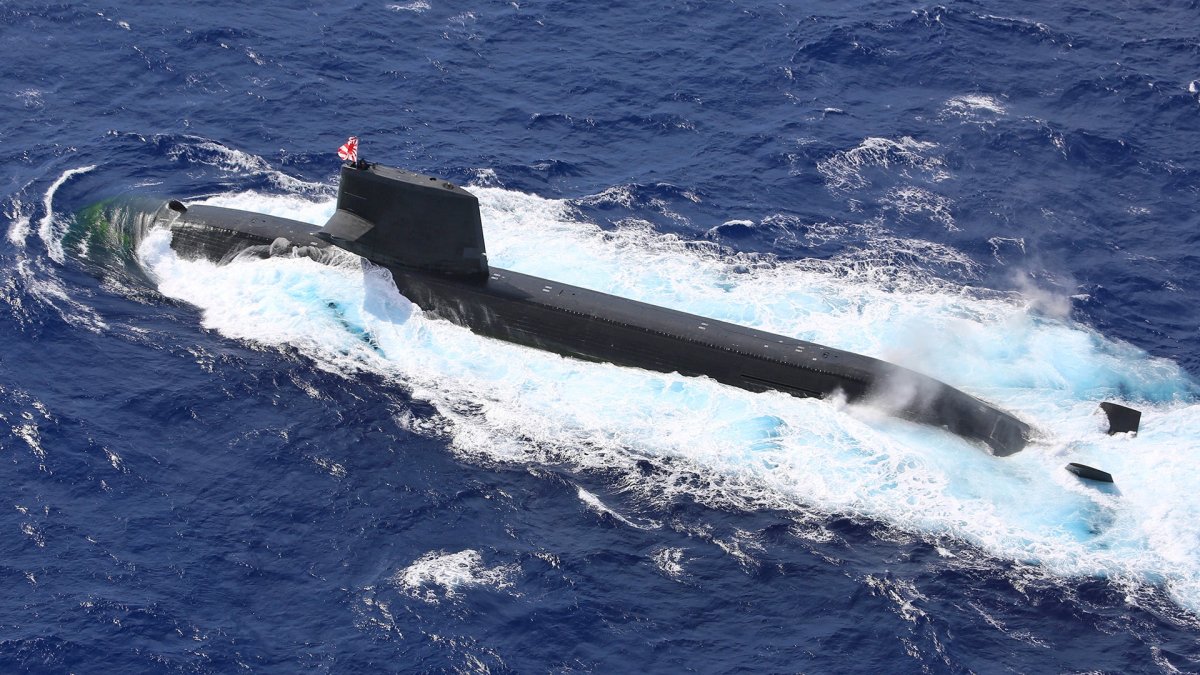
High-tech diesel-electric submarines may begin to return to their simpler roots as Japan is pioneering a concept today that aims to eliminate AIP altogether. Their next generation Soryu class diesel-electric attack submarines will be equipped with lithium-ion batteries, and just like submarines dating back before World War I, they will run undersea on battery power alone.
The Soryu class is already a very modern submarine, having been introduced into service just over a decade ago. As an outgrowth of the previous Oyashio class , these are not tiny boats, displacing 4,200 tons submerged and measuring 275 feet long, They are the largest submarines Japan has constructed since the end of World War II. They also feature an “X” tailplane configuration for extreme maneuverability in tight littoral environments.
The profile of the Soryu class (Mike1979Russia/wikicommons):
Today seven boats are operational, all of which leverage Stirling Engine AIP technology licensed directly from Kockums—the same Swedish company that produces the Gotland class. Japan, an island nation with long and complex coastlines, uses its submarines to patrol its territorial holdings and to protect its shores. As such, the proven and affordable Stirling Engine-based AIP technology, paired with the class’s large size and ample fuel reservoirs, was a good, balanced fit for their needs. But now Japan wants to eliminate AIP technology altogether without losing its benefits, and in doing so free up room for other capabilities while also simplifying design, construction and sustainment of their future submarines. Above all else, this new configuration should result in quieter operation than most existing AIP capable submarines.
The idea is to install thousands of lithium-ion batteries along with powerful diesel engines and generators, as well as large exhaust and intakes stacks to accommodate them, into a tweaked Soryu design. A new power handling system that can deal with high power loads and optimize efficiency is also included in the concept. Basically, the configuration is similar to a standard diesel-electric submarine, that uses diesel engines and batteries alone for propulsion, but infused with new technology.
Lithium-ion batteries have a ton of advantages over their old-school lead-acid cousins. They keep up their output even when their charge runs low, they are lighter than lead-acid batteries, they can be charged exceptionally fast (hence the more powerful diesel engine and generators), and they can store much more energy. Compared to the AIP system they aim to replace, endurance should be similar, while the overall boat’s propulsion system design will be less complex and bulky. Not just that, but lithium-ion batteries can provide large output on demand, allowing the boat to dash mush faster while dived compared to one running on an AIP system.
The main downside to lithium-ion batteries is very well publicized: they are known to “runaway” and combust—exactly what you don’t want on a submarine. When they do so they produce very high heat, give off toxic fumes and expel conductive dust. They are also hard to extinguish using traditional means. But because weight is not as much of an issue on a large sea-going vessel, new methods of abatement can be put in place to lower the risk of a fire and its potentially catastrophic results.
Soryu class boat undergoing maintenance (Hunini/wikicommons):
Suppliers are working with Japan’s Maritime Self-Defense Force to overcome these concerns by building larger lithium-ion cell matrices with reinforced boundaries and enhanced chemistry that is less susceptible to these types of events. Extensive short-circuit, saltwater intrusion, drop and impact testing has also been done to certify the batteries for such critical use. Also, a specialized fire extinguishing system will be installed aboard advanced Soryu boats to neutralize a fire quickly and automatically in its battery compartments should one occur.
Lithium-ion batteries have had their problems in aircraft and in submersibles before , but Japan is investing billions into making the technology work, with the last three Soryu class boats being earmarked for lithium-ion propulsion. The seventh boat in the class, which is in the water now, may also use lithium-ion batteries, although it may be in combination with the four Stirling Engines found on earlier models. This boat could act as a “bridge” between the new all lithium-ion battery configuration and the older AIP configuration and could also serve as technology demonstrator for fielding the new batteries on a smaller scale aboard a submarine.
The Soryu class is almost entirely covered in acoustic tiling (Norio NAKAYAMA/wikicommons):
With this new Soryu class configuration, Japan has the potential to raise their profile as builders of an excellent class of attack submarine to the realm of world leader in new conventionally-powered submarine technology. This could mean serious exports if the type proves to be reliable and safe.
Down the road, the success of Japan’s lithium-ion battery powered subs could also mean a large cut in price for their AIP-like capabilities. Not just that, but other configurations, where existing AIP technologies are paired with lithium-ion batteries could also emerge, offering the best of both worlds for some users. The pairing of lithium-ion batteries and fuel cells for instance could result in highly capable and versatile submarines that feature extreme endurance, very quiet operation, fast acceleration and high dash speeds. In fact, there are rumors that China is working on pairing lithium-ion batteries with its own AIP submarines right now. But such a hybrid design would come at greater cost and complexity than what Japan or most navies require.
A diagram of the so called “Super Soryu” class of submarines that was intended to fulfill Australia’s requirement for a new advanced attack submarine. It would have used lithium-ion batteries instead of AIP and many thought it was a favorite to win the tender. In the end DCNS won with their Shortfin Baraccuda concept that supposedly leverages fuel cell AIP technology. Considering the extreme range requirements that Australia puts on their submarines, it really is no surprise that even the enlarged “Super Soryu,” which was designed for more territorial operations, was passed over:
The US Navy, which got out of the diesel-electric submarine business 27 years ago , has since experienced a submarine deficit, one that has no sign of abating. If Japan is successful in proving that higher-tech, yet simpler and possibly cheaper lithium-ion powered diesel-electric submarines can achieve similar or better performance as AIP equipped boats, all with less of equal acoustic signature as the best nuclear submarines, the US should move to adopt the technology.
The USS Blueback was the last diesel-electric submarine in the US Navy’s fleet. For years it worked as aggressor boat, but by 1990 the Navy had moved on to an all nuclear submarine force. Blueback was featured in Hunt for the Red October and now resides at Oregon Museum of Science and Industry:
As we have discussed before , there is every reason for the US Navy to invest in diesel-electric submarines now that they have evolved so much over the last three decades. For so many missions, a nuclear submarine is not needed, and their massive infrastructure needs and security concerns makes forward basing them in foreign countries impossible. But now that AIP may not even be needed, the Navy could solve its attack submarine capacity woes by adopting Japan’s technology and building their own version of the advanced Soryu class under license. This would provide the highest-tech solution at the lowest possible cost. Roughly four Soryu class boats could be bought for the price of a single Virginia class SSN today. If a Soryu derivative were put into wider serial production, their price would drop event further. Sadly, the politics and special interests behind naval shipbuilding in the US, and especially submarine building, along with the Navy’s blind unwillingness to deviate from its nuclear only submarine strategy, makes such a logical proposition all but impossible to realize.
Regardless of the US Navy’s elitist obsession with keeping an all nuclear submarine force, it will be interesting to watch Japan as they move forward with fielding their first lithium-ion powered diesel-electric attack submarine. And don’t expect them to be shy about possessing such a capability. Once they have found the technology to be stable they will likely show it off in an attempt to offset their investment with export sales.
Contact the author: Tyler@thedrive.com
Comments couldn’t be loaded. Please refresh the page.
更新于美国东部时间2020年7月3日凌晨4:08
近一个世纪以来,柴电潜艇一直依靠水面航行或近水面通气航行时运转柴油发动机来持续为传统的铅酸电池充电。这使得它们始终处于易受攻击的状态,因为它们一次只能在深海潜航数小时或数天。近几十年来,不依赖空气推进(AIP)技术的出现彻底改变了传统的柴电潜艇。如今,配备AIP技术的小型柴电潜艇以远低于造价昂贵的大型核潜艇的成本,实现了接近核潜艇的性能。现在,柴电潜艇即将迎来又一次革命,回归其最初的本质——仅依靠柴油发动机和电池来执行其秘密任务。
AIP技术描述的是一种理念,而非某种特定的潜艇配置。同一总体概念可以通过多种方法实现。目前最先进的方案包括使用斯特林发动机、法国MESMA(自主潜艇能源模块)闭式循环蒸汽轮机系统,以及利用尖端燃料电池为潜艇长时间潜航提供动力。每种方案都有其自身的优缺点,除了性能之外,成本、复杂性和技术风险也是需要考虑的重要因素。
例如,瑞典威力强大但结构相对简单且久经考验的哥特兰级潜艇采用斯特林发动机作为主动式推进系统(AIP)。虽然这项技术成熟可靠且成本低廉,但潜艇需要携带液氧氧化剂(这本身就存在安全隐患)以及与之混合的惰性气体。斯特林发动机和其他必要的配套设施占据了相对较小的潜艇的大部分体积。此外,基于斯特林发动机的AIP系统拥有众多运动部件,即使潜艇内部设计了高度隔音措施,这些部件仍然会产生噪音。
2000年代中期,瑞典向美国海军租借了一艘哥特兰级潜艇作为假想敌舰。事实证明,这艘潜艇是一个非常危险的对手,其AIP(主动式推进系统)技术引起了美国海军战术人员的极大担忧。这些长期战争演习的影响至今仍在持续(美国海军照片):
巴基斯坦阿戈斯塔90B级潜艇使用的法国MESMA型AIP系统远比斯特林发动机AIP概念复杂得多。它的工作原理与核反应堆类似,但它使用乙醇和液氧燃烧产生蒸汽,而非核反应,从而驱动涡轮机发电。同样,潜艇需要携带易挥发的乙醇和液氧以及复杂的机械设备(这些设备会产生噪音)才能使系统运转,但它可以产生强大的动力,这有利于高速航行。成本是一个主要考虑因素,因为MESMA技术的购置和维护成本都不低。
最后,燃料电池AIP系统虽然技术含量很高,无法像MESMA系统那样快速提升功率输出,但由于系统内部活动部件很少,因此噪音非常低。它也是执行长时间任务的高效系统。所以,如果您不需要高速航行,但需要长时间保持静默和隐蔽,这项技术就具有巨大的优势。据推测,澳大利亚即将服役的法国制造的“短鳍梭鱼”级潜艇将采用燃料电池AIP推进系统。这些巨型潜艇将提供尽可能接近核动力推进能力的性能。以色列最新的“海豚”级潜艇也采用了燃料电池AIP系统,这很合理,因为它们是以色列的二次核打击威慑力量。
在所有传感器和武器性能相同的情况下,海军选择柴电潜艇时,不仅要考虑成本,还要考虑其计划采用的战术类型以及最可能作战的作战环境。例如,如果远程巡逻和伏击战术较为常见,且需要最大限度的隐蔽性,那么燃料电池AIP技术可能是最佳选择。如果攻击和规避机动中经常需要高速爆发,并且需要高续航能力,那么MESMA技术可能最为合适。对于近岸短程作战,基于斯特林发动机的AIP技术可能是最合理的选择。然而,随着过去二十年来电池技术的飞速发展,AIP技术在潜艇作战领域可能很快就会面临严峻的竞争。
第一艘电动潜艇是1888年为西班牙建造的佩拉尔号潜艇:
随着日本目前率先推出一项旨在彻底取消AIP(自动干涉装置)的概念,高科技柴电潜艇或许将回归其更为简单的设计理念。日本的下一代苍龙级柴电攻击潜艇将配备锂离子电池,就像第一次世界大战之前的潜艇一样,它们将完全依靠电池动力在水下航行。
苍龙级潜艇已经是非常现代化的潜艇了,它服役至今不过十余年。作为上一代亲潮级潜艇的改进型,苍龙级潜艇并非小型潜艇,其水下排水量达4200吨,艇长275英尺(约84米)。它是日本自二战结束以来建造的最大型潜艇。此外,苍龙级潜艇还采用了“X”型尾翼布局,使其在狭窄的近岸环境中拥有极佳的机动性。
苍龙级战舰的剖面图(Mike1979Russia/wikicommons):
目前,日本共有七艘潜艇投入使用,它们均采用直接从瑞典科克姆公司(Kockums)获得许可的斯特林发动机AIP技术——该公司也是哥特兰级潜艇的制造商。日本是一个拥有漫长而复杂海岸线的岛国,其潜艇主要用于巡逻领土和保卫海岸。因此,成熟且经济实惠的斯特林发动机AIP技术,结合该级潜艇的大尺寸和充足的燃料储备,完美契合了日本的需求。但现在,日本希望在不损失AIP技术优势的前提下彻底淘汰该技术,从而为其他功能腾出空间,并简化未来潜艇的设计、建造和维护。最重要的是,这种新的配置应该能够比大多数现有的具备AIP技术的潜艇运行更加安静。
其构想是在经过改进的苍龙级潜艇设计中,安装数千块锂离子电池、强大的柴油发动机和发电机,以及与之配套的大型排气和进气烟囱。该方案还包括一套能够应对高功率负载并优化效率的新型动力处理系统。基本上,其配置类似于仅使用柴油发动机和电池推进的标准柴电潜艇,但融入了新技术。
锂离子电池相比传统的铅酸电池优势众多。即使电量不足,它们也能保持输出功率;它们比铅酸电池更轻;充电速度极快(因此需要更强劲的柴油发动机和发电机);而且储能能力更强。与它们旨在取代的AIP系统相比,续航能力应该相近,同时船舶的整体推进系统设计会更加简洁轻巧。不仅如此,锂离子电池还能按需提供大功率输出,使船舶在潜水时比使用AIP系统的船舶速度更快。
锂离子电池的主要缺点众所周知:它们容易“失控”并燃烧——这正是潜艇上最不希望发生的情况。一旦发生燃烧,它们会产生极高的温度,释放有毒气体并喷出导电粉尘。而且,使用传统方法很难扑灭它们。但由于大型远洋船舶的重量并非主要问题,因此可以采用新的减灾方法来降低火灾风险及其可能造成的灾难性后果。
苍龙级潜艇正在进行维护(Hunini/wikicommons):
供应商正与日本海上自卫队合作,通过制造更大尺寸、边界更坚固、化学成分更优的锂离子电池组来克服这些担忧,从而降低此类事件发生的可能性。此外,还进行了大量的短路、海水入侵、跌落和冲击测试,以确保电池能够胜任如此关键的应用。同时,先进的苍龙级潜艇还将安装一套专用的灭火系统,以便在电池舱发生火灾时能够快速自动地将其扑灭。
锂离子电池此前在飞机和潜艇领域都遇到过一些问题,但日本正投入数十亿美元致力于这项技术的研发,最后三艘苍龙级潜艇已计划采用锂离子推进系统。目前正在下水的第七艘苍龙级潜艇也可能使用锂离子电池,但或许会与早期型号上的四台斯特林发动机结合使用。这艘潜艇有望成为新型全锂离子电池配置与旧式AIP配置之间的“桥梁”,并可作为技术验证艇,用于在小型潜艇上应用新型电池。
苍龙级几乎完全被声学瓷砖覆盖(Norio NAKAYAMA/wikicommons):
凭借这种新型苍龙级潜艇配置,日本有望将其在优秀攻击型潜艇建造领域的地位提升至世界领先水平,成为新型常规动力潜艇技术的领军者。如果该型潜艇被证明可靠且安全,则可能带来可观的出口收益。
未来,日本锂离子电池动力潜艇的成功或许意味着其类似AIP(主动式推进系统)潜艇的价格将大幅下降。不仅如此,将现有AIP技术与锂离子电池相结合的其他方案也可能出现,为部分用户提供两全其美的选择。例如,锂离子电池与燃料电池的结合,可以打造出性能卓越、用途广泛的潜艇,具备超长的续航能力、极低的运行噪音、快速的加速性能和极高的冲刺速度。事实上,有传言称中国目前正在研发将锂离子电池与其AIP潜艇相结合的方案。但这种混合设计方案的成本和复杂性将远超日本或大多数海军的需求。
这是所谓的“超级苍龙”级潜艇的设计图,该级潜艇旨在满足澳大利亚对新型先进攻击潜艇的需求。它原本计划使用锂离子电池而非AIP系统,许多人认为它是中标的热门之选。最终,DCNS公司凭借其据称采用燃料电池AIP技术的“短鳍梭鱼”级潜艇赢得了竞标。考虑到澳大利亚对潜艇的超长航程要求,即使是专为近海作战而设计的加大型“超级苍龙”级潜艇最终落选,也并不令人意外。
美国海军27年前退出柴电潜艇领域后,一直面临着潜艇数量不足的问题,而且这一问题丝毫没有缓解的迹象。如果日本能够成功证明,技术更先进、结构更简单、成本可能更低的锂离子电池柴电潜艇,其性能可以与配备AIP系统的潜艇相媲美甚至更优,并且声学特征比最先进的核潜艇还要小,那么美国就应该着手采用这项技术。
“蓝背”号是美国海军舰队中最后一艘柴电潜艇。多年来,它一直作为假想敌潜艇使用,但到1990年,海军已全面转型为核潜艇部队。“蓝背”号曾在电影《猎杀红色十月》中出现,现藏于俄勒冈科学与工业博物馆。
正如我们之前讨论过的,鉴于柴电潜艇在过去三十年中取得了长足发展,美国海军完全有理由投资建设柴电潜艇。许多任务并不需要核潜艇,而且核潜艇庞大的基础设施需求和安全隐患使得将其前沿部署在国外成为不可能。如今,即使AIP(先进集成推进系统)可能也不再必要,海军可以通过引进日本的技术,获得许可建造自己的先进苍龙级潜艇,从而解决其攻击型潜艇的产能问题。这将以尽可能低的成本提供最先进的解决方案。目前,一艘弗吉尼亚级攻击型核潜艇的价格,大约可以购买四艘苍龙级潜艇。如果苍龙级潜艇的衍生型号能够投入更大规模的批量生产,其价格还会进一步下降。遗憾的是,美国海军造船业,尤其是潜艇建造业背后的政治因素和特殊利益,以及海军固守其核潜艇战略的顽固不化,使得这一合乎逻辑的提议几乎不可能实现。
尽管美国海军执着于保持一支全部由核动力潜艇组成的精锐部队,但日本推进其首艘锂离子动力柴电攻击潜艇的建造进程仍值得关注。而且,不要指望日本会羞于展示其拥有的这种能力。一旦这项技术成熟稳定,他们很可能会大肆宣传,试图通过出口销售来弥补投资。
联系作者:Tyler@thedrive.com
评论加载失败,请刷新页面。