Top Gun 2’s Aerial Coordinator Describes The Cameraships That Captured The Flying Magic《壮志凌云2》的空中协调员讲述了捕捉飞行魔力的摄影机
Planes, helicopters, and drones grabbed the aerial footage for the film, including of "high-energy" dogfights, that so many of us are waiting to see.
By Tyler Rogoway and Joseph Trevithick
Published Dec 23, 2019 8:17 PM EST
Last week, just two days after the release of the second trailer for Top Gun: Maverick , we were treated a behind the scenes featurette about the work that went into capturing the movie’s flying sequences. At the time, we were concerned that the air-to-air engagements would be largely rendered in CGI, but a recent Facebook post from Kevin LaRosa II, the Aerial Coordinator and Lead Camera Pilot for the film, has allayed much of that fear and offered details on the four different platforms, including drones, that he and his team used to capture the aerial magic we will see on screen.
You can read LaRosa’s post in full below:
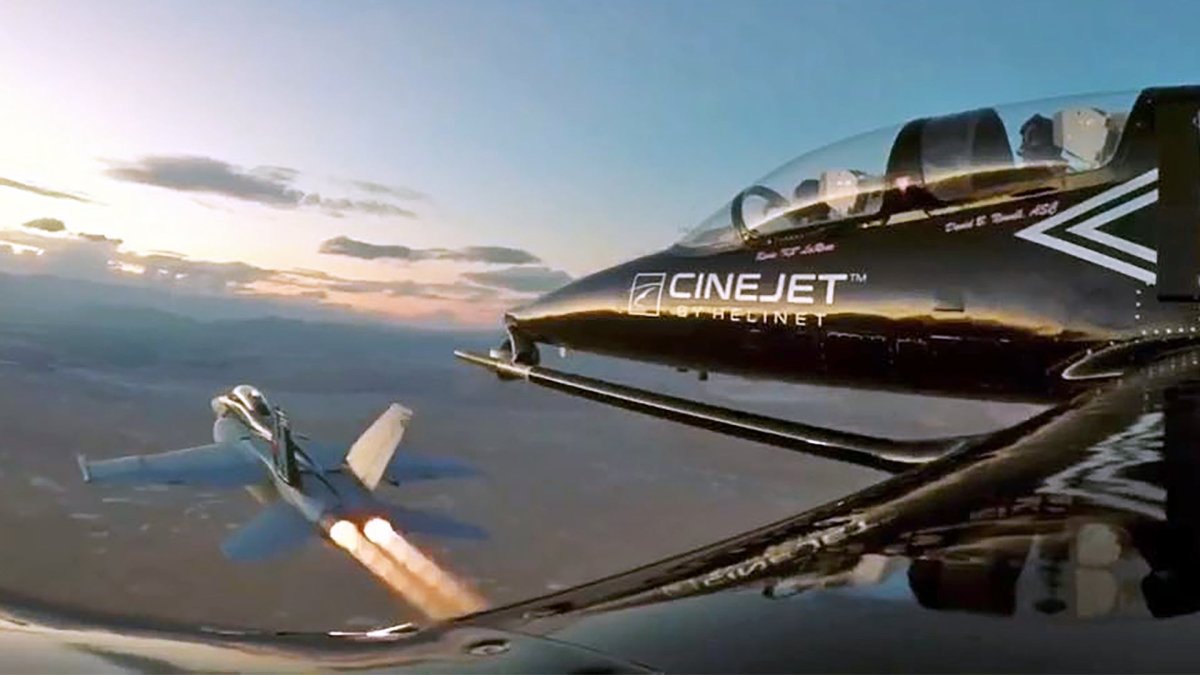
“I used four different types of camera platforms on Top Gun Maverick. As the Aerial Coordinator and Lead Camera Pilot, each platform was chosen with the help of both Aerial DP’s ( Michael FitzMaurice & David Nowell) for a specific purpose for each individual aerial sequence. The L-39 CineJet was chosen for most of the dog fighting and low level high energy type flying. The Phenom Camera Jet with my Co-Captain @jonathan_spano was chosen for any extended over water operation, extended range missions, or complex sequence that needed the flexibility of carrying two Shotover F1’s at the same time with different lens capabilities. The Helinet camera helicopter was used to capture all of the high energy passes and low level action with the Shotover K1 attached by an Airfilm Camera Systems AF200. The fourth platform was Helinet Aviation cinema drones which were able to operate in places we couldn’t get full size camera aircraft. All of these amazing platforms carried state of the art SHOTOVER camera gimbals. The gimbals and accessories were supplied by both @helinetaviation and Team5 Aerial Systems . There is so much fantastic footage that I can’t wait for the world to see. Really looking forward to this summer when the movie is released! @k2_larosa #AerialCoordinator #StuntPilot #AerialDepartment @helinetaviation @team5aerials @shotovercamera #TeamWork @paramountpics @tomcruise @glenpowell @monicabarbaro @gregtarzandavis @jaredslater @scherbas”
“I used four different types of camera platforms on Top Gun Maverick. As the Aerial Coordinator and Lead Camera Pilot, each platform was chosen with the help of both Aerial DP’s ( Michael FitzMaurice & David Nowell) for a specific purpose for each individual aerial sequence.
The L-39 CineJet was chosen for most of the dog fighting and low level high energy type flying. The Phenom Camera Jet with my Co-Captain @jonathan_spano was chosen for any extended over water operation, extended range missions, or complex sequence that needed the flexibility of carrying two Shotover F1’s at the same time with different lens capabilities. The Helinet camera helicopter was used to capture all of the high energy passes and low level action with the Shotover K1 attached by an Airfilm Camera Systems AF200. The fourth platform was Helinet Aviation cinema drones which were able to operate in places we couldn’t get full size camera aircraft.
All of these amazing platforms carried state of the art SHOTOVER camera gimbals. The gimbals and accessories were supplied by both @helinetaviation and Team5 Aerial Systems . There is so much fantastic footage that I can’t wait for the world to see. Really looking forward to this summer when the movie is released! @k2_larosa #AerialCoordinator #StuntPilot #AerialDepartment @helinetaviation @team5aerials @shotovercamera #TeamWork @paramountpics @tomcruise @glenpowell @monicabarbaro @gregtarzandavis @jaredslater @scherbas”
So, there you have it. At least some of the dogfighting in the movie will be footage of actual air-to-air engagements. We had already seen one of CineJet’s L-39s in the featurette filming an F/A-18E/F Super Hornet as it goes into full afterburner. That’s exactly the kind of “high energy type flying” footage that LaRosa said his team used the L-39 to grab.
It’s very interesting to see the kind of additional platforms that the aerial team used to capture all of the in-air footage. The use of smaller drones is hardly surprising given how unmanned platforms are increasingly valuable for various commercial enterprises , especially when it comes to any task that involves getting into hard to access areas, just as LaRosa says.
All told, LaRosa’s brief, but detailed post highlights the very hard work that goes into making this kind of specialized movie magic without defaulting to computer-generated imagery. We already know that the filming of the original Top Gun more than three decades ago was particularly challenging and potentially risky given how close the camera aircraft had to fly to the fighter jets they were filming.
Back in 2016, Dave “Bio” Baranek, a F-14 Radar Intercept Officer who was a real Topgun instructor and took part in the filming of Top Gun , told The War Zone the following in an interview :
“In basically every scene, we had to fly closer to each other for the cameras than we would in real life. When we were filming the head-on passes, it took quite a few passes to get it right [detailed in awesome fashion in Topgun Days ]. In our dogfight training, when we had a head-on pass we were required to stay 500 feet away from the other jet for safety. That was a distance we were all comfortable with, even if we were closing at Mach 1! But when we tried it for the movie the other jets looked too small, so the director wanted us to get closer than 500 feet. We talked about it and reasoned that under the controlled filming conditions we could close the distance. It still took several passes to refine the formations and other things, and we eventually passed close enough to hear the other jets—a rarity. The flight leads and all the aircrew kept it professional, in the briefings and during the flights. The main flight lead for the F-14s was Lloyd “Bozo” Abel, while Bob “Rat” Willard and Ray “Secks” Seckinger took turns leading the Topgun jets. From the Navy’s safety-conscious culture, we knew that unusual flights such as air shows present high risk because it’s not the way we normally fly. So the movie crew would tell us what they wanted and the flight leads would work out how we could safely accomplish it. Then the briefings were very thorough. No one wanted to mess up while filming a Hollywood movie.”
“In basically every scene, we had to fly closer to each other for the cameras than we would in real life. When we were filming the head-on passes, it took quite a few passes to get it right [detailed in awesome fashion in Topgun Days ]. In our dogfight training, when we had a head-on pass we were required to stay 500 feet away from the other jet for safety. That was a distance we were all comfortable with, even if we were closing at Mach 1! But when we tried it for the movie the other jets looked too small, so the director wanted us to get closer than 500 feet. We talked about it and reasoned that under the controlled filming conditions we could close the distance. It still took several passes to refine the formations and other things, and we eventually passed close enough to hear the other jets—a rarity.
The flight leads and all the aircrew kept it professional, in the briefings and during the flights. The main flight lead for the F-14s was Lloyd “Bozo” Abel, while Bob “Rat” Willard and Ray “Secks” Seckinger took turns leading the Topgun jets. From the Navy’s safety-conscious culture, we knew that unusual flights such as air shows present high risk because it’s not the way we normally fly. So the movie crew would tell us what they wanted and the flight leads would work out how we could safely accomplish it. Then the briefings were very thorough. No one wanted to mess up while filming a Hollywood movie.”
Be sure to read the rest of that interview, if you haven’t already, here .
Knowing what we know now about the aerial filming for Top Gun: Maverick , we are even more excited to see the exhilarating new footage and feel that need for speed all over again.
Contact the author: Tyler@thedrive.com
Comments couldn’t be loaded. Please refresh the page.
作者:泰勒·罗戈韦和约瑟夫·特雷维西克
发布于 2019 年 12 月 23 日晚上 8:17(美国东部时间)。
上周,《壮志凌云:独行侠》第二支预告片发布仅两天后,我们就看到了一段幕后花絮,讲述了影片飞行场景的拍摄过程。当时,我们担心空战场面会主要依靠电脑特效,但影片的空中协调员兼首席摄影师凯文·拉罗萨二世最近在Facebook上发布的一篇文章打消了我们的疑虑,详细介绍了他和他的团队用来拍摄影片中精彩空中特效的四种不同平台,包括无人机。
您可以在下方阅读拉罗萨的完整帖子:
在《壮志凌云:独行侠》的拍摄中,我使用了四种不同的摄影机平台。作为空中协调员和首席摄影师,每种平台都是在两位空中摄影指导(Michael FitzMaurice 和 David Nowell)的协助下,根据每个航拍镜头的具体用途而选择的。L-39 CineJet 主要用于拍摄空战和低空高能量飞行。Phenom 摄影机由我的副驾驶 @jonathan_spano 驾驶,用于拍摄任何需要长时间飞越水域、远距离飞行任务或需要同时携带两台配备不同镜头的 Shotover F1 摄像机的复杂镜头。Helinet 摄影直升机用于拍摄所有高能量飞行和低空动作镜头,机上搭载了一台由 Airfilm Camera Systems AF200 相机系统驱动的 Shotover K1 摄像机。第四种平台是 Helinet Aviation 的电影无人机,它们能够在大型摄影机无法到达的地方作业。所有这些出色的平台都配备了最先进的 SHOTOVER 摄影机云台。云台及其配件素材由@helinetaviation 和 Team5 Aerial Systems 提供。我有很多精彩的镜头,迫不及待地想让全世界看到。非常期待今年夏天电影上映!@k2_larosa #空中协调员 #特技飞行员 #空中部门 @helinetaviation @team5aerials @shotovercamera #团队合作 @paramountpics @tomcruise @glenpowell @monicabarbaro @gregtarzandavis @jaredslater @scherbas”
“我在《壮志凌云:独行侠》中使用了四种不同的摄影机平台。作为空中协调员和首席摄影师,每种平台都是在两位空中摄影指导(迈克尔·菲茨莫里斯和大卫·诺威尔)的帮助下,根据每个空中镜头的具体用途而选择的。”
L-39 CineJet 主要用于拍摄空战和低空高能量飞行。我的副驾驶 @jonathan_spano 驾驶的 Phenom Camera Jet 则用于任何需要长时间水上作业、远距离任务或复杂镜头序列的拍摄,因为它可以同时搭载两台配备不同镜头的 Shotover F1 摄像机。Helinet 摄影直升机则用于拍摄所有高能量飞行和低空动作,其搭载的 Shotover K1 摄像机通过 Airfilm Camera Systems AF200 系统进行拍摄。第四个平台是 Helinet Aviation 的电影无人机,它们能够在大型摄影飞机无法到达的地方作业。
所有这些令人惊叹的平台都搭载了最先进的SHOTOVER相机云台。云台和配件由@helinetaviation和Team5 Aerial Systems提供。我迫不及待地想让全世界看到这些精彩的镜头。非常期待今年夏天电影的上映!@k2_larosa #空中协调员 #特技飞行员 #空中部门 @helinetaviation @team5aerials @shotovercamera #团队合作 @paramountpics @tomcruise @glenpowell @monicabarbaro @gregtarzandavis @jaredslater @scherbas”
好了,就是这样。至少电影里的一些空战镜头会是真实空战的实拍画面。我们之前在一段花絮里已经看到CineJet公司的L-39飞机拍摄了一架F/A-18E/F超级大黄蜂战斗机开启加力燃烧室的画面。这正是拉罗萨所说的他的团队用L-39拍摄的那种“高能量飞行”镜头。
看到航拍团队用来拍摄所有空中镜头的各种辅助平台,真是令人大开眼界。考虑到无人平台对各种商业企业来说越来越有价值,尤其是在需要进入难以到达的区域时,使用小型无人机也就不足为奇了,正如拉罗萨所说。
总而言之,拉罗萨这篇简短却详尽的帖子凸显了在不依赖电脑特效的情况下,制作这种专业电影特效需要付出多么艰辛的努力。我们都知道,三十多年前拍摄第一部《壮志凌云》时,由于摄影机必须近距离飞行才能拍摄到战斗机,因此拍摄过程极具挑战性,也可能非常危险。
早在 2016 年,曾担任 F-14 雷达拦截官、也是真正的“壮志凌云”教官并参与过电影《壮志凌云》拍摄的戴夫·“比奥”·巴拉内克在接受《战区》采访时说了以下这番话:
“基本上每个场景,为了拍摄需要,我们都必须比现实中更近距离地飞行。拍摄迎头交锋的镜头时,我们反复尝试了很多次才达到理想效果(《壮志凌云》中有精彩的详细描述)。在我们的空战训练中,为了安全起见,迎头交锋时我们必须与对方保持500英尺的距离。即使我们以1马赫的速度接近,这个距离对我们来说也很舒适!但当我们尝试拍摄电影时,对方的飞机看起来太小了,所以导演要求我们缩短距离。我们讨论后认为,在可控的拍摄环境下,我们可以缩短距离。尽管如此,我们还是进行了多次尝试来完善编队和其他细节,最终我们近到可以听到对方飞机的声音——这可是难得一见的。飞行指挥官和所有机组人员在简报和飞行过程中都保持了专业的态度。F-14战斗机的主要飞行指挥官是劳埃德·“博佐”·阿贝尔,而鲍勃…… “老鼠”威拉德和雷·“塞克斯”·塞金格轮流驾驶“壮志凌云”喷气式飞机。海军一贯注重安全,我们知道像航展这种非常规飞行风险很高,因为这并非我们通常的飞行方式。所以电影摄制组会告诉我们他们的需求,然后飞行队长会制定安全完成任务的方案。之后的简报非常详尽。谁也不想在拍摄好莱坞电影时出错。
“基本上每一场戏,为了拍摄效果,我们都必须比现实中更近距离地飞行。拍摄迎头交锋的镜头时,我们反复尝试了很多次才达到理想效果(《壮志凌云》中有精彩的详细描述)。在我们的空战训练中,为了安全起见,迎头交锋时,我们必须与另一架飞机保持500英尺的距离。即使我们以1马赫的速度接近,这个距离对我们来说也很舒适!但当我们在电影拍摄中尝试时,其他飞机看起来太小了,所以导演要求我们比500英尺更近。我们讨论后认为,在可控的拍摄环境下,我们可以缩短距离。尽管如此,我们还是反复尝试了很多次来完善编队和其他细节,最终我们近到可以听到对方飞机的声音——这可是难得一见的。”
无论是飞行简报还是飞行过程中,领队和所有机组人员都保持着专业的态度。F-14战斗机的主领队是劳埃德·“博佐”·阿贝尔,而鲍勃·“老鼠”·威拉德和雷·“塞克斯”·塞金格则轮流领队“壮志凌云”战斗机。海军一贯注重安全,我们知道像航展这样的特殊飞行任务风险很高,因为这并非我们通常的飞行方式。所以,电影摄制组会告诉我们他们的需求,然后由领队制定安全完成任务的方案。之后,飞行简报会非常详尽。谁也不想在拍摄好莱坞电影时出错。
如果你还没看过,一定要点击这里阅读那篇采访的其余部分。
现在我们对《壮志凌云:独行侠》的空中拍摄有了更多了解,我们更加兴奋地想要看到激动人心的新镜头,再次感受速度带来的快感。
联系作者:Tyler@thedrive.com
评论加载失败,请刷新页面。