National Cancer Centre e-mail lapse allegedly exposes patients’ details including names, workplaces据称,国家癌症中心电子邮件系统故障导致患者个人信息泄露,包括姓名和工作单位。
Names, email addresses, workplaces are among details revealed in the carbon-copied recipients list. Read more at straitstimes.com.
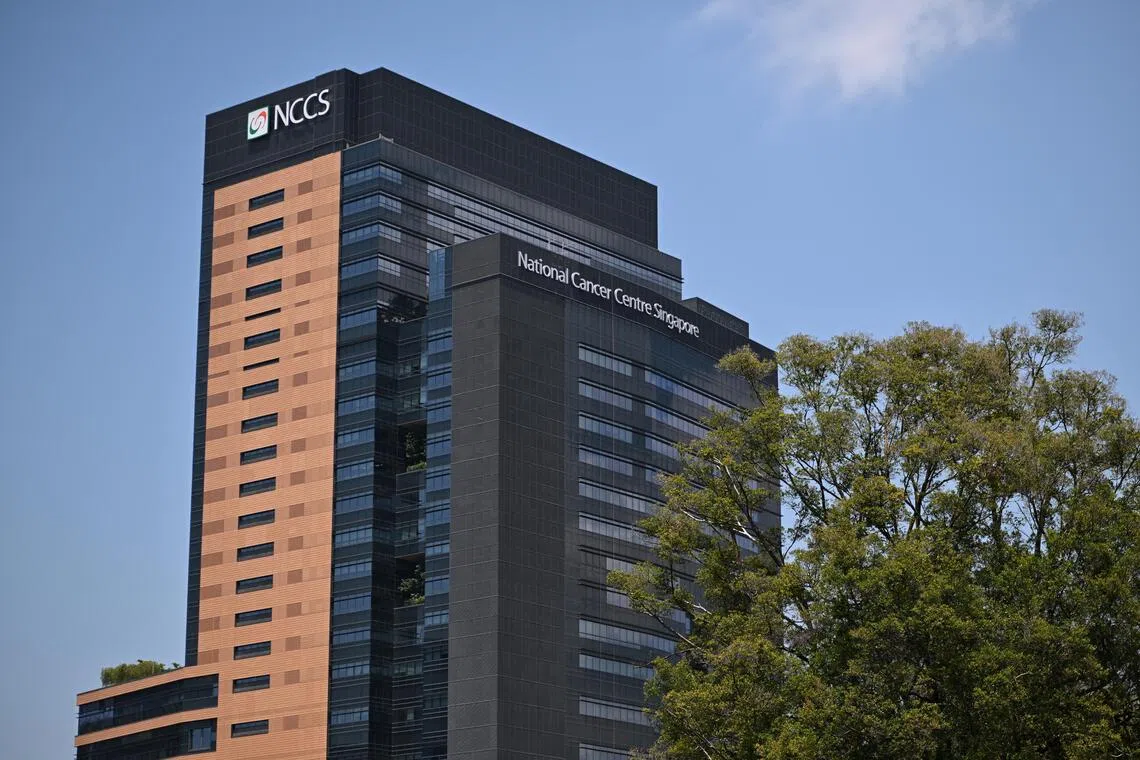
Instead of using the BCC (blind carbon copy) function, which keeps the list of recipients hidden, the e-mail from the National Cancer Centre allegedly CC’d recipients.
Published Sep 19, 2026, 05:18 PM
Updated Sep 19, 2026, 05:18 PM
SINGAPORE – An event invitation sent by the National Cancer Centre Singapore (NCCS) has sparked privacy concerns after a mailing list exposed the identities, contact details and, in some instances, workplaces of individuals with a genetic cancer condition.
The e-mail, an invitation to a Living with HBOC event – referring to hereditary breast and ovarian cancer syndrome which can affect both genders – was sent on Sept 18 to the NCCS’ list of individuals associated with the hereditary condition, according to screenshots shared with The Straits Times.
However, instead of using the BCC (blind carbon copy) function, which keeps the list of recipients hidden, the e-mail CC’d recipients.
Those who received the e-mail could thus view the names, e-mail addresses and workplaces of others with the genetic condition, if they had used their workplace email address.
In a subsequent e-mail from NCCS, seen by ST, recipients were requested to delete the earlier e-mail with addresses visible from their inboxes and trash folders.
They were also asked not to further circulate it and also to refrain from using or saving any e-mail addresses listed.
“Please be assured that this was an administrative error that affected e-mail addresses only. We are thoroughly reviewing our internal processes to ensure that this does not happen again,” the e-mail said.
ST has contacted NCCS for more information.
Sent at 7.53pm, the original e-mail invited recipients and their loved ones to the NCCS event scheduled for Oct 31.
Checks by ST of the NCCS’ website show that it is an invite-only event from 10am to 12.30pm and is for people living with HBOC and their relatives. It will feature an “informative session” and “interactive workshops”.
Various e-mail addresses are visible in the screenshots. The sender appears to be a member of the NCCS’ Cancer Genetics Service, which provides genetic counselling to individuals with a history of cancer.
One recipient, who spoke to ST on the condition of anonymity, said the number of e-mail addresses visible was “too numerous to count”.
They estimated there could be more than 500.
They said e-mail domains identified the companies, foreign embassies and schools of those on the NCCS’ HBOC list. In the e-mail thread, they also saw a list of NCCS doctors, including their own.
“This effectively discloses each person’s association with hereditary cancer screening or counselling to a group of strangers,” they said.
“It ties identifiable people directly to a health condition, which is a more sensitive category of personal data than a typical CC mishap.”
The recipient expressed worries that people they have never met will now know about their genetic condition.
“I don’t know who they are, whether they will pass this info to someone else, or whether it will come back to affect me at work or with insurance one day,” they said.
Adding that their children have a 50 per cent chance of inheriting the genetic mutation and will need to be tested once they turn 21, they fear their kids’ future employment and insurance prospects could be affected as well.
According to them, the NCCS attempted to recall the e-mail 2 ½ hours after it was sent.
They said they had since informed the agency’s Quality Service Manager and asked for a follow-up.
HBOC is an inherited genetic condition most commonly caused by mutations in the BRCA1 or BRCA2 genes. These genes make proteins to repair damaged DNA and protect against tumour growth.
The harmful inherited mutations significantly increase a person’s lifetime risk of developing breast and ovarian cancers, as well as prostate, pancreatic, and skin cancers.
ST has also contacted SingHealth and the Personal Data Protection Commission for more details.
Health and well-being
据称,国家癌症中心的电子邮件没有使用密送(BCC)功能来隐藏收件人列表,而是抄送给了收件人。
发布于 2026 年 9 月 19 日下午 5:18
更新于2026年9月19日下午5:18
新加坡——新加坡国家癌症中心 (NCCS) 发出的一份活动邀请函引发了隐私担忧,因为邮件列表泄露了患有遗传性癌症的个人的身份、联系方式,在某些情况下甚至泄露了他们的工作场所。
据《海峡时报》获得的截图显示,这封电子邮件是邀请参加“与 HBOC 共存”活动的邀请函,HBOC 指的是遗传性乳腺癌和卵巢癌综合征,这种疾病会影响男性和女性。该邮件于 9 月 18 日发送给了 NCCS 中与这种遗传性疾病相关的人员名单。
然而,该电子邮件并没有使用密送(BCC)功能来隐藏收件人列表,而是使用了抄送(CC)功能。
因此,收到该电子邮件的人可以看到其他患有这种遗传疾病的人的姓名、电子邮件地址和工作场所(如果他们使用的是工作场所电子邮件地址)。
在 ST 看到的 NCCS 随后发送的电子邮件中,收件人被要求删除收件箱和垃圾箱中可见的先前电子邮件。
他们还被要求不要进一步传播该信息,也不要使用或保存其中列出的任何电子邮件地址。
邮件中写道:“请放心,这只是一个行政错误,仅影响到电子邮件地址。我们正在彻底审查内部流程,以确保此类事件不再发生。”
ST已联系NCCS以获取更多信息。
原邮件于晚上 7 点 53 分发出,邀请收件人及其亲友参加定于 10 月 31 日举行的 NCCS 活动。
《海峡时报》查阅国家癌症中心网站后发现,这是一场仅限受邀人士参加的活动,时间为上午10点至下午12点30分,面向遗传性乳腺癌和卵巢癌综合征(HBOC)患者及其亲属。活动内容包括“信息介绍会”和“互动工作坊”。
截图中可以看到多个电子邮件地址。发件人似乎是国家癌症研究中心(NCCS)癌症遗传服务中心的成员,该中心为有癌症病史的人士提供遗传咨询。
一位匿名接受《海峡时报》采访的收件人表示,可见的电子邮件地址数量“多到数不清”。
他们估计可能有超过500人。
他们表示,电子邮件域名可以识别出国家癌症研究中心(NCCS)“高危人群”(HBOC)名单上的公司、外国使馆和学校。在邮件往来中,他们还看到了NCCS医生的名单,其中也包括他们自己的医生。
他们说:“这实际上向一群陌生人透露了每个人与遗传性癌症筛查或咨询的关联。”
“它将可识别身份的人与健康状况直接联系起来,这比典型的信用卡事故涉及的个人数据更为敏感。”
受赠者表示担心,他们素未谋面的人现在会知道他们的遗传疾病。
“我不知道他们是谁,也不知道他们是否会将这些信息透露给其他人,或者这些信息将来是否会对我的工作或保险产生影响,”他们说。
他们还表示,他们的孩子有 50% 的几率会遗传这种基因突变,需要在 21 岁时接受检测,他们担心孩子未来的就业和保险前景也会受到影响。
据他们称,NCCS 在电子邮件发出 2.5 小时后试图撤回该电子邮件。
他们表示,他们已经通知了该机构的质量服务经理,并要求进行后续跟进。
遗传性乳腺癌/卵巢癌综合征(HBOC)是一种遗传性疾病,最常见的原因是BRCA1或BRCA2基因突变。这些基因编码的蛋白质可以修复受损的DNA并防止肿瘤生长。
有害的遗传突变会显著增加一个人一生中患乳腺癌、卵巢癌以及前列腺癌、胰腺癌和皮肤癌的风险。
《海峡时报》也已联系新加坡保健集团和个人数据保护委员会,以了解更多详情。
健康与福祉