AI industry can learn from aviation and nuclear safety: Experts专家:人工智能行业可以借鉴航空和核安全领域的经验
Explore how aviation-style global regulations and strong safety cultures could shape international AI governance and accelerate safe innovation in the industry. Read more at straitstimes.com.
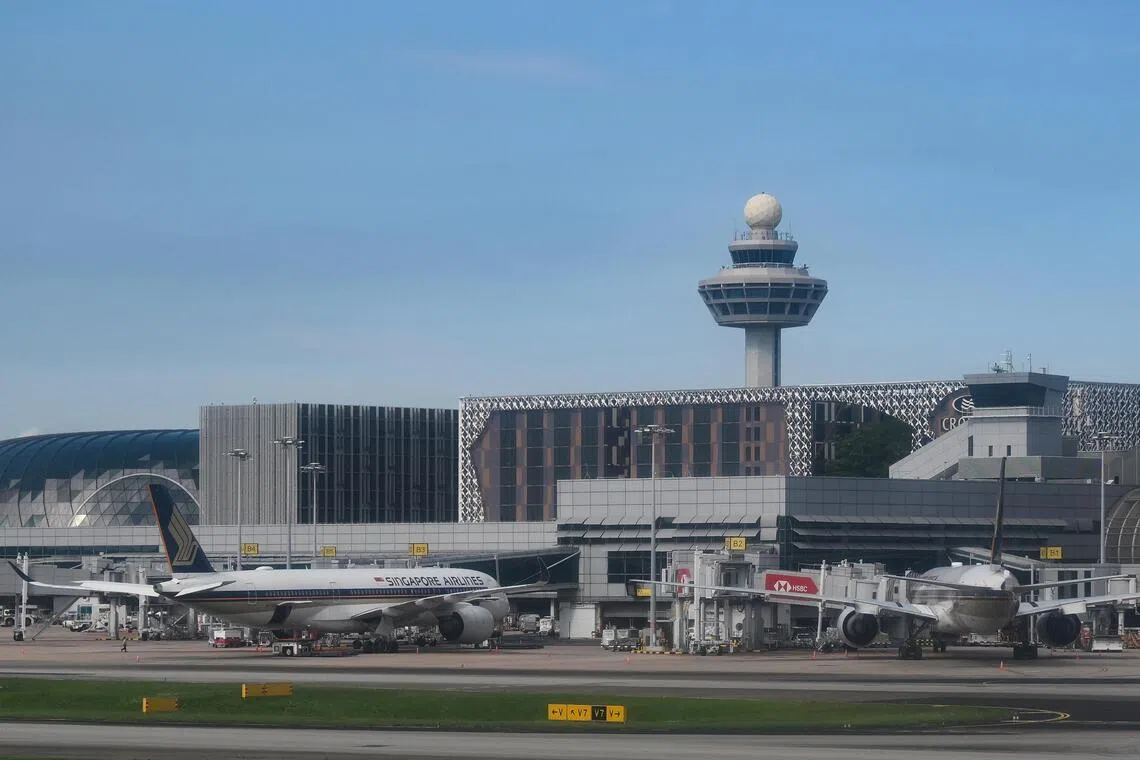
Minister for Digital Development and Information Josephine Teo said on Sept 17 that AI may eventually need a safety regime similar to that for civil aviation.
ST PHOTO: LIM YAOHUI
Published Sep 20, 2026, 05:00 AM
Updated Sep 20, 2026, 05:00 AM
Aviation-style AI regulations could involve global rules with an international body, supported by national regulators and a strong safety culture, enabling safer innovation and faster adoption.
Singapore leads in AI safety with tools like the AI Verify toolkit and the Singapore AI Safety Institute, positioning itself as a neutral party for global AI testing.
Key challenges include US-China competition and lack of consensus on AI safety priorities; models from aviation, nuclear and financial sectors offer templates for future AI governance frameworks.
SINGAPORE – If artificial intelligence gets aviation-style regulations , this could mean having an international governing body and national regulators ensuring compliance with a set of globally agreed rules, said industry players.
Jonathan Zhang, president of the Singapore AI Association, said: “The opportunity for AI is that it can compress a journey that took aviation most of the 20th century into a much shorter timeframe because we already know what the destination looks like – internationally trusted, independently verifiable safety assurance.”
While there are concerns that regulations could slow the progress of AI innovation, safety should not be seen as an impediment, said other experts, adding that the AI industry could also learn from regimes that manage nuclear weapons and financial risks.
Hassan Shahidi, president and chief executive of US-based non-profit Flight Safety Foundation, said: “A strong safety framework can enable innovation because society is more willing to adopt new technology when it has confidence that the risks are being responsibly managed.”
On Sept 17, Minister for Digital Development and Information Josephine Teo said that AI may eventually need a safety regime similar to that for civil aviation to foster trust.
Although more research and testing are still needed, Singapore must start building safeguards alongside the adoption of AI now, she added.
Her LinkedIn comments came after recent calls – and opposition – to slow the rapid pace of AI development , amid debate over potentially catastrophic risks that the tech could pose.
One of aviation’s most important achievements was the establishment of internationally accepted rules for accident investigation.
The Paris Convention of 1919 established some of the first international aviation rules.
Later, the 1944 Chicago Convention created the framework that led to the formation of aviation’s global governing body in 1947, the United Nations’ International Civil Aviation Organization (ICAO).
Aircraft were operating in international airspace before today’s international rules existed.
During the interim period, aircraft were governed by national laws, bilateral agreements and earlier international conventions.
“Under today’s ICAO framework, the purpose of a safety investigation is to determine what happened and prevent recurrence, rather than to assign blame or liability,” said Shahidi.
“That learning culture is particularly relevant to AI.”
Another aviation principle that translates well for AI is rigorous testing before deploying high-risk systems, he added.
“Do not wait for a catastrophe to build the safety architecture,” Shahidi urged, explaining that aviation learnt through accidents.
Singapore has a head start in testing, having launched in 2022 the AI Verify toolkit that runs technical audits to check whether AI results are fair, robust and can be explained.
It also established the Singapore AI Safety Institute, forma lly designated in 2024, to test and evaluate AI models for safety risks.
Dennis Yap, founder and CEO of home-grown start-up AI Seer, said having this testing infrastructure is important to prepare for the enforcement of global regulations, standards and agreements.
“Singapore also has credibility with both the US and China, so we can be positioned as a neutral and trusted party where the world goes to get AI checked,” Yap added.
Chew Hwee Yong, the CEO of the Association of Aerospace Industries (Singapore), said safety is embedded in the design, manufacture, maintenance and operation of an aircraft or its components.
Alan Tan, a professor who specialises in aviation law and politics at the National University of Singapore, said: “No one disputes the need for rigorous aircraft safety.”
But for AI, there is little agreement on the extent to which safety should be prioritised, he added.
While leaders of major tech companies – Anthropic CEO Dario Amodei, OpenAI boss Sam Altman and SpaceXAI owner Elon Musk – have called for a slowdown in AI development , US President Donald Trump has rejected these calls, arguing that doing so could allow China to overtake the US.
China also pushed back and warned against “fearmongering” and “vicious competition”, following comments by Amodei to “pace the frontier” and take measures to slow China’s progress in AI.
Tan said the lack of a consensus means that the US and China – as the main purveyors of AI tech – need to take the lead on developing the necessary AI safeguards.
Trump will meet Chinese President Xi Jinping on Sept 24, and AI is expected to be on the agenda.
Fierce AI competition between the two countries could, however, limit the outcomes.
Even so, in the lead-up to the meeting, the US has said it is open to discussing shared risks with China during the AI talks this weekend.
“In time, a UN-sponsored treaty and agency could be created – akin to ICAO in aviation – to bring in other countries to pursue AI safety mechanisms,” said Tan, adding that setting up an ICAO-like body for international discussions on AI will be a priority.
Recognising that AI safety cannot be tackled by any country alone, Singapore has been engaging with other nations through an annual forum, the International Scientific Exchange on AI Safety, since 2025.
Efforts like this and Singapore’s AI testing infrastructure are essentially doing in a few years what took aviation decades, noted the Singapore AI Association’s Zhang.
“That’s why we’re optimistic real alignment on global AI rules is achievable within this decade, rather than across generations,” he said.
Besides aviation, observers point to other models for how AI safety rules could develop, such as nuclear non-proliferation pacts.
This includes the way the US and the former Soviet Union engaged bilaterally through the Strategic Arms Limitation Talks during the Cold War to limit and reduce strategic nuclear weapons, said NUS’ Tan.
A multilateral Treaty on the Non-Proliferation of Nuclear Weapons was also introduced to bring in other states.
Tan said it is essential for the superpowers to start talking and working on something similar for AI.
“Without their involvement and commitment, any aim to establish AI safeguards and a global consensus is bound to fail,” he added.
AI Seer’s Yap said that the AI sector can learn from the financial sector.
The Monetary Authority of Singapore, for instance, does not regulate neighbourhood remittance shops the way it regulates banks.
He suggested that large AI players carry the heaviest obligations.
These could include conducting independent tests before a product is released, reporting any data leaks or hacking incidents, demonstrating that AI will not harm the public, and footing most of the testing bill.
Smaller AI companies may face fewer obligations so they are not snuffed out.
“Aviation itself is tiered this way,” Yap added.
“The rules for a small radio-controlled plane should not be the rules for a large A380 jet.”
AI/artificial intelligence
Aviation/Aerospace sector
新加坡数码发展及新闻部长杨莉明于9月17日表示,人工智能最终可能需要类似于民用航空的安全机制。
ST 照片:林耀辉
发布于 2026 年 9 月 20 日上午 5:00
更新于2026年9月20日 上午5:00
航空业式人工智能监管可能涉及由国际机构制定的全球规则,并得到国家监管机构的支持和强大的安全文化,从而实现更安全的创新和更快的应用。
新加坡凭借 AI Verify 工具包和新加坡人工智能安全研究所等工具,在人工智能安全领域处于领先地位,并将自身定位为全球人工智能测试的中立方。
主要挑战包括中美竞争以及在人工智能安全优先事项上缺乏共识;航空、核能和金融领域的模式为未来的人工智能治理框架提供了模板。
新加坡——业内人士表示,如果人工智能领域像航空领域一样受到监管,这可能意味着需要一个国际管理机构和国家监管机构来确保遵守一套全球商定的规则。
新加坡人工智能协会主席张乔纳森表示:“人工智能的机遇在于,它可以将航空业在 20 世纪大部分时间里所经历的旅程压缩到一个更短的时间内,因为我们已经知道目的地是什么样子——国际认可、可独立验证的安全保证。”
虽然有人担心监管可能会减缓人工智能创新的进程,但其他专家表示,安全不应被视为障碍,并补充说,人工智能行业还可以从管理核武器和金融风险的制度中学习。
美国非营利组织飞行安全基金会总裁兼首席执行官哈桑·沙希迪表示:“强大的安全框架可以促进创新,因为当社会确信风险得到负责任的管理时,社会就更愿意采用新技术。”
9月17日,数码发展及新闻部长杨莉明表示,人工智能最终可能需要类似于民用航空的安全机制来建立信任。
她补充说,虽然还需要更多的研究和测试,但新加坡现在必须开始在采用人工智能的同时建立保障措施。
在她发表LinkedIn评论之前,最近有人呼吁(也有人反对)放慢人工智能快速发展的步伐,因为人们正在争论这项技术可能带来的潜在灾难性风险。
航空业最重要的成就之一是建立了国际公认的事故调查规则。
1919 年的《巴黎公约》确立了一些最早的国际航空规则。
后来,1944 年的《芝加哥公约》建立了框架,最终促成了 1947 年航空业全球管理机构——联合国国际民用航空组织(ICAO)的成立。
在现行国际规则出台之前,飞机就已经在国际空域运行了。
在此期间,航空器受国家法律、双边协议和早期国际公约的管辖。
沙希迪说:“根据国际民航组织现行的框架,安全调查的目的是确定发生了什么事并防止再次发生,而不是追究责任或追究过错。”
“这种学习文化与人工智能尤其相关。”
他还补充说,另一个可以很好地应用于人工智能的航空原则是在部署高风险系统之前进行严格测试。
沙希迪敦促道:“不要等到灾难发生才去构建安全架构”,并解释说航空业是从事故中吸取教训的。
新加坡在测试方面领先一步,于 2022 年推出了 AI Verify 工具包,该工具包运行技术审计,以检查 AI 结果是否公平、可靠且可解释。
它还成立了新加坡人工智能安全研究所(正式名称为新加坡人工智能安全研究所,于 2024 年成立),旨在测试和评估人工智能模型的安全风险。
本土初创公司 AI Seer 的创始人兼首席执行官 Dennis Yap 表示,拥有这种测试基础设施对于为执行全球法规、标准和协议做好准备至关重要。
“新加坡在美国和中国都拥有信誉,因此我们可以定位为中立且值得信赖的第三方,供世界各国对人工智能进行检验,”叶补充道。
新加坡航空航天工业协会首席执行官周慧勇表示,安全体现在飞机或其部件的设计、制造、维护和运行中。
新加坡国立大学专门研究航空法律和政治的教授艾伦·谭表示:“没有人会质疑严格的航空安全措施的必要性。”
但他补充说,对于人工智能而言,安全应该在多大程度上优先考虑,目前还没有达成共识。
尽管主要科技公司的领导人——Anthropic 首席执行官 Dario Amodei、OpenAI 老板 Sam Altman 和 SpaceXAI 所有者 Elon Musk——呼吁放缓人工智能的发展,但美国总统唐纳德·特朗普拒绝了这些呼吁,认为这样做可能会让中国超越美国。
针对阿莫迪关于“引领前沿”并采取措施减缓中国在人工智能领域发展速度的言论,中国也予以反驳,并警告不要散布“恐慌”和“恶性竞争”。
谭表示,由于缺乏共识,作为人工智能技术的主要供应国,美国和中国需要牵头制定必要的人工智能安全保障措施。
特朗普将于9月24日会见中国国家主席习近平,人工智能预计将是双方会谈的议题之一。
然而,两国之间激烈的AI竞争可能会限制最终结果。
即便如此,在会晤前夕,美国表示愿意在本周末的人工智能会谈中与中国讨论共同面临的风险。
“假以时日,或许可以建立一个由联合国支持的条约和机构——类似于航空领域的国际民航组织——来吸引其他国家参与,共同推进人工智能安全机制,”谭说道,并补充说,建立一个类似国际民航组织的机构,就人工智能问题进行国际讨论,将是当务之急。
新加坡认识到人工智能安全问题不能由任何一个国家单独解决,因此自 2025 年以来,新加坡一直通过年度论坛“人工智能安全国际科学交流会”与其他国家进行交流。
新加坡人工智能协会的张先生指出,像这样的努力以及新加坡的人工智能测试基础设施,实际上在短短几年内就完成了航空业花费数十年才完成的事情。
“正因如此,我们乐观地认为,在未来十年内,而不是几代人的时间里,全球人工智能规则的真正统一是可以实现的,”他说。
除了航空领域,观察人士还指出,人工智能安全规则的发展还可以借鉴其他模式,例如核不扩散条约。
新加坡国立大学的谭教授表示,这其中包括美国和前苏联在冷战期间通过战略武器限制谈判进行双边接触,以限制和减少战略核武器的方式。
为了吸纳其他国家参与,还提出了《不扩散核武器条约》这一多边条约。
谭表示,超级大国必须开始就人工智能领域的类似问题展开对话和合作。
他补充说:“如果没有他们的参与和承诺,任何旨在建立人工智能保障措施和达成全球共识的目标都注定会失败。”
AI Seer 的 Yap 表示,人工智能领域可以向金融领域学习。
例如,新加坡金融管理局对社区汇款店的监管方式与对银行的监管方式不同。
他认为,大型人工智能玩家承担着最重的责任。
这些措施可能包括在产品发布前进行独立测试、报告任何数据泄露或黑客攻击事件、证明人工智能不会对公众造成伤害,以及承担大部分测试费用。
规模较小的AI公司可能面临的义务较少,因此不会被扼杀。
“航空业本身也是这样分层的,”叶补充道。
“小型遥控飞机的规则不应该适用于大型A380喷气式飞机。”
人工智能
航空航天领域