He battled high-risk leukaemia at age 7. Now he's a doctor helping to treat cancer patients他7岁时罹患高危白血病,如今已成为一名医生,致力于治疗癌症患者。
Dr Jason Chng knows firsthand the fear, uncertainty and exhaustion that can come with serious illness. Those memories continue to guide the way he practises medicine today.
Dr Jason Chng knows firsthand the fear, uncertainty and exhaustion that can come with serious illness. Those memories continue to guide the way he practises medicine today.
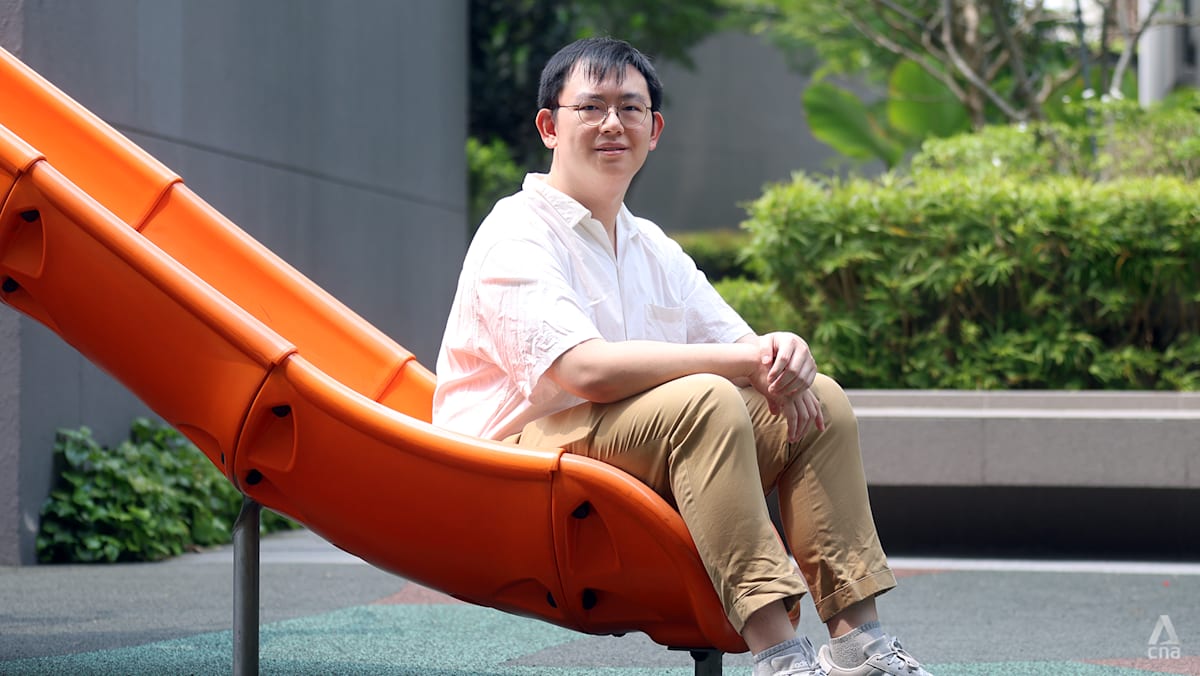
Dr Jason Chng, a childhood cancer survivor who is now a third-year medical resident in Anatomical Pathology in a Singapore hospital, pictured on Sep 7, 2026. (Photo: CNA/Ooi Boon Keong)
This audio is generated by an AI tool.
In 2011, 15-year-old Jason Chng told his mother he wanted to be a doctor. While any other parent might have beamed with pride, she was fearful and hesitant to support his dream.
Given her son's earlier struggle with a critical illness, she worried about his desire to pursue a career notorious for long hours and high stress.
As we spoke in his living room earlier this month – Childhood Cancer Awareness Month – Dr Chng, now 30 and a third-year resident at Singapore General Hospital, was precise and detailed about the leukaemia diagnosis that upended his childhood and his family's life.
At just seven years old, he had been given a 50 per cent chance of survival. Tests revealed that he had 140 times the normal amount of white blood cells, putting his cancer in the "high risk" category.
CNA Games Guess Word Crack the word, one row at a time Buzzword Create words using the given letters Mini Sudoku Tiny puzzle, mighty brain teaser Mini Crossword Small grid, big challenge Word Search Spot as many words as you can Show More Show Less
Recounting the experience now as a medical professional, he spoke calmly and openly. Nevertheless, there was a palpable emotional undercurrent to his words – and no wonder, considering the ordeal he had survived at a tender age.
For most of his childhood, his parents had done their best to shield him from this grim diagnosis. Despite their efforts, there was no shielding a seven-year-old boy from the effects of a gruelling treatment regime.
He underwent chemotherapy, sedated bone marrow tests, and suffered recurrent infections.
Decades later, the discomfort remained vivid in Dr Chng's mind as he recounted treatments such as intrathecal injections – where medication is directly injected into the cerebrospinal fluid surrounding the spinal cord.
Another particularly disconcerting memory for him: a surgery he underwent for a Port-a-Cath, a device that allowed chemotherapy to be delivered directly into his veins.
"Persistent nausea, frequent vomiting and lumbar punctures became my routine," he said.
A seven-year-old Jason Chng posing for a picture at home. (Photo: Dr Jason Chng)
THE DEVASTATION OF A DIAGNOSIS
Before his cancer diagnosis, Dr Chng remembered being a "very active" student who was excited about playing with schoolmates at recess and attending lessons.
But his family soon noticed that he bruised particularly easily. He also began intermittently feeling discomfort in his chest.
"I would call out at assembly, let my teachers know that I'm not feeling well. There were a few instances where the teachers would call my parents and I was brought back (home)."
His mother, Madam Teo Wei Wei, 58, who was also present during the interview, had observed his appetite deteriorating. She took him to traditional Chinese therapeutic massage sessions, but grew worried when bruises quickly formed on his skin.
Her own parents had noticed that their grandson was growing thin and pale, and suspected that he might be anaemic.
"I took a half-day leave from my work and brought him to the hospital for a blood test, but the result … kept delaying," said Mdm Teo.
By the time a doctor called on them, Mdm Teo had exceeded her half-day's leave. Her anxieties only multiplied when she heard the long-awaited results: something was not right about her son's blood count.
A seven-year-old Jason Chng went from being an active schoolboy to undergoing intensive treatment for leukaemia. (Photo: Dr Jason Chng)
That same day, she and her husband took young Jason to see a specialist to do a bone marrow test. White patches showed up in his lungs – leukaemic cells from his bloodstream or bone marrow that were invading his lung tissues.
Mdm Teo was devastated by the news: "We didn't expect it could be something so bad. The whole world was upside down, we couldn't believe it was real.
"I was still hoping that I would wake up from my dream."
At the time, the youngster thought he just had an "ordinary sort of illness" – something minor where he could see a doctor, take some medicine and come out better.
"The next moment, I'm sedated, so I was very confused at what's happening. And then I was told that they needed to give me a haircut because my hair was long. And then I was shaved bald," Dr Chng recalled.
"When I looked at the mirror, I just started to cry."
THE EMOTIONAL ROLLER COASTER OF CRITICAL ILLNESS
Undergoing treatment for such a serious illness meant having to be pulled out of school in his Primary 2 year and once doing exams from his hospital bed. For a time, he had to live under extra precautions, such as being warded alone in a special room. Anyone around him had to wear masks.
Looking back, Dr Chng reckoned he was likely neutropenic at the time – having low levels of infection-fighting white blood cells called neutrophils – and thus very susceptible to infectious diseases.
Over the next several months, he became a frequent visitor at the National University Hospital's (NUH) paediatric wards 46 and 47 – not something he relished as a boy.
He recalls thinking: "Why can't I go out and play? Why am I having to be subjected to this sort of treatment?"
Mdm Teo's voice grew heavy as she described the "emotional roller coaster" of her son's childhood.
"The first feeling was guilt. I think every parent would feel that way because if you take care of a kid with such a serious illness. (You think:) 'Could I be the one who caused it?'"
Her distress was worsened by others insinuating that the seeds of her son's leukaemia could have been planted in her pregnancy, during which she recalled having worked long hours and not eating well.
"I didn't cry in front of (Jason). But every night, I cried myself to sleep."
Why can't I go out and play? Why am I having to be subjected to this sort of treatment?
Thankfully, the couple had just bought insurance for Jason and his younger brother, though its payout was quickly used up for Jason's medical bills, especially in his first year of treatment. They soon started racking up expenses for the organic food, supplements and immune booster jabs for their older son.
"There were times he was critically low in count, and he had to be in isolation," said Mdm Teo. "That was the hardest time, because a single virus or bacterium could kill him."
Despite this, Dr Chng counts himself as lucky.
"Some families we met during my treatment faced devastating losses, and some children did not survive," he said. "My parents' quiet courage was my anchor."
STAYING UPBEAT AND CURIOUS
Dr Chng recalls feeling bored and upset about having to frequent the hospital so often due to his extensive treatment needs.
He gratefully credited the Children's Cancer Foundation (CCF) with restoring a "sense of normalcy" to his hospital-dominated childhood. The foundation ran an outlet at the hospital stocked with board games, game consoles and books, which he had borrowed heavily while warded.
Make-A-Wish Singapore also reached out offering to grant him a wish. Still young and "quite naive" at the time, he just wanted an escape from the routine of endless medical treatments. He asked for a desktop computer and, to his great joy, received one.
"It definitely made the whole process a lot more bearable and palatable for a child," he said.
He cherished the device so much that, though the computer parts are no longer working, the original desktop frame still sits intact at his parents' place today.
By Primary 3, the treatment had proven effective. Young Jason went into remission and was allowed back to school, transferring to a primary school nearer to his home.
Ahead of returning to school, he found himself worrying about being ostracised. What did other kids his age really know of cancer? Would they see him as too "different"?
The CCF, he recalled, made an appearance during a school assembly to brief his new schoolmates about cancer and how they could support him.
"When I first went back to class, I remember there were a lot of other students who supported me, always checking in whether I'm okay, helping me to carry my bags or my books around," said Dr Chng, the memory bringing a warm smile to his face.
Such an ordeal might put many others off from unnecessary discussions about sickness and disease. But for the inquisitive Dr Chng, his experience with cancer only deepened the interest he'd already had in understanding how the human body works.
He lapped up visits to the Singapore Science Centre and treasured playing with anatomy resources including a human model his father bought him with removable organs and a flip chart on the different bodily systems.
"Now I was more curious to know: 'Why is it that I had this illness? What actually went wrong?'"
A young Jason Chng (far left) on a cruise with his family when he was in Primary 5, with his father Stanley Chng, mother Teo Wei Wei and brother Keith Chng. (Photo: Dr Jason Chng)
He went on to study biology in secondary school and junior college, where he even entered biomedical challenges. At 17, he clinched an internship with NUH's paediatric oncology department.
For this internship, he asked to shadow the doctor who had treated him as a child – Emeritus Professor Quah Thuan Chong.
Dr Chng quickly became a "role model" intern, not just as a promising doctor-to-be but also as living proof of what young patients could hope for.
"When I was sitting in (Prof Quah’s) clinic, he would joke to some of the patients: 'Don't worry, chemotherapy will make you better and … very strong. It'll make you very smart like Jason'," said Dr Chng.
The soft, grounded way Prof Quah spoke with his young patients and parents – like "a kind, very gentle grandpa" – stayed with Dr Chng, motivating him to do his best later on when starting medical school.
"Although there were times when I felt it was very hard (and) the knowledge was overwhelming, I just knew that I wouldn't trade it for any other thing."
It must have been surreal, I remarked, to have spent years as a child patient at NUH only to return later as an aspiring student of medicine.
To Dr Chng, it was simply "very cool" and heartwarming to potentially inspire other children journeying with cancer and learn more about how doctors worked together to treat them.
Dr Jason Chng at a pathology conference in Melbourne, Australia in 2025. (Photo: Dr Jason Chng)
Despite the notoriously demanding rigour of medical school, Dr Chng said his personal experience was a constant reminder not to view patients as a sum of their symptoms.
"A lot of times when we are busy, we start to think of patients by their locators, like which bed they are in, or it's the patient with this condition. There are still times that I might fall into this (pattern)."
Dr Chng has strong memories of family and family friends being very involved and rallying around him during his own battle with cancer, even donating platelets to help in his treatment.
These first-hand experiences, he said, continue to shape the way he now approaches medicine as a practitioner.
"I understand the fear of the unknown, the weight of uncertainty, and the relief that even small acts of kindness can bring."
He strives to understand why patients might feel unhappy about the treatment process and empathise with the fatigue they and their families may grapple with throughout the complex journey of recovery.
"It's not something you can just shake off and say that they don't have that mental strength."
In that case, I wondered, has his past critical illness turned out to be something of an asset in his adult career?
Here, Dr Chng paused.
"It's something I feel very grateful for. It's not an experience I want to go through again, but it's something that I feel has made me a lot more empathetic (towards) situations that cancer patients are going through.
"It's not something to be taken lightly."
At one point in our interview, Mdm Teo emerged from a bedroom with a surprise – Dr Chng's six-month-old daughter, Clarisse.
The baby was down with a mild flu and home for the day instead of at infant care, being cared for by her grandmother and mother, Ms Tiew Li Ying Vanessa, who was working from home as a project manager in the healthcare industry. Dr Chng picked her up when she began to fuss, cuddling her close.
Dr Jason Chng with his mother, Madam Teo Wei Wei (left), and wife Vanessa Tiew Li Ying, who is holding their baby daughter Clarisse, pictured at their home on Sep 7, 2026. (Photo: CNA/Ooi Boon Keong)
As calm as he had been in describing his own severe health struggles, Dr Chng – who had always yearned to be a father – now ruefully admitted to being prone to anxiety about his young daughter's welfare.
"There are times that I might feel like: 'Oh, is it that she's not really developing well? But I realise, it's part of the process."
His concern partly stems from his professional unfamiliarity with paediatrics, notwithstanding that internship at NUH.
"I still have colleagues who are in paediatrics, and they will assure me: 'Everything is okay. Don't be so crazy'," he laughed.
Now, as a third-year resident in anatomical pathology, most of Dr Chng's workdays are spent examining tissues under a microscope to help other doctors make accurate diagnoses – a critical step in informing a patient's assigned doctors how best to manage their care.
His work currently includes analysing gene mutations in cancer cases, which can provide information that guides personalised therapy or indicates a patient's prognosis.
For Dr Chng, being in the medical profession is also a front-row seat to the "quite big strides" that have been made in cancer management since he was a patient himself.
Cancer is not an experience I want to go through again, but it's something that I feel has made me a lot more empathetic (towards) situations that cancer patients are going through.
He spoke about the intricacies of anatomical pathology with the same delightful fervour he showed later while playing with baby Clarisse, fresh off her morning nap.
As we watched father and daughter bond, I asked Dr Chng's mother if this scene was something she'd ever imagined for her son.
"Honestly, I didn't really hope so far," she said. "To me, every day he's healthy is a blessing."
In the past, she would have preferred her son to have a comfortable life and career rather than immerse himself in the acute stresses of medicine.
"I feel pain whenever he has to work long hours and work over the weekend, even public holidays."
She's no longer as resistant to the idea of Dr Chng being a doctor, understanding that he can help patients through the physical, mental and emotional journey of critical illness that he once underwent. At the same time, she hopes simply that her son looks after his own health.
As for Dr Chng, it's not lost on him that he's in a "unique position". He personally does not know of any other doctors who survived cancer as a child and later joined the medical profession.
But he hopes that sharing his experience might bring comfort and clarity to others dealing with a cancer diagnosis – and to their caregivers, too.
"No one wants to have a serious illness like this," said Dr Chng.
"Don't ostracise people with such illnesses. Embrace them. Everyone's out there to try to do their best and contribute to society the best way we can."
Get our pick of top stories and thought-provoking articles in your inbox
Stay updated with notifications for breaking news and our best stories
Join our channel for the top reads for the day on your preferred chat app
张杰森医生深知罹患重病带来的恐惧、不安和疲惫。这些经历至今仍指引着他行医的方式。
2026年9月7日,曾患儿童癌症的张杰森医生(Jason Chng)在新加坡一家医院担任解剖病理学三年级住院医师。(图片:CNA/Ooi Boon Keong)
这段音频是由人工智能工具生成的。
2011年,15岁的Jason Chng告诉母亲他想当医生。其他父母或许会为此感到无比自豪,但她却感到担忧和犹豫,不知是否应该支持儿子的梦想。
鉴于她儿子之前曾与重病作斗争,她担心他想从事一份以工时长、压力大而闻名的职业。
本月初,正值儿童癌症宣传月,我们在他家的客厅里采访了现年 30 岁、在新加坡中央医院担任三年级住院医师的庄医生。他详细而准确地讲述了白血病的诊断如何彻底改变了他的童年和家庭生活。
他年仅七岁时,医生就断言他只有50%的生存几率。检查结果显示,他的白细胞数量是正常值的140倍,这使他的癌症被归为“高危”类别。
CNA游戏 猜词游戏 逐行破解单词 流行词游戏 用给定的字母组成单词 迷你数独 小小谜题,挑战你的大脑 迷你填字游戏 小方格,大挑战 单词搜索 尽可能多地找出单词 显示更多 显示更少
如今作为一名医务人员,他回忆起这段经历时,语气平静而坦诚。然而,他的话语中却流露出明显的感伤——考虑到他年幼时经历的磨难,这也就不足为奇了。
在他童年的大部分时间里,他的父母竭尽全力不让他知道这个可怕的诊断结果。尽管他们努力尝试,但一个七岁的男孩还是无法免受艰苦治疗方案的影响。
他接受了化疗、镇静状态下的骨髓检查,并反复感染。
几十年后,当庄医生回忆起鞘内注射等治疗方法时,那种不适感依然历历在目——鞘内注射是将药物直接注射到脊髓周围的脑脊液中。
对他来说,还有一段特别令人不安的记忆:他接受了一次手术,植入了Port-a-Cath装置,这种装置可以将化疗药物直接输送到他的静脉中。
“持续恶心、频繁呕吐和腰椎穿刺成了我的日常,”他说。
七岁的张杰森在家中摆姿势拍照。(照片:张杰森医生)
诊断带来的毁灭性打击
在被诊断出癌症之前,张医生回忆说他是一个“非常活跃”的学生,喜欢在课间休息时和同学们玩耍,也喜欢上课。
但他的家人很快注意到他特别容易瘀伤。他还开始间歇性地感到胸口不适。
“我会在集会上大声喊出来,告诉老师我身体不舒服。有好几次,老师会打电话给我父母,然后我就被接回家了。”
他的母亲张薇薇女士,58岁,当时也在场。她注意到儿子的食欲越来越差,便带他去做中医按摩,但很快发现儿子身上就出现了瘀伤,这让她十分担忧。
她的父母注意到孙子越来越瘦弱,脸色苍白,怀疑他可能得了贫血。
“我请了半天假带他去医院做血液检查,但是结果……一直拖延着,”张女士说。
等到医生来的时候,张女士已经过了半天的假期。听到期盼已久的检查结果时,她的焦虑更是与日俱增:她儿子的血常规检查结果似乎不太对劲。
七岁的张杰森(Jason Chng)原本是一个活泼好动的学生,却不幸罹患白血病,正在接受密集的治疗。(照片:张杰森医生)
当天,她和丈夫带小杰森去看专科医生,做了骨髓检查。结果显示他的肺部有白色斑块——是来自血液或骨髓的白血病细胞侵入了他的肺组织。
张女士听到这个消息后悲痛欲绝:“我们没想到事情会这么糟糕。整个世界都颠倒了,我们简直不敢相信这是真的。”
“我当时还希望自己能从梦中醒来。”
当时,这个年轻人认为自己只是得了一种“普通的病”——一种小病,去看医生,吃点药就能好起来。
“下一刻,我就被注射了镇静剂,所以对发生的一切感到非常困惑。然后他们告诉我,因为我的头发太长,所以需要给我剪头发。然后他们就把我剃成了光头,”张医生回忆道。
“当我看着镜子时,我忍不住哭了起来。”
重病带来的情绪过山车
由于罹患重病,他不得不在小学二年级辍学,甚至一度在病床上参加考试。有一段时间,他必须采取额外的防护措施,例如被单独安置在特制病房。所有与他接触的人都必须佩戴口罩。
回想起来,Chng 医生认为他当时可能患有中性粒细胞减少症——体内抗感染的白细胞(称为中性粒细胞)水平较低——因此非常容易感染传染病。
在接下来的几个月里,他频繁出入新加坡国立大学医院(NUH)的儿科病房 46 和 47——这对一个男孩来说并不是一件令人愉快的事情。
他回忆当时的想法:“为什么我不能出去玩?为什么我要遭受这种待遇?”
张女士在描述儿子童年时期“跌宕起伏的情感历程”时,声音变得沉重起来。
“我首先感到的是内疚。我想每个父母都会有这种感觉,因为如果你照顾一个患有如此严重疾病的孩子,你会想:‘会不会是我造成的?’”
其他人暗示她儿子的白血病种子可能在她怀孕期间就埋下了,这加剧了她的痛苦。她回忆说,怀孕期间她工作时间很长,而且吃得不好。
“我没有在杰森面前哭。但每天晚上,我都是哭着入睡的。”
为什么我不能出去玩?为什么我要遭受这种待遇?
幸好这对夫妇刚给杰森和他的弟弟买了保险,但保险金很快就用在了杰森的医疗费用上,尤其是在他治疗的第一年。他们很快又开始为大儿子购买有机食品、营养补充剂和免疫增强针剂,开销也随之而来。
“有好几次他的血细胞计数都非常低,不得不隔离,”张女士说。“那段时间最难熬,因为哪怕只有一种病毒或细菌都可能要了他的命。”
尽管如此,张医生仍然觉得自己很幸运。
“在我接受治疗期间,我们遇到的一些家庭遭受了毁灭性的打击,有些孩子没能活下来,”他说。“我父母默默的勇气给了我莫大的安慰。”
保持乐观和好奇心
庄医生回忆说,由于他需要接受大量的治疗,不得不经常去医院,这让他感到无聊和沮丧。
他感激地表示,儿童癌症基金会(CCF)帮助他从以医院为主导的童年生活中恢复了“正常感”。该基金会在医院里开设了一个商店,里面摆满了棋盘游戏、游戏机和书籍,他在住院期间经常借阅这些东西。
新加坡许愿基金会也联系了他,表示愿意帮他实现一个愿望。当时他还很年轻,也“相当天真”,只是想要摆脱无休止的治疗。他想要一台台式电脑,令他欣喜若狂的是,他真的如愿以偿了。
“这无疑让整个过程对孩子来说更容易忍受和接受,”他说。
他非常珍爱这台电脑,虽然电脑部件已经无法正常工作,但原有的台式机框架至今仍完好无损地保存在他父母家中。
到了小学三年级,治疗效果显著。小杰森的病情得到缓解,获准重返校园,并转学到离家更近的一所小学。
在重返校园之前,他开始担心自己会被孤立。其他和他同龄的孩子对癌症究竟了解多少?他们会不会觉得他太“另类”了?
他回忆说,CCF(癌症防治基金会)曾在一次学校集会上出现,向他的新同学们介绍了癌症以及他们可以如何帮助他。
“我记得刚回到学校上课的时候,有很多同学都支持我,总是关心我是否一切都好,帮我拿书包或书本,”张博士回忆道,脸上露出了温暖的笑容。
这样的磨难或许会让许多人对不必要的疾病讨论望而却步。但对于求知欲旺盛的庄医生来说,他与癌症抗争的经历反而加深了他对人体运作机制的兴趣。
他非常喜欢参观新加坡科学馆,也很珍惜玩解剖学教具,包括他父亲给他买的带有可拆卸器官的人体模型和关于不同身体系统的翻页图表。
“现在我更想知道:‘我为什么会得这种病?到底哪里出了问题?’”
照片中,小学五年级的张杰森(左一)与家人一起乘游轮旅行,他的父亲张斯坦利、母亲张薇薇和弟弟张基思也在其中。(照片:张杰森医生)
他在中学和初级学院学习生物学,甚至还参加过生物医学挑战赛。17岁时,他获得了新加坡国立大学医院儿科肿瘤科的实习机会。
为了这次实习,他请求跟随儿时给他治疗的医生——名誉教授柯顺崇——学习。
Chng 医生很快成为一名“模范”实习医生,不仅因为他是一位前途无量的未来医生,更因为他以自身经历证明了年轻患者可以期待什么。
“我坐在(柯教授的)诊所里时,他会跟一些病人开玩笑说:‘别担心,化疗会让你们好起来,而且……会变得非常强壮。它会让你们像杰森一样非常聪明’,”张医生说。
柯教授与年轻患者及其家长交谈时那种温和、脚踏实地的态度——就像“一位和蔼、非常温柔的爷爷”——深深地影响了庄医生,激励着他后来在医学院学习时做到最好。
“虽然有时我觉得非常困难,知识量也很大,但我知道我不会用它换取任何其他东西。”
我评论道,这一定很不可思议,曾经作为儿童患者在新加坡国立大学医院度过了多年,后来又以一名有抱负的医学生的身份回到这里。
对张医生来说,能够激励其他正在与癌症抗争的儿童,并了解医生们如何共同治疗他们,这简直“太酷了”,也令人感动。
2025年,Jason Chng医生在澳大利亚墨尔本举行的病理学会议上。(照片:Jason Chng医生)
尽管医学院的学习出了名的严格,但庄医生表示,他的个人经历不断提醒他不要把病人看作是其症状的总和。
“很多时候,当我们忙碌的时候,我们会开始根据病人的位置信息来思考他们,比如他们睡在哪张床上,或者他们是患有这种疾病的病人。有时我还是会陷入这种(思维模式)。”
Chng 医生对家人和朋友在他与癌症作斗争期间的积极参与和支持他,甚至捐献血小板来帮助他治疗,有着深刻的记忆。
他说,这些亲身经历不断影响着他现在作为一名医生对待医学的态度。
“我理解对未知的恐惧,不确定性带来的压力,以及即使是微小的善举也能带来的慰藉。”
他努力了解患者为何会对治疗过程感到不满,并体谅他们及其家人在复杂的康复过程中可能面临的疲惫。
“这不是你能轻易忽视的,也不能说他们缺乏那种心理素质。”
在这种情况下,我不禁想知道,他过去的重病是否反而成了他成年后事业上的一种优势?
这时,张医生停顿了一下。
“我对此深表感激。我不想再经历一次,但这段经历让我对癌症患者的处境更加感同身受。”
“这不是一件可以掉以轻心的事情。”
采访过程中,Teo 女士突然从卧室里走出来,带来了一个惊喜——Chng 医生六个月大的女儿 Clarisse。
宝宝得了轻微流感,没有去托儿所,而是待在家里,由她的祖母和母亲蒂丽英女士照顾。蒂丽英女士在医疗保健行业担任项目经理,当天在家办公。当宝宝开始哭闹时,庄医生抱起了她,紧紧地搂着她。
2026年9月7日,张建伟医生与母亲张薇薇女士(左)和妻子张丽莹(怀抱女儿Clarisse)在家中合影。(图片:CNA/Ooi Boon Keong)
尽管在描述自己严重的健康问题时表现得十分平静,但一直渴望成为父亲的庄医生现在却遗憾地承认,他很容易为年幼女儿的健康感到焦虑。
“有时候我可能会想:‘哦,是不是她发育得不太好?’但我意识到,这是成长过程的一部分。”
尽管曾在新加坡国立大学医院实习,但他对儿科的专业知识仍然不够熟悉,这在一定程度上导致了他的担忧。
“我还有一些儿科的同事,他们会安慰我说:‘一切都好,别这么紧张’,”他笑着说。
现在,作为一名解剖病理学三年级住院医师,Chng 医生的大部分工作时间都花在显微镜下检查组织,以帮助其他医生做出准确的诊断——这是告知患者的主治医生如何最好地管理其护理的关键步骤。
他目前的工作包括分析癌症病例中的基因突变,这可以提供指导个性化治疗或指示患者预后的信息。
对于张医生来说,身为医生,他也得以近距离见证自他自己还是病人以来,癌症治疗领域取得的“巨大进步”。
我不想再经历癌症,但我觉得癌症让我对癌症患者正在经历的处境更加感同身受。
他兴致勃勃地谈论着解剖病理学的复杂细节,就像后来和刚睡完晨觉的小克拉丽丝玩耍时一样兴致勃勃。
当我们看到父女俩亲密互动时,我问庄医生的母亲,她是否曾想过儿子会有这样的场景。
“说实话,我之前并没有抱太大希望,”她说。“对我来说,他每天健康都是一种恩赐。”
过去,她更希望儿子能拥有舒适的生活和事业,而不是投身于医学的巨大压力之中。
“每当他需要长时间工作,甚至周末和节假日都要工作时,我都会感到心痛。”
她不再像以前那样抗拒张医生当医生这件事,因为她理解他能够帮助病人度过他曾经经历过的重病带来的生理、心理和情感上的难关。与此同时,她只希望儿子能够照顾好自己的健康。
至于张医生,他很清楚自己处于一个“独特的位置”。他个人并不认识其他任何一位童年时期患过癌症,后来又投身医疗行业的医生。
但他希望分享自己的经历能够给其他正在应对癌症诊断的人以及他们的护理人员带来安慰和启发。
“没有人愿意得这样的重病,”张医生说。
“不要排斥患有这类疾病的人。要接纳他们。每个人都在尽力做到最好,尽我们所能为社会做出贡献。”
订阅我们的邮件,即可获取精选热点新闻和引人深思的文章。
订阅通知,第一时间获取突发新闻和精彩报道。
加入我们的频道,即可在您常用的聊天应用上获取当日热门文章。