South Korea inks largest arms export deal with UAE for missile interceptor韩国与阿联酋签署史上最大规模的导弹拦截器武器出口协议
Valued about $3.5 billion, the contract for the Cheongung II KM-SAM weapons was singed Jan. 16 during a meeting between South Korean President Moon Jae-in and Emirati Prime Minister Mohammed bin Rashid Al Maktoum in Dubai as they discussed economic cooperation.
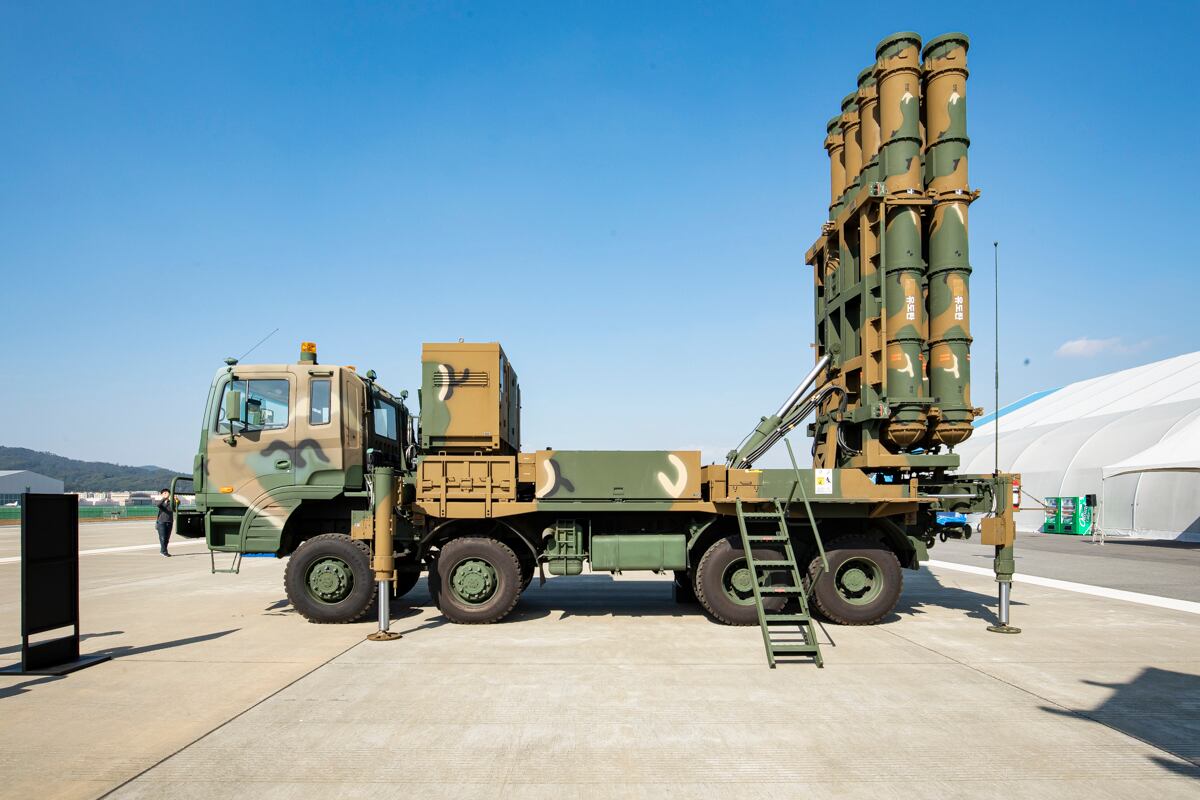
SEOUL — South Korea has inked a deal with the United Arab Emirates to export midrange surface-to-air missiles, marking the Asian country’s largest-ever arms export deal in history.
Valued about $3.5 billion, the contract for the Cheongung II KM-SAM weapons was singed Jan. 16 during a meeting between South Korean President Moon Jae-in and Emirati Prime Minister Mohammed bin Rashid Al Maktoum in Dubai as they discussed economic cooperation.
Earlier, South Korean defense firms involved in the missile’s production signed respective deals with the UAE-based Tawazun Economic Council: LIG Nex1 will help with system integration; Hanwha Systems will provide a multifunctional radar; and Hanwha Defense will develop the missile’s vertical launcher as well as its ammunition resupply vehicles.
“The UAE is the first foreign nation to operate the Cheongung II,” South Korea’s Defense Acquisition Program Administration said in a news release. “The deal is the result of the bilateral defense cooperation based on mutual trust and will serve as a watershed moment for future direction of the two nation’s strategic defense partnership.”
Along with the missile acquisition contract, the two governments signed a memorandum of understanding to collaborate on defense technologies, including the co-development of weapons systems, DAPA added.
The KM-SAM was first developed by the South Korean Agency for Defense Development with technical support from Russian firms. It was based on technology from the 9M96 missile used on S-350E and S-400 missile systems, and created to replace the older Hawk surface-to-air missiles that were adopted in 1964.
A complete battery consists of four to six eight-cell transporter erector launchers, a multifunction phased array 3D radar, and a fire command vehicle. Employing so-called hit-to-kill technology, the missile can intercept up to six hostile missiles coming in at altitudes below 40 kilometers, with a detection range of 100 kilometers. The missiles have anti-electronic warfare capabilities to keep functioning, despite jamming.
The system passed the South Korean military’s operational requirement verification test in 2015 and began deployment in early 2016, according to the Air Force.
Brian Kim was a South Korea correspondent for Defense News.
首尔——韩国与阿拉伯联合酋长国签署了一项出口中程地对空导弹的协议,这标志着这个亚洲国家历史上最大的武器出口协议。
价值约 35 亿美元的“天宫二号”KM-SAM 导弹武器合同于 1 月 16 日在迪拜签署,当时韩国总统文在寅和阿联酋总理穆罕默德·本·拉希德·阿勒马克图姆正在讨论经济合作。
此前,参与导弹生产的韩国国防企业分别与总部位于阿联酋的塔瓦尊经济委员会签署了相关协议:LIG Nex1 将协助系统集成;韩华系统将提供多功能雷达;韩华防务将开发导弹的垂直发射器及其弹药补给车。
韩国国防采办计划管理局在一份新闻稿中表示:“阿联酋是首个运营‘青宫II’导弹防御系统的外国。这项协议是两国基于互信开展双边防务合作的成果,并将成为两国未来战略防务伙伴关系发展方向的一个里程碑。”
国防采办计划署补充说,除了导弹采购合同外,两国政府还签署了一份谅解备忘录,将在国防技术领域开展合作,包括共同开发武器系统。
KM-SAM导弹最初由韩国国防发展局在俄罗斯公司的技术支持下研制。它基于S-350E和S-400导弹系统使用的9M96导弹技术,旨在取代1964年采用的老式“鹰”地对空导弹。
一套完整的导弹系统包括四至六套八单元运输起竖发射车、一部多功能相控阵三维雷达和一辆火力指挥车。该导弹采用直接命中杀伤技术,可在40公里以下高度拦截多达六枚敌方导弹,探测距离达100公里。导弹具备反电子战能力,即使在受到干扰的情况下也能继续作战。
据美国空军称,该系统于 2015 年通过了韩国军方的作战需求验证测试,并于 2016 年初开始部署。
Brian Kim曾是《防务新闻》驻韩国记者。