Before US pullout, watchdog warned of Afghan air force collapse美军撤离前,监督机构曾警告阿富汗空军可能崩溃
The SIGAR report underscores that American authorities had been alerted that Afghanistan’s air force did not have the capabilities to survive after a U.S. withdrawal.
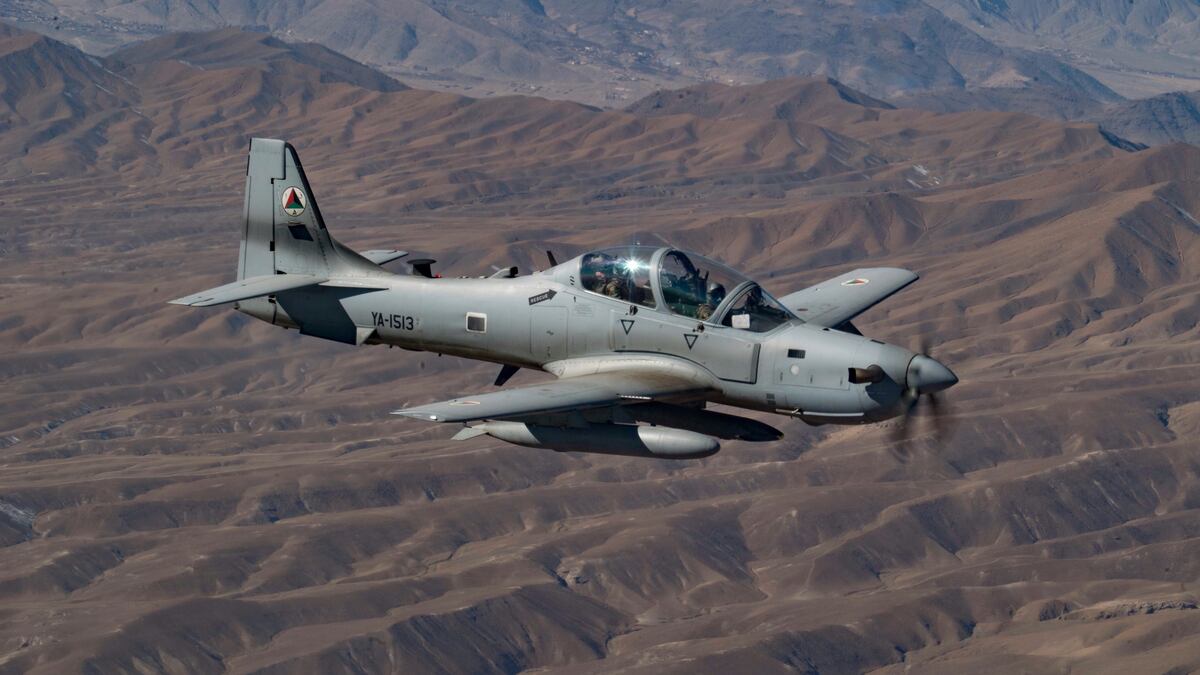
KABUL, Afghanistan — Months before President Joe Biden announced the U.S.’s complete withdrawal from Afghanistan last year, Washington’s watchdog warned that the Afghan air force would collapse without critical American aid, training and maintenance. The report was declassified Tuesday.
The report by the Special Inspector General for Afghanistan Reconstruction John Sopko, submitted to the Department of Defense in January 2021, underscores that American authorities had been alerted that Afghanistan’s air force did not have the capabilities to survive after a U.S. withdrawal. In particular, the report points to U.S. failure to train Afghan support staff, leaving the air force unable to maintain its aircraft without American contractors.
U.S. air support to government forces was key in the 20-year-war against Taliban insurgents. Its removal — along with the inability of the Afghan air force to fill the void — was one factor that contributed to the Taliban’s sweeping victory as the Americans withdrew.
The inspector general’s office told The Associated Press on Monday that it is rare for SIGAR reports to be classified but when they are, a declassified version is issued by the Pentagon in under two months. The office said it did not know why it took the Defense Department more than a year before declassifying this particular report, or why it did so now, five months after the Taliban took power.
SIGAR has tracked and documented Washington’s spending and progress in Afghanistan since the office was established in 2008. It has released successive reports that documented corruption, Afghan and U.S. leadership failings and weaknesses within the Afghan army, offering recommendations on where to improve.
Since the 2001 U.S-led invasion that ousted the Taliban and during the long war that ensued, Washington spent more than $145 billion on reconstruction in Afghanistan and nearly $1 trillion on its military engagement. Billions went to building up the Afghan military forces.
Biden announced in April that the last 2,500-3,500 U.S. troops would leave along with NATO’s 7,500 troops, following a deal reached with the Taliban by the Trump administration. The announcement started a rapid collapse of the Afghan defense forces.
The Taliban’s sweep through the country was swift, with many areas falling without a fight as Afghan troops — many of whom had not received their salaries from the Afghan government in months — fled. Afghan warplanes continued to hit Taliban positions in some areas in June and July last year, but it was not enough to stem the tide.
The Taliban entered Kabul on Aug. 15 after U.S.-backed President Ashraf Ghani fled the capital. By the end of August, the U.S. completed its chaotic departure and the evacuation of tens of thousands of Afghans, marked by images of young men clinging to departing U.S. aircraft for an opportunity to live in the U.S. and flee the Taliban’s harsh and restrictive rule.
Over the preceding months, Afghan officials had warned that the air force was not able to stand on its own. Ata Mohammed Noor, a powerful warlord in northern Afghanistan who was a key U.S. ally in the 2001 defeat of the Taliban, said the fleet was overused and under-maintained.
“Most of the planes are back on the ground. They cannot fly and most of them are out of ammunition,” he said.
The newly declassified SIGAR report says that between 2010 and 2019, the U.S. spent $8.5 billion “to support and develop” the Afghan air force and its elite unit, the Special Mission Wing. But the report warns that both are ill-prepared. It also warns against removing the hundreds of U.S. contractors who maintained the aircraft fleet.
According to the report, NATO and the U.S. switched in 2019 from building the air force to making sure it had a chance at long-term survival.
But Sopko gave their efforts a failing grade, saying the Afghan air force hadn’t been able to get the qualified personnel needed to set itself on the road to independence.
He said a combination of U.S. and NATO military personnel, as well as U.S.-funded contractors, had focused on training pilots but had not prioritized training for 86% of Afghanistan Air force personnel, including its support staff.
Even as the U.S. Department of Defense touted the Afghan air force’s progress “in combat operation capabilities, pilot and ground crew proficiency, as well as air-to-ground integration,” Sopko said, they continued “to struggle with human capital limitations, leadership challenges, aircraft misuse, and a dependence on contractor logistic support.”
阿富汗喀布尔——去年,在乔·拜登总统宣布美国全面撤出阿富汗的几个月前,华盛顿的监督机构就曾警告说,如果没有美国的关键援助、训练和维护,阿富汗空军将会崩溃。这份报告于周二解密。
阿富汗重建特别监察长约翰·索普科于2021年1月向国防部提交的报告强调,美国当局此前已被告知,阿富汗空军不具备在美军撤离后生存的能力。报告特别指出,美国未能对阿富汗后勤人员进行培训,导致阿富汗空军在没有美国承包商的情况下无法维护其飞机。
在长达20年的反塔利班战争中,美国对政府军的空中支援至关重要。美军撤离后,加上阿富汗空军无法填补这一空白,是导致塔利班在美军撤离后取得全面胜利的因素之一。
监察长办公室周一告诉美联社,特别监察长办公室(SIGAR)的报告很少被列为机密,但如果被列为机密,五角大楼通常会在两个月内发布解密版本。该办公室表示,他们不知道国防部为何花了一年多的时间才解密这份报告,也不知道为何在塔利班掌权五个月后才解密。
自 2008 年成立以来,阿富汗重建特别监察长办公室 (SIGAR) 一直跟踪和记录华盛顿在阿富汗的支出和进展。该办公室发布了一系列报告,记录了腐败、阿富汗和美国领导层的失职以及阿富汗军队内部的弱点,并就如何改进提出了建议。
自2001年美国领导的入侵推翻塔利班政权以来,以及随后的长期战争期间,华盛顿在阿富汗重建方面花费了超过1450亿美元,在军事行动方面花费了近1万亿美元。其中数十亿美元用于建设阿富汗军队。
拜登在四月份宣布,根据特朗普政府与塔利班达成的协议,最后2500至3500名美军士兵将与北约7500名部队一同撤离阿富汗。这一宣布随即引发了阿富汗国防军的迅速瓦解。
塔利班迅速席卷全国,许多地区兵不血刃地沦陷,阿富汗军队——其中许多人已经数月未领到阿富汗政府的薪水——纷纷逃亡。去年六月和七月,阿富汗战机继续空袭部分地区的塔利班阵地,但仍不足以阻止塔利班的攻势。
8月15日,在美国支持的总统阿什拉夫·加尼逃离首都后,塔利班进入喀布尔。到8月底,美国完成了混乱的撤离行动,数万名阿富汗人被疏散。当时的画面令人触目惊心:许多年轻人紧紧抓住即将起飞的美国飞机,渴望有机会前往美国生活,逃离塔利班严苛的统治。
此前几个月,阿富汗官员曾警告称,阿富汗空军已无力独立作战。阿富汗北部一位势力强大的军阀阿塔·穆罕默德·努尔(Ata Mohammed Noor)曾是美国在2001年击败塔利班的关键盟友,他表示,阿富汗空军过度使用且维护不足。
他说:“大部分飞机都已停在地面上。它们无法飞行,而且大部分飞机都已耗尽弹药。”
新近解密的阿富汗重建特别监察长办公室(SIGAR)报告指出,2010年至2019年间,美国花费85亿美元“支持和发展”阿富汗空军及其精锐部队——特种任务联队。但报告警告称,这两支部队都准备不足。报告还警告不要撤走数百名负责维护阿富汗空军机队的美国承包商。
报告指出,北约和美国在 2019 年将战略重心从建设空军转向确保空军的长期生存能力。
但索普科对他们的努力不及格,称阿富汗空军未能获得走上独立之路所需的合格人员。
他表示,美国和北约的军事人员以及美国资助的承包商一直专注于训练飞行员,但并未优先考虑对阿富汗空军 86% 的人员(包括其后勤人员)进行培训。
索普科表示,尽管美国国防部吹嘘阿富汗空军在“作战能力、飞行员和地勤人员的熟练程度以及空地一体化”方面取得了进步,但他们仍然“面临着人力资本限制、领导力挑战、飞机滥用以及对承包商后勤支持的依赖等问题”。