Inflation and unpredictable funding are straining Navy readiness, says top officer海军高级官员表示,通货膨胀和资金的不确定性正在削弱海军的战备能力。
Chief of Naval Operations Adm. Mike Gilday said the Navy’s funding levels have remained “flat relative to inflation for over a decade."
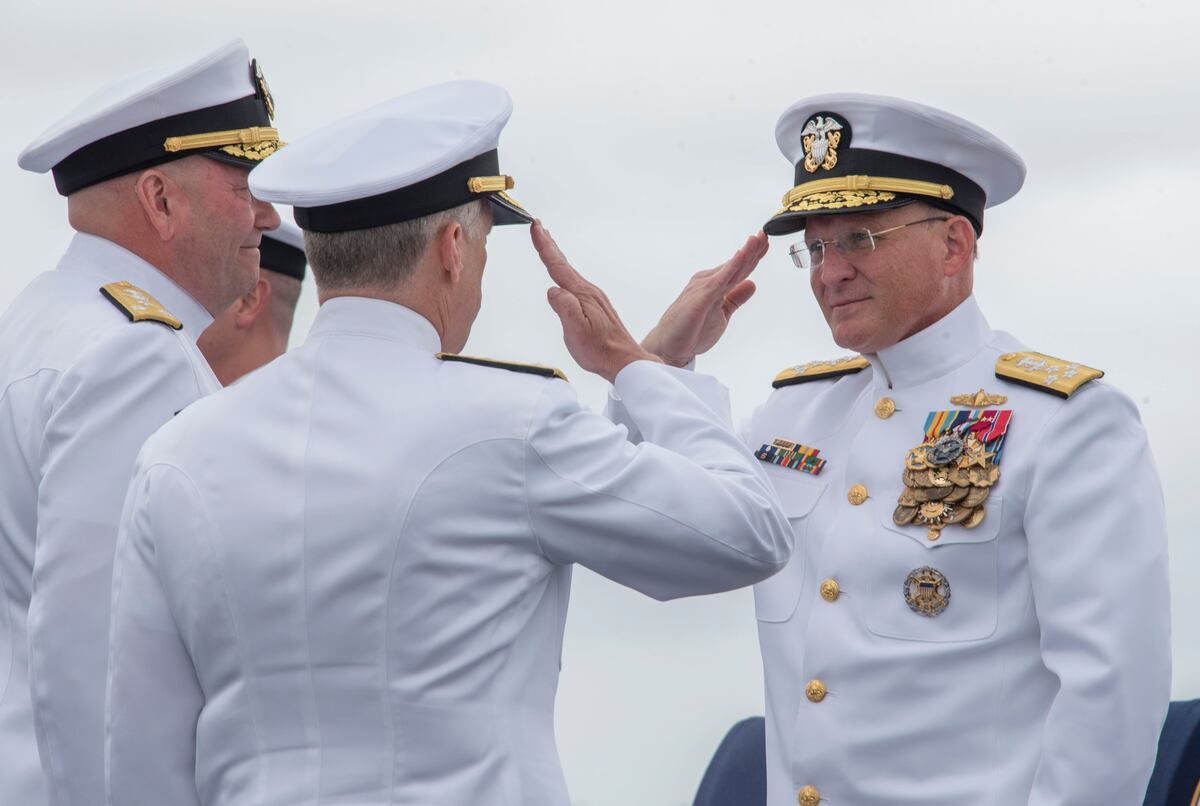
Inflation is harming Navy readiness and unpredictable funding from extending a delayed defense spending bill will thwart deterrence against near peer competitors like China, according to Chief of Naval Operations Adm. Mike Gilday.
“The price of Fleet readiness is going up,” Gilday said in his written testimony the House Appropriations Committee on Jan. 12. “Manpower, operations, and maintenance costs — which make up almost 60 percent of our budget — continue to grow above the rate of inflation. Making matters worse, inflation rose and remains at 6-8 percent, well above the historical average. This will likely exacerbate all of our readiness costs.”
Gilday’s comments coincide with the U.S. Bureau of Labor Statistics reporting on Jan. 12 that inflation had reached the highest 12-month increase since June 1982.
Additionally, Gilday said the Navy’s funding levels have remained “flat relative to inflation for over a decade,” and noted Congress stalling on passing spending bills also poses challenges to operational readiness, delays military construction projects and upends acquisition schedules, among other things.
Although both chambers of Congress passed the National Defense Authorization Bill and the White House signed it in December, funding can’t kick in until the defense appropriations bill is passed. As a result, the Defense Department is funded under a continuing resolution at least until Feb. 18, 2022, which means the Navy is operating under FY21′s funding levels.
That’s problematic, Gilday said, since the funding levels for FY22 are significantly higher and unpredictable levels of funding wastes manpower and taxpayer money. Under the FY22 NDAA, the Pentagon would receive an additional $25 billion in funding in comparison to the previous year.
Gilday also voiced concern over the possibility of a year-long continuing resolution, or CR, in the event lawmakers can’t reach a long-term agreement in February. Operating past February — up to a full year — under a CR would jeopardize national security, make sailors’ missions more challenging, signal doubt to allies and partners, and would waste taxpayer dollars, he said.
Gilday summed up his request to lawmakers by urging them to avoid a full-year CR and enact FY22 funding.
“As our competitors aggressively modernize their forces, a full-year CR cedes ground we cannot afford to yield,” Gilday wrote. “CRs further erode our deterrence posture against China.”
“The competition is on, and it is heating up,” Gilday wrote. “If the CR continues past February, or worse, remains in effect through the end of the fiscal year, we inject unnecessary risk to our national security and concede advantages to our adversaries; we make our sailors’ mission even more difficult; we signal doubt to allies and partners; and we waste American taxpayer dollars. All of which can be prevented.”
Other Navy leaders have also recently raised concerns about the continuing resolution and the budget. Adm. Daryl Caudle, commander of U.S. Fleet Forces Command , said at the annual Surface Navy Association conference Jan. 12 that the Navy does not have the “luxury to do more with less” and called for more ships, no CR, and a bigger budget.
Meanwhile, lawmakers want the Navy to better outline what it needs to be most effective. For example, Rep. Elaine Luria, D-Va., pointed out at the Surface Navy Association conference on Jan. 12 that the Navy only requested one new guided-missile destroyer in the FY22 budget.
“We all know in this room that the only ship that we’re building on time, on budget and on schedule right now are DDGs,” said Luria, a former Naval officer and graduate from the U.S. Naval Academy. “And why would we only request to build one?”
Ultimately, the NDAA legislation Congress passed and that was approved by the White House for FY22 includes funding for three new Arleigh Burke-class destroyers.
“The number one thing I want to do is to be able to provide more resources to the Navy,” Luria said. “But when the Navy comes before Congress, there really isn’t a push to say, ‘This is what the Navy needs, this is what the nation needs.’”
海军作战部长迈克·吉尔迪海军上将表示,通货膨胀正在损害海军的战备能力,而延长延迟的国防开支法案所带来的不可预测的资金将阻碍对中国等势均力敌的竞争对手的威慑。
吉尔迪在1月12日提交给众议院拨款委员会的书面证词中表示:“舰队战备成本正在上升。人力、运营和维护成本——几乎占我们预算的60%——持续高于通货膨胀率。更糟糕的是,通货膨胀率上升并维持在6%至8%之间,远高于历史平均水平。这很可能会加剧我们所有的战备成本。”
吉尔迪的评论与美国劳工统计局 1 月 12 日发布的报告相吻合,该报告称通货膨胀率已达到自 1982 年 6 月以来最高的 12 个月增幅。
此外,吉尔迪表示,海军的资金水平“十多年来一直与通货膨胀保持平稳”,并指出国会迟迟不通过支出法案也给作战准备带来了挑战,延误了军事建设项目,并打乱了采购计划等等。
尽管国会两院均已通过《国防授权法案》,白宫也于去年12月签署了该法案,但只有在国防拨款法案获得通过后,资金才能生效。因此,国防部至少在2022年2月18日之前都将依靠一项持续拨款决议维持运转,这意味着海军目前仍按2021财年的预算水平运作。
吉尔迪表示,这很成问题,因为2022财年的拨款额度显著提高,而拨款额度的不确定性会浪费人力和纳税人的钱。根据2022财年国防授权法案,五角大楼将比上一年额外获得250亿美元的拨款。
吉尔迪还对一项可能持续一年的临时决议(CR)表示担忧,即如果立法者在2月份无法达成长期协议,则可能需要通过该决议。他表示,在临时决议下运作到2月份以后——长达一年——将危及国家安全,增加海军官兵任务的难度,向盟友和伙伴发出怀疑信号,并浪费纳税人的钱。
吉尔迪总结了他对立法者的请求,敦促他们避免通过一整年的持续拨款法案,并批准 2022 财年的拨款。
吉尔迪写道:“随着竞争对手积极推进军队现代化,为期一年的全面军事行动限制令意味着我们失去了无法承受的阵地。全面军事行动限制令进一步削弱了我们对中国的威慑态势。”
吉尔迪写道:“竞争已经开始,而且愈演愈烈。如果这项持续拨款决议持续到二月以后,或者更糟的是,持续到本财年结束,我们将给国家安全带来不必要的风险,并向对手拱手让出优势;我们将使我们海军官兵的任务更加艰难;我们将向盟友和伙伴发出怀疑的信号;而且我们将浪费美国纳税人的钱。所有这一切都是可以避免的。”
其他海军领导人近期也对持续拨款决议和预算表示担忧。美国舰队司令部司令达里尔·考德尔海军上将在1月12日举行的水面海军协会年会上表示,海军没有“以更少资源做更多事情的奢侈”,并呼吁增加舰艇数量、取消持续拨款决议,以及增加预算。
与此同时,议员们希望海军能更清晰地阐明自身需要哪些装备才能发挥最大效能。例如,弗吉尼亚州民主党众议员伊莱恩·卢里亚在1月12日举行的水面舰艇协会会议上指出,海军在2022财年预算中仅申请建造一艘新的导弹驱逐舰。
“我们所有人都知道,目前唯一能按时、按预算、按计划建造的舰艇就是驱逐舰(DDG)。”卢里亚说道,他曾是一名海军军官,毕业于美国海军学院。“为什么我们只申请建造一艘呢?”
最终,国会通过并经白宫批准的 2022 财年国防授权法案包含了建造三艘新的阿利·伯克级驱逐舰的资金。
卢里亚说:“我最想做的就是为海军提供更多资源。但当海军向国会提出诉求时,并没有人真正努力去说明‘海军需要什么,国家需要什么’。”