Baltic nations ponder biggest bang for their bucks in $14 billion arms spending spree波罗的海国家正在考虑如何最大程度地利用这笔140亿美元的军备开支。
"The factory floor and the frontline are now part of the same equation,” Lithuanian President Gitanas Nausėda said.
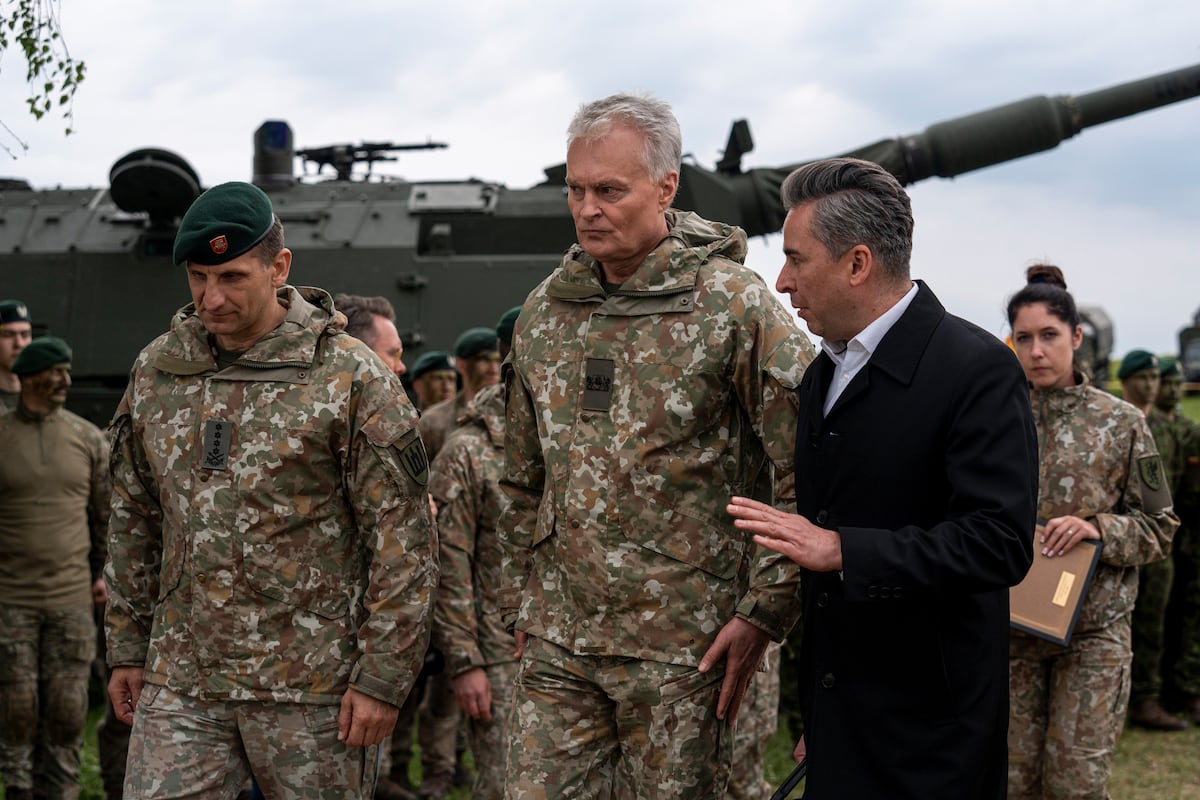
VILNIUS, Lithuania — Estonia, Latvia and Lithuania are readying to spend around €12.2 billion ($14 billion) from the European Union’s Security Action for Europe (SAFE) low-cost loans on new weapons, equipment and ammunition, with first contracts to be signed in the coming weeks.
Baltic State officials insist that a large share of production must be located in the three countries, and partial or full technology transfers are preferred over complete off-the-shelf purchases, decision-makers said at the DAIMEX Baltic conference here.
Lithuanian President Gitanas Nausėda said in his opening remarks at the conference, whose 2026 edition takes place on May 12 and 13, that Russia’s ongoing invasion of Ukraine has encouraged Lithuania to accommodate a rising number of investments by foreign defense companies. The Lithuanian authorities aim to build up domestic production capacities to safeguard supplies for the country’s military in case of an armed conflict, but also integrate the nation’s defense industry into international supply chains, the president said.
The Ukraine war has shown that “industrial capacity is also battlefield capacity. The factory floor and the frontline are now part of the same equation,” Nausėda said. “Lithuania, together with Latvia, Estonia, Poland and Finland, forms NATO’s first line of defense on the eastern flank.”
The Lithuanian president noted that the Baltic nation has succeeded in attracting numerous investments by foreign companies that ensure local production and maintenance capabilities, among others in the field of 155 mm artillery ammunition and Leopard 2A8 tanks .
“We fully expect the defense industry to step up its capacity and deliver fast and on time,” the president said.
Lithuania has been allocated €6.38 billion in SAFE loans, with a large portion of the funds intended to support purchases of tanks, infantry fighting vehicles and ammunition from European suppliers.
“Rheinmetall has chosen Lithuania for regional ammunition production; KNDS France and KNDS Germany for the assembly and maintenance of military equipment,” Nausėda said. “I invite you to see Lithuania not only as a destination to make a sales pitch, but also as a place to build something lasting for your company, for our region, and for the alliance.”
Vincas Jurgutis, a chief adviser at the Lithuanian Defence and Security Industry Association (LDSIA), the conference organizer, said local production and maintenance capabilities are essential, and the state has implemented regulations to foster foreign investments in arms manufacturing.
“Since Russia attacked Ukraine in 2022, there has been a major push in Lithuania to develop the capacities of Lithuanian defense companies, and also to include them in big programs carried out in partnership with foreign companies,” Jurgutis told Defense News.
“In 2024, a special law on the defense and security industry was introduced to simplify procedures, increase the Lithuanian industry’s participation in acquisitions, facilitate partnerships with foreign companies, and attract more investments.”
A Latvian soldier stands during the handover of 21 Patria 6x6 armored transport vehicles to the Ukrainian army at the Latvian military base in Adazi, Latvia, on Nov 6, 2025. (Alexander Welscher/picture alliance via Getty Images)
For Latvia, which has secured €3.5 billion in SAFE loans, procurements of unmanned aerial systems (UAVs), anti-drone systems and missile systems are also key items on the nation’s shopping list, with priorities largely determined by the lessons drawn from the Ukraine war.
Artis Pabriks, the chairman of the country’s Military Technology, Drone and Robotics Association and Latvia’s former defense minister, told Defense News that the challenge for the Baltic states, is not simply spending SAFE loans, but allocating the funds to the most effective force multipliers.
“Unmanned systems and robotics provide us, as a small country, with asymmetric power. In cyber-defense, both small and big countries can generate equal damage. It’s the same with drones which can be cheap but powerful,” Pabriks said. “Our second priority for SAFE is air defense. We are learning the lessons from the war in Ukraine, but also from the Middle East, and we know we need to cover our skies with multi-layer defenses.”
In Estonia, the country’s government recently decided to put on hold its planned procurement of infantry fighting vehicles , and instead shift the funds toward purchases of UAVs, counter-drone measures and air-defense systems. A large part of these purchases could be financed from SAFE loans in the amount of €2.34 billion that the nation has secured from the European Union.
Meanwhile, another major procurement Tallinn is advancing is related to the selection of a new missile defense system , with Estonian officials declaring plans to select between the U.S., European and Israeli offers in the coming months.
Similarly to Lithuania, Estonia is intensifying efforts to bring in weapon and ammunition producers. In March 2026, the country’s authorities announced that, in relation to Tallinn’s purchase of High Mobility Artillery Rocket Systems, or HIMARS, producer Lockheed Martin will open a local maintenance facility under an $11 million investment.
For a number of acquisitions, the three Baltic States intend to pool their resources and ramp up their eastern flank defenses under joint projects such as the “Baltic Drone Wall” , Miiko Peri, the head of the Defence Industry Development Department at Estonia’s Ministry of Defence, said during a panel discussion at the DAIMEX Baltic event.
Jaroslaw Adamowski is the Poland correspondent for Defense News.
立陶宛维尔纽斯——爱沙尼亚、拉脱维亚和立陶宛准备从欧盟的“欧洲安全行动”(SAFE)低成本贷款中支出约 122 亿欧元(140 亿美元)用于购买新的武器、装备和弹药,首批合同将在未来几周内签署。
波罗的海三国官员坚持认为,大部分生产必须设在这三个国家,而且他们更倾向于部分或全部技术转让,而不是直接购买现成产品。决策者们在波罗的海 DAIMEX 会议上表示。
立陶宛总统吉塔纳斯·瑙塞达在即将于5月12日至13日举行的2026年国际防务展(以下简称“国际防务展”)开幕致辞中表示,俄罗斯持续入侵乌克兰促使立陶宛接纳越来越多的外国国防企业投资。总统指出,立陶宛当局的目标是提升国内生产能力,以保障国家军队在发生武装冲突时的物资供应,同时也将本国国防工业融入国际供应链。
瑙塞达表示:“乌克兰战争表明,工业产能也是战场产能。工厂车间和前线现在是同一等式的一部分。立陶宛与拉脱维亚、爱沙尼亚、波兰和芬兰一起,构成了北约东翼的第一道防线。”
立陶宛总统指出,这个波罗的海国家成功吸引了众多外国公司投资,这些投资确保了当地的生产和维护能力,其中包括 155 毫米炮弹和豹 2A8 坦克等领域。
总统表示:“我们完全相信国防工业能够提高产能,快速按时交付。”
立陶宛已获得 63.8 亿欧元的 SAFE 贷款,其中很大一部分资金将用于支持从欧洲供应商处购买坦克、步兵战车和弹药。
“莱茵金属公司已选择立陶宛作为区域弹药生产基地;法国KNDS公司和德国KNDS公司则负责军事装备的组装和维护,”瑙塞达说道。“我诚挚地邀请各位将立陶宛视为一个不仅能进行销售洽谈,更能为贵公司、我们地区以及联盟创造持久价值的地方。”
立陶宛国防和安全工业协会(LDSIA)首席顾问、本次会议的组织者文卡斯·尤尔古蒂斯表示,本地生产和维护能力至关重要,国家已实施相关法规以促进外国对武器制造业的投资。
“自俄罗斯在 2022 年袭击乌克兰以来,立陶宛大力发展立陶宛国防公司的能力,并将它们纳入与外国公司合作开展的大型项目中,”尤尔古蒂斯告诉《防务新闻》。
“2024年,一项关于国防和安全行业的特别法律出台,旨在简化程序,提高立陶宛工业在收购中的参与度,促进与外国公司的合作,并吸引更多投资。”
2025年11月6日,在拉脱维亚阿达济的拉脱维亚军事基地,一名拉脱维亚士兵在向乌克兰军队移交21辆“帕特里亚”6x6装甲运输车时站立。(Alexander Welscher/picture alliance via Getty Images)
对于已获得 SAFE 贷款 35 亿欧元的拉脱维亚来说,采购无人机系统 (UAV)、反无人机系统和导弹系统也是该国采购清单上的重点项目,其优先事项很大程度上取决于从乌克兰战争中吸取的教训。
拉脱维亚军事技术、无人机和机器人协会主席、前国防部长阿蒂斯·帕布里克斯告诉《防务新闻》,波罗的海国家面临的挑战不仅仅是花掉SAFE贷款,而是将资金分配给最有效的力量倍增器。
“无人系统和机器人技术为我们这样的小国提供了不对称优势。在网络防御领域,无论大小国家都能造成同等程度的破坏。无人机也是如此,它们价格低廉但威力强大,”帕布里克斯说道。“SAFE计划的第二重点是防空。我们正在从乌克兰战争以及中东局势中吸取教训,我们深知需要用多层防御系统来保护我们的领空。”
爱沙尼亚政府近期决定暂停原计划采购步兵战车,转而将资金用于购买无人机、反无人机设备和防空系统。这些采购的大部分资金可能来自爱沙尼亚从欧盟获得的23.4亿欧元SAFE贷款。
与此同时,塔林正在推进的另一项重大采购与选择新的导弹防御系统有关,爱沙尼亚官员宣布计划在未来几个月内从美国、欧洲和以色列的报价中做出选择。
与立陶宛类似,爱沙尼亚也在加大力度引进武器弹药生产商。2026年3月,该国政府宣布,为配合塔林采购高机动性火箭炮系统(HIMARS),生产商洛克希德·马丁公司将投资1100万美元在当地设立一家维修厂。
爱沙尼亚国防部国防工业发展部部长米科·佩里在波罗的海防务展(DAIMEX Baltic)的小组讨论会上表示,波罗的海三国计划通过“波罗的海无人机墙”等联合项目,集中资源加强东翼防御,进行多项采购。
Jaroslaw Adamowski 是《防务新闻》驻波兰记者。