Role of Indo-Pacific air defenders has evolved dramatically, US Army commander says美国陆军指挥官称,印太地区防空部队的角色已经发生了巨大变化。
Brig. Gen. William Parker, 94th AAMDC chief, recalled an old air defense building bearing a "Will work for food" sign, a stark contrast to the role today.
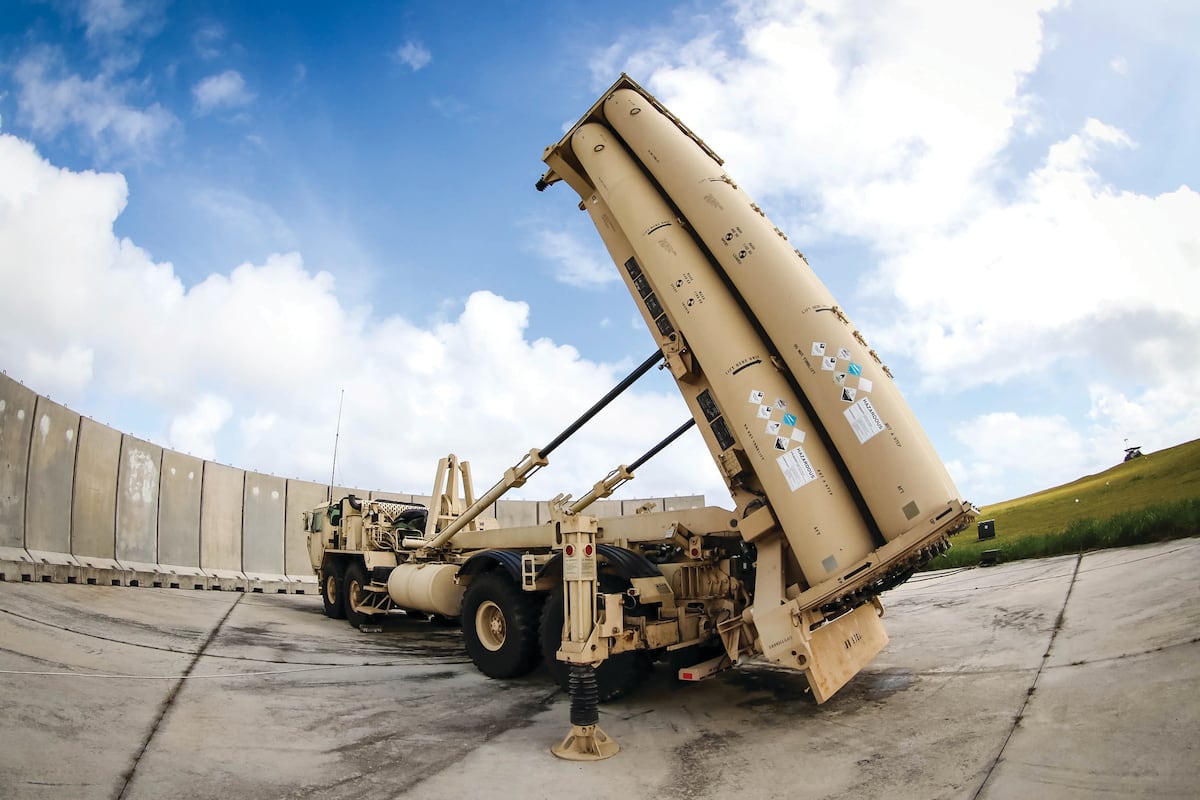
HONOLULU — Though they once occupied the fringes of operational conversation, one of the U.S. Army’s most in-demand — and increasingly popular — jobs is now that of the Indo-Pacific air defender.
Speaking at the 2026 Land Forces of the Pacific Symposium and Exposition in Hawaii, U.S. Army Brig. Gen. William Parker, commander of the 94th Army Air and Missile Defense Command , joked that he remembers, as a young officer, standing outside at a headquarters building adorned with a sign that read, “Will work for food,” a stark contrast in how the AAMDC is perceived today as tensions surge across the Indo-Pacific.
“But now, I’m a cool guy,” Parker added. “We are a very, very much demanded resource globally because of the challenges within the operating environment that we face.”
The 94th AAMDC’s mission includes protecting critical assets and formations within the expansive Indo-Pacific theater from enemy missile, air and drone attacks . The command was reactivated in 2005, roughly seven years after it shuttered.
The command’s mission, Parker discussed, is now especially focused on delivering layered defense at scale across a region that has seen its strategic importance skyrocket as the U.S. military and partner nations continue to contend with emerging security threats from China and North Korea.
Brig. Gen. William Parker, commanding general of the 94th AAMDC, speaks during the LANPAC Symposium in Honolulu, Hawaii, May 12, 2026. (Sgt. Dustin Stark/U.S. Army)
Parker said there has been a consistent sense of urgency over the last 10 to 15 years as the People’s Republic of China speedily develops both its capabilities and capacity.
These contributions to a challenging environment come as the U.S. air and missile defense community is undergoing its largest period of modernization in history, Parker said.
Among those new critical developments is the incorporation of the Integrated Air and Missile Defense Battle Command System, or IBCS, a network of command-and-control systems, sensors and interceptors that offers commanders — from any branch or partner nation — a tailored approach to thwart threats ranging from cruise missiles to drones.
“The IBC’s capability really brings us to the concept of any sensor,” Parker said. “They are the most effective shooter ... that allows us to break the paradigm of having to rely solely on Patriot Radar Systems.”
Beyond tech developments, Parker hammered home the importance of continued allied collaboration while staring down and deterring threats out of Beijing.
“We can’t do any of what we do today without allies and partners,” Parker said. “We don’t fight alone, and we haven’t fought alone for a long time. Our partners help us protect our critical assets and critical formations that we have within this theater.”
Days before the launch of LANPAC 2026, the U.S. military wrapped up the 41st iteration of Exercise Balikatan, the largest annual bilateral exercise between U.S. and Philippine militaries.
This year’s 19-day exercise was also joined by Australia, Japan, New Zealand, France and Canada, the latter four of which put troops on the ground for the first time as part of the exercise.
“Balikatan 2026 marked a strategic evolution from a bilateral exercise to a full-scale, multinational mission rehearsal for the defense of the Philippines,” U.S. Navy Adm. Samuel J. Paparo, commander of U.S. Indo-Pacific Command, said of the event. “That growth reflects the security environment. It reflects the sovereign choices of free nations.”
The surge in partner participation, Parker noted at LANPAC, is a direct reflection of the region’s security importance. And the role of the air defender, he added, is at the heart of it all.
“It’s both an interesting and challenging time,” Parker said. “It’s a great time to be an air defender. If you don’t believe it, just watch the news every night.”
Cristina Stassis is a reporter covering stories surrounding the defense industry, national security, military/veteran affairs and more. She previously worked as an editorial fellow for Defense News in 2024 where she assisted the newsroom in breaking news across Sightline Media Group.
J.D. Simkins is Editor-in-Chief of Military Times and Defense News, and a Marine Corps veteran of the Iraq War.
檀香山——尽管印太地区防空人员曾经在作战讨论中处于边缘地位,但现在他们已成为美国陆军最抢手、也越来越受欢迎的职位之一。
在夏威夷举行的 2026 年太平洋陆军研讨会暨展览会上,美国陆军第 94 航空和导弹防御司令部司令威廉·帕克准将开玩笑说,他记得自己年轻时站在司令部大楼外,大楼外挂着一块牌子,上面写着“愿意工作换取食物”。这与如今印太地区紧张局势加剧,人们对 AAMDC 的看法形成了鲜明的对比。
“但现在,我可是个很酷的人,”帕克补充道。“由于我们面临的运营环境充满挑战,我们在全球范围内都是非常非常抢手的资源。”
第94防空导弹司令部的任务包括保护广阔的印太战区内的关键资产和部队免受敌方导弹、空袭和无人机袭击。该司令部于2005年重新组建,此前已关闭约七年。
帕克讨论说,该司令部的任务现在尤其侧重于在该地区大规模提供多层防御,随着美国军方及其伙伴国家继续应对来自中国和朝鲜的新兴安全威胁,该地区的战略重要性已经飙升。
2026年5月12日,第94陆军航空医学司令部司令威廉·帕克准将在夏威夷檀香山举行的LANPAC研讨会上发表讲话。(美国陆军中士达斯汀·斯塔克摄)
帕克表示,过去 10 到 15 年间,随着中华人民共和国迅速发展其能力和实力,一直存在着一种紧迫感。
帕克表示,在充满挑战的环境下做出这些贡献之际,美国防空和导弹防御系统正经历着历史上规模最大的现代化时期。
这些新的关键发展之一是整合了综合防空反导作战指挥系统(IBCS),这是一个由指挥控制系统、传感器和拦截器组成的网络,它为任何军种或伙伴国家的指挥官提供了一种量身定制的方法来挫败从巡航导弹到无人机的各种威胁。
帕克说:“IBC 的能力真正让我们认识到任何传感器都适用。它们是最有效的武器……使我们能够打破仅仅依赖爱国者雷达系统的固有模式。”
除了技术发展之外,帕克还强调了继续盟国合作的重要性,同时警惕并遏制来自北京的威胁。
帕克说:“没有盟友和伙伴,我们今天所做的一切都无从谈起。我们并非孤军奋战,而且长期以来也从未孤军奋战。我们的伙伴帮助我们保护在这个战区内的关键资产和关键部队。”
在 LANPAC 2026 启动前几天,美军结束了第 41 次“肩并肩”联合军演,这是美菲两军之间规模最大的年度双边联合军演。
今年为期 19 天的演习还有澳大利亚、日本、新西兰、法国和加拿大参加,其中后四个国家首次派兵参加此次演习。
“‘肩并肩2026’标志着战略演习从双边演习演变为保卫菲律宾的大规模多国联合任务演练,”美国印太司令部司令、海军上将塞缪尔·J·帕帕罗在谈到此次演习时表示。“这种发展反映了安全环境的变化,也体现了自由国家的自主选择。”
帕克在LANPAC会议上指出,合作伙伴参与度的激增直接反映了该地区安全的重要性。他还补充说,防空力量的作用是这一切的核心。
帕克说:“这是一个既有趣又充满挑战的时代。对于防空球员来说,这是一个绝佳的时代。如果你不信,那就每天晚上看看新闻吧。”
克里斯蒂娜·斯塔西斯是一位记者,主要报道国防工业、国家安全、军事/退伍军人事务等领域的新闻。她曾于2024年在《防务新闻》担任编辑助理,协助Sightline媒体集团旗下新闻编辑室处理突发新闻。
JD Simkins 是《军事时报》和《防务新闻》的总编辑,也是参加过伊拉克战争的海军陆战队老兵。