Navy Pilot Recounts The Secret Stalking Of North Korea’s Missile Laden Cargo Ship So San海军飞行员讲述秘密跟踪朝鲜导弹货船“苏山”号的经历
The 6,500-mile chase around the globe and the taking down of the Scud missile-filled So San from a Navy special ops helicopter pilot that was there.
新闻视频
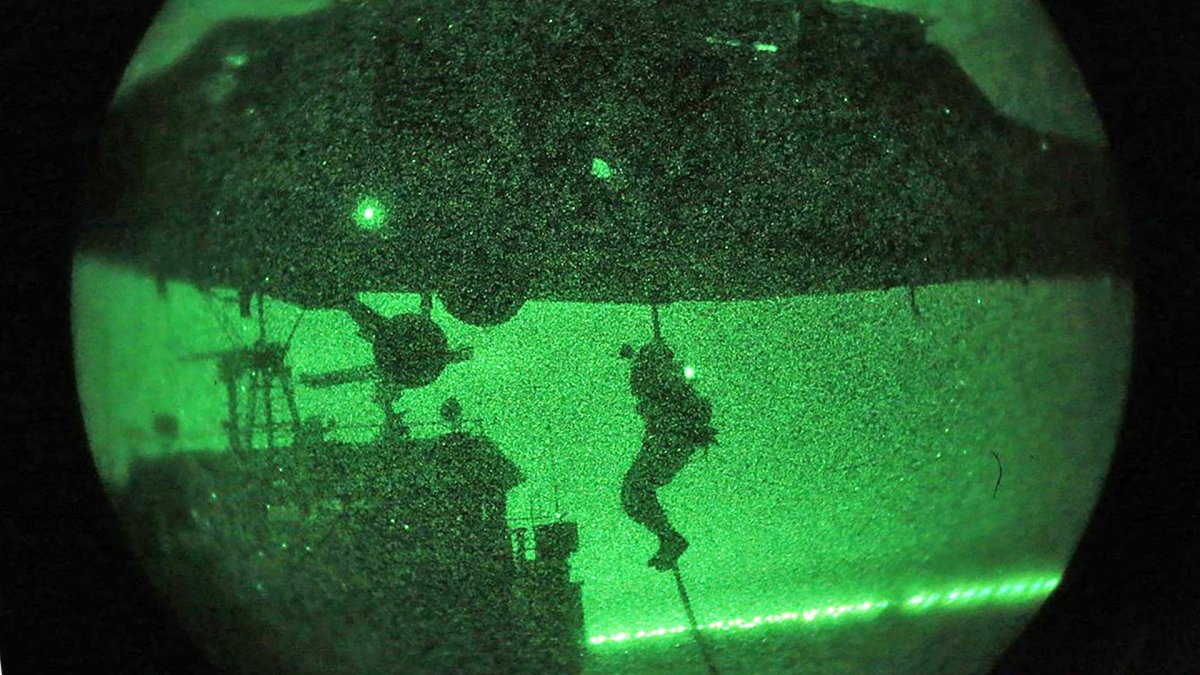
By Chris "Ox" Harmer
Updated Dec 1, 2019 5:54 AM EST
In 2001, I was assigned to Carrier Air Wing 14 (CVW-14), at Naval Air Station (NAS) Lemoore, California. I wore two “hats” for CVW-14. First, I was the Force Protection (FP) and Anti Terrorism (AT) Officer. The seven squadrons of CVW-14 were geographically dispersed at Naval Air Stations Lemoore, Point Mugu, and North Island, all in California, at Whidbey Island in Washington, and Norfolk in Virginia. I was responsible for FP/AT for all of them. Second, I was the Seahawk Weapons and Tactics Instructor (SWTI) on staff, so I trained the helicopter squadron assigned to CVW-14, the Helicopter Anti-Submarine Squadron Four (HS-4) Black Knights, at NAS North Island in Coronado, California.
On the morning of September 11, 2001, I was in my apartment in San Diego, burning off some “use or lose” leave. My only problem for the week was deciding which beach to hit each day of my “staycation.” At 0700, I was awakened by a call from my “little boss,” the Operations Officer for CVW-14 who simply said “Wake up. The big boss wants a call at 0800 with a status update.” Click.
My “big boss,” the Commander, CVW-14, wanted a phone call from me at 0800 with a status update… On what? I was used to being interrupted on leave. It happens, But why? I called back to Lemoore—no answer. I called the helicopter squadron at North Island—no answer. I turned on the TV, saw the news, and thought—well, that’s what he wants.
I eventually got through to all seven squadrons in the air wing, confirmed they were set at Force Protection Condition (FPCON) Alpha (as if they needed me to tell them that) and called back to Lemoore at 0800.
I told the big boss that his air wing was at FPCON Alpha and he asked if I had any other inputs. I replied, “Sir, it could have been a lot worse. So far, there’s no indication they used Weapons of Mass Destruction (WMD).” To be clear, the attacks of 9/11 were horrific. Equally clear—they could have been far worse.
Shortly after 9/11, Bush administration officials began sensitizing the American public to the reality that having endured the conventional attacks of 9/11, America needed to prepare for and prevent what the enemy was clearly trying to do next, obtain WMD to conduct a bigger, deadlier attack, either in the U.S. or overseas.
Almost exactly a year later, on Sunday, September 8, 2002, then National Security Adviser Condoleezza Rice, while making the case for the U.S. to invade Iraq and end Saddam Hussein’s dictatorship, one way or another, said “we don’t want the smoking gun to be a mushroom cloud.” By that point, I was no longer in San Diego. I was in Japan, getting ready to prevent that mushroom cloud from happening, by taking down a ship that was (or so we thought) transporting WMD.
Forward Deployed Naval Forces Are Always Ready
In June of 2002, I reported to Helicopter Anti-Submarine Squadron 14 (HS-14), the Chargers, part of Carrier Air Wing Five (CVW-5), stationed at Naval Air Facility (NAF) Atsugi, Japan. Together, HS-14 and CVW-5 were assigned to the aircraft carrier USS Kitty Hawk (CV-63) stationed just down the road in Yokosuka.
At that time, CVW-5 was comprised of three squadrons of F/A-18 Hornets and one squadron each of F-14 Tomcats, S-3 Vikings, E-2 Hawkeyes, EA-6B Prowlers, and SH-60 Seahawks. In other words, we were the only helicopter squadron in the air wing, which meant at times we wound up getting pulled in many different directions. It’s better to have too much to do than not enough, but as the only helicopter squadron, we were never plagued with inadequate tasking. We always had more customers and tasking than operational bandwidth.
For most of its history, the Navy’s carrier fleet has followed a cycle of deployment, followed by a post-deployment stand down and maintenance period, followed by a training and exercise cycle in preparation for deployment, followed by another deployment. During the post-deployment and stand down maintenance period, the carrier and carrier air wing are in a greatly reduced readiness status. The carrier and its aircraft are in heavy maintenance, personnel are in classroom training, and a relatively limited amount of training flights are being executed. For a carrier/air wing team in this status, it would take at least 45 days to prepare to deploy—put aircraft back together, finish or cancel ground training, get all the pilots requalified on carrier landings, and so on.
In contrast, Forward Deployed Naval Forces (FDNF) are manned, trained, and equipped to be always ready for deployment. Our tether was measured in hours, not days. At any given time the ship and air wing had to have a certain percentage of personnel on station, ready to deploy, as well as a certain number of aircraft in a Full Mission Capable (FMC) status. Using the nomenclature of the time, we were constantly at T-1 levels of training and readiness, at M-1 levels of materiel support, and at C-1 levels of combat capability overall. To be clear, the FDNF carrier and air wing stationed in Japan do execute deployments, they are just of shorter duration and greater frequency than the standard six- to eight-month deployments of the rest of the carrier fleet, which is stationed in the Continental United States.
Helicopter Anti-Submarine Squadron 14’s Structure And Mission
In 2002, HS-14 was equipped with five SH-60F and three HH-60H Seahawk helicopters. Like all carrier-based HS squadrons at the time, we had a very challenging and diverse set of missions. As the name indicates, the primary mission of the squadron was Anti-Submarine Warfare (ASW).
With a powerful and accurate dipping sonar, the SH-60F Seahawk airframes were optimized for ASW in the aircraft carrier inner defense zone. From a hover, the sonar could be lowered on a cable into the water, then start actively pinging. If a submarine was within detection range, the sonar waves would bounce off the hull and be picked up and displayed by our onboard processor. In contrast, the HH-60H was optimized for Naval Special Warfare (NSW) support. It had a Forward Looking Infrared (FLIR) turret on the nose, a standard suite of Aircraft Survivability Equipment (ASE) such as Radar Warning Receiver (RWR), Infra-Red Guided Missile Counter Measure (IRCM) devices, chaff and flare dispensers, and a wire strike protection system.
HH-60H dropping off some SEALs via fast-rope during a boarding exercise. , USN
Additionally, the HH-60H could carry a rail on the port side of the aircraft holding up to four AGM-114 Hellfire missiles, as well as crew-served machine guns. With all the seats stripped out in the back, it had just enough room to carry up to ten or eleven total personnel, between aircrew and SEALS.
For an optimal/fully supported NSW mission, we would have two of the HH-60Hs equipped with M-60/M-240 7.62 mm machine guns, one out the port window, and one on the starboard side in the cabin door, with two to three aircrewmen and eight SEALS onboard. The third HH-60H would serve in a command role and as a weapons truck, loaded with Hellfire missiles, a .50 cal machine gun in the cabin door on the starboard side, a SEAL sniper or two, and the senior ranking officer for the SEAL detachment to provide command and control.
Depending on the size/threat/nature of the NSW mission, we could roll in some support from the SH-60B Seahawks flown by Helicopter Antisubmarine Light Fifty One (HSL-51), the Warlords, also stationed at NAF Atsugi. Like the HH-60H, the SH-60B had a FLIR and Hellfire capability; it also had a surface search radar and robust data link. Both these capabilities were very useful in the maritime NSW environment, especially in the extremely congested waters of the Pacific Rim.
HS-14 helos over a SSGN., NUSN
At the time, HS squadrons flew SH-60F/HH-60H Seahawks primarily off of the aircraft carriers, and HSL squadrons flew SH-60B Seahawks primarily off of surface combatants, such as frigates, destroyers, and cruisers. Although, depending on the mission, we would “cross deck” to each other’s ships as required. In any case, for a maritime NSW mission, depending on what the target and operation looked like, we would have a mix of HH-60Hs and tricked-out SH-60Fs carrying SEALS, an HH-60H serving as a fire support and/or command platform, and an SH-60B providing situational awareness and comms via radar and data link.
Who Wants Some Scud Missiles?
Many veterans of the wars in Afghanistan and Iraq refer to these conflicts as “never-ending wars,” and with good reason. But long before the U.S. ever contemplated getting involved in armed conflict in either of those countries, we entered into a different land war on the other side of Asia, on the Korean peninsula. While the Korean Armistice Agreement of 1953 put a stop to active combat as part of the Korean War, it did not formally end the war. As a result, U.S. forces on the Korean peninsula constantly train to various “renewal of hostilities” scenarios. The FDNF carrier/air wing team, although stationed in Japan, are integral to these contingency plans. Needless to say, a lot of our attention was focused on the Korean peninsula, and whatever shenanigans the North Koreans were up to.
Since 1953, North Korea has engaged in plenty of malfeasance on or near the Korean peninsula, including initiating multiple armed skirmishes on the Demilitarized Zone (DMZ), infiltrating North Korean soldiers wearing South Korean military uniforms into South Korea, printing extremely accurate counterfeit U.S. currency and distributing it in South Korea, kidnapping Japanese citizens, and the list goes on.
Beyond their destabilizing activity on the Korean peninsula itself, North Korea has been a designated state sponsor of terror for over two decades. One of the reasons it has been listed as a state sponsor of terror is that it provides support to other designated state sponsors of terror, including Iran and Syria.
Scud SRBM being raised for launch on its TEL., USN
North Korea is the primary technical enabler of the Iranian ballistic missile and nuclear weapons programs. We knew all this at the time, of course. There has never been any doubt as to the nature of the North Korean regime. What changed after 9/11 was that North Korea had been identified by President Bush as part of the “axis of evil” along with Iran and Iraq. We knew that the North Koreans had been exporting ballistic missiles to the Middle East and we were about to experience what the U.S. and its allies were prepared to do to stop it first hand.
Short Notice Maritime Interdiction Operation
Even though it was 17 years ago, out of an abundance of caution, I am going to leave out some of the details of the mission. Suffice to say in the fall of 2002, we received message traffic that Commander, Seventh Fleet (C7F) was putting together a task force and we were to supply three helicopters and adequate pilots, aircrew, and maintainers to that task force to conduct a Maritime Interdiction Operation (MIO) that would last at least 30 days.
C7F is the numbered Navy fleet that exercises command and control over all Navy assets in the Western Pacific and the Indian Ocean. C7F has a massive footprint—think of it as operating from just west of Hawaii all the way through the Western Pacific, and across the Indian Ocean to the Pakistani coastline, where Commander, Fifth Fleet (C5F) takes over.
We were ordered to report to Okinawa. Readers will be familiar with many of the larger U.S. military installations on Okinawa, including Kadena Air Base and Marine Corps Air Station Futenma. Less well known is the U.S. Navy facility at White Beach. It is little more than a massive pier extending 2,500 feet out into Nakagusuku Bay and some shore support facilities, but that is all we needed to rally up.
Three surface ships, embarking a total of five helicopters, three HH-60Hs and two SH-60Bs, and a platoon of SEALS (approximately 16 personnel), as well as a couple of EOD techs gathered at the pier. We were under strict orders not to discuss the mission and were told we would not get any further intelligence on it until we got underway.
The cockpit of an HH-60H., USN
We had never worked with this particular SEAL platoon before, so we took the opportunity to talk things over with them, go over the aircraft, walk through our Helicopter Visit Board Search and Seizure (HVBSS) and fast-rope terminology. We weren’t talking about our particular mission per se—none of us knew for sure what it was—but we thought it would be a good idea to make sure we were all on the same page generally before we got underway.
We were feet dry in Okinawa for no more than 48 hours. This was just enough time to gather everyone together, get supplies loaded, figure out how we were going to split the helicopters, pilots, aircrew, and SEALs among the three surface ships, and get a superficial inbrief with the task force commander. This consisted primarily of a “who’s who in the zoo” data dump on what ships, aircraft, and personnel were in the task force.
Why We Got The Mission Instead of 160th SOAR
In a previous article, I discussed why Navy SEALs fly most of their “feet dry” missions on Army and Air Force helicopters, but this operation is a great example of the opposite situation.
As we were loading up in Okinawa, we heard rumors that the 160th Special Operations Aviation Regiment (SOAR) detachment in South Korea was making a bid to take the lead for flight support. While the 160th does great work, we never thought we would lose this mission to them. This was a purely maritime NSW mission and there are too many things that land-based helicopters just can’t do well on ships. Army helicopters have operated successfully from big deck Navy ships like aircraft carriers, amphibious assault ships, and supply ships, but operating from small-deck surface combatants is another issue entirely.
The first video below shows the entire concept of the Recovery Assist Secure Traverse (RAST) process that helicopters use on small surface combatant and the second video shows an SH-60B using the system:
In order to conduct RAST landings, helicopters have to have all of the associated equipment built into the airframe—it’s not something you can add on in a few hours or days before the mission. The reality is that small ships pitch, roll, and yaw much more than the big ships the 160th SOAR was used to operating off of . As such, there was no possibility that they were going to be able to take this mission.
Sure enough, within 36 hours of getting the initial prepare to deploy order, we also received confirmation that this would be an all-Navy mission. Navy ships, Navy SEALS, Navy Explosive Ordnance Disposal (EOD), and Navy helicopters. Sometimes it seems our modern approach to warfighting takes the joint approach too far and it felt good to have an all Navy mission.
Underway And Mission Brief
An hour or two after we got underway, the pilots, aircrew, SEALS, and EOD techs got the full inbrief on the mission. Sure enough, as suspected, it was a North Korean ship we would be going after, the So San . At the inbriefing, we received some of the intel that identified the So San in port in North Korea being loaded with Scud missiles. While there was no definitive evidence of WMD being loaded, the potential was obviously there. WMD are a lot smaller than Scud missiles. We knew the Scud missiles were there, we had to assume that WMD might also be present, too.
The mission was clear—we were going to conduct a multi-helicopter assault against the So San , preferably at night, with four helicopters—two HH-60Hs loaded with eight SEALS and EOD techs each, another HH-60H functioning as a weapons truck with missiles, machine guns, and SEAL snipers, and an SH-60B for comms relay and radar cueing. This was a mission we had practiced endlessly and we had executed a number of unopposed actual HVBSS operations in the past.
Here is a good video of a practice HVBSS conducted out of an MH-60S, which is very similar to an HH-60H. An unopposed HVBSS in permissive conditions would look very similar to this:
We were excited to know the target, get the mission, and start preparing. But as we looked a little closer at the photos we had of the So San , it quickly became apparent this would be a very difficult ship to take down via HVBSS, due to the number of cables and wires strung around the ship.
In order to execute the HVBSS, a helicopter has to hover over a clear space on the deck of the ship, a fast-rope has to be tossed out of the helicopter to the deck, then the SEALS and EOD personnel have to rapidly descend the rope. The So San had very little clear deck space. It’s cargo loading cranes and stanchions were all stayed with multiple cables and wires. That would make the insertion via fast-rope extremely difficult, and slow.
We discussed shooting out the wires with the Navy SEAL snipers and the Officer in Charge (OIC) of the platoon. Ultimately, we decided the advantage gained by shooting out the wires was less than the risk incurred by firing the first shot. If this was going to devolve from a surprise HVBSS in the middle of the night into a firefight, we wanted the North Korean sailors to take the first shot.
Remember, we had three HH-60H helicopters, two of which had two M-60/M-240 machine guns, one of which had a .50 cal machine gun and four Hellfires, plus a SEAL sniper at our disposal. If it went hot, we were confident we had enough firepower to quickly suppress any resistance. The best outcome here was to take down the ship without any shots fired and without any of the North Korean sailors getting killed. Depending on what the cargo turned out to be, their value as intelligence assets might be significant, and of course, if we killed them on the way in, they couldn’t tell us anything.
An HH-60H door gunner., USN
It’s Just Scud Missiles, Who Cares?
The military efficacy of the Scud missile is relatively limited. It is a short-range ballistic missile with extremely poor accuracy. As a first strike or counter strike weapon aimed at military targets, it is of virtually no value. With that said, it is a very effective weapon for use in terror attacks against civilian populations. During the Gulf War, Saddam Hussein’s forces launched approximately 42 Scud missiles at Israel. This action, more than anything else, threatened to shatter the fragile U.S.-led coalition.
In any case, the U.S. was very interested in this shipment of Scud missiles—where was it going? Who was the intended recipient? What was their purpose in acquiring the missiles?
As an added complicating factor, at the time North Korea was reportedly expanding its WMD program. It was possible that along with the Scud missiles, North Korea was proliferating Nuclear, Biological, or Chemical (NBC) weapons, their components, or their associated technologies. While we were not at war with North Korea, we certainly were at a state of heightened tension and any hint of WMD ratcheted up the intensity even more.
Training, Tracking, And Training Some More
It was just under 1,000 nautical miles from Okinawa to the port where the So San was located. Again, out of an abundance of caution, I am not going to tell you which port the So San was getting underway from. Suffice to say North Korea has a number of ports on the east coast of the Korean peninsula, with direct access to the Sea of Japan, and on the west coast of the Korean peninsula, with direct access to the Yellow Sea. Both of these seas are extremely crowded with commercial shipping and fishing vessels. Our plan was to lay off the coast far enough that North Korean intelligence would not detect us, wait to get “cued” onto the So San , then follow it via primarily visual tracking, using the five helicopters in our task force plus other land and sea-based aircraft.
Of course, all three ships and both SH-60B helicopters had powerful radars that could have tracked the So San fairly easily, but U.S. military radars have a very specific emissions signature. Had we used active radar to track the So San , it might have keyed them in as to our presence.
Once we were on station off the Korean Peninsula, we began training for the mission. We had all done dozens of practice HVBSS operations and some of us had quite a few unopposed HVBSS missions under our belt, but this would be a pretty big operation—up to five helicopters airborne at once, with the potential that it could turn into a firefight at any time.
Most Navy surface combatant vessels have a helicopter hangar with room for two birds, but only one can launch at a time. From the time one helicopter launches, it can take up to 30 minutes to get the second helicopter out of the hangar, unfold its rotor head, and get it spun up and launched. Launching five aircraft from three separate vessels was going to take some timing and coordination, so we began practicing the mission, day and night.
It seemed like forever, but it was only a couple of days that we had to wait for the So San to get underway. Once it was, we began a game of cat and mouse. We had to stay close enough to the So San to keep visual contact via helicopters and FLIR, but not so close that it would see us. We had other national reconnaissance assets external to the task force to help cue us in, as well.
Exactly how we tracked the So San beyond using our Mark 1 Mod 0 eyeballs, I will leave up to the reader’s imagination. Suffice to say, from shortly after it got underway until the So San was boarded, 6,500 miles away from North Korea, the U.S. Navy knew exactly where the ship was.
Is Tonight The Night?
We were told the execute order on this mission was going to be made at the national level, so our local commanders would not have any more of a heads-up then we would. We knew the execute order could come down at any minute, but we also knew that our window to execute the order was night time and most probably late at night or early in the morning.
We quickly developed a rhythm. If we did not get the execute order by about 0500, we knew we were off for the next twelve hours and went to sleep. We’d get up around 1200, check the message traffic, see what was on the boards, and plan our training flight for the day/evening.
We did the first two or three training flights during the day, to maximize safety and familiarity with each other. Once we had our battle rhythm down, we started doing most of our training flights at night. So, depending on sunset, we would generally plan a late afternoon/early evening launch, wait for total darkness, do a practice HVBSS, land, stow the aircraft, and wait in the wardroom on the ship, wondering if tonight was the night we would get the go order.
We were generally done with our training flight by around 2130 and in the wardroom by 2200 each night. The wardroom is basically a small dining room for officers, which doubles as a planning space between meals. We sat around the table, drinking Diet Coke, waiting for the go order until 0500, then we’d hit the rack.
The go order never came.
What The Movies Leave Out: Nice Work, Now Go Home
In the movies, there is always a mission, and always a go order. In real life, a whole heck of a lot of military operations consist of preparing to do something, then not doing it.
That’s what happened in this case.
It’s 6,500 miles from Korea to where the So San was eventually taken into custody. Our task force of three ships, five helicopters, about 20 pilots and aircrew, a SEAL platoon, and a few EOD techs tracked the So San for a lot of that distance, but not all of it.
An HH-60H crewman waits in the dark., USN
The further away we got from our home base of Japan without getting the go order, the more skeptical we would ever get it. The mission started to look a lot more like a babysitting operation than a takedown. We started to speculate that now that national reconnaissance assets were dialed in on the So San , the probability was we would be called off.
The logic was clear—if the So San was headed to the Middle East, the smart play was to let it get as close to the intended destination as possible, gather intelligence, see what they were up to and where they were going, before taking the ship.
Sure enough, after several weeks on mission, we got the call. We were canceled. The task force was heading back to Japan.
Don’t Worry, This War Ain’t Ending Anytime Soon
I remember the exact moment the mission was canceled. It was almost sunset and we had a no-fly day scheduled to allow the maintainers to catch up on working off gripes on the birds. I was standing on the fantail with a few of the other pilots when the ship slowed down, turned 180 degrees and picked up speed. We all knew even before reading the message traffic that our task force had been ordered back to Japan.
Nobody had much to say, except one of my aircrewman, who looked at me and said “Don’t worry, sir. This war ain’t ending anytime soon.” I laughed and let the bitterness slip away.
The mission wasn’t a failure—someone else would take down the So San . It just wouldn’t be us.
Spanish Navy Gets The Prize
On Monday, Dec. 9, 2002, the Spanish Navy frigate Navarra (F85), accompanied by its oiler and support vessel Patino , hailed the So San on bridge-to-bridge radio frequency. Navarra challenged it to stop and prepare to be boarded and inspected. At the time of the challenge, the So San was located several hundred miles southeast of Yemen, roughly where the Arabian Sea and the Gulf of Aden meet.
The So San ignored the verbal challenge and continued on its way. Accordingly, the Navarra fired warning shots across the bow of the So San , which caused it to stop and accept the boarding.
As the following picture shows, when the Spanish Navy finally did execute the HVBSS takedown of the So San , they did so during the day, after confirming with the captain of the So San that they would be coming aboard. But before they fast-roped in, Spanish snipers shot off some of the guide wires. As you can see, the forward cargo post has no aft tending guide wire stays.
a Sea King helicopter from Navarra fast-roping a VBSS team aboard. , USN
A detachment of Spanish Sailors and Marines boarded the vessel without incident and began the search. In the cargo hold, they discovered, as expected, a shipment of 15 Scud missiles, concealed under bags of cement.
What was not immediately clear was the destination of the missiles. Despite rampant speculation that other more nefarious cargo might be onboard, repeated searches of the So San by a U.S. technical team revealed nothing of significance other than the Scud missiles.
The cargo hold of So San had concrete packages covering containers loaded with Scud missile components. , USN
Iran? Sudan? Iraq? Al Qaeda? No…Yemen
At first, the captain of the So San would not reveal his intended destination. Speculation was rampant that the intended recipient of the Scuds was either a state sponsor of terror or a foreign terrorist organization (FTO). Eventually, the Yemeni government filed a complaint with the U.S. Department of State as the shipment of Scuds was in fact destined for Yemen, a country which at that time was ostensibly allied with the U.S. coalition in the ongoing anti-terrorism operations that were then known as the Global War on Terror (GWOT).
So, after a lot of high visibility drama that made the front page of newspapers around the world, we let the So San go on its way to Yemen where it delivered its cargo of cement and Scuds.
Was This A Spanish Navy or A U.S. Navy Mission? Yes.
While the Spanish Navy ultimately executed the Visit, Board, Search, and Seizure (VBSS) of the So San , this was, from inception to completion, a U.S. Navy mission. At the point of seizure, U.S. leadership made a decision to let our Spanish ally take the lead. That was a frustrating decision for many of us in the Navy that had spent over a month tracking the So San , but it was also the right decision.
Although Spain has a limited military capability, in the immediate aftermath of 9/11, it agreed to work closely with the U.S. government on the GWOT. As best I can tell, the decision to allow the Spanish Navy the prize of actually taking down the So San was intended to thank them for the cooperation and to solidify their status as a close U.S. ally in the GWOT. It was also a chance for the Spanish Navy to show that it could conduct important, high visibility operations at a distance from Spain.
Spanish commandos aboard So San. , Spanish Defense Ministry/Getty Images)
From Major Win To Faux Pas?
Initially, the capture of the So San and discovery of Scud missiles looked like a major win for the Maritime Interdiction Operations (MIO) component of the GWOT.
The vast majority of the technology transfer between the ballistic missile and nuclear program of North Korea and Iran takes place on ships, as does the transfer of weapons from Iran to Sudan. Also, the majority of Iran’s transfer of rockets to Hezbollah and Hamas takes place by ships. If you want to stop the State Sponsors of Terror from helping each other and helping their allied or cooperative FTOs, you need to have an effective MIO program.
The public doesn’t know much about the MIO program, but in the aftermath of 9/11, the Navy and its allies were conducting or preparing to conduct MIO in dozens of locations around the world. It’s the epitome of a low profile, high impact mission.
So, successfully detecting, tracking, intercepting, and boarding the So San was a major, high visibility win for the Navy MIO program—right up until the point we figured out the Scuds belonged to an ostensible ally.
Spanish Navy snipers provide cover aboard Narvarra during the boarding, search, and seizure operation., USN
A Small Win Is Still A Win
In retrospect, the mission was executed correctly. There was no way to know where the Scud missiles were going and boarding the So San was the only reasonable course of action to take. The fact that a U.S. ally was buying Scud missiles from North Korea was portrayed by the media as an embarrassment, but most of us involved in the mission didn’t see it that way.
Everything about the So San mission was done correctly. The fact that Yemen was buying Scuds from North Korea painted the country in a far worse light than the U.S. decision to interdict the shipment and ascertain its destination.
Bottom line, the Scuds weren’t destined for a state sponsor of Terror or FTO. Nevertheless, the U.S. Navy validated its capability to detect, track, and seize illicit cargo on the high seas.
We sailed away disappointed that it wasn’t a bigger win, but a small win is still a win.
Contact the editor: Tyler@thedrive.com
Comments couldn’t be loaded. Please refresh the page.
作者:克里斯·“奥克斯”·哈默
更新于美国东部时间2019年12月1日凌晨5:54
2001年,我被分配到位于加利福尼亚州勒莫尔海军航空站的第14舰载航空联队(CVW-14)。我在CVW-14身兼两职。首先,我是部队保护(FP)和反恐(AT)军官。CVW-14的七个中队分散在加利福尼亚州的勒莫尔、穆古角和北岛海军航空站,华盛顿州的惠德比岛以及弗吉尼亚州的诺福克海军航空站。我负责所有这些中队的部队保护和反恐工作。其次,我还是海鹰直升机武器战术教官(SWTI),负责训练CVW-14下属的直升机中队——位于加利福尼亚州科罗纳多北岛海军航空站的第四反潜直升机中队(HS-4“黑骑士”)。
2001年9月11日清晨,我在圣地亚哥的公寓里,正忙着休一些“不用就作废”的年假。这周我唯一的烦恼就是每天该去哪个海滩度假。早上7点,我被“小老板”——CVW-14作战官的电话吵醒了。他只说了一句:“起床。大老板要我8点打电话汇报情况。” 咔哒一声,电话挂断了。
我的“大老板”,CVW-14舰载航空联队指挥官,早上八点要我打电话汇报情况……汇报什么情况?休假时被打断是常有的事,但为什么呢?我给勒莫尔基地回了电话——没人接。我又给北岛的直升机中队打了电话——还是没人接。我打开电视,看了新闻,心想——嗯,原来他想听的就是这个。
我最终联系上了空军联队的所有七个中队,确认他们已进入部队保护状态(FPCON)Alpha(好像还需要我告诉他们似的),并在 0800 时回拨了莱莫尔空军基地。
我告诉上级,他的空军联队已经进入FPCON Alpha级别,他问我还有什么其他情况。我回答说:“长官,情况本来可能更糟。到目前为止,没有任何迹象表明他们使用了大规模杀伤性武器。” 需要明确的是,9/11袭击事件非常可怕。同样显而易见的是——情况本来可能更糟。
9/11事件发生后不久,布什政府官员开始让美国公众意识到,在经历了9/11的常规袭击之后,美国需要做好准备,阻止敌人接下来显然想要做的事情,即获得大规模杀伤性武器,以便在美国境内或海外发动更大、更致命的袭击。
差不多一年后的2002年9月8日,星期日,时任国家安全顾问康多莉扎·赖斯在为美国入侵伊拉克、以任何方式结束萨达姆·侯赛因的独裁统治辩护时说:“我们不希望确凿的证据是一朵蘑菇云。” 那时,我已经不在圣地亚哥了。我在日本,正准备击沉一艘(我们当时认为)运载大规模杀伤性武器的船只,以阻止那朵蘑菇云的出现。
前沿部署的海军部队时刻准备着
2002年6月,我到驻扎在日本厚木海军航空基地的第14反潜直升机中队(HS-14,绰号“冲锋者”)报到,该中队隶属于第五舰载航空联队(CVW-5)。HS-14和CVW-5共同隶属于驻扎在横须贺的“小鹰”号航空母舰(CV-63)。
当时,CVW-5由三个F/A-18“大黄蜂”战斗机中队和各一个F/14“雄猫”战斗机中队、一个S-3“维京”反潜巡逻机中队、一个E-2“鹰眼”预警机中队、一个EA-6B“徘徊者”电子战飞机中队以及一个SH-60“海鹰”直升机中队组成。换句话说,我们是航空联队中唯一的直升机中队,这意味着我们有时会被各种任务牵扯。任务过多总比任务不足好,但作为唯一的直升机中队,我们从未遇到过任务不足的问题。我们的客户和任务总是比作战能力要多。
在海军航母舰队的大部分历史中,其部署周期遵循着这样的模式:部署后进入休整维护期,随后进行训练演习以备再次部署,如此循环往复。在部署后休整维护期间,航母及其舰载机联队的战备状态大幅降低。航母及其舰载机处于深度维护状态,人员进行课堂培训,训练飞行也相对有限。对于处于这种状态的航母/舰载机联队而言,至少需要45天才能完成部署准备——包括重新组装飞机、完成或取消地面训练、让所有飞行员重新获得航母着舰资格等等。
相比之下,前沿部署海军部队(FDNF)的人员配备、训练和装备都确保其始终处于部署准备状态。我们的部署周期是以小时而非天来计算的。在任何特定时间,舰艇和舰载机联队都必须保持一定比例的人员在岗待命,随时准备部署,并且一定数量的飞机处于完全任务能力(FMC)状态。按照当时的术语,我们的训练和战备水平始终保持在T-1级,物资保障水平保持在M-1级,整体作战能力保持在C-1级。需要明确的是,驻扎在日本的前沿部署海军部队的航母和舰载机联队确实会执行部署任务,只是与驻扎在美国本土的其他航母舰队相比,其部署周期更短,频率更高,而其他航母舰队的部署周期通常为六到八个月。
第14反潜直升机中队的结构和任务
2002年,HS-14中队装备了5架SH-60F和3架HH-60H“海鹰”直升机。与当时所有舰载直升机中队一样,我们面临着极具挑战性和多样化的任务。顾名思义,该中队的主要任务是反潜作战(ASW)。
SH-60F“海鹰”直升机配备了强大而精准的吊放式声呐,专为航母内防御区的反潜作战而优化设计。该机悬停后,声呐可通过缆绳放入水中,并开始主动发射声呐信号。如果潜艇进入探测范围,声呐波会从潜艇船体反射回来,并被机载处理器接收和显示。相比之下,HH-60H则专为海军特种作战(NSW)支援而优化设计。它在机头安装了前视红外(FLIR)转塔,并配备了一套标准的飞机生存设备(ASE),例如雷达告警接收机(RWR)、红外制导导弹对抗(IRCM)装置、箔条和干扰弹投放器以及防撞线系统。
美国海军一架HH-60H直升机在登船演习期间,通过速降绳索投放了一些海豹突击队员。
此外,HH-60H直升机左侧机翼可挂载一条导轨,最多可携带四枚AGM-114“地狱火”导弹,以及机组人员使用的机枪。拆除后部所有座椅后,机舱内仅够搭载十至十一名人员,包括机组人员和海豹突击队员。
为了确保海军特种作战部队(NSW)任务的最佳/全面支援,我们将配备两架HH-60H直升机,每架配备一挺M-60/M-240 7.62毫米机枪,一挺位于左舷舷窗外,另一挺位于右舷舱门内,机上搭载两到三名机组人员和八名海豹突击队员。第三架HH-60H将作为指挥和武器运输机,装载地狱火导弹、一挺位于右舷舱门内的.50口径机枪、一到两名海豹突击队狙击手,以及海豹突击队分遣队的高级军官,负责指挥和控制。
根据海上反潜任务的规模、威胁和性质,我们可以从驻扎在厚木海军航空基地的第51轻型反潜直升机中队(HSL-51,又称“军阀”)调集SH-60B“海鹰”直升机提供支援。与HH-60H一样,SH-60B也具备前视红外(FLIR)和“地狱火”导弹能力;此外,它还配备了水面搜索雷达和可靠的数据链。这两种能力在海上海上反潜行动中都非常有用,尤其是在环太平洋地区极其拥挤的水域。
HS-14直升机飞越SSGN。(NUSN)
当时,HS中队主要在航空母舰上驾驶SH-60F/HH-60H“海鹰”直升机执行任务,而HSL中队则主要在水面作战舰艇(如护卫舰、驱逐舰和巡洋舰)上驾驶SH-60B“海鹰”直升机执行任务。当然,根据任务需要,我们也会根据需要“跨甲板”前往对方的舰艇执行任务。总之,对于海上特种作战任务,根据目标和作战情况的不同,我们会混合使用搭载海豹突击队员的HH-60H和改装过的SH-60F,一架HH-60H作为火力支援和/或指挥平台,以及一架SH-60B通过雷达和数据链提供态势感知和通信。
谁想要一些飞毛腿导弹?
许多参加过阿富汗和伊拉克战争的老兵都称这些冲突为“永无止境的战争”,这并非没有道理。但早在美军考虑介入这两个国家的武装冲突之前,我们就已在亚洲另一端的朝鲜半岛卷入了一场不同的陆地战争。尽管1953年的《朝鲜停战协定》结束了朝鲜战争的战斗,但并未正式结束这场战争。因此,驻扎在朝鲜半岛的美军部队一直在进行各种“战事重启”的演习。尽管驻扎在日本,但驻日美军第一海军航空兵(FDNF)的航母/舰载机联队在这些应急计划中发挥着至关重要的作用。毋庸置疑,我们当时将大量注意力集中在朝鲜半岛,以及朝鲜的任何举动上。
自 1953 年以来,朝鲜在朝鲜半岛及其周边地区进行了大量不法行为,包括在非军事区 (DMZ) 发动多次武装冲突、派遣身穿韩国军服的朝鲜士兵渗透韩国、印制极其逼真的假美元并在韩国流通、绑架日本公民等等。
除了在朝鲜半岛本身从事破坏稳定的活动外,朝鲜还被认定为支持恐怖主义的国家超过二十年。它被列为支持恐怖主义国家的原因之一是,它向其他被认定为支持恐怖主义的国家提供支持,包括伊朗和叙利亚。
美国海军正在吊装“飞毛腿”短程弹道导弹,准备从发射车上发射。
朝鲜是伊朗弹道导弹和核武器计划的主要技术支持方。当然,我们当时都清楚这一点。朝鲜政权的性质从未有过任何疑问。9·11事件之后,情况发生了变化,布什总统将朝鲜与伊朗和伊拉克一起列为“邪恶轴心”的一部分。我们知道朝鲜一直在向中东出口弹道导弹,而且我们即将亲身体验美国及其盟友为阻止朝鲜出口导弹所准备采取的行动。
短时海上拦截行动
虽然已过去17年,但出于谨慎考虑,我将省略任务的一些细节。简而言之,2002年秋季,我们收到电报,第七舰队司令部(C7F)正在组建一支特遣部队,我们需要向该特遣部队提供三架直升机以及足够的飞行员、机组人员和维护人员,以执行至少持续30天的海上拦截行动(MIO)。
第七舰队(C7F)是美国海军在西太平洋和印度洋拥有指挥和控制权的舰队。第七舰队的行动范围极其广泛——其活动范围从夏威夷以西一直延伸到整个西太平洋,并横跨印度洋到达巴基斯坦海岸线,在那里由第五舰队(C5F)接管。
我们奉命前往冲绳报到。读者们应该对冲绳上许多大型美军基地比较熟悉,例如嘉手纳空军基地和普天间海军陆战队航空站。但鲜为人知的是位于白滩的美国海军设施。它不过是一座延伸至中城湾2500英尺的巨大码头和一些岸上支援设施,但这足以让我们集结起来。
三艘水面舰艇,共搭载五架直升机——三架HH-60H和两架SH-60B——以及一个海豹突击队排(约16人),还有几名爆炸物处理技术人员聚集在码头。我们接到严格命令,不得讨论此次任务,并被告知在启航前不会获得任何进一步的情报。
美国海军HH-60H直升机的驾驶舱。
我们之前从未和这支海豹突击队排合作过,所以我们借此机会和他们进行了沟通,检查了飞机,并讲解了直升机登临检查、搜查和扣押(HVBSS)流程以及快速绳降的术语。我们并没有具体讨论这次任务——我们谁也不确定任务内容——但我们觉得在正式出发前,确保大家对任务内容达成共识是件好事。
我们在冲绳停留的时间不超过48小时。这段时间刚好够我们召集所有人,装载补给,安排好如何将直升机、飞行员、机组人员和海豹突击队员分配到三艘水面舰艇上,并与特遣部队指挥官进行一次简单的简报。简报的内容主要是罗列特遣部队的舰艇、飞机和人员等信息。
为什么是我们而不是第160特种作战航空团接到了这项任务
在之前的文章中,我讨论了为什么海军海豹突击队的大部分“脚踏实地”任务都是乘坐陆军和空军的直升机执行的,但这次行动恰恰说明了相反的情况。
我们在冲绳装载物资时,听到传言说驻韩美军第160特种作战航空团(SOAR)分遣队正试图争取主导此次飞行支援任务。虽然第160团表现出色,但我们从未想过会把这次任务拱手让给他们。这是一次纯粹的海上特种作战任务,陆基直升机在舰艇上有很多无法胜任的任务。陆军直升机曾在大型海军舰艇(如航空母舰、两栖攻击舰和补给舰)上成功执行过任务,但在小型水面作战舰艇上执行任务则完全是另一回事。
下面的第一个视频展示了直升机在小型水面作战舰艇上使用的回收辅助安全转向(RAST)流程的完整概念,第二个视频展示了SH-60B使用该系统的情况:
为了执行快速空中着陆(RAST)任务,直升机必须将所有相关设备集成到机身中——这并非任务开始前几小时或几天内就能加装的。事实上,小型飞机的俯仰、滚转和偏航幅度远大于第160特种作战航空团(SOAR)以往使用的大型飞机。因此,他们根本不可能完成这项任务。
果然,在收到初步部署准备命令后的36小时内,我们就确认这将是一次完全由海军执行的任务。海军舰艇、海军海豹突击队、海军爆炸物处理小组(EOD)和海军直升机都将参与其中。有时,我们现代的作战方式似乎过于强调联合作战,所以这次完全由海军执行的任务感觉很好。
航行中及任务简报
起飞一两个小时后,飞行员、机组人员、海豹突击队员和爆炸物处理技术人员听取了任务简报。果然不出所料,我们的目标正是朝鲜船只“苏山”号。简报会上,我们获得了一些情报,显示“苏山”号停泊在朝鲜港口,正在装载飞毛腿导弹。虽然没有确凿证据表明船上装载了大规模杀伤性武器,但这种可能性显然存在。大规模杀伤性武器比飞毛腿导弹小得多。既然我们知道船上有飞毛腿导弹,就必须假设船上也可能装载了大规模杀伤性武器。
任务很明确——我们要对索桑基地发动多架直升机突袭,最好是在夜间,出动四架直升机:两架HH-60H,每架搭载八名海豹突击队员和爆炸物处理技术人员;另一架HH-60H作为武器运输机,配备导弹、机枪和海豹突击队狙击手;还有一架SH-60B用于通信中继和雷达引导。这项任务我们已经演练过无数次,过去也曾多次成功执行过类似的无抵抗高空突袭行动。
这里有一段不错的视频,展示了使用 MH-60S(与 HH-60H 非常相似)进行的 HVBSS 演习。在允许的条件下,一次无抵抗的 HVBSS 演习看起来会非常相似:
我们得知目标、接到任务并开始准备时,都兴奋不已。但当我们仔细查看“索桑”号的照片时,很快就发现,由于船上缠绕着大量的电缆和电线,用重型舰艇拦截系统(HVBSS)将其击沉将非常困难。
为了执行直升机舰载突袭(HVBSS),直升机必须悬停在舰艇甲板上的空旷区域,然后从直升机上抛下速降绳至甲板,之后海豹突击队队员和爆炸物处理人员必须迅速沿绳索下降。“索山”号的甲板空旷区域非常有限。其货物装卸起重机和支柱都由多根缆绳和钢索固定。这使得通过速降绳进行突袭变得极其困难且缓慢。
我们与海豹突击队狙击手和排长讨论了射断电线的方案。最终,我们认为射断电线带来的优势小于先开枪的风险。如果这次夜间突袭行动最终演变成枪战,我们希望朝鲜水兵先开枪。
记住,我们当时有三架HH-60H直升机,其中两架配备两挺M-60/M-240机枪,另一架配备一挺.50口径机枪和四枚地狱火导弹,此外还有一名海豹突击队狙击手可供调遣。如果情况紧急,我们有信心凭借足够的火力迅速压制任何抵抗。最好的结果是在不开一枪、不伤及任何朝鲜水兵的情况下击沉这艘船。根据船上货物的性质,他们作为情报人员的价值可能非常高,当然,如果我们在他们上船的途中就杀了他们,他们就什么也说不出来。
一名HH-60H型直升机的舱门机枪手,美国海军
不就是飞毛腿导弹吗,谁在乎?
飞毛腿导弹的军事效能相对有限。它是一种短程弹道导弹,精度极差。作为针对军事目标的先发制人或反击武器,它几乎没有任何价值。然而,它却是袭击平民的恐怖袭击中非常有效的武器。在海湾战争期间,萨达姆·侯赛因的军队向以色列发射了约42枚飞毛腿导弹。这一行动比其他任何事件都更严重地威胁到了脆弱的美国领导的联军。
总之,美国对这批飞毛腿导弹非常感兴趣——它们要去哪里?预定接收方是谁?他们获取这些导弹的目的是什么?
更复杂的是,据报道,当时朝鲜正在扩大其大规模杀伤性武器计划。朝鲜可能除了研发飞毛腿导弹外,还在扩散核武器、生物武器或化学武器(NBC)及其部件或相关技术。虽然我们当时并未与朝鲜交战,但局势无疑高度紧张,任何有关大规模杀伤性武器的迹象都会进一步加剧这种紧张感。
训练、跟踪,以及更多训练
从冲绳到“苏山”号所在的港口,航程略低于1000海里。出于谨慎起见,我不会透露“苏山”号是从哪个港口起航的。朝鲜在朝鲜半岛东海岸和西海岸都拥有多个港口,东海岸可直达日本海,西海岸可直达黄海。这两个海域都挤满了商船和渔船。我们的计划是远离海岸,避开朝鲜情报部门的侦察,等待“苏山”号的“信号”,然后主要依靠目视跟踪,利用我们特遣部队的五架直升机以及其他陆基和海基飞机进行追踪。
当然,这三艘舰艇和两架SH-60B直升机都配备了强大的雷达,可以比较容易地追踪到“苏山”号,但美军雷达的辐射特征非常独特。如果我们使用主动雷达追踪“苏山”号,很可能会暴露我们的行踪。
我们抵达朝鲜半岛附近海域后,便开始了任务训练。我们都进行过数十次直升机巡逻拦截演练,有些人甚至有过不少未遇抵抗的直升机巡逻拦截任务经验,但这次行动规模相当大——最多将有五架直升机同时升空,而且随时可能演变成交火。
大多数海军水面作战舰艇都配备有可容纳两架直升机的机库,但一次只能起飞一架。从第一架直升机起飞到第二架直升机从机库驶出、展开旋翼、完成启动并最终起飞,可能需要长达30分钟的时间。要从三艘不同的舰艇上起飞五架飞机,需要相当的时机把握和协调配合,因此我们开始日夜不停地进行任务演练。
感觉好像过了很久,但其实我们只等了几天就等“索桑”号出航了。一旦它开始行动,我们就开始了猫捉老鼠的游戏。我们必须与“索桑”号保持足够的距离,以便通过直升机和前视红外系统进行目视监视,但又不能太近以免被它发现。此外,我们还有特遣部队以外的其他国家侦察力量协助我们定位。
至于我们究竟是如何凭借肉眼追踪“苏山”号的,就留给读者自行想象吧。总之,从“苏山”号启航后不久,直到它在距离朝鲜6500英里之外被美国海军登船,美国海军始终精准掌握着它的位置。
今晚就是那一夜吗?
我们被告知,这次任务的执行命令将在国家层面下达,所以我们当地指挥官不会比我们更早得到通知。我们知道执行命令随时可能下达,但我们也知道,执行命令的窗口期是在夜间,而且很可能是在深夜或凌晨。
我们很快就摸索出了一套节奏。如果早上五点左右还没收到执行指令,我们就知道接下来十二个小时都得休息,然后就去睡觉。中午十二点左右起床,查看信息流,看看公告板上有什么安排,然后计划当天/晚上的训练飞行。
为了确保安全并增进彼此的熟悉度,我们最初的两三次训练飞行都是在白天进行的。一旦我们掌握了作战节奏,就开始在夜间进行大部分训练飞行。因此,根据日落时间,我们通常会计划在傍晚或傍晚早些时候起飞,等待天完全黑下来,进行高空突击搜救演练,然后降落,收起飞机,在舰上的军官餐厅里等待,忐忑不安地猜测今晚是否会接到出击命令。
我们通常在晚上9点半左右结束训练飞行,晚上10点左右回到军官餐厅。军官餐厅其实就是军官们的小型餐厅,也兼作两餐之间的计划室。我们围坐在桌旁,喝着健怡可乐,等待着凌晨5点的行动指令,然后就上床睡觉。
外卖订单始终没有送来。
电影里没讲的:干得漂亮,现在回家吧
电影里总有任务,总有行动命令。现实生活中,很多军事行动都是准备工作完成后,最终却什么也没做。
这就是本案的情况。
从韩国到“苏山”号最终被扣押的地方有6500英里。我们的特遣部队由三艘舰艇、五架直升机、大约20名飞行员和机组人员、一个海豹突击队排和几名爆炸物处理技术人员组成,追踪了“苏山”号的大部分航程,但并非全程。
一名HH-60H直升机机组人员在黑暗中等待。(美国海军)
我们离日本大本营越远,却始终没有接到行动命令,就越怀疑自己是否还能得到命令。这次任务看起来更像是一次保姆行动,而不是一次歼灭战。我们开始猜测,既然国家侦察力量已经将注意力集中在“苏山”号上,那么我们很可能会被取消行动。
逻辑很明确——如果“索桑”号要去中东,明智的做法是让它尽可能靠近目的地,收集情报,看看他们在做什么以及要去哪里,然后再劫持这艘船。
果然,执行任务几周后,我们接到了电话。任务取消了。特遣队要返回日本。
别担心,这场战争短期内不会结束。
我清楚地记得任务取消的那一刻。当时已近黄昏,我们当天安排了禁飞日,以便维护人员能够处理飞机上的各种问题。我和其他几位飞行员站在机尾,飞机突然减速,转了180度,然后加速。甚至在我们查看通讯信息之前,我们都知道我们的特遣队已被命令返回日本。
除了我的一名机组人员外,没人说什么。他看着我说:“别担心,长官。这场战争不会很快结束的。”我笑了,让苦涩的情绪消散了。
这次任务并没有失败——总会有人干掉索桑号。只不过那个人不会是我们。
西班牙海军获奖
2002年12月9日星期一,西班牙海军护卫舰“纳瓦拉”号(F85)及其油轮兼支援舰“帕蒂诺”号通过舰桥间无线电频率向“索桑”号发出指令。“纳瓦拉”号要求“索桑”号停泊并准备接受登船检查。发出指令时,“索桑”号位于也门东南数百英里处,大致在阿拉伯海和亚丁湾交汇处。
“索桑”号无视口头挑战,继续航行。于是,“纳瓦拉”号向“索桑”号船头鸣枪示警,迫使其停船并接受登船检查。
如下图所示,西班牙海军最终执行对“索桑”号的HVBSS拦截行动时,是在白天进行的,事先已与“索桑”号舰长确认过他们将登船。但在他们快速索降之前,西班牙狙击手击断了一些导向索。正如你所看到的,前部货舱没有后部支撑索。
一架来自纳瓦拉的“海王”直升机正在快速绳降一名登船搜救小组队员。(美国海军)
一支由西班牙水兵和海军陆战队员组成的分队顺利登船并展开搜查。不出所料,他们在货舱中发现了15枚飞毛腿导弹,这些导弹被藏在水泥袋下面。
导弹的目的地尚不明确。尽管外界纷纷猜测船上可能载有其他更危险的货物,但美国技术小组对“索桑”号的反复搜查除了飞毛腿导弹外,并未发现其他任何重要物品。
“苏山”号的货舱内有混凝土包裹,覆盖着装有飞毛腿导弹部件的集装箱。
伊朗?苏丹?伊拉克?基地组织?不……是也门
起初,“索桑”号的船长拒绝透露其预定目的地。外界纷纷猜测,这批飞毛腿导弹的接收方要么是支持恐怖主义的国家,要么是外国恐怖组织。最终,也门政府向美国国务院提出申诉,因为这批飞毛腿导弹的目的地实际上是也门——当时也门表面上是美国领导的反恐联盟的盟友,参与了当时被称为“全球反恐战争”(GWOT)的行动。
因此,在经历了一系列备受瞩目的事件,登上世界各地报纸的头版头条之后,我们让“索桑”号继续前往也门,在那里它运送了水泥和飞毛腿导弹。
这是西班牙海军还是美国海军的任务?两者都是。
虽然最终是西班牙海军执行了对“索桑”号的登临、检查、搜查和扣押(VBSS)行动,但从始至终,这都是美国海军的一项任务。在扣押行动进行到最后阶段时,美国领导层决定让我们的西班牙盟友主导行动。对于我们这些在海军中花费了一个多月时间追踪“索桑”号的许多人来说,这是一个令人沮丧的决定,但同时也是正确的决定。
尽管西班牙的军事能力有限,但在9·11事件发生后,它立即同意与美国政府在反恐战争中密切合作。据我所知,让西班牙海军承担击沉“索桑”号潜艇的任务,是为了感谢西班牙的合作,并巩固其作为美国在反恐战争中亲密盟友的地位。同时,这也是西班牙海军展示其在远离西班牙本土的情况下执行重要且引人注目的军事行动的机会。
西班牙突击队员在“圣索”号上。(西班牙国防部/Getty Images)
从重大胜利到重大失误?
最初,缴获“索桑”号和发现飞毛腿导弹看起来像是全球反恐战争海上拦截行动(MIO)的一次重大胜利。
朝鲜和伊朗之间弹道导弹和核计划的大部分技术转让都是通过船舶进行的,伊朗向苏丹转移武器也是如此。此外,伊朗向真主党和哈马斯转移的大部分火箭也是通过船舶进行的。如果你想阻止支持恐怖主义的国家相互帮助,以及帮助其盟友或合作的外国恐怖组织,你就需要制定一个有效的海上情报组织(MIO)计划。
公众对MIO项目了解不多,但在9/11事件之后,美国海军及其盟友在全球数十个地点开展或准备开展MIO行动。这堪称低调而高影响任务的典范。
因此,成功探测、跟踪、拦截和登船“索桑”号是海军海上情报组织 (MIO) 项目的一次重大、高调的胜利——直到我们发现这些飞毛腿导弹属于一个表面上的盟友为止。
在登船、搜查和扣押行动中,西班牙海军狙击手为“纳瓦拉”号提供掩护。(美国海军)
小胜也是胜
现在回想起来,这次任务执行得非常正确。当时根本无法得知飞毛腿导弹的落点,登上“苏山”号是唯一合理的行动方案。美国盟友从朝鲜购买飞毛腿导弹一事被媒体渲染成一件令人尴尬的事,但我们这些参与任务的人大多并不这么认为。
索山行动的一切都进行得非常顺利。也门从朝鲜购买飞毛腿导弹这一事实,比美国拦截这批货物并查明其目的地更能损害也门的形象。
总之,飞毛腿导弹的目标并非支持恐怖主义的国家或外国恐怖组织。尽管如此,美国海军还是验证了其在公海上探测、追踪和扣押非法货物的能力。
我们带着些许失望扬帆离去,因为胜利不够大,但小小的胜利也是胜利。
联系编辑:Tyler@thedrive.com
评论加载失败,请刷新页面。