Pentagon creates regional partnerships to sustain gear far from home五角大楼建立区域合作伙伴关系,以保障远离家乡的装备供应。
The Pentagon has signed off on a regional sustainment framework to maintain equipment forward in theaters around the world, starting with the Indo-Pacific.
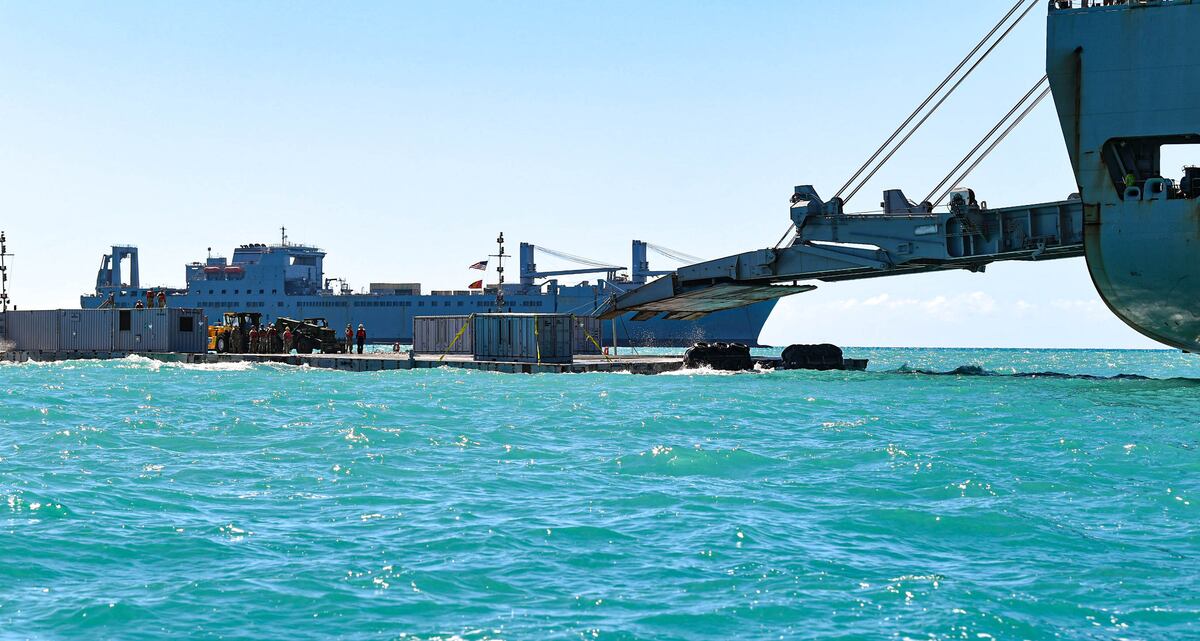
Seeking to move away from its reliance on hauling equipment back stateside for repairs, the Pentagon is working with allies and partners to better sustain capability forward in operational theaters , beginning with the Indo-Pacific region.
Being able to fix gear close to the fight is considered critical to any future conflict with China, according to officials.
The Pentagon recently released a regional sustainment framework that would “satisfy demand closer to the point of need,” while enhancing both U.S. and regional partners’ capabilities, Assistant Secretary of Defense for Sustainment Christopher Lowman told reporters at a recent briefing.
“For the past two and a half years, we’ve been focused on the realities of sustaining the U.S. joint force in a contested theater and what it would take to ensure success and mitigate some of the risk of relying on long, over-ocean lines of communication to retrograde equipment back to the United States for repair and then return,” Lowman said.
Historically, sustainment has been viewed solely as a national responsibility , with the U.S. government sustaining its own forces in theater.
The Pentagon’s new, partner-focused plans are “really a recognition that sustainment can be performed through a coalition and a network of regional providers, because each of those regional allies has capability, industrial capability, maintenance, repair and overhaul capability and a desire to support the work,” Lowman said.
The idea is not to build new maintenance and repair capabilities in theater, but to take advantage of what already exists while “making the appropriate changes to accommodate specific U.S. needs and then utilizing that through a joint venture arrangement, as opposed to a U.S. funded, built, owned and operated capability,” Lowman said.
The Pentagon’s under secretary of defense for acquisition and sustainment, Bill LaPlante, and Lowman recently signed the strategy laying out the regional sustainment framework to align maintenance, repair and overhaul capabilities globally.
Such a strategy would cover sustaining equipment that has experienced normal wear and tear or battle damage.
The framework will also provide theater commanders multiple options to redirect equipment sustainment and “creates a higher level of uncertainty within adversaries’ planning cycles, and thereby enhancing deterrence,” Lowman said.
The plan is to establish the framework in the Indo-Pacific theater first, and the Defense Department is already working with five nations there to put together maintenance, repair and overhaul capability for American and partner equipment.
Lowman said he was unable to disclose the countries the U.S. is working with in the Pacific as terms of agreements are still being negotiated.
But he said the Defense Department is working with five Indo-Pacific countries to establish appropriate projects and to identify industrial partners, both U.S. and regionally based.
The Pentagon plans to build out regional sustainment partnerships within the European and Middle East theaters in fiscal 2025, followed by South America in FY26 and Africa later on, Lowman said.
INDOPACOM is being prioritized given the U.S. national defense strategy’s focus on China as the pacing threat, but also because it presents the greatest contested logistics challenge because relying on long, over-the-ocean lines will no longer prove effective if the U.S. finds itself in a war against China.
Already in the European theater, because of support for Ukraine’s fight against the Russian invasion, sustainment partnership capabilities are emerging within the context of NATO cooperation, but the Pentagon plans to apply lessons learned from the INDOPACOM pathfinder effort to other key theaters, according to Lowman.
Ideally, regional partners will come to the table with existing capability because those countries are similarly equipped, or are equipped with U.S. produced weapon systems, “so they have repair capabilities that we’ll capitalize on,” he said.
The Defense Department will also take a look at capabilities like shipyards that are not currently configured to accommodate America’s specific requirements, but would require money for expansions and workforce training, Lowman said.
Less desirable, but also under consideration, is to look at places where capability does not exist and build it, but “that would entail the greatest amount of capital investment,” Lowman added.
Already, the U.S. has seen what regional sustainment can look like through small examples during major exercises like Talisman Sabre in Australia . During the exercise, a vehicle was damaged during a road march and was able to be repaired in country using Australian parts.
In addition to the regional sustainment framework, Lowman said the Pentagon is also engaged in a major push to use advanced manufacturing techniques forward in theater, such as additive or subtractive manufacturing and 3D printing to make parts.
“What we’re doing is enabling a digital framework in order to transmit intellectual property to the point of manufacture and then, of course, secure that intellectual property at the point of manufacture and finally to ensure that the parts produced meet our standards of manufacture so that they’re safe and suitable to operate,” Lowman said.
Jen Judson is an award-winning journalist covering land warfare for Defense News. She has also worked for Politico and Inside Defense. She holds a Master of Science degree in journalism from Boston University and a Bachelor of Arts degree from Kenyon College.
为了摆脱将装备运回美国本土进行维修的依赖,五角大楼正与盟友和伙伴合作,以更好地在作战区域(首先是印太地区)维持前沿作战能力。
官员们表示,能够在靠近战场的地方修理装备对于未来与中国的任何冲突都至关重要。
五角大楼最近发布了一项区域保障框架,该框架将“在更接近需求点的地方满足需求”,同时增强美国及其区域伙伴的能力。负责保障的助理部长克里斯托弗·洛曼在最近的一次简报会上告诉记者。
洛曼说:“在过去的两年半里,我们一直专注于在竞争激烈的战区维持美国联合部队的现实情况,以及如何确保成功并减轻依赖漫长的跨洋通信线路将装备撤回美国进行维修然后再返回所带来的风险。”
从历史上看,后勤保障一直被视为纯粹的国家责任,美国政府负责保障其在战区的部队。
洛曼表示,五角大楼以合作伙伴为中心的新计划“实际上承认,可以通过联盟和区域供应商网络来执行保障工作,因为每个区域盟友都拥有能力、工业能力、维护、修理和大修能力,并且渴望支持这项工作。”
洛曼表示,其理念并非在战区建立新的维护和修理能力,而是利用现有的能力,同时“做出适当的改变以适应美国的具体需求,然后通过合资安排来利用这些能力,而不是由美国出资、建造、拥有和运营的能力”。
五角大楼负责采购和保障的国防部副部长比尔·拉普兰特和洛曼最近签署了一项战略,该战略制定了区域保障框架,以协调全球的维护、修理和大修能力。
这样的策略将涵盖对遭受正常磨损或战斗损伤的装备进行维护。
洛曼表示,该框架还将为战区指挥官提供多种重新分配装备保障的选择,“在对手的计划周期内创造更高程度的不确定性,从而增强威慑力”。
该计划是先在印太地区建立框架,国防部已经与该地区的五个国家合作,为美国及其伙伴国的装备建立维护、修理和大修能力。
洛曼表示,由于协议条款仍在谈判中,他无法透露美国在太平洋地区与哪些国家开展合作。
但他表示,国防部正在与五个印太国家合作,以建立合适的项目并确定工业合作伙伴,包括美国本土和区域内的合作伙伴。
洛曼表示,五角大楼计划在 2025 财年在欧洲和中东地区建立区域保障合作伙伴关系,随后在 2026 财年扩展到南美洲,之后再扩展到非洲。
鉴于美国国家安全战略将中国视为主要威胁,印太司令部被列为优先事项,同时也因为它带来了最大的后勤挑战,因为如果美国与中国开战,依靠漫长的跨洋运输将不再有效。
据洛曼称,由于支持乌克兰对抗俄罗斯入侵,欧洲战场上已经出现了保障伙伴关系能力,这是北约合作的成果。但五角大楼计划将从印太司令部探路者行动中吸取的经验教训应用到其他关键战场。
他说:“理想情况下,区域伙伴将带着现有的能力参与谈判,因为这些国家装备类似,或者装备了美国生产的武器系统,所以他们拥有我们可以利用的维修能力。”
洛曼表示,国防部还将考察一些目前尚未配置以满足美国具体需求的设施,例如造船厂,但这些设施需要资金进行扩建和员工培训。
洛曼补充说,虽然不太理想,但也在考虑之中,那就是在缺乏相关能力的地方进行建设,但这“将需要最大的资本投资”。
美国已经通过一些小型案例,例如在澳大利亚举行的“护身军刀”大型演习,看到了区域后勤保障的运作模式。演习期间,一辆车辆在行军途中受损,但使用澳大利亚提供的零部件在当地进行了维修。
除了区域保障框架外,洛曼表示,五角大楼还在大力推进在战区使用先进制造技术,例如增材制造或减材制造以及 3D 打印来制造零件。
“我们正在做的是建立一个数字化框架,以便将知识产权传递到生产环节,然后在生产环节保护这些知识产权,最后确保生产的零件符合我们的制造标准,从而安全且适合运行,”洛曼说。
珍·贾德森是一位屡获殊荣的记者,为《防务新闻》报道陆地战争。她也曾为《政治报》和《内幕防务》工作。她拥有波士顿大学新闻学硕士学位和凯尼恩学院文学学士学位。