All that’s left: A self-defeating semiconductor export tactic for China剩下的只有:中国一项适得其反的半导体出口策略
Opinion: If we do not get our semiconductor export control strategy right, not much else matters when it comes to the technology arms race with China.
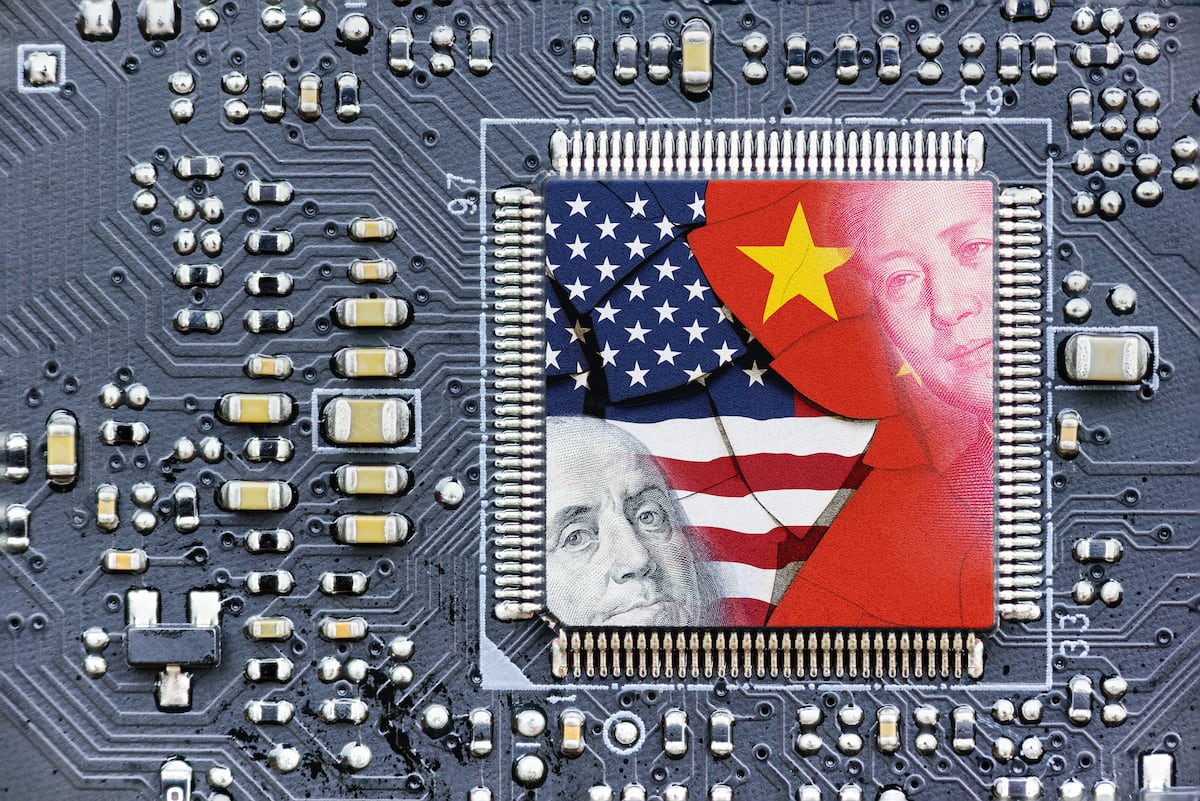
The Biden administration has two tactics to slow — or ideally halt — China’s indigenous development of its advanced semiconductor sector. The core tactic is extensive, unprecedented, unilateral export controls on American advanced semiconductor technology to China.
Supporting this core approach is the ad hoc tactic of periodically badgering key semiconductor countries to follow our export controls so that their semiconductor businesses do not simply take over the significant market share in China required to be abandoned by American semiconductor companies.
In January of this year , I predicted this supporting tactic would fail. In April, it did.
The Netherlands and Japan both refused senior U.S. officials’ requests for tighter export controls because these two key semiconductor supply chain countries wanted additional time to evaluate their existing export controls and to see who would win the upcoming U.S. election. Germany’s response was neutral, neither signaling support nor rejecting the U.S. officials’ requests.
Since then, crickets.
That leaves only the core tactic, which on its own is self-defeating. The competing semiconductor businesses of these key three semiconductor countries, along with South Korea and Taiwan, will simply vacuum up the abandoned American semiconductor market share in China. In those embarrassing parts of the advanced semiconductor supply chain where the semiconductor companies are completely absent from American shores, the sales to China will now still go through.
China is the “pacing challenge” for the U.S. As previously explained , semiconductors are not simply another important technology or even a first-among-equals technology; semiconductors are alone in a class of the first order because they undergird all other advanced technologies.
Dishearteningly, the Biden administration doesn’t even have a strategy for this apex technology. Headlines, such as “Blacklisted China chipmaker SMIC becomes the world’s second-largest pure-play foundry by revenue — outsells GlobalFoundries and others,” confirm the real-world consequences of this strategy void.
As if this were not disastrous enough, with certain types of Chinese advanced technology armaments we currently face, such as hypersonic missiles , or might expect to face in the future, such as autonomous killer robots , there are many additional physical components to these weapons that might be successfully caught by either our own or other U.S. allies’ export controls because they are physical things. When it comes to artificial intelligence, however, once you have the high-end silicon, you need only the software algorithms and large data sets.
While technically such advanced AI technology would be likely caught by either our own or other U.S. allies’ export controls, the real-world, practical difficulty of stopping such AI technology transfer is almost insurmountable because no physical goods are involved. An electrical outlet, a laptop and internet access are all that is needed for this AI technology to be transported to China.
That is particularly the case when the AI software is open source instead of proprietary. For example, Meta Platforms, which owns Facebook, has adopted an open-source AI software business model that allegedly contains national security safeguards. That has not stopped China from using this advanced AI software as the base for a majority of its homegrown AI models. That makes the state of play for China’s advanced semiconductors all the more critical as a last line of defense.
So if China succeeds in buying from other countries the advanced semiconductor technology America has either banned its own companies from selling to China or would if they were domestically resident, expect China’s cyberattacks, biological weapons, robotic submarines, warships, fighter jets, swarming aerial drones and ground combat vehicles to be powered by AI.
And of course when AI is being considered as significant an inflection point equivalent in human history as fire, electricity, the internet or nuclear weapons, the implications to our and our allies’ economies versus China cannot be exaggerated. As succinctly explained by historian Michael Mastanduno, “ military power rests upon a foundation of economic power both qualitatively and quantitatively.”
During the second presidential debate in 1992, Ross Perot famously said the North American Free Trade Agreement would create a “giant sucking sound” of American jobs to Mexico. China is creating a second giant sucking sound by buying from our foreign competitors as much advanced semiconductor technology as possible. This time, the giant sucking sound from China is because there is no export control treaty — only a failed, voluntary export control regime known as the Wassenaar Arrangement, with Russia as its most notorious member.
Thus, it is only a slight exaggeration to state that if we do not get our semiconductor export control strategy right, not much else matters when it comes to the technology arms race with China.
Given deepening cooperation between China and Russia , especially regarding semiconductors, our semiconductor export control strategy cannot be just about China. More than 80% of the semiconductors that Russia has purchased since its full-scale invasion of Ukraine in 2022 have come directly from China. This shockingly high number is yet another example of how critical it is that we get a strategy — and get the right one. This deep semiconductor linkage between China and Russia is another arrow in U.S. officials’ quiver for European countries such as the Netherlands and Germany, who are equivocating regarding tighter semiconductor export controls on China.
I have argued before in short and long form that we need a semiconductor export control strategy — not failed and self-defeating tactics. Our relationships with the Netherlands, Germany, South Korea, Japan and Taiwan are multifaceted and deep, and they contain within them many potential horse trades we could make if we were determined to create a binding semiconductor export control treaty among us that is focused on China, Russia, North Korea and Iran.
The People’s Liberation Army recently surrounded Taiwan’s main island, as well as smaller islands like Matsu and Kinmen, as “punishment” because of Taiwan’s recent inauguration of its democratically elected president, Lai Ching-te. According to Taiwanese military experts , these PLA military drills simulated for the first time a full-scale attack rather than an economic blockade. There is no time to waste.
André Brunel is an international technology attorney with Reiter, Brunel and Dunn. This commentary was adapted from his article published in the Journal of Business & Technology Law. The views and opinions expressed in this commentary are his and do not necessarily reflect the views or positions of the law firm or any clients it represents.
拜登政府采取了两项策略来减缓——或者理想情况下是阻止——中国自主发展先进半导体产业。其核心策略是对美国先进半导体技术向中国实施广泛且史无前例的单方面出口管制。
为了支持这一核心方针,我们采取了一种临时策略,即定期向主要半导体国家施压,要求它们遵守我们的出口管制,以免它们的半导体企业轻易占据美国半导体公司必须放弃的中国市场的重要份额。
今年一月,我预测这种支持策略会失败。四月,结果证明我的预测是正确的。
荷兰和日本都拒绝了美国高级官员提出的加强出口管制的要求,因为这两个重要的半导体供应链国家希望有更多时间评估现有的出口管制措施,并观察即将到来的美国大选结果。德国的反应则保持中立,既没有表示支持,也没有拒绝美国官员的要求。
此后,杳无音讯。
这样一来,就只剩下核心策略了,而这本身就是个失败的策略。这三大半导体强国以及韩国和台湾的半导体企业,将轻易地蚕食掉美国在中国放弃的半导体市场份额。在先进半导体供应链中那些令人尴尬的环节——美国半导体公司完全缺席——对华销售依然能够进行。
中国是美国的“步伐挑战”。正如之前解释的那样,半导体不仅仅是另一项重要的技术,甚至不仅仅是同等重要的技术;半导体是独一无二的,因为它们支撑着所有其他先进技术。
令人沮丧的是,拜登政府甚至没有针对这项尖端技术的战略。诸如“被列入黑名单的中国芯片制造商中芯国际按营收计算成为全球第二大纯晶圆代工厂——销量超过格罗方德等公司”之类的标题,证实了这一战略在现实世界中毫无意义。
如果这还不够糟糕的话,我们目前面临的某些中国先进技术武器,例如高超音速导弹,或者未来可能面临的武器,例如自主杀手机器人,都包含许多额外的物理组件,这些组件由于是实物,很容易被我们自己或其他美国盟友的出口管制条例拦截。然而,对于人工智能而言,一旦拥有了高端芯片,只需要软件算法和庞大的数据集即可。
虽然从技术上讲,这种先进的人工智能技术很可能受到美国自身或其他盟友的出口管制,但实际上,阻止此类人工智能技术转让的难度几乎是无法克服的,因为其中不涉及任何实物。只需一个电源插座、一台笔记本电脑和互联网接入,这项人工智能技术就能被转移到中国。
当人工智能软件是开源而非专有软件时,情况尤其如此。例如,拥有Facebook的Meta Platforms公司采用了一种开源人工智能软件商业模式,据称其中包含国家安全保障措施。但这并未阻止中国将这种先进的人工智能软件作为其大部分自主研发人工智能模型的基础。这使得中国先进半导体作为最后一道防线的现状显得尤为关键。
因此,如果中国成功从其他国家购买到美国已经禁止本国公司向中国出售或如果这些公司是本国居民就会被禁止向中国出售的先进半导体技术,那么可以预见,中国的网络攻击、生物武器、无人潜艇、军舰、战斗机、集群无人机和地面作战车辆都将由人工智能驱动。
当然,当人工智能被视为与火、电、互联网或核武器一样,是人类历史上一个意义重大的转折点时,它对我们及盟友经济(尤其是与中国经济)的影响就不容低估了。正如历史学家迈克尔·马斯坦杜诺精辟地指出,“军事力量无论在质还是量上,都建立在经济力量的基础之上。”
在1992年的第二次总统辩论中,罗斯·佩罗曾发表著名言论,称《北美自由贸易协定》将使美国的工作岗位“像被吸走一样”大量流失到墨西哥。如今,中国正通过尽可能多地从我们的外国竞争对手那里购买先进的半导体技术,制造出第二次“吸走”的声音。这一次,中国“吸走”美国工作岗位的原因是,目前没有出口管制条约——只有一项失败的、自愿性的出口管制机制,即瓦塞纳尔安排,而俄罗斯是其中最臭名昭著的成员国。
因此,毫不夸张地说,如果我们不制定正确的半导体出口管制战略,那么在与中国的科技军备竞赛中,其他一切都将变得无关紧要。
鉴于中俄合作日益深化,尤其是在半导体领域,我们的半导体出口管制战略不能仅仅针对中国。自2022年俄罗斯全面入侵乌克兰以来,其购买的半导体产品中超过80%直接来自中国。这一惊人的高比例再次表明,制定战略——而且是制定正确的战略——至关重要。中俄之间这种深厚的半导体联系,也为美国官员提供了又一张王牌,可以用来对付荷兰和德国等在加强对华半导体出口管制问题上态度暧昧的欧洲国家。
我曾多次以简述和详述的方式论证,我们需要的是半导体出口管制战略,而不是失败且适得其反的策略。我们与荷兰、德国、韩国、日本和台湾的关系错综复杂且根深蒂固,如果我们决心在我们之间建立一项具有约束力的半导体出口管制条约,并重点关注中国、俄罗斯、朝鲜和伊朗,那么这些关系中蕴含着许多潜在的利益交换。
近日,解放军包围了台湾本岛以及马祖、金门等小岛,以“惩罚”台湾近期举行民选总统赖清德就职典礼。据台湾军事专家分析,此次解放军军事演习模拟的是全面进攻,而非经济封锁,这在以往是首次。时不我待。
安德烈·布鲁内尔是Reiter, Brunel & Dunn律师事务所的国际技术律师。本文改编自他发表在《商业与技术法杂志》上的文章。文中表达的观点和意见仅代表布鲁内尔本人,并不一定反映律师事务所或其任何客户的观点或立场。