CNA Explains: Beyond the Air India stake, how have SIA's other investments fared?CNA解读:除了印度航空的股份外,新加坡航空的其他投资表现如何?
One analyst says Singapore Airlines' track record of investments in other airlines has been "pretty underwhelming".
One analyst says Singapore Airlines' track record of investments in other airlines has been "pretty underwhelming".
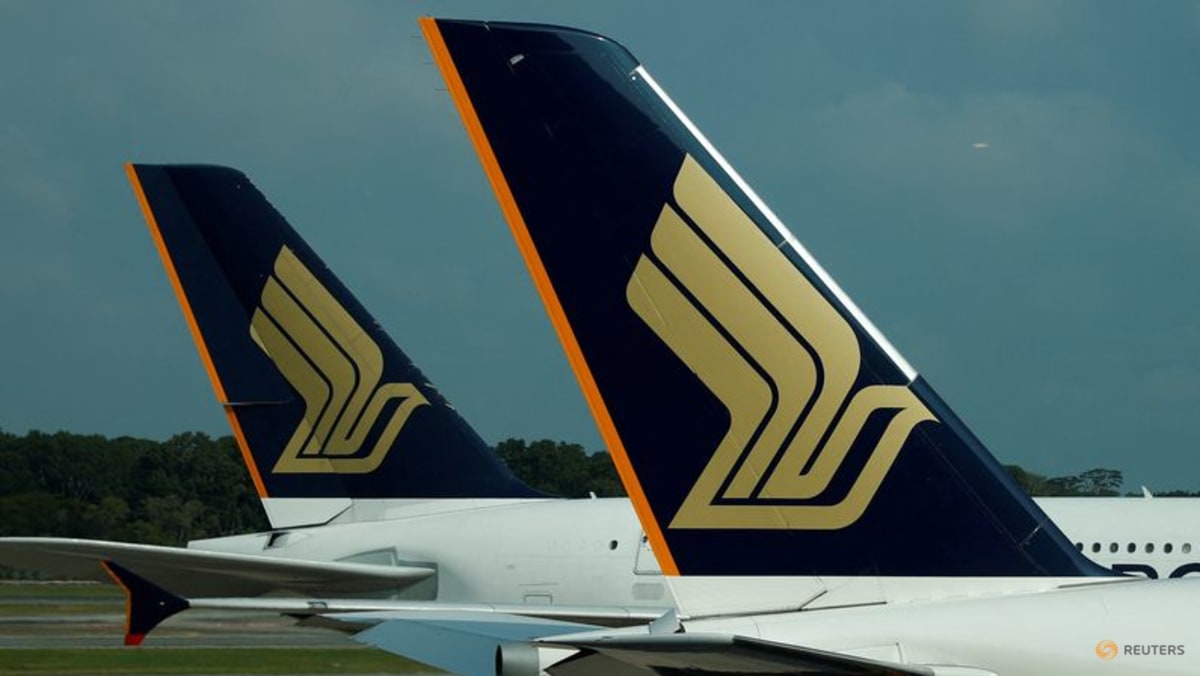
Singapore Airlines planes sit on the tarmac at Singapore's Changi Airport on Mar 11, 2020. (File photo: Reuters/Edgar Su)
This audio is generated by an AI tool.
SINGAPORE: Singapore Airlines’ (SIA) stake in Air India is under scrutiny after the Indian carrier asked its owners last month for a further US$1.5 billion in support following a record annual loss .
The bet is the latest in a series of “underwhelming” investments that Singapore's flag carrier has made in other airlines as it seeks exposure to other markets.
SIA said its investments in India have been and will continue to be funded through internal resources. It owns 25.1 per cent of Air India.
Transport Minister Jeffrey Siow told parliament that SIA’s ability to serve Singaporeans is not affected by its stake in Air India.
CNA Games Guess Word Crack the word, one row at a time Buzzword Create words using the given letters Mini Sudoku Tiny puzzle, mighty brain teaser Mini Crossword Small grid, big challenge Word Search Spot as many words as you can Show More Show Less In response to CNA's queries, SIA said its investments generally aim to strengthen its network and market access, deepen commercial partnerships and support long-term growth beyond Singapore. What happened with SIA's other investments? In 1999, SIA paid £600 million – equivalent to around US$1.6 billion in today's money after accounting for inflation – for 49 per cent of Virgin Atlantic. Reports at the time said the airline had hoped the deal would help it secure approval for transatlantic routes from London, which it did not receive. By 2008, SIA was inviting offers for the stake, noting that the investment had generated poor returns. It eventually sold out for £224 million in 2012. SIA’s 25 per cent stake in Air New Zealand was also heavily diluted after the New Zealand government stepped in to rescue the airline. It sold its 6.3 per cent stake in Air New Zealand for US$336 million in 2004, Reuters reported. Separately, SIA subsidiary Tiger Airways set up an Australian arm that racked up years of losses, Reuters reported. Virgin Australia bought a 60 per cent stake in Tiger Airways Australia in 2013, then acquired the rest of the company for A$1 in 2014. SIA also took a stake in Virgin Australia in 2012 and added to it the following year. The investment was written off after the carrier entered voluntary administration during the COVID-19 pandemic. Budget carrier Scoot, an SIA subsidiary, formed a joint venture with Nok Airlines in Thailand in 2014 but liquidated NokScoot in 2020 amid the pandemic, recording a S$123.6 million (US$97 million) one-off charge, mostly from the impairment of planes leased to the venture. Why have SIA’s investments been lacklustre? DBS Group Research analyst Jason Sum said SIA’s track record of investing in other airlines has been “pretty underwhelming financially”. COVID-19 played a big part in the more recent failures, he said, but not all the investments were affected by external shocks. SIA said it assesses every investment on its own merits, weighing strategic fit, potential long-term value, the operating environment, risk profile and alignment with strategy and capital requirements. "Investment decisions are subject to the appropriate board approvals and the group's disciplined capital allocation framework," a spokesperson said.
In response to CNA's queries, SIA said its investments generally aim to strengthen its network and market access, deepen commercial partnerships and support long-term growth beyond Singapore.
What happened with SIA's other investments?
In 1999, SIA paid £600 million – equivalent to around US$1.6 billion in today's money after accounting for inflation – for 49 per cent of Virgin Atlantic.
Reports at the time said the airline had hoped the deal would help it secure approval for transatlantic routes from London, which it did not receive.
By 2008, SIA was inviting offers for the stake, noting that the investment had generated poor returns. It eventually sold out for £224 million in 2012.
SIA’s 25 per cent stake in Air New Zealand was also heavily diluted after the New Zealand government stepped in to rescue the airline. It sold its 6.3 per cent stake in Air New Zealand for US$336 million in 2004, Reuters reported.
Separately, SIA subsidiary Tiger Airways set up an Australian arm that racked up years of losses, Reuters reported. Virgin Australia bought a 60 per cent stake in Tiger Airways Australia in 2013, then acquired the rest of the company for A$1 in 2014.
SIA also took a stake in Virgin Australia in 2012 and added to it the following year. The investment was written off after the carrier entered voluntary administration during the COVID-19 pandemic.
Budget carrier Scoot, an SIA subsidiary, formed a joint venture with Nok Airlines in Thailand in 2014 but liquidated NokScoot in 2020 amid the pandemic, recording a S$123.6 million (US$97 million) one-off charge, mostly from the impairment of planes leased to the venture.
Why have SIA’s investments been lacklustre?
DBS Group Research analyst Jason Sum said SIA’s track record of investing in other airlines has been “pretty underwhelming financially”.
COVID-19 played a big part in the more recent failures, he said, but not all the investments were affected by external shocks.
SIA said it assesses every investment on its own merits, weighing strategic fit, potential long-term value, the operating environment, risk profile and alignment with strategy and capital requirements.
"Investment decisions are subject to the appropriate board approvals and the group's disciplined capital allocation framework," a spokesperson said.
Mr Sum said one challenge is that SIA often takes minority stakes without full strategic or operational control, meaning it shares in the financial downside without being able to control fleet, network, capacity, costs or management.
Airlines are difficult investments to begin with, he added, being capital-intensive, cyclical businesses with high fixed costs, volatile fuel prices and heavy regulatory constraints.
SIA's stakes have also tended to be in challenging markets or airlines already in need of substantial improvement, he said.
OCBC equity research analyst Ada Lim made a similar point about SIA repeatedly entering structurally difficult markets.
“The carrier has attempted, time and again, to enter the domestic aviation market in Australia, which is reportedly one of the most lucrative in the world due to an effective duopoly structure between Qantas and Virgin Australia,” she said.
However, the duopoly structure is what makes it difficult for new entrants to break in, she added.
What about the Air India investment?
India’s market is “politically and commercially complex” even though it is growing quickly, Ms Lim said.
Unexpected shocks followed the merger of Vistara – which SIA had initially invested in – with Air India, she said, pointing to Pakistan's closure of its airspace to Indian carriers and the Air India Flight 171 crash that killed more than 240 people on board.
SIA said its investment in Air India is a long-term strategic commitment aligned with the group's multi-hub strategy, noting that Air India holds valuable slots and air traffic rights at key domestic and international airports.
"This investment differs from SIA’s previous equity holdings, which were undertaken in different contexts and for different strategic objectives," the airline said.
How else can SIA grow?
Singapore's small size means it has no domestic aviation market and SIA cannot rely on a baseload of domestic traffic, Ms Lim said. This makes overseas expansion a strategic driver as part of its multi-hub strategy.
The airline is also pursuing other avenues for growth, she said, including fleet renewal and premiumisation to target higher-yielding customers, with next-generation first- and business-class seats expected to roll out in the first quarter of next year.
It can also grow its portfolio of network partnerships and tap the ongoing maintenance, repair and overhaul upcycle through SIA Engineering, she added.
Mr Sum said SIA can still grow by increasing transit traffic through Changi Airport, including using Scoot to provide feeder traffic into the network.
Scoot can also expand further into price-sensitive markets or add frequencies and destinations, he said.
Is there a model SIA can follow?
Few examples exist of clearly successful airline acquisitions, especially cross-border minority stakes, Mr Sum said.
"Qatar Airways is probably the clearest example SIA can learn from," he said, noting its sizeable minority stakes in Cathay Pacific and the International Consolidated Airlines Group, parent of British Airways and other carriers.
"Both have generated decent returns while also delivering strategic benefits," he said, adding that a key difference is that Qatar invested in strong airline franchises with valuable hubs, rather than taking minority stakes in businesses requiring major turnarounds.
Want an issue or topic explained? Email us at digitalnews [at] mediacorp.com.sg . Your question might become a story on our site.
Our chief editor shares analysis and picks of the week's biggest news every Saturday.
Get our pick of top stories and thought-provoking articles in your inbox
Stay updated with notifications for breaking news and our best stories
Join our channel for the top reads for the day on your preferred chat app
一位分析师表示,新加坡航空公司对其他航空公司的投资记录“相当令人失望”。
2020年3月11日,新加坡航空公司的飞机停在新加坡樟宜机场的停机坪上。(资料照片:路透社/Edgar Su)
这段音频由人工智能工具生成。
新加坡:印度航空公司(SIA)在印度航空公司上个月因创纪录的年度亏损而向其所有者寻求额外 15 亿美元的支持后,新加坡航空公司持有的印度航空公司股份正受到审查。
此次投资是新加坡国家航空公司为拓展其他市场而对其他航空公司进行的一系列“差强人意”的投资中的最新一笔。
新加坡航空表示,其在印度的投资过去和将来都将继续通过内部资源进行融资。该公司持有印度航空25.1%的股份。
交通部长萧敬腾向国会表示,新加坡航空公司持有印度航空公司的股份不会影响其为新加坡人提供服务的能力。
CNA游戏 猜词游戏 逐行破解单词 流行词游戏 用给定的字母组成单词 迷你数独 小谜题,脑力挑战 迷你填字游戏 小方格,大挑战 单词搜索 尽可能多地找出单词 显示更多 显示更少 针对CNA的询问,新加坡航空表示,其投资通常旨在加强航线网络和市场准入,深化商业伙伴关系,并支持新加坡以外的长期增长。那么,新加坡航空的其他投资情况如何呢?1999年,新加坡航空斥资6亿英镑(按通货膨胀率计算,相当于今天的约16亿美元)收购了维珍航空49%的股份。当时的报道称,该航空公司希望这笔交易能够帮助其获得从伦敦出发的跨大西洋航线的批准,但最终未能如愿。到2008年,新加坡航空开始公开招标出售这些股份,并指出该项投资的回报不佳。最终,该公司于2012年以2.24亿英镑的价格售出。据路透社报道,新西兰政府出手拯救新西兰航空后,新加坡航空持有的25%的股份也被大幅稀释。该公司于2004年以3.36亿美元的价格出售了其持有的新西兰航空6.3%的股份。另据路透社报道,新加坡航空的子公司虎航在澳大利亚设立了分公司,但该公司多年来持续亏损。维珍澳大利亚航空于2013年收购了虎航澳大利亚公司60%的股份,随后于2014年以1澳元的价格收购了剩余股份。新加坡航空也于2012年入股维珍澳大利亚航空,并在次年增持了股份。在新冠疫情期间,维珍澳大利亚航空进入自愿托管程序后,这笔投资被注销。新加坡航空(SIA)旗下的廉价航空公司酷航(Scoot)于2014年与泰国鸟航(Nok Airlines)成立合资企业,但在2020年新冠疫情期间清算了NokScoot,并计入了1.236亿新元(约合9700万美元)的一次性费用,主要来自租赁给该合资企业的飞机的减值。为什么新航的投资表现平平?星展集团研究分析师Jason Sum表示,新航对其他航空公司的投资记录“在财务上相当令人失望”。他指出,新冠疫情在近期的失败中扮演了重要角色,但并非所有投资都受到了外部冲击的影响。新航表示,公司会根据每项投资的具体情况进行评估,权衡其战略契合度、潜在的长期价值、运营环境、风险状况以及与公司战略和资本需求的匹配度。“投资决策须经董事会批准,并遵循集团严格的资本配置框架,”一位发言人表示。
针对 CNA 的询问,新加坡航空公司表示,其投资通常旨在加强其网络和市场准入,深化商业伙伴关系,并支持新加坡以外的长期增长。
新航的其他投资情况如何?
1999 年,新加坡航空斥资 6 亿英镑(按今天的币值计算,经通货膨胀调整后约为 16 亿美元)收购了维珍航空 49% 的股份。
当时的报道称,该航空公司希望这笔交易能够帮助其获得从伦敦出发的跨大西洋航线的批准,但最终并未获得批准。
到2008年,新加坡航空开始邀请各方报价收购其持有的股份,并指出该项投资回报不佳。最终,该公司于2012年以2.24亿英镑的价格出售了这些股份。
据路透社报道,新西兰政府出手拯救新西兰航空后,新加坡航空持有的25%股份也被大幅稀释。该公司于2004年以3.36亿美元的价格出售了其持有的6.3%的新西兰航空股份。
据路透社报道,新加坡航空旗下子公司虎航在澳大利亚设立的分支机构多年来持续亏损。维珍澳大利亚航空于2013年收购了虎航澳大利亚公司60%的股份,随后于2014年以1澳元的价格收购了剩余股份。
新加坡航空于2012年入股维珍澳大利亚航空,并在次年继续增持。在新冠疫情期间,维珍澳大利亚航空进入自愿托管程序后,这笔投资被注销。
廉价航空公司酷航(Scoot)是新加坡航空(SIA)的子公司,于 2014 年与泰国 Nok Airlines 成立合资企业,但在 2020 年疫情期间清算了 NokScoot,并计提了 1.236 亿新元(9700 万美元)的一次性费用,主要来自租赁给该合资企业的飞机的减值。
新加坡航空的投资为何表现平平?
星展集团研究分析师Jason Sum表示,新加坡航空投资其他航空公司的记录“在财务上相当令人失望”。
他表示,新冠疫情在最近的失败案例中起到了重要作用,但并非所有投资都受到了外部冲击的影响。
新加坡航空公司表示,公司会根据每项投资的具体情况进行评估,权衡战略契合度、潜在的长期价值、运营环境、风险状况以及与战略和资本需求的匹配度。
一位发言人表示:“投资决策须经董事会适当批准,并遵守集团严格的资本配置框架。”
森先生表示,其中一个挑战是,新加坡航空通常只持有少数股权,而没有完全的战略或运营控制权,这意味着它会分担财务上的不利影响,却无法控制机队、网络、运力、成本或管理。
他还补充说,航空公司本身就是很难投资的行业,因为它们是资本密集型、周期性行业,固定成本高,燃油价格波动大,而且监管限制严格。
他还表示,新加坡航空的投资往往集中在充满挑战的市场或本身就需要大幅改进的航空公司。
华侨银行股票研究分析师 Ada Lim 也表达了类似的观点,认为新加坡航空屡次进入结构性困难的市场。
“该航空公司曾多次尝试进入澳大利亚国内航空市场,据报道,由于澳航和维珍澳大利亚航空之间有效的双寡头垄断结构,澳大利亚国内航空市场是世界上最赚钱的市场之一,”她说。
她补充说,正是这种双寡头垄断结构使得新进入者难以打入市场。
印度航空的投资情况如何?
林女士表示,尽管印度市场增长迅速,但其“政治和商业环境仍然十分复杂”。
她表示,Vistara(新加坡航空最初投资的公司)与印度航空合并后,出现了意想不到的冲击,例如巴基斯坦对印度航空公司关闭领空,以及印度航空171号航班坠毁,造成机上240多人死亡。
新加坡航空表示,其对印度航空的投资是一项长期战略承诺,符合集团的多枢纽战略,并指出印度航空在重要的国内和国际机场拥有宝贵的航班时刻和空中交通管制权。
“这项投资与新加坡航空以往的股权投资有所不同,以往的投资是在不同的背景下进行的,目的是实现不同的战略目标,”该航空公司表示。
SIA还能通过哪些其他方式发展壮大?
林女士表示,新加坡国土面积小,没有国内航空市场,新航无法依赖国内客运量作为主要客源。因此,海外扩张成为其多枢纽战略的重要驱动力。
她表示,该航空公司还在寻求其他增长途径,包括机队更新和高端化,以吸引收益更高的客户,预计下一代头等舱和商务舱座椅将于明年第一季度推出。
她补充说,该公司还可以扩大其网络合作伙伴关系组合,并通过新加坡航空工程公司利用持续的维护、修理和大修升级循环。
森先生表示,新加坡航空公司仍可通过增加樟宜机场的转机客流量来实现增长,包括利用酷航提供支线客流进入其航线网络。
他还表示,酷航还可以进一步拓展对价格敏感的市场,或者增加航班频次和目的地。
SIA可以借鉴哪些模式?
苏先生表示,航空公司收购案中真正成功的案例很少,尤其是跨境少数股权收购。
“卡塔尔航空可能是新加坡航空可以学习的最明显的例子,”他说道,并指出新加坡航空持有国泰航空和国际航空集团(英国航空和其他航空公司的母公司)的大量少数股权。
“两者都产生了可观的回报,同时也带来了战略利益,”他说道,并补充说,关键区别在于卡塔尔投资的是拥有宝贵枢纽的实力雄厚的航空公司特许经营权,而不是收购需要重大转型的企业的少数股权。
想了解某个问题或话题?请发送邮件至 digitalnews [at] mediacorp.com.sg。您的提问可能会成为我们网站上的报道内容。
我们的主编每周六都会分享对本周重大新闻的分析和精选。
订阅我们的邮件,即可获取精选热点新闻和引人深思的文章。
订阅通知,第一时间获取突发新闻和精彩报道。
加入我们的频道,即可在您常用的聊天应用上获取当日热门文章。