Watch A P-3 Submarine Hunter’s Sonobuoy Dramatically Transform Once In The Water观看P-3反潜巡逻机的声呐浮标入水后的惊人变化
The secret lives of sonobuoys.
新闻视频
Updated Nov 26, 2021 7:34 PM EST
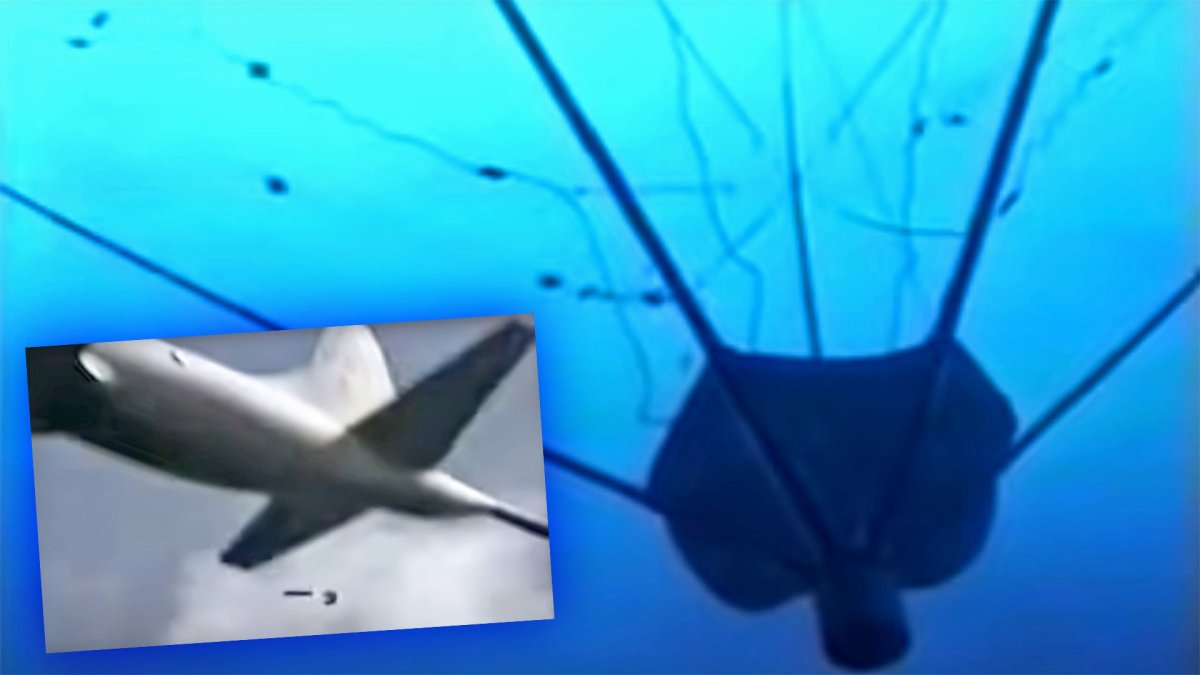
Sonobuoys are absolutely critical tools in a Navy’s efforts to keep enemy submarines at bay. We see them chucked out of maritime patrol aircraft and helicopters over and over again, but we really haven’t seen how they can transform once in the water. A video that came to our attention via @RealAirPower1 on Twitter, shows exactly that, with one advanced sonobuoy going through a total metamorphosis of shape and structure once at depth.
There are a number of types of sonobuoys that do different things, but they all fall primarily into two classes, active and passive. Active send actual acoustic pings through the water looking for the return off of a submarine’s hull, while passive buoys allow for listening for the sounds made by submarines. Active buoys are usually more complex and far more expensive than their passive counterparts. Remember, these are disposable pieces of hardware. You can read all about the difference and how active buoys are becoming more essential than ever in this past feature of ours .
Some passive sonobuoys are also quite complex as they can rely on detecting and processing active sonar returns from pings that originate from a different source. This is called a bistatic sonar concept.
Such a system is exactly what we are seeing in the video. It appears to be AN/SSQ-101 Air-Deployable Active Recieve (ADAR) sonobuoy, which is a remarkably complex passive sonobuoy. It fits in an A-sized sonobuoy canister like most sonobuoys, but the look of this container is very deceiving.
Once it hits the water, the sonobuoy packed inside breaks into sections that drop down further into the water and it ultimately deploys a massive pentagram-shaped hydrophone array consisting of a whopping 40 hydrophones. It takes around 240 seconds, or four minutes, for the entire array to deploy and become fully operational. Once it is, and other active sonar systems are in use, it can provide very accurate location info of a target.
Sonobuoytechsystems.com
Here is a bit more about the system from FAS.org :
The AN/SSQ-101 Air Deployable Active Receiver (ADAR) sonobuoy is an A-size, expendable, non-repairable sonobuoy. It is an acoustic data receiver capable of in-buoy beamforming and transmission of received real-time acoustic signals back to any monitoring unit(s). The primary mission is to receive active search signals (i.e., long-range echo detection of quiet, slow moving targets). The ADAR does not drive technological breakthroughs, but does use existing hardware and processing technology. The ADAR sonobuoy is an expendable unit capable of receiving UHF downlink commands and sending real-time beamformed acoustic data via a VHF digital uplink to the monitoring unit. The ADAR will be a free-floating acoustic data receiver that will operate in conjunction with an acoustic source. The buoy will also scuttle automatically upon detection of a low voltage state or completion of its six-hour life.The ADAR is expended by all compatible ASW aircraft or OTS by shipboard personnel and operated in conjunction with an independent transmitting acoustic source. The EFS selector is used to select depth (one of three) and the default acoustic beamform band (one of two). Once in the water the acoustic frequency band can be changed, the RF channel can be changed, and the RF can be turned on or off via downlink command function select. Once activated, the sonobuoy receives, beamforms, and transmits real-time acoustic data in the selected frequency band to the monitoring unit. The separately deployed acoustic source will be commanded to “ping,” ensonifying the water and any target present, generating an acoustic “return” that is received and transmitted by the ADAR receiver. Aboard the monitoring unit, the data is processed and displayed (visual and aural), providing the operator a means of determining range, bearing, amplitude and possibly Doppler (coherent acoustic sources only) on submarine targets.
The AN/SSQ-101 Air Deployable Active Receiver (ADAR) sonobuoy is an A-size, expendable, non-repairable sonobuoy. It is an acoustic data receiver capable of in-buoy beamforming and transmission of received real-time acoustic signals back to any monitoring unit(s). The primary mission is to receive active search signals (i.e., long-range echo detection of quiet, slow moving targets). The ADAR does not drive technological breakthroughs, but does use existing hardware and processing technology.
The ADAR sonobuoy is an expendable unit capable of receiving UHF downlink commands and sending real-time beamformed acoustic data via a VHF digital uplink to the monitoring unit. The ADAR will be a free-floating acoustic data receiver that will operate in conjunction with an acoustic source. The buoy will also scuttle automatically upon detection of a low voltage state or completion of its six-hour life.The ADAR is expended by all compatible ASW aircraft or OTS by shipboard personnel and operated in conjunction with an independent transmitting acoustic source. The EFS selector is used to select depth (one of three) and the default acoustic beamform band (one of two).
Once in the water the acoustic frequency band can be changed, the RF channel can be changed, and the RF can be turned on or off via downlink command function select. Once activated, the sonobuoy receives, beamforms, and transmits real-time acoustic data in the selected frequency band to the monitoring unit. The separately deployed acoustic source will be commanded to “ping,” ensonifying the water and any target present, generating an acoustic “return” that is received and transmitted by the ADAR receiver. Aboard the monitoring unit, the data is processed and displayed (visual and aural), providing the operator a means of determining range, bearing, amplitude and possibly Doppler (coherent acoustic sources only) on submarine targets.
The AN/SSQ-101, it’s not only a sonobuoy, it’s a transformer.
Contact the author: Tyler@thedrive.com
Comments couldn’t be loaded. Please refresh the page.
更新于美国东部时间2021年11月26日晚上7:34。
声呐浮标是海军拦截敌方潜艇的关键工具。我们经常看到它们从海上巡逻机和直升机上投放,但却很少见到它们入水后的变化。一段来自推特用户@RealAirPower1 的视频恰好展示了这一过程:一个先进的声呐浮标在深海中经历了彻底的形状和结构变化。
声呐浮标种类繁多,功能各异,但主要可分为两大类:主动式和被动式。主动式浮标会向水中发射声波,寻找潜艇船体的回声;而被动式浮标则用于监听潜艇发出的声音。主动式浮标通常比被动式浮标更复杂、更昂贵。请记住,这些都是一次性硬件。您可以在我们之前的专题文章中详细了解主动式和被动式浮标的区别,以及它们为何变得比以往任何时候都更加重要。
有些被动式声呐浮标也相当复杂,因为它们可以依靠探测和处理来自不同来源的声呐脉冲回波。这被称为双基地声呐概念。
视频中展示的正是这样的系统。它似乎是AN/SSQ-101型空射主动接收(ADAR)声呐浮标,这是一种结构极其复杂的被动式声呐浮标。它像大多数声呐浮标一样,可以装入A型声呐浮标罐中,但这个容器的外观极具迷惑性。
入水后,内置的声呐浮标会分解成多个部分,这些部分会进一步下沉到水中,最终展开一个巨大的五角星形水听器阵列,该阵列由多达40个水听器组成。整个阵列展开并完全投入使用大约需要240秒,也就是四分钟。一旦阵列展开并与其他主动声呐系统配合使用,它就能提供目标的非常精确的位置信息。
Sonobuoytechsystems.com
以下是来自 FAS.org 的关于该系统的更多信息:
AN/SSQ-101 空射型主动接收机 (ADAR) 声呐浮标是一种 A 型一次性、不可修复的声呐浮标。它是一种声学数据接收器,能够在浮标内进行波束成形,并将接收到的实时声学信号传输回任何监测单元。其主要任务是接收主动搜索信号(即,对安静、低速移动目标进行远程回波探测)。ADAR 本身并没有带来技术突破,而是利用了现有的硬件和处理技术。ADAR 声呐浮标是一种一次性装置,能够接收超高频 (UHF) 下行链路指令,并通过甚高频 (VHF) 数字上行链路向监测单元发送实时波束成形声学数据。ADAR 将是一种自由漂浮的声学数据接收器,需要与声源配合使用。当检测到低电压状态或六小时寿命结束时,浮标将自动沉没。ADAR 可由所有兼容的反潜战飞机或舰载作战系统 (OTS) 人员投放,并与独立的发射声源配合使用。 EFS选择器用于选择深度(三个选项之一)和默认声波束形成频段(两个选项之一)。入水后,可以通过下行链路命令功能选择来更改声波频段、射频通道以及开启或关闭射频功能。激活后,声呐浮标会在选定的频段内接收、形成波束并向监控单元发送实时声学数据。单独部署的声源将被指令发出“脉冲”声波,向水体和任何目标发出声波,产生由ADAR接收器接收和发送的声学“回波”。在监控单元上,数据将被处理并显示(视觉和听觉),使操作员能够确定潜艇目标的距离、方位、振幅以及可能的Doppler(仅限相干声源)。
AN/SSQ-101 空射型主动接收器 (ADAR) 声呐浮标是一种 A 型一次性、不可修复的声呐浮标。它是一种声学数据接收器,能够在浮标内进行波束成形,并将接收到的实时声学信号传输回任何监测单元。其主要任务是接收主动搜索信号(即,对安静、低速移动目标进行远距离回波探测)。ADAR 本身并没有带来技术突破,而是采用了现有的硬件和处理技术。
ADAR声呐浮标是一种一次性装置,能够接收UHF下行链路指令,并通过VHF数字上行链路向监测单元发送实时波束成形声学数据。ADAR是一种自由漂浮的声学数据接收器,需与声源配合使用。当检测到低电压状态或六小时使用寿命结束时,浮标将自动沉没。ADAR可由所有兼容的反潜飞机或舰载作战系统(OTS)人员使用,并与独立的发射声源配合操作。EFS选择器用于选择深度(三个选项之一)和默认声波束成形频段(两个选项之一)。
入水后,声呐浮标可通过下行链路指令功能选择来更改声学频段、射频通道以及开启或关闭射频功能。激活后,浮标接收、波束成形并将选定频段的实时声学数据发送至监控单元。单独部署的声源将被指令发出“脉冲”声波,向水体和目标区域发射声波,产生声学“回波”,该回波由ADAR接收机接收和发送。监控单元对数据进行处理并以视觉和听觉方式显示,使操作员能够确定潜艇目标的距离、方位、振幅以及可能的多普勒频移(仅限相干声源)。
AN/SSQ-101 不仅仅是一个声呐浮标,它还是一个变压器。
联系作者:Tyler@thedrive.com
评论加载失败,请刷新页面。