The U.S. Sold This Unique Stealth Drone Called ‘Scarab’ To Egypt In The 1980s上世纪80年代,美国向埃及出售了这款名为“圣甲虫”的独特隐形无人机。
The Egyptians never even unboxed most of the unmanned aircraft, which were state-of-the-art for their time, but they may still be flying some of them.
新闻视频
By Joseph Trevithick and Tyler Rogoway
Updated Dec 1, 2019 7:06 AM EST
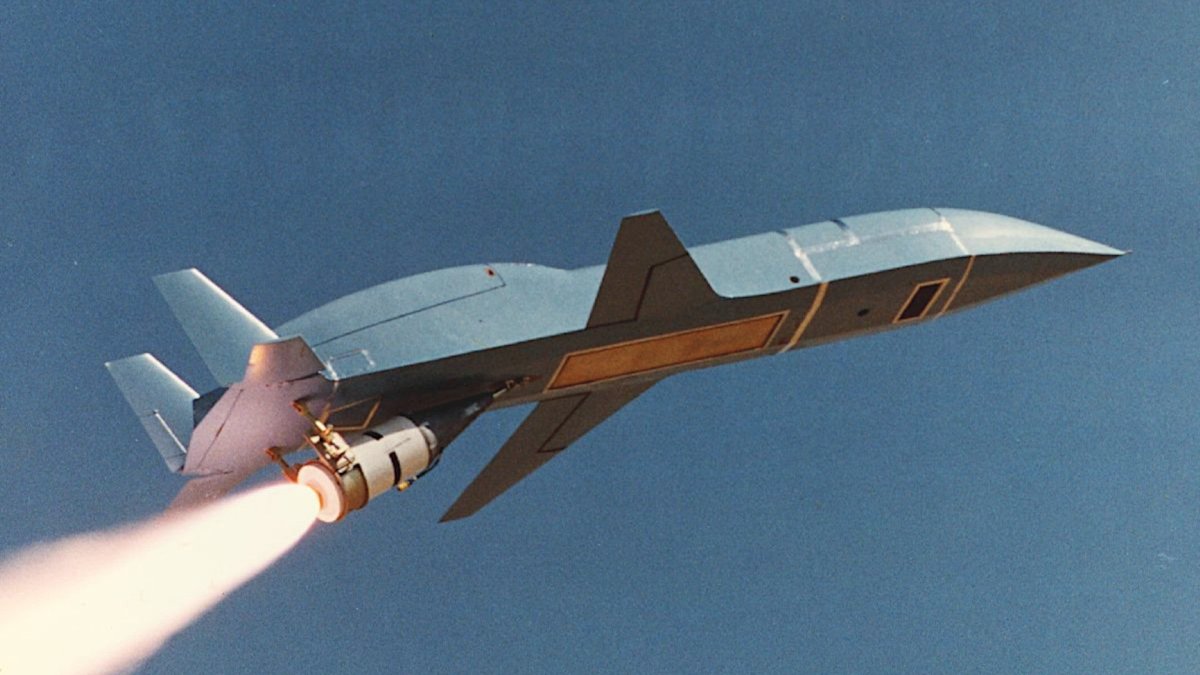
Earlier in 2018, Scaled Composites, an aviation company well known for its advanced and novel designs , and now a division of Northrop Grumman, quietly posted a series of previously unreleased images online of a stealthy reconnaissance drone called the Scarab. Decades earlier, Scaled had built an initial batch of the unmanned aircraft on behalf of what was then Teledyne Ryan Aeronautical, who, in turn, sold them to just one customer, Egypt.
Teledyne Ryan, which itself became part of Northrop Grumman in 1999, developed the jet-powered, ground-launched Scarab , also known as the Model 324, specifically to meet Egyptian requirements in the early 1980s. Scaled was directly involved throughout the entire design and flight test processes.
It’s not entirely clear what the specific impetus was for Egypt’s interest in the drone was, but in 1978, then-Egyptian President Anwar Sadat had signed the Camp David Accords with then-Israeli Prime Minister Menachem Begin . This led to a formal peace treaty between the two countries the following year. It also came along with a pledge by the United States, which had mediated the deal, that it would provide both countries with significant amounts of often advanced military aid.
To this day, these two countries are among the top recipients of American foreign military assistance. Scarab could have been attractive to the Egyptians as it would have provided an advanced aerial reconnaissance tool that would have been highly survivable against most, if not all of the air defense threats in the broader Middle East region at the time. This means that it could collect details imagery of enemy positions without the need for air superiority to ensure its survival.
Scaled Composites employees carry a nose section for a Scarab at the company’s plant in 1988., Scaled Composites
The Scarab was definitely a state-of-the-art design at the time with a purpose-built stealth shape . Teledyne Ryan already had years of experience experimenting with stealthier drone designs for the U.S. Air Force, including the AQM-91 Firefly , also known as Compass Arrow, and YQM-98A , or Compass Cope.
The Model 324 also featured a lightweight composite airframe, which helped improve its performance and further reduce its radar cross-section. Export laws prevented Teledyne Ryan and Scaled from using carbon fiber, so the latter firm devised a novel “composite sandwich panel structure with fiberglass and Kevlar for skins and PVC foam cores,” according to Scaled’s website .
Scarabs under construction at Scaled Composites., Scaled Composites
“Even with these lower-performance materials, Scaled engineering a wing that was strong and stiff enough to accommodate all of the required flight loads,” the company’s profile on the drone continues. “In fact, the vehicle experienced an extreme negative g pitch-over due to a control problem on the first flight, and did not fail any composite components during the ensuing out-of-control event.”
Other components of the unmanned aircraft proved extremely durable, as well. This was in part a result of the need for the drone to survive being repeatedly blasted into the air from a ground-based launcher using a modified rocket booster from a Harpoon anti-ship missile .
A Scarab on its launcher., Scaled Composites
“On one occasion, the 18,000 pound-thrust launch rocket motor exploded at launch and pitched the vehicle approximately 10 feet vertically into the air,” Scaled’s website notes . “The vehicle then fell back into the incinerating launcher and bounced out into the desert. The integrity of the fuel tank was not compromised during this event.”
The entire system included a truck-mounted ground control station and power generation system that also served as the prime mover for the trailer-mounted launcher. It’s not clear who built the 8×8 all-wheel-drive truck, but it appears to have an independent suspension system very reminiscent of a family of designs the Standard Manufacturing Company was developing at the same time. The U.S. military tested a variety of the Standard Manufacturing vehicles, including a wheeled self-propelled anti-aircraft gun called Excalibur , but never adopted any of them.
The complete Scarab system., SDASM Archives
The six-wheeled trailer also had an auxiliary motor to allow crews to more readily move it into its actual launching position when detached from the truck. The truck-and-trailer combination had a maximum speed of 52 miles on improved roads, but also had some off-road capability. A complete system with a Scarab on the launcher was also small enough to fit inside a C-130 cargo plane.
After blasting off from its launcher, Scarab could reach a top speed of nearly 650 miles per hour and an altitude of up to 40,000 feet, depending on its predetermined altitude and mission profile, and could carry a payload of more than 250 pounds over a total distance of 1,400 miles. When it returned to base, its small jet engine would cut out and a parachute would deploy. The drone would eventually sail down to earth, landing on a set of inflatable airbags hidden inside the fuselage and wings.
The recovery sequence for the Scarab., Teledyne Ryan
The Scarab’s Air-Bag Impact Attenuation System (ABIAS), which cushioned it when it hit the ground after parachuting down to Earth., Teledyne Ryan
Crews on the ground had a line-of-sight command link that they could use during the beginning and end of the drone’s flight. Beyond the range of that control station, the drone would use pre-programmed waypoints and an inertial navigation guidance system to get to and from the intended area. Later on, Egypt upgraded the Scarabs with a GPS-assisted guidance capability.
As delivered, the Scarabs could carry either a KS-153A optical camera or a Loral D-500 infrared laser camera system. The latter used the laser for infrared illumination, allowing the camera to capture images at night. Both cameras, however, employed wet film that required processing after the mission was over. The drone could not transmit any imagery back to base during flight.
A graphic showing a typical mission profile and operaional setup for the Scarab., Teledyne Ryan
Egypt’s President Sadat, who was assassinated in 1981, never got to see the Scarabs and almost certainly didn’t initiate the program. Scarab’s first flight occurred in 1987 and Sadat’s successor, President Hosni Mubarak , accepted the first examples the following year.
Scaled Composites built a total of 29 Scarabs for Teledyne Ryan, which shipped them to Egypt and trained members of the Egyptian Air Force how to fly them. Teledyne Ryan built another 30 Scarabs independently as a second-run and delivered those to Egypt as well. It was the first time Teledyne-Ryan had exported an unmanned aircraft of any kind, which the U.S. military had not adopted, to a foreign country. The Egyptians only established one unit to operate the drones at Kom Awshim Air Base, approximately 50 miles south of Cairo.
An Egyptian Scarab launcher in action., via GlobalSecurity.org
In 1988, the U.S. Air Force, Navy, and Marines did join together to develop an air- and ground-launched derivative that could be employed both as a target drone and an unmanned reconnaissance platform. Unfortunately, in 1993, the Navy and Marines dropped out of the program.
The Air Force could not afford to purchase the drones, then known as the BQM-145A Peregrine , by itself and subsequently canceled the entire project later that year. The Peregrines lack the visually distinctive hump the Scarabs have on top of their rear fuselage, with their twin air intakes being arranged pectorally instead of having a single intake mounted dorsally.
Workers roll out one of the prototype BQM-145As., SDASM Archives
An undated photo of an F-4 Phantom II fighter jet, privately owned and carrying the US civil registration code N420ES, with a BQM-145A on its centerline pylon during a test., SDASM Archives
Of the 59 Scarab drones the Egyptians received, they reportedly never even uncrated 50 of them, according to Scaled . The nine operational examples did fly some 65 operational missions, but there’s no information about what areas they flew over or for what purpose. There are reports that during Operation Desert Storm, the U.S.-led coalition considered asking the Egyptians to commit the Scarabs to help increase overall reconnaissance coverage. True or not, the conflict ended before the drones went to work, though.
Regardless of their operational activities, the delivery of the drones to Egypt caused something of a stir inside and outside the United States. The biggest concern was that Egyptians might try to modify the Scarabs into stealthy ground-launched cruise missiles that could have presented a significant threat to other countries in the region and potentially have a destabilizing effect.
The Missile Technology Control Regime , a voluntary arms control arrangement covering missiles and unmanned aircraft, which was in place at the time, only prohibits the export of systems that can carry a payload of more than 1,100 pounds to distances greater than 185 miles. This would not cover the Scarab with its stated payload capacity, though it might be possible to increase the payload at the cost of overall range. Either way, Teledyne Ryan did not sell Scarabs to any other customers.
An Egyptian Air Force CH-47 Chinook helicopter recovers a Scarab after a launch. The drone’s deployed airbag landing system is visible in black under the fuselage., SDASM Archives
The exact status of the remaining Scarabs is unclear. As of the late 1990s, Teledyne Ryan was still actively supporting the program in Egypt. After Northrop Grumman bought the firm in 1999, it took over that support contract.
“We are working on a contract with the Egyptians to do upgrades on that aircraft, we are negotiating that as we speak,” Rick Ludwig, then-Director of Unmanned Systems Business Development for Northrop Grumman Integrated Systems, told FlightGlobal in 2006 . “They still fly that aircraft about once a month.”
The next year, Northrop Grumman said it was still in talks with Egypt over potentially upgrading the Scarabs, to include new guidance systems and sensors. The addition of digital still or video cameras and a two-way satellite data link to send that imagery back to base in near real time could have significantly improved the drone’s capabilities.
The video below includes footage of a Scarab during testing, beginning at 5:33 in the runtime, followed by clips of the air-launched BQM-145A Peregrine.
There’s no clear evidence that that upgrade program ever went forward and it may have eventually ended up hampered by political developments. In 2011, Egypt experienced mass protests that led to the ouster of President Mubarak the following year. Then, in 2013, the Egyptian military launched a coup and took power from the subsequent democratically elected president, Mohamed Morsi .
President Barack Obama subsequently put a freeze on military aid to the country, but lifted those restrictions in 2015 . President Donald Trump’s administration has continued re-establishing military ties with the country and has also advocated for increased American arms sales abroad in general.
At this point, the Scarabs, many of which may have been sitting in storage for decades, may be too expensive and impractical to modernize and put to more active use. The idea that the Egyptian Air Force was only flying one of these drones once a month a decade ago doesn’t suggest it was particularly invested in retaining anything but a token capability.
All told, the Scarab’s story may end in relative obscurity. Of course, there’s always the chance that someone might uncover one of them in the future still in its crate sitting in an Egyptian warehouse and hopefully send it to a museum.
Contact the author: jtrevithickpr@gmail.com
Comments couldn’t be loaded. Please refresh the page.
作者:约瑟夫·特雷维西克和泰勒·罗戈韦
更新于美国东部时间2019年12月1日上午7:06
2018年初,以先进创新设计著称的航空企业Scaled Composites(现为诺斯罗普·格鲁曼公司旗下部门)悄然在网上发布了一系列此前从未公开的隐形侦察无人机“圣甲虫”(Scarab)图片。几十年前,Scaled曾为当时的泰莱达因·瑞安航空(Teledyne Ryan Aeronautical)制造了首批这种无人机,而后者最终只将这些无人机卖给了埃及这一个客户。
泰莱达因·瑞安公司(Teledyne Ryan,该公司于1999年并入诺斯罗普·格鲁曼公司)在20世纪80年代初专门为满足埃及的需求而开发了喷气式地面发射的“圣甲虫”(Scarab)导弹,也称为324型导弹。Scaled公司直接参与了整个设计和飞行测试过程。
埃及对无人机产生兴趣的具体动机尚不完全清楚,但1978年,时任埃及总统安瓦尔·萨达特与时任以色列总理梅纳赫姆·贝京签署了《戴维营协议》。该协议促成了两国在次年签署正式和平条约。此外,作为斡旋者,美国还承诺向两国提供大量且往往先进的军事援助。
时至今日,这两个国家仍然是美国对外军事援助的主要接受国之一。“圣甲虫”无人机对埃及来说可能极具吸引力,因为它能提供一种先进的空中侦察工具,即使面对当时整个中东地区绝大多数(如果不是全部)的防空威胁,它也拥有极高的生存能力。这意味着它无需取得制空权就能获取敌方阵地的详细图像,从而确保自身生存。
1988年,Scaled Composites公司的员工在公司工厂内搬运Scarab战斗机的机头部分。
圣甲虫无人机在当时绝对是一款最先进的设计,其外形专为隐身而设计。泰莱达因·瑞安公司此前已为美国空军试验过多年更隐蔽的无人机设计,包括AQM-91萤火虫(又名罗盘箭)和YQM-98A(又名罗盘斗篷)。
324 型飞机还采用了轻质复合材料机身,这有助于提高其性能并进一步降低其雷达反射截面。由于出口管制法律禁止 Teledyne Ryan 和 Scaled 公司使用碳纤维,因此 Scaled 公司设计了一种新型的“复合材料夹层板结构,蒙皮采用玻璃纤维和凯夫拉纤维,芯材采用 PVC 泡沫”,Scaled 公司网站上如此介绍道。
Scaled Composites公司正在建造Scarabs。
“即使采用这些性能较低的材料,Scaled公司仍然设计出足够坚固的机翼,能够承受所有必要的飞行载荷,”该公司在无人机简介中继续写道。“事实上,该飞行器在首次飞行中由于控制问题经历了极端的负G俯仰,但在随后的失控事件中,没有任何复合材料部件发生故障。”
无人机的其他部件也同样非常耐用。这部分是由于无人机需要能够经受住地面发射器使用改装后的“鱼叉”反舰导弹火箭助推器反复发射升空的考验。
圣甲虫导弹发射架,Scaled Composites
Scaled公司网站指出:“有一次,推力为18000磅的发射火箭发动机在发射时爆炸,将飞行器垂直抛向空中约10英尺。随后,飞行器落回燃烧的发射器中,并弹射到沙漠中。此次事件中,燃料箱的完整性并未受到影响。”
整套系统包括一个车载地面控制站和发电系统,该系统同时也是拖车式发射器的动力来源。目前尚不清楚这辆8×8全轮驱动卡车的制造商,但它似乎采用了一种独立悬挂系统,与当时标准制造公司(Standard Manufacturing Company)正在开发的一系列设计非常相似。美军曾测试过标准制造公司生产的多种车辆,包括一款名为“王者之剑”(Excalibur)的轮式自行高射炮,但最终并未采用其中任何一款。
Scarab 系统全集,SDASM 档案
这辆六轮拖车还配备了一台辅助发动机,以便工作人员在将其与卡车分离后,能够更轻松地将其移动到实际发射位置。卡车和拖车的组合在路况良好的道路上最高时速可达 52 英里,同时也具备一定的越野能力。包含“圣甲虫”导弹发射装置的完整系统体积小巧,足以装入 C-130 运输机。
圣甲虫无人机从发射架升空后,最高速度可达近650英里/小时,飞行高度可达40000英尺,具体高度取决于预设高度和任务方案。它可携带超过250磅的有效载荷,飞行距离可达1400英里。返回基地时,小型喷气发动机将关闭,降落伞随即展开。无人机最终将滑翔降落,落在隐藏于机身和机翼内的一组充气气囊上。
圣甲虫的回收序列,泰莱达因·瑞安
圣甲虫的气囊冲击衰减系统(ABIAS)在它跳伞着陆后撞击地面时起到了缓冲作用。——泰莱达因·瑞安
地面人员可以通过视距指令链路控制无人机的起飞和降落。超出控制站范围后,无人机将使用预设航点和惯性导航系统往返目标区域。后来,埃及为“圣甲虫”无人机升级了GPS辅助导航功能。
出厂时,Scarab无人机可搭载KS-153A光学相机或Loral D-500红外激光相机系统。后者利用激光进行红外照明,使相机能够在夜间拍摄图像。然而,两种相机都使用湿胶片,需要在任务结束后进行冲洗。无人机在飞行过程中无法将任何图像传回基地。
一张图表展示了“圣甲虫”导弹的典型任务剖面图和操作设置。(Teledyne Ryan)
埃及总统萨达特于1981年遇刺身亡,从未亲眼见过“圣甲虫”无人机,而且几乎可以肯定,该项目并非他发起。“圣甲虫”无人机于1987年首飞,萨达特的继任者穆巴拉克总统于次年接收了首批样机。
Scaled Composites公司为Teledyne Ryan公司共制造了29架“圣甲虫”(Scarab)无人机,Teledyne Ryan公司将这些无人机运往埃及,并对埃及空军人员进行了飞行培训。Teledyne Ryan公司随后又独立制造了30架“圣甲虫”无人机作为第二批订单,并交付给了埃及。这是Teledyne Ryan公司首次向外国出口美国军方未采用的无人机。埃及方面仅在位于开罗以南约50英里的科姆奥希姆空军基地建立了一个无人机操作单位。
图片来自 GlobalSecurity.org,展示了一枚正在发射的埃及圣甲虫火箭炮。
1988年,美国空军、海军和海军陆战队联合研发了一种空地两用衍生型号,既可用作靶机,也可用作无人侦察平台。遗憾的是,1993年,海军和海军陆战队退出了该项目。
空军无力单独采购当时名为BQM-145A“游隼”的无人机,因此在当年晚些时候取消了整个项目。“游隼”无人机不像“圣甲虫”无人机那样在机身后部上方有一个明显的隆起,而且它的双进气口位于胸部,而不是像“圣甲虫”那样位于背部。
工人们正在推出其中一台BQM-145A原型机。(SDASM档案馆)
一张未注明日期的照片,展示了一架私人拥有的F-4“鬼怪II”战斗机,其美国民用注册号为N420ES,机身中线挂架上挂载了一枚BQM-145A导弹,当时正在进行测试。(SDASM档案馆)
据Scaled报道,埃及接收的59架“圣甲虫”无人机中,有50架甚至从未开箱使用。其余9架投入使用的无人机执行了约65次作战任务,但目前尚无关于其飞行区域和作战目的的信息。有报道称,在“沙漠风暴”行动期间,美国领导的联军曾考虑要求埃及提供“圣甲虫”无人机,以扩大整体侦察范围。但无论真假,冲突在这些无人机投入使用前就已结束。
无论这些无人机的具体作战用途如何,向埃及交付无人机一事都在美国国内外引起了不小的震动。最大的担忧在于,埃及方面可能会将这些“圣甲虫”无人机改装成隐形陆基巡航导弹,这可能对该地区其他国家构成重大威胁,并可能造成局势动荡。
当时生效的《导弹及其技术控制制度》(简称《导弹及其技术控制制度》)是一项涵盖导弹和无人机的自愿性军控安排,该制度仅禁止出口有效载荷超过1100磅且射程超过185英里的系统。根据该制度,Scarab导弹的有效载荷能力并不在此限制范围内,尽管或许可以通过牺牲整体射程来增加有效载荷。无论如何,Teledyne Ryan公司并未向其他客户出售Scarab导弹。
一架埃及空军的CH-47“支奴干”直升机回收了一架“圣甲虫”无人机。无人机展开的气囊着陆系统在机身下方清晰可见,呈黑色。(SDASM档案馆)
剩余的“圣甲虫”导弹防御系统的确切状况尚不清楚。截至20世纪90年代末,泰莱达因·瑞安公司仍在埃及积极支持该项目。1999年诺斯罗普·格鲁曼公司收购该公司后,接管了这项支持合同。
“我们正在与埃及方面洽谈一份合同,对那架飞机进行升级改造,我们正在进行谈判,”诺斯罗普·格鲁曼综合系统公司时任无人系统业务发展总监里克·路德维希在2006年告诉FlightGlobal。“他们仍然每月飞行那架飞机大约一次。”
次年,诺斯罗普·格鲁曼公司表示,仍在与埃及就升级“圣甲虫”无人机进行谈判,升级内容包括加装新的制导系统和传感器。如果能增加数码相机(无论是静态照片还是视频)以及双向卫星数据链路,将图像近乎实时地传回基地,则有望显著提升无人机的性能。
下面的视频包含一段圣甲虫导弹测试期间的画面,从运行时的 5:33 开始,随后是空射 BQM-145A 游隼导弹的片段。
目前尚无明确证据表明该升级计划曾实施,而且最终可能因政治局势发展而受阻。2011年,埃及爆发大规模抗议活动,导致穆巴拉克总统于次年下台。随后,在2013年,埃及军方发动政变,从民选总统穆罕默德·穆尔西手中夺取政权。
奥巴马总统随后冻结了对该国的军事援助,但在2015年取消了这些限制。特朗普总统的政府继续重建与该国的军事关系,并倡导增加美国对海外的武器销售。
目前来看,这些“圣甲虫”无人机(其中许多可能已封存数十年)升级改造成本过高且不切实际,难以投入更积极的使用。十年前埃及空军每月仅使用一架此类无人机进行飞行,这表明他们当时并未特别重视保留这种能力,而只是象征性地保留而已。
总而言之,圣甲虫的故事或许最终会湮没在历史长河中。当然,也并非完全没有可能,未来有人会在埃及的某个仓库里发现一件仍装在箱子里的圣甲虫,并希望有人能把它送到博物馆。
联系作者:jtrevithickpr@gmail.com
评论加载失败,请刷新页面。