The A-10 Warthog Is Preparing For Its Biggest Upgrade In Over A DecadeA-10“疣猪”攻击机正准备迎来十多年来最大规模的升级。
A new large-area cockpit display and additional weapons are all in the grand plans to get the A-10 ready for higher-end missions.
新闻视频
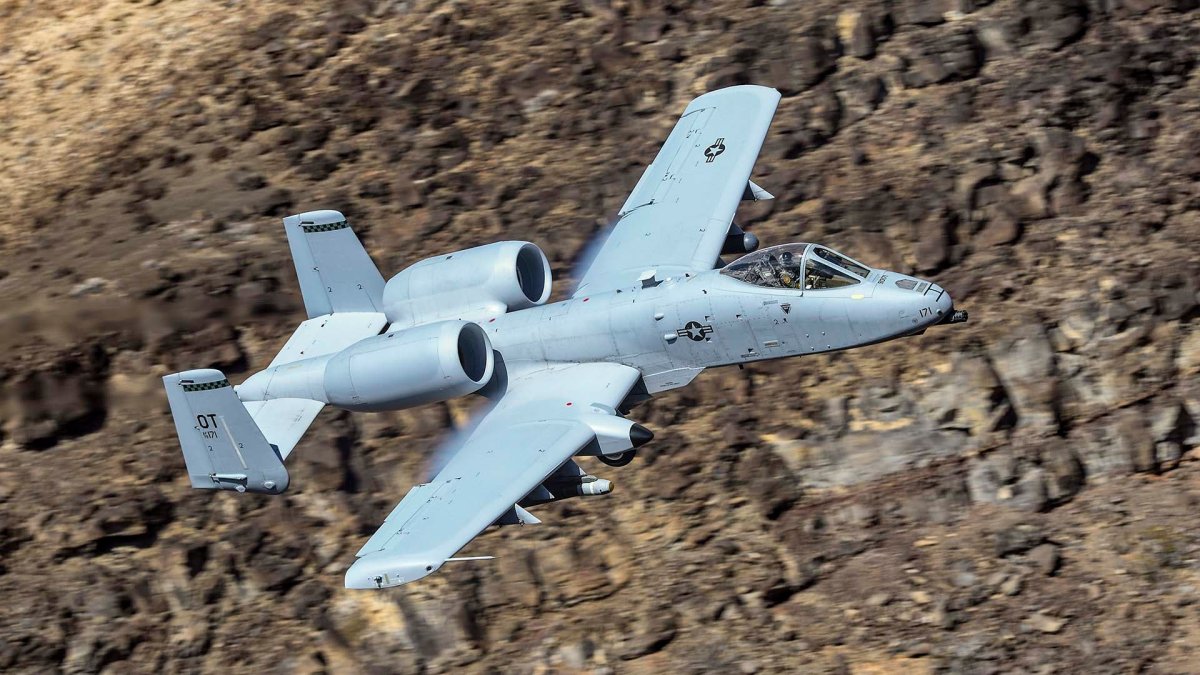
Updated Nov 27, 2020 6:12 PM EST
Just six years ago the U.S. Air Force was on the verge of culling its entire fleet of A-10 Thunderbolt IIs, better known as Warthogs. In 2014, the then USAF Chief of Staff, Gen Mark Welsh III, said the Air Force had to retire the A-10 completely if it was to make substantial cuts to its budgets, and that it required freed-up funding and manpower to be channeled into the standup of new F-35 units. Welsh claimed divesting the close air support stalwart would save $3.7 billion across the five-year future-year defense program and another $500 million in cost avoidance for upgrades that wouldn’t be necessary. How times have changed. Fast forward to 2020 and the A-10 is not only here to stay, but it’s getting a raft of upgrades to keep it relevant for years to come. New weapons, a new cockpit layout, and an overhaul of tactics are some of the elements now in the pipeline to keep the “Hawg’s” tusks sharp and its community a meaningful contributor on the front line fight.
Built to ravage Soviet tanks on the plains of northern Europe, the A-10 was designed around the General Electric GAU-8/A Avenger 30mm cannon and its seven barrels, which are able to dish out devastating punishment to armor. Over the years, the Warthog’s 11 hardpoints have evolved from carrying dumb iron bombs and rockets to hauling the latest guided ordnance. Despite carving itself a fearsome reputation during Operation Desert Storm in 1991, and evolving with the times as new technology became available, the venerable ground attack jet has repeatedly come under fire from within the Air Force when it comes to cutbacks.
The USAF made the case for the F-35A Lightning II to assume the A-10’s roles, emphasizing how the Warthog was no longer survivable in modern high-threat environments littered with advanced air defense systems. The A-10 community was told that the drawn-out war in Afghanistan was over and that close air support (CAS) specialists were no longer needed. All the while, A-10 supporters in Congress vehemently rejected the proposals on the grounds that it would severely impact the USAF’s ability to cover this mission, and some demanded a fly-off to prove once and for all that the F-35 could adequately replace the A-10 in this mission.
An A-10C assigned to the 163rd Fighter Squadron, Indiana Air National Guard. , USAF/SSgt Corey Hook
Fight against ISIS helps make the case for retaining the A-10
As talk of retiring the A-10 grew in 2014, Operation Inherent Resolve (OIR), the U.S.-led mission to dismantle the so-called Islamic State in Iraq and Syria, was ramping up fast and pressure was put on the USAF to step up its involvement in the expanding campaign. Back home, the Fiscal Year 2015 spending plan included House and Senate Armed Services Committee stipulations that essentially blocked efforts to retire the A-10 fleet. It was a perfect storm that effectively saved the A-10.
The Indiana Air National Guard’s 163rd Fighter Squadron, the “Blacksnakes,” deployed to the Central Command (CENTCOM) area of operations in October 2014, as part of a Theater Security Package sent to Kuwait. The unit was quickly re-tasked to Afghanistan to cover U.S. Army withdrawals from forward operating bases (FOBs) in that war-ravaged country. However, after only a month in theater, the pressure was on to move the “Blacksnakes” back to Kuwait to join the burgeoning effort against ISIS.
The A-10s were immediately pressed into combat missions, a move that was to again underscore the usefulness of the A-10 to senior leaders. As time went on, a succession of Warthog squadrons were called upon to join the OIR mission, providing both CAS, as well as cover for Combat Search and Rescue (CSAR) for coalition operations.
An A-10C drops a flare during a mission on the Nevada Test and Training Range., Jamie Hunter
New upgrades for the A-10
The scheme to retire the A-10 had started a knock-on effect with regard to support and upgrades. Operational testing for the active-duty A-10 fleet at the 422nd Test and Evaluation Squadron (TES) at Nellis Air Force Base, Nevada, and the A-10 Program Office at Hill Air Force Base, Utah, had both effectively been shut down . However, with OIR at its height, by the summer of 2016, this was all being reversed, with a renewed impetus for mission-critical enhancements for the A-10.
The planned end of the A-10 briefly stalled some supply chains, but a rolling series of upgrades were soon back on track. “In 2017, the Lightweight Airborne Recovery System [LARS] V-12 was installed on all active-duty and Air National Guard and Reserve Command A-10s to allow pilots to communicate more effectively with individuals on the ground such as downed pilots and pararescuemen,” explains Air Force Major Matthew Kading, the A-10 Test Director for the 59th TES. “This was integrated in [Operational Flight Program, OFP] Suite 8, and all A-10s now have this system integrated into the Central Interface Control Unit to provide critical Combat Search and Rescue [CSAR] information.”
As a community with limited funding, the active-duty test effort under the 422nd and the 59th Test and Evaluation Squadrons and that of the Air National Guard/Air Force Reserve Command Test Center (AATC) at Tucson Air National Guard Base, Arizona, now work collectively. The USAF currently fields 281 A-10s, but there have been numerous failed attempts to reduce the fleet . The USAF’s proposed Fiscal Year 2021 budget looks to cut three squadrons-worth of jets, effectively 44 Warthogs. This too may well end up curbed and now major A-10 upgrades are moving full steam ahead.
Such is the resurgence of the A-10, that a new Common Fleet Initiative is planned to keep the type in service and credible out towards 2035. Central to the upgrades for the A-10 is the need to be survivable in a contested environment. This involves Warthog pilots evading threats through the additional use of standoff weapons from longer ranges, combined with the use of updated tactics. A-10 operations will evolve to include the ability to tackle some threats with precision weapons from extended ranges. Once these threats are destroyed, the A-10s will then theoretically be able to swing into more traditional missions.
“Survivability isn’t just about upgrading equipment and software, it’s about ensuring we’re going into battle with the most up-to-date and lethal tactics,” says Major Kading. “What makes the 422nd/59th TES, and the 53rd Wing as a whole, a unique organization is that we do all of these things.”
An A-10C from the USAF Weapons School at Nellis AFB., Jamie Hunter
“Right now, the 422 is working on multiple Tactics Development and Evaluations [TD&Es] to address an Air Combat Command Tactics Improvement Proposals, known as a ‘TIPs.’ One current example is a TIP for Night Medium Altitude Survivability and Low Altitude Tactics. Modern Night Vision Goggle fidelity has driven the requirement to re-evaluate if we can execute the A-10’s primary missions at lower altitudes at night. Other planned TD&Es include adapting CSAR tactics and engaging maritime targets with AGR-20 Advanced Precision Kill Weapon System [APKWS] rockets. There are also continued efforts to enhance the A-10’s capability to operate from austere environments with minimal support. All these will allow for greater readiness and mission ability through tactics improvements,” Kading explains. The AGR-20 APKWS II is a guided version of the veteran 2.75-inch Folded Fin Aerial Rocket, which was added to the A-10’s arsenal in 2013 .
“Suite 9 [fielded in 2019] brought the integration of Situational Awareness Position (SAP) into the OFP, so JTACs [forward air controllers] can report their position digitally,” says Kading. “Validation was built in to help prevent inadvertent targeting of friendly positions with inertially aided munitions. It also introduced the first phase of engaging multiple targets with precision-guided munitions. It allowed six weapons to be dropped with a single ‘pickle button’ press.”
The aircraft can send weapons to different targets with one button push on one pass, whereas before it took a lot of pilot workload. A-10 pilots can employ 500-pound-class GBU-38 or 54 or 2,000-pound class GBU-31 Joint Direct Attack Muntions (JDAM) and the aircraft will inform the pilot if they can all hit their intended targets on a single run.
Suite 9 also included provision for an improved helmet-mounted sight, known as HObIT (Hybrid Optical-based Inertial Tracker), which is a development of the Thales Visionix Scorpion helmet that A-10 pilots have been wearing since 2013. The improved helmet more accurately tracks pilot head movements via a new optical head tracker, consisting of a series of dots on the canopy.
This pilot from the Idaho ANG is wearing the new HObIT (Hybrid Optical-based Inertial Tracker) helmet., Jamie Hunter
Biggest upgrade since the A-10C
The upgrade of A-10As to A-10Cs from 2005 onwards was a huge leap for the Warthog. This essentially added precision weapons, a partial glass cockpit, and a laser designator pod. “Suite 10 will field in the spring of 2021, and it’s a foundational step in the modernization of the A-10,” says Kading.
Suite 10 will include “multiple target list improvements” that will enable the pilot to engage multiple targets with three different weapon types on one pass. It also includes full AGR-20 APKWS integration, which Kading says “provides the ability to target at the maximum kinematic range of the rocket with aiming solutions designed within rocket tolerances.” GBU-31(V)3 JDAM integration brings expanded capabilities for utilizing new fuze types, and “improved JDAM feedback” will enable the pilot to have greater confidence in weapon accuracy. “Threat information can now be shared between A-10s utilizing the data link, which allows all flight members increased situation awareness for survivability.”
An A-10C of the 422nd TES at Nellis AFB., Jamie Hunter
“Operational testing for Suite 11 will begin when Suite 10 fields,” Major Kading continues. The developmental testing of this phase is currently underway with the 40th Flight Test Squadron, which is headquartered at Eglin Air Force Base, Florida. “Suite 11 is the first A-10 OFP that will be built using agile development methodologies. This will provide a more rapid update cycle for relevant enhancements.”
“Most of the improvements in this program will focus on hardware integration of a new High Resolution Display System [HRDS], GBU-39 Small Diameter Bomb [SDB] integration, 3-D audio , jam-resistant GPS , and ARC-210 radio upgrades. New map software will also be added, along with further enhancements to weapons employment. Both the method of development and the result will be a major modernization for the A-10.”
“We are currently working on the HRDS, which is a 11.6-inch, 1920 x 1080-pixel Multifunction Color Display that replaces [the cockpit’s central ‘six-pack” of analogue instruments] with a digital primary flight display. This will display high definition targeting pod footage and a new map engine. It is the most significant cockpit modernization since the A-10A to A-10C conversion.”
The new HRDS display will replace the central pack of analogue instruments in the A-10 cockpit., Jamie Hunter
“This upgrade is important because it provides modern navigation instruments to improve situational awareness when flying in IMC [Instrument Meteorological Conditions],” Kading explains. “It will make targets much more visible through a higher definition display of targeting pod footage and improved map imagery will allow enhanced target correlation.”
“SDB testing is currently in developmental testing with the 40th Flight Test Squadron, Detachment 1, based at Davis-Monthan Air Force Base, Arizona. This will give the A-10 a four-fold increase in standoff bomb capability and allows the A-10 to provide weapons effects in much [greater] threat environments than before.” This is due to the standoff range of these weapons, which means the A-10 pilot will be able to strike from outside the range of some ground threats.
The GBU-39 SDB will give the A-10 greater ability to make precision standoff strikes., USAF
The USAF completed a project to re-wing a portion of its A-10C fleet on July 25, 2019. The project began in 2007 when Boeing received a $1.1-billion contract to provide 173 sets of wings. The new wings are expected to last for up to 10,000 equivalent flight hours without requiring a depot inspection and will permit the modified aircraft to remain in service through 2030 or beyond.
A further project to provide 112 additional wing sets for the remaining A-10Cs was funded in Fiscal Year 2018. The service is acquiring the wing sets under the A-10 Thunderbolt Advanced-Wing Continuation Kit (ATACK) program.
A long-held ambition to re-engine the A-10s isn’t included in current plans. New parts suppliers with modern techniques may help restore the original engine thrust of the General Electric TF34 engines rather than the slight de-tune that the aircraft currently operates with.
Together, this host of capability upgrades will keep the A-10 at the forefront of the USAF CAS mission for at least another decade, and likely substantially longer. A lot will depend on whether or not the USAF decides to mount another attack on the Thunderbolt II fleet, but with new investments being made to recapitalize the A-10 force and with reduced interest in a successor or new Light Attack platform , all indications are that the A-10 will not be going away anytime soon.
Contact the editor: Tyler@thedrive.com
Comments couldn’t be loaded. Please refresh the page.
更新于美国东部时间2020年11月27日下午6:12
仅仅六年前,美国空军还濒临淘汰其全部A-10“雷电II”攻击机,也就是俗称的“疣猪”。2014年,时任美国空军参谋长马克·韦尔什三世将军表示,如果空军要大幅削减预算,就必须彻底退役A-10,腾出的资金和人力必须投入到组建新的F-35部队中。韦尔什声称,放弃这款近距离空中支援主力战机将在未来五年国防计划中节省37亿美元,并避免因不必要的升级而额外花费5亿美元。时过境迁。如今到了2020年,A-10不仅继续服役,而且还获得了一系列升级,以确保其在未来数年内保持竞争力。新武器、新的驾驶舱布局以及战术的全面改革,这些都是目前正在筹备中的要素,目的是保持“野猪”的獠牙锋利,并使其社区在前线战斗中发挥有意义的作用。
A-10攻击机专为在北欧平原上摧毁苏联坦克而设计,其核心装备是通用电气GAU-8/A“复仇者”30毫米机炮,该炮拥有七根炮管,能够对装甲目标造成毁灭性打击。多年来,“疣猪”的11个外挂点不断升级,从最初挂载普通炸弹和火箭弹,发展到如今能够挂载最新的制导武器。尽管在1991年的“沙漠风暴”行动中声名鹊起,并随着新技术的出现而不断改进,但这款久经沙场的对地攻击机在空军内部的预算削减问题上却屡屡受到抨击。
美国空军力主用F-35A“闪电II”战斗机取代A-10的作战任务,强调“疣猪”攻击机在遍布先进防空系统的现代高威胁环境中已无法生存。A-10方面则被告知,阿富汗旷日持久的战争已经结束,不再需要近距离空中支援(CAS)专家。与此同时,国会中A-10的支持者强烈反对这些提议,理由是这将严重影响美国空军执行这项任务的能力,一些人甚至要求进行飞行对比测试,以彻底证明F-35能够胜任这项任务。
一架隶属于印第安纳州空中国民警卫队第163战斗机中队的A-10C攻击机。美国空军/中士科里·胡克
打击ISIS的战斗有助于证明保留A-10攻击机的必要性。
2014年,随着关于A-10战机退役的讨论日益增多,美国领导的旨在摧毁伊拉克和叙利亚境内所谓“伊斯兰国”的“坚定决心行动”(OIR)也在迅速推进,美国空军面临着加大参与这场不断扩大的行动的压力。与此同时,在国内,2015财年预算案中包含了众议院和参议院军事委员会的附加条款,这些条款实际上阻止了A-10机队的退役进程。正是这一系列因素的完美结合,最终拯救了A-10战机。
印第安纳州空中国民警卫队第163战斗机中队,绰号“黑蛇”,于2014年10月部署至中央司令部(CENTCOM)作战区域,作为派往科威特的战区安全保障部队的一部分。该部队很快被重新调往阿富汗,负责掩护美军从这个饱受战争蹂躏的国家的前沿作战基地(FOB)撤离。然而,在战区驻扎仅一个月后,“黑蛇”中队就面临着返回科威特加入日益壮大的打击“伊斯兰国”(ISIS)行动的压力。
A-10攻击机立即投入作战任务,这一举动再次凸显了A-10在高级指挥官眼中的价值。随着时间的推移,一系列“疣猪”攻击机中队被召集加入“坚定决心行动”(OIR),为联合作战提供近距离空中支援(CAS)以及战斗搜救(CSAR)掩护。
一架A-10C攻击机在内华达州试验训练场执行任务时投掷了一枚照明弹。——杰米·亨特
A-10攻击机的新升级
A-10战机的退役计划引发了一系列连锁反应,影响到后续的维护和升级工作。位于内华达州内利斯空军基地的第422测试评估中队(TES)以及位于犹他州希尔空军基地的A-10项目办公室,其现役A-10机队的作战测试工作实际上都已停止。然而,随着“坚定决心行动”(OIR)的全面展开,到2016年夏季,情况发生了逆转,A-10战机的关键任务改进工作重新焕发活力。
A-10战机的计划退役曾一度导致部分供应链中断,但一系列的升级改造很快恢复正常。“2017年,所有现役、空中国民警卫队和预备役部队的A-10战机都安装了轻型机载回收系统(LARS)V-12,以便飞行员能够更有效地与地面人员(例如被击落的飞行员和伞降救援人员)进行沟通,”空军少校、第59测试评估中队(59th TES)A-10测试主管马修·卡丁解释道。“该系统已集成到作战飞行程序(OFP)第8套件中,现在所有A-10战机的中央接口控制单元(CICU)都集成了该系统,以提供关键的战斗搜救(CSAR)信息。”
由于资金有限,现役部队的测试工作目前由第422和第59测试评估中队以及位于亚利桑那州图森空军国民警卫队基地的空军国民警卫队/空军预备役司令部测试中心(AATC)共同协作。美国空军目前拥有281架A-10攻击机,但此前多次削减机队的尝试均以失败告终。美国空军2021财年预算提案计划削减三个中队的战机,相当于44架“疣猪”攻击机。但这项计划最终很可能也会被搁置,目前A-10的重大升级工作正在如火如荼地进行。
A-10攻击机的复兴势头强劲,促使一项新的“通用舰队计划”启动,旨在确保该机型在2035年前继续服役并保持竞争力。A-10升级的核心在于提升其在对抗环境中的生存能力。这意味着“疣猪”飞行员需要借助远程防区外武器,并结合更新的战术,来规避威胁。A-10的作战能力也将随之发展,使其能够从更远的距离使用精确制导武器打击某些威胁。一旦这些威胁被摧毁,A-10理论上就可以转而执行更传统的作战任务。
“生存能力不仅仅是升级装备和软件,更重要的是确保我们运用最先进、最具杀伤力的战术投入战斗,”卡丁少校说道。“第422/59测试评估中队以及整个第53联队之所以独特,就在于我们能够做到所有这些。”
来自内利斯空军基地美国空军武器学校的A-10C攻击机,杰米·亨特
“目前,第422中队正在开展多项战术开发与评估(TD&E)工作,以落实空战司令部提出的战术改进建议(简称“TIP”)。其中一个例子是针对夜间中空生存能力和低空战术的TIP。现代夜视镜的保真度提升促使我们重新评估A-10能否在夜间低空执行其主要任务。其他计划中的TD&E包括改进战斗搜救(CSAR)战术,以及使用AGR-20先进精确杀伤武器系统(APKWS)火箭打击海上目标。此外,我们还在持续努力提升A-10在简陋环境下以最少支援作战的能力。所有这些都将通过战术改进来提高战备水平和任务执行能力。”卡丁解释道。 AGR-20 APKWS II 是老牌 2.75 英寸折叠翼空中火箭的制导版本,于 2013 年加入 A-10 的武器库。
卡丁表示:“2019年部署的9号套件将态势感知位置(SAP)集成到作战飞行计划(OFP)中,使联合终端攻击控制员(JTAC)能够以数字方式报告其位置。该套件内置了验证功能,有助于防止惯性辅助弹药误击友军阵地。它还引入了使用精确制导武器打击多个目标的第一阶段,只需按下一次‘投弹按钮’即可投放六枚武器。”
该战机只需按下一个按钮,即可在一次飞行中向不同目标投放武器,而此前这需要飞行员投入大量精力。A-10飞行员可以使用500磅级的GBU-38、54磅级或2000磅级的GBU-31联合直接攻击弹药(JDAM),战机将告知飞行员这些弹药是否能在一次飞行中全部命中目标。
第九套件还包括改进型头盔瞄准器,称为 HObIT(混合光学惯性跟踪器),它是泰雷兹 Visionix Scorpion 头盔的改进型,A-10 飞行员自 2013 年以来一直佩戴该头盔。改进型头盔通过新的光学头部跟踪器(由座舱盖上的一系列点组成)更准确地跟踪飞行员的头部运动。
这位来自爱达荷州国民警卫队的飞行员佩戴的是新型HObIT(混合光学惯性跟踪器)头盔。——杰米·亨特
这是自A-10C以来最大的升级。
从2005年开始,A-10A升级为A-10C,这对“疣猪”攻击机来说是一次巨大的飞跃。此次升级主要增加了精确制导武器、部分玻璃座舱和激光指示器吊舱。“第10套升级方案将于2021年春季交付使用,这是A-10现代化进程中的基础性一步,”卡丁说道。
第 10 号套件将包含“多目标列表改进”,使飞行员能够在一次飞行中使用三种不同类型的武器攻击多个目标。它还包括完整的 AGR-20 APKWS 集成,卡丁表示,这“使飞行员能够在火箭的最大运动射程内进行瞄准,瞄准方案的设计符合火箭的公差范围”。GBU-31(V)3 JDAM 的集成扩展了使用新型引信的能力,“改进的 JDAM 反馈”将使飞行员对武器精度更有信心。“现在可以通过数据链在 A-10 战机之间共享威胁信息,从而提高所有机组人员的态势感知能力,增强生存能力。”
内利斯空军基地第422测试评估中队的一架A-10C攻击机。杰米·亨特
“10号套件投入使用后,11号套件的运行测试也将随之启动,”卡丁少校继续说道。目前,该阶段的开发测试工作正在由驻扎在佛罗里达州埃格林空军基地的第40飞行测试中队负责。“11号套件是首个采用敏捷开发方法构建的A-10作战测试样机。这将为相关改进提供更快的更新周期。”
“该项目的大部分改进将集中在硬件集成方面,包括新型高分辨率显示系统(HRDS)、GBU-39小直径炸弹(SDB)、3D音频、抗干扰GPS以及ARC-210无线电升级。此外,还将添加新的地图软件,并进一步增强武器运用能力。无论从开发方法还是最终成果来看,都将是A-10的一次重大现代化升级。”
“我们目前正在研发HRDS,这是一款11.6英寸、1920 x 1080像素的多功能彩色显示器,它将取代驾驶舱中央的六个模拟仪表,成为一款数字主飞行显示器。该显示器将显示高清瞄准吊舱画面和新的地图引擎。这是自A-10A升级为A-10C以来最重要的驾驶舱现代化改造。”
新型高分辨率显示系统(HRDS)将取代A-10驾驶舱内的中央模拟仪表组。——杰米·亨特
卡丁解释说:“这次升级意义重大,因为它提供了现代化的导航仪器,可以提高在仪表气象条件下飞行时的态势感知能力。它将通过更高分辨率的瞄准吊舱影像显示,使目标更加清晰可见,而改进的地图图像将有助于增强目标关联性。”
“目前,A-10攻击机的防区外炸弹(SDB)正在由驻扎在亚利桑那州戴维斯-蒙森空军基地的第40飞行测试中队第1分队进行研发测试。这将使A-10的防区外炸弹投掷能力提升四倍,并使其能够在比以往更具威胁的环境中实施打击。” 这是因为这些武器的防区外射程,这意味着A-10飞行员能够从某些地面威胁的射程之外进行打击。
GBU-39 SDB 将赋予 A-10 更强大的精确防区外打击能力。(美国空军)
美国空军于2019年7月25日完成了部分A-10C攻击机机翼的更换项目。该项目始于2007年,当时波音公司获得了一份价值11亿美元的合同,负责提供173套机翼。新机翼预计无需大修即可飞行1万小时,并将使改装后的飞机能够服役至2030年或更久。
2018 财年,空军又拨款兴建了一个项目,为剩余的 A-10C 提供 112 套额外的机翼组件。空军正在根据 A-10 雷电先进机翼延续套件 (ATACK) 计划采购这些机翼组件。
长期以来,为A-10攻击机更换发动机的计划并未纳入目前的方案。拥有先进技术的新零部件供应商或许能够帮助恢复通用电气TF34发动机的原始推力,而不是像目前这样略微降低推力。
这一系列能力升级将使A-10攻击机在未来至少十年内继续保持在美国空军近距离空中支援任务中的领先地位,而且很可能持续更长时间。很大程度上取决于美国空军是否决定再次削减“雷电II”机队,但随着对A-10机队进行更新换代的新投资,以及对后续机型或新型轻型攻击平台兴趣的降低,种种迹象表明,A-10不会很快退出历史舞台。
联系编辑:Tyler@thedrive.com
评论加载失败,请刷新页面。