How The Iran Hostage Rescue Was Supposed To Go Down If It Hadn’t Ended Early In Disaster如果伊朗人质营救行动没有提前以灾难告终,它本应如何进行
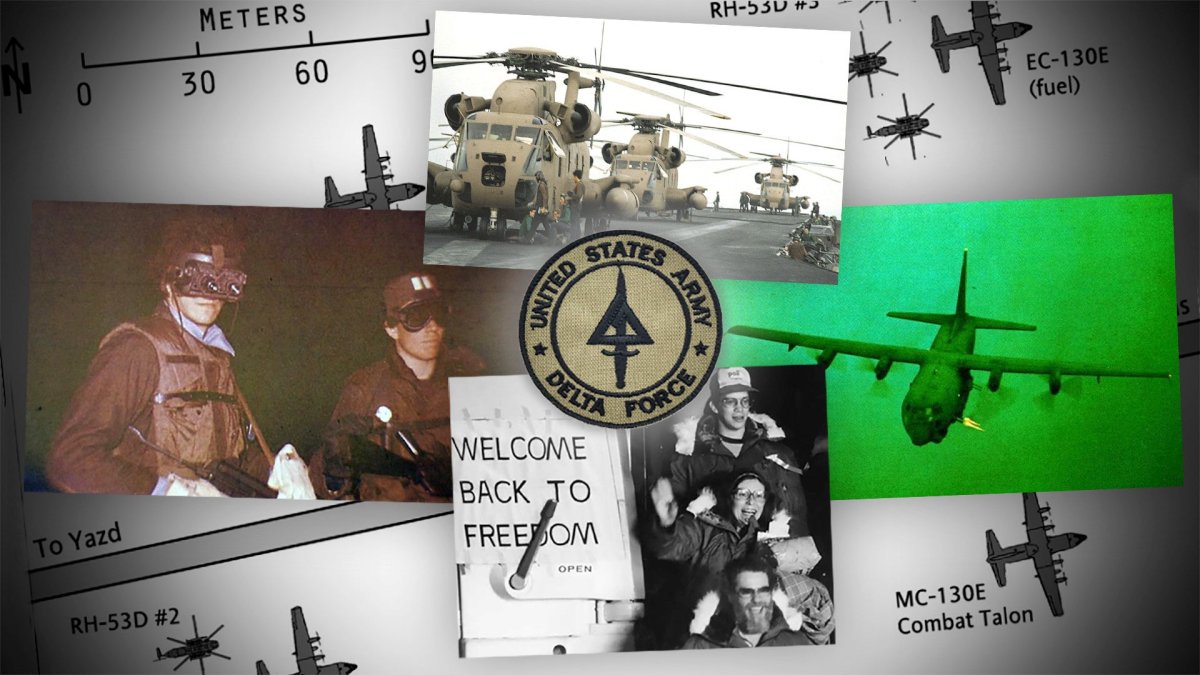
Operation Eagle Claw was amazingly complex with incredible risks at every turn. Here is exactly how it was supposed to go down, step by step.
新闻视频
Updated Jan 28, 2021 3:49 PM EST
At approximately 3:00 am local time on April 25, 1980, U.S. Marine Corps Major Jim Schaefer lifted off in Bluebeard 3 , the Navy RH-53D Sea Stallion helicopter he was piloting. The helicopter’s massive rotors kicked up a dense cloud of sand at Desert One , a small patch of Iranian territory that had, in the last hour, been transformed into an American airbase of sorts.
Minutes earlier, their mission, rescuing the 52 Americans held hostage at the United States embassy in Tehran, had been aborted. Eight helicopters had launched for the task; two aborted en route, leaving six that made it to the first waypoint, Desert One , where they would refuel before heading onto the forward staging area deeper inside the country.
RH-53D Sea Stallion helicopters on the deck of the aircraft carrier USS Nimitz ahead of the attempted rescue of hostages from Iran in April 1980., USN
Soon after arrival, however, a third helicopter aborted due to problems with its second-stage hydraulic system that provided functionality for its flight controls. This left five helicopters, which was not enough to carry on with a mission that required 120 men to ultimately arrive safely in Tehran to affect the rescue.
Delta Force commander U.S. Army Colonel Charlie Beckwith, in charge of the mission’s ground element, called for the abort. The message was transmitted all the way up to the chain of command to the White House, where President Jimmy Carter deferred to the judgment of the men on the ground.
The mission was over. The hostages were not going to be rescued, at least not during the remaining days of April 1980.
The disposition of the RH-53D Sea Stallion helicopters and other aircraft at Desert One at approximately 1:30 AM on Apr. 25, 1980., Estman via Wikimedia
As Major Schaefer attempted to re-position his helicopter for refueling before departing Iran, he became disoriented. In the darkness and the swirling sand, his only point of reference was an Air Force Combat Controller standing forward and to the right of the Sea Stallion. To avoid getting lashed with blowing sand, the Combat Controller backed away. Without any other positioning references, this was perceived by Schaefer as though his helicopter was drifting backward.
Schaefer corrected for the perceived drift by applying forward stick and crashed into one of the parked EC-130E Airborne Battlefield Command and Control Center ( ABCCC ) aircraft, which had brought fuel for the helicopters so they could press on to Tehran to accomplish their rescue mission. Both the Sea Stallion and Combat Talon were engulfed in a fireball, leading to pandemonium at Desert One .
A US Air Force EC-130E Airborne Battlefield Command and Control Center (ABCCC) aircraft., USAF
In the end, most of the men would escape, including Schaefer, but others did not. Eight Americans were killed, the RH-53D and the EC-130E it had collided with were destroyed, and the remaining five helicopters were abandoned in the Iranian desert.
The events that occurred at Desert One in the early morning of April 25, 1980, became a moment that would live in infamy. Forty years later, a burning question lingers: what if? What if the mission had not been canceled? What if the three helicopters had not suffered mechanical failures on the way? Could they have made it all the way to Tehran and successfully rescued the hostages?
Maybe. And that’s a big maybe .
In response to the abhorrent act in Iran, our Nation has never been aroused and unified so greatly in peacetime. Our position is clear. The United States will not yield to blackmail. – President Jimmy Carter, State of the Union, January 23, 1980
In response to the abhorrent act in Iran, our Nation has never been aroused and unified so greatly in peacetime. Our position is clear. The United States will not yield to blackmail.
– President Jimmy Carter, State of the Union, January 23, 1980
On November 4, 1979, Iranian protesters and terrorists seized the American embassy, kicking off an excruciating ordeal that ended 444 days later on January 20, 1981.
It was arguably the first shot fired in a now four-decade-long shadow war between the United States and the Islamic Republic of Iran, which, in 1979, had recently overthrown the last vestiges of its imperial, monarchical past and established one of the world’s largest – and most violent – theocracies, in the unstable and war-ridden Middle East.
This enduring U.S-Iran conflict looms large in the present day, as recent tensions threaten to engulf the region in war. But the United States and Iran have seldom come closer to war than they did in 1980. Since the Desert One debacle, U.S. troops have not set foot on Iran territory—at least that we know of—and both sides have only exchanged direct fire on a few occasions, waging the fight from the shadows or via proxies instead.
Holding 52 Americans hostage, all of them diplomats or military personnel, certainly upped the ante in a way unrivaled until recent events such as the January 3, 2020 killing of Qasem Soleimani and the subsequent ballistic missile attack on an Iraqi base that hosted U.S. troops.
Finally, the Iran hostage crisis came at a time when the United States was least geared for a major conflict in the Middle East. The economy was in stagnation, energy prices were high, the U.S. military had left Vietnam only four years prior, and there were questions about America’s ability to effectively address the Soviet threat. It was a low point of sorts for the country and the sight of burned-out aircraft and charred bodies in the Iranian desert with nothing to show for it was an unpleasant wake-up call.
Operation Eagle Claw could have delivered a huge victory for the nation at a time when it desperately needed one. Instead, Americans were subjected to a shocking, demoralizing loss.
An aerial view of Desert One the morning after the hostage rescue attempt., via SOCOM
The mission had to be considered high risk because people and equipment were called upon to perform at the upper limits of human capacity and equipment capability. There was little margin to compensate for mistakes or plain bad luck. – The Holloway Report (IV. Conclusions)
The mission had to be considered high risk because people and equipment were called upon to perform at the upper limits of human capacity and equipment capability. There was little margin to compensate for mistakes or plain bad luck.
– The Holloway Report (IV. Conclusions)
In the end, however, the hostages all returned home alive, a fact that serves as a point of contemplation about the crisis in retrospect. But, for now, imagine a counterfactual in which the helicopter never collided with the parked plane. Better yet, imagine a scenario where all eight helicopters made it to Desert One , refueled, and, ultimately, the men of Operation Eagle Claw made it to Tehran and were in position to affect a rescue of the hostages. How successful could they expect to be?
Even the most state-of-the-art in counterfactual analysis cannot determine whether the mission would have succeeded had it continued, let alone how close the rescue team would have come to success. There are simply too many gambles and unknown variables to consider for even the most astute analyst or historian to convincingly argue the exact outcome of Eagle Claw had it not failed at Desert One .
It is, however, worth examining the facts of the mission to describe and assess what the men of Eagle Claw would have had to accomplish in order to succeed. Doing so not only allows observers to decide for themselves how likely the mission was to have been a success, but it also creates a sense of appreciation for the sorts of odds the men were up against.
President Jimmy Carter, alongside Vice President Walter Mondale, bows his head in prayer during a special service for the hostages at the National Cathedral in late-1979., AP / Ira Schwarz
“ The Holloway Report ,” an official post-incident investigation chaired by retired U.S. Navy Admiral James Holloway III, zeroed in on the events at Desert One , citing a wide range of issues contributing to the mission’s abrupt end there. The number of helicopters sent on the mission, quite likely, remains the most contentious factor of all. The Holloway Report’s judgment on the matter was as follows:
Planning was adequate except for the number of backup helicopters and provisions for weather contingencies. A larger helicopter force and better provisions for weather penetration would have increased the probability of mission success .
The investigation board qualified its remarks later in the report, however, stating:
It is too simplistic to suggest that adding more helicopters would have reduced the likelihood of the mission aborting due to mechanical failure. The problematic advantages of an increased helicopter force must be balanced against the increased threat posed to [operational security] throughout the continuum of training, deployment, and execution and the reduced contingency fuel reserve at Desert One. In retrospect, it appears that on balance an increase in the helicopter force was warranted; however, such an increase could not itself guarantee success.
While there is no way to know whether additional helicopters would have assured success, there is no question that any discussion of the mission going any further than Desert One begins and ends on that point. Colonel Beckwith had assessed a minimum of six choppers were required for the mission to continue, otherwise, he would need to leave men and equipment behind and attempt a high-risk rescue understaffed and under-resourced. By a margin of one helicopter, the mission was aborted.
History is often determined by the slimmest of margins and the proverbial coin toss, but this did not make the disappointment any easier to swallow. President Carter latched onto the narrative, remarking in 2015, “I wish I had sent one more helicopter to get the hostages, and we would have rescued them and I would have been reelected.” The Eagle Claw after-action report drew roughly the same conclusion: had it been known there existed even a “remote” possibility that three helicopters would suffer failure in a relatively short period of time, the task force responsible for planning the mission would have called for at least 10 helicopters to be deployed on the mission to mitigate this risk.
But, again, the success or failure of the mission came down to more than just the number of helicopters. Predicting mechanical failure is an imperfect science and the lack of reliable meteorological forecasts inside Iran were wild cards the mission had no choice but to roll the dice on. Furthermore, any additional helicopters would have been vulnerable to these same factors.
Two Navy RH-53D helicopters are brought up to the Nimitz ’s flight deck via elevator, April 1980., USN
It is a wide-open question as to how many more helicopters could have and should have been sent on the mission; consider instead the possibility that Eagle Claw had everything it needed at Desert One to press onward. After all, the minimum six helicopters required to continue with the mission had made it that far and, at least in the mind of U.S. Air Force Colonel James Kyle, two of the three helos were aborted unnecessarily.
Colonel Kyle served as the mission’s air element commander and was the on-scene commander at Desert One . In his 1994 account of the incident, Kyle delivers his verdict on why the mission failed:
It is my firm belief that the Joint Task Force never had less than seven flyable RH-53s that entire night. What’s more, some highly experienced helicopter pilots have told me that all eight helicopters should have made it to the [hide site] with the five in the best shape completing the mission.
The first helo to abort was Bluebeard 6 , after the Blade Inspection Method (BIM) warning lights came on. Approximately 150 miles inside Iran, the RH-53D landed immediately to inspect the rotor blades, which were hollow and filled with nitrogen gas. A loss of gas would trigger the BIM warning, an indication of a crack in the rotors, thereby jeopardizing the aircraft and its crew.
Bluebeard 8 landed alongside Bluebeard 6 . The crew of the latter determined the helo was no longer safe to fly, transferring equipment, classified material, and themselves to 8 , then forging ahead to Desert One , minus one chopper. Kyle is not so sure 6 needed to be abandoned, however. “Sikorsky had run extensive tests on RH-53D rotor blades removed for BIM warnings and found all still demonstrated structural integrity,” he explained. “Moreover, Sikorsky performed a blade failure fatigue analysis and found that at reduced weights and airspeeds, rotor blades with cracked spars would retain structural integrity for up to seventy-nine hours.”
Bluebeard 6 should have flown on, no question, in the mind of Kyle. He finds it difficult to fault the decision by its Marine pilots, however – the RH-53D was a Navy asset. The CH-53s the Marines were familiar with had recently endured crashes associated with BIM warnings, so it was difficult to regard the same warning aboard the RH-53Ds as anything other than a call to stop flying. By the same token, Kyle believes the helicopter would have continued the mission had its pilots been more familiar with the operating limits of Navy variant H-53.
US Marines disembark from a CH-53D Sea Stallion during an exercise in 1981., USMC
It is the abort of Bluebeard 5 Kyle finds inexcusable. At 167 miles and 25 minutes from Desert One , the Sea Stallion turned back for its base at sea, the nuclear-powered supercarrier USS Nimitz sailing in the Gulf of Oman. The mission had run into severe unexpected sandstorms, or haboobs , that meteorologists failed to forecast.
Visibility deteriorated, making it difficult for the helicopters to maintain formation. The temperature inside the uncomfortably warm aircraft cabin rose dramatically to a dreadful 100 degrees. It was also inside the haboob that Bluebeard 2 ’s second-stage hydraulic system failed, setting up the fateful decision at the landing zone to abort the mission.
The video below shows an especially severe haboob in Tehran in 2014, giving a sense of how serious they can potentially be.
The crew of Bluebeard 5 , like those in the other helicopters, had distanced themselves from the other aircraft to avoid a collision and the pilots were suffering from disorientation and vertigo. While increasing altitude to get above the sandstorm was an option, it was ruled out due to fears of detection by Iranian radar. After losing sight of 7 , the pilots determined they were lost and, after weighing the risks, decided to return to Nimitz .
Kyle believes the pilot essentially lost his nerve, failing to consider his options thoroughly, and looked for a reason to turn around rather than push on. Questioning his decision-making, Kyle wonders, “…after turning around, the [ Bluebeard 5 ] crew broke radio silence to notify the Nimitz that they were returning. If that warranted breaking radio silence, why not do it to obtain information that could prevent the abort?”
Simply put, if the Bluebird
5 crew were willing to jeopardize operational security by broadcasting over the radio, better to do so to find a way to fly on, instead of risking the rest of the force for little gain other than to essentially abandon the mission.
“There were three other choppers out in front of him,” continued Kyle, “And those crews did not know the weather conditions at Desert-I [sic] either. Yet they had the guts to keep going, and they made it. No. 5 should have too!”
Bluebeard 2 , the third and decisive abort, does not escape Kyle’s criticisms either. Citing conversations with numerous pilots, including the one that flew the problematic helicopter to Desert One in 1980, he concludes “this helicopter could have been flown on just one hydraulic system, observing certain precautions.”
Furthermore, Kyle quoted the grounded helo’s pilot, B.J. McGuire, as wanting to press on, but being overruled by his superior, Marine Lieutenant Colonel Edward Seiffert. Both Kyle and McGuire were on the same page regarding the gravity and urgency of the mission. From Desert One to Delta Force’s insertion point was two-plus hours of flying; it was close enough to risk flying on. If 2 was truly unairworthy, it could have been abandoned after offloading its Delta Force operators or flown just a bit further to the helicopter hide-site and abandoned there. The number of choppers was important as far as getting to the hide-sites; as will be seen later, less than six operational helos would not necessarily result in mission failure. From a risk assessment standpoint, Kyle seems to believe the rewards clearly outweighed the risk.
A decision table offering commanders options and continue/abort criteria under specific scenarios., DOD
Left unanswered, however, is what would have come of the occupants of that chopper had it failed en route to the hide-sites. The other aircraft could not accommodate them, and a rescue mission so far inland would have been extremely risky if not impossible to attempt. In fact, a search-and-rescue (SAR) mission was planned using the then-new HH-53H Pave Low helicopters flown by Air Force personnel, but any SAR attempt would not have taken place for at least 30 hours after the Eagle Claw began, since these forces would not be pre-deployed in-theater for operational security reasons. Furthermore, there was no telling, given potential changes in the tactical, operational, or even strategic picture, whether such a mission would be possible 30 hours after U.S. troops entered Iran. That left escape and evasion the only alternative, and a highly unfavorable one at that.
Kyle insists the situation called for such risks to be taken, describing the mission as akin to the “Super Bowl” and saying that all the stops should have been pulled to make it happen. More importantly, Kyle believes that the mission was more than likely to be successful, had they carried on.
“All that was lacking was the guts to try!” he cites as the missing ingredient. But, like many of the mission’s elements, the decision to fly on in the face of blinding sandstorms and a failed hydraulic system were tricky gambles. Colonel Beckwith and the mission’s other planners had staked the mission’s success on 93 members of Delta Force, a 13-man team composed of Army Special Forces soldiers, a.k.a. “Green Berets,” 12 drivers and Farsi linguists, and two former Iranian military officers participating as advisers – a total of 120 men – all making it to the embassy with all their equipment. The amount of weight toted by each man (270 pounds, bodyweight included) was a critical aspect of the decision to begin the mission with eight helicopters and proceed with a minimum of six. Weight is, after all, a limiting factor in flight. Each additional pound aboard must be compensated with fuel, adding still more weight to the aircraft, but there is also a limit to how much fuel, and gross weight overall, that can ultimately be carried.
Members of Delta Force board a cargo plane in Wadi Kena, Egypt, to fly to Masirah, Oman., Public Domain
Had the six helicopters forged on and Bluebeard 2 broke down en route, the mission would have needed to be canceled or Colonel Beckwith would have had to make the decision to execute the mission with less than 120 people, something he and the rest of the mission’s command team had not intended to do. Finally, the broken-down helicopter and its occupants would be truly stranded. It would be impossible to cram 120 men aboard five helicopters without disposing of millions of dollars’ worth of valuable military equipment, assuming they could even accommodate the extra bodies aboard the helicopters at all. Those folks would then become liabilities to the mission and, as mentioned previously, there was no guarantee a rescue mission could or would be mounted, let alone in a timely fashion.
In retrospect, Colonel Kyle’s judgment might be valid, but so was Colonel Beckwith’s judgment in the heat of the moment. It simply is not feasible to plan for a mission requiring 120 personnel and their equipment making it all the way to the embassy, only to take a chance on a helicopter that has suffered a flight control system failure in an austere environment hundreds of miles from safety. With each helicopter ferrying over 5,000 pounds of men and equipment, their systems would be taxed to their limits, so moving forward under these conditions with a faulty aircraft seems severely reckless. There was no assurance, other than “the guts to try,” as Kyle insists, to breed any kind of confidence in such a leap of faith.
Such analysis is bold, to say the least, but the act of pressing on could very well have led to an even bigger and more convoluted hostage crisis, or far worse. This was a belief related post-mission by Colonel Beckwith to the late Dr. Zbigniew Brzezinski. Brzezinski was President Carter’s National Security Adviser and an avid proponent of a rescue attempt.
As Carter weighed whether to abort or continue the mission, Brzezinski had considered recommending that the rescue force continue despite the failure of three of the helicopters. When asked by Brzezinski what would have happened had they pushed on with only five helicopters, Beckwith simply replied, “I wouldn’t be here today to tell you about it. It would have been a disaster.”
To which Brzezinski answered, “That’s good enough for me.”
Joint Task Force commander US Army Major General James Vaught, left, poses with Delta Force commander Colonel Charlie Beckwith, right, on the eve of Operation Eagle Claw., Public Domain
All without getting caught
The force had concentrated on contingency and “what if” drills for months. If problems developed (they had in training) it was up to each commander to deal with them, request guidance, consultation or assistance as needed, and make every effort to continue to the point where mission completion was no longer feasible.
– Eagle Claw After-Action Report (Contingency Review)
Map of the general mission outline. Blue represents the path taken by the helicopters. Red is the path flown by the planes transporting fuel and troops to Desert One. Green indicates the planes flying from Wadi Kena to extract and provide gunship support for the rescue on Night Two. Gold represents the path flown by combat aircraft from USS Nimitz tasked with escort and close air support (CAS) duties. Locations and paths approximate., Google Earth/Edward Chang
Using the decision to abort in the desert as an inflection point, we can more accurately assess the chances of success in rescuing the hostages from Tehran. Given that decision came down to the flyability of one helicopter, we can proceed with the premise that, given a bit more industriousness and some luck, at least six helicopters could have continued with the mission and that Colonel Kyle’s judgment was correct – the flight control system would hold all the way to the mission’s next waypoint. But all the “guts” in the world would not have diminished the magnitude of the challenges that lay ahead for Eagle Claw.
The mission was already running almost two hours behind schedule, due to the late arrival of the helicopters at Desert One . In a few hours, it would be daylight, drawing the risk of detection and possibly forcing an abort. The rescue force needed to get to its next staging point, fast.
After Desert One , the plan called for the following:
Fly two-and-a-half to three hours to an insertion point where the rescue team, composed of Delta Force operators, drivers, and interpreters, would be dropped off approximately 70 miles southeast of Tehran, hopefully, an hour before sunrise.
The RH-53Ds would fly to a hiding site of their own 15 miles to the north, where they planned to spend the daylight hours tucked away in the hills near the city of Garmsar.
The rescuers would be met by a team led by Richard Meadows, who would lead them five miles to a remote wadi that would be used as their hiding spot for the day. Meadows, a former Special Forces officer, had been called out of retirement to be secretly inserted, along with others, into Iran to gather intelligence for the operation and prepare transportation and hide sites for the rescue force. Their contributions would not only have made it easier to insert such a massive force so stealthily into Tehran, but their reconnaissance of the embassy grounds gave the mission a level of certainty it would have otherwise lacked.
The rescue team would hide and rest throughout the day. In the evening, two of Meadows’ men would bring back to the hide-site a Datsun pick-up truck and a Volkswagen bus. One vehicle would take Colonel Beckwith to Tehran for a reconnaissance mission of the embassy to gather last-minute intelligence. The other would transport six designated drivers and six translators to pick up six covered Mercedes trucks that would transport the rescue team to the embassy.
All of this would need to take place within a span of less than 24 hours, and without getting caught. It was this second phase of the operation that the risks taken became less calculated and more up to raw chance. In his comprehensive account of the hostage crisis from 2006, author Mark Bowden rattles off a list of “what-if” pitfalls that lay every step of the way. Examples included questions like, “What if the force was stumbled upon in its mountain hiding place outside Tehran on the mission’s second day, or stopped and attacked on its way into the city on that night?” Colonel Beckwith, as related in his memoir , had been concerned about the security of the hide-site. Meadows, who had staked out the location, assured him it was remote enough that secrecy was assured, assuming the helicopters took the prescribed course.
There was, of course, no guarantee of this. At Desert One , the force had encountered a fuel truck and a bus driving along a nearby road upon landing. An Army Ranger, part of a contingent tasked with securing the area, attempted to destroy the truck with a shoulder-fired missile, but the driver survived and was picked up by another vehicle and escaped. The bus, meanwhile, was stopped with 45 occupants onboard.
Beckwith, however, states that chance encounters were factored into the planning and the troops were ready for anything that happened. Therefore, these sorts of incidents were no reason on their own to abort the mission.
Beckwith would later appear to have been justified in making such bets – no indications surfaced on the Iranian side that the truck that had escaped with two occupants ever reported their shocking desert encounter to the authorities. Colonel Kyle later estimated that “the clandestine nature of the mission could have been preserved for forty hours – sufficient time to complete the mission.”
Delta Force, equipment in tow, waiting on the tarmac in Egypt before flying to Oman., Public Domain
Still, at Desert One , the team had the luxury of turning around. Any further and it would have been exceedingly difficult, if not impossible, to leave the country the way they had come, given the distances involved and the lack of a refueling point as they had on the way in. As a result, beyond Desert One was a point-of-no-return of sorts, If they were caught from there on, escape and evasion was the only option, something the Delta Force operators were exceptionally good at, albeit undesirable. The rescue team was prepared to do whatever it took to leave the country, with or without the hostages.
The operators carried thousands of dollars in cash in Iranian currency, fake passports stamped with fake visas, documents providing key words and phrases in Farsi, had memorized escape routes, and were able and willing to steal or hot-wire cars and drive and shoot their way hundreds of miles out of the country to either Turkey or Afghanistan, the latter of which had recently been invaded by the Soviet Union. Hopefully, air support would be available from the carriers Nimitz and Coral Sea stationed in the Gulf of Oman or the AC-130 Spectre gunships attached to the operation; if not, the soldiers were not about to surrender or roll over and die just because the mission was compromised.
At Joint Task Force headquarters in Wadi Kena, Egypt, communications would be monitored to detect any signs that the mission had been compromised, such as an increase in security at the embassy. This was also where the presence of Richard Meadows and his team inside Iran would have proven invaluable. They provided the operation the closest thing it had to real-time, intelligence, surveillance, and reconnaissance (ISR) of the target. Bringing Beckwith to survey the embassy prior to the assault would also confirm some key details and allow the Delta commander to more accurately assess the level of opposition they could expect.
An aid to assist mission participants in saying useful words and key phrases in Farsi., DOD
Satellite communications, or SATCOM, would be the primary means of communications throughout the operation, due to the distances involved, the remoteness of the situations the rescue team would encounter, and to provide a secure means of communications. SATCOM does have its drawbacks, such as requiring favorable environmental and geographic conditions to achieve a good connection.
As real-life experience both en route to and at Desert One revealed, however, SATCOM proved problematic and it is likely it would have continued to be problematic throughout the mission as the team snuck deeper into Iran. Unreliable long-distance communications meant they would find it difficult to coordinate the operation with the other players involved and keep their chain-of-command in the loop.
This potential lack of communication was a problem difficult to mitigate and could have upended the mission entirely, even if everything else went off without a hitch. Delta Force had little recourse but to hope conditions were favorable during the entirety of the one-day, two-night operation to facilitate SATCOM utilization.
Extensively prepared as the mission was, a certain amount of luck was necessary to overcome each hurdle. Just reaching the hide-sites and remaining hidden throughout the day required vigilance and good fortune. The Eagle Claw team would have expended much of its allotment of the latter by this point.
In our alternative history of the raid that never was, the sun was now setting on Iran on April 25, 1980, with Tehran and the embassy looming on the horizon. Could they actually pull this improbable mission off, or was their luck about to run out?
Delta Force troopers. The one on the left is sporting AN/PVS-5 second-generation night-vision goggles., Public Domain
The conferees were fully knowledgeable of the challenges ahead and the importance of the mission to the hostages and the United States. These were sobering thoughts but the group judged that their plan was feasible. They had been ready for several weeks but they were more ready than ever before. Their confidence was high.
– Eagle Claw After-Action Report (Overall Assessment)
Assuming Col. Beckwith was satisfied with the situation at the embassy, he would return to Delta Force’s hide-site at around 8:00 that night. By this time, the six trucks intended to carry the rescue team would have arrived, with the men and their equipment loaded aboard and hidden behind construction material and false walls installed inside the covered truck beds.
At 8:30, the force, now composed of 120 men (down from 132 at Desert One , where aircrews and additional personnel primarily tasked to the refueling operation had been present), would depart the hide-site and motor up the road for the 70-mile drive northwest to Tehran. From here on out, the margin for error would narrow dramatically.
There were two checkpoints along the route, located near the cities of Eyvanekey and Sherifabad. Hopefully, the Farsi-speaking translators would be able to convince the two guards at each site to allow them to pass without piquing suspicion. As before, however, the team was ready for anything – should the guards attempt to search the trucks, they would be seized, restrained, and carried along as cargo for the remainder of the ride or until they could be safely released without compromising the mission.
Close-up of Night Two of the operation. Blue represents the path taken by the helicopters from the hide-site, to the embassy, then to the airfield at Manzariyeh. Green shows the general path taken by the rescue team to drive to the embassy. Locations and paths approximate., Google Earth/Edward Chang
Though hardly ideal, getting past the checkpoints was not judged to be a particularly difficult part of the mission. The in-country clandestine agents who had spent months setting up the infrastructure and resources necessary for Eagle Claw’s success had driven along the road connecting Tehran and Desert Two numerous times and had apparently concluded these were obstacles the team could easily navigate. Furthermore, the reconnaissance mission Meadows and Beckwith would have gone on earlier in the evening ran the same route. If the checkpoints really were a problem, it would likely be known long before the rest of the force left their hide-site for Tehran.
Once they got past the checkpoints, and Tehran drew closer, Beckwith would decide upon the specific route the vehicles would take to get to the embassy, depending on what the reconnaissance mission earlier in the evening had revealed. While sticking together was certainly preferable, the team was ready to split up to avoid drawing attention or take different routes to the embassy to avoid any obstacles that might have been spotted previously.
Finally, the Volkswagen bus would now be transporting the 13-man team of Green Berets to the Foreign Ministry building, where three of the American hostages were being held away from the embassy. They would take an entirely different route from the others and were largely on their own for the duration of the rescue. The Green Berets were part of a Special Forces detachment assigned to the Berlin Brigade stationed in the American Sector of the divided German city.
Meanwhile, a flurry of air activity would have already kicked off elsewhere in the region:
From mission headquarters in Wadi Kena, a company-sized force of U.S. Army Rangers would take off aboard four MC-130E Combat Talons . They were tasked with landing at Manzariyeh Air Base, approximately 60 miles south of Tehran, and securing it as an extraction location.
Four AC-130 Spectre gunships would depart Wadi Kena shortly after the Rangers left. The gunships would constitute Eagle Claw’s air support for most of the rescue portion. One was tasked with providing close air support (CAS) near the embassy, one would suppress Iranian Air Force activities at Mehrabad Air Base in Tehran, and a third would provide air support for the Rangers at Manzariyeh after it was seized. The fourth AC-130 would be a back-up.
Two C-141 Starlifter cargo planes would leave Dhahran, Saudi Arabia, with plans to land at Manzariyeh 10 minutes after the airfield’s seizure. One Starlifter was configured as a medevac platform, while the other was configured with seats like that aboard airliners. The C-141s would be responsible for flying the rescue team and the hostages out of the country.
Members of the Air Force’s 8th Special Operations Squadron stand in front of an MC-130E Combat Talon ahead of the rescue attempt. Air Force Major Lyn McIntosh, fourth from right, was one of the eight individuals who perished in the accident at Desert One ., USAF
For the embassy assault, Delta Force had been partitioned into Red, Blue, and White elements. Their responsibilities were as follows:
Red: Consisting of 40 troops, would secure the western part of the embassy compound, rescuing the hostages and neutralizing the guards located in an area that included the consulate, staff cottages, office buildings, and motor pool.
Blue: Consisting of 40 troops, would secure the eastern part of the compound, which included the Deputy Chief of Mission’s residence, Ambassador’s house, and the chancery, which was the “main” building of the compound.
White: Consisting of 13 troops, would secure Roosevelt Avenue to the east of the compound and the insertion point for the team. They would cover the withdrawal of the Red and Blue teams and the hostages as they moved to Amjadieh Stadium (currently known as Shahid Shiroudi Stadium ) slightly to the north and across the street from the embassy for extraction. During the rescue, White would cover the northern part of Roosevelt Ave. with an M60 machine gun and cover the south with an HK 21 machine gun.
‘A’ Squadron, Delta Force poses in front of an American flag, April 1980., DOD
Timing was essential, but there was some flexibility built into the plan. To deal with any unforeseen events, obstacles, or changes to the tactical situation at the embassy, the plan permitted Colonel Beckwith to delay the assault for up to 40 minutes to reassess and wait for more favorable conditions to develop. Neither the seizure of Manzariyeh Air Base nor the arrival of the Spectre gunships would occur without Beckwith’s order.
Assuming the rescue took place on-schedule, between 11:00 p.m. and midnight, a group of Delta operators would drive down Roosevelt Ave., east of the embassy compound, in the Datsun pick-up truck and, using silenced .22-caliber pistols, neutralize two guard posts and the guards walking along the street.
Afterward, the trucks would arrive with the rest of the team. Using ladders, the troops would climb over the nine-foot wall surrounding the compound and drop into an area covered in trees. Red and Blue teams would get into position and await the signal to begin the assault. That signal constituted an explosion – the wall over which Delta Force climbed along Roosevelt would be blown open to create a convenient exit from the compound. After the explosion, the assault would commence and anyone inside the compound carrying a gun and not part of the rescue team would be killed as the hostages were rescued.
This portion of the mission was expected to last 45 minutes.
Locations of the U.S. embassy, Ministry of Foreign Affairs, and Mehrabad Airport, where Iranian Air Force fighters were on standby alert., Google Earth/Edward Chang
Meanwhile, the Rangers would land and seize Manzariyeh, the gunships would arrive overhead, and the helicopters from their hide-site to the east would fly towards Amjadieh Stadium. Hopefully, they would all start up after being shut down for almost an entire day. Once more, the helicopters would prove a decisive factor in the mission’s success.
Any mechanical issues would pose potentially grave risks from this point forward, since mission success depended on the helicopters being operational from lift-off at the hide-site to landing at the stadium to extract Delta Force and the hostages to Manzariyeh for final extraction and any additional trips necessary between there and the embassy. Once the final delivery to Manzariyeh was made, the helicopters would be abandoned and destroyed, and the crews would depart aboard MC-130s.
Rangers, including some riding in M151 jeeps and others on motorcycles, disembark from a C-130 during training for Operation Eagle Claw., US Army
The mission plan underscores the importance of at least six helicopters remaining operational the entire mission. In theory, the operation could get away with just four for the rescue phase – one for carrying the hostages, one as a back-up for the first, and the last two for extracting Delta Force.
However, as Beckwith states, this was predicated on the risk of one or two helicopters being downed at the stadium. If necessary, one or more helicopters could make multiple trips between the stadium and Manzariyeh – as was done at Desert One , fuel would be brought to the airfield, making the multiple trips possible, though the refueling evolutions would certainly consume precious time. In such a scenario where the hostages and the rescuers could not depart the stadium together, Delta would form a defensive perimeter around the stadium and, with some help from above, would hold out until their extraction aircraft finally arrived.
Having helicopters shuttle back and forth from Manzariyeh and the stadium was undesirable, however. “We fervently hope we won’t have to do this. The risks are obvious,” U.S. Army Major General James Vaught, commander of the entire Joint Task Force assembled for the hostage rescue attempt, was quoted as saying by Colonel Beckwith in his memoir.
Easy to forget was the 13-man team tasked with rescuing the hostages at the Foreign Ministry. Unlike the embassy force, the Green Berets were largely on their own, but, thankfully, they needed to secure just three hostages and had a good fix on their location. However, the Green Berets would need to be extracted via helicopter separately. Again, any less than six helicopters would jeopardize the lives of the rescuers and hostages immensely, since one helicopter would have to be available to stop at the Foreign Ministry to pick up the 13 soldiers and three hostages. Furthermore, if they ran into trouble at the Foreign Ministry, they would not have nearly 100 other soldiers to rely on for support. Again, assistance from the AC-130s would be vital here.
Map of the U.S. embassy, the soccer stadium to the northeast to be used for extraction, and the surrounding area. The street running perpendicular just east of the embassy compound was Roosevelt Ave., Google Earth/Edward Chang
If, for any reason, extraction was not possible, then, as stated before, the entire force was prepared to escape and evade.
If all went well, the rescuers and the hostages would be brought to Manzariyeh, where the Rangers hopefully would not have endured a nightmare of their own to secure. The rescuers and the hostages would be loaded aboard the C-141s and would be first to leave. The Rangers and the helicopter crews would leave aboard the MC-130s. The AC-130s and any other U.S. aircraft would follow suit and leave Iranian airspace and return to base.
Hopefully, everyone would go home alive.
The review group concludes that the concept of a small, clandestine operation was sound. A larger, overt attempt would probably have resulted in the death of the hostages before they could be reached. It offered the best chance of getting the hostages out alive and the least danger of starting a war with Iran.
One of the sticking points of the operation, unresolved until just prior to Eagle Claw’s commencement, was the matter of air support. Without it, there was a low likelihood of the mission’s success. But sending U.S. warplanes into the skies of Iran was no simple matter. The country still had formidable defenses built up from the days of the Shah. The circumstances of the operation also meant the threat had to be met “as is” – there would be no air campaign intended to soften up Iranian defenses prior to the rescue.
The Carter administration was understandably concerned with civilian casualties, but, without some big guns overhead to assist, even an elite contingent of warriors like Delta Force would not hold out for long in the face of fierce resistance. After all, they were neither equipped nor intended to sustain large engagements. Had the mission advanced far enough to affect the rescue, the AC-130s would be critical to success, holding off any hostile units attempting to interfere with the operation. It was hoped that their 105mm howitzers, 40mm Bofors cannons , and 20mm Vulcan cannons could handle any hostile forces that Delta could not handle and the AC-130’s presence would help ensure they and the hostages could not get pinned down with enemy fire.
AC-130 Spectre gunship as seen through night-vision goggles., USAF
“There was never any intention just to arbitrarily shell Teheran [sic],” said Beckwith. A predetermined alphanumeric grid system had been established to more clearly delineate targeting zones in case the AC-130s needed to deliver fire support, entirely on-demand. Consistent with President Carter’s directive to avoid as much collateral damage as possible, the gunships would neither “engage at will” nor fire directly at crowds unless specifically requested by those on the ground. It was hoped that merely firing near the crowds would generate a visual impact of spectacular firepower, which would dissuade hostiles from interfering with the operation, and that raining fire directly down on Iranian heads would prove unnecessary.
Once the rescue team and the hostages moved to the stadium for extraction, the AC-130 would continue to provide air cover. In theory, attackers could be held off for quite some time with their assistance.
The AC-130 responsible for targeting Mehrabad would focus on two American-built McDonnell Douglas F-4E Phantom II fighters known to be on ready-alert. Again, the gunship would not fire at will; it would destroy the F-4s only if they appeared to be taxiing for take-off. Doing so would buy time for the mission and reduce the possibility of an air-to-air threat presenting itself during the operation. If needed, this Spectre gunship could move north towards the embassy and assist the other in covering Delta Force.
Other targets designated for potential strikes, according to Colonel Kyle, included a ground-control radar north of Mehrabad used for controlling and vectoring Iran fighters, along with transport and tanker aircraft at the same air base.
Finally, the gunship at Manziryeh would be the Rangers’ only heavy artillery as they captured the airfield. Once their work was done, the AC-130 could also proceed to Tehran and assist in the embassy rescue if needed.
That left the matter of tactical air support provided by fast jets (TACAIR). During Eagle Claw planning sessions, Colonel Beckwith had been told he could count on fighter aircraft in the event something went wrong, with a caveat – due to the distances involved, TACAIR would take at least an hour to arrive on-scene.
Declassified report discussing tactical air (TACAIR) support for the mission by warplanes from the USS Nimitz ., DOD
“An hour to get on station was one hell of a long time,” Beckwith remarked in his memoir. “That was a hard bone to swallow.” In 1980, the U.S. military lacked the robust infrastructure in the Middle East necessary to host air assets in significant quantity. Therefore, TACAIR for Eagle Claw would be entirely aircraft carrier-borne, roaring off the flight decks of Nimitz and Coral Sea in the Gulf of Oman. Of the two, Nimitz possessed the more modern air wing and was tasked with providing the lion’s share of TACAIR during the mission.
It was assigned two squadrons of the Grumman F-14A Tomcat fighter/interceptors, which had been in operational service for only six years at the time. The air wing was also equipped with one squadron of Grumman A-6E Intruder medium attack aircraft and two squadrons of LTV A-7E Corsair II light attack aircraft, both of which capable of flying close air support (CAS) missions. Coral Sea ‘s air wing also had A-6Es and A-7Es, as well as older F-4 Phantom IIs.
An F-14A Tomcat of Fighter Squadron 41 (VF-41), the “Black Aces,” assigned to the USS Nimitz , flying high above the Arabian Sea, 1980., Bill Lindner
There was another problem. “There was also no TACAIR support tasked to follow us out of Manzariyeh,” recalled Beckwith. He had expressed his concerns to mission commander Major General James Vaught, fearing they would depart Manzariyeh, only to get shot down by an Iranian fighter. But, in the words of Beckwith, the problem never seemed to get resolved throughout the planning stages.
Finally, President Carter settled the matter once and for all at a White House briefing on April 16. “There will be air cover from Manzariyeh all the way out of Iran,” Beckwith quoted the Commander-in-Chief as declaring. Ostensibly, carrier-based fighter aircraft would provide protection for the rescue team and hostages out of the country. It was a welcome relief for the special ops veteran.
Flight deck of the aircraft carrier USS Nimitz during its 1979-1980 deployment, which culminated in its participation in Operation Eagle Claw., USN
While the hostage rescue mission was underway, it was planned to have two of Nimitz ’s F-14s, two A-6s, and a Boeing KC-135 Stratotanker patrolling the North Persian Gulf. The F-14s were primarily tasked with protecting the tanker (and, later, escorting the transports out of Iran), while the A-6s were the designated CAS aircraft. Situation reports from the time indicate several airframes assigned to the Intruder squadron aboard Nimitz were equipped with the new Target Recognition and Attack Multisensor (TRAM) system, which provided the warplanes with, at the time, unprecedented night attack capability. The North Persian Gulf patrol station would be maintained throughout the operation with relief aircraft provided, as necessary.
If Delta requested additional air support beyond what the AC-130s could provide, the A-6s would top-off their tanks and speed towards Tehran. According to the official mission after-action report, the Intruders would fly 375 nautical miles (431.5 miles) to Tehran, where they would remain on-station for up to two hours before returning to the Persian Gulf for fuel.
It is difficult to say whether there was enough air support available to provide for all of Delta Force’s needs. Operational restrictions precluded the deployment of additional assets. Furthermore, American air-to-ground capabilities largely resembled that of the Vietnam War; a time when unguided munitions were predominant, and precision-strike had yet to become ubiquitous as it has become in the present day. Even while equipped with targeting aids such as low-light-level television (LLTV) and the TRAM system, the aircrews flying and operating the AC-130s and A-6s would rely almost entirely on Delta Force to provide them the proper verbal and visual guidance (such as smoke signals) necessary to provide accurate and timely air support. Likewise, the boots on the ground would rely on the training and experience of the aircrews to not only hit the target as they were supposed to, but to also avoid friendly fire.
Still, not everything can be seen from the air, especially at night, and the mission’s outcome would ultimately come down to the performance of the men on the ground who had a seemingly insurmountable challenge to overcome. However, as will be seen in the next section, the rescue team did have some factors in their favor that would increase their chances of success.
Declassified message suggesting ordnance loads for Navy F-14 Tomcats and A-6 Intruders supporting Eagle Claw., DOD
The group believes it virtually impossible to precisely appraise the remaining part of the operation and to measure probability of success. During that portion of the mission, the inevitability of hostile reaction would have become a major factor. The dynamics inherent in a recovery of the type envisioned would have produced a level of complexity that makes the study of probabilities essentially a matter of conjecture.
– Holloway Report (IV. Conclusions)
One of the most intriguing questions regarding Operation Eagle Claw is the quantity and quality of resistance Delta Force would have encountered at the embassy. While it is easy to imagine a “ Black Hawk Down ” scenario, especially when picturing a virulently hostile city such as Tehran, the reality is that the Americans faced a more permissive environment than generally appreciated.
According to the declassified Eagle Claw after-action report , the threat picture was summed up as follows:
Intelligence regarding the status of the Iranian Armed Forces, Gendarmerie, Police, and Pasdaran had not changed – if anything, conditions in the country had become more unstructured and chaotic and the capabilities of Iranian forces even less.
Unless spotted directly by Pasdaran or a Gendarmerie post, the probability of getting to the [American Embassy] compound wall undetected was high.
Iranians burn an effigy of Uncle Sam, representing America, with “CIA” printed on its right arm, in Tehran in 1979., AP
Mission planners studied photographs and video footage from the nightly news of the embassy guards. In the eyes of Colonel Beckwith and his team, whether they were of the Pasdaran (Iran’s Islamic Revolutionary Guard ) variety or the militant-type, the guards were amateurs, not professionals. They arrived at this conclusion by examining details such as how the guards handled their weapons and the types of weapons they toted. While many were armed with rifles, their arsenal appeared limited to small arms – no grenades were seen, for example.
Equally important, the streets surrounding the embassy were busy during the day, indicating either an inability or unwillingness on the part of the guards to control crowds or command anyone else except themselves. This indicated that while the revolutionaries were certainly in charge at the embassy, they were not exactly in charge outside its walls, implying the Americans might not have to worry about an entire city turning against them, a la Mogadishu in October 1993. The Iranian people might not arrive en masse to aid the hostage-takers while the raid was underway. Or, the mob could show up and they would be as fearless and menacing as they appeared on television.
This had been a major concern since the early days of the hostage crisis, when Major General Vaught expressed worry over the rescue team clashing with violent mobs, like the ones originally seen overrunning the embassy. This was a strong mitigating factor during the early stages of planning, one that could have prevented a mission from taking place. Intelligence reports from November and December 1979 indicated that local mobs could begin showing up at the embassy within 15 to 20 minutes of commencing the rescue, in addition to anywhere from 100 to 300 armed revolutionaries estimated to be capable of responding within the same timeframe.
“Until we can find a way to get Delta into and out of the embassy without a massacre occurring in the streets, there will be no rescue attempt,” Colonel James Kyle recalled Major General Vaught as declaring.
Declassified intelligence report detailing estimated response times of various hostile forces in Tehran., DOD
By attacking in the dead of night, the threat of mobs swarming the rescue team was minimized. With adequate air support, it further decreased the likelihood a mob would get close enough to interfere with the rescue. In addition to attacking at night, doing so almost half a year after the embassy was initially seized, gave the rescuers a better chance of not only catching the guards in a vulnerable, less-focused state, but with a high degree of surprise.
A daytime rescue was out of the question, but having a rescue take place so many months after the beginning of the crisis would inevitably create a sense of complacency or even fatigue in those guarding the hostages. It was reasonably expected that routines would be established by this point and the guards’ behavior would be more predictable, again lessening the risk of attempting a rescue.
Finally, President Carter, who was running for re-election in 1980, was being roundly criticized in the media and by political opponents who felt he was gun-shy and unable to make the tough choice to launch a rescue attempt. This could have helped in making Eagle Claw a success, since it apparently convinced both Americans and Iranians that Carter would not dare send U.S. troops into the heart of Tehran.
Declassified intelligence report detailing the disposition of hostiles at the embassy., DOD
According to the after-action report, intelligence further indicated there were “up to 200 guards in the immediate area of the compound.” This seems to be a maximal estimate, however. According to Beckwith, their analysis told them to expect 70 to 125 potential hostiles on the compound. Between 20 to 25 guards were expected to be on duty while the rest were asleep, a seemingly reasonable expectation given the rescue would be taking place close to midnight.
The building that intelligence indicated was housing the guards was to be covered with machine gunfire. Iranian reinforcements would have been mowed down as they exited their quarters to aid their comrades or pinned down inside. That left the on-duty guards as the greatest concern to Delta, but their mission would certainly be simpler with fewer armed hostiles to focus on.
Finally, the after-action-report mentions:
Perimeter security was at a low point just prior to mission launch. Several of the sandbag positions along the wall, for instance, were unoccupied and deteriorating.
This critical bit of intelligence was likely gleaned through the observations of Richard Meadows and his team of secret agents inside Iran. These observations not only lend credence to the judgment that a sense of complacency and “crisis fatigue” had set in for the amateurish Iranian guards, but that the six-month delay in launching a rescue attempt could very well have paid off in terms of providing tactical advantages the elite warriors of Delta Force could easily exploit.
This left the Iranian military, arguably the deadliest, yet the least-immediate threat to the Americans. As the after-action report notes, the Iranian Revolution had thrown the nation’s military and security forces into disarray. The ranks of the military had been gutted, as the new government established under Ayatollah Khomeini sought to purge the leadership of anyone not on board with the revolution. As evidenced by the two former Iranian military officers advising Eagle Claw, the revolution had also led to defections among Iranian service members, not to mention executions of those who could not escape.
Intelligence section of the Eagle Claw after-action report describing the level of opposition expected to be encountered during the mission., DOD
Colonel Beckwith cited the presence of an armored cavalry unit stationed in Tehran as their greatest military threat. The Iranian Army, then and now, was armed with American-built M48 and M60 Patton and British-built Chieftain main battle tanks , along with Soviet-built BTR-60 wheeled armored personnel carriers and ZSU-23-4 “Shilka” anti-aircraft systems. The Shilkas worried Beckwith most. They posed a threat to both the helicopters and the men on the ground. Equipped with its own radar and four 23mm cannons, Delta and the hostages could be sitting ducks against such a weapon, to say nothing about shooting down the Sea Stallions as they arrived at the stadium. Elements of this armored cavalry unit were known to be stationed only blocks from the embassy.
Analysis of various sources had led intelligence to conclude it would take 90 minutes for such a military formation to mobilize and respond to the situation at the embassy. Since the rescue was planned to take 45 minutes, there was plenty of time to secure the hostages and move to the stadium without needing to worry about an armored formation rolling down the street towards the embassy. Again, the AC-130s would prove instrumental in such a scenario, armed to deal with a threat such as armored vehicles.
“The division leadership had been decimated by the Khomeini government,” Beckwith recounted. “When this fact was coupled with the unit’s known lack of spare parts and maintenance capability, the intel planners determined that it posed little threat to Delta.” Intelligence assessments at the time validate Beckwith’s analysis, with poor maintenance and low morale due to politicization of the military by the Revolutionary Guard being consistent problems across the services.
If the element of surprise could be maintained and Delta Force did not run into serious problems at the embassy, then, with air support, the Iranian military could largely be a non-factor. The planners saw the National Police (known as the Shahrbani) as a more persistent threat than the military. Not only did they possess armored vehicles armed with .50-caliber machine guns or 76mm cannons, but they also exhibited greater loyalty to the new regime and the militants than the military.
Intelligence was more limited regarding the police, so there was greater uncertainty regarding what to expect from them, other than that they would undoubtedly be the first responders to the situation at the embassy. Still, they were weaker than an armored force, so they presented a threat which Delta, with air support, could more easily manage.
As for an air threat, there were the F-4 fighters at Mehrabad, the Shilkas, and surface-to-air missiles (SAMs). But an AC-130 had Mehrabad covered and the F-4s would be blasted if they showed any signs of taking off. While Delta was worried about the prospect of confronting Shilkas, again, the delay in their mobilization and cover from the gunships considerably reduced that threat, and most of their anti-aircraft artillery were stored away.
One last wrinkle – how would so many American military aircraft safely enter Iranian airspace, anyway? After all, even if the Iranian military as a whole were at a low state of readiness, they still retained some capacity to detect and defend against intruders. Electronic and signals intelligence gathered by U.S. forces in the region revealed a number of radars throughout the country were active, including the coastal installations, which could detect the C-130s and C-141s entering Iran east of the city of Abadan, close to the border with Iraq.
Again, there was little choice but to take a chance, since no air campaign to neutralize Iranian air defenses could take place and the mission was nearly impossible without the involvement of the gunships and transports. If detected, a plan was put in place to transmit radio broadcasts in Farsi to confuse and distract the Iranians (who also flew C-130s) and buy time for the C-130s to get to where they needed to be. In an emergency, there were Navy F-14s, A-6s, and A-7s ready to assist. It was still a dangerous endeavor, however, and the aircrews of the C-130s and C-141s were taking a risk that would likely be considered unacceptable by military planners today.
A KA-6D uses a buddy store to refuel an F-14A Tomcat with another F-14A flies alongside., USN
Operation Eagle Claw also created the prospect of a seemingly inevitable clash between U.S. warplanes and that of Iran’s air force, made all the more intriguing by the fact the Islamic Republic operated many U.S.-built platforms and weapons, many of which had been delivered in the few years leading up to the revolution. The possibility that American F-14s and F-4s would encounter Iranian F-14s and F-4s might have been a fascinating match-up to contemplate for armchair warriors, but, for the pilots participating in the mission, it was yet another threat that would need to be addressed to ensure operational success.
One measure taken was to paint special mission markings on the outer portion of the right wings of the aircraft from Nimitz and Coral Sea . Done primarily to help aircrews visually distinguish between U.S. and Iranian fighters from a distance, they also helped distinguish the aircraft by the squadron to which they were assigned. For example, Navy F-14s assigned to Fighter Squadron 41 (VF-41), the “Black Aces,” had a red marking in between black stripes, while Tomcats from its sister squadron VF-84, the “Jolly Rogers,” bore a yellow marking in between the black stripes. Furthermore, any aircraft deemed as needing to fly overland into Iran during the mission, primarily the fighter and attack planes, were similarly marked.
A special black-red-black recognition marking is visible under the right wing of this F-14 assigned to VF-84., Bill Lindner
An F-4 Phantom II fighter jet and an A-6E Intruder strike aircraft on the deck of USS Coral Sea . Both carry the black-red-black identification markings on their right wings., USN
A-7Es on the deck of the USS Coral Sea wearing the black-red-black identification markings., USN
Finally, Colonel Kyle described the SAM threat as “marginal” and “low-probability” since intelligence indicated the missiles were not loaded onto their launchers. Iran’s pre-revolution military did not have an extensive arsenal of SAMs beyond the American-built Hawks and British-built Rapiers . There were no man-portable air defense systems in their arsenal. Despite the likely probability that the Iranians would try to interfere with the extraction operation, intelligence also estimated the probability of enemy success as “extremely low,” so long as proper precautions, such as radio silence and low-altitude flying, were observed. With Iranian military response time calculated to be 90 minutes, it underscored the importance of quickly securing the hostages at the embassy.
Known unknowns, unknown unknowns
Rescue depended upon surprising the captors in the Embassy compound before the hostages could be harmed. If this surprise could not be achieved, the mission would fail – either canceled or aborted, with high probability of the hostages being removed or executed.
The success of Eagle Claw ultimately came down to two factors – preservation of the element of surprise and accurate, timely intelligence. Obviously, the mission would have been more difficult, if not impossible, to accomplish if the Iranians were aware the Americans were coming.
Preserving the element of surprise, unfortunately, conflicted with the fact that a number of critical gambles would have to pay off along the way, so there would have also been a lot of hoping and praying that nobody in Iran would be alerted to Eagle Claw’s presence until the rescue actually commenced. There were, unquestionably, many locations where Delta Force could have been compromised – Desert One , the hide-sites, at the checkpoints on the way to Tehran, within Tehran itself, etc.
Intelligence was another area in which the six-month delay between the embassy seizure and the rescue attempt worked to the rescue team’s benefit. Had an attempt been made earlier on in the crisis, Delta Force would have run into obstacles they would have not been able to prepare for. One of these were poles erected on the embassy grounds by the militants, ostensibly to obstruct any rescue attempt via helicopter. These poles were a big reason the stadium across the street was selected as the landing zone for the helicopters. If, however, it was determined on-scene that the poles could be removed, then a stadium landing would become unnecessary and the helicopters could land inside the embassy compound instead, making for easier extraction. Again, intelligence and planning permitted them to prepare for such a contingency.
The U.S. Embassy in Tehran just days after its seizure., AP
Another critical element of the rescue’s success was the location of the hostages within the compound. Consisting of several buildings, there was no concrete information on where exactly the hostages were. So much planning came down to educated guesses on that point. It appeared as though every single building might have to be searched for hostages.
Then, on April 23, Delta Force caught a huge break. A cook, who had been working at the embassy throughout the crisis, had revealed to a CIA agent who just happened to sit next to him on a plane as he left the country, that most of the hostages were located in the chancery, including the exact rooms they were located in, along with the number of guards inside the chancery at night and where they were positioned. There were other hostages located in other buildings, but much fewer than anticipated. This information streamlined the assault plan considerably and the chancery would receive most of the attention at the outset, forcing Beckwith to make changes to the size of the assault elements.
Still, it was all too good to be true, as Colonel Kyle noted. A cook, who had worked inside the embassy all this time, got on an airplane to fly home, and a CIA agent just happens to sit next to him, and he spills the beans? Something was not right. The mission commanders took advantage of the intelligence, but did so cautiously and were ready to shift gears if it all turned out to be a ruse.
Years later, Steve Emerson, in his book Secret Warriors , explained that the cook story was, in fact, a ruse, but the information was not. It was obtained through a deep-cover CIA source in Iran who had gained access to the hostages. The cook story certainly makes sense in this context, as a cover to hide the fact the CIA did have assets deep within Iran, capable of gathering such valuable intelligence, at a time when it was widely-believed the U.S. had next to no sources on the ground. Furthermore, the information was consistent with what mission planners had surmised, minus the specifics.
To this day, there exists little further detail regarding the information on the cook story aside from what mission participants and Steve Emerson described. It is worth noting, interestingly, that declassified documents related to the Iran hostage crisis suggest the U.S. either had sources on the ground or attempted to insert clandestine agents inside the country throughout 1980. If the information related in the cook story was true, it could very well have spelled success for the mission. A 45-minute rescue may have needed only 20 minutes to find and secure all the hostages.
Finally, there was some concern as to how the hostages themselves would react to the rescue. It was feared some of the hostages, particularly the military service members, would attempt to overpower their guards and arm themselves with weapons. As mentioned earlier, however, Delta was planning on shooting anyone with a gun who did not arrive with the rescue team. It was very possible a hostage or two could be unintentionally killed in this fashion.
It was a sobering thought, yet another coin-flip they would be forced to face, and the president accepted the risk. The guards were the most immediate threat to Delta and the hostages, and they had to be neutralized on the spot, without hesitation. No mercy would be shown. Every last Iranian on embassy grounds would be killed if that was what it took to ensure success.
What could have been
This rescue mission was the most difficult and challenging recorded in the annals of military operations. Few will fully appreciate the international, geophysical, astronomical, security and operation complexities associated with this operation.
– Eagle Claw After-Action Report (Preface)
Despite the rescue attempt’s real-life tragic end, the Carter administration never abandoned efforts at securing the release of the hostages. For its part, the military continued to develop additional rescue options under a new project code-name of Snowbird (the first and only rescue attempt was developed under Rice Bowl ).
However, political, strategic, and operational changes that occurred in the wake of Desert One meant the window to rescue the hostages had likely passed once the April 24-25 mission ended in failure, making another rescue mission highly unlikely, unless the Iranians did something drastic like putting hostages on trial or killing them.
President Jimmy Carter prepares to address the nation about the disaster at Desert One on April 25, 1980., AP
This brings us to the question – was Operation Eagle Claw the proverbial Mission: Impossible— a task beyond the capabilities of even the world’s most powerful military? Or was it something within the realm of the feasible, just in need of luck and guile to achieve success? The answer will never be known, but the consequences of a successful mission would have been profound.
Operation Eagle Claw has the feel of a Hollywood epic, one destined for a resounding and happy ending where the hostages and rescuers triumphantly return home and America receives a spiritual lift – if we can overcome this, we can overcome anything would have been the mantra of the moment. On that very high, the American people would enter the new decade having regained some of the optimism lost in the jungles of Vietnam.
As the old rule of warfare goes, no plan ever survives first contact . It is hard to imagine the ball bouncing the way of the rescuers at every critical juncture of the mission. The haboobs and the mechanical failures aboard the helicopters, were all manifestations of Murphy’s law – what can go wrong, will go wrong. All the preparation in the world cannot reverse the likelihood that bad things can happen, since all military operations, even successful ones, constitute an exercise in risk management. But Eagle Claw needed so much to go right, with so little margin for error. Every step of the way was a gamble, however calculated, and the rescuers would just have to hope no deadly surprises lay in store for them.
Even Delta Force commander Charlie Beckwith conceded, at the time, that the U.S. military “had neither the present resources nor the present capabilities” to pull the operation off. But, at least according to popular culture and the history books, it is precisely moments like these in which heroes are made. There exists a temptation to believe that the courage, ice-cold professionalism, phenomenal skill and training, and sheer willpower that are the hallmarks of an elite military unit such as Delta Force would have been enough to rescue those 52 hostages. Part of the mystique of special operations lies in the belief those who fight in the shadows possess some sort of “X-factor” that makes the impossible possible.
Portrait of Delta Force, 1979. Jerry Boykin, who would later participate in the hunt for Pablo Escobar and serve as an Undersecretary of Defense, is top right. Eric Haney, who would later produce the popular CBS television show The Unit , is third row down, fourth from left., Public Domain
Everyone involved understood the stakes and what they were fighting for. In terms of mission clarity, it was as simple and righteous as it gets: save our fellow countrymen and women and deliver them from the clutches of evil. They were not going into Iran to seize the oil or enact regime change and deliver democracy. They were going in to save people . Our people . The mission had been given considerable resources to facilitate success and every effort would be made to bring everyone home the same night the mission took place. President Carter, who has been roundly derided for his handling of the crisis, had largely left the operation to the military’s devices, trusting in their judgment and their skills, a fact that members of the rescue team, including Colonel Beckwith, have confirmed.
“As far as I’m concerned, Colonel Beckwith has my approval to use whatever force he needs to save American lives,” Carter was quoted as saying.
Yet all the force in the world may not have been enough. If Delta Force and the hostages had run into fierce resistance at the embassy, if they had been pinned down at the stadium, if a helicopter or two had been shot down, if the Green Berets at the Foreign Ministry ran into serious trouble, the entire complexion of the mission would have changed. The Carter administration would then face an even greater dilemma – does the U.S. unleash the full power of their military forces stationed in the region in an all-out effort to save the hostages and their rescuers? Or do they concede defeat, accept the humiliation, and try to negotiate the release of what is likely to be even more hostages? In textbook fashion, Eagle Claw was an ultimate high-risk, high-reward operation and it is difficult to imagine Americans not being killed. After all, many of history’s most successful hostage rescue operations saw both hostages and rescuers dying in the process. Even a relatively successful operation in Tehran could have amounted to a pyrrhic victory, in the end.
On the other hand, if the hostages had been successfully rescued with minimal loss of life, it would have been a monumental military victory for the United States. Eagle Claw would come to possess a legend like that of other well-known long-distance hostage rescues, such as Israel’s Operation Entebbe in Uganda and the rescue of Lufthansa Flight 181 in Mogadishu, Somalia during the 1970s. Americans caught a further glimpse of what could have been less than two weeks later, as they witnessed the British Special Air Service (SAS) liberate, ironically enough, the Iranian embassy in London, from the clutches of Arab separatist militants. Like Peruvian President Alberto Fujimori in the wake of the Japanese embassy rescue in 1997, President Carter’s political fortunes might have been reversed, possibly winning him re-election in November 1980 and denying Ronald Reagan the opportunity to become the transformational political figure he became. The Iran hostage crisis would not have become the lingering, open wound which it remains over 40 years later, clouding every interaction between Washington and Tehran. For better or for worse, the world would be a different place.
Regardless, a successful Eagle Claw is fascinating to think about.
The legacy of Eagle Claw
The facts are that, in the conduct of this review, we have seen infinitely more to be proud of than to complain about. The American servicemen who participated in this mission—planner, crewman, or trooper—deserved to have a successful outcome. It was the ability, dedication, and enthusiasm of these people who made what everyone thought was an impossibility into what should have been a success.
– Holloway Report (Forwarding Statement)
The 40th anniversary of Operation Eagle Claw came and went with little fanfare. Though the memory of the Iran hostage crisis is seared in the minds of some and remains a topic of considerable controversy in certain circles, the rescue attempt has faded from the consciousness of the general public. For better or for worse, Eagle Claw possesses a different level of notoriety compared to, for example, the Black Hawk Down incident in Somalia in 1993.
Perhaps this is due, in part, to the fact the Iran hostage crisis did have something of a happy ending. In 2004’s The Persian Puzzle , former CIA analyst and Middle East politico-military expert Kenneth Pollack put the crisis into perspective, stating the Carter administration’s strategy “ultimately ‘worked’ in the sense that all of the hostages came home alive. It is impossible to get around that fact.”
Interior of the U.S. embassy in Tehran, present day., AP
Any judgment of Eagle Claw must be rendered within this context. Political partisanship aside, any fair, objective appraisal of the mission must also acknowledge that not only did President Carter’s strategy deliver the desired results in the end, that strategy was, in the words of Pollack, “the only one that could have worked [emphasis original].” Unfortunately, it took 444 grueling, stressful days to reach the desired conclusion. The ordeal endured by the hostages was no trivial matter, either. These facts are not lost on observers like Pollack, who willingly concedes that it is certainly fair to ask if there was an alternative strategy that could have brought the hostages home sooner and permitted the U.S. to save some face on the international stage.
But when faced with the choice between all 52 Americans returning home alive versus the loss of even a single hostage, talk of any alternative, particularly a more forceful response against Iran, loses momentum. Americans could have certainly done without the loss of eight troops in the Iranian desert and the accompanying demoralization and embarrassment that followed. However, even if Eagle Claw had succeeded, the Pentagon had still estimated the loss of 15 hostages and 30 soldiers.
Given the risks the rescue mission entailed, the fact is, there was no further American loss of life associated with the crisis beyond April 25, 1980. To further argue the matter is to miss the point, which was to bring home the Americans held captive. When asked to reflect upon her ordeal in a CBS interview televised on April 25, 2020, Kathryn Koob summed it up aptly by saying, “It was fourteen-and-a-half months out of over 80 years. I had to let go.”
Letting go, of course, is tough in any hardship or tragedy. For those who participated in Eagle Claw, there was a sense of disappointment and sadness that would linger for many years. But, it was an experience they did not face alone.
For one, they had the backing of their Commander-in-Chief. Despite an attempt to apologize for the mission’s failure, President Carter refused to allow Colonel Beckwith nor Delta Force to shoulder the entire burden of the calamity. Beckwith quoted Carter as telling him, “I didn’t know we still had people like this, people who would sacrifice everything for their country. Colonel Beckwith, I am very proud of these men.”
It was a story corroborated by the air component commander, Colonel James Kyle. “The President didn’t abandon the rescue team, nor did he point the finger of blame at anyone,” he recalled in his memoir years later. “He was showing the forces we would face the consequences together.” The manifestation of solidarity from the top down arguably helped those responsible for picking up the pieces do precisely that in the face of tremendous adversity.
The hostages as they disembark a plane after being released. Kathryn Koob is in the middle., USAF
Pick up the pieces, they did. From the ashes of Desert One rose a new era for special operations within the American military. Special Operations Command (SOCOM), along with its subordinate Joint Special Operations Command (JSOC), was established in response to the perceived failures of Eagle Claw. For the first time in U.S. military history, special operations forces would be unified under a major command and be treated with the regard of a frontline, main-effort formation. Along with it would be incredible new advances in highly focused tactics and technologies that were specifically developed and procured to give special operators every advantage and to fill in glaring capability gaps, many of which were highlighted in the aftermath of Eagle Claw.
Together, SOCOM and JSOC, for decades, have constituted the tip of the spear in the ongoing struggle against international terrorism. Equally significant was the long-overdue re-organization of the military command structure under the Goldwater-Nichols Act of 1986. The Holloway Report had mentioned multiple issues concerning command-and-control and inter-service cooperation during Eagle Claw, serving as a final straw of sorts to simplify the way the military conducted business.
Tragic as the outcome of Eagle Claw was, the release of all the hostages, combined with the transformation of the military in the wake of the disaster, ensured the sacrifices of the eight men who died at Desert One were not totally in vain. Furthermore, the mission’s premature tragic end, ironically, made it unnecessary to confront the exceeding dangers and uncertainties of the entire operation, perhaps sparing the hostages a worse fate, and certainly re-opening the door to a largely peaceful resolution to the crisis.
Despite championing military action early in the crisis, even National Security Advisor Zbigniew Brzezinski later concluded, “It relieved public pressure for a large-scale military action against Iran, and thus permitted the resumption of our diplomatic efforts, reinforced by sanctions, to obtain the release of our people.” The disaster in the desert was costly in many ways, but, in retrospect, it might have been the price of ensuring all the hostages came home alive.
Remember them not for how they died
For the men we honor today, duty required both daring and quiet courage. They were willing to face the relentless desert and the angry mobs, if necessary, to free fellow Americans who can be accused of doing nothing more than their own duty in a hostile place.
– President Jimmy Carter, Arlington National Cemetery, May 9, 1980
The eight men who lost their lives in the desert are buried at Arlington National Cemetery and elsewhere across America. On May 9, 1980, a memorial service was held at Arlington to eulogize the fallen and it was a moment never to be forgotten by those who were there.
J.V.O. Weaver, an Air Force officer who participated in the mission, recalled how President Carter knelt and embraced two young boys who had lost a loved one at Desert One . “Tears were streaming down his cheeks,” Weaver told Airman Magazine in 2001. “Here’s the president of the United States, on his knees, crying, holding these boys. That burned right in there.”
Colonel James Kyle reacted much the same, himself becoming overwhelmed with emotion, as he listened to the president pay tribute to the eight airmen who made the ultimate sacrifice. “It was an extremely moving ceremony,” Kyle remarked in his memoir. “I could not suppress the tears of grief any longer.”
Together, they would all watch as military jets flew overhead in the missing man formation to memorialize the men who did not make it back.
Like most events of great historical significance, such as the Kennedy assassination, 9/11, and the present-day COVID-19 epidemic, the Iran hostage crisis was endured by the nation as a whole. But, for the hostages and the servicemembers who participated in the rescue attempt, it was undeniably personal. The sacrifices of the eight men who perished, along with the efforts of all who took part in Operation Eagle Claw, hold deep meaning to the 52 hostages and their families despite its failure, a humbling and inspiring affirmation that there exists among us those willing to give everything for those whom they have never met, even at great risk to themselves.
It is a legacy worth honoring – the bravery, courage, and selflessness exhibited on April 25, 1980, in the desert by those who embarked on a mission against all odds.
Portraits of the fallen. Top, L to R: Maj. Richard Bakke, USAF, Sgt. John Harvey, USMC, Cpl. George Holmes, USMC, and SSgt. Dewey Johnson, USMC. Bottom, L to R: Maj. Harold Lewis, USAF, TSgt. Joel Mayo, USAF, Capt. Lyn McIntosh, USAF, and Capt. Charles McMillan II, USAF. , Public Domain
Edward Chang is a defense, military, and foreign policy writer. Follow him on Twitter at @Edward_Chang_8 .
Comments couldn’t be loaded. Please refresh the page.
更新于美国东部时间2021年1月28日下午3:49。
1980年4月25日凌晨3点左右(当地时间),美国海军陆战队少校吉姆·谢弗驾驶着代号为“蓝胡子3号”的海军RH-53D“海种马”直升机升空。直升机巨大的旋翼在“沙漠一号”——一块位于伊朗境内的小区域,在过去一个小时内被改造成了一个类似美国空军基地的地方——扬起一阵浓密的沙尘。
几分钟前,他们营救被扣押在德黑兰美国大使馆的52名美国人质的任务已被中止。共有8架直升机执行此次任务;其中2架在途中中止,最终有6架抵达第一个中转站“沙漠一号”,在那里加油后,他们将前往位于伊朗境内更深处的前沿集结区。
1980年4月,在营救伊朗人质行动之前,RH-53D“海种马”直升机停在“尼米兹”号航空母舰的甲板上。(美国海军)
然而,第三架直升机抵达后不久,由于其二级液压系统出现故障,导致飞行控制系统无法正常工作,因此被迫中止飞行。这样一来,只剩下五架直升机,不足以完成这项需要120名救援人员最终安全抵达德黑兰的任务。
负责此次任务地面部队的美国陆军上校、三角洲特种部队指挥官查理·贝克威斯下令中止行动。这一命令逐级上报至白宫,总统吉米·卡特最终尊重了地面部队的判断。
任务结束了。人质不会获救了,至少在1980年4月剩下的日子里不会。
1980年4月25日凌晨1点30分左右,沙漠一号空军基地RH-53D“海种马”直升机和其他飞机的部署情况。(图片来自Wikimedia,由Estman提供)
谢弗少校在离开伊朗前试图调整直升机位置进行加油时,却迷失了方向。在黑暗和漫天飞舞的沙尘中,他唯一的参照物是站在“海种马”直升机前方偏右的一名空军战斗控制员。为了避免被风沙吹得浑身湿透,这名战斗控制员向后退去。由于没有任何其他参照物,谢弗感觉自己的直升机似乎在向后漂移。
谢弗试图通过向前推杆来纠正飞机偏离航线的趋势,结果撞上了一架停放在一旁的EC-130E空中战场指挥控制中心(ABCCC)飞机。这架飞机当时正在为直升机运送燃料,以便它们能够继续飞往德黑兰完成救援任务。“海种马”和“战斗利爪”两架飞机随即燃起熊熊大火,引发了“沙漠一号”演习现场的一片混乱。
美国空军EC-130E空中战场指挥控制中心(ABCCC)飞机。
最终,包括谢弗在内的大部分人都成功逃脱,但也有一些人未能幸免。八名美国人丧生,与其相撞的RH-53D和EC-130E直升机被摧毁,其余五架直升机被遗弃在伊朗沙漠中。
1980年4月25日清晨发生在沙漠一号的事件,成为了一段遗臭万年的耻辱史。四十年过去了,一个令人痛心的问题依然萦绕心头:如果……?如果任务没有取消呢?如果三架直升机在途中没有发生机械故障呢?它们是否就能顺利抵达德黑兰,成功解救人质?
也许吧。但这真的只是个很大的“也许”。
面对伊朗的骇人听闻的行径,我国在和平时期从未如此强烈地觉醒和团结。我们的立场很明确:美国绝不屈服于讹诈。——吉米·卡特总统,1980年1月23日国情咨文
面对伊朗的骇人听闻的行径,我国在和平时期从未如此团结一致、义愤填膺。我们的立场很明确:美国绝不屈服于任何讹诈。
——吉米·卡特总统,1980年1月23日国情咨文
1979 年 11 月 4 日,伊朗抗议者和恐怖分子占领了美国大使馆,开始了长达 444 天的痛苦煎熬,直到 1981 年 1 月 20 日才结束。
可以说,这是美国与伊朗伊斯兰共和国之间长达四十年的影子战争的第一枪。伊朗伊斯兰共和国于 1979 年推翻了帝国君主制的最后残余,并在动荡不安、战乱不断的中东地区建立了世界上规模最大、也最暴力的神权政体之一。
这场旷日持久的美伊冲突在当今依然阴云密布,近期的紧张局势甚至威胁到该地区的战争前景。但美伊两国距离战争边缘的程度,鲜少能与1980年相提并论。自“沙漠一号”行动失败后,美军至少据我们所知,从未踏足伊朗领土,双方也仅在少数情况下发生直接交火,其余战斗大多在暗中进行或通过代理人进行。
劫持 52 名美国人质,他们都是外交官或军事人员,这无疑将局势升级到了前所未有的程度,直到最近发生的事件,例如 2020 年 1 月 3 日卡西姆·苏莱曼尼被杀以及随后对驻有美军的伊拉克基地发动弹道导弹袭击。
最后,伊朗人质危机爆发之时,美国正处于最无力应对中东大规模冲突的时期。当时美国经济停滞不前,能源价格高企,美军撤离越南仅四年,而且美国能否有效应对苏联的威胁也备受质疑。这对美国而言无疑是一个低谷,而伊朗沙漠中烧毁的飞机残骸和焦尸遍野的景象,以及最终却一无所获的惨痛教训,无疑是一记当头棒喝。
“鹰爪行动”本可以为国家带来一场至关重要的胜利,而当时美国正急需一场胜利。然而,美国民众却遭受了一场令人震惊、士气低落的惨败。
这是特种作战司令部提供的“沙漠一号”基地在人质营救行动次日早晨的航拍照片。(图片来源:特种作战司令部)
由于人员和设备都必须在人力和设备能力的极限范围内运行,因此这项任务必须被视为高风险任务。几乎没有弥补失误或纯粹运气不佳的余地。——《霍洛威报告》(第四部分:结论)
这项任务必须被视为高风险任务,因为人员和设备都必须在人类能力和设备性能的极限范围内运行。几乎没有任何弥补失误或纯粹运气不佳的余地。
霍洛威报告(第四部分:结论)
然而,最终所有人质都活着回到了家,这在事后看来,无疑是对这场危机的一个反思点。但现在,让我们设想一下另一种情况:直升机从未与停放的飞机相撞。或者,更进一步,设想一下,如果所有八架直升机都抵达了沙漠一号基地并完成了加油,最终,“鹰爪行动”的队员们成功抵达德黑兰,并做好了营救人质的准备。他们又能取得多大的成功呢?
即使运用最先进的反事实分析方法,也无法确定如果“鹰爪行动”继续进行,它是否会成功,更遑论救援队最终能取得多大的成功。由于存在太多不确定因素和未知变量,即使是最精明的分析家或历史学家,也无法令人信服地论证“鹰爪行动”如果未在“沙漠一号”战役中失败,其最终结果会如何。
然而,仔细审视这次任务的事实,描述和评估“鹰爪”小队的成员为了成功必须完成哪些任务,是十分必要的。这样做不仅能让观察者自行判断任务成功的可能性,还能让他们体会到小队成员当时所面临的巨大困难。
1979年末,在国家大教堂为人质举行的特别仪式上,吉米·卡特总统与副总统沃尔特·蒙代尔低头祈祷。(美联社/艾拉·施瓦茨摄)
由美国海军退役上将詹姆斯·霍洛威三世主持的官方事后调查报告《霍洛威报告》重点关注了“沙漠一号”事件,并指出导致任务突然终止的诸多因素。其中,参与任务的直升机数量很可能是最具争议的因素。《霍洛威报告》对此事的结论如下:
除了备用直升机的数量和应对恶劣天气的准备不足外,计划总体上是充分的。如果拥有更大规模的直升机部队和更完善的防灾措施,任务成功的概率将会更高。
然而,调查委员会在报告后文中对其评论进行了补充说明,指出:
认为增加直升机数量就能降低因机械故障导致任务中止的可能性,这种说法过于简单。增加直升机数量带来的优势固然重要,但同时也会带来诸多问题,例如在整个训练、部署和执行过程中,直升机数量增加会对作战安全构成更大威胁,以及“沙漠一号”演习期间应急燃料储备的减少。事后看来,总体而言,增加直升机数量是合理的;然而,增加直升机数量本身并不能保证任务成功。
虽然无法确定增加直升机数量是否就能确保任务成功,但毫无疑问,任何关于“沙漠一号”行动后续计划的讨论都离不开这一点。贝克威斯上校评估认为,至少需要六架直升机才能继续执行任务,否则他将不得不放弃人员和装备,在人手和资源不足的情况下进行高风险的救援行动。最终,由于缺少一架直升机,任务被迫中止。
历史往往由毫厘之差和掷硬币决定,但这并不能减轻失望之情。卡特总统也抓住了这一叙事,他在2015年说道:“我真希望当时能多派一架直升机去营救人质,那样我们就能救出他们,我也能连任。”“鹰爪行动”的行动后报告也得出了大致相同的结论:如果事先知道哪怕只有“极小的”可能性——三架直升机在相对较短的时间内发生故障——负责任务规划的特遣队就会要求至少部署十架直升机来降低这种风险。
但是,任务的成败不仅仅取决于直升机的数量。预测机械故障并非易事,而伊朗境内缺乏可靠的气象预报,这些不确定因素使得任务只能孤注一掷。此外,任何额外的直升机都同样容易受到这些因素的影响。
1980年4月,两架海军RH-53D直升机通过升降机被运送到尼米兹号航母的飞行甲板上。(美国海军)
关于究竟应该派出多少架直升机执行任务,目前仍是一个悬而未决的问题;不妨考虑一下“鹰爪”行动在“沙漠一号”演习中是否已经具备了继续执行任务所需的一切条件。毕竟,执行任务所需的至少六架直升机已经抵达目的地,而且至少在美国空军上校詹姆斯·凯尔看来,三架直升机中的两架被不必要地中止了任务。
凯尔上校担任此次任务的空中指挥官,也是“沙漠一号”行动的现场指挥官。在他1994年对该事件的记述中,凯尔对任务失败的原因做出了评判:
我坚信,联合特遣部队当晚至少有七架可飞行的RH-53直升机。此外,一些经验丰富的直升机飞行员告诉我,所有八架直升机都应该能够抵达[隐蔽地点],其中状态最好的五架应该能够完成任务。
第一架中止飞行的直升机是“蓝胡子6号”,原因是旋翼叶片检查方法(BIM)警告灯亮起。这架RH-53D直升机在伊朗境内约150英里处立即降落,检查旋翼叶片。这些叶片是空心的,内部充满氮气。一旦氮气泄漏,就会触发BIM警告,表明旋翼存在裂纹,从而危及飞机及其机组人员的安全。
“蓝胡子8号”与“蓝胡子6号”并排降落。后者机组人员认定直升机已不再安全,于是将设备、机密材料以及自身转移到“蓝胡子8号”上,然后继续前往“沙漠一号”基地,只剩下一架直升机。然而,凯尔并不确定是否应该放弃“蓝胡子6号”。他解释说:“西科斯基公司对因BIM警告而拆卸的RH-53D旋翼桨叶进行了广泛的测试,发现所有桨叶仍然保持结构完整性。此外,西科斯基公司还进行了桨叶失效疲劳分析,发现即使在重量和空速降低的情况下,翼梁开裂的旋翼桨叶也能保持结构完整性长达79小时。”
在凯尔看来,“蓝胡子6号”本应继续飞行,这一点毋庸置疑。然而,他很难指责海军陆战队飞行员的决定——毕竟,RH-53D是海军的装备。海军陆战队熟悉的CH-53直升机最近发生过几起与BIM警告相关的坠机事故,因此很难将RH-53D上的同样警告视为停止飞行的指令之外的其他含义。同样,凯尔认为,如果飞行员更熟悉海军版H-53的操作限制,这架直升机本可以继续执行任务。
1981年,美国海军陆战队员在一次演习中从CH-53D“海种马”直升机上下来。
凯尔认为“蓝胡子5号”任务的失败是不可原谅的。当时距离“沙漠一号”基地167英里,航程25分钟,“海种马”号直升机被迫返航,返回其位于阿曼湾的核动力超级航母“尼米兹”号。此次任务遭遇了气象学家未能预测到的严重沙尘暴,也就是所谓的“沙尘暴”。
能见度急剧下降,导致直升机难以保持编队。原本就闷热的机舱内温度骤升至令人难以忍受的100华氏度(约38摄氏度)。就在此时,蓝胡子2号的二级液压系统在沙尘暴中发生故障,最终导致在着陆区做出中止任务的致命决定。
下面的视频显示了 2014 年德黑兰发生的一次特别严重的沙尘暴,从中可以看出沙尘暴可能造成的严重后果。
蓝胡子5号的机组人员和其他直升机的机组人员一样,为了避免碰撞而与其他飞机保持距离,飞行员们都出现了方向感丧失和眩晕的症状。虽然提高飞行高度以越过沙尘暴是一个选择,但由于担心被伊朗雷达发现,这个方案被否决了。在与7号机失去联系后,飞行员们判断他们已经迷路,并在权衡利弊后决定返回尼米兹号航母。
凯尔认为,飞行员基本上是临阵退缩了,没有充分考虑各种选择,而是寻找返航的理由,而不是继续前进。凯尔质疑他的决策,问道:“……返航后,‘蓝胡子5号’机组打破了无线电静默,通知‘尼米兹号’他们正在返航。如果这值得打破无线电静默,为什么不利用这个机会获取一些能够阻止中止飞行的信息呢?”
简而言之,如果蓝鸟
5 名机组人员愿意通过无线电广播来危及作战安全,这样做是为了找到继续飞行的方法,而不是为了几乎毫无益处地放弃任务而让其他机队冒险。
“他前面还有三架直升机,”凯尔继续说道,“那些机组人员也不知道沙漠一号机场的天气状况。但他们有胆量继续飞行,而且成功了。5号直升机也应该能做到!”
第三次也是决定性的失败案例“蓝胡子2号”也未能逃脱凯尔的批评。他引用了与众多飞行员的谈话,其中包括1980年驾驶这架问题直升机前往沙漠一号的飞行员,并得出结论:“只要采取某些预防措施,这架直升机完全可以只用一套液压系统飞行。”
此外,凯尔引用了那架停飞直升机的飞行员BJ·麦奎尔的话,麦奎尔原本想继续飞行,但被他的上级——海军陆战队中校爱德华·塞弗特否决了。凯尔和麦奎尔都清楚这次任务的严重性和紧迫性。从“沙漠一号”到三角洲部队的插入点需要两个多小时的飞行时间;距离足够近,可以冒险继续飞行。如果“沙漠二号”真的不适航,可以在卸下三角洲部队队员后弃机,或者再飞一小段距离到达直升机隐蔽点后弃机。直升机的数量对于抵达隐蔽点至关重要;正如后面将看到的,少于六架可操作的直升机并不一定会导致任务失败。从风险评估的角度来看,凯尔似乎认为收益明显大于风险。
一份决策表,为指挥官提供特定情况下的选项和继续/中止决策的标准。(美国国防部)
然而,问题在于,如果那架直升机在前往藏身地点的途中发生故障,机上人员的命运将会如何。其他飞机无法容纳他们,而且在如此内陆地区执行救援任务即使并非不可能,也极其危险。事实上,当时已计划使用空军人员驾驶的新型HH-53H“铺路低空”直升机执行搜救任务,但任何搜救行动至少在“鹰爪行动”开始30小时后才能进行,因为出于作战安全考虑,这些部队不会提前部署到战区。此外,考虑到战术、作战甚至战略形势可能发生的变化,也无法确定在美军进入伊朗30小时后,这样的任务是否可行。因此,逃脱和规避成了唯一的选择,而且是一个极其不利的选择。
凯尔坚称当时的形势需要承担这样的风险,他将这次任务比作“超级碗”,并表示应该不惜一切代价完成任务。更重要的是,凯尔认为,如果他们坚持下去,这次任务很可能会成功。
“我们唯一缺少的就是尝试的勇气!”他认为这是关键所在。但是,就像任务中的许多其他环节一样,在沙尘暴肆虐、液压系统故障的情况下继续飞行也是一项冒险的决定。贝克威斯上校和任务的其他策划者将任务的成败押在了93名三角洲特种部队成员身上,这支由13名陆军特种部队士兵(即“绿色贝雷帽”)、12名司机和波斯语翻译以及两名担任顾问的前伊朗军官组成的队伍——总共120人——他们必须携带所有装备抵达大使馆。每人负重270磅(包括自身体重),这是决定任务开始时使用8架直升机,并至少保留6架直升机执行任务的关键因素。毕竟,重量是飞行中的一大限制因素。飞机上每增加一磅重量,就必须用燃料来弥补,这又会增加飞机的重量,但最终能携带的燃料量和总重量也是有限的。
美国三角洲特种部队成员在埃及瓦迪凯纳登上货机,飞往阿曼马西拉。(公共领域)
如果六架直升机继续飞行,而“蓝胡子2号”在途中发生故障,那么任务要么被迫取消,要么贝克威斯上校就不得不做出以不足120人的规模执行任务的决定——而这并非他和任务指挥团队其他成员的初衷。最终,故障的直升机及其乘员将彻底被困。即便假设直升机能够容纳下额外的人员,也不可能在不浪费价值数百万美元的宝贵军事装备的情况下,将120人塞进五架直升机。这些人将成为任务的累赘,而且正如前文所述,救援行动能否展开,更遑论及时展开,都无法保证。
事后看来,凯尔上校的判断或许有道理,但贝克威斯上校在当时情况下的判断也同样正确。要安排一次需要120名人员及其装备抵达大使馆的任务,却冒险使用一架飞行控制系统故障的直升机,而且是在距离安全地点数百英里的艰苦环境中,这显然是不切实际的。每架直升机都要运送超过5000磅的人员和装备,其系统将承受极限负荷,因此在这种情况下使用故障飞机继续前进显得极其鲁莽。除了凯尔坚持的“敢于尝试的勇气”之外,没有任何保证能够让人对这种冒险之举抱有任何信心。
这种分析可谓大胆,但继续推进很可能导致规模更大、错综更复杂的劫持人质危机,甚至更糟。贝克威斯上校在任务结束后向已故的兹比格涅夫·布热津斯基博士表达了这种看法。布热津斯基是卡特总统的国家安全顾问,也是营救行动的积极倡导者。
当卡特权衡是否中止或继续任务时,布热津斯基曾考虑建议救援队即使三架直升机发生故障也继续行动。当布热津斯基问贝克威斯,如果只用五架直升机继续执行任务会发生什么时,贝克威斯简单地回答说:“我今天就不会在这里告诉你了。那将是一场灾难。”
布热津斯基回答说:“对我来说这就足够了。”
联合特遣部队指挥官、美国陆军少将詹姆斯·沃特(左)与三角洲特种部队指挥官查理·贝克威斯上校(右)在“鹰爪行动”前夕合影。(公共领域)
这一切都没有被发现。
几个月来,部队一直专注于应急预案和“假设情景”演练。如果出现问题(他们在训练中确实遇到过),则由各指挥官自行处理,根据需要请求指导、咨询或援助,并尽一切努力坚持下去,直到任务无法完成为止。
– 鹰爪行动事后报告(应急审查)
任务总体概览图。蓝色代表直升机的飞行路线。红色代表向“沙漠一号”运送燃料和部队的飞机的飞行路线。绿色代表从瓦迪凯纳起飞的飞机,它们负责撤离并提供炮艇支援,以支援“第二夜”的救援行动。金色代表从“尼米兹”号航空母舰起飞的作战飞机的飞行路线,这些飞机负责护航和近距离空中支援(CAS)。位置和路线均为近似值。(谷歌地球/Edward Chang)
以沙漠中止任务的决定为转折点,我们可以更准确地评估从德黑兰营救人质的成功几率。鉴于该决定取决于一架直升机的飞行性能,我们可以假设,如果更加勤奋,再加上一些运气,至少有六架直升机可以继续执行任务,而且凯尔上校的判断是正确的——飞行控制系统能够一直维持到任务的下一个航点。但是,即便拥有再多的“勇气”,也无法减轻“鹰爪”行动即将面临的巨大挑战。
由于直升机迟迟未能抵达沙漠一号营地,任务已经比原计划晚了近两个小时。几个小时后天就亮了,这将增加被发现的风险,并可能导致任务中止。救援队必须尽快抵达下一个集结地。
沙漠一号行动之后,该计划要求如下:
飞行两个半到三个小时到达一个投放点,由三角洲特种部队队员、司机和翻译组成的救援队将被投放到德黑兰东南约 70 英里处,希望能在日出前一小时到达。
RH-53D 将飞往位于北部 15 英里处的自己藏身处,他们计划在那里度过白天的时间,躲藏在加姆萨尔市附近的山丘中。
救援人员将与理查德·梅多斯率领的队伍会合,梅多斯将带领他们前往五英里外的一处偏僻河谷,那里将作为他们当天的藏身之处。梅多斯曾是特种部队军官,他被召回复出,与其他人员一起秘密潜入伊朗,为此次行动收集情报,并为救援部队准备交通工具和藏身地点。他们的贡献不仅使如此庞大的救援力量能够如此隐秘地部署到德黑兰变得更加容易,而且他们对大使馆区域的侦察也为此次行动增添了一份原本可能缺乏的确定性。
救援队白天会躲藏起来休息。晚上,梅多斯手下的两名手下会把一辆达特桑皮卡和一辆大众巴士开回藏身处。其中一辆车会载着贝克威斯上校前往德黑兰,对大使馆进行侦察,收集最后的情报。另一辆车则会运送六名指定的司机和六名翻译,去接六辆加装了遮盖的奔驰卡车,这些卡车会将救援队送往大使馆。
所有这一切都必须在不到24小时内完成,而且不能被发现。行动的第二阶段,风险不再是经过深思熟虑的,而是更多地取决于运气。在2006年对人质危机的全面记述中,作家马克·鲍登列举了行动过程中每一步都潜藏的“如果……会怎样”的种种陷阱。例如,“如果行动第二天,部队在德黑兰郊外的山中藏身处被发现怎么办?或者当晚进城途中遭到拦截和攻击怎么办?”贝克威斯上校在他的回忆录中提到,他一直担心藏身处的安全。负责侦察该地点的梅多斯向他保证,只要直升机按计划飞行,地点足够偏僻,秘密就能得到保障。
当然,这并不能保证万无一失。在“沙漠一号”演习中,部队着陆后不久便遇到一辆油罐车和一辆巴士沿附近道路行驶。一名隶属于负责该区域安全任务的陆军游骑兵试图用肩扛式导弹摧毁油罐车,但司机幸存下来,并被另一辆车接走逃脱。与此同时,巴士被截停,车上载有45名乘客。
然而,贝克威斯指出,计划中已考虑到了偶遇的可能性,部队也做好了应对任何突发情况的准备。因此,这类事件本身并不构成中止任务的理由。
贝克威斯后来的判断似乎是正确的——伊朗方面没有任何迹象表明,那辆载着两名乘客逃脱的卡车曾向当局报告过他们在沙漠中遭遇的惊险经历。凯尔上校后来估计,“这次秘密行动可以保密长达四十个小时——足以完成任务。”
三角洲特种部队携装备在埃及停机坪等待飞往阿曼。(公共领域)
然而,在沙漠一号,救援队还有回头的余地。如果再往前走,考虑到路途遥远,而且不像来时那样有加油站,他们几乎不可能原路返回。因此,过了沙漠一号就成了某种意义上的“不归路”。如果从那里被抓,逃脱和躲避就成了唯一的选择,而三角洲特种部队队员在这方面极其擅长,尽管他们并不希望这样做。救援队已经做好了一切准备,无论能否救出人质,都要离开这个国家。
行动人员携带了数千美元的伊朗现金、盖有伪造签证的假护照、记录着波斯语关键词和短语的文件,熟记了逃跑路线,并且有能力也有意愿偷窃或启动汽车,一路驾车并开枪杀出数百英里,逃往土耳其或阿富汗——后者不久前刚被苏联入侵。他们希望驻扎在阿曼湾的“尼米兹”号和“珊瑚海”号航空母舰,或是参与此次行动的AC-130“幽灵”炮艇机能够提供空中支援;即便没有,这些士兵也不会因为任务失败就投降或束手就擒。
在位于埃及瓦迪凯纳的联合特遣部队总部,通讯将受到监控,以检测任务是否遭到破坏,例如大使馆安保升级。理查德·梅多斯及其团队在伊朗境内的存在也至关重要。他们为行动提供了最接近实时的目标情报、监视和侦察(ISR)信息。在突袭前让贝克威斯勘察大使馆,也能确认一些关键细节,并使三角洲部队指挥官更准确地评估可能遇到的抵抗程度。
国防部出品,旨在帮助任务参与者用波斯语说出有用的词汇和关键短语。
鉴于救援行动涉及的距离遥远,救援队将面临偏远地区的情况,并且需要确保通信安全,卫星通信(简称SATCOM)将是整个行动的主要通信方式。然而,卫星通信也存在一些缺点,例如需要有利的环境和地理条件才能获得良好的连接。
然而,正如前往“沙漠一号”行动途中以及行动期间的实际经验所表明的那样,卫星通信问题重重,而且随着小组深入伊朗境内,问题很可能在整个任务过程中持续存在。不可靠的远程通信意味着他们难以与其他参与方协调行动,也难以让指挥系统及时了解情况。
这种潜在的通信中断问题难以避免,即使其他一切顺利,也可能彻底颠覆整个任务。三角洲部队别无选择,只能寄希望于在为期一天两夜的行动中,各种条件都有利于卫星通信的使用。
尽管任务准备得十分充分,但克服每一个难关仍然需要一定的运气。仅仅是抵达藏身之处并整日保持隐蔽,就需要高度警惕和良好的运气。“鹰爪”小队此时恐怕已经耗尽了大部分运气。
在我们设想的这段从未发生的突袭行动的平行历史中,1980年4月25日,夕阳西下,德黑兰和大使馆在地平线上若隐若现。他们真的能完成这项看似不可能的任务吗?还是他们的好运即将耗尽?
三角洲特种部队士兵。左边那位佩戴的是AN/PVS-5第二代夜视镜。(公共领域)
与会人员充分了解即将面临的挑战以及此次任务对人质和美国的重要性。这些想法令人警醒,但小组认为他们的计划是可行的。他们已经准备了数周,但现在比以往任何时候都更加准备充分。他们信心十足。
– 鹰爪行动事后报告(总体评估)
假设贝克威斯上校对大使馆的情况感到满意,他会在当晚8点左右返回三角洲部队的藏身处。届时,运送救援队的六辆卡车应该已经抵达,队员和装备都已装载完毕,并隐藏在卡车车厢内用建筑材料和假墙搭建的掩体后面。
上午8点30分,这支由120人组成的队伍(在“沙漠一号”行动中人数为132人,当时驻扎着机组人员和其他主要负责空中加油的人员)将离开隐蔽地点,驱车沿公路向西北方向行驶70英里前往德黑兰。从这里开始,容错空间将急剧缩小。
沿途设有两处检查站,分别位于埃瓦内基和谢里法巴德附近。希望会说波斯语的翻译能够说服两处检查站的两名守卫,让他们顺利通过而不引起怀疑。然而,和之前一样,团队已做好万全准备——如果守卫试图搜查卡车,他们将被扣押、控制,并作为货物带走,直到完成剩余的行程或找到安全释放的途径,以确保任务顺利完成。
行动第二晚的近景照片。蓝色路线代表直升机从藏身处出发,途经大使馆,最终抵达曼扎里耶机场的飞行路线。绿色路线则代表救援队驱车前往大使馆的大致路线。位置和路线均为近似值。(图片来源:谷歌地球/Edward Chang)
尽管这并非理想之选,但通过检查站并未被认为在任务中特别困难。潜伏在伊朗境内的特工们花费数月时间搭建了“鹰爪行动”所需的基础设施和资源,他们曾多次沿着连接德黑兰和“沙漠二号”的道路行驶,显然已经得出结论,这些障碍是小队可以轻松克服的。此外,梅多斯和贝克威斯当晚早些时候执行的侦察任务也使用了相同的路线。如果检查站真的构成问题,那么在其他队员离开藏身处前往德黑兰之前,很可能早就被发现了。
一旦他们通过检查站,德黑兰越来越近,贝克维斯就会根据当晚早些时候侦察任务的结果,决定车辆前往大使馆的具体路线。虽然保持队形当然是最佳选择,但为了避免引起注意或避开之前可能发现的任何障碍,小队也做好了分散行动或选择不同路线前往大使馆的准备。
最后,大众巴士将载着13名绿色贝雷帽特种部队成员前往外交部大楼,三名美国人质被关押在那里,远离大使馆。他们将采取与其他人完全不同的路线,并在整个营救过程中基本依靠自身力量。这些绿色贝雷帽特种部队隶属于驻扎在分裂的德国城市柏林美占区的柏林旅特种部队分遣队。
与此同时,该地区其他地方的空中活动可能已经十分频繁:
从位于瓦迪凯纳的任务总部出发,一支美国陆军游骑兵连的部队将乘坐四架MC-130E“战斗利爪”运输机起飞。他们的任务是在德黑兰以南约60英里的曼扎里耶空军基地降落,并确保该基地作为撤离地点的安全。
四架AC-130“幽灵”炮艇机将在游骑兵离开后不久从瓦迪凯纳起飞。这些炮艇机将为“鹰爪”部队在大部分救援行动中提供空中支援。其中一架负责在使馆附近提供近距离空中支援(CAS),一架负责压制伊朗空军在德黑兰梅赫拉巴德空军基地的活动,第三架则在曼扎里耶被占领后为游骑兵提供空中支援。第四架AC-130将作为备用机。
两架C-141“星际运输者”运输机将从沙特阿拉伯达兰起飞,计划在曼扎里耶机场被占领10分钟后降落。其中一架“星际运输者”被改装为医疗后送平台,另一架则配备了类似客机的座椅。这两架C-141将负责把救援队和人质送出该国。
美国空军第8特种作战中队的成员站在一架MC-130E“战斗爪”运输机前,准备展开救援行动。空军少校林恩·麦金托什(右数第四位)是“沙漠一号”事故中遇难的八人之一。
为了突袭大使馆,三角洲特种部队被分成红、蓝、白三个小组。他们的职责如下:
红色部队:由 40 名士兵组成,负责守卫大使馆建筑群的西部,营救人质,并消灭位于领事馆、工作人员宿舍、办公楼和停车场等区域的守卫。
蓝色:由 40 名士兵组成,负责守卫大院的东部,其中包括副使团长住所、大使官邸和使馆办公楼,使馆办公楼是大院的“主要”建筑。
白队由13名士兵组成,负责守卫大院东侧的罗斯福大道,该大道也是行动小组的登陆点。他们将掩护红队、蓝队和人质撤退至位于大使馆北侧、马路对面的阿姆贾迪耶体育场(现名沙希德·希鲁迪体育场)。营救行动期间,白队将使用M60机枪掩护罗斯福大道北段,并使用HK 21机枪掩护南段。
1980年4月,三角洲部队“A”中队在美国国旗前合影。(美国国防部)
时机至关重要,但计划中也留有一定的灵活性。为了应对大使馆可能出现的任何意外事件、障碍或战术形势的变化,计划允许贝克威斯上校将进攻推迟最多40分钟,以便重新评估形势并等待更有利的条件出现。没有贝克威斯的命令,曼扎里耶空军基地的占领和“幽灵”武装直升机的抵达都无法进行。
假设救援行动按计划进行,在晚上 11 点到午夜之间,一群三角洲特种部队队员将驾驶达特桑皮卡车沿着大使馆大院东侧的罗斯福大道行驶,并使用装有消音器的 .22 口径手枪,消灭两个哨所和沿街巡逻的警卫。
随后,卡车会载着其余队员抵达。队员们会利用梯子翻越环绕营地的九英尺高的围墙,然后降落在一片树木茂密的区域。红队和蓝队会各就各位,等待发起进攻的信号。这个信号就是一次爆炸——三角洲部队沿着罗斯福大道翻越的围墙会被炸开,形成一条便捷的出口。爆炸后,进攻随即展开,营地内所有携带武器且非救援队员的人员都将被击毙,人质将被解救。
任务的这一部分预计持续45分钟。
美国大使馆、外交部和梅赫拉巴德机场的位置,伊朗空军战斗机当时在机场处于待命状态。(谷歌地球/Edward Chang)
与此同时,游骑兵部队将登陆并占领曼扎里耶,武装直升机将抵达上空,而从东部隐蔽地点起飞的直升机将飞往阿姆贾迪耶体育场。希望它们在停飞近一天后都能重新启动。直升机将再次成为此次任务成败的关键因素。
从现在开始,任何机械故障都可能构成严重风险,因为任务的成功取决于直升机能否从隐蔽地点起飞,顺利降落在体育场,将三角洲特种部队和人质撤离到曼扎里耶进行最终撤离,以及往返大使馆的任何其他必要行程。一旦完成对曼扎里耶的最终交付,直升机将被弃置并销毁,机组人员将乘坐MC-130运输机离开。
在“鹰爪行动”训练期间,一些乘坐M151吉普车、另一些骑摩托车的游骑兵从C-130运输机上下来。(美国陆军)
任务计划强调了至少六架直升机在整个任务过程中保持运行的重要性。理论上,救援阶段只需四架直升机即可——一架用于运送人质,一架作为第一架的备用,另外两架用于撤离三角洲特种部队。
然而,正如贝克威斯所说,这一切都基于一两架直升机在体育场被击落的风险。如有必要,一架或多架直升机可以像在“沙漠一号”行动中那样,在体育场和曼扎里耶之间多次往返——燃料将被运送到机场,从而实现多次往返,尽管加油过程无疑会耗费宝贵的时间。在这种情况下,如果人质和救援人员无法同时离开体育场,三角洲部队将在体育场周围建立防御圈,并在空中支援下坚守阵地,直到撤离飞机最终抵达。
然而,用直升机在曼扎里耶和体育场之间来回运送人员并非理想之选。“我们衷心希望不必这样做。风险显而易见,”美国陆军少将詹姆斯·沃特(James Vaught)说道。沃特少将是为营救人质而组建的联合特遣部队的指挥官。贝克威斯上校在他的回忆录中引用了沃特少将的话。
人们很容易忘记那支负责营救外交部人质的13人小队。与使馆部队不同,这些绿色贝雷帽特种部队成员基本上是孤军奋战,但幸运的是,他们只需要解救三名人质,而且已经大致确定了人质的位置。然而,绿色贝雷帽特种部队成员需要单独乘坐直升机撤离。同样,少于六架直升机将极大地危及救援人员和人质的生命安全,因为必须有一架直升机在外交部停留,接走这13名士兵和3名人质。此外,如果他们在外交部遇到麻烦,他们将无法依靠近百名其他士兵的支援。因此,AC-130攻击机的支援在这里至关重要。
美国大使馆地图,东北方向用作撤离点的足球场及其周边地区。大使馆东侧垂直的街道是罗斯福大道。(谷歌地球/Edward Chang)
如果由于任何原因无法撤离,那么正如之前所说,所有人员都做好了逃脱和躲避的准备。
如果一切顺利,救援人员和人质将被送往曼扎里耶,希望游骑兵们在那里不会经历一场噩梦般的营救行动。救援人员和人质将登上C-141运输机,率先离开。游骑兵和直升机机组人员将乘坐MC-130运输机离开。AC-130和其他美军飞机也将随后离开伊朗领空,返回基地。
希望大家都能平安回家。
审查小组认为,小规模秘密行动的构想是合理的。更大规模的公开行动很可能导致人质在获救前就丧命。这种方案既能最大程度地提高人质获救的几率,又能最大程度地降低与伊朗开战的风险。
直到“鹰爪行动”开始前不久,行动的症结之一——空中支援问题——才得以解决。没有空中支援,任务成功的可能性微乎其微。然而,派遣美国战机进入伊朗领空并非易事。伊朗仍然拥有自沙阿时期以来就建立起来的强大防御体系。行动的特殊情况也意味着必须“直面”威胁——不会在营救行动前进行旨在削弱伊朗防御的空袭。
卡特政府对平民伤亡的担忧不无道理,但如果没有重型火力支援,即使是像三角洲特种部队这样的精锐部队,面对顽强抵抗也难以持久作战。毕竟,他们既没有装备,也没有能力进行大规模战斗。如果救援行动进展到足以实施营救的地步,AC-130运输机将至关重要,它们能够阻挡任何试图干扰行动的敌军。人们希望AC-130的105毫米榴弹炮、40毫米博福斯炮和20毫米火神炮能够对付三角洲特种部队无法应对的敌军,而AC-130的存在则有助于确保他们和人质不会被敌军火力压制。
透过夜视镜看到的AC-130“幽灵”炮艇机,美国空军
贝克威斯说:“我们从未打算随意炮击德黑兰。”为了更清晰地划定目标区域,以便在AC-130炮艇机需要提供火力支援时能够完全按需执行,我们预先建立了一套字母数字网格系统。为了贯彻卡特总统尽可能避免附带损害的指示,除非地面人员明确要求,否则炮艇机既不会“随意交战”,也不会直接向人群开火。我们希望,仅仅在人群附近开火就能产生震撼的火力视觉效果,从而阻止敌方干扰行动,并最终证明无需直接向伊朗人头上倾泻炮火。
救援队和人质转移到体育场准备撤离后,AC-130将继续提供空中掩护。理论上,在他们的协助下,可以阻挡袭击者相当长一段时间。
负责攻击梅赫拉巴德的AC-130炮艇机将重点攻击两架处于戒备状态的美制麦克唐纳·道格拉斯F-4E“鬼怪II”战斗机。同样,这架炮艇机不会随意开火;它只会在F-4战斗机看似正在滑行准备起飞时才会将其摧毁。这样做是为了给任务争取时间,并降低行动过程中遭遇空战威胁的可能性。如有必要,这架“幽灵”炮艇机可以向北飞往大使馆,协助另一架炮艇掩护三角洲部队。
据凯尔上校称,其他被指定为潜在打击目标的还有位于梅赫拉巴德北部的地面控制雷达,该雷达用于控制和引导伊朗战斗机,以及同一空军基地的运输机和加油机。
最后,驻扎在曼齐里耶的这架炮艇机将是游骑兵部队攻占机场时唯一的重型火炮。任务完成后,AC-130还可以前往德黑兰,在必要时协助营救使馆人员。
这就引出了由快速喷气式飞机提供的战术空中支援(TACAIR)的问题。在“鹰爪行动”的计划会议上,贝克威斯上校被告知,如果出现意外情况,他可以指望战斗机支援,但有一个前提条件——由于距离遥远,TACAIR 至少需要一个小时才能到达现场。
一份解密报告讨论了“尼米兹”号航空母舰上的战机为此次任务提供的战术空中支援(TACAIR)。(美国国防部)
“抵达指定位置需要一个小时,真是漫长得令人难以忍受,”贝克威斯在他的回忆录中写道,“这真让人难以接受。”1980年,美军在中东缺乏部署大量空中力量所需的强大基础设施。因此,“鹰爪行动”的战术空中支援(TACAIR)将完全由航空母舰提供,从阿曼湾的“尼米兹”号和“珊瑚海”号航母的甲板上呼啸而过。这两艘航母中,“尼米兹”号拥有更先进的舰载机联队,并承担了此次行动中绝大部分战术空中支援的任务。
该基地配备了两个中队的格鲁曼F-14A“雄猫”战斗/截击机,当时该机型服役仅六年。该航空联队还装备了一个中队的格鲁曼A-6E“入侵者”中型攻击机和两个中队的LTV A-7E“海盗II”轻型攻击机,这两种飞机均具备近距离空中支援(CAS)能力。珊瑚海空军基地的航空联队也拥有A-6E和A-7E,以及较老的F-4“鬼怪II”战斗机。
1980年,隶属于“尼米兹”号航空母舰的第41战斗机中队(VF-41,绰号“黑桃A”)的一架F-14A“雄猫”战斗机在阿拉伯海上空翱翔。(比尔·林德纳摄)
还有另一个问题。“也没有战术空中支援部队(TACAIR)奉命跟随我们离开曼扎里耶,”贝克威斯回忆道。他曾向任务指挥官詹姆斯·沃特少将表达过他的担忧,担心他们离开曼扎里耶后会被伊朗战斗机击落。但正如贝克威斯所说,这个问题在整个计划阶段似乎始终没有得到解决。
最终,卡特总统在4月16日的白宫简报会上彻底解决了此事。“从曼扎里耶到伊朗境外,全程都将有空中掩护,”贝克威斯援引总统的话说。表面上看,舰载战斗机将为撤离伊朗的救援队和人质提供保护。这对这位特种作战老兵来说无疑是个好消息。
1979-1980年部署期间,尼米兹号航空母舰的飞行甲板,此次部署最终以参与“鹰爪行动”达到高潮。(美国海军)
在人质营救行动进行期间,计划派遣“尼米兹”号航母的两架F-14战斗机、两架A-6攻击机和一架波音KC-135空中加油机在波斯湾北部巡逻。F-14战斗机的主要任务是保护加油机(以及之后护送运输机离开伊朗),而A-6攻击机则被指定为近距离空中支援飞机。当时的战况报告显示,隶属于“尼米兹”号航母“入侵者”中队的几架飞机都配备了新型目标识别与攻击多传感器(TRAM)系统,这为这些战机提供了当时前所未有的夜间攻击能力。在整个行动期间,波斯湾北部巡逻站将保持运转,并根据需要提供轮换飞机。
如果达美航空请求的空中支援超出AC-130的能力范围,A-6攻击机将加满油箱,高速飞往德黑兰。根据官方任务后报告,这些“入侵者”攻击机将飞行375海里(431.5英里)抵达德黑兰,并在那里停留最多两个小时,之后返回波斯湾加油。
很难说当时的空中支援是否足以满足三角洲部队的所有需求。作战限制使得增派资源无法部署。此外,美军的空对地作战能力与越战时期基本相同;当时非制导武器盛行,精确打击远未像今天这样普及。即使配备了低照度电视(LLTV)和目标指示系统(TRAM)等瞄准辅助设备,驾驶和操作AC-130和A-6的机组人员也几乎完全依赖三角洲部队提供必要的口头和视觉引导(例如烟雾信号),才能提供准确及时的空中支援。同样,地面部队也需要依靠机组人员的训练和经验,不仅要确保击中目标,还要避免误伤友军。
然而,并非所有情况都能从空中观察到,尤其是在夜间,任务的成败最终取决于地面人员的表现,他们面临着看似无法克服的挑战。不过,正如下一节将要提到的,救援队确实拥有一些有利因素,这些因素将增加他们成功的几率。
解密文件显示,海军F-14“雄猫”战斗机和A-6“入侵者”攻击机参与“鹰爪”行动的弹药装载量可能存在差异。(美国国防部)
该组织认为,几乎不可能精确评估行动剩余部分的情况并衡量成功概率。在任务的这一阶段,敌对反应的必然性将成为一个主要因素。设想中的回收行动本身就蕴含着复杂的动态变化,使得概率分析本质上只能是推测。
– 霍洛威报告(第四部分:结论)
关于“鹰爪行动”,最引人入胜的问题之一是三角洲部队在使馆遭遇的抵抗的数量和强度。虽然人们很容易想象出类似电影《黑鹰坠落》的场景,尤其是在想到像德黑兰这样充满敌意的城市时,但现实情况是,美国人所处的环境比人们通常认为的要宽松得多。
根据解密的“鹰爪行动”事后报告,威胁形势总结如下:
有关伊朗武装部队、宪兵队、警察和伊斯兰革命卫队状况的情报并没有改变——如果说有什么变化的话,那就是该国的局势变得更加混乱无序,伊朗军队的能力也更加下降了。
除非被伊朗伊斯兰革命卫队或宪兵哨所直接发现,否则不被发现地到达[美国大使馆]院墙的概率很高。
1979年,伊朗人在德黑兰焚烧山姆大叔的模拟像,该模拟像代表美国,其右臂上印有“CIA”(中央情报局)字样。(美联社)
任务策划人员研究了从晚间新闻中截取的使馆警卫的照片和视频片段。在贝克威斯上校及其团队看来,无论这些警卫是伊朗伊斯兰革命卫队(Pasdaran)的成员还是其他武装分子,他们都属于业余人员,而非专业人士。他们通过考察警卫如何使用武器以及携带的武器类型等细节得出这一结论。虽然许多警卫都配备了步枪,但他们的武器库似乎仅限于小型武器——例如,没有看到手榴弹。
同样重要的是,大使馆周围的街道白天人潮涌动,这表明守卫要么无力要么不愿控制人群,也只能指挥自己。这表明,虽然革命者在使馆内无疑占据主导地位,但在使馆外他们却并非完全掌控局面,这意味着美国人或许不必担心像1993年10月的摩加迪沙那样,整个城市都倒戈反对他们。伊朗民众可能不会在突袭行动进行时蜂拥而至支援劫持者。当然,暴民也可能出现,而且他们会像电视上那样无所畏惧、咄咄逼人。
自人质危机初期,沃特少将就曾表达过对救援队可能与暴力暴徒发生冲突的担忧,例如最初冲进大使馆的那些暴徒。这在计划初期是一个重要的制约因素,甚至可能导致救援行动无法进行。1979年11月和12月的情报报告显示,当地暴徒可能在救援行动开始后的15到20分钟内出现在大使馆附近,此外,估计还有100到300名武装革命者能够在同一时间内做出反应。
“在我们找到一种方法,让德尔塔小队能够顺利进出大使馆,而不会在街头发生屠杀之前,不会有任何营救行动,”詹姆斯·凯尔上校回忆沃特少将曾这样宣布。
一份解密情报报告,详细列出了德黑兰境内各敌对势力的预计反应时间。(美国国防部)
通过在夜深人静之时发动袭击,将暴民围攻救援队的威胁降至最低。充足的空中支援进一步降低了暴民靠近干扰救援的可能性。除了夜间袭击之外,在使馆最初被占领近半年后才发起行动,也让救援人员更有可能趁守卫处于脆弱、注意力分散的状态时发动突袭,从而获得极大的出其不意的效果。
白天营救人质是不可能的,但危机爆发数月后才进行营救,势必会让看守人质的人员产生懈怠甚至疲惫之感。可以合理预期,到那时,看守人员的日常工作已经建立起来,他们的行为也更容易预测,这同样会降低营救的风险。
最后,1980年竞选连任的卡特总统受到了媒体和政治对手的广泛批评,他们认为他畏首畏尾,不敢做出发动营救行动的艰难抉择。这或许有助于“鹰爪行动”的成功,因为它显然让美国人和伊朗人都相信,卡特不敢派遣美军进入德黑兰腹地。
解密情报报告,详细说明了大使馆内敌对分子的处置情况。(美国国防部)
根据行动后报告,情报进一步显示“营地附近有多达200名守卫”。但这似乎是一个最高估计。贝克威斯表示,他们的分析显示,营地内预计有70至125名潜在敌对分子。预计会有20至25名守卫值班,其余人员则在睡觉,考虑到救援行动将在接近午夜时分进行,这个估计似乎合情合理。
情报显示,驻守警卫的那栋建筑将被机枪火力覆盖。伊朗增援部队要么在离开营房支援战友时被扫射殆尽,要么被困在营房内。这样一来,执勤的警卫就成了三角洲部队最主要的威胁,但需要集中精力对付的武装敌人减少,他们的任务无疑也会更加轻松。
最后,事后报告提到:
任务开始前,周边安全形势十分薄弱。例如,沿墙设置的几个沙袋掩体无人值守,而且破损严重。
这条至关重要的情报很可能是理查德·梅多斯及其潜伏在伊朗的特工团队通过观察获得的。这些观察不仅印证了之前的判断,即伊朗守卫队缺乏经验,已经出现了自满情绪和“危机疲劳”,而且还表明,延迟六个月才发起营救行动,很可能反而为三角洲特种部队的精锐战士们提供了战术优势,使他们能够轻易利用这些优势。
这使得伊朗军队——或许是最致命的,但却是美国人面临的最不直接的威胁。正如行动后报告所述,伊朗革命使该国军队和安全部队陷入混乱。军队人员遭到严重削弱,因为在霍梅尼领导下建立的新政府试图清除领导层中所有不认同革命的人。正如两位为“鹰爪”行动提供咨询的前伊朗军官所证实的那样,这场革命也导致伊朗军人叛逃,更不用说那些无法逃脱的人遭到处决了。
《鹰爪行动》事后报告的情报部分描述了任务期间预计遇到的抵抗程度。(美国国防部)
贝克威斯上校指出,驻扎在德黑兰的一支装甲骑兵部队是他们面临的最大军事威胁。伊朗军队当时和现在都装备有美制M48和M60巴顿主战坦克、英制酋长主战坦克,以及苏制BTR-60轮式装甲运兵车和ZSU-23-4“石勒喀河”防空导弹系统。“石勒喀河”防空导弹系统最令贝克威斯担忧。它们对直升机和地面人员都构成了威胁。“石勒喀河”防空导弹系统配备雷达和四门23毫米机炮,对于“三角洲”直升机和人质来说,面对这种武器简直就是活靶子,更不用说“海种马”直升机抵达体育场时被击落了。据悉,这支装甲骑兵部队的部分兵力就驻扎在距离大使馆仅几个街区的地方。
根据多方情报分析,情报部门得出结论:这样一支军事力量需要90分钟才能完成集结并应对大使馆的局势。由于营救行动计划耗时45分钟,因此有足够的时间确保人质安全并转移到体育场,无需担心装甲部队会沿着街道向大使馆逼近。在这种情况下,AC-130炮艇机将再次发挥关键作用,它们配备的武器足以应对装甲车辆等威胁。
“该师的领导层已被霍梅尼政府重创,”贝克威斯回忆道。“考虑到这一事实,再加上该部队众所周知的缺乏备件和维护能力,情报策划人员认定它对三角洲部队构不成什么威胁。”当时的情报评估证实了贝克威斯的分析,维护不善和士气低落(由于革命卫队对军队的政治化)是各军种普遍存在的问题。
如果能够保持出其不意,并且三角洲部队在使馆行动中没有遇到严重问题,那么在空中支援下,伊朗军方基本上就构不成威胁。策划者认为,国家警察(即沙赫尔巴尼)比军方更具持续威胁。他们不仅拥有装备.50口径机枪或76毫米火炮的装甲车,而且对新政权和武装分子的忠诚度也高于军方。
关于警方的情报较为有限,因此除了他们无疑会是使馆事件的第一响应者之外,很难预料他们会采取什么行动。尽管如此,他们的实力远逊于装甲部队,因此,三角洲部队在空中支援下更容易应对他们的威胁。
至于空中威胁,梅赫拉巴德有F-4战斗机、石勒喀河自行高炮和地对空导弹。但一架AC-130炮艇机掩护着梅赫拉巴德,如果F-4战斗机有任何起飞的迹象,都会被击落。虽然三角洲部队担心再次遭遇石勒喀河自行高炮,但由于其部署延迟以及武装直升机的掩护,这种威胁大大降低,而且他们的大部分防空火炮都已封存。
最后一个疑点是——这么多美国军用飞机究竟是如何安全进入伊朗领空的?毕竟,即便伊朗军队整体战备水平较低,他们仍然具备一定的探测和防御入侵者的能力。美军在该地区收集的电子和信号情报显示,伊朗境内多处雷达处于激活状态,包括沿海地区的雷达站,这些雷达站能够探测到从阿巴丹市以东、靠近伊拉克边境的伊朗领空进入的C-130和C-141运输机。
再次强调,除了冒险一试别无他法,因为无法开展任何旨在摧毁伊朗防空系统的空袭行动,而且如果没有武装直升机和运输机的参与,这项任务几乎不可能完成。如果被发现,计划是用波斯语进行无线电广播,以迷惑和分散伊朗人的注意力(他们也驾驶C-130运输机),从而为C-130争取时间抵达目的地。紧急情况下,海军的F-14、A-6和A-7战机也随时待命提供支援。然而,这仍然是一项危险的行动,C-130和C-141的机组人员所承担的风险,在今天的军事策划者看来很可能是不可接受的。
一架卡-6D加油机利用友军加油装置为一架F-14A“雄猫”战斗机加油,另一架F-14A则在一旁飞行。(美国海军)
“鹰爪行动”也使得美军战机与伊朗空军之间看似不可避免的冲突成为可能。而伊朗伊斯兰共和国拥有大量美国制造的战机和武器,其中许多是在革命前几年交付的,这使得冲突更具悬念。美军F-14和F-4战机与伊朗F-14和F-4战机遭遇的可能性,或许会让那些纸上谈兵的军事爱好者津津乐道,但对于参与此次行动的飞行员而言,这却是确保行动成功的又一威胁。
其中一项措施是在“尼米兹”号和“珊瑚海”号航母上所有飞机的右翼外侧涂上特殊的任务标记。此举主要是为了帮助机组人员从远处目视区分美军和伊朗的战斗机,同时也有助于区分飞机所属的飞行中队。例如,隶属于第41战斗机中队(VF-41,绰号“黑桃A”)的海军F-14战斗机在黑色条纹之间涂有红色标记,而隶属于其姊妹中队VF-84(绰号“海盗旗”)的F-14“雄猫”战斗机则在黑色条纹之间涂有黄色标记。此外,任何在任务期间需要飞越伊朗陆路的飞机,主要是战斗机和攻击机,也都涂上了类似的标记。
在隶属于VF-84中队的这架F-14战斗机的右翼下方,可以看到一个特殊的黑-红-黑识别标志。——比尔·林德纳
一架F-4“鬼怪II”战斗机和一架A-6E“入侵者”攻击机停在“珊瑚海”号航空母舰的甲板上。两架飞机的右翼都涂有黑-红-黑的识别标志。
停放在“珊瑚海”号航空母舰甲板上的A-7E攻击机,机身涂有黑-红-黑三色识别标志。
最后,凯尔上校将地空导弹的威胁描述为“边缘性”且“可能性极低”,因为情报显示导弹并未装载到发射架上。伊朗革命前的军队除了美制“鹰”式和英制“长剑”式导弹外,并没有其他大规模的地空导弹武器库。他们的武器库中也没有便携式防空系统。尽管伊朗方面很可能会试图干扰营救行动,但情报部门也估计,只要采取适当的预防措施,例如保持无线电静默和低空飞行,敌方成功的概率“极低”。考虑到伊朗军方的反应时间预计为90分钟,这凸显了迅速确保大使馆内人质安全的重要性。
已知的未知,未知的未知
营救行动的关键在于能否在人质受到伤害之前,出其不意地突袭大使馆内的绑匪。如果无法做到这一点,营救行动就会失败——要么被取消,要么被中止,人质很可能被带走或处决。
鹰爪行动的成功最终归功于两个因素——保持行动的突然性以及准确及时的情报。显然,如果伊朗人事先知道美国人要来,这次行动即便不是完全不可能,也会更加困难。
不幸的是,为了保持行动的奇袭效果,必须确保一系列关键的冒险取得成功,这两者之间存在冲突。因此,他们也只能祈祷在营救行动真正开始之前,伊朗境内没有人会察觉到“鹰爪”小队的存在。毫无疑问,三角洲部队有很多地方都可能暴露行踪——沙漠一号营地、藏身处、前往德黑兰途中的检查站、德黑兰城内等等。
情报方面,使馆被占领到救援行动之间长达六个月的延迟反而对救援队有利。如果危机爆发初期就展开救援行动,三角洲特种部队将会遇到许多他们无法预料的障碍。其中之一就是武装分子在使馆内竖起的杆子,显然是为了阻止直升机救援。正是这些杆子使得救援队最终选择街对面的体育场作为直升机降落点。然而,如果现场确认这些杆子可以移除,那么就无需在体育场降落,直升机可以直接降落在使馆院内,从而简化撤离行动。情报和周密的计划再次让他们能够为这种突发情况做好准备。
美国驻德黑兰大使馆被查封数日后的照片。(美联社)
营救行动成功的另一个关键因素是确定人质在营地内的具体位置。营地由多栋建筑组成,因此没有任何关于人质确切位置的可靠信息。很多计划都只能依靠推测。看起来似乎每一栋建筑都必须进行搜查才能找到人质。
4月23日,三角洲部队迎来重大突破。一名在危机期间一直在大使馆工作的厨师,在离开美国时,恰巧与一名中央情报局特工同乘一架飞机,并向他透露了大部分人质都藏身于使馆办公楼内,包括他们所在的具体房间,以及夜间办公楼内警卫的数量和位置。其他建筑物内也有一些人质,但数量远少于预期。这一情报极大地简化了突击计划,使馆办公楼将成为行动的首要目标,迫使贝克威斯不得不调整突击队的规模。
然而,正如凯尔上校所指出的,这一切美好得令人难以置信。一个一直在使馆工作的厨师,乘飞机回家,结果碰巧被一名中央情报局特工坐在旁边,然后就泄露了秘密?这肯定有问题。任务指挥官利用了这条情报,但行事谨慎,并随时准备在发现这一切都是骗局时改变策略。
多年后,史蒂夫·埃默森在他的著作《秘密战士》中解释说,厨师的故事实际上是个幌子,但情报本身却是真的。情报来自一名潜伏在伊朗的中央情报局线人,他接触到了人质。在当时普遍认为美国几乎没有地面情报来源的情况下,厨师的故事确实说得通,因为它掩盖了中央情报局在伊朗境内拥有线人的事实,这些线人能够收集到如此宝贵的情报。此外,除了细节之外,情报内容与任务策划者的推测基本一致。
时至今日,除了任务参与者和史蒂夫·埃默森的描述外,关于“厨师故事”的更多细节仍然鲜为人知。值得注意的是,与伊朗人质危机相关的解密文件表明,美国在1980年全年要么在伊朗境内设有线人,要么试图向伊朗境内安插秘密特工。如果“厨师故事”中的信息属实,那么这次任务很可能就此成功。原本需要45分钟的营救行动,或许只需20分钟就能找到并解救所有人质。
最后,人们还担心人质们会对营救行动作何反应。有人担心部分人质,特别是军人,会试图制服守卫并夺取武器。然而,正如前文所述,三角洲部队计划射杀所有未随营救队抵达的持枪人员。因此,很可能有一两名人质会因此被意外击毙。
这是一个令人警醒的想法,他们又将被迫面对一场生死攸关的博弈,总统接受了这一风险。这些守卫是三角洲部队和人质面临的最直接威胁,必须毫不犹豫地当场消灭他们。绝不手软。如果为了确保行动成功,大使馆内的所有伊朗人都将被杀光。
原本可能的样子
这次救援行动是军事行动史上最艰难、最具挑战性的行动。很少有人能完全理解这次行动所涉及的国际、地球物理、天文、安全和行动层面的复杂性。
– 鹰爪行动事后报告(序言)
尽管营救行动最终以悲剧告终,卡特政府从未放弃营救人质的努力。与此同时,军方继续制定新的营救方案,并启动了代号为“雪鸟”(Snowbird)的新项目(第一次也是唯一一次营救行动是在“赖斯碗”(Rice Bowl)计划下制定的)。
然而,在“沙漠一号”行动之后发生的政治、战略和行动变化意味着,在 4 月 24 日至 25 日的任务以失败告终后,营救人质的窗口期可能已经过去,除非伊朗人采取一些极端措施,例如审判人质或杀害他们,否则再次营救人质的可能性极小。
1980年4月25日,吉米·卡特总统准备就“沙漠一号”灾难向全国发表讲话。(美联社)
这就引出了一个问题——“鹰爪行动”是否真如人们常说的“不可能完成的任务”,即使是世界上最强大的军队也无力完成?或者,它其实并非遥不可及,只是需要一些运气和计谋才能成功?答案或许永远不得而知,但如果行动成功,其影响将是深远的。
“鹰爪行动”颇具好莱坞史诗片的风范,注定会迎来一个辉煌的结局:人质和救援人员凯旋而归,美国也因此精神振奋——“如果我们能战胜这次危机,我们就能战胜一切”将成为当时人们的共同信念。带着这份高昂的士气,美国人民将带着在越南丛林中失去的部分乐观精神,迈入新的十年。
正如古老的战争法则所言,计划赶不上变化。很难想象救援人员在任务的每个关键时刻都能一帆风顺。沙尘暴和直升机的机械故障,无一不是墨菲定律的体现——凡事皆有可能出错。即使做了再周全的准备,也无法完全避免灾难的发生,因为所有军事行动,即使是成功的行动,本质上都是风险管理。但“鹰爪行动”需要万无一失,容错空间却极其有限。每一步都像是一场赌博,无论计划多么周密,救援人员只能祈祷不会遭遇致命的意外。
就连三角洲特种部队指挥官查理·贝克威斯当时也承认,美军“既没有足够的资源,也没有足够的能力”来完成这次行动。但至少在流行文化和历史书中,正是这样的时刻造就了英雄。人们很容易相信,像三角洲特种部队这样的精英部队所具备的勇气、冷静的专业精神、卓越的技能和训练,以及强大的意志力,足以解救那52名人质。特种作战的神秘感部分源于人们相信,那些在暗中作战的人拥有某种“X因素”,能够化不可能为可能。
1979年三角洲部队合影。杰里·博伊金(Jerry Boykin)位于右上角,他后来参与了对巴勃罗·埃斯科瓦尔的追捕,并担任过国防部副部长。埃里克·哈尼(Eric Haney)位于第三排左起第四位,他后来制作了热门CBS电视剧《特种部队》(The Unit)。(公共领域)
所有参与者都明白事态的严重性以及他们为之奋斗的目标。就任务的清晰度而言,它简单而正义:拯救我们的同胞,将他们从邪恶的魔爪中解救出来。他们进入伊朗并非为了夺取石油或推翻政权、建立民主,而是为了拯救人民,拯救我们的人民。为了确保任务成功,救援队获得了大量资源,并将竭尽全力确保所有人员在任务当晚安全返回。卡特总统因其处理危机的方式而饱受诟病,但他基本上将行动交给了军方,信任他们的判断和技能,救援队成员,包括贝克威斯上校,都证实了这一点。
据报道,卡特说:“就我而言,我授权贝克威斯上校使用任何必要的武力来拯救美国人的生命。”
然而,即便倾尽全力,也未必足够。如果三角洲特种部队和人质在使馆遭遇顽强抵抗,如果他们被困在体育场,如果一两架直升机被击落,如果外交部的绿色贝雷帽特种部队遭遇严重麻烦,那么整个任务的走向都将截然不同。卡特政府届时将面临更大的困境——美国是否应该动用驻扎在该地区的全部军事力量,全力营救人质和营救人员?还是应该承认失败,接受耻辱,并尝试谈判释放可能更多的人质?从教科书的角度来看,“鹰爪行动”是一次极致的高风险、高回报行动,很难想象会有美国人幸免于难。毕竟,历史上许多最成功的营救人质行动都伴随着人质和营救人员的牺牲。即使在德黑兰的行动相对成功,最终也可能是一场得不偿失的胜利。
另一方面,如果人质能够成功获救,且伤亡极小,那对美国来说将是一场意义非凡的军事胜利。“鹰爪行动”将会像其他著名的长途人质营救行动一样,成为一段传奇,例如以色列在乌干达的“恩德培行动”以及20世纪70年代在索马里摩加迪沙营救汉莎航空181号航班的行动。不到两周后,美国人再次目睹了可能发生的类似情况:英国特种空勤团(SAS)从阿拉伯分离主义武装分子手中解放了伊朗驻伦敦大使馆,颇具讽刺意味的是,这本身就是一种胜利。就像1997年日本大使馆营救行动后秘鲁总统阿尔韦托·藤森一样,卡特总统的政治命运或许也会因此而逆转,他可能在1980年11月赢得连任,并阻止罗纳德·里根成为他后来所取得的变革性政治人物。伊朗人质危机本不会像40多年前那样,成为一道挥之不去的伤口,至今仍笼罩着华盛顿和德黑兰之间的每一次互动。无论好坏,世界都将截然不同。
无论如何,一个成功的鹰爪战队总是令人着迷。
鹰爪的遗产
事实上,在本次审查过程中,我们看到的值得骄傲之处远远多于值得抱怨之处。参与此次任务的美国军人——无论是策划者、机组人员还是士兵——都理应获得成功。正是他们的能力、奉献精神和热情,才将原本看似不可能的事情变成了理应成功的事情。
霍洛威报告(转发声明)
“鹰爪行动”四十周年纪念日悄然过去,并未引起太多关注。尽管伊朗人质危机在一些人心中留下了深刻的印象,并在某些圈子里引发了相当大的争议,但这场营救行动已逐渐淡出公众的记忆。无论好坏,“鹰爪行动”的知名度与例如1993年索马里“黑鹰坠落”事件相比,都截然不同。
或许部分原因在于,伊朗人质危机最终以某种程度上的圆满结局告终。2004年,前中央情报局分析师、中东政治军事专家肯尼斯·波拉克在其著作《波斯之谜》中对这场危机进行了客观分析,指出卡特政府的策略“最终‘奏效’了,因为所有人质都活着回来了。这是无法回避的事实。”
美国驻德黑兰大使馆内部,现状。(美联社)
对“鹰爪行动”的任何评价都必须在此背景下做出。抛开政治党派之争,任何公正客观的评估都必须承认,卡特总统的战略不仅最终取得了预期成果,而且正如波拉克所言,这一战略“是唯一可行的方案[原文强调]”。不幸的是,达成这一目标耗费了444个艰苦卓绝、压力巨大的日子。人质所遭受的磨难也绝非小事。像波拉克这样的观察家们都清楚这些事实,他们也坦言,人们完全有理由质疑是否存在其他战略,能够更快地将人质带回家,并让美国在国际舞台上挽回一些颜面。
但当面临52名美国人全部生还与哪怕失去一名人质之间的抉择时,任何替代方案,尤其是对伊朗采取更强硬回应的讨论,都失去了动力。美国人当然不希望在伊朗沙漠损失8名士兵,以及随之而来的士气低落和尴尬局面。然而,即便“鹰爪行动”成功,五角大楼估计仍会有15名人质和30名士兵的损失。
考虑到营救行动的风险,事实是,1980年4月25日之后,这场危机中再无美国人丧生。继续争论此事就偏离了重点,重点在于将被俘的美国人带回家。在2020年4月25日哥伦比亚广播公司(CBS)播出的一次采访中,当被问及如何看待这段磨难时,凯瑟琳·库布恰如其分地总结道:“那是80多年漫长岁月中的14个半月。我不得不放手。”
当然,在任何困境或悲剧中,放手都是艰难的。对于参加过“鹰爪行动”的人来说,那种失望和悲伤会持续多年。但是,他们并非独自面对这一切。
首先,他们得到了三军统帅的支持。尽管有人试图为任务失败道歉,但卡特总统拒绝让贝克威斯上校或三角洲部队独自承担这场灾难的全部责任。贝克威斯引用卡特的话说:“我不知道我们国家还有这样的人,愿意为国家牺牲一切。贝克威斯上校,我为这些战士感到无比自豪。”
空军指挥官詹姆斯·凯尔上校证实了这一说法。“总统没有抛弃救援队,也没有指责任何人,”多年后,他在回忆录中写道,“他是在向部队表明,我们将共同承担后果。”这种自上而下的团结一致,无疑帮助了那些负责收拾残局的人员在巨大的逆境中出色地完成了任务。
人质获释后走下飞机。凯瑟琳·库布在中间。(美国空军)
他们确实重整旗鼓。从“沙漠一号”行动的废墟中,美国特种作战部队迎来了新的时代。特种作战司令部(SOCOM)及其下属的联合特种作战司令部(JSOC)的成立,正是为了应对“鹰爪行动”的失败。美国军事史上,特种作战部队首次被统一到一个主要司令部之下,并被视为前线主力部队。与此同时,一系列高度专业化的战术和技术也取得了令人瞩目的进步,这些技术是专门研发和采购的,旨在为特种作战人员提供一切优势,并弥补在“鹰爪行动”后暴露出的诸多明显能力缺陷。
数十年来,特种作战司令部(SOCOM)和联合特种作战司令部(JSOC)一直是打击国际恐怖主义的先锋力量。同样重要的是,1986年《戈德华特-尼科尔斯法案》促成了姗姗来迟的军事指挥结构重组。霍洛威报告在“鹰爪行动”期间曾提及指挥控制和军种间合作方面的诸多问题,这最终促使军方简化了运作方式。
尽管“鹰爪行动”的结局令人悲痛,但所有人质的获释,以及灾难后军方的改革,确保了在“沙漠一号”行动中牺牲的八名官兵的牺牲并非完全徒劳。此外,具有讽刺意味的是,此次行动过早的悲剧性结局,反而使得人们不必面对整个行动中巨大的危险和不确定性,这或许避免了人质遭受更惨重的命运,也无疑为以和平方式解决危机重新打开了大门。
尽管在危机初期曾力主采取军事行动,但就连国家安全顾问兹比格涅夫·布热津斯基后来也得出结论:“这缓解了公众对伊朗采取大规模军事行动的压力,从而使我们得以恢复外交努力,并在制裁的强化下,争取释放我们的人民。” 沙漠中的这场灾难在很多方面都代价惨重,但事后看来,这或许是确保所有人质平安回家的代价。
不要因为他们的死法而记住他们
对于我们今天缅怀的这些英雄而言,履行职责既需要胆识,也需要沉着冷静。他们甘愿面对荒凉的沙漠和愤怒的暴民,即使这意味着要解救那些在敌对之地履行职责却无异于履行自身义务的美国同胞。
——吉米·卡特总统,阿灵顿国家公墓,1980年5月9日
在沙漠中牺牲的八名烈士安葬于阿灵顿国家公墓以及美国其他地区。1980年5月9日,在阿灵顿举行了追悼会,缅怀这些阵亡将士,对于在场的人来说,那是一个永生难忘的时刻。
参与此次行动的空军军官JVO Weaver回忆说,卡特总统在“沙漠一号”行动中跪下拥抱了两个失去亲人的男孩。“他泪流满面,”Weaver在2001年接受《空军杂志》采访时说,“美国总统跪在地上,痛哭流涕,抱着这两个男孩。那一幕深深地烙印在我的脑海里。”
詹姆斯·凯尔上校的反应也大致相同,当他听到总统向八位英勇牺牲的空军官兵致敬时,他自己也激动不已。“那是一场极其感人的仪式,”凯尔在他的回忆录中写道,“我再也无法抑制悲痛的泪水。”
他们会一起观看军用喷气式飞机以失踪者队形从头顶飞过,以此纪念那些未能归来的战士。
如同大多数具有重大历史意义的事件,例如肯尼迪遇刺、9·11事件以及当今的新冠疫情,伊朗人质危机也牵动着整个国家。但对于人质和参与营救行动的军人来说,这场危机无疑具有特殊的个人意义。尽管营救行动最终失败,但八名牺牲者的牺牲以及所有参与“鹰爪行动”人员的努力,对52名人质及其家人而言意义非凡。这令人肃然起敬,也鼓舞人心,它告诉我们,在我们身边,确实存在着愿意为素未谋面的人付出一切,甚至不惜冒生命危险的人。
这是值得铭记的遗产——1980 年 4 月 25 日,那些在沙漠中不顾一切地执行任务的人们所展现出的勇敢、勇气和无私精神。
阵亡将士肖像。上排,从左至右:美国空军少校理查德·巴克、美国海军陆战队中士约翰·哈维、美国海军陆战队下士乔治·霍姆斯和美国海军陆战队中士杜威·约翰逊。下排,从左至右:美国空军少校哈罗德·刘易斯、美国空军技术军士乔尔·梅奥、美国空军上尉林恩·麦金托什和美国空军上尉查尔斯·麦克米兰二世。(公共领域)
爱德华·张是一位国防、军事和外交政策作家。请在推特上关注他:@Edward_Chang_8。
评论加载失败,请刷新页面。