Are our students still memorising their way to academic ‘excellence’我们的学生是否仍然依靠死记硬背来获得学术上的“卓越”?
SEPTEMBER 23 — “Never ever hire anyone with a Grade Point Average of 4.0” ~ Tom PetersLet’s be real. For most Asian kids to do well in school, it usually means that s/he...
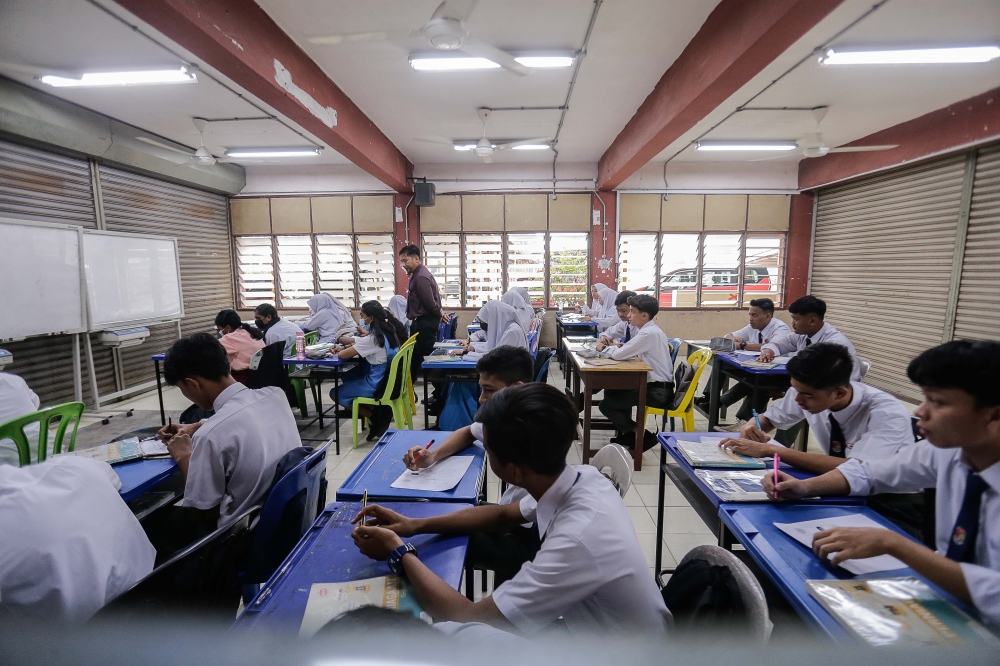
Malaysian education emphasises memorisation, which is effective for scoring well but limits deeper learning and adaptability.
Memorisation conditions students to react predictably, hindering creativity and teamwork, crucial skills in modern workplaces.
Open book exams could reduce reliance on rote learning, encouraging students to develop problem-solving and critical thinking skills.
SEPTEMBER 23 — “Never ever hire anyone with a Grade Point Average of 4.0” ~ Tom Peters
Let’s be real. For most Asian kids to do well in school, it usually means that s/he has developed a certain habit of mind: memorisation.
Unless all the Sekolah Rendah Kebangsaan and Sekolah Menengah Kebangsaan have undergone a (literally) mind-blowing revolution, how Malaysian teachers educate students today wouldn’t be that different from how they did back when the Form 3 exam was known as SRP.
Memorisation, in fact, is an apt symbol for our attitude towards formal education i.e. it’s safe and it’s effective. How can there be a downside?
That’s why millions of Malaysians use the method.
Likewise, “scoring well in school” is seen as the non-negotiable trajectory all parents want their kids to be on. If our kids do well in school, it’s good for morale, it promises a bright future — what could possibly be wrong with that?
But, ay, there’s the rub.
As anyone who’s ever thought hard about learning knows, memorisation isn’t merely an inferior way to learn — it also prevents us from adopting something better.
It’s like, if you’ve been using a QWERTY keyboard all your life, suddenly being asked to use the DVORAK or COLEMAK format is going to be torture.
Or, if you’ve been reading slooooow-ly, line by line, for the past 30 years, attempting to speed read is going to make your eyes feel like popping out.
Ditto with memorisation.
The method forces and freezes (?) your mind to react in a particular way on cue. It’s a form of mental behaviourism.
Remember Pavlov and his dog? Pavlov saw that his dogs would drool each time he brought them food.
Then he noticed that his mutts would salivate by the mere sight of him entering the room even without food. It’s conditioning, and this is what the education system (at least the Malaysian one) does to students.
It’s like, each time Form 5-ers see the word “exam” or “learn” or “education”, they go into “how many pages of which topic do I have to upload into my memory before downloading into an exam answer sheet?” mode (see note 1).
And that’s just, uh, sub-par. Memorisation inhibits holistic and authentic learning.
It’s also counter to teamwork and co-operation (surely one of the most important skills in modern corporations).
This is why management guru Tom Peters declared in public that students scoring CGPA 4.0 shouldn’t be hired because that usually suggests they’ve been using a very restricted kind of learning and are inflexible when it comes to “real world” issues.
So how do we get kids off memorisation and rote-learning entirely?
This is really a separate question but here’s one option to think about: Open book exams.
In one stroke, the need to commit large chunks of textbook pages to our internal RAM is out the window.
Students, all of a sudden, won’t have this “hammer” available anymore to treat everything like a nail.
Hence, they’ll be forced to trawl their internal toolbox for something else, for something better.
Note 1: Strictly speaking, there is nothing wrong with conditioning itself. Nicol David is blessedly “conditioned” to trash her opponents in squash. Alas, I think Malaysian kids — especially those who excel — are “conditioned” to memorise.
* This is the personal opinion of the columnist.
Is ‘Hope’ the ‘Mad Max: Fury Road’ of monster movies?
Saying sorry is not a competitive sport
Malaysia Day: We must be the Malaysians we wish we were
Negeri Sembilan exco overstepped its powers by suspending two top officials, says AGC
Melaka election ahead: Key players, shifting alliances and the possible implications for Putrajaya
‘Sometimes I make only RM5’: Traders struggle as Rantau Panjang’s once-bustling bazaar falls quiet
马来西亚的教育强调记忆,虽然这种方法能取得好成绩,但却限制了深度学习和适应能力。
死记硬背会让学生养成可预测的反应习惯,从而阻碍创造力和团队合作能力的发展,而这些技能在现代职场中至关重要。
开卷考试可以减少对死记硬背的依赖,鼓励学生培养解决问题和批判性思维能力。
9月23日——“永远不要雇用平均绩点为4.0的人”——汤姆·彼得斯
说实话,对大多数亚洲孩子来说,要想在学校取得好成绩,通常意味着他们养成了某种思维习惯:记忆。
除非所有国民小学和国民中学都经历了(字面意义上的)翻天覆地的革命,否则马来西亚教师今天教育学生的方式与当年三年级考试被称为 SRP 时的方式不会有太大不同。
事实上,死记硬背恰如其分地象征了我们对待正规教育的态度,即它安全有效。它怎么会有缺点呢?
这就是为什么数百万马来西亚人使用这种方法的原因。
同样,“在学校取得好成绩”被视为所有家长都希望孩子走的必经之路。如果我们的孩子在学校表现出色,这有利于他们的士气,预示着光明的未来——这有什么错呢?
但是,哎,问题就在这里。
任何认真思考过学习的人都知道,死记硬背不仅不是一种低效的学习方式,而且还会阻碍我们采用更好的学习方法。
这就好比,如果你一辈子都在使用 QWERTY 键盘,突然被要求使用 DVORAK 或 COLEMAK 格式,那简直就是一种折磨。
或者,如果你在过去的 30 年里一直逐行慢读,那么尝试快速阅读会让你的眼睛感觉快要爆出来。
记忆也是如此。
这种方法会强迫你的思维按照特定的指令做出反应。它是一种心理行为主义。
还记得巴甫洛夫和他的狗吗?巴甫洛夫发现,每次他给狗带食物时,狗都会流口水。
然后他注意到,即使没有食物,他的狗只要看到他走进房间就会流口水。这是条件反射,而这正是教育体系(至少是马来西亚的教育体系)对学生所做的。
就好像,每当中五学生看到“考试”、“学习”或“教育”这些词时,他们就会进入“我需要把多少页哪个主题的知识上传到我的记忆里,才能下载到考试答题纸上?”的模式(见注释 1)。
这简直太差劲了。死记硬背会阻碍全面、真实的学习。
这也违背了团队合作精神(这无疑是现代企业中最重要的技能之一)。
这就是为什么管理大师汤姆·彼得斯公开宣称,不应该雇用平均绩点为 4.0 的学生,因为这通常表明他们接受的学习方式非常局限,在面对“现实世界”的问题时缺乏灵活性。
那么,我们如何才能让孩子们彻底摆脱死记硬背和机械学习呢?
这其实是另一个问题,但这里有一个可以考虑的方案:开卷考试。
就这样,我们不再需要将大段教科书页面存入内部内存了。
学生们突然之间就不能再像以前那样,用“锤子”来对待所有东西,把它们都当成钉子了。
因此,他们将被迫翻遍内部工具箱,寻找其他更好的方法。
注1:严格来说,训练本身并没有错。妮可·戴维(Nicol David)在壁球比赛中能轻松击败对手,这真是令人钦佩。然而,我认为马来西亚的孩子们——尤其是那些成绩优异的孩子——被训练成死记硬背。
* 这是专栏作家的个人观点。
《希望》会是怪兽电影界的《疯狂的麦克斯:狂暴之路》吗?
道歉不是竞技运动。
马来西亚日:我们必须成为我们希望成为的那种马来西亚人
总检察署表示,森美兰州行政议会越权停职两名高级官员。
马六甲州选举临近:关键人物、不断变化的联盟以及对布城可能产生的影响
“有时我只能赚到5令吉”:兰道班让曾经熙熙攘攘的集市如今冷清萧条,商贩们苦苦挣扎