This Is What Grumman’s Proposed F-14 Super Tomcat 21 Would Have Actually Looked Like这就是格鲁曼公司提出的F-14“超级雄猫”21型战斗机的实际外观。
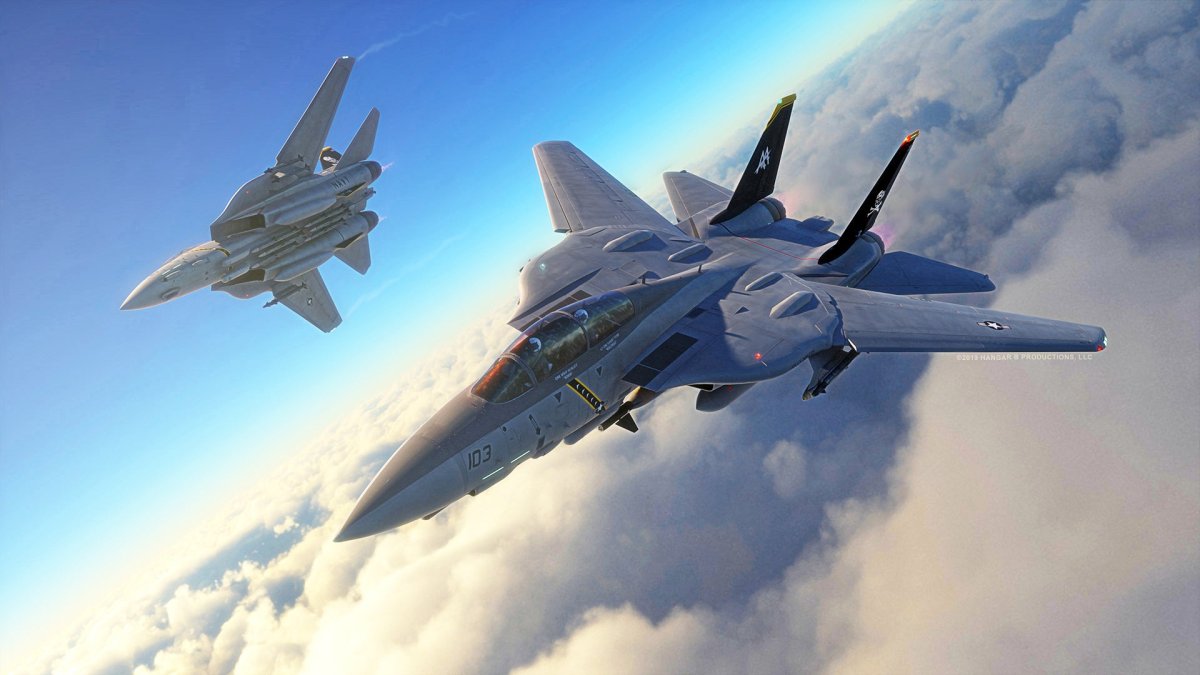
If the Super Hornet hadn't been built, Grumman's next-gen Tomcat may have become a reality. We forensically recreated it in these awesome renderings.
Updated Dec 1, 2019 5:58 AM EST
Arguably the most famous and beloved American jet fighter, Grumman’s F-14 Tomcat, still firmly holds the public’s attention in its cat claws well over a decade after it was retired from U.S. Navy service. Of the many long-form , very in-depth pieces I have posted on the “Turkey Bird, ” one article from years ago still makes its viral rounds and is the source of constant reader mail— The Super Tomcat That Was Never Built . It was over five years ago that I wrote that piece—the first iteration of it nearly a decade ago—and now, with the help of our favorite aerospace artist Adam Burch from Hangar B Productions , we have forensically recreated what this aircraft would have looked like if it had been built—just like we have done with the F-23 and the F-32 . Not only that, but we also ventured to create theoretical ‘2010s’ upgrade of this aircraft along the same lines as what we have seen with Boeing’s latest F-15 Strike Eagle variants.
So, tighten your ejection seat straps, wipe the controls, throttle up, and snap a salute as we rocket you down the catapult into the realm of alternative aerospace history.
We need to start with a little backstory on the Super Tomcat 21 from my earlier piece. Some of the details and timelines have been debated, but generally, this is the idea of where the ST21 came from:
In our reality, the F/A-18E/F Super Hornet became the Navy’s vanguard fighter of the 21st century as a result of the boondoggle that was the A-12 Avenger program . After massive cost overruns, weight increases and huge delays, then Defense Secretary Dick Cheney axed the stealthy carrier-borne flying wing attack jet leaving a huge hole in NAVAIR’s future inventory. This was back in 1991, the Cold War had just ended and we just got done kicking the ass of one of the world’s largest standing armies. Congress had been talked into high-risk, hugely aggressive defense programs for decades and they had had enough. The “peace dividend” sentiment was on the rise and defense budgets were beginning to fall. With the A-6E TRAM Intruder’s retirement imminent and in the vacuum created by the canceled A-12 program, manufactures starting throwing out “logical growth” designs based on existing platforms [some were even rehashed and updated concepts from years prior]. The hope was that if aircraft manufacturers make an almost entirely new aircraft look like an existing type, while also giving them a familiar “evolutionary” designation, Congress would see the product as a low-risk, low-cost upgrade of a proven platform and thus move forward with its procurement. At the same time the NATF program (the Navy’s equivalent to the USAF’s Advanced Tactical Fighter program) was in the works, but the costs and timeline for its development would have been massive, and in light of what happened to the stealthy A-12 “Flying Dorito,” it was clear that something simpler was needed. In the end, this “low-risk” and familiar design concept worked via the eventual development and procurement of the F/A-18E/F Super Hornet. Yet in some people’s opinion, it worked for the wrong aircraft. The Super Tomcat 21 grew out of a previous proposal made by Grumman after the collapse of the A-12 program called Quick Strike [one of my sources says it actually came before Quick Strike, but was rehashed later]. Quick Strike was meant to be an upgrade for existing F-14s by giving them high-end navigation and targeting pods similar to the USAF’s LANTIRN system , along with upgraded ground attack modes for F-14D’s APG-71 Radar (based on the aircraft’s original AWG-9 radar) and the ability to carry more standoff weaponry like the AGM-84E SLAM and AGM-88 HARM . Quick Strike was aimed more at cheaply picking up the Intruder’s slack than at replacing the A-12’s high-end capability, and was seen at the time as an insufficient technological leap over the F-14B and D models already in service. Also, rumors that an inexpensive clean sheet next-generation Hornet design was in the works over at McDonnell Douglas did not help Quick Strike’s attractiveness. So, Grumman came back to the Navy with a true “Super Tomcat,” called the Super Tomcat 21 [ST21].
In our reality, the F/A-18E/F Super Hornet became the Navy’s vanguard fighter of the 21st century as a result of the boondoggle that was the A-12 Avenger program . After massive cost overruns, weight increases and huge delays, then Defense Secretary Dick Cheney axed the stealthy carrier-borne flying wing attack jet leaving a huge hole in NAVAIR’s future inventory.
This was back in 1991, the Cold War had just ended and we just got done kicking the ass of one of the world’s largest standing armies. Congress had been talked into high-risk, hugely aggressive defense programs for decades and they had had enough. The “peace dividend” sentiment was on the rise and defense budgets were beginning to fall.
With the A-6E TRAM Intruder’s retirement imminent and in the vacuum created by the canceled A-12 program, manufactures starting throwing out “logical growth” designs based on existing platforms [some were even rehashed and updated concepts from years prior]. The hope was that if aircraft manufacturers make an almost entirely new aircraft look like an existing type, while also giving them a familiar “evolutionary” designation, Congress would see the product as a low-risk, low-cost upgrade of a proven platform and thus move forward with its procurement.
At the same time the NATF program (the Navy’s equivalent to the USAF’s Advanced Tactical Fighter program) was in the works, but the costs and timeline for its development would have been massive, and in light of what happened to the stealthy A-12 “Flying Dorito,” it was clear that something simpler was needed. In the end, this “low-risk” and familiar design concept worked via the eventual development and procurement of the F/A-18E/F Super Hornet. Yet in some people’s opinion, it worked for the wrong aircraft.
The Super Tomcat 21 grew out of a previous proposal made by Grumman after the collapse of the A-12 program called Quick Strike [one of my sources says it actually came before Quick Strike, but was rehashed later]. Quick Strike was meant to be an upgrade for existing F-14s by giving them high-end navigation and targeting pods similar to the USAF’s LANTIRN system , along with upgraded ground attack modes for F-14D’s APG-71 Radar (based on the aircraft’s original AWG-9 radar) and the ability to carry more standoff weaponry like the AGM-84E SLAM and AGM-88 HARM .
Quick Strike was aimed more at cheaply picking up the Intruder’s slack than at replacing the A-12’s high-end capability, and was seen at the time as an insufficient technological leap over the F-14B and D models already in service. Also, rumors that an inexpensive clean sheet next-generation Hornet design was in the works over at McDonnell Douglas did not help Quick Strike’s attractiveness. So, Grumman came back to the Navy with a true “Super Tomcat,” called the Super Tomcat 21 [ST21].
As noted above, this also occurred around the same time that it was becoming clear that the NATF wasn’t going to happen. So, whereas Quick Strike could help replace the gap left by the Intruder, the ST21 could plug that hole and the one left by the NATF, performing its same proposed mission, albeit without the advantage of stealth and a number of other cutting-edge, high-risk technologies.
Grumman’s notional roadmap for the Tomcat. , Grumman
The Super Tomcat 21 would include a variety of enhancements over the F-14D and it could be produced via remanufacturing existing F-14 airframes or it could be ordered via a new-build arrangement. Most likely a combination of both options would have been used, just like the F-14D. Remember that the last new-build Tomcat had rolled off the Bethpage, New York production line in 1992, so it’s not like the F-14 inventory was long in the tooth or its production line had gone cold for an extensive period of time when the Super Tomcat 21 was being considered.
Grumman F-14 Super Tomcat 21 model. It now hangs in the Cradle Of Aviation Museum in Garden City, NY. It gave a general arrangement for the ST21. , Public Domain via “GE Geoff”
Public Domain via “GE Geoff”
The ST21 would have incorporated a bunch of highly logical features that would accentuate the Tomcat’s attributes and mitigate its deficiencies. These were largely already available or relatively mature technologies. As a result, Grumman could start delivering ST21s as soon as the mid-1990s.
Hangar B Productions
These proposed modifications were all documented and largely included the following:
F110-GE-429 turbofan engines. This 29K pound thrust class engine, a modification of the same variant found in later block F-16s and now some Strike Eagle derivatives, albeit with a longer exhaust pipe tailored to the Tomcat, would give the ST21 supercruise performance (>Mach 1 without the use of gas-guzzling afterburner) while carrying a relevant air-to-air loadout. Some state M1.2-1.4 supercruise would have been possible.
Enlarged and recontoured leading-edge gloves with an additional 2,200lbs of fuel storage each.
Underfuselage-mounted Ford Aerospace (now Lockheed Martin) Night Owl targeting pod/FLIR and navigation pod.
Single-piece windscreen for enhanced visibility.
Wide-angle raster-scan HUD capable of projecting FLIR imagery.
Glass cockpit. New mission computers and graphics processors.
On-Board Oxygen Generations System (OBOGS)
AN/APG-71 radar with additional upgrades ported over from the AN/APG-70 used on the F-15E. Expanded range and capabilities over the original AN/APG-71 in F-14D, which itself was an outgrowth of the AWG-9.
Digital Flight Control System (DFCS).
Wet wing pylons capable of carrying 300-gallon external tanks.
Ability to carry 425-gallon external tanks on nacelle hardpoints if it was developed. Existing tank size 280 gallons.
Larger multi-segmented fowler-flaps.
Enlarged and extended slats on wing leading-edge.
Bring-back to ship capacity increased from 9k lbs to 16k lbs.
Reduced approach speed and better slow-speed control.
Integration of latest standoff weaponry, as well as AIM-120 AMRAAM.
Upgraded AN/ALE-47 countermeasures dispenser. Integration of the BOL countermeasures dispensers into the outboard pylons as a mission configuration option.
A host of other less prominent features would also be included. These include redesigned hydraulic and environmental control systems, and smaller changes to the Tomcat’s flight controls and aerodynamics for enhanced performance, stability, and maintainability. The ST21’s gross weight would have also increased, which may have led to slight enhancements to its already very stout landing gear. The F-14D’s radar warning and electronic countermeasures suite would have been carried over initially with some smaller updates, but that would likely have become an area of focus for future upgrades, which we will get to in a moment.
In all, the ST21 would have been a mighty beast of a multi-role fighter. With drastically expanded fuel capacity, both internally and externally, its range and loiter time would have been increased quite dramatically. Combined with supercruise in an air-to-air combat configuration, AIM-120 capability, and its modern Infrared Search and Track (IRST) system and updated Television Camera Set (TCS) ported over from the F-14D, the ST21 would have pushed the Tomcat into a new realm of air superiority fighter and fleet defender. In fact, no other fighter in the world would have possessed similar long-range target detection and identification capabilities.
The upgrades to its engines, slats, digital flight control system, windscreen, and HUD, as well as smaller tweaks to its other control surfaces including its spoilers, would have made it a more formidable close-in dogfighter. The nav/attack pod setup would have provided a low-altitude, all-weather precision deep strike capability similar to the F-15E . Standoff weapons integration would have expanded the carrier’s tactical reach dramatically, as well, and those new weapons would have fit perfectly with the Tomcat’s heavy load carrying capabilities. It may have even seen the AIM-54 Phoenix long-range air-to-air missile get upgraded again and kept in service longer to take advantage of the ST21’s hugely powerful sensor suite.
Really, the ST21 represents what many always dreamed of the Tomcat being while also keeping its capabilities firmly grounded in technology that was readily available at the time. In many ways, technology finally would have caught up with the Tomcat’s airframe design. The ST21 configuation leaves a lot of room for future upgrades that could take its individual and force multiplier capabilities to yet another level.
The Super Tomcat 21. , Hangar B Productions
During the early 1990s, even a more drastic upgrade of the Tomcat was being floated as part of Grumman’s future roadmap that did not include the NATF—the Advanced Strike Fighter 14 (ASF-14). This aircraft would have been a total redesign of the Tomcat leveraging advanced technologies from the NATF initiative. This would have been a costly new-build endeavor that would have likely gone significantly beyond what McDonnell Douglas did with their Super Hornet offering.
In reality, a follow-on to the ST21 in the form of the ASF-14 was unlikely even if the ST21 would of been procured. But if the Navy were to of invested heavily back into the Tomcat platform in the form of the ST21 in the mid-1990s, that aircraft would have very possibly seen a mid-life upgrade with a similar suite of technologies as what Boeing has injected into its F-15 line via the F-15SA as well as the F-15QA and the F-15X , to a bit lesser degree. This would likely have involved upgrading existing ST21 airframes with new technologies in a relatively economical manner.
Based on this conjecture, we carefully, realistically, and rationally put together what the ST21 would have likely grown into by the 2010s. We named this upgraded aircraft the Super Tomcat 2010, or ST2010.
Hypothetical Super Tomcat 2010, Hangar B Productions
This upgrade would hypothetically expand upon the existing ST21 in the following ways:
Active Electronically Scanned Array (AESA) radar. The F-14 has the largest radar aperture of any American fighter ever. As such, the ST2010 would have sported the most powerful AESA of any fighter in the world. A variant of the AN/APG-63(V)3 used by the Eagle, with enhanced multi-mode capabilities, just like the AN/APG-82 that the F-15Es are receiving today, but with a bigger antenna array, would have been the most likely system to satisfy this requirement. The radome would be slightly redesigned to accommodate the AESA radar set.
AN/APX-111(V) “pizza box” identification friend or foe (IFF) interrogator/transponder found on the Super Hornet mounted in the same position on the ST2010’s nose.
Both crew stations equipped with Digital Joint-Helmet Mounted Cuing System (D-JHMCS II) helmet-mounted displays with night vision capability. Full AIM-9X capability.
Upgraded cockpit displays with enhanced large area display in the RIO’s section.
Sniper Advanced Targeting Pod replaces Ford Aerospace Night Owl targeting pod or whatever would have been in service at the time. Nav pod is retained or removed depending on mission needs.
Beyond-line-of-sight SATCOM receive capability that can push real-time threat, blue-force tracking, and critical mission information to the Super Tomcat. It can then push parts of that information out to any platform within line-of-sight with Link 16 connectivity. The EA-18G Growler was built with this capability, which is now in its second generation.
Missile Approach Warning System (MAWS). With apertures on the upper nose, lower nose pod, leading-edge gloves, upper fuselage, lower fuselage, and atop the ST2010’s twin tails, this system provides total situational awareness of incoming missiles and other threats ( potentially DAS upgradable in the future) and is tied into the aircraft’s defensive suite.
Expanded AN/ALE-47 expendable countermeasures capacity.
Fully integrated towed fiber-optic decoys in housings near the rear of the ST2010’s under-fuselage ‘tunnel.”
Retains original speed-brake for terminal phases of flight, but digital flight control system can execute speed brake functionality using deflection of control surfaces and upper speed brake surface.
Replace AN/AAS-44 infrared search and track system with IRST21 .
Updated mission computer and graphics display processors.
Integration of latest standoff weaponry such as Small Diameter Bomb, JSOW , SLAM-ER, WCMD , Laser JDAM , etc.
Digital electronic warfare system. Modern, fully integrated digital electronic warfare and threat awareness suite that will also control countermeasures, towed decoys, AESA electronic warfare modes, and more. The RIO’s large display will allow them to work as mission managers with sensor, electronic warfare suite, data-link, and satellite data-link information displayed for maximum situational awareness.
The ST2010 would be as much about what the platform could do as a force multiplier than about its own individual combat capabilities. This aircraft would field the most powerful sensor suite on any aircraft in American fighter history. With the largest fighter AESA array in the inventory, the latest infrared search and track sensor, the ability to receive threat data and other information via satellite from all the Pentagon’s networked assets, and possessing its own highly-sensitive electronic surveillance and warfare system, the ST2010 could broadcast all that data to other less capable platforms that are within its line-of-sight. Basically, we are talking about a flying and fighting primary sensor and data-exchange node here as much as just a more capable fighter. The concept isn’t all that unique as the USAF is adapting it to their own F-15C/D fleet as part of the Talon Hate program.
The ST2010 would also be more survivable than its predecessor, not only due to its advanced digital electronic warfare suite, but via expanded expendable countermeasures capacity, towed fiber-optic decoys, larger cockpit displays, and 360-degree missile approach warning system (MAWS). It would also feature Digital-Joint Helmet Mounting Cueing Systems in both cockpits and full AIM-9X capability.
Another logical addition includes the replacement of the NITE OWL targeting pod with a Sniper Advanced Targeting Pod and the ability to carry the latest standoff weaponry, including JSOW, SDB, AIM-9X, AIM-120D, and more. The ST2010’s use as a heavy lifting and long-hauling weapons truck for large outsized payloads would also be taken into account. It could find great utility as the fleet’s hypersonic weapons hauler as well-performing its more traditional duties. But it has to be stressed again that the ST2010 hypothetical upgrade isn’t all about kinetic capabilities, it is about working as a fast-flying sensor and networking platform.
Fully tanked up, it would have very long endurance and it could fully protect itself while traveling into and out of the target area. The pilot could deal with air-to-air and air-to-ground threats while the RIO ‘quarterbacks’ the fight—enabling other assets in the air wing and across the joint force. Just the ST2010’s AESA radar alone can execute air-to-air and air-to-ground functions seamlessly and concurrently, and we are talking about it possessing a range of many hundreds of miles here. In fact, the ST2010 could work as a mini-AWACS if need be.
Most importantly, it features technologies that were in a mature or near-mature state around the early part of this decade. As such, we are talking about a huge capability boost here via a low-risk, high-reward upgrade that once again builds on the F-14’s unique attributes.
This patch would have been reason enough to build the ST21!, Hangar B Productions
So, there you have it, what could have been when it comes to America’s most beloved jet fighter. In the end, the Navy got a good plane in the Super Hornet, but it just can’t compare in terms of raw performance and other key attributes that the ST21 would have brought to the table. Who knows, maybe in an alternative universe there are nuclear supercarriers that had their decks packed with upgraded and new build legacy F/A-18Cs and ST21s as the new millennium settled in. For the rest of us in the prime timeline, what could have been will just have to remain something to ponder, or in Adam Burch’s case, to render in spectacular and highly detailed fashion.
Author’s Note: A huge, massive thanks to Adam Burch. He is so amazing to work with. He put up with a lot on this one in terms of endless notes and change requests. There were roughly 150 emails that went into finalizing these designs. I can’t thank him enough for bringing his amazing artistic skills and passion for all things aerospace to these projects. For me, they literally are something of a dream come true.
Make absolutely sure you follow Hangar-B Productions on Instagram and on Twitter , and you should check out his website too . I also want to give much-deserved credit to Chris Khun who created the standard F-14 3D model that was adapted for this piece. Check out more of Chris’s work here .
Contact the author: Tyler@thedrive.com
Comments couldn’t be loaded. Please refresh the page.
更新于美国东部时间2019年12月1日凌晨5:58
格鲁曼公司的F-14“雄猫”战斗机堪称美国最著名、最受喜爱的喷气式战斗机,即使在从美国海军退役十多年后,它依然牢牢抓住公众的目光。在我发表的众多关于这款“火鸡鸟”的深度长文中,有一篇多年前的文章至今仍在网络上疯传,并不断收到读者来信——《从未建造的超级雄猫》。这篇文章是我五年前写的——初稿则要追溯到近十年前——如今,在我们最喜欢的航空航天艺术家、来自Hangar B Productions的Adam Burch的帮助下,我们像之前对F-23和F-32所做的那样,对这款飞机进行了细致的复原,重现了它如果建造出来会是什么样子。不仅如此,我们还尝试根据波音公司最新F-15“攻击鹰”系列的改进思路,对这款飞机进行了理论上的“2010年代”升级。
所以,系紧弹射座椅安全带,擦拭控制装置,加大油门,敬个礼,我们将带你乘坐弹射器飞向另一个航空航天历史的领域。
我们需要先回顾一下我之前文章中提到的超级雄猫21型战斗机的背景。一些细节和时间线尚有争议,但总的来说,ST21的起源大致如下:
在我们的现实中,F/A-18E/F“超级大黄蜂”战斗机之所以成为海军21世纪的先锋战机,要归功于A-12“复仇者”攻击机项目的失败。在经历了巨额成本超支、重量增加和严重延误之后,时任国防部长迪克·切尼取消了这款隐形舰载飞翼攻击机项目,给海军航空系统司令部(NAVAIR)的未来装备留下了一个巨大的空缺。那是在1991年,冷战刚刚结束,我们刚刚击败了当时世界上规模最大的常备军之一。几十年来,国会一直被说服参与高风险、极具侵略性的国防项目,如今他们已经受够了。“和平红利”的呼声日益高涨,国防预算开始下降。随着A-6E“入侵者”攻击机即将退役,以及A-12项目取消造成的空白,制造商们开始推出基于现有平台的“逻辑增长”设计方案(其中一些甚至是几年前概念的翻新和升级版)。当时的设想是,如果飞机制造商将一款几乎全新的飞机设计得与现有机型外观相似,同时赋予其一个熟悉的“进化型”名称,国会就会将其视为对成熟平台的低风险、低成本升级,从而推进采购。与此同时,海军先进战术战斗机(NATF)项目(相当于美国空军的先进战术战斗机项目)也在筹备中,但其研发成本和时间都非常庞大,而且鉴于隐形A-12“飞行多力多滋”的失败,显然需要一种更简单的方案。最终,这种“低风险”且熟悉的研发理念通过F/A-18E/F“超级大黄蜂”的最终研发和采购得以实现。然而,在一些人看来,这种理念用错了飞机。超级雄猫21型战斗机源于格鲁曼公司在A-12项目失败后提出的“快速打击”(Quick Strike)方案[据我所知,该方案实际上早于“快速打击”方案,但后来被重新提出]。“快速打击”方案旨在升级现有的F-14战斗机,为其配备类似于美国空军LANTIRN系统的高端导航和目标指示吊舱,并升级F-14D的APG-71雷达(基于该机原有的AWG-9雷达)的对地攻击模式,以及携带更多防区外武器的能力,例如AGM-84E SLAM和AGM-88 HARM导弹。“快速打击”方案的目标更多在于以低成本弥补“入侵者”(Intruder)攻击机的不足,而非取代A-12的高端作战能力,因此在当时被认为相对于已服役的F-14B和F-14D型战斗机而言,技术进步并不显著。此外,有传言称麦克唐纳·道格拉斯公司正在研发一款成本低廉的全新下一代“大黄蜂”战斗机,这进一步削弱了“快速打击”方案的吸引力。因此,格鲁曼公司带着真正的“超级雄猫”战斗机——超级雄猫21型(ST21)——重返海军。
在我们的现实中,F/A-18E/F“超级大黄蜂”战斗机之所以能成为海军21世纪的先锋战斗机,正是由于A-12“复仇者”攻击机项目的巨大失败。在经历了巨额成本超支、重量增加和严重延误之后,时任国防部长迪克·切尼最终取消了这款隐形舰载飞翼攻击机项目,这给海军航空系统司令部(NAVAIR)未来的装备库留下了一个巨大的空缺。
那是1991年,冷战刚刚结束,我们刚刚痛击了世界上规模最大的常备军之一。几十年来,国会一直被说服支持高风险、极具侵略性的国防计划,他们已经受够了。“和平红利”的呼声日益高涨,国防预算也开始下降。
随着A-6E TRAM“入侵者”攻击机即将退役,以及A-12项目取消造成的空白,制造商们开始推出基于现有平台的“逻辑增长”设计方案(其中一些甚至是对多年前概念的重新包装和升级)。他们希望,如果飞机制造商能够设计出一款外观与现有机型几乎完全相同的全新飞机,并赋予其一个熟悉的“进化型”名称,国会就会将其视为对成熟平台的低风险、低成本升级,从而推进采购进程。
与此同时,海军先进战术战斗机(NATF)项目(相当于美国空军的先进战术战斗机项目)也在筹备中,但其研发成本和时间都非常庞大,而且鉴于隐形A-12“飞行多力多滋”的失败,显然需要一种更简单的方案。最终,这种“低风险”且较为熟悉的方案通过F/A-18E/F“超级大黄蜂”的最终研发和采购得以实现。然而,在一些人看来,这种方案用错了飞机。
超级雄猫21型战斗机源于格鲁曼公司在A-12项目失败后提出的名为“快速打击”(Quick Strike)的早期方案[我的一个消息来源称,该方案实际上早于“快速打击”,但后来被重新提出]。“快速打击”旨在升级现有的F-14战斗机,为其配备类似于美国空军LANTIRN系统的高端导航和目标指示吊舱,并升级F-14D的APG-71雷达(基于该机原有的AWG-9雷达)的对地攻击模式,以及携带更多防区外武器的能力,例如AGM-84E SLAM和AGM-88 HARM导弹。
“快速打击”战斗机的研发初衷更多是为了以低成本弥补“入侵者”战斗机的不足,而非取代A-12的高端作战能力。当时,人们认为它相对于已服役的F-14B和F-14D型战斗机而言,技术进步并不显著。此外,有传言称麦克唐纳·道格拉斯公司正在研发一款全新设计的低成本下一代“大黄蜂”战斗机,这进一步削弱了“快速打击”战斗机的吸引力。因此,格鲁曼公司最终带着真正的“超级雄猫”战斗机——“超级雄猫21”(ST21)——重返海军。
如上所述,这恰好与NATF项目宣告失败的时间大致相同。因此,虽然快速打击导弹可以弥补入侵者导弹留下的空白,但ST21导弹可以同时填补入侵者导弹和NATF项目留下的空白,执行其原定任务,尽管它不具备隐身优势以及其他一些尖端高风险技术。
格鲁曼公司为“雄猫”战斗机制定的概念路线图。
超级雄猫21型战斗机将在F-14D的基础上进行多项改进,其生产方式可以是翻新现有的F-14机身,也可以是全新制造。最有可能的是,会像F-14D一样,采用两种方式相结合的方案。需要注意的是,最后一架全新制造的雄猫战斗机于1992年从纽约州贝斯佩奇的生产线下线,因此在考虑超级雄猫21型战斗机项目时,F-14的库存并不老旧,生产线也并非长期停产。
格鲁曼F-14“超级雄猫”21型模型。现藏于纽约州花园城航空摇篮博物馆。该模型为ST21型提供了总体布局。(图片来自“GE Geoff”,属公共领域)
公共领域,图片来自“GE Geoff”
ST21型战机融合了一系列极具逻辑性的功能,旨在强化“雄猫”战机的优势并弥补其不足。这些功能大多是当时已具备或相对成熟的技术。因此,格鲁曼公司最早可在20世纪90年代中期开始交付ST21型战机。
Hangar B Productions
这些修改建议均已记录在案,主要包括以下内容:
F110-GE-429涡扇发动机。这款推力为29000磅级的发动机,是后期F-16战斗机以及部分F-16“攻击鹰”战斗机衍生机型所用发动机的改进型,尽管其排气管更长,更适合“雄猫”战斗机使用。该发动机能够使ST21战斗机在不开启耗油量巨大的加力燃烧室的情况下实现超音速巡航(超过1马赫),同时还能携带相应的空对空武器载荷。一些专家认为,该机甚至有可能达到1.2-1.4马赫的超音速巡航速度。
加大并重新设计了前缘手套的轮廓,每个手套可额外储存 2,200 磅燃料。
机身下方安装福特航空航天公司(现洛克希德·马丁公司)的夜猫子瞄准吊舱/前视红外和导航吊舱。
一体式挡风玻璃,视野更佳。
可投射 FLIR 图像的广角光栅扫描 HUD。
玻璃座舱。新型任务计算机和图形处理器。
船载氧气发生系统(OBOGS)
AN/APG-71雷达是在F-15E上使用的AN/APG-70雷达的基础上进行升级改造而来。与F-14D上使用的原版AN/APG-71雷达相比,其探测距离和性能均有所提升,而F-14D本身又是AWG-9雷达的衍生产品。
数字飞行控制系统(DFCS)。
湿翼挂架可挂载 300 加仑外挂油箱。
如果研制成功,发动机舱挂点可以携带425加仑的外部油箱。现有油箱容量为280加仑。
更大的多节式福勒瓣。
机翼前缘缝翼加宽加长。
返回船舶的运力从 9000 磅增加到 16000 磅。
降低进场速度,提高低速操控性能。
整合最新防区外武器以及AIM-120 AMRAAM导弹。
升级版AN/ALE-47对抗措施投放器。将BOL对抗措施投放器集成到外侧挂架中,作为任务配置选项。
此外,还有许多其他不太显眼的改进。这些改进包括重新设计的液压和环境控制系统,以及对“雄猫”战斗机飞行控制和空气动力学方面的细微调整,以提升其性能、稳定性和可维护性。ST21的总重量也会增加,这可能导致其原本就非常坚固的起落架进行一些细微的改进。F-14D的雷达告警和电子对抗系统最初会沿用,并进行一些小的升级,但这很可能成为未来升级的重点,我们稍后会详细介绍。
总而言之,ST21本应是一款性能卓越的多用途战斗机。其内部和外部燃料容量都大幅提升,航程和滞空时间也将显著增加。结合空对空超音速巡航能力、AIM-120导弹发射能力、以及从F-14D移植而来的现代化红外搜索跟踪(IRST)系统和升级版电视摄像系统(TCS),ST21将把“雄猫”战斗机推向空中优势战斗机和舰队防空战斗机的新高度。事实上,世界上没有任何其他战斗机能够拥有如此强大的远程目标探测和识别能力。
对其发动机、缝翼、数字飞行控制系统、风挡和平视显示器(HUD)的升级,以及对包括扰流板在内的其他控制面的细微调整,将使其成为更强大的近距离空战战斗机。导航/攻击吊舱配置将使其具备类似F-15E的低空全天候精确纵深打击能力。防区外武器的集成也将大幅扩展航母的战术打击范围,而这些新型武器与“雄猫”战斗机强大的载弹能力完美契合。甚至有可能再次升级AIM-54“不死鸟”远程空空导弹,并延长其服役时间,以充分利用ST21航母强大的传感器套件。
实际上,ST21 代表了许多人梦寐以求的“雄猫”战斗机,同时又使其性能牢牢扎根于当时的技术水平。在许多方面,技术发展最终赶上了“雄猫”的机身设计。ST21 的配置为未来的升级留下了很大的空间,可以将其单机作战能力和协同作战能力提升到一个新的水平。
超级雄猫21号,B机库制作公司
上世纪90年代初,格鲁曼公司在其未来发展路线图中曾提出一项更为彻底的“雄猫”战斗机升级方案——先进攻击战斗机14型(ASF-14),该方案并未包含NATF项目。这款飞机将完全重新设计“雄猫”战斗机,并充分利用NATF项目中的先进技术。这将是一项耗资巨大的全新研发项目,其成本很可能远远超过麦克唐纳·道格拉斯公司为其“超级大黄蜂”战斗机所投入的资金。
事实上,即便ST21最终被采购,其后续机型ASF-14的可能性也很小。但如果海军在20世纪90年代中期对ST21“雄猫”平台进行大量投资,那么这款战机很可能也会进行中期升级,采用与波音公司在其F-15系列战机(包括F-15SA、F-15QA和F-15X)中应用的技术类似的升级方案,尽管程度可能略低一些。这很可能涉及以相对经济的方式,用新技术升级现有的ST21机身。
基于这一推测,我们仔细、务实、理性地构想了ST21在2010年代可能的发展方向。我们将这款升级后的飞机命名为超级雄猫2010,或简称ST2010。
假设的超级雄猫 2010,Hangar B Productions
此次升级理论上将在现有 ST21 的基础上进行以下扩展:
有源电子扫描阵列(AESA)雷达。F-14拥有美国战斗机中最大的雷达孔径。因此,ST2010原本将配备世界上所有战斗机中最强大的AESA雷达。F-14使用的AN/APG-63(V)3雷达的改进型,具备增强的多模式探测能力(类似于F-15E目前使用的AN/APG-82雷达),但天线阵列更大,最有可能满足这一要求。雷达罩将进行略微重新设计以适应AESA雷达装置。
AN/APX-111(V)“披萨盒”识别敌我识别 (IFF) 询问器/应答器,在超级大黄蜂上发现,安装在 ST2010 机头相同位置。
两个乘员舱均配备数字联合头盔瞄准系统(D-JHMCS II)头盔显示器,具备夜视功能。完全具备AIM-9X导弹发射能力。
驾驶舱显示屏升级,RIO 部分配备了增强型大面积显示屏。
狙击手先进瞄准吊舱取代了福特航空航天公司的夜猫子瞄准吊舱或当时正在使用的其他任何瞄准吊舱。导航吊舱是否保留取决于任务需要。
超级雄猫战斗机具备超视距卫星通信接收能力,可将实时威胁信息、蓝军跟踪信息和关键任务信息推送至该战机。随后,它还可以利用Link 16链路将部分信息转发至视距内的任何平台。EA-18G咆哮者电子战飞机就具备这种能力,目前该能力已发展至第二代。
导弹逼近告警系统(MAWS)。该系统在机头上部、机头下部吊舱、前缘护罩、机身上部、机身下部以及ST2010的双垂尾上方设有开口,可提供对来袭导弹和其他威胁的全面态势感知(未来可能升级为DAS),并与飞机的防御系统相连。
扩大 AN/ALE-47 消耗性对抗措施能力。
ST2010 机身下方“隧道”后部附近的壳体内装有完全集成的拖曳式光纤诱饵。
保留了原有的减速板用于飞行末段,但数字飞行控制系统可以通过控制面和上减速板的偏转来执行减速板功能。
用 IRST21 替换 AN/AAS-44 红外搜索和跟踪系统。
更新了任务计算机和图形显示处理器。
整合最新型防区外武器,例如小直径炸弹、联合特种作战武器系统(JSOW)、SLAM-ER、WCMD、激光制导联合直接攻击弹药(JDAM)等。
数字电子战系统。这套现代化的全集成数字电子战和威胁感知系统,还能控制对抗措施、拖曳式诱饵、AESA电子战模式等。雷达信息官(RIO)的大尺寸显示屏可让他们作为任务经理,实时显示传感器、电子战系统、数据链和卫星数据链信息,从而最大限度地掌握态势感知。
ST2010 的重点不仅在于其自身的作战能力,更在于其作为战力倍增器的强大作用。这款战机将配备美国战斗机史上最强大的传感器套件。它拥有现役最大的战斗机用有源相控阵雷达阵列、最新的红外搜索跟踪传感器,能够通过卫星接收来自五角大楼所有联网资产的威胁数据和其他信息,并拥有自身高度敏感的电子监视和作战系统。ST2010 可以将所有这些数据广播给视线范围内其他性能较弱的平台。简而言之,我们讨论的不仅仅是一架性能更强的战斗机,而是一个飞行作战的主传感器和数据交换节点。这个概念并非独创,美国空军正在将其应用于自身的 F-15C/D 机队,作为“鹰爪仇恨”(Talon Hate)计划的一部分。
ST2010的生存能力也将优于其前身,这不仅得益于其先进的数字电子战系统,还得益于其更大的消耗性对抗措施容量、拖曳式光纤诱饵、更大的座舱显示器以及360度导弹逼近告警系统(MAWS)。此外,它还将在前后座舱配备数字联合头盔瞄准系统,并具备完整的AIM-9X导弹拦截能力。
另一个合乎逻辑的升级方案是将NITE OWL瞄准吊舱替换为狙击手先进瞄准吊舱(Sniper Advanced Targeting Pod),并使其能够携带最新的防区外武器,包括JSOW、SDB、AIM-9X、AIM-120D等等。ST2010作为重型武器运输机,能够运送大型超大型有效载荷,其用途也将被纳入考虑。它不仅可以履行其更传统的任务,还能作为舰队的高超音速武器运输机发挥巨大作用。但必须再次强调的是,ST2010的此次升级并非仅仅着眼于动能能力,更重要的是使其成为一个高速飞行的传感器和网络平台。
满油状态下,ST2010拥有极长的续航能力,能够在进出目标区域的过程中全面保护自身安全。飞行员可以应对空对空和空对地威胁,而雷达拦截官(RIO)则负责指挥作战,为联队及其他联合部队的作战力量提供支持。仅ST2010的AESA雷达就能无缝、同步地执行空对空和空对地作战任务,其探测距离可达数百英里。事实上,必要时,ST2010完全可以胜任小型预警机(AWACS)的角色。
最重要的是,它采用了在本世纪初就已经成熟或接近成熟的技术。因此,我们谈论的是一次低风险、高回报的升级,它将极大地提升F-14的性能,并再次强化了F-14的独特优势。
光凭这个补丁就足以让我们打造出 ST21 了!Hangar B Productions
所以,这就是美国最受欢迎的喷气式战斗机ST21原本可能拥有的辉煌。最终,海军获得了性能优异的超级大黄蜂,但在性能和其他关键特性方面,它仍然无法与ST21相提并论。谁知道呢,或许在平行宇宙中,随着新千年的到来,核动力超级航母的甲板上会满载着升级版和新建造的F/A-18C以及ST21。对于我们这些身处现实世界的人来说,这些“原本可能”只能留在脑海中,或者像亚当·伯奇那样,用精湛的技艺将其渲染成一幅幅壮观而细致的画作。
作者注:非常非常感谢Adam Burch。和他合作简直太棒了。为了完成这个项目,他忍受了我无数次的修改意见和修改要求。为了最终确定这些设计,我们大概来回发了150封邮件。他为这些项目倾注了精湛的艺术才华和对航空航天的热情,我感激不尽。对我来说,这简直就是梦想成真。
务必关注 Hangar-B Productions 的 Instagram 和 Twitter 账号,也别忘了访问他们的网站。此外,我要特别感谢 Chris Khun,他制作了用于本作品的标准 F-14 3D 模型。点击此处查看 Chris 的更多作品。
联系作者:Tyler@thedrive.com
评论加载失败,请刷新页面。