The Night A Mysterious Drone Swarm Descended On Palo Verde Nuclear Power Plant神秘无人机群袭击帕洛维德核电站的夜晚
The mysterious case of mass drone incursions over America's most powerful nuclear power plant that only resulted in more questions and no changes.
新闻视频
By Tyler Rogoway and Joseph Trevithick
Updated Jul 30, 2020 10:03 AM EDT
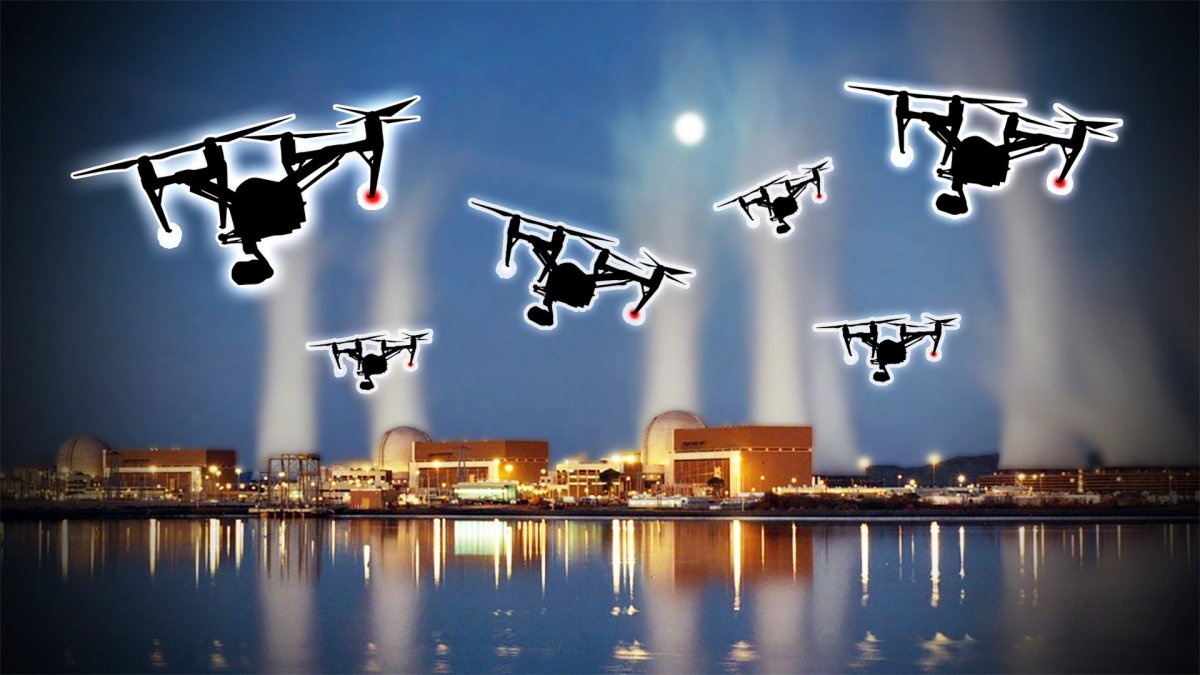
While the news has been filled with claims that strange unidentified craft with unexplainable capabilities are appearing over highly sensitive U.S. installations and assets as of late, a much less glamorous, more numerous, and arguably far more pressing threat has continued to metastasize in alarming ways—that posed by lower-end and even off-the-shelf drones. Less than a year ago and just days after the stunning drone attacks on Saudi Arabia’s most critical energy production infrastructure deep in the heart of that highly defended country, a bizarre and largely undisclosed incident involving a swarm of drones occurred on successive September evenings in 2019. The location? America’s most powerful nuclear plant, the Palo Verde Nuclear Generation Station situated roughly two dozen miles west of Phoenix, near Tonopah, Arizona.
In a trove of documents and internal correspondences related to the event, officials from the Nuclear Regulatory Commission (NRC) described the incident as a “drone-a-palooza” and said that it highlighted concerns about the potential for a future “adversarial attack” involving small unmanned aircraft and the need for defenses against them. Even so, the helplessness and even cavalier attitude toward the drone incident as it was unfolding by those that are tasked with securing one of America’s largest and most sensitive nuclear facilities serves as an alarming and glaring example of how neglected and misunderstood this issue is.
What you are about to read is an unprecedented look inside a type of event that is less isolated in nature than many would care to believe.
A Rapidly Accelerating Threat
Troubling incidents of protracted activity by swarms of drones, including a series of very strange incidents in Colorado and neighboring states last year that the mainstream media was quick to blow off without any real evidence to prompt such a dismissal, are occurring over and near some of America’s most critical infrastructure. These events are occurring as lower-end and lower-performance unmanned aircraft systems (UAS) have become weaponized to increasingly remarkable degree in recent years. Even those built-in sheds in the middle of warzones have been employed with not only deadly, but also a highly disruptive effects . As we mentioned a moment ago, drones have even inflicted major damage to one of the world’s richest and most heavily defended country’s cash cow—oil production. They have also been used in an attempt to assassinate a country’s ruler. And yes, the potential for them to be used for similar purposes exists right here in the United States, as well.
Even as lower-end drones that are armed with explosives and capable of precision attacks are being mass-produced overseas and America’s adversaries are openly perfecting far more complex swarm capabilities , the U.S. military and federal agencies are desperately trying to play catch-up to the threat even though they had years to proactively work to nullifying it before its inevitable manifestation. It wasn’t before weaponized drones were careening into and dropping bomblets on Iraq soldiers’ heads during the Battle of Mosul that the U.S. military had no choice but to begin to take the issue seriously. Today, American soldiers deal with the ominous presence of drones overhead and even dropping munitions daily in overseas hotspots. America’s top military commander in the Middle East is all too aware of this compounding threat and the lack of resources being placed on countering it:
“I argue all the time with my Air Force friends that the future of flight is vertical and it’s unmanned,” U.S. Marine General Kenneth McKenzie, head of U.S. Central Command, said at an event hosted by the Middle East Institute last week . “I’m not talking about large unmanned platforms, which are the size of a conventional fighter jet that we can see and deal with, as we would any other platform.” “I’m talking about the one you can go out and buy at Costco right now in the United States for a thousand dollars, four quad, rotorcraft, or something like that that can be launched and flown,” he continued. “And with very simple modifications, it can make made into something that can drop a weapon like a hand grenade or something else.” … “Right now, the fact of the matter is we’re on the wrong side of that equation.”
“I argue all the time with my Air Force friends that the future of flight is vertical and it’s unmanned,” U.S. Marine General Kenneth McKenzie, head of U.S. Central Command, said at an event hosted by the Middle East Institute last week . “I’m not talking about large unmanned platforms, which are the size of a conventional fighter jet that we can see and deal with, as we would any other platform.”
“I’m talking about the one you can go out and buy at Costco right now in the United States for a thousand dollars, four quad, rotorcraft, or something like that that can be launched and flown,” he continued. “And with very simple modifications, it can make made into something that can drop a weapon like a hand grenade or something else.”
“Right now, the fact of the matter is we’re on the wrong side of that equation.”
With all this in mind, it isn’t a matter of if similar events will occur in the homeland, it’s a matter of when and of what scope. As it sits now, all the warning signs are there, especially in terms of where mysterious swarms of drones are popping up without explanation.
Two Nights In Late September
Douglas D. Johnson , a volunteer researcher affiliated with the Scientific Coalition for UAP Studies (SCU) , was able to obtain a large number of internal documents regarding the September drone incidents at Palo Verde from the NRC via the Freedom of Information Act (FOIA) and kindly shared them with The War Zone . It is important to note that these documents primarily reflect the NRC’s perspective rather than that of any other U.S. government agencies at the federal, state, or local levels. The Arizona Public Service Company, which operates the Palo Verde Generating Station, is also a private entity not directly subject to the FOIA.
Johnson did also submit a FOIA request for relevant documents to the Department of Homeland Security’s (DHS) Cybersecurity and Infrastructure Security Agency (CISA). DHS said it found 32 pages of documents related to the incident from CISA, but declined to release them, citing exemptions related to law enforcement activities. Another 17 pages of relevant records are still undergoing a review by the Transportation Security Administration (TSA).
This particular story starts on Sept. 29, 2019. Shortly before 11:00 PM local time at the Palo Verde Nuclear Generating Station, Daphne Rodriguez, an Acting Security Section Chief at the plant, called the duty officer at NRC’s Headquarters Operations Center (HOC). Rodriguez reported that a number of drones were flying over and around a restricted area near the nuclear power plant’s Unit 3, which houses one of its three pressurized water reactors.
A page from a Palo Verde visitor’s guide from 2016 showing a basic map of the facility and offering additional information about the various controlled areas therein., Arizona Public Service Company
Thomas Kendzia, a Headquarters Emergency Response Officer (HERO) at the HOC, subsequently created an incident report in the NRC’s Security Information Database (SID). The HOC’s policy is to have one Headquarters Operations Officer (HOO) and a Headquarters Emergency Response Officer (HERO) on duty, 24 hours a day, every day, with no exceptions. “The designated HOO for the shift has the primary responsibility for receiving reports and determining appropriate actions. The HERO counterpart role provides procedural, communications, and administrative support,” according to a 2018 NRC Office of the Inspector General’s report on headquarters staffing issues.
The key portions of the SID entry that Kendzia created, which was then updated as time went on, are as follows:
“Officer noticed several drones (5 or 6) flying over the site. The drones are circling the 3 unit site inside and outside the Protected Area. The drones have flashing red and white rights and are estimated to be 200 to 300 hundred feet above the site. It was reported the drones had spotlights on while approaching the site that they turned off when they entered the Security Owner Controlled Area. Drones were first noticed at 2050 MST and are still over the site as of 2147 MST. Security Posture was normal, which was changed to elevated when the drones were noticed. The Licensee notified one of the NRC resident inspectors. As of 0237 EST, no drones have been observed at the site since 2230 MST. Officers believe drones were over 2 feet in diameter.
“Officer noticed several drones (5 or 6) flying over the site. The drones are circling the 3 unit site inside and outside the Protected Area. The drones have flashing red and white rights and are estimated to be 200 to 300 hundred feet above the site. It was reported the drones had spotlights on while approaching the site that they turned off when they entered the Security Owner Controlled Area. Drones were first noticed at 2050 MST and are still over the site as of 2147 MST. Security Posture was normal, which was changed to elevated when the drones were noticed. The Licensee notified one of the NRC resident inspectors.
As of 0237 EST, no drones have been observed at the site since 2230 MST. Officers believe drones were over 2 feet in diameter.
Personnel at the HOC also then called the duty officer at the NRC’s Intelligence Liaison and Threat Assessment Branch (ILTAB), a division of the Office of Nuclear Security and Incident Response. ILTAB’s mission is to “provide strategic and tactical intelligence warning and analysis of all threats to the US commercial nuclear sector, and serve as NRC’s liaison and coordination staff to the US intelligence and law enforcement communities,” according to a 2010 briefing .
Palo Verde Nuclear Generating Station as seen from the air. , Cuhlik/wikicommons
That wasn’t the end of it, though, for Palo Verde. The very next night, Ismael Garcia, a Security Supervisor at the plant called ILTAB to report another drone incursion over sensitive areas.
This new information was originally added as an update to the previous incident, but the HERO on duty, Donald Norwood, eventually set up a new, separate SID entry, which again received additional updates as the situation progressed, with the key details being as follows:
Four (4) drones were observed flying beginning at 2051 MST [on Sept. 30, 2019] and continuing through the time of this report (2113 MST). As occurred last night, the drones are flying in, through, and around the owner controlled area, the security owner controlled area, and the protected area. Also, as last night, the drones are described as large with red and white flashing lights. Spotlights have not been noted tonight. The licensee has not changed their security posture. The licensee continues to monitor the drones. As of 0355 EDT, no drones have been observed at the site since before 0020 MST. LLEA [local law enforcement agency] surveyed the area and were unable to locate drones on the ground or anyone controlling the drones. The licensee notified FAA (both Phoenix and Albuquerque), FBI, DHS, and the Maricopa [County, Arizona] Sheriff’s Office. The licensee notified the NRC Resident lnspector.
Four (4) drones were observed flying beginning at 2051 MST [on Sept. 30, 2019] and continuing through the time of this report (2113 MST). As occurred last night, the drones are flying in, through, and around the owner controlled area, the security owner controlled area, and the protected area. Also, as last night, the drones are described as large with red and white flashing lights. Spotlights have not been noted tonight.
The licensee has not changed their security posture. The licensee continues to monitor the drones.
As of 0355 EDT, no drones have been observed at the site since before 0020 MST. LLEA [local law enforcement agency] surveyed the area and were unable to locate drones on the ground or anyone controlling the drones.
The licensee notified FAA (both Phoenix and Albuquerque), FBI, DHS, and the Maricopa [County, Arizona] Sheriff’s Office. The licensee notified the NRC Resident lnspector.
Palo Verde security officials had filed their own report on this second incident, which eventually made its way to NRC. It included the following narrative:
“On 9/30/19 at approximately 2051 hours, it was reported by a Security Team Leader that Unmanned Aerial Vehicles (UAVs) were approaching the plant from the east (true east). The hours of darkness made it difficult to estimate the altitude at which the UAVs were flying. Two Security Team Leaders [redacted]. The UAVs appeared to have been launching from behind the mountain range at the intersection of Southern Ave and 361 Ave just east of the plant. Four UAVs were confirmed to have been spotted at one time flying northwest over Unit 1 and returning northeast over Unit 3. LLEA (MCSO) [Maricopa County Sheriff’s Office] deputies were dispatched to the area of the mountain range with a Security Unit Team Leader in an attempt to determine the location of the UAV operators, but were unsuccessful. No other UAVs were observed after approximately 2300 hours.” “These UAVs are believed to have been the same UAVs that flew over the plant the night before on 9/29/19 at approximately 2020 hours (refer to CR# 14095 for details).” “All required notifications were made IAW [in accordance with] 20DP-0SK49 Security Integrated Response Plan and additional Security contingency measure [sic] were implemented IAW 21SP-0SK11 Security Contingencies. No additional compensatory measures are required IAW 20SP-0SK08 Compensatory Measures for Loss of Security Equipment/Effectiveness.”
“On 9/30/19 at approximately 2051 hours, it was reported by a Security Team Leader that Unmanned Aerial Vehicles (UAVs) were approaching the plant from the east (true east). The hours of darkness made it difficult to estimate the altitude at which the UAVs were flying. Two Security Team Leaders [redacted]. The UAVs appeared to have been launching from behind the mountain range at the intersection of Southern Ave and 361 Ave just east of the plant. Four UAVs were confirmed to have been spotted at one time flying northwest over Unit 1 and returning northeast over Unit 3. LLEA (MCSO) [Maricopa County Sheriff’s Office] deputies were dispatched to the area of the mountain range with a Security Unit Team Leader in an attempt to determine the location of the UAV operators, but were unsuccessful. No other UAVs were observed after approximately 2300 hours.”
“These UAVs are believed to have been the same UAVs that flew over the plant the night before on 9/29/19 at approximately 2020 hours (refer to CR# 14095 for details).”
“All required notifications were made IAW [in accordance with] 20DP-0SK49 Security Integrated Response Plan and additional Security contingency measure [sic] were implemented IAW 21SP-0SK11 Security Contingencies. No additional compensatory measures are required IAW 20SP-0SK08 Compensatory Measures for Loss of Security Equipment/Effectiveness.”
Palo Verde Nuclear Generating Station., Google Earth
The mountain range to the east of the plant. The facility is located in a desolate area roughly 24 miles from the very eastern edge of Phoenix’s urban sprawl. Regardless of its lonely locale, millions live within 50 miles of the plant. , Google Earth
A Futile Distraction?
Curiously, one of ILTAB’s top priorities seemed to be getting the staff at Palo Verde, or anyone from any other NRC-licensed facility, to stop calling them in the middle of the night about reported drones. “Our folks got calls last night at 2am, which is correct per the procedure,” Laura Pearson, ILTAB’s chief, wrote an Email on Sept. 30 to Silas Kennedy, the Chief of the Operations Branch within the Division of Preparedness and Response of NRC’s Office of Nuclear Security. “However, I am wondering if there is a way to cut down on calls in the middle of the night for issues that ILTAB can’t add value to,” Pearson continued. “The call last night about drones is a good example-in the middle of the night, ILTAB can’t really do anything about it anyway apart from say ‘ok thanks’ and handle it in the morning.”
Pearson raised concerns that the late-night calls “interrupts sleep” and that her staff would then arrive at work “either groggy or come in late, so there’s negative returns on it from an, organizational perspective.” Kennedy told her that ILTAB could, on its own accord, change its requirements for when personnel at nuclear sites would need to immediately contact the duty officer to report an incident.
Before the second drone incursion had even occurred on Sept. 30, ILTAB was already working on revising its instructions from when the HOC staff should contact them. Pearson also asked Kennedy if there was a way to halt all calls about drones in and around Palo Verde, specifically. “There is nothing ILTAB can do about it at night, and if my staff has to be woken up about it each night, it will start to cause other problems for us. We have a small staff and having people out or late because they are not getting adequate sleep will impact our ability to get work done,” she wrote in another Email on Oct. 1.
“Please place a note in the turnover log stating ‘Until further notice, do not call the ILTAB duty officer from 10 pm until 6 am for drone flyovers of Palo Verde. Send an email to ILTAB in the morning. This is specific to Palo Verde only. For all other licensed facilities, continue to follow HOO procedures until changes are made,’” Kennedy subsequently instructed other staff at the HOC.
At that time, per a subsequent Email, the list of instances in where HOOs or HEROs were supposed to immediately notify ILTAB included, but were not necessarily limited to the following:
Ongoing security events. (basis for the drone calls since they were loitering in the OCA [owner controlled area]) Verbal/telephone/e-mail threats. Bomb threats. Threats to site employees. Fence jumpers/intrusions. Security barrier penetrations. Discovery of weapons or explosives. Event involving law enforcement response/investigation on the owner-controlled area (OCA) or watercraft exclusion areas. Event involving FBI investigation. Security-related media attention at any level. Sabotage/Tampering.
Ongoing security events. (basis for the drone calls since they were loitering in the OCA [owner controlled area])
Verbal/telephone/e-mail threats.
Threats to site employees.
Fence jumpers/intrusions.
Security barrier penetrations.
Discovery of weapons or explosives.
Event involving law enforcement response/investigation on the owner-controlled area (OCA) or watercraft exclusion areas.
Event involving FBI investigation.
Security-related media attention at any level.
Other NRC officials appear to have been unsure as to how they could necessarily help in responding to the incidents, in general. “[Palo Verde] Site security was unable to observe any identifying markings on the UAVs themselves or locate the operator(s), so I do not know how much additional investigation can be undertaken,” an Intelligence Specialist at the Response Coordination Branch for NRC’s Region IV, whose name is redacted, wrote in a separate Email.
Inconclusive Investigation
The situation on the ground at Palo Verde was completely different. By Oct. 2, officials at the plant were working together resident NRC personnel, as well as local law enforcement, the FBI, the Department of Homeland Security (DHS), and the Federal Aviation Administration (FAA). A subsequent Email shows that the FBI’s Weapons of Mass Destruction (WMD) Coordinator was specifically contacted in relation to the drones.
They were also in the process of deploying unspecified drone detection systems acquired from a company identified in one Email as “Area Armor.” This is very likely an error in referring to Aerial Armor , which describes itself as having “been at the forefront of the drone defense industry since 2015 as a service provider and systems integrator for C-UAS solutions.” The company’s website also says “On countless deployments, we’ve worked hand in hand with local law enforcement, FAA, FBI, DHS and private security professionals throughout the US.”
“This technology apparently has a 13-mile radius and can determine the specific point from which the UAVs were launched so that LLEA / site security can locate the operator(s),” a Region IV Response Coordination Branch Intelligence Specialist, with their name redacted, possibly the same individual referenced earlier, wrote in an Email. “I confirmed with the licensee that they have coordinated the use of this counter drone technology with FAA, and they informed me that this technology only locates the UAVs; it does not interfere with the flight pattern of those UAVs in any way.”
Aerial Armor supplies drone detection systems from various manufacturers, including small radars and ones that work by spotting and tracking the unmanned aircraft’s signal emissions. Some of them also include full-motion electro-optical and infrared video cameras that can be slewed to visually monitor targets of interest after the other sensors spot them.
It’s not entirely clear what drove the decision at the time by the Palo Verde staff to set up systems to detect rather than knock down the drones. It’s possible that the detections systems were the only ones readily available or that this was the established protocol for security at the plant at the time.
Regardless, it underscored serious questions about what the plant operators could actually do, legally, in response to the intrusions. “At this time, the pilots are not violating any laws or regulations by flying over the plant,” Joseph Rivers, a now-retired Senior Level Advisor on Security for NRC, wrote in an Email on Oct 2.
“Since drones are aircraft and they are not violating a law, what is the action that can be taken legally if they locate the operator?” Mark Lombard, the Deputy Director of NRC’s Office of Nuclear Security and Incident Response, asked in response. The next Email in the chain is unrelated to that question and the one after that is redacted entirely. The last message in this particular string is also heavily censored, though it does say that “NEI has a drone working group and we will bring these examples to them.” NEI very likely refers to the Nuclear Energy Institute , a nuclear energy trade association and lobby group in the United States.
It’s unclear if whoever was flying the drones was still violating FAA regulations, which ban unmanned aircraft from flying lower than 400 feet over “designated national security sensitive facilities,” which includes nuclear power plants, even if they weren’t technically breaking any laws. Arizona also has its own state law prohibiting drones from flying under 500 feet over any critical infrastructure, including power plants.
Without knowing the exact altitude the drones were flying at during the incursions, it’s difficult to say what the exact legalities of the situation were. We also don’t know for sure if authorities at Palo Verde didn’t deploy counter-drone systems capable of actually knocking down unmanned aircraft later, though NRC’s officials never mention any such development in the documents The War Zone reviewed.
What we do know is that by Oct. 3, with assistance from the FBI and the Department of Energy, officials at Palo Verde had begun the process of rectifying that situation and getting the airspace over the plant designated as restricted through the FAA.
“DOE is working closely with FAA to designate areas over NPPs [nuclear power plants] are no-fly zones and we are working to communicate to licensees what that means,” Deputy Director Lombard wrote in an Email the following day. “At this time, we are not planning to impose new requierments [sic] on licensees, but the landscape is dynamic and changing.”
Fuel assemblies in one of the plant’s three cores. , APS
None of the authorities involved in subsequent investigations into the two drone incursions over Palo Verde were able to determine the operators of the drones or their intent. ILTAB followed up with other officials within NRC on Oct. 28 to see if there had been any new developments and had marked the two SID entries “closed unresolved” by Nov. 25.
Not An Isolated Incident
Whatever the exact story of what happened at Palo Verde might be, the internal Emails from NRC make clear that this was not an isolated incident. “We also had several high speed drones over Limerick [Generating Station in Pennsylvania] that caused a VP to call about 8 months ago,” Brian Holian, Director of NRC’s Office of Nuclear Security and Incident Response, wrote at one point.
“Yes, I agree that both of these overflight incidents at Palo Verde meet several criteria that we have historically used in triaging UAV overflights as particularly worthy of follow-up (# of UAVs involved, time of day, length of overflight, maneuvers, etc.),” another individual whose name is redacted added in the same Email chain.
Another response, from another redacted individual, is censored almost entirely. “Just my two cents worth of an observation. I’m off to a tabletop exercise,” the Email concludes with.
After the Palo Verde incidents, officials at ILTAB went back and checked and found 42 drone-related incident reports entered into the Security Information Database since 2016, including the two at the Arizona plant. There were another 15 in the system when they searched all the way back to Dec. 27, 2014. This includes another one involving a drone at Palo Verde, also “closed unresolved,” on Dec. 21, 2017. NRC redacted information about all of these remaining cases as “non-responsive” to Douglas Johnson’s FOIA request.
It’s also clear that NRC hasn’t been the only U.S. government entity grappling with this issue. Another Email notes that the Federal Energy Regulatory Commission (FERC), part of the Department of Energy, had recently added a “suspicious activity reporting requirement” with regards to incidents at sites under its jurisdiction, but that it was also unclear as to how to approach drone incursions, necessarily.
“I just met with Shana Helton [Director of the Physical & Cyber Security Policy Division of the Office of Nuclear Security and Incident Response] and Jeremy Bowen [Deputy Director of the Office of Nuclear Regulatory Research] for a detailed discussion about drones, FERC, and where we are with reporting requirements,” Geoffrey Miller, Deputy Director of the Reactor Safety Division at the NRC’s Region IV office, wrote.
“I look forward to that discussion,” an individual, whose name is redacted, responded. “I would love to have a better understanding of where we
are going as an Agency on the topic of drones.”
“This week has been Drone-a-palooza for ssure [sic],” the Office of Nuclear Security and Incident Response’s Deputy Director Lombard had written in an Email on Oct. 4. “With the two drone swarm flyovers at PVNGS [Palo Verde Nuclear Generating Station] early in the week getting a lot of attention in the agency and outside (e.g., folks who work in the EEOB [Electrical Engineering Operating Reactors Division of the Office of Nuclear Reactor Regulation]), we learned a lot and briefed a lot. And our UAV/drone Commission paper should go up to them next week.”
The huge storage facility at Palo Verde features rows and rows of 20-foot tall concrete casks that contain the nuclear generating station’s spent fuel rods., APS
Rules, regulations, and reporting requirements are, of course, just one part of the picture. Joseph Rivers, the NRC Senior Level Advisor on Security who was coordinating with various other individuals around the Palo Verde incidents, highlighted in one Email that none of this would do anything to directly prevent a hostile actor from using drones in a more nefarious way.
“I would point out that restricted airspace will do nothing to stop an adversarial attack and even the detection systems identified earlier in this email chain have limited success rates, and there is even lower likelihood that law enforcement will arrive quickly enough to actually engage with the pilots,” he wrote.
“We should be focusing our attention on getting Federal regulations and laws changed to allow sites to be defended and to identify engineering fixes that would mitigate an adversarial attack before there our licensed facilities become vulnerable.”
You can find the full copies of the NRC documents as they were released to us, broken into four parts here: Part 1 , Part 2 , Part 3 , and Part 4 .
The Changes That Never Came
The “drone-a-palooza” over America’s most powerful nuclear powerplant represents an intriguing and puzzling mystery. Who had the capability to put at least around a half a dozen drones up over the plant for hours on two consecutive nights and why? The fact that drone incursions aren’t totally new there, or at other major nuclear facilities, is equally concerning. But above all else, these internal documents show just how naive those tasked with dealing with such threats are to the potential nefarious capabilities of readily available unmanned aircraft.
Could smaller weaponized drones have the capability to trigger a catastrophic radiological event at a powerplant like Palo Verde? These facilities and the nuclear waste stored on their grounds are hardened to some degree, but that’s not really the point. Even throwing the plant into disarray and disabling it for a protracted period of time could have substantial impacts on the region as millions depend on the plant for power. Coordinated attacks on other plants across a region could have even more damning, if not somewhat unthinkable impacts.
Strategically speaking, a standoff capability with such a low barrier of acquisition, ease of use, and with such a high-chance of evasion for its perpetrators, is highly troubling. We will talk about these elements and tie together many other threads we have been weaving over the past year in an upcoming post, but for now, the Palo Verde drone scare of 2019 should be yet another reminder of how far we are behind dealing with this threat on a legislative, informational, and defensive level.
Oh, and if you think this event may have served as something of a wakeup call for the powers that be, you are mistaken. Just a month after it occurred, the NRC made the highly controversial, if not outright dubious decision to formally decline to require owners of U.S. nuclear power and waste storage facilities to be able to defend against drones.
“Staff has determined that nuclear power plants and Category I fuel cycle facilities do not have any risk-significant vulnerabilities that could be exploited using UAVs and result in radiological sabotage, theft of special nuclear material (SNM), or substantial diversion of SNM,” according to NRC’s review . “Similarly, the staff has determined that information gained from UAV video surveillance of an NRC-licensed facility is bounded by the type of information that could be provided by the knowledgeable insider currently permitted in the DBTs [ Design-Basis Threats ].”
Physicist Edwin Lyman, acting director of the Nuclear Safety Project at the Union of Concerned Scientists, a nonprofit organization , stated the following about the decision:
“The NRC’s irresponsible decision ignores the wide spectrum of threats that drones pose to nuclear facilities and is out of step with policies adopted by the Department of Energy and other government agencies… Congress should demand that the NRC require nuclear facility owners to update their security plans to protect against these emerging threats. Many companies are developing technologies to protect critical infrastructure from drone attacks through early detection, tracking, and jamming… If the NRC were to add drones to the design basis threat, nuclear plant owners would likely to have to purchase such systems. Laws would also have to be changed to allow private facilities to disrupt hostile drone flights. But plant owners are loath to spend more on safety and security at a time when many of their facilities are struggling to compete with cheap natural gas, wind and solar. The NRC seems more interested in keeping the cost of nuclear plant security low than protecting Americans from terrorist sabotage that could cause a reactor meltdown… The agency needs to remember that it works for the public, not the industry it regulates.”
“The NRC’s irresponsible decision ignores the wide spectrum of threats that drones pose to nuclear facilities and is out of step with policies adopted by the Department of Energy and other government agencies… Congress should demand that the NRC require nuclear facility owners to update their security plans to protect against these emerging threats.
Many companies are developing technologies to protect critical infrastructure from drone attacks through early detection, tracking, and jamming… If the NRC were to add drones to the design basis threat, nuclear plant owners would likely to have to purchase such systems. Laws would also have to be changed to allow private facilities to disrupt hostile drone flights. But plant owners are loath to spend more on safety and security at a time when many of their facilities are struggling to compete with cheap natural gas, wind and solar.
The NRC seems more interested in keeping the cost of nuclear plant security low than protecting Americans from terrorist sabotage that could cause a reactor meltdown… The agency needs to remember that it works for the public, not the industry it regulates.”
Sadly, it’s unlikely that any action will be taken when it comes to the threat posed by lower-end drones until a catastrophe occurs. We will discuss just how much is at risk and highlight other even more concerning incidents that have all but proven how capable such an asymmetric and inconvenient threat can be in the very near future.
Regardless, the Palo Verde incidents serve as yet another warning of the potential dark side of the drones that fly among us daily.
Contact the authors: Tyler@thedrive.com and Joe@thedrive.com
You can reach Douglas D. Johnson via @ddeanjohnson on Twitter.
Comments couldn’t be loaded. Please refresh the page.
作者:泰勒·罗戈韦和约瑟夫·特雷维西克
更新于美国东部时间2020年7月30日上午10:03
近来,新闻报道充斥着关于不明飞行物出现在美国高度敏感设施和资产上空,且这些飞行物拥有无法解释的能力的说法。然而,一种远不那么引人注目、数量更多,而且可以说更为紧迫的威胁正在以令人担忧的方式持续蔓延——那就是低端无人机,甚至是现成的无人机。不到一年前,就在沙特阿拉伯位于其重兵把守的腹地、最重要的能源生产基础设施遭到无人机袭击的几天后,2019年9月连续几个晚上,发生了一起离奇且鲜为人知的事件,一群无人机袭击了美国最强大的核电站——位于亚利桑那州托诺帕附近、凤凰城以西约24英里的帕洛维德核电站。
在与该事件相关的大量文件和内部信函中,美国核管理委员会(NRC)的官员将该事件描述为一场“无人机狂欢”,并表示这凸显了人们对未来可能遭受小型无人机“敌对攻击”的担忧,以及建立防御体系的必要性。即便如此,负责保护美国最大、最敏感的核设施之一的人员,在无人机事件发生时表现出的无助甚至漫不经心的态度,令人震惊地暴露出该问题长期以来被忽视和误解的程度。
你即将读到的内容,将带你以前所未有的视角深入了解这类事件,而这类事件的本质远比许多人想象的要普遍得多。
迅速加剧的威胁
令人不安的无人机群持续活动事件,包括去年发生在科罗拉多州及其周边各州的一系列非常奇怪的事件(主流媒体在没有任何确凿证据的情况下就迅速对此不予理睬),正在美国一些最重要的基础设施上空和附近发生。这些事件的发生,正值低端、低性能的无人机系统(UAS)近年来被武器化程度日益显著之际。即使是战区中央的简易机库,也被用于制造致命且极具破坏性的影响。正如我们刚才提到的,无人机甚至对世界上最富有、防御最严密的国家之一的摇钱树——石油生产——造成了重大破坏。它们还被用于试图刺杀一国领导人。是的,它们在美国也存在被用于类似目的的可能性。
即使海外正在大规模生产配备炸药且具备精确打击能力的低端无人机,而美国的对手也在公开完善更为复杂的集群作战能力,美国军方和联邦机构却仍在拼命追赶这一威胁,尽管他们本可以有数年时间主动采取措施,在威胁不可避免地爆发之前将其消除。直到摩苏尔战役期间,武装无人机撞向伊拉克士兵并向他们头上投掷子炸弹,美国军方才不得不开始认真对待这个问题。如今,在海外热点地区,美军士兵每天都要面对无人机在头顶盘旋甚至投掷弹药的威胁。美国驻中东最高军事指挥官非常清楚这种日益严重的威胁以及应对威胁资源的匮乏:
“我一直和空军的朋友们争论,飞行的未来在于垂直起降和无人驾驶,”美国中央司令部司令、海军陆战队上将肯尼斯·麦肯齐上周在中东研究所主办的一次活动上说道。“我说的不是那种大型无人平台,它们体型和传统战斗机差不多,我们能看到它们,也能像对付其他平台一样对付它们。”他继续说道,“我说的是那种你现在在美国好市多花一千美元就能买到的四旋翼飞行器,或者类似的可以发射和飞行的飞行器。而且只需进行一些简单的改装,它就能变成可以投掷手榴弹或其他武器的飞行器。”……“但事实是,我们现在在这方面还处于劣势。”
“我一直和空军的朋友们争论,飞行的未来是垂直起降和无人驾驶,”美国中央司令部司令、海军陆战队上将肯尼斯·麦肯齐上周在中东研究所主办的一次活动上说。“我说的不是那种大型无人平台,它们的大小和我们能看到并能像对付其他平台一样对付的传统战斗机差不多。”
“我指的是现在在美国好市多就能买到的那种,一千美元左右,四轴飞行器,或者类似的东西,可以发射和飞行,”他继续说道。“而且只需进行一些简单的改装,它就能变成可以投掷手榴弹或其他武器的装置。”
“就目前而言,事实是我们在这个等式中处于劣势。”
考虑到所有这些因素,问题不在于类似事件是否会在本土发生,而在于何时发生以及规模如何。就目前的情况来看,所有预警信号都已出现,尤其是一些神秘的无人机群毫无解释地突然出现。
九月下旬的两个夜晚
道格拉斯·D·约翰逊(Douglas D. Johnson)是隶属于不明空中现象研究科学联盟(SCU)的一名志愿者研究员,他通过《信息自由法》(FOIA)从美国核管理委员会(NRC)获取了大量关于帕洛维德核电站9月份无人机事件的内部文件,并慷慨地与“战区”(The War Zone)网站分享了这些文件。值得注意的是,这些文件主要反映的是NRC的观点,而非美国联邦、州或地方其他政府机构的观点。运营帕洛维德核电站的亚利桑那公共服务公司(Arizona Public Service Company)也是一家私营企业,不受《信息自由法》的直接约束。
约翰逊还根据《信息自由法》向国土安全部网络安全和基础设施安全局 (CISA) 提交了相关文件申请。国土安全部表示,他们从 CISA 处找到了 32 页与该事件相关的文档,但以涉及执法活动的豁免条款为由拒绝公开。另有 17 页相关记录仍在由运输安全管理局 (TSA) 进行审查。
这起事件始于2019年9月29日。当晚11点前不久,帕洛维德核电站代理安保科科长达芙妮·罗德里格斯致电美国核管理委员会总部运行中心(HOC)值班人员。罗德里格斯报告称,多架无人机在核电站3号机组附近的一处禁区上空盘旋。3号机组是该电站三座压水反应堆之一。
这是2016年帕洛维德游客指南中的一页,展示了该设施的基本地图,并提供了有关其中各个管制区域的更多信息。(亚利桑那公共服务公司)
总部应急响应官 (HERO) Thomas Kendzia 随后在核管会安全信息数据库 (SID) 中创建了一份事件报告。总部应急响应官的政策是每天 24 小时都有一名总部运营官 (HOO) 和一名总部应急响应官 (HERO) 值班,没有任何例外。根据核管会监察长办公室 2018 年关于总部人员配备问题的报告,“当班的指定总部运营官主要负责接收报告并确定适当的行动。应急响应官则负责提供程序、沟通和行政支持。”
Kendzia创建的SID条目的主要部分如下(随着时间的推移,该条目也进行了更新):
“执法人员注意到有数架(5或6架)无人机在现场上空飞行。这些无人机在保护区内外盘旋,盘旋范围为3个单元。无人机发出红白相间的闪烁信号,估计飞行高度在现场上方200至300英尺(约60至90米)处。据报告,无人机在接近现场时开启了探照灯,进入安保人员控制区域后关闭了探照灯。无人机于美国山区时间20:50首次被发现,截至21:47,无人机仍在现场上空飞行。安保级别最初为正常,在发现无人机后立即提升至增强。许可证持有人已通知美国核管理委员会(NRC)驻场检查员。截至美国东部时间02:37,自22:30以来,现场未再发现无人机。执法人员认为无人机直径超过2英尺(约60厘米)。”
“工作人员注意到有数架(5或6架)无人机在场地上空飞行。这些无人机在保护区内外盘旋,盘旋范围为3个单元。无人机发出红白相间的闪烁信号,估计飞行高度在场地上方200至300英尺。据报告,无人机在接近场地时开启了探照灯,进入安保人员控制区域后关闭了探照灯。无人机于山区标准时间20:50首次被发现,截至21:47仍在场地上空。安保级别原为正常,发现无人机后立即提升至增强。许可证持有人已通知美国核管会(NRC)驻场检查员。”
截至美国东部时间凌晨2点37分,自山区标准时间晚上10点30分以来,该地点未再发现无人机。警方认为无人机的直径超过2英尺。
HOC 的工作人员随后还致电美国核管理委员会 (NRC) 情报联络与威胁评估处 (ILTAB) 的值班官员。ILTAB 是核安全与事故响应办公室的一个部门。根据 2010 年的一份简报,ILTAB 的任务是“提供针对美国商业核能领域所有威胁的战略和战术情报预警与分析,并作为 NRC 与美国情报和执法部门的联络和协调人员”。
从空中俯瞰帕洛维德核电站。(图片来源:Cuhlik/wikicommons)
然而,帕洛维德公司的麻烦并未就此结束。第二天晚上,该工厂的安保主管伊斯梅尔·加西亚致电ILTAB,报告了另一起无人机入侵敏感区域的事件。
这条新信息最初是作为对之前事件的更新而添加的,但值班英雄唐纳德·诺伍德最终建立了一个新的、独立的SID条目,随着情况的发展,该条目又收到了额外的更新,关键细节如下:
2019年9月30日晚上8点51分(山区标准时间),观察到四架无人机飞行,直至本报告发布时(晚上9点13分,山区标准时间)。与昨晚的情况类似,这些无人机在业主控制区域、安保业主控制区域和保护区内飞行。同样与昨晚的情况类似,这些无人机体积较大,带有红白闪光灯。今晚未发现探照灯。许可证持有人未改变其安保措施。许可证持有人将继续监控无人机。截至美国东部时间凌晨3点55分,自凌晨0点20分(山区标准时间)之前以来,未在该地点发现任何无人机。当地执法机构(LLEA)对该区域进行了勘察,但未能发现地面上的无人机或任何操控无人机的人员。许可证持有人已通知美国联邦航空管理局(FAA)(凤凰城和阿尔伯克基分局)、联邦调查局(FBI)、国土安全部(DHS)以及马里科帕县(亚利桑那州)警长办公室。持证人通知了美国核管理委员会驻地检查员。
2019年9月30日晚上8点51分(山区标准时间),观测到四架无人机开始飞行,直至本报告发布时(晚上9点13分,山区标准时间)。与昨晚的情况类似,这些无人机在所有者控制区域、安保所有者控制区域和保护区内、穿过区域及周围飞行。此外,与昨晚的情况相同,这些无人机体型较大,带有红白闪光灯。今晚未发现探照灯。
持证方未改变其安全态势,并继续监控无人机。
截至美国东部时间 03:55,自山区标准时间 00:20 之前以来,该地点未发现任何无人机。当地执法机构对该地区进行了勘察,但未能发现地面上的无人机或任何操控无人机的人员。
持证人已通知美国联邦航空管理局(凤凰城和阿尔伯克基分局)、联邦调查局、国土安全部以及马里科帕县(亚利桑那州)警长办公室。持证人还通知了美国核管理委员会驻地检查员。
帕洛维德安全官员就第二起事件提交了一份报告,该报告最终送达了美国核管理委员会(NRC)。报告内容如下:
2019年9月30日约20时51分,一名安保小组组长报告称,有无人机(UAV)从东面(正东方向)接近工厂。由于夜色已深,难以估计无人机的飞行高度。两名安保小组组长[姓名已隐去]报告称,无人机似乎是从工厂东侧,南大街和361大街交叉口附近的山脉后方起飞的。经确认,曾同时发现四架无人机,先向西北方向飞越1号机组,然后向东北方向飞越3号机组。马里科帕县警长办公室(MCSO)的警员与一名安保小组组长一同前往山脉区域,试图确定无人机操作员的位置,但未能成功。约23时后,未再发现其他无人机。 “据信这些无人机与前一天晚上(2019年9月29日)晚上8点20分左右飞越该工厂的无人机是同一架(详情请参阅CR# 14095)。” “所有必要的通知均已按照20DP-0SK49《安全综合响应计划》发出,并已按照21SP-0SK11《安全应急措施》实施了额外的安全应急措施。根据20SP-0SK08《安全设备/效能损失补偿措施》,无需采取额外的补偿措施。”
2019年9月30日约20时51分,一名安保小组组长报告称,有无人机(UAV)从东面(正东方向)接近工厂。由于夜色已深,难以估计无人机的飞行高度。两名安保小组组长[姓名已隐去]报告称,无人机似乎是从工厂东侧,南大街和361大街交叉口附近的山脉后方起飞的。经确认,曾同时发现四架无人机,先向西北方向飞越1号机组,然后向东北方向飞越3号机组。马里科帕县警长办公室(MCSO)的警员与一名安保小组组长一同前往山脉区域,试图确定无人机操作员的位置,但未能成功。约23时后,未再发现其他无人机。
“据信这些无人机与前一天晚上(2019年9月29日)晚上8点20分左右飞越该工厂的无人机是同一批(详情请参阅CR# 14095)。”
“所有必需的通知均已按照 20DP-0SK49《安全综合响应计划》发出,并已按照 21SP-0SK11《安全应急措施》实施了额外的安全应急措施。根据 20SP-0SK08《安全设备/效能损失补偿措施》,无需采取额外的补偿措施。”
帕洛维德核电站,谷歌地球
工厂东侧是山脉。该工厂位于凤凰城城市扩张区最东端约 24 英里(约 39 公里)的一片荒凉地区。尽管位置偏僻,但工厂方圆 50 英里(约 80 公里)内却居住着数百万人。(谷歌地球)
徒劳的干扰?
令人费解的是,ILTAB 的首要任务之一似乎是让帕洛维德核设施或其他任何获得美国核管理委员会 (NRC) 许可的设施的工作人员停止在半夜打电话询问无人机报告。“我们的人员昨晚凌晨 2 点接到了电话,这符合程序规定,”ILTAB 负责人劳拉·皮尔逊 (Laura Pearson) 在 9 月 30 日写给 NRC 核安全办公室应急响应司运营处处长塞拉斯·肯尼迪 (Silas Kennedy) 的一封电子邮件中说道。“但是,我想知道是否有办法减少半夜接到的关于 ILTAB 无法解决的问题的电话,”皮尔逊继续说道。“昨晚关于无人机的电话就是一个很好的例子——在半夜,ILTAB 除了说‘好的,谢谢’然后第二天早上再处理之外,真的什么也做不了。”
皮尔逊提出担忧,认为深夜电话会“打断睡眠”,导致她的员工“要么昏昏沉沉地到岗,要么迟到,从组织角度来看,这会造成负面影响”。肯尼迪告诉她,ILTAB可以自行修改其关于核设施人员何时需要立即联系值班人员报告事故的规定。
早在9月30日第二次无人机入侵事件发生之前,ILTAB就已经开始着手修改其指示,明确众议院议员何时应该联系他们。皮尔逊还询问肯尼迪,是否有办法阻止所有关于帕洛维德及其周边地区无人机的电话。“ILTAB在夜间对此无能为力,如果我的员工每晚都被吵醒,这会给我们带来其他问题。我们人手有限,如果有人因为睡眠不足而缺勤或加班,会影响我们的工作效率。”她在10月1日的另一封邮件中写道。
肯尼迪随后指示HOC的其他工作人员:“请在交接记录中添加备注,说明‘在另行通知之前,晚上10点至早上6点期间,请勿致电ILTAB值班人员咨询帕洛维德的无人机航拍事宜。请在早上发送电子邮件至ILTAB。此规定仅适用于帕洛维德。对于所有其他持证设施,请继续遵循HOO程序,直至另行通知。’”
根据随后的电子邮件,当时 HOO 或 HERO 应立即通知 ILTAB 的情况列表包括但不限于以下情况:
持续发生的安全事件。(无人机在业主控制区内盘旋,因此接到报警)口头/电话/电子邮件威胁。炸弹威胁。对现场员工的威胁。翻越围栏/入侵。安全屏障被突破。发现武器或爆炸物。涉及执法部门对业主控制区 (OCA) 或水上禁航区做出响应/调查的事件。涉及联邦调查局 (FBI) 调查的事件。任何级别的安全相关媒体关注。破坏/篡改。
持续发生的安全事件。(无人机出动的原因是它们在OCA[所有者控制区域]内徘徊)
口头/电话/电子邮件威胁。
对现场员工构成威胁。
翻越围栏/擅闯围栏者。
安全屏障被突破。
发现武器或爆炸物。
涉及执法部门对业主控制区域 (OCA) 或水上交通工具禁区进行响应/调查的事件。
涉及联邦调查局调查的事件。
各层级的安全相关媒体关注。
其他美国核管会官员似乎并不确定他们究竟能在应对这些事件中提供多少帮助。美国核管会第四区应急协调部门的一位情报专家(姓名已隐去)在另一封电子邮件中写道:“帕洛维德基地安保人员未能发现无人机上的任何识别标记,也未能找到操作人员,因此我不知道还能进行多少进一步的调查。”
调查结果不明
帕洛维德核电站的实际情况则截然不同。到10月2日,该电站的官员已与美国核管理委员会(NRC)驻场人员、当地执法部门、联邦调查局(FBI)、国土安全部(DHS)和联邦航空管理局(FAA)展开合作。随后的一封电子邮件显示,FBI的大规模杀伤性武器(WMD)协调员曾就无人机事件被特别联系。
他们当时还在部署从一家名为“Area Armor”的公司采购的未指明的无人机探测系统。这很可能是误称,应该是“Aerial Armor”,该公司自称“自2015年以来一直处于无人机防御行业的前沿,是反无人机系统(C-UAS)解决方案的服务提供商和系统集成商”。该公司网站还写道:“在无数次部署中,我们与美国各地的当地执法部门、联邦航空管理局(FAA)、联邦调查局(FBI)、国土安全部(DHS)和私人安保专业人员密切合作。”
“这项技术的有效范围似乎为13英里半径,能够确定无人机的具体发射点,以便执法机构/现场安保人员定位操作人员,”第四区响应协调部门的一位情报专家(姓名已隐去,可能与前文提及的是同一人)在电子邮件中写道。“我已与许可证持有者确认,他们已就这项反无人机技术的使用与美国联邦航空管理局(FAA)进行了协调。他们告诉我,这项技术仅用于定位无人机,不会以任何方式干扰无人机的飞行路线。”
Aerial Armor公司供应来自多家制造商的无人机探测系统,包括小型雷达以及通过探测和跟踪无人机信号发射来工作的雷达。部分系统还配备了全动态光电和红外摄像机,这些摄像机可以旋转,以便在其他传感器发现目标后进行目视监控。
目前尚不完全清楚帕洛维德工厂员工当时决定安装无人机探测系统而非将其击落的原因。可能是因为当时只有这些探测系统可用,也可能是因为这原本就是工厂既定的安全规程。
尽管如此,这凸显了一个严肃的问题:面对这些入侵行为,电厂运营方究竟能合法地采取哪些措施?美国核管理委员会(NRC)前高级安全顾问约瑟夫·里弗斯(Joseph Rivers)在10月2日的一封电子邮件中写道:“目前,飞行员飞越电厂并未违反任何法律法规。”
“既然无人机属于航空器,而且它们并未违反任何法律,那么如果它们定位到操作员,可以采取哪些合法行动?”美国核管理委员会(NRC)核安全与事故响应办公室副主任马克·隆巴德(Mark Lombard)回复道。邮件链中的下一封邮件与此问题无关,再下一封邮件则完全被涂黑。该邮件链中的最后一封邮件也经过了大量审查,但其中提到“NEI有一个无人机工作组,我们会将这些案例提交给他们。”NEI很可能指的是美国核能协会(Nuclear Energy Institute),这是一个位于美国的核能行业协会和游说团体。
目前尚不清楚操控无人机的人员是否违反了美国联邦航空管理局(FAA)的规定。FAA规定禁止无人机在“指定的国家安全敏感设施”(包括核电站)上空低于400英尺(约122米)的高度飞行,即使他们实际上并未触犯任何法律。亚利桑那州也有一项州法律,禁止无人机在任何关键基础设施(包括发电厂)上空低于500英尺(约152米)的高度飞行。
由于不清楚无人机入侵期间的确切飞行高度,很难判断当时情况的合法性。我们也无法确定帕洛维德核设施的管理部门后来是否部署了能够击落无人机的反无人机系统,尽管在《战区》查阅的文件中,美国核管理委员会的官员从未提及过此类进展。
我们知道的是,到 10 月 3 日,在联邦调查局和能源部的协助下,帕洛维德的官员们已经开始着手纠正这种情况,并通过联邦航空管理局将该工厂上空的空域指定为限制空域。
“能源部正与联邦航空管理局密切合作,将核电站上空划定为禁飞区,我们也在努力向许可证持有者解释这意味着什么,”副主任隆巴德在第二天的一封电子邮件中写道。“目前,我们暂不打算对许可证持有者施加新的要求,但形势瞬息万变。”
该电厂三个堆芯之一的燃料组件。,APS
参与后续对帕洛维德两起无人机入侵事件调查的各部门均未能确定无人机的操控者及其意图。10月28日,ILTAB与美国核管理委员会(NRC)的其他官员联系,询问是否有任何新的进展,并于11月25日将这两起事件的SID记录标记为“未解决”。
这并非孤立事件
无论帕洛维德核电站究竟发生了什么,美国核管会(NRC)的内部邮件都清楚地表明,这并非孤立事件。美国核管会核安全与事故响应办公室主任布莱恩·霍利安曾在邮件中写道:“大约8个月前,我们还发现几架高速无人机飞越了宾夕法尼亚州的利默里克核电站,这导致一位副总裁打来电话。”
“是的,我同意帕洛维德发生的这两起无人机飞越事件符合我们过去在对无人机飞越事件进行分类时所使用的几个标准,这些标准特别值得跟进(涉及的无人机数量、时间、飞越时长、机动动作等)。”另一位姓名被隐去的人士在同一封电子邮件中补充道。
另一封回复来自另一位匿名人士,内容几乎完全被审查。邮件最后写道:“我只是想发表一下我的看法。我要去参加桌面演练了。”
帕洛维德事件发生后,ILTAB的官员回溯并核查了安全信息数据库,发现自2016年以来,该数据库共录入了42起与无人机相关的事件报告,其中包括亚利桑那州核电站的两起事件。当他们追溯到2014年12月27日时,系统中又发现了15起相关事件。这其中包括2017年12月21日发生在帕洛维德的另一起无人机事件,该事件也被标记为“未解决”。美国核管理委员会(NRC)以“不回应”为由,隐去了所有剩余案件的信息,拒绝回应道格拉斯·约翰逊的《信息自由法》申请。
显然,美国核管理委员会(NRC)并非唯一面临此问题的美国政府机构。另一封邮件指出,隶属于能源部的联邦能源监管委员会(FERC)近期在其管辖范围内新增了一项“可疑活动报告要求”,但对于如何处理无人机入侵事件,目前尚不明确。
“我刚刚与核安全和事故响应办公室物理和网络安全政策部门主任莎娜·赫尔顿(Shana Helton)和核监管研究办公室副主任杰里米·鲍文(Jeremy Bowen)会面,详细讨论了无人机、联邦能源监管委员会(FERC)以及我们在报告要求方面所处的位置,”美国核管理委员会(NRC)第四区办公室反应堆安全部门副主任杰弗里·米勒(Geoffrey Miller)写道。
一位匿名人士回应道:“我期待着那次讨论。我很想更好地了解我们目前的情况。”
我们正在以机构的名义就无人机问题展开讨论。”
“本周对核安全局来说简直是无人机狂欢周,”核安全与事故响应办公室副主任隆巴德在10月4日的一封电子邮件中写道。“本周初,帕洛维德核电站(PVNGS)进行了两次无人机群飞越演习,引起了局内外(例如,核反应堆监管办公室电气工程运行反应堆部门的工作人员)的广泛关注。我们从中获益良多,也做了很多汇报。我们关于无人机/无人飞行器委员会的文件应该会在下周提交给他们。”
帕洛维德核电站巨大的乏燃料储存设施内,排列着一排排20英尺高的混凝土容器,里面存放着核电站的乏燃料棒。(美联社)
当然,规章制度和报告要求只是问题的一部分。负责协调帕洛维德事件的美国核管理委员会高级安全顾问约瑟夫·里弗斯在一封电子邮件中强调,所有这些措施都无法直接阻止敌对行为者以更邪恶的方式使用无人机。
“我想指出,限制空域并不能阻止敌对攻击,即使是这封邮件链前面提到的检测系统,其成功率也有限,执法部门能够及时赶到并与飞行员进行有效交锋的可能性就更低了,”他写道。
“我们应该集中精力推动联邦法规和法律的修改,以便能够对设施进行防御,并找出可以减轻敌对攻击的工程解决方案,以免我们的持证设施变得脆弱。”
您可以在这里找到 NRC 向我们发布的完整文件副本,分为四个部分:第 1 部分、第 2 部分、第 3 部分和第 4 部分。
那些从未到来的改变
美国最强大的核电站上空发生的“无人机狂欢”事件,构成了一个引人入胜又令人费解的谜团。究竟是谁有能力在连续两个晚上,让至少六架无人机在电站上空盘旋数小时?其目的又是什么?无人机入侵并非该电站或其他大型核设施的首次事件,这一点同样令人担忧。但最重要的是,这些内部文件揭示了那些负责应对此类威胁的人员,对于唾手可得的无人机可能造成的邪恶威胁,是多么的天真无知。
小型武装无人机是否有能力在帕洛维德核电站等设施引发灾难性的放射性事件?这些设施及其储存的核废料都经过一定程度的加固,但这并非问题的关键。即使只是扰乱电站的正常运转并使其长时间瘫痪,也可能对该地区造成重大影响,因为数百万人依赖该电站供电。如果对该地区其他核电站发动协同攻击,后果可能更加严重,甚至难以想象。
从战略角度来看,这种远程攻击能力获取门槛低、使用简便,且攻击者极易规避,令人极为担忧。我们将在后续文章中探讨这些因素,并将过去一年中我们一直在梳理的诸多线索串联起来。但就目前而言,2019 年帕洛维德无人机事件再次提醒我们,在立法、信息和防御层面,我们应对这一威胁的步伐仍然远远不够。
哦,如果你认为这件事可能给当权者敲响了警钟,那就大错特错了。就在事件发生一个月后,美国核管理委员会(NRC)做出了一个极具争议,甚至可以说是完全可疑的决定:正式拒绝要求美国核电站和核废料储存设施的所有者具备防御无人机的能力。
根据美国核管会(NRC)的审查报告,“工作人员已确定,核电站和I类燃料循环设施不存在任何可被无人机利用的重大风险漏洞,这些漏洞不会导致放射性破坏、特殊核材料(SNM)被盗或SNM被大量转移。” “同样,工作人员已确定,从无人机视频监控NRC许可设施中获取的信息仅限于目前在设计基础威胁(DBT)中允许的知情内部人员所能提供的信息类型。”
物理学家埃德温·莱曼是忧思科学家联盟(一个非营利组织)核安全项目的代理主任,他针对这一决定发表了以下声明:
“美国核管理委员会(NRC)不负责任的决定忽视了无人机对核设施构成的广泛威胁,并且与能源部和其他政府机构的政策背道而驰……国会应该要求NRC责令核设施所有者更新其安保计划,以应对这些新兴威胁。许多公司正在开发相关技术,通过早期探测、跟踪和干扰来保护关键基础设施免受无人机袭击……如果NRC将无人机纳入设计基准威胁,核电站所有者可能不得不购买此类系统。此外,还需要修改法律,允许私人设施干扰敌对无人机飞行。然而,在许多核电站正努力与廉价的天然气、风能和太阳能竞争之际,核电站所有者不愿在安全保障方面投入更多资金。NRC似乎更关心降低核电站安保成本,而不是保护美国民众免受可能导致反应堆熔毁的恐怖破坏……该机构需要记住,它是为公众服务的,而不是为它监管的行业服务的。”
“美国核管理委员会不负责任的决定忽视了无人机对核设施构成的广泛威胁,并且与能源部和其他政府机构采取的政策不符……国会应该要求美国核管理委员会责令核设施所有者更新其安全计划,以防范这些新出现的威胁。”
许多公司正在开发相关技术,通过早期探测、跟踪和干扰来保护关键基础设施免受无人机攻击……如果美国核管理委员会(NRC)将无人机纳入设计基准威胁范围,核电站所有者可能就不得不购买此类系统。此外,还需要修改法律,允许私人设施干扰敌对无人机的飞行。然而,在许多核电站正努力与廉价的天然气、风能和太阳能竞争之际,核电站所有者不愿在安全保障方面投入更多资金。
美国核管理委员会似乎更关心如何降低核电站安保成本,而不是保护美国民众免受可能导致反应堆熔毁的恐怖袭击……该机构需要记住,它是为公众服务的,而不是为它所监管的行业服务的。
令人遗憾的是,除非发生灾难性事件,否则不太可能有人会针对低端无人机构成的威胁采取任何行动。我们将探讨这种威胁究竟有多大,并重点介绍其他一些更令人担忧的事件,这些事件几乎已经证明,这种不对称且令人头疼的威胁在不久的将来会造成多么严重的后果。
无论如何,帕洛维德事件再次警示我们,每天在我们周围飞行的无人机可能存在阴暗面。
联系作者:Tyler@thedrive.com 和 Joe@thedrive.com
您可以通过推特账号 @ddeanjohnson 联系 Douglas D. Johnson。
评论加载失败,请刷新页面。