Anwar: Malaysia needs skilled workers to power its next economic leap安华:马来西亚需要技术工人来推动其下一个经济飞跃
SHANGHAI, Sept 23 — Malaysia is positioning Technical and Vocational Education and Training (TVET) at the centre of its industrial policy, making it a key instrument of economic...
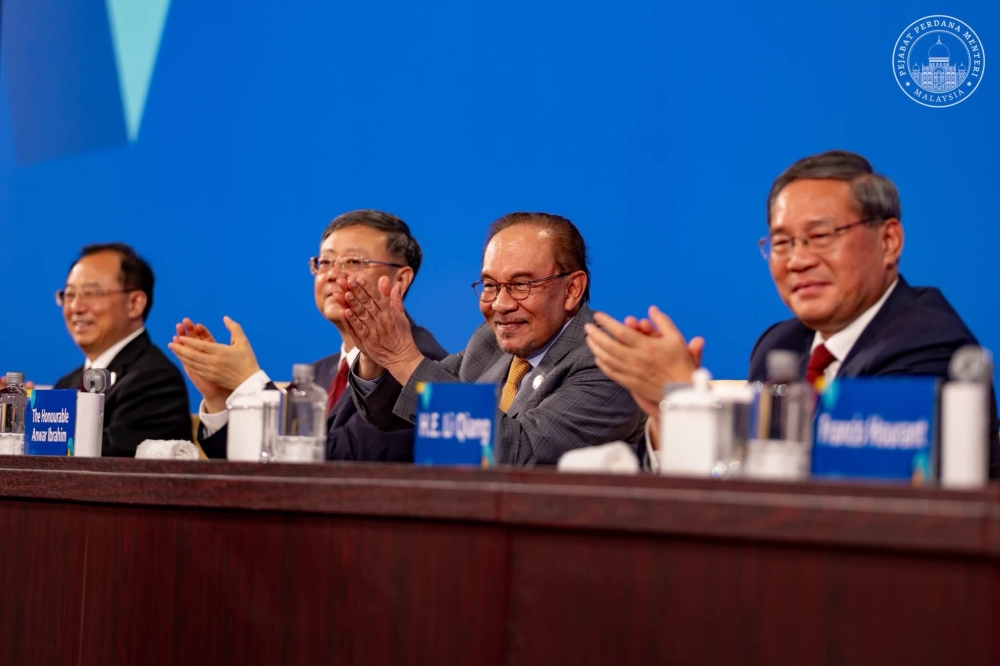
Malaysia is integrating Technical and Vocational Education and Training (TVET) into its industrial strategy to enhance economic transformation by building a skilled workforce in sectors such as AI, semiconductors, and green technology.
Prime Minister Anwar Ibrahim emphasized TVET 2.0's goal of fostering collaboration between industries and training institutions, under the National TVET Policy 2030.
At the WorldSkills Conference 2026 in Shanghai, Anwar highlighted Malaysia's ambition to secure significant semiconductor investments and the importance of strengthening TVET cooperation with China to drive industrial growth and skill development.
SHANGHAI, Sept 23 — Malaysia is positioning Technical and Vocational Education and Training (TVET) at the centre of its industrial policy, making it a key instrument of economic transformation to build a highly skilled and well-paid workforce.
Prime Minister Datuk Seri Anwar Ibrahim said the strategy forms a core part of the nation’s push to transition to a high-growth, high-value economy as it expands into chip design, artificial intelligence (AI), green technology and agri-food.
He said the ‘TVET 2.0’ reform phase aims to promote closer collaboration between industry players and training institutions while accelerating exposure to emerging fields such as semiconductors, AI and renewable energy.
Coordination of the national agenda is managed by the National TVET Council across around 1,400 institutions, involving 12 ministries, state governments and private providers, under the National TVET Policy 2030, he said.
“Companies know what equipment they use and how quickly their needs change. They should be partners in shaping talent from the outset and ensure they are ahead of the curve.
“A modern economy cannot function without the technicians who keep a semiconductor line running or an electric vehicle plant on schedule. The machinery may become more sophisticated.
“The software may become more intelligent. But somebody still has to understand how it works and know what to do when it does not,” said the Prime Minister in his 10-minute keynote address at the plenary session of the WorldSkills Conference 2026 here on Wednesday.
Chinese Premier Li Qiang officially opened the three-day conference, which carried the theme “Shaping a Skills-Driven Future”, at the National Exhibition and Convention Centre (NECC).
Held in parallel with the 48th WorldSkills Competition Shanghai 2026 and WorldSkills Expo, the conference brought together policymakers, educators, industry leaders and other stakeholders to discuss ways to strengthen global TVET systems.
Strengthening Malaysia-China TVET cooperation
Thanking the Chinese premier for the invitation to visit and the warm welcome extended to the Malaysian delegation, Anwar said Shanghai had changed immensely, evolving from its ‘mother industry’ of textile mills to become a hub for semiconductors and artificial intelligence.
“Every new industry has to be learned before it can be built. Malaysia has reached the same conclusion,” he said.
Anwar said Malaysia had set two major targets for 2030 under its National Semiconductor Strategy: securing RM500 billion in semiconductor investment and training or upskilling 60,000 highly skilled Malaysian engineers.
By leveraging China’s capabilities in advanced manufacturing, AI, robotics, industrial automation, electric vehicles, semiconductors and digital technologies, Malaysia seeks to strengthen TVET cooperation with China, he said.
“In TVET, we look forward to more exchanges between our students and instructors, more joint training programmes, closer links among TVET institutions and between institutions and industry, and wider sharing of technology and expertise.
“The Malaysia-China Youth TVET Training initiative already shows what cooperation between our institutions can achieve. I believe TVET can become one of the pillars of the wider relationship between Malaysia and China,” said Anwar. — Bernama
Road closure: Jalan Sultan Ismail in KL to close Sept 24-28 for Autumn Music & Cultural Festival 2026
Malaysia, China deepen transport ties with new MoU covering land, rail, air and sea
Case closed: PM Anwar, Pendang MP settle defamation suit
马来西亚正在将技术和职业教育与培训 (TVET) 纳入其产业战略,以通过在人工智能、半导体和绿色技术等领域培养技能型劳动力来促进经济转型。
安瓦尔·易卜拉欣总理强调,根据《2030 年国家职业技术教育政策》,职业技术教育 2.0 的目标是促进产业界与培训机构之间的合作。
在上海举行的 2026 年世界技能大赛上,安瓦尔强调了马来西亚争取半导体领域重大投资的雄心,以及加强与中国在职业技术教育与培训方面的合作,以推动产业增长和技能发展的重要性。
上海,9月23日——马来西亚将技术和职业教育与培训(TVET)置于其产业政策的核心位置,使其成为经济转型的重要工具,以建立一支高技能、高薪的劳动力队伍。
首相拿督斯里安华·易卜拉欣表示,该战略是国家向高增长、高价值经济转型的重要组成部分,其发展方向包括芯片设计、人工智能 (AI)、绿色技术和农业食品。
他表示,“职业技术教育与培训 2.0”改革阶段旨在促进产业参与者与培训机构之间更紧密的合作,同时加快接触半导体、人工智能和可再生能源等新兴领域。
他表示,国家职业技术教育与培训委员会负责协调国家议程,该委员会涵盖约 1400 个机构,涉及 12 个部委、州政府和私营机构,依据的是《2030 年国家职业技术教育与培训政策》。
“企业了解自己使用的设备以及需求变化的速度。他们应该从一开始就参与人才培养,并确保自己始终走在时代前沿。”
“如果没有技术人员维持半导体生产线的运转或确保电动汽车工厂按计划生产,现代经济就无法运转。机器设备可能会变得越来越复杂。”
“软件可能会变得更加智能。但仍然需要有人了解它的工作原理,以及在它出现故障时该怎么做,”总理周三在2026年世界技能大赛全体会议上发表10分钟主旨演讲时说道。
中国国务院总理李强在国家会展中心(NECC)正式宣布为期三天的会议开幕,会议主题为“塑造技能驱动的未来”。
与 2026 年上海世界技能大赛和世界技能博览会同期举行的此次会议,汇聚了政策制定者、教育工作者、行业领袖和其他利益相关者,共同探讨加强全球职业技术教育与培训体系的方法。
加强马来西亚与中国职业技术教育合作
安华感谢中国总理邀请他访问马来西亚,并表示对马来西亚代表团的热情接待。他指出,上海已经发生了巨大的变化,从纺织厂的“母产业”发展成为半导体和人工智能中心。
“任何新兴产业在建立之前都需要学习。马来西亚也得出了同样的结论,”他说。
安华表示,马来西亚在其国家半导体战略下为 2030 年设定了两个主要目标:确保 5000 亿令吉的半导体投资,以及培训或提升 6 万名高技能马来西亚工程师的技能。
他表示,马来西亚希望通过利用中国在先进制造业、人工智能、机器人、工业自动化、电动汽车、半导体和数字技术方面的能力,加强与中国的职业技术教育与培训合作。
“在职业技术教育领域,我们期待学生和教师之间有更多交流,更多联合培训项目,职业技术教育机构之间以及机构与行业之间有更紧密的联系,以及更广泛的技术和专业知识共享。
安华表示:“马来西亚-中国青年职业技术教育培训计划已经展现了我们两国机构间合作所能取得的成就。我相信职业技术教育可以成为马来西亚和中国更广泛关系的重要支柱之一。”——马新社
道路封闭:吉隆坡苏丹伊斯迈路将于9月24日至28日因2026年秋季音乐文化节而封闭。
马来西亚和中国签署新的谅解备忘录,深化陆路、铁路、航空和海运等交通运输领域的合作。
案件结案:安华总理与本登国会议员就诽谤诉讼达成和解