France to test its own AI-powered battlefield command in June NATO exercise法国将在6月的北约演习中测试其自主研发的人工智能战场指挥系统。
The French Army has developed its own large-language model for staff officers, called Berthier, named after Napoleon’s chief of staff.
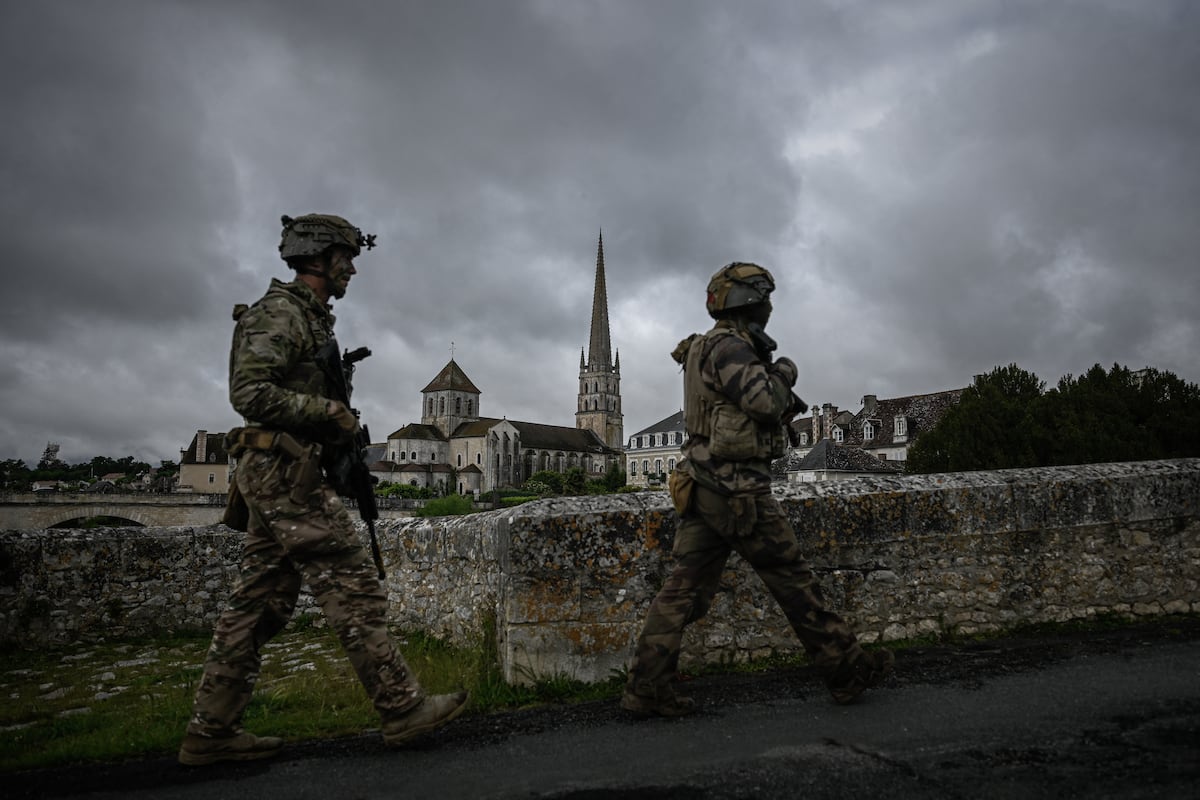
PARIS — France will test its artificial intelligence-powered battlefield command system with allies during a NATO interoperability exercise this month, as an alternative to the Maven Smart System developed by Palantir Technologies, said Gen. Patrick Justel, deputy chief of the French Army staff.
The French have been developing the system with local companies including Mistral AI , Safran.AI , Thales and Airbus , Justel said in a media briefing on Thursday. The French Army has already tested the system, dubbed Arcadia, in exercises including Dacian Fall in Romania and Orion 26 in France.
NATO military personnel started training with Palantir’s Maven Smart System in August 2025, the alliance’s first use of AI-enabled command and control software. The platform is derived from the Pentagon’s Project Maven and ties together massive amounts of battlefield data and AI analysis to help commanders identify targets and make decisions more quickly.
Arcadia “is our response to Maven,” said Justel. He said NATO’s use of Maven raises issues of digital sovereignty, “so the question arises whether should we adopt Maven blindly, or should we look for other solutions.”
France’s army, general staff and Defense Digital Commission “have been working on what other solutions might look like,” Justel said. France will deploy Arcadia during NATO’s Coalition Warrior Interoperability Exercise, or CWIX, a live exercise held in Poland June 8-26.
Justel said several NATO countries including France have raised questions around interoperability with the Palantir system. The Army deputy chief of staff said Arcadia is designed to comply with NATO’s Federated Mission Networking standards, or FMN, and contrasted that with Maven, which he said hasn’t integrated FMN requirements.
Palantir said Maven Smart System is “compliant with the principles of FMN” and that it is working with NATO toward official certification, in an emailed response to a request for comment. The company added that the platform has proven compliance with two NATO data-security standards that are “key building blocks” of FMN.
“NATO Maven Smart System is compatible, and does allow interoperability, but of course nations are free to choose what systems they use,” said Martin O’Donnell, a spokesperson for Supreme Headquarters Allied Powers, in an emailed reply to questions.
The Palantir system is already integrated with more than 10 NATO systems, according to U.S. Army Col. Arnel David, the director of Task Force Maven at SHAPE, who said his team is “focused on securing final certification across all FMN milestones,” with the declaration of full operational capability imminent.
France plans to propose Arcadia to its European partners, with a number of countries expressing interest, and has organized demonstrations for NATO, which is also interested, the general said. “When we talk to our European partners, we get the same reaction of, `well, we’ve kind of gone with Maven because there’s no choice, but if countries in Europe are able to build an alternative, we’ll go for it.’”
Palantir said it “welcomes the opportunity to integrate with Arcadia, or any other national system.”
Arcadia builds on previous work by the Armed Forces Ministry as part of the Artemis project started in 2022, which uses AI to process massive amounts of defense data. The French Army has been developing use cases for Arcadia internally as well as in cooperation with the industry partners, according to Justel.
The United Kingdom is working on a similar AI-enabled command and control system, and is also in discussions on how to interface with Maven, according to Justel.
Based on discussions with the British, “their concept is well-established, but they don’t yet have all the technological building blocks,” said Col. Frédéric Vola, head of the planning and capacity development office in the Army general staff, in the briefing.
While Palantir is behind the version of Maven used by NATO, the system is not the same as that used by the U.S., with different databases and functionality and “certainly not the same performance,” according to Justel.
The French system is conceived to be a more resilient alternative to Maven because it will be “highly decentralized” rather than a centralized system, with all command posts connected to field-deployed servers in a mesh-network architecture rather than a distant central cloud. The French Army already has a network of data hubs and is acquiring more, Justel said.
“First, it distributes the data, and in the event of destruction or loss of connection, it allows us to maintain the autonomy of what remains, and second, it’s easier to implement,” Justel said.
The system has an open architecture, with the French armed forces inviting “all the major players in artificial intelligence” and being open to working with others, according to Justel. “We don’t want to enter into the logic that we’ve known for years, where we give a manufacturer the system and then everything goes via them, everything is closed, they own all the data,” Justel said. “We want an open system where any manufacturer can plug in, and all data can be shared by everyone, without any notion of exclusive ownership.”
As part of its work on AI for command and control, the French Army has developed its own large-language model for staff officers, called Berthier, named after Napoleon’s chief of staff, and which Justel said is used to synthesize information, retrieve operational data, and support drafting of proposed courses of action, while leaving decisions to commanders.
Rudy Ruitenberg is a Europe correspondent for Defense News. He started his career at Bloomberg News and has experience reporting on technology, commodity markets and politics.
巴黎——法国陆军副参谋长帕特里克·朱斯特尔将军表示,法国将在本月与盟友举行的北约互操作性演习中测试其人工智能驱动的战场指挥系统,作为帕兰提尔科技公司开发的Maven智能系统的替代方案。
尤斯特尔周四在新闻发布会上表示,法国一直在与包括Mistral AI、Safran.AI、泰雷兹和空客在内的多家法国本土公司合作开发这套系统。法国陆军已在罗马尼亚举行的“达契亚陨落”演习和法国举行的“猎户座26”演习中测试了这套名为“阿卡迪亚”的系统。
北约军事人员于2025年8月开始使用Palantir公司的Maven智能系统进行训练,这是北约首次使用人工智能赋能的指挥控制软件。该平台源自五角大楼的Maven项目,整合了海量战场数据和人工智能分析,帮助指挥官更快地识别目标并做出决策。
尤斯特尔表示,Arcadia“是我们对Maven的回应”。他指出,北约使用Maven引发了数字主权问题,“因此,问题在于我们是否应该盲目采用Maven,还是应该寻找其他解决方案。”
尤斯特尔表示,法国陆军、总参谋部和国防数字委员会“一直在研究其他可能的解决方案”。法国将在北约“联盟勇士互操作性演习”(CWIX)期间部署“阿卡迪亚”系统。该演习是一场实战演习,将于6月8日至26日在波兰举行。
尤斯特尔表示,包括法国在内的几个北约国家对与帕兰提尔系统的互操作性提出了质疑。这位陆军副参谋长指出,阿卡迪亚系统的设计符合北约的联邦任务网络标准(FMN),并将其与Maven系统进行了对比,后者并未整合FMN的要求。
Palantir在回复置评请求的电子邮件中表示,Maven智能系统“符合FMN原则”,并正在与北约合作以获得官方认证。该公司补充说,该平台已证明符合北约的两项数据安全标准,这两项标准是FMN的“关键组成部分”。
“北约 Maven 智能系统具有兼容性,并允许互操作性,但各国当然可以自由选择使用哪些系统,”盟军最高司令部发言人马丁·奥唐纳在回复问题的电子邮件中表示。
据美国陆军上校、欧洲盟军最高司令部“Maven”特遣部队主任阿内尔·戴维称,Palantir 系统已经与 10 多个北约系统集成。他表示,他的团队“专注于确保所有 FMN 里程碑的最终认证”,全面作战能力的宣布指日可待。
这位将军表示,法国计划向其欧洲伙伴国推介“阿卡迪亚”卫星系统,一些国家已表示出兴趣,法国还组织了向北约的演示活动,北约也对此很感兴趣。“当我们与欧洲伙伴国讨论时,得到的反馈都一样,‘我们之所以选择Maven系统,是因为别无选择,但如果欧洲国家能够建造一个替代方案,我们也会支持。’”
Palantir表示“欢迎有机会与Arcadia或任何其他国家系统进行整合”。
Arcadia系统建立在法国武装部队部此前开展的Artemis项目的基础上,该项目于2022年启动,旨在利用人工智能处理海量国防数据。据Justel介绍,法国陆军一直在内部以及与行业合作伙伴合作开发Arcadia的应用案例。
据贾斯特尔称,英国正在研发类似的人工智能指挥控制系统,并且也在讨论如何与 Maven 系统对接。
陆军总参谋部规划和能力发展办公室主任弗雷德里克·沃拉上校在简报会上表示,根据与英国方面的讨论,“他们的概念已经相当成熟,但他们还没有掌握所有必要的技术基础。”
据 Justel 称,虽然 Palantir 是北约使用的 Maven 版本的幕后推手,但该系统与美国使用的系统并不相同,数据库和功能都不同,“性能肯定也不一样”。
法国的这套系统旨在成为比Maven更具弹性的替代方案,因为它采用“高度分散式”而非集中式系统,所有指挥所都通过网状网络架构连接到野战部署的服务器,而不是连接到遥远的中央云平台。Justel表示,法国陆军已经拥有一个数据中心网络,并且正在采购更多。
“首先,它可以分发数据,即使发生数据损毁或连接中断的情况,也能让我们保持剩余数据的自主性;其次,它更容易实施,”Justel说道。
据尤斯特尔称,该系统采用开放式架构,法国武装部队邀请“所有人工智能领域的主要参与者”,并乐于与其他机构合作。“我们不想重蹈覆辙,回到过去那种把系统交给制造商,然后所有事情都通过他们,一切都是封闭的,他们拥有所有数据,”尤斯特尔说。“我们想要一个开放的系统,任何制造商都可以接入,所有数据都可以共享,没有任何独占的概念。”
作为其在指挥控制人工智能方面工作的一部分,法国陆军开发了自己的大型语言模型,供参谋军官使用,名为贝尔蒂埃(Berthier),以拿破仑的参谋长命名。尤斯特尔表示,该模型用于综合信息、检索作战数据和支持起草拟议的行动方案,同时将决策权留给指挥官。
鲁迪·鲁伊滕贝格是《防务新闻》的欧洲记者。他的职业生涯始于彭博新闻社,拥有报道科技、大宗商品市场和政治方面的经验。