US strikes Iranian sites after Iran launches drones, in latest Gulf flare-up伊朗出动无人机后,美国对伊朗目标发动袭击,海湾地区局势再度升级
U.S. forces struck Iranian coastal radar sites on Saturday after shooting down drones launched by Iran toward the Strait of Hormuz, the U.S. military said.
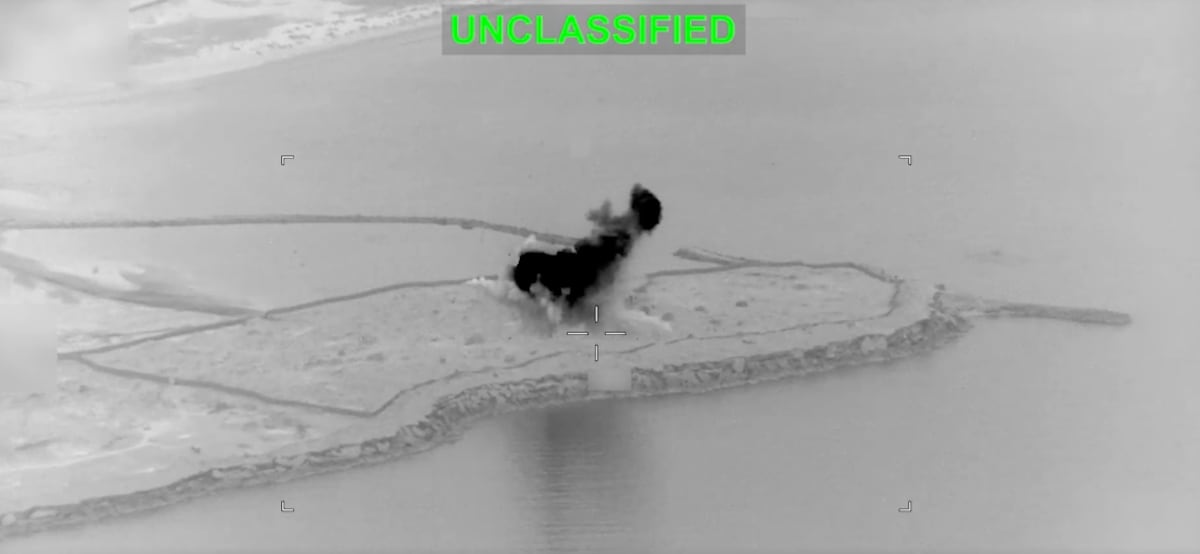
U.S. forces struck Iranian coastal radar sites on Saturday after shooting down drones launched by Iran toward the Strait of Hormuz, the U.S. military said, in the latest escalation complicating efforts to end the war between the two countries.
The U.S. military believes the four Iranian drones were targeting regional maritime traffic, a U.S. official told Reuters. U.S. Central Command said on X that the U.S. then struck Iran’s surveillance sites in Goruk and Qeshm Island, which are both on the Strait of Hormuz.
Iran’s foreign ministry said the U.S. action broke an April 8 ceasefire, adding that repeated violations showed Washington had no intention of reducing tensions. It warned that the United States would bear responsibility for the consequences of its “illegal actions” and any further escalation.
Iran’s Revolutionary Guard Corps said it had attacked U.S. bases in Kuwait and Bahrain in retaliation for U.S. strikes and fired at four tankers trying to cross the strait without its permission.
Kuwait’s army said on Saturday it engaged seven ballistic missiles that entered the country’s airspace early in the morning and passed over several residential areas, resulting in the fall of some debris. The army added that the Iranian attack caused material damage but no casualties. In Bahrain sirens sounded and residents were urged to seek shelter.
Kuwait and Bahrain condemned the strikes. Kuwait’s foreign ministry described the Iranian attacks, including the latest one on Saturday, as “blatant” aggression that threatened citizens, residents and regional security, a ministry statement said.
Iran later said it had hit U.S. bases in both countries with ballistic missiles but the U.S. military said six missiles were intercepted and a seventh did not reach its target.
The U.S. and Iran have been engaged in largely indirect negotiations to secure an interim deal to halt the three-month-old war that would leave issues including Iran’s nuclear program to further negotiations.
But amid periodic skirmishes a deal has remained elusive.
Tehran wants access to billions of dollars in oil revenue, waivers on sanctions on crude exports, the lifting of a U.S. blockade on its ports and leverage over the strait. Iran has effectively blocked the waterway, where about a fifth of the world’s oil transited before the war.
Iranian state media reported that Mohsin Naqvi, the interior minister of Pakistan, which has been mediating an end to the conflict, was on his way to Tehran on Saturday.
A Pakistani source said Naqvi would carry a message from Pakistan to the Iranian Supreme Leader Mojtaba Khamenei.
U.S. President Donald Trump is facing mounting domestic political pressure due to rising gas prices to bring the unpopular war to an end. He told NBC that while most of Iran’s drone and missile manufacturing facilities had been destroyed, the Iranians still have access to about a fifth of their missiles.
“They have some missiles, they have some drones. I would say percentage wise, maybe 21%-22% of their missiles. It’s a lot of missiles, but it’s not what it was when we first attacked,” Trump told NBC News’ “Meet the Press” program, according to excerpts released by the network on Friday.
When asked why Iran’s leaders were not more inclined to strike a deal, if they are as desperate as he has portrayed them, Trump said, “Because they are strong. They’re proud. There are things they never thought they’d be doing that they’re going to have to do, they’ve got no choice, and it takes a little while.”
After the U.S. and Israel launched the war against Iran on Feb. 28, Tehran attacked Gulf states hosting U.S. bases and largely stopped shipping through the Strait of Hormuz.
The conflict has driven up oil prices and disrupted supply chains for other products. The U.N. World Food Programme said on Friday that it was pushing millions of people closer to hunger due to rising fuel and transport costs.
Mohsen Rezaei, an adviser to Iran’s supreme leader, told CNN on Friday that a peace deal hinged on the Trump administration unfreezing $24 billion in Iranian assets, and warned that the U.S. would “enter into a dark corridor” if it resumed attacks.
In a parallel conflict in Lebanon, two Lebanese army officers and a soldier were killed in an Israeli strike on a military vehicle in south Lebanon, the Lebanese army said, while the Israeli military said it was investigating the incident.
The Israeli military said it struck the vehicle after identifying what it described as a threat to its forces and receiving indications that Hezbollah was preparing to fire on Israeli troops from the area. Iran-aligned Hezbollah called the incident part of Israel’s continued aggression against Lebanon.
Iran has made a ceasefire between Israel and Hezbollah a condition for any peace deal with Washington.
Hezbollah leader Naim Qassem this week rejected a U.S.-brokered pact between Israel and the Lebanese government to halt the fighting in Lebanon. The deal did not provide for an Israeli withdrawal and Hezbollah had not been party to the negotiations.
Israel has said its forces would not withdraw or halt operations in the country amid increasing friction with the U.S.
美国军方称,美军周六击落伊朗向霍尔木兹海峡发射的无人机后,袭击了伊朗沿海雷达站。这是两国结束战争的最新升级,使相关努力更加复杂。
一位美国官员告诉路透社,美军认为这四架伊朗无人机的目标是该地区的海上交通。美国中央司令部在X频道表示,美军随后袭击了伊朗位于霍尔木兹海峡戈鲁克岛和格什姆岛的监视设施。
伊朗外交部表示,美国的行动违反了4月8日达成的停火协议,并补充说,美国屡次违反停火协议表明华盛顿无意缓和紧张局势。伊朗警告称,美国将为其“非法行为”以及任何进一步升级的局势承担后果。
伊朗革命卫队表示,为报复美国的空袭,他们袭击了位于科威特和巴林的美国基地,并向四艘未经许可试图穿越海峡的油轮开火。
科威特军方周六表示,当天清晨,七枚弹道导弹进入科威特领空,飞越多个居民区,造成部分碎片坠落。军方补充说,伊朗的袭击造成了物质损失,但没有人员伤亡。巴林方面拉响警报,并敦促居民寻找掩体。
科威特和巴林谴责了此次袭击。科威特外交部在一份声明中表示,伊朗的袭击,包括周六发生的最新一次袭击,是“公然的”侵略行为,威胁到公民、居民和地区安全。
伊朗后来表示,它用弹道导弹袭击了美伊两国境内的美国基地,但美国军方表示,六枚导弹被拦截,第七枚导弹没有击中目标。
美国和伊朗一直在进行主要间接的谈判,以达成一项临时协议,结束这场持续三个月的战争,而包括伊朗核计划在内的问题将留待进一步谈判解决。
但由于双方时有摩擦,协议始终未能达成。
德黑兰希望获得数十亿美元的石油收入、原油出口制裁豁免、美国解除对其港口的封锁,以及对霍尔木兹海峡的控制权。伊朗实际上已经封锁了这条水道,战前全球约五分之一的石油都要经过这里。
伊朗国家媒体报道称,巴基斯坦内政部长莫辛·纳克维(Mohsin Naqvi)周六前往德黑兰,巴基斯坦一直在斡旋结束这场冲突。
一位巴基斯坦消息人士称,纳克维将把巴基斯坦的信息带给伊朗最高领袖穆杰塔巴·哈梅内伊。
由于油价上涨,美国总统唐纳德·特朗普在国内面临越来越大的政治压力,要求他结束这场不得人心的战争。他告诉美国全国广播公司(NBC),虽然伊朗的大部分无人机和导弹制造设施已被摧毁,但伊朗人仍然可以获得大约五分之一的导弹。
“他们有一些导弹,也有一些无人机。我估计,按比例来说,大概占他们导弹总数的21%到22%。导弹数量很多,但跟我们第一次发动攻击时的情况不一样了。”特朗普在接受NBC新闻“会见媒体”节目采访时说道。以上内容由NBC周五公布。
当被问及如果伊朗领导人真像他所描述的那样绝望,为什么他们不愿达成协议时,特朗普说:“因为他们很强大。他们很骄傲。有些事情他们从未想过自己会去做,但现在他们不得不去做,他们别无选择,这需要一些时间。”
2月28日,美国和以色列对伊朗发动战争后,德黑兰袭击了设有美国军事基地的海湾国家,并基本停止了通过霍尔木兹海峡的航运。
这场冲突推高了石油价格,并扰乱了其他产品的供应链。联合国世界粮食计划署周五表示,由于燃料和运输成本上涨,数百万人正面临饥饿的威胁。
伊朗最高领袖的顾问莫森·雷扎伊周五告诉美国有线电视新闻网(CNN),和平协议能否达成取决于特朗普政府是否解冻伊朗240亿美元的资产,并警告说,如果美国恢复对伊朗的袭击,将会“进入一条黑暗的通道”。
在黎巴嫩发生的另一场冲突中,黎巴嫩军方称,两名黎巴嫩军官和一名士兵在以色列对黎巴嫩南部一辆军车的袭击中丧生,而以色列军方则表示正在调查这起事件。
以色列军方称,他们击中这辆汽车是因为他们认定该车辆对其部队构成威胁,并收到迹象表明真主党正准备从该地区向以色列军队开火。与伊朗结盟的真主党则称此次事件是以色列持续侵略黎巴嫩的一部分。
伊朗已将以色列和真主党之间的停火作为与华盛顿达成任何和平协议的先决条件。
本周,真主党领导人纳伊姆·卡西姆拒绝了美国斡旋达成的以色列与黎巴嫩政府之间的停火协议。该协议并未规定以色列撤军,真主党也未参与谈判。
以色列表示,尽管与美国的摩擦日益加剧,但其军队不会撤出或停止在该国的军事行动。