Germany and France drop joint fighter jet project德国和法国放弃联合战斗机项目
Failure to reach an agreement underscores the struggles Europe has faced in rebuilding its military capacity after decades of underinvestment.
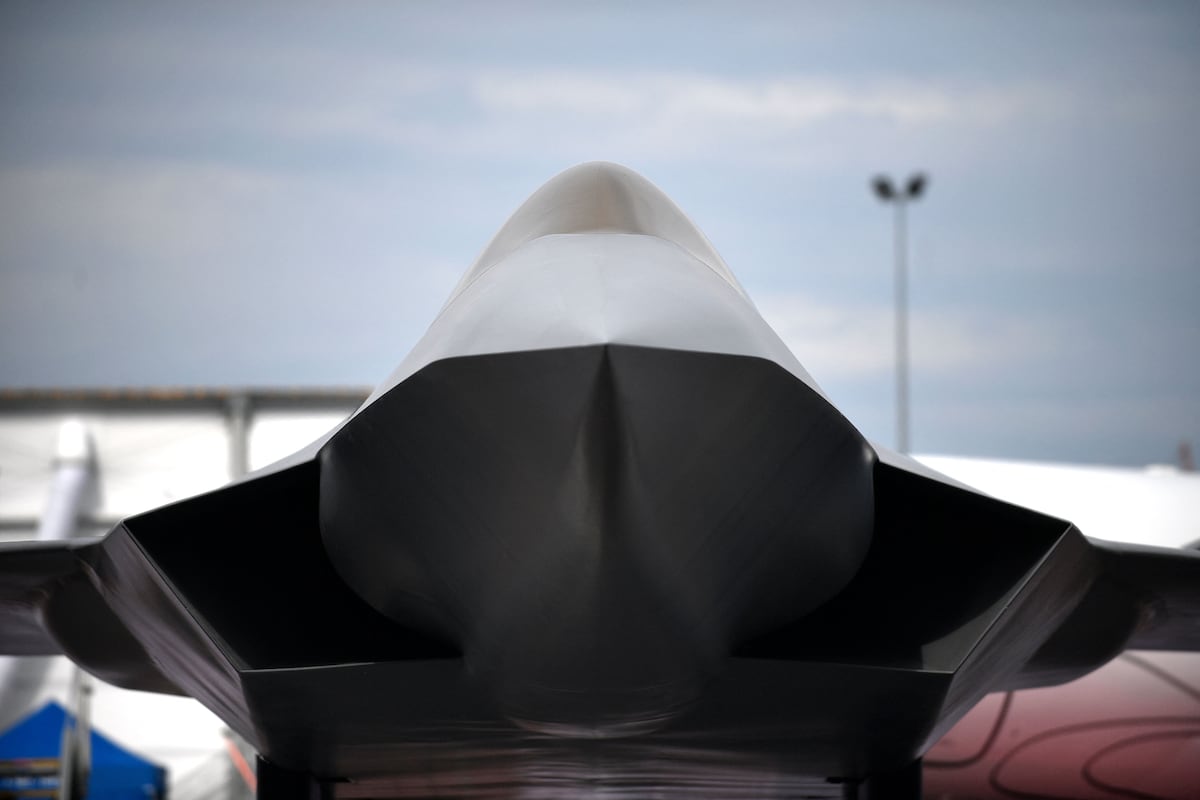
BERLIN — The leaders of France and Germany have agreed to scrap a landmark project to develop and build a new-generation fighter jet, two German officials said on Monday, ending one of Europe’s most ambitious defense programs.
German Chancellor Friedrich Merz and French President Emmanuel Macron discussed the troubled project on the sidelines of the EU-Western Balkans summit in Montenegro last week and concluded there was no prospect of breaking months of deadlock, the officials said.
Failure to reach an agreement on the €100-billion ($116 billion) project underscores the struggles Europe has faced in rebuilding its military capacity after decades of underinvestment.
The project, which centers on a core fighter jet supported by drones and linked by a classified “combat cloud,” had been in doubt for months as the two sides have wrangled over specifications and control.
A European source briefed on the matter said the two sides were moving towards a face-saving solution in which the remaining systems outside the core fighter, such as the “combat cloud” of highly secure links, would maintain the same name: Future Combat Air System or FCAS.
The compromise is mainly symbolic since FCAS is a generic name for such systems and not unique to this plan, but officials have been seeking a formula allowing Macron to relinquish the core fighter without having to declare the whole project dead.
Macron launched the project with former German Chancellor Angela Merkel in 2017. His office did not immediately return a request for comment.
Macron and Merz had tried for months to salvage the project and overcome differences between the main industry partners, European aerospace group Airbus AIR.PA, which represents Germany and Spain, and France’s Dassault Aviation.
As well as disputes over control and technological specifications, the two sides had widely differing requirements for the aircraft.
Merz has openly questioned whether developing a manned sixth-generation fighter jet still made sense for his country’s air force, and said Germany did not need a nuclear-capable jet that could land on an aircraft carrier.
柏林——两名德国官员周一表示,法国和德国领导人已同意放弃一项具有里程碑意义的新一代战斗机研发和制造项目,这标志着欧洲最雄心勃勃的国防计划之一的终结。
官员们表示,德国总理弗里德里希·默茨和法国总统埃马纽埃尔·马克龙上周在黑山举行的欧盟-西巴尔干峰会期间讨论了这一陷入困境的项目,并得出结论,认为没有希望打破数月的僵局。
未能就这项价值 1000 亿欧元(1160 亿美元)的项目达成协议,凸显了欧洲在经历了数十年的投资不足后,在重建其军事能力方面所面临的困境。
该项目以一架核心战斗机为中心,辅以无人机,并通过一个机密的“作战云”连接起来。由于双方在规格和控制权问题上争执不休,该项目几个月来一直处于不确定状态。
一位了解此事的欧洲消息人士称,双方正在朝着一个体面的解决方案迈进,其中核心战斗机之外的其余系统,例如高度安全链路的“作战云”,将保持相同的名称:未来作战空中系统或 FCAS。
这项妥协主要具有象征意义,因为 FCAS 是此类系统的通用名称,并非该计划独有,但官员们一直在寻求一种方案,使马克龙能够在不宣布整个项目终止的情况下放弃核心战斗机。
马克龙于 2017 年与德国前总理安格拉·默克尔共同启动了该项目。他的办公室尚未对此置评。
几个月来,马克龙和梅尔茨一直试图挽救该项目,并克服主要行业合作伙伴之间的分歧,即代表德国和西班牙的欧洲航空航天集团空中客车公司(AIR.PA)和法国达索航空公司。
除了在控制权和技术规格方面存在争议外,双方对飞机的要求也大相径庭。
梅尔茨公开质疑为德国空军研发有人驾驶的第六代战斗机是否还有意义,并表示德国不需要能够在航空母舰上降落的具备核打击能力的战斗机。