Special Access Programs And The Pentagon’s Ecosystem Of Secrecy特殊访问项目与五角大楼的保密生态系统
We shed light on the dark realm of the Department Of Defense's often misunderstood classified apparatus in this comprehensive explainer.
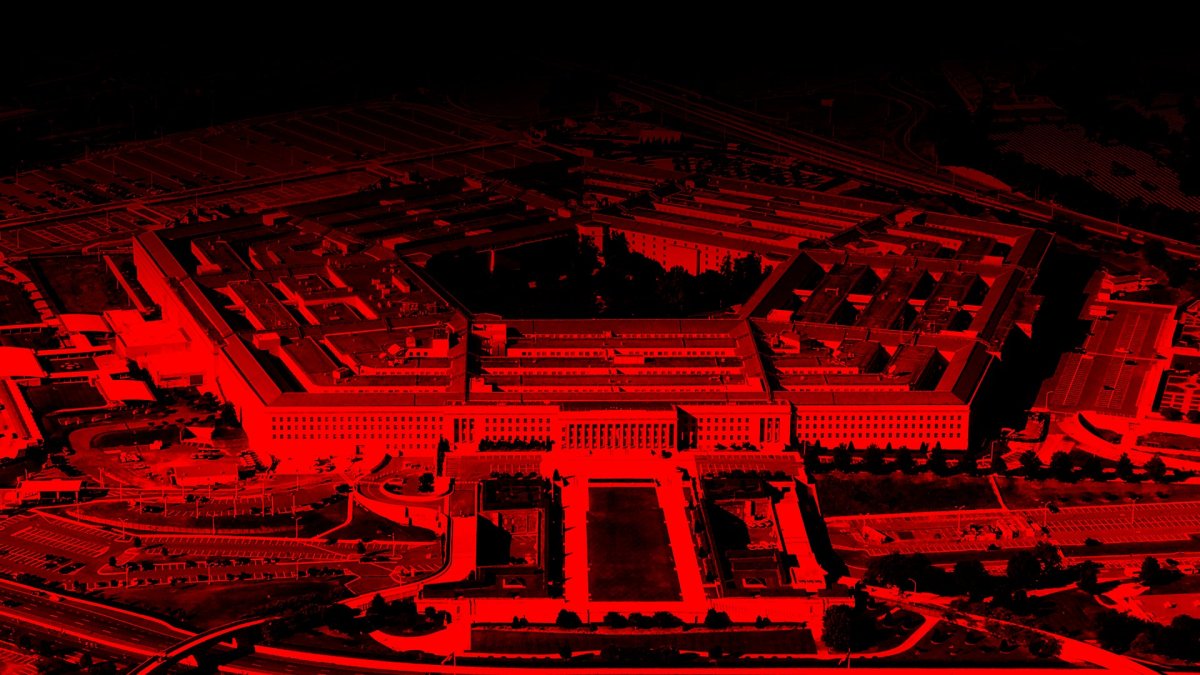
By Tim McMillan and Tyler Rogoway
Updated Dec 1, 2019 5:55 AM EST
To a lot of people, terms like “black budget,” or “black projects,” inspire dark imagery of government figures operating in contrast to the principles of a free and open society. Indeed, with tens of billions set aside every year for classified Pentagon programs and operations, it would be reckless of the public not to be willing to question that which they pay for, but lack the privilege of knowing anything about.
Inherently enigmatic and often grossly misunderstood, The War Zone set out to shed light on the obscure processes that are involved in maintaining the highly intricate ecosystem that works to guard the Pentagon’s most closely held secrets.
Special Access Programs—A Hidden World Most Will Never See
For the better part of the last twenty-five years, the manner in which the U.S. government safeguards and restricts access of highly classified information is through a set of compartmentalization protocols termed “Special Access Programs.” Thanks to the government’s love affair with condensing words, most people are likely familiar with this formalized system of security’s acronym—”SAP.”
For most of us stuck on the outside trying to get an idea of what’s inside, the term “Special Access Program” is often misunderstood as being itself a classification level. In truth, SAPs are merely a set of security protocols limiting access of sensitive information to only authorized and necessary individuals. Cue the cliché, “That information is need to know, and you don’t have a need to know!”
Now, before one can gain a real appreciation for how Special Access Programs operate, like any scholar of history will tell you, “To understand the present, one must first appreciate the past.”
Top Secret cover sheet circa 1967., CIA
How National Security Information Is Classified
The early origins of Special Access Programs can be traced to March 22, 1940, when President Franklin D. Roosevelt signed Executive Order 8381, creating for the first time, three security designations for America’s most crucial information—restricted, confidential, and secret.
In the ensuing years, various presidential executive orders have tweaked how the government designates classified information. The current levels of classification are confidential, secret, and top secret. The determining factor for how information is classified depends on how much damage an unauthorized disclosure would reasonably be expected to cause.
Top Secret: “Exceptionally grave damage to national security.”
Secret: “Serious damage to national security.”
Confidential: “Damage to national security.”
Important to note, established through the Atomic Energy Act of 1954, the Department of Energy (DOE) uses two differing equivalent levels of security clearance.
Q-Clearance: Equivalent to a Top-Secret level clearance.
L-Clearance: Equivalent to a Secret level clearance.
For clarity’s sake, at times misrepresented by the entertainment industry, a “Yankee White clearance” is not an actual security clearance. “Yankee White” is an administrative nickname for the background check performed for persons who will work within close proximity to the President or Vice President. According to Department of Defense instructions , to obtain a Yankee White clearance one must pass the same Single Scope Background Investigation (SSBI) necessary for a top secret clearance, and establish “unquestionable loyalty to the United States.”
Within the world of SAPs, a program can involve information from any one of these official classification levels. Further adding to the confusion, in many cases, a single Special Access Program will contain multiple components, each with differing classification levels.
The Dubious Origins Of Special Access Programs
The incredulous mystique surrounding SAPs likely comes from the unofficial, ad hoc nature of their origins. In 1953, when President Dwight D. Eisenhower issued Executive order 10501 , he eliminated classification authority from 28 government entities, limiting only departments and agencies of the executive branch the ability to classify materials. More importantly, President Eisenhower’s directive removed the previously approved “restricted” designation.
President Dwight D. Eisenhower in the Oval Office. , Eisenhower Library
Up to this point, “restricted” classifications functioned as a means of limiting certain information from people who may indeed have held an active security clearance, however, they didn’t have a “need to know.”
In light of being given a formal order by the Commander and Chief, some departments within the Pentagon weren’t all that keen on being unable to limit access to their secrets. In response, many agencies began to unofficially use “special access.” Albeit, with no official authority, these informal “special access” classifications would allow for the continuance of closely guarded, tight-knit programs, to be hidden within the government.
Now, it’s hard to argue that the flagrant rejection of national directives wasn’t a recipe for disaster waiting to happen. In fact, it’s likely no coincidence some of the darkest times in government secrecy went on during these unofficial “special access” years. For example, the CIA’s infamous Project MKULtra began in 1953 and remained active until 1973. Coincidently, 1973 was the same year that during an oversight hearing, a report by the Committee on Government Operations brought to light that dozens of unauthorized “special access, distribution, control labels, stamps, or markings” were being used, by “many executive agencies having classification authority and dozens of other agencies who do not possess such authority.”
In all fairness, by the time of their discovery, the precedent of unofficial special access programs was primarily a moot point. Either intentionally or by ironic happenstance, three months prior to five men being caught breaking into the Democratic party headquarters at the Watergate complex in Washington D.C., on March 8, 1972, President Richard Nixon signed Executive order 11652 , legitimatizing and establishing the overall framework for what would eventually become the “Special Access Program” of today.
President Nixon in the Oval Office., National Archives
Still not thoroughly having worked the kinks out, according to the Center for Development of Security Excellence’s (CDSE) Special Access Programs Training Course, from the early 1970s to 1980s, SAPs—referenced even within the government as “black programs,”—were almost exclusively restricted to safeguarding DoD acquisition programs. In fact, the existence of “black programs” wasn’t publicly known until the mid-1980s, when the controversial “Project Yellow Fruit” unceremoniously thrust government secrecy programs in the limelight.
More on “Project Yellow Fruit” to come.
By the mid-1990s, these enigmatic workshops shed the “black program” moniker, opting to go by the more contemporarily familiar “Special Access Program.” In addition to the more dexterously sleek title, intelligence, operations, and support programs were added to the SAP repertoire, establishing the Special Access Program regime we’ve come to know today.
Armed with some history on SAP’s, let’s take a look at how they operate.
Enter the Bureaucratic Jungle of SAPs
When considering the term “special access program,” typically, people envision one of the three categories that go on within the Department of Defense, as outlined by DoD 5205.07. Acquisition, intelligence, and operations and support. Breaking these categories down to gain a sense of what they entail:
Acquisition SAPs: Programs that involve research, development, testing, modification, evaluation or procurement of new technologies. (According to the CDSE, Acquisition SAPs make up 75-80% of all DoD SAPs)
Intelligence SAPs: Planning and execution of, especially sensitive, intelligence or counter-intelligence operations.
Operations and Support SAPs: Planning, implementation, and support of sensitive military activities.
It’s important to note, though the DoD’s three main categories are the most well-known, Special Access Programs are inherently just a procedure within the government. In fact, there are many other categories of SAPs that go on outside the DoD. For example, the Secret Service’s Presidential travel support detail is technically a SAP. Additionally, within the intelligence services, these similar sets of protocols are termed, “Sensitive Compartmented Information” (SCI) and not “Special Access Programs.”
Additionally, separate from an objective category, all special access programs fall under one of two distinctive protection levels—”acknowledged” and “unacknowledged.”
Acknowledged SAPs – Programs that’s existence and purpose can be openly recognized. With Acknowledged SAPs, typically only intimate details, such as technologies, materials or techniques are kept secret. Funding for Acknowledged SAPs is mostly unclassified and can be readily seen in the government’s fiscal budget.
With its existence well known, yet its inner details still remaining mysterious, Northrop Grumman’s B-21 Raider is an excellent example of an Acknowledged Special Access Program actively going on today.
On the other end of the spectrum, serving as the inspiration for much spy fiction or conspiracy theories of secret space forces, there is the “Unacknowledged” SAP.
Unacknowledged SAPs or “USAPs”: The shy sibling of the SAP family. When a SAP is designated as “unacknowledged” not only is a program’s purpose carefully guarded, as the name implies, USAPs mere existence may be denied to everyone but a spare few who aren’t a part of the program. Given their shadowy presence, it should come as no surprise, the funding for unacknowledged SAPs is either classified or is intentionally hidden within the Federal budget.
An example of an Unacknowledged SAP would be the RQ-170 before it was officially disclosed to the public.
In rare instances, when information is considered to be of the most extremely sensitive in nature, the Secretary of Defense can formally exempt a program from federal reporting requirements and establish the pinnacle of the secrecy—the “Waived Unacknowledged SAP.”
Due to their ultra-secretive nature, Unacknowledged or Waived-Unacknowledged SAPs, serve as fertile breeding grounds for conspiracies of hidden crashed UFO technology or veiled government “carve-outs” whereby the general public’s benefit is an afterthought. In truth, USAPs or Waived USAPs, like anything else that lacks accessibly verifiable fact, is likely very mythicized. With that said, like any good myth, there’s some truth and historical precedent that give legitimate reasons to be concerned with these deeply hidden programs.
With that in mind, let’s take a quick journey back to the not-to-distant past. To a time that shows Special Access Programs have, and can, operate in a manner opposed to public interest.
“Yellow Fruit,” The Rogue SAP The Government Wants To Forget
In 1983, an arbitrary internal audit turned up enormous inconsistencies in an unacknowledged, covert SAP being run out of the newly formed Special Operations Division of the DoD. Code named, “Yellow Fruit,” the program was established to provide additional operational security and counter-intelligence assistance for missions in Central American. Yellow Fruit was a genuine “deep cover” USAP, with the program’s director, former Assistant Chief of Staff for Intelligence, Lt. Col. Dale Duncan outwardly appearing to have “retired” from the Army to start a private consulting firm called Business Security International.
The discovery of financial discrepancies in Yellow Fruit sparked a formal investigation by the FBI. The inquiry into Yellow Fruit would result in Lt. Col. Duncan, Special Operation Division Commander Lt. Col. James E. Longhofer, and several other members of SOD being court-martialed for a hodgepodge of varying crimes. In addition, many never-fully proven allegations, such as millions of stolen dollars hidden in Swiss bank accounts , set-ups of other U.S. military officials with prostitutes and hidden cameras, and even ties to the Iran-Contra affair, still loom over Yellow Fruit.
Nicaraguan Contra Rebels,1986. , Public Domain
Though career military officers allowing their moral compasses to diverge from pointing ethically north is somberly disappointing, it’s regrettably far from unprecedented. Instead, what made Yellow Fruit such a significant turning point in the formative growth of current classified operations came from the embarrassing lack of DoD control and oversight that was revealed.
As the rotting stench of Yellow Fruit made its way up the military hierarchy, top Army leadership, including Army Chief of Staff John Wickham and his Vice Maxwell Thurman, were stunned. The level of shock conveyed from the Pentagon’s leadership was understandable when you consider that in “The Dilemma of Covert Action,” published by the U.S. Army War College in 1989, it’s said none of the DoD brass had ever been briefed on the program and literally had no clue that a mere 15-minute drive from the Pentagon, tucked amongst a suite of commercial offices, a multi-million-dollar clandestine military operation was being run.
Determining exactly what all went on within Project Yellow Fruit can prove to be a rather difficult task. Spare a few newspaper articles from the 1980s, publicly available information is extremely limited. With that said, the required CDSE’s training course for all persons participating in DoD SAPs, repeatedly mentions “Yellow Fruit” as being an inspiration for a wave of oversight and controls put in place to stem off the ability for a small group within government to literally go rogue.
The Inner Workings of Special Access Programs
In the Department of Defense’s mind-numbing behemoth of formal policies and directives, five volumes totaling 151 pages are now dedicated solely to Special Access Programs. Of course, if a light book’s worth of reading wasn’t enough, there are also specialized manuals for many divisions within the Pentagon that also provide their own expansive volume of rules and regulations.
For example, there’s a Joint Army-Navy-Air Force SAP manual , offering service members of these three branches an extra 129 pages of supplemental reading. Lest we forget, since a significant amount of secret government activity is farmed out to private industry, government contractors who are involved with SAPs get their own 131 pages of “National Industrial Security Program” operating manual to peruse.
Needless to say, though a considerable amount of government’s covert goings-on are indeed hidden from prying eyes, substantially more regulation and control have been implemented since the days when Project Yellow Fruit was turning in $56,000 receipts for desk calculators .
A word of note before proceeding, for all those fans of flowcharts, this would be an excellent time to break out the markers and whiteboard, because as promised, no matter how “unconventional” SAPs may be, at the end of the day, they’re still subject to all of the customary administrative confusion that’s characteristic of civil service.
Courtesy photo by Petty Officer 1st Class Brandan Schulze
Special Access Program Central Offices
Within the DoD, The Secretary or Under Secretary of Defense are the principal authorities for all Special Access Programs. Assisting the military’s Chief Executives in this endeavor involves a vast complex of ministerial powers.
Serving on the front lines of the secrecy mosaic is the “Special Access Program Central Offices” (SAPCO). With a process that thrives on compartmentalization, it should come as no surprise, by “central” the DoD actually means there are three different types of SAP Central Offices residing in the corridors of the Pentagon—Component-Level SAPCOs, OSD-Level SAPCO, and DoD-Level SAPCO.
Component-Level SAP Central Office (SAPCO): They can be found within each branch of the military, The Joint Chiefs of Staff, The Defense Advanced Research Projects Agency (DARPA), and The Missile Defense Agency (MDA). The Component-Level SAPCOs are responsible for initiating the prospective process for accessing the need for a Special Access Program. Once a SAP has been established, a Component-Level SAP Central Office serves as the hands-on manager for the SAPs that fall under their purview.
Office of the Secretary of Defense-Level SAP Central Office (OSD SAPCO): Specifically established to assist the Deputy Secretary of Defense, The Office of the Secretary of Defense-Level Central Office serves as the oversight authority for all SAPs.
Department of Defense SAP Central Office (DOD SAPCO): Serving to help streamline this entire fragmented and confusing process, the Department of Defense SAP Central Office functions as an ambassador by communicating and advising agencies of the executive branch and Congress on all issues relating to SAPs.
Now if that wasn’t enough delegated authority for you, have no fear, because roaring alongside the SAP Central Offices like forking whitewater rapids of procedural hierarchy, comes the “SAP governance structure.”
The Special Access Program Governance Structure
Spearheading the SAP governance structure is the SAP Oversight Committee (SAPOC). Made up of a who’s who of Pentagon Under Secretaries, Vice Chiefs, and Assistant Directors, the Oversight Committee’s primary role is to advise and assist the Secretary and Deputy Secretary of Defense in the governance, management, and oversight of all DoD Special Access Programs.
Ensuring that the limitation of secrecy to only a select few isn’t a decision made in a vacuum, assisting the SAP Oversight Committee is:
Senior Review Group (SRG): The principle working-level body who governs the process of SAP oversight.
SAP Senior Working Group (SWG): Provides recommendations to the Senior Review Group and serves as a senior program protection forum coordinating, deconflicting, and integrating special programs.
Pausing for a moment to take a breath, don’t put down those markers and flowchart just yet. As twisting and turning as all the aforementioned regulatory authorities might be, we’re far from having the whole picture of the Special Access Program process.
The Importance Of Maintaining Secrecy
In the late 1970’s NASA began operating an extensively modified Boeing 747 airliner to ferry the Space Shuttle around. By the late 1980s, two were in operation. Unimaginatively, these modified jumbo jets were called the “Shuttle Carrier Aircraft” (SCA) .
SCA with an Orbiter on its back., NASA
A decade after NASA began toting around the Space Shuttle Orbiter on the back of a wide-body plane, Russia started soaring through the skies in their brand new Antonov An-225 Mriya (meaning “dream” in English).
Powered by six turbofan engines, the Mriya, to date, is the heaviest aircraft ever built. Oh, and as it happens, the Mriya was built to offer piggyback rides to Russia’s own space shuttle, the Buran. In case you don’t see where this is going, according to the Center For Development Security Excellence ( CDSE ), it was later determined Russia had “borrowed” technical information on the SCA to help develop their own massive orbiter transport aircraft.
Protecting technological advancement isn’t just about maintaining military dominance. Instead, in terms of time and developmental dollars, the cost associated with the loss of industrial secrets can be enormous. When Russia “acquired” the fine technological details to develop the An-225 to carry their version of the Space Shuttle Orbiter, the Soviet Union effectively saved themselves considerable time and money at America’s expense. Noting only one Mriya has ever been built, the argument can be made, without the unwilling help of the U.S. aerospace industry, Russia’s shuttle ferry may never have entered operation.
Photo taken at the 38th Paris International Air and Space Show at Le Bourget Airfield showing a line up to tour a Soviet An-225 Mirya aircraft that is carrying the Space Shuttle Buran on its back. June 12, 1989. , Master Sgt. Dave Casey/Public Domain.
Ultimately, examples like Russia’s An-225 serve as distinct reminders that the most vital part of protecting national secrets doesn’t necessarily occur at desks and in boardrooms of the Pentagon. Instead, it goes on within the Special Access Programs themselves.
Securing Special Access Programs
In all fairness, with the intelligence field supposedly being one of the last bastions of “gentleman warfare,” it’s safe to assume America has its fair share of hush-hush programs geared at “borrowing” other nation’s research and development. In fact, known past and present Foreign Materiel Exploitation (FME) programs alone are shining examples of this.
That aside, in the span of SAP controls, the Office for the Under Secretary of Defense for Intelligence (OUSDi) SAP Control Office fills the very vital role of monitoring and investigating counter-intelligence matters, security violations, or infractions within all DoD SAPS.
Assisting OSDi’s Central SAP Office in this effort is the Office of the Director of National Intelligence and the powerful 17 individual agencies which make up the United States intelligence community. Bolstering this mighty SAP Central Office, the U.S. Defense Security Service (DSS) helps provide operational support and security oversight for all DoD SAPs.
Of course, the first line of defense in protecting the integrity of SAP secrecy starts with who is granted access to a program. Regardless, if a person is in the military, a federal-civilian employee, or a private contractor, several prerequisites must be met before one can work within a SAP.
Working Inside A SAP
The path to working in a SAP begins with a currently accessed person nominating a potential candidate to the “access approval authority,” or the central office that the SAP emerges out of. If a candidate does not presently possess an active secret or top secret clearance, the appropriate clearance must be obtained before one can be considered for involvement.
Finally, all persons who will be involved in a SAP must agree to be subject to random “counter-intelligence scope” polygraph examinations and sign a DoD-approved SAP indoctrination and non-disclosure agreement.
Once inside a special access program, there are yet still several vital roles that help ensure the secure integrity of each individual program. Some of these are:
The Government Program Manager (GPM), and their private industry equivalent, the Contractor Program Manager (CPM): The person who manages all overall aspects of a specific program.
Program Security Officer: The person responsible for all aspects of security in the program. Every SAP has a PSO, however, large or complex SAPS can also have additional Government SAP security officers or contractor program security officers to assist the Program Security Officer.
Further protecting who knows what, a SAP’s overarching scope and purpose can fall under one program “umbrella.” However, multiple compartments, which can further breakdown into separate sub-compartments, and finally, numerous projects, can all emerge out from under a single SAP umbrella.
It’s entirely possible for a compartment, sub-compartment, or project not to have access, or even to be aware of the work that’s going on in other sections of the same SAP.
When it comes to the extreme isolation of work, it’s not just about keeping information out of the hands of foreign adversaries. Sometimes components are cordoned off from each other because you may have two different contract partners from the same industry working on different aspects of a SAP. In essence, caution must also be taken to ensure industrial partners don’t “borrow” each other’s trade secrets.
Oversight Of Special Access Programs
All Special Access Programs are subject to federal and defense acquisition regulations. As such, all SAPs can be audited and inspected by a host of oversight entities, including the Government Accountability Office or the DoD Inspector General.
Equally, oversight of SAPs isn’t merely left to agency policies and directives. Instead, it’s a matter of federal law, as defined by Section 119, Title 10 United States Code.
By federal statute, all active acknowledged, and non-waived unacknowledged Special Access Programs must submit reports to the House and Senate Authorization, Appropriations, and Intelligence Committees annually. These yearly reports provide committee members with an estimated total budget request for the upcoming fiscal year, a brief description of the program, including the number of persons involved, the status of significant milestones or current issues, and the actual cost of the program for each previous fiscal year.
Any member not assigned to one of the defense or intelligence committees may be granted access to non-waived SAPs, provided they receive permission by the ranking and minority member from each of the respective committees and with approval by the Secretary or Deputy Secretary of Defense.
But What About Those Waived-Unacknowledged SAPs?
As mentioned earlier, in rare instances, when a SAP’s purpose and scope are deemed so sensitive that standard reporting procedures could pose a risk to national security, the Secretary of Defense can authorize the darkest of “black programs,” the waived-unacknowledged special access program.
According to the Center for Development of Security Excellence, “Waived SAPs have more restrictive reporting requirements and access controls.” Determining what precisely the CDSE means by this statement is a little tricky.
In the book, Strategic Intelligence : Covert Action, Behind the Veils of Secret Foreign Policy , author Lock K. Johnson notes, “Waived SAPs are only orally briefed to the so-called Gang of Eight, this is, the chair and ranking (minority) members of both the Senate and House intelligence (or Armed Services) committees, and House and Senate Majority and Minority Leaders.” Sure to raise a few eyebrows, Johnson mentions that the National Security Agency’s controversial “warrantless surveillance” program, which ran from 2001-2007, was a waived SAP.
According to the very limited information provided by the Department of Defense’s Directive 5205.07, the “Access Approval Authority” for waived SAPs is narrowed down to the Deputy Secretary of Defense, Under Secretaries of Defense, or a component head with “cognizant authority.”
Beyond this, even after combing through hundreds of pages of DoD directives, policies, and federal Title 10 and Title 50 laws, it’s hard to pin down exactly how waived-USAPs are governed.
Indeed, since the self-indulgent days of Project Yellow Fruit, the DoD has piled a sizable number of regulations and policies governing the Special Access Program process. However, given the obscurity of even being able to determine how checks and balances are maintained with waived-USAPs, one cannot help considering risks may still lurk within the very murky waters of this bureaucratic swamp.
As we twist further down the spiral of sanctioned secrecy, let’s take a look at some of the concerns with intensive secrecy that’s governed by a mere few individuals.
The Dark Side Of An Already Dark World
Taking a glance at the DoD’s mind-numbing number of rules, regulations, and directives pertaining to SAPs, it’s not hard to see why the CDSE can make the claim that modern Special Access Programs have significantly more scrutiny and oversight than those of the past that may have been marked by somewhat laissez faire attitudes. However, it would not be objectively fair to not point out, even since the mid-1990s, there have been examples of mismanagement or corruption involving SAPs.
When it comes to the corruptibility of SAPs, leading the charge is the biblical “root of all evil,” and the cold hard fact that these programs of isolated secrecy can involve enormous amounts of money.
Well, according to the Stockholm International Peace Research Institute , the United States’ $81.1 billion dollar budget request for classified intelligence programs alone in 2019, is larger than nine of the next top-ten foreign nations total military expenditures . Only China, with an estimated total defense budget of $250 billion U.S. dollars, exceeds the budgetary sum of America’s intelligence community’s classified budget. This does not include the tens of billions of dollars spent on the Pentagon’s non-intelligence related classified programs every year.
As staggering as having a classified budget that exceeds many countries entire GDP might be, it still doesn’t account for all the money being spent on secret programs.
A 2016 Office of Inspector General (OIG) report indicated the DoD couldn’t account for $21 trillion dollars in transactions and adjustments from 1998 to 2015. It’s important to note that this movement of funds, an average of $1.2 trillion annually during this 17 year period, which was “unsupported” by accounting documentation, does not reflect any actual “missing” money that could have gotten funneled into “black programs” or SAPs. OIG also did not suggest that any of these funds had gotten categorically lost, stolen, or otherwise burned in ritual sacrifice.
At the same time, the U.S. military’s apparent inability to properly record trillions of dollars worth of transactions calls into question how well it is monitoring even its most basic financial activities to prevent money from ending up diverted or simply misspent. Historically, black programs have exploited the nebulous nature of U.S. government budgets to fund their efforts through complex arrangements involving multiple agencies, making a full accounting, or even any accounting, of their costs difficult.
So going back to that initial question, just how large is the sum of the money involved in these black programs?
We really don’t know because it’s seemingly uncountable. But it’s safe to say that it is very large.
Considering how much of public politics is dominated by relentless bickering over the allocation of government funds, the potential for classified programs to have uncountable, perhaps even undefined, streams of cash is almost incomprehensible.
Corruption Breeds In Shadowy, Cash-Packed Environments
Access to large sums of difficult-to-track cash can have the unfortunate, yet all too common side-effect of tempting seemingly moral persons to engage in very immoral acts. Such was the case with former CIA executive Kyle “Dusty” Foggo, who was indicted in 2007 by the Department of Justice for accepting bribes in return for steering millions of taxpayer dollars towards his friend’s private contract company, ADCS Inc. In the same case against Foggo, former California Congressman and Navy ace fighter pilot Randy “Duke” Cunningham was sentenced to 8 years in federal prison for his part in the procurement scam.
Absent any malicious intent, there are still areas within the SAP process that provide a safe haven for poor decision making and insufficient oversight.
Chiefly, when it comes America’s elected leaders who are tasked with approving or disapproving clandestine programs. How many of them actually possess the technical prowess to adequately assess a program’s feasibility or need? Out of the members of the “The Gang of Eight”—the only eight members of Congress who are authorized to have knowledge of Waived-Unacknowledged SAPs—presently, none have any background in the military or technological and scientific research sectors.
This reality is somewhat remarkable, considering one must possess the technical requisites necessary to work within a SAP, however, a significant number of the precious few who ultimately pull the strings of this hidden world outside of the Pentagon and the industrial complex that support it, need only to be popular among their constituencies.
There are other potentially adverse aspects of secrecy that get very little attention. For instance, it costs exponentially more money to run a classified program than one that is unclassified. The deeper you get into the shadows, the more expensive that secrecy costs and declassifying something can be extremely expensive, problematic, and time-consuming. This has likely resulted in throngs of programs that pose little to no risk when it comes to disclosure, but will never see the light of day regardless.
In addition, there have been accusations that some programs get classified at least in part so as not to compete with existing and in some cases inferior high-profile capabilities or operations that are already in production or underway. It’s possible that this could be to hide the program from those who would otherwise work to destroy it—especially the pork rollers on Capitol Hill and the highly territorial services that occupy the Pentagon. On the other hand, even a service itself could fear that its own clandestine emerging capability could threaten an existing one that it has already bet heavily on.
Bad Ideas, Big Classified Budgets
An argument can certainly be made that putting reclusive, highly complex, and expensive defense programs in the hands of elected leaders who lack any subject matter expertise makes for ideal conditions that result in costly and entirely avoidable failures. One example is the proposed nuclear-powered rocket system “Project Timber Wind.”
Once considered a key component of President Reagan’s Strategic Defense Initiative—better known as “Star Wars”—Timber Wind also offers a peek at how deep secrecy can lend a hand to quietly crossing the line of what the public is likely willing to find acceptable in the name of national security.
The aim of the once Unacknowledged SAP, Timber Wind, was to develop nuclear thermal rockets capable of reaching space to support ballistic missile defense. Outwardly unreasonable as it sounds, with America no longer facing the Cold War threat of the Soviet Union, in 1992 when details about the program were declassified, many in the scientific community were stunned to discover the grand plan behind Timber Wind involved a two-stage rocket process whereby, immense tanks of liquid hydrogen attached to a nuclear reactor would be fired off into the atmosphere.
Serving as the inspiration behind the founding of the Federation for American Scientists’ (FAS) “Project on Government Secrecy,” current FAS director Steven Aftergood would describe Timber Wind as “Just about as dangerous a machine as any I can imagine,” adding the SAP was “Sheer scientific adventurism.”
When all was said and done, the government shelled out $139 million dollars before finally canceling Project Timber Wind. Though the loss of money may be significant, the potential costs for “pumping liquid hydrogen across a “bed” of uranium at 5,000 degrees Fahrenheit” a mere stone’s throw from an unwitting Nevada or Utah populous, could have resulted in far more catastrophic public health and ecological consequences.
Intriguingly, (in a macabre kind of way) a willingness to take extreme risk in order to maintain the vanguard defensive capabilities, isn’t merely an isolated event. Instead, as many former Area-51 employees have come to discover, secrecy with minimal oversight can have very personal and disturbing consequences.
Area 51’s notorious perimeter. , X51/Wikicommons
Area 51: A Place That Is Literally Above The Law
In the mid-1990s, several former employees of the Air Force’s infamous Area 51 flight test facility—the developmental home of so many SAPs and a place that is itself a massive SAP—sought the help of legal scholar and attorney Jonathan Turley.
Riddled with various serious illnesses, the former Area 51 workers told Turley that officials had, for years, been burning classified equipment and materials in large trenches for disposal at the secret military facility located seventy-five miles north of Las Vegas, Nevada. The plumes of thick toxic smoke that would billow and linger across the installation would come to be known as “London fog,” by Area 51 employees, Turley later recounted .
Armed with tales of ecological catastrophe and a zeal for justice, Jonathan Turley and the Area 51 veterans would launch an epic legal battle to define the line between national security and basic civil liberties.
The chief aim of the Area 51 employees’ lawsuit was to discover what exactly they had been exposed to, in hopes it might help them receive medical care. As reasonable as this request might have been, sanctioned secrecy protecting Area 51, not only allowed for the government to refuse information that might save the workers lives, it also allowed for the government to repeatedly insist that no such place even existed.
Only after Turley provided satellite pictures he purchased from Russia, did the government finally admit Area 51’s existence to the courts. As a result, U.S. District Judge Phillip Pro would reject the government’s claim of “state secrets privilege” and declare the government was required to disclose what hazardous chemicals employees had been exposed to.
In a tragic twist, in light of the federal court judge’s ruling, no one would get the opportunity to ever find out exactly what types of toxic substances had been allowed to permeate the secret facility. Instead, in an 11th-hour intervention, President Bill Clinton issued a Presidential Determination that exempted installation from environmental disclosure laws.
US Government Document
Ultimately, by a stroke of the pen, secrecy overrode the federal law, defeated basic civil liberties, and largely sealed the fates of those impacted by the open-air burnings at the base. Also, President Clinton put a definitive stop to any appeals for government accountability at the reclusive military test site.
Sadly, former Area 51 employees Wally Kasza and Bob Frost would lose their own personal battles with debilitating skin and respiratory illnesses. Analysis of tissue samples from the autopsy of Bob Frost showed , “unidentifiable and exotic substances that one of the nation’s premier scientists could not recognize,” Jonathan Turley later told the L.A. Times . Described by Turley as “deeply patriotic guys,” both men are assumed causalities of the government’s war to maintain secrecy at Area 51.
Since the legal battles of the 1990s, more employees have continued to come forward complaining of serious and life-threatening ailments as a result of working at Area 51. Instead of making amends for the wanton risk placed on the very people who helped usher in some most remarkable advances in military technology the world’s ever known, every U.S. president has annually reissued President Clinton’s initial 1995 executive order declaring Area 51 to above environmental laws.
While the potential for Special Access Programs to serve as hidden conduits for costly government waste can and should spark formal debate and even dinner table discussions, for the families of Wally Kasza, Bob Frost, and others who’ve found themselves dealing with the effects of extreme government secrecy, the price for that secrecy can come with significant and dramatically personal costs.
Dark Nights Can Equal Bright Stars
Now, as ominous as they may feel at the moment, Special Access Programs are far from being all doom and gloom. Conversely, as bestselling author Richard Paul Evans puts it, “It is often in the darkest skies that we see the brightest stars.”
When it comes to bright stars set against a dark sky of secrecy, one must consider, arguably the forefather example of the modern SAP— Lockheed’s U-2 Dragon Lady high-altitude reconnaissance aircraft.
The minimal interference of working in the shadows allowed Kelly Johnson and his team of just 28 Lockheed special projects engineers to design, build, and fly a spy plane capable of flying at 70,000 feet in only 8 months. Ironically, the U-2 program also gave birth to Area 51 .
U-2 testing at Groom Lake (what would become known as Area 51). , CIA
Employing many of the same techniques used by SAPs today, the extreme secrecy reduced external meddling from the powers that be in and around Washington D.C., the potential of competing interests from the military services, from the very entity the program is being executed for, and from multiple outside contractors. The latter of which allowed 87% of the U-2’s development to be performed in a single building in Burbank, California, then the Skunk Works’ headquarters.
Ultimately, deep secrecy can allow for wasteful “scientific adventurism,” the bottom-line truth is that this same risky inspiration can equally allow for incredible technological breakthroughs. In fact, without the breathing room of secrecy and minimal external interference, some remarkable and game-changing technologies may never have come to fruition.
For instance, the F-117 Nighthawk and even the framework for the modern internet emerged from the dark shadows of Special Access Programs.
Whereas disclosed defense programs that fail after a bunch of money was spent can have major repercussions, even though some would say not major enough, secrecy allows for risks to be taken without the fear of becoming a headline news story.
Yes, this is a major concern for potential abuse and waste, but at the same time it has become somewhat essential to making huge qualitative leaps in defense-related technologies. Lockheed’s Skunk Works largely defined this reality and has built a hugely successful operational model around it that has been knocked off by many contractors and businesses entities.
To put it another way, making it ok to fail by classifying a program can be an incredibly powerful tool for promoting major innovation.
With all this in mind, it is simply impossible to ever say that that innovation shrouded by secrecy is inherently a bad thing.
Final Thoughts on Special Access Programs
It’s important to note, we’ve almost entirely focused on the Department of Defense’s secrecy ecosystem and the Special Access Programs and “clandestine” operations that spring forth from it. Though briefly mentioned early on, when it comes to secrets stemming from the intelligence community and “covert” activities, that’s a whole other sprawling government maze, complete with entirely different regulations, policies, and federal laws. We’ll likely don our secret decoder ring and try to untangle that surreptitious web in the future.
When it comes to Special Access Programs, like virtually all government operations, they are mostly cumbersome bureaucratic affairs.
Though visions of a powerful shadow government of sorts may tantalize our imaginations, within the dense procedural jungle of SAPs, these programs are not inherently good or bad. Instead, SAPs are merely institutions made up of people, and like any group people, the inner sanctums of SAPs can be comprised of good and bad individuals and good and bad ideas.
Few would competently argue against the fact that some defense programs and operations need to be tightly classified. That’s not to say there aren’t real concerns associated with deep black programs very few people even know exist. Notably, the designed exclusivity and compartmentalization of SAPs doesn’t just help protect national secrets, it allows for considerably impactful information to be secured to a minute number of defense officials, legislators, and industry insiders. With such a substantial vacuum of power and influence, self-interest can easily become national interest, and suddenly SAPs can become safe houses for careless, wasteful, or even illegal activities.
Confidentiality may indeed be an unavoidable byproduct of ensuring national defense and we cannot reasonably expect to be able to eradicate the secrecy Special Access Programs protect. However, we can, and should, be willing to know how the underlying secrecy processes work. If for no other reason than to ensure secrecy is always maintained with a laser focus on the greater good for us all and a reasonable balance is being maintained between the need for secrecy and the public’s right to know.
Contact the editor: Tyler@thedrive.com
Comments couldn’t be loaded. Please refresh the page.
作者:蒂姆·麦克米兰和泰勒·罗戈韦
更新于美国东部时间2019年12月1日凌晨5:55
对很多人来说,“秘密预算”或“秘密项目”之类的词汇,会让人联想到政府官员违背自由开放社会原则的黑暗景象。的确,每年有数百亿美元被拨给五角大楼用于机密项目和行动,公众若不愿质疑自己花钱却无从知晓的项目,那将是极其不负责任的。
《战区》本身就充满谜团,而且经常被严重误解。该节目旨在揭示维护五角大楼最严密秘密的复杂生态系统所涉及的晦涩过程。
特别节目——大多数人永远看不到的隐秘世界
在过去二十五年的大部分时间里,美国政府保护和限制高度机密信息访问的方式是通过一套被称为“特殊访问计划”(Special Access Programs)的隔离协议。由于政府热衷于使用缩写词,大多数人可能都熟悉这套正式安全系统的缩写——“SAP”。
对于我们这些局外人,想要了解内部运作机制的人来说,“特殊访问计划”(SAP)这个词常常被误解为一种保密级别。事实上,SAP 仅仅是一套安全协议,旨在限制敏感信息的访问权限,只允许授权且必要的人员访问。正如那句老话所说:“这些信息属于‘需要知道’的范畴,而你并不需要知道!”
现在,正如任何历史学者都会告诉你的那样,“要了解现在,首先必须了解过去”,在真正了解特殊访问计划是如何运作之前,人们应该明白这一点。
1967年左右的绝密封面页,中央情报局
国家安全信息的分类方式
特殊访问计划的早期起源可以追溯到 1940 年 3 月 22 日,当时富兰克林·罗斯福总统签署了第 8381 号行政命令,首次为美国最重要的信息创建了三种安全级别——限制级、机密级和秘密级。
在随后的几年里,多项总统行政命令对政府如何划分机密信息进行了调整。目前的机密级别分为机密、秘密和绝密。信息被划分为何种级别,取决于未经授权披露可能造成的损害程度。
绝密:“对国家安全造成了极其严重的损害。”
机密:“对国家安全造成严重损害。”
机密:“对国家安全造成损害。”
值得注意的是,根据 1954 年《原子能法》设立的能源部 (DOE) 使用两种不同的等效安全许可级别。
Q级安全许可:相当于最高机密级别的安全许可。
L级安全许可:相当于秘密级安全许可。
为了避免误解,娱乐行业有时会错误地描述“Yankee White”安全许可,但需要澄清的是,它并非真正的安全许可。“Yankee White”是针对那些将与总统或副总统密切接触的人员进行的背景调查的行政昵称。根据美国国防部的指示,要获得“Yankee White”安全许可,必须通过与最高机密安全许可相同的单项背景调查(SSBI),并证明“对美国绝对忠诚”。
在特殊访问项目(SAP)领域,一个项目可能涉及来自任何一个官方密级的信息。更令人困惑的是,在许多情况下,一个单一的特殊访问项目会包含多个组成部分,而每个组成部分的密级都各不相同。
特殊准入项目的可疑起源
围绕特殊访问项目(SAP)的神秘感可能源于其非官方、临时性的起源。1953年,德怀特·D·艾森豪威尔总统颁布第10501号行政命令,取消了28个政府机构的保密权限,仅保留行政部门和机构的保密权限。更重要的是,艾森豪威尔总统的指令废除了此前批准的“限制级”标识。
艾森豪威尔总统在椭圆形办公室。(艾森豪威尔图书馆)
在此之前,“受限”分类的作用是限制某些信息对那些可能确实持有有效安全许可,但却“没有必要知道”的人的获取。
鉴于三军统帅已下达正式命令,五角大楼内部一些部门并不乐意失去对机密信息的限制。作为回应,许多机构开始非正式地使用“特殊访问权限”。尽管缺乏官方授权,这些非正式的“特殊访问权限”分类却使得政府内部一些高度保密、组织严密的项目得以继续进行。
现在,很难否认,公然无视国家指令无疑是灾难的预兆。事实上,政府保密史上最黑暗的时期恰好发生在这些非正式的“特殊访问”时期,这很可能并非巧合。例如,臭名昭著的中央情报局MKULtra计划始于1953年,一直持续到1973年。巧合的是,1973年,在一次监督听证会上,政府运作委员会的一份报告揭露,许多“拥有保密权限的行政机构和数十个不具备此类权限的其他机构”使用了数十种未经授权的“特殊访问、分发、控制标签、印章或标记”。
平心而论,在他们被发现时,非官方特殊访问项目的先例基本上已经无关紧要了。无论是有意还是出于讽刺的巧合,在五名男子因闯入位于华盛顿特区水门大厦的民主党总部而被捕的三个月前,即1972年3月8日,理查德·尼克松总统签署了第11652号行政命令,使最终演变为如今“特殊访问项目”的计划合法化并确立了其总体框架。
尼克松总统在椭圆形办公室。(美国国家档案馆)
根据安全卓越发展中心(CDSE)的特别访问项目培训课程,由于尚未完全完善,从20世纪70年代初到80年代,特别访问项目(SAPs,甚至在政府内部也被称为“黑计划”)几乎完全局限于保护国防部的采购项目。事实上,直到20世纪80年代中期,备受争议的“黄果计划”才将政府的保密项目推到了风口浪尖,公众才得以知晓“黑计划”的存在。
关于“黄色水果计划”的更多信息,敬请期待。
到了20世纪90年代中期,这些神秘的研讨会摒弃了“黑计划”的称谓,转而使用更为现代人所熟知的“特殊访问计划”(Special Access Program,简称SAP)。除了这个更简洁明了的名称外,SAP还新增了情报、行动和支持等项目,从而形成了我们今天所熟知的SAP体系。
在了解了一些 SAP 的历史之后,让我们来看看它们是如何运作的。
进入SAP的官僚丛林
提到“特殊访问项目”,人们通常会想到国防部内部的三大类别之一,如国防部条例 5205.07 所述:采购、情报以及作战与支援。下面我们来详细了解一下这些类别的具体内容:
采购类SAP:涉及新技术的研究、开发、测试、改进、评估或采购的项目。(据CDSE统计,采购类SAP占国防部所有SAP的75-80%)
情报特别行动小组:计划和执行特别敏感的情报或反情报行动。
行动与支持 SAP:敏感军事活动的规划、实施和支持。
值得注意的是,虽然国防部的三大主要类别最为人熟知,但特殊访问项目本质上只是政府内部的一种程序。事实上,国防部之外还有许多其他类型的特殊访问项目。例如,特勤局的总统出行保障小组在技术上就属于特殊访问项目。此外,在情报机构内部,这些类似的流程被称为“敏感信息隔离”(SCI),而不是“特殊访问项目”。
此外,除了客观类别之外,所有特殊访问计划都属于两个不同的保护级别之一——“已承认的”和“未承认的”。
公开认可的特殊项目 (SAP)——其存在和目的可以公开承认的项目。对于公开认可的特殊项目,通常只有技术、材料或工艺等核心细节需要保密。公开认可的特殊项目资金大多不属于机密信息,可以在政府财政预算中清晰查阅。
虽然它的存在众所周知,但其内部细节仍然神秘莫测,诺斯罗普·格鲁曼公司的 B-21 突袭者轰炸机是当今仍在进行的公认特殊访问计划的绝佳例证。
另一方面,还有“未被承认的”SAP,它激发了许多间谍小说或秘密太空部队阴谋论的灵感。
未公开的特殊援助项目(简称“USAP”):SAP 家族中低调的“隐秘成员”。当一项 SAP 被指定为“未公开”时,不仅其目的会被严密保密,顾名思义,USAP 的存在甚至可能被排除在外,只有极少数非项目参与者知晓。鉴于其隐秘性,未公开 SAP 的资金要么被列为机密,要么被刻意隐藏在联邦预算中,也就不足为奇了。
RQ-170 在正式向公众公开之前就是一个未公开的 SAP 的一个例子。
在极少数情况下,当信息被认为具有极其敏感的性质时,国防部长可以正式豁免某个项目遵守联邦报告要求,并建立最高级别的保密措施——“豁免未确认的 SAP”。
由于其高度保密性,未公开或已放弃公开的特别援助项目(SAP)成为了各种阴谋论的温床,这些阴谋论充斥着坠毁的UFO技术被隐藏起来,或是政府暗中进行的“豁免”,而公众利益则被置之不理。事实上,未公开援助项目(USAP)或已放弃公开援助项目(Waided USAP)就像其他任何缺乏易于验证的事实的事物一样,很可能被严重神话化。话虽如此,就像任何好的神话一样,这些高度保密的项目也包含一些事实和历史先例,为人们提供了合理的担忧理由。
鉴于此,让我们快速回顾一下并不遥远的过去。那段历史表明,特殊访问项目过去和现在都可能以违背公众利益的方式运作。
“黄果”,政府想要遗忘的流氓SAP项目
1983年,一次随意的内部审计揭露了国防部新成立的特种作战部门秘密运作的一项未公开的特别行动计划(SAP)存在诸多漏洞。该计划代号“黄果”(Yellow Fruit),旨在为在中美洲的任务提供额外的行动安全和反情报支持。“黄果”实际上是一项真正的“深度掩护”的美国陆军特别行动计划(USAP),其负责人、前情报助理参谋长戴尔·邓肯中校表面上已从陆军“退役”,创办了一家名为“国际商业安全公司”(Business Security International)的私人咨询公司。
“黄果行动”中发现的财务违规行为引发了联邦调查局的正式调查。对“黄果行动”的调查导致邓肯中校、特种作战师指挥官詹姆斯·E·朗霍弗中校以及其他几名特种作战师成员因各种罪名被送上军事法庭。此外,许多从未被完全证实的指控,例如数百万美元的赃款藏匿在瑞士银行账户中、美国军方官员与妓女发生性关系并安装隐藏摄像头,甚至与伊朗门事件的关联,至今仍笼罩着“黄果行动”的阴影。
尼加拉瓜反政府武装,1986年。,公共领域
尽管职业军官的道德准则偏离正轨令人深感失望,但遗憾的是,这种情况并非史无前例。相反,“黄果行动”之所以成为当前机密行动发展历程中的一个重要转折点,是因为该行动暴露了国防部在管控和监督方面令人尴尬的缺失。
随着“黄果”计划的腐臭气味在军方高层蔓延,包括陆军参谋长约翰·威克姆和副参谋长麦克斯韦·瑟曼在内的陆军高层领导都震惊不已。考虑到美国陆军战争学院1989年出版的《隐蔽行动的困境》一书中指出,国防部高层此前从未听取过该计划的简报,并且完全不知道在距离五角大楼仅15分钟车程的地方,在一排商业办公楼中,一项耗资数百万美元的秘密军事行动正在进行,五角大楼领导层的震惊程度也就不难理解了。
要确切查明“黄果计划”的全部内容并非易事。除了上世纪80年代的一些报纸文章外,公开信息极其有限。尽管如此,国防部安全援助计划(DoD SAP)所有参与人员都必须参加的CDSE培训课程中,却反复提及“黄果计划”,认为它启发了一系列监督和管控措施的建立,旨在防止政府内部一小撮人肆意妄为。
特殊准入项目的内部运作
在国防部浩如烟海的正式政策和指令中,仅特殊访问项目就占了五卷,共计151页。当然,如果一本小册子的阅读量还不够,五角大楼内许多部门还有专门的手册,其中也包含了各自庞大的规章制度。
例如,陆军、海军和空军联合编写了一份特殊访问项目(SAP)手册,为这三个军种的官兵提供了额外的129页补充阅读材料。此外,由于大量政府机密活动外包给私营企业,参与SAP项目的政府承包商也需要查阅一份长达131页的“国家工业安全计划”操作手册。
毋庸置疑,虽然政府的许多秘密活动确实不为人知,但自从“黄果计划”提交价值 56,000 美元的桌面计算器收据以来,已经实施了更多的监管和控制。
在继续之前,需要特别说明一点:对于所有流程图爱好者来说,现在是拿出马克笔和白板的好时机,因为正如承诺的那样,无论 SAP 多么“非传统”,最终,它们仍然会受到公务员制度特有的所有惯常行政混乱的影响。
照片由一级士官布兰登·舒尔茨提供
特殊访问项目中心办公室
在国防部内部,国防部长或副部长是所有特殊准入项目的主要负责人。协助军方最高行政长官开展这项工作涉及极其复杂的部长级权力。
处于保密体系最前线的是“特殊访问项目中央办公室”(SAPCO)。鉴于整个流程依赖于层层划分,国防部所谓的“中央”实际上指的是五角大楼内三种不同类型的SAP中央办公室——部门级SAPCO、国防部长办公室级SAPCO和国防部级SAPCO——也就不足为奇了。
部门级特殊访问项目中央办公室 (SAPCO):这些办公室设在各军种、参谋长联席会议、国防高级研究计划局 (DARPA) 和导弹防御局 (MDA) 内。部门级 SAPCO 负责启动特殊访问项目 (SAP) 申请流程。一旦 SAP 项目设立,部门级 SAP 中央办公室将负责管理其管辖范围内的所有 SAP 项目。
国防部长办公室高级特殊援助计划中央办公室(OSD SAPCO):专门为协助国防部副部长而设立,国防部长办公室高级特殊援助计划中央办公室是所有特殊援助计划的监督机构。
国防部特殊援助计划中央办公室(DOD SAPCO):国防部特殊援助计划中央办公室旨在帮助简化整个分散且令人困惑的流程,它充当大使的角色,就特殊援助计划的所有问题与行政部门和国会进行沟通和提供建议。
如果这还不足以让你获得足够的授权,也不用担心,因为与 SAP 中央办公室一起咆哮的,就像程序层级的激流一样,“SAP 治理结构”也随之而来。
特殊准入项目治理结构
负责SAP治理结构的是SAP监督委员会(SAPOC)。该监督委员会由五角大楼的高级副部长、副参谋长和助理主任组成,其主要职责是就国防部所有特殊准入项目的治理、管理和监督向国防部长和副部长提供建议和协助。
确保将保密范围限制在少数特定人员并非孤立做出的决定,协助 SAP 监督委员会的工作是:
高级审查小组(SRG):负责 SAP 监督流程的主要工作层级机构。
SAP 高级工作组 (SWG):向高级审查小组提供建议,并作为高级项目保护论坛,协调、消除冲突和整合特殊项目。
稍作停顿,深吸一口气,先别放下手中的标记和流程图。尽管前面提到的所有监管机构的流程错综复杂,但我们距离全面了解特殊准入计划的运作方式还相去甚远。
保密的重要性
20世纪70年代末,美国国家航空航天局(NASA)开始运营一架经过大幅改装的波音747客机,用于运送航天飞机。到20世纪80年代末,已有两架这样的飞机投入使用。这些改装后的巨型喷气式飞机被毫无创意地称为“航天飞机运输机”(SCA)。
SCA背上搭载着航天飞机。,美国宇航局
在 NASA 开始用宽体飞机运送航天飞机轨道飞行器十年后,俄罗斯开始用他们全新的安东诺夫 An-225 Mriya(在英语中意为“梦想”)翱翔于天空。
“梦想”号由六台涡扇发动机提供动力,是迄今为止建造的最重的飞机。顺便一提,“梦想”号的建造目的是为了搭载俄罗斯自己的航天飞机“暴风雪”号。如果你还没明白我的意思,根据发展安全卓越中心(CDSE)的说法,后来证实俄罗斯“借鉴”了SCA的技术信息,以帮助其开发自己的大型轨道运输机。
保护技术进步不仅仅关乎维护军事优势。实际上,从时间和研发资金的角度来看,工业机密的泄露代价可能极其巨大。当俄罗斯“获取”了用于研发安-225运输机以运送其航天飞机轨道器的精细技术细节时,苏联实际上以美国的损失为代价,节省了大量时间和金钱。考虑到“梦想”号航天飞机至今只建造了一架,可以说,如果没有美国航空航天业的“无奈”帮助,俄罗斯的航天飞机运输机可能永远无法投入使用。
这张照片拍摄于1989年6月12日,地点是勒布尔热机场,照片中人们正在排队参观一架苏联安-225“和平”运输机,该机背负着“暴风雪”号航天飞机。照片由戴夫·凯西中士拍摄/公共领域。
最终,像俄罗斯安-225这样的案例鲜明地提醒我们,保护国家机密最关键的部分并非发生在五角大楼的办公桌和会议室里,而是在特殊访问项目本身内部进行的。
保障特殊访问项目
平心而论,情报领域被认为是“绅士战争”最后的堡垒之一,因此可以肯定的是,美国也拥有相当数量的秘密项目,旨在“窃取”他国的研发成果。事实上,仅过去和现在已知的外国物资利用(FME)项目就足以证明这一点。
除此之外,在 SAP 控制范围内,国防部负责情报的副部长办公室 (OUSDi) SAP 控制办公室发挥着至关重要的作用,负责监控和调查所有国防部 SAPS 中的反情报事项、安全违规行为或违法行为。
协助国防部特别行动计划办公室(OSDi)中央特别行动计划办公室开展这项工作的,是美国国家情报总监办公室以及组成美国情报界的17个实力雄厚的独立机构。美国国防安全局(DSS)为这个强大的特别行动计划中央办公室提供支持,并为所有国防部特别行动计划提供行动支持和安全监督。
当然,保护SAP保密性的第一道防线在于谁有权访问该项目。无论此人是军人、联邦政府文职雇员还是私人承包商,都必须满足若干先决条件才能参与SAP项目。
在 SAP 内部工作
参与SAP项目的流程始于现有权限持有者向“访问审批机构”(即SAP项目所属的中央办公室)提名潜在候选人。如果候选人目前不持有有效的秘密或绝密安全许可,则必须先获得相应的安全许可才能被考虑参与该项目。
最后,所有参与 SAP 的人员都必须同意接受随机的“反情报范围”测谎检查,并签署国防部批准的 SAP 灌输和保密协议。
即使进入特殊访问程序,仍然有几个至关重要的角色在帮助确保每个程序的安全完整性。其中包括:
政府项目经理 (GPM) 和私营企业中的同等职位——承包商项目经理 (CPM):负责管理特定项目的所有方面。
项目安全官:负责项目安全各个方面的人员。每个 SAP 项目都配备一名项目安全官 (PSO),但规模较大或较为复杂的 SAP 项目可能还会配备额外的政府 SAP 安全官或承包商项目安全官来协助项目安全官的工作。
为了进一步保护某些未知内容,SAP 的总体范围和目标可能被纳入一个项目“框架”之下。然而,多个组成部分(这些部分还可以进一步细分为独立的子部分),最终,众多项目,都可能从同一个 SAP 框架下衍生出来。
一个隔间、子隔间或项目完全有可能无法访问,甚至不知道同一 SAP 系统中其他部分正在进行的工作。
就工作的高度隔离性而言,这不仅仅是为了防止信息落入外国敌对势力之手。有时,由于同一行业的两个不同合同伙伴可能分别负责SAP系统的不同方面,因此需要将各个组件彼此隔离。本质上,还必须谨慎行事,确保行业伙伴之间不会“窃取”彼此的商业机密。
特殊准入项目的监督
所有特殊访问项目均受联邦和国防部采购法规的约束。因此,所有特殊访问项目都可能受到众多监督机构的审计和检查,包括政府问责局或国防部监察长办公室。
同样,对特殊援助计划的监督不仅仅取决于机构的政策和指令。相反,它属于联邦法律的管辖范围,具体规定见美国法典第10篇第119条。
根据联邦法律规定,所有已确认的现行特殊访问项目以及未获豁免但已确认的特殊访问项目,都必须每年向众议院和参议院的授权委员会、拨款委员会和情报委员会提交报告。这些年度报告向委员会成员提供下一财政年度的预算申请总额估算、项目简介(包括参与人数)、重要里程碑或当前问题的进展情况,以及每个财政年度的项目实际成本。
任何未被分配到国防或情报委员会的成员,只要获得各委员会中级别最高且少数派成员的许可,并经国防部长或副部长批准,即可获得非豁免特别援助计划的访问权限。
但是那些被豁免但未被确认的SAP(社会援助计划)又该如何处理呢?
如前所述,在极少数情况下,当 SAP 的目的和范围被认为非常敏感,以至于标准报告程序可能对国家安全构成风险时,国防部长可以授权最黑暗的“黑计划”,即豁免-未承认的特殊访问计划。
根据安全卓越发展中心(CDSE)的说法,“豁免特殊访问项目(SAP)有更严格的报告要求和访问控制。” 要准确理解CDSE的这一说法有点棘手。
在《战略情报:秘密行动,揭开秘密外交政策的面纱》一书中,作者洛克·K·约翰逊指出:“豁免特别行动计划(SAP)仅以口头形式向所谓的‘八人帮’汇报,即参众两院情报委员会(或军事委员会)的主席和资深(少数派)成员,以及参众两院多数党领袖和少数党领袖。” 约翰逊还提到,国家安全局备受争议的“无授权监视”计划(2001年至2007年实施)就是一项豁免特别行动计划,这无疑会引起一些人的质疑。
根据国防部第 5205.07 号指令提供的非常有限的信息,豁免 SAP 的“访问批准权限”缩小到国防部副部长、国防部副部长或具有“认知权限”的部门负责人。
除此之外,即使仔细查阅了数百页国防部指令、政策以及联邦第 10 篇和第 50 篇法律,也很难确定豁免的美国陆军援助计划 (USAP) 的具体管理方式。
事实上,自从“黄果计划”时期国防部肆意妄为以来,已经制定了大量规章制度来规范特殊准入项目(Special Access Program,简称USAP)的流程。然而,鉴于即使是豁免USAP的权力制衡机制都难以确定,人们不禁会担心,在这个官僚主义的泥潭中,仍然潜藏着诸多风险。
随着我们进一步陷入官方认可的保密螺旋,让我们来看看由少数人掌控的严密保密制度会带来哪些问题。
一个本已黑暗的世界的黑暗面
只需瞥一眼国防部关于特殊访问项目(SAP)的繁杂规则、条例和指令,就不难理解为什么国防部国防安全执行局(CDSE)会声称,现代特殊访问项目比以往那些可能带有某种放任自流态度的项目受到更严格的审查和监督。然而,客观地指出,即使自20世纪90年代中期以来,也出现过一些涉及特殊访问项目的管理不善或腐败案例,是不公平的。
说到结构调整计划的腐败性,首要原因是圣经中提到的“万恶之源”,以及这些与世隔绝的秘密计划可能涉及巨额资金的残酷事实。
根据斯德哥尔摩国际和平研究所的数据,美国2019年仅机密情报项目的预算申请就高达811亿美元,超过了排名前十的外国中九个国家的军费总支出。只有中国的国防预算总额(估计为2500亿美元)超过了美国情报机构机密预算的总额。这还不包括五角大楼每年用于非情报相关机密项目的数百亿美元支出。
尽管机密预算超过了许多国家的整个 GDP 令人震惊,但这仍然不足以解释所有用于秘密项目的资金。
2016年监察长办公室(OIG)的一份报告指出,国防部无法解释1998年至2015年间高达21万亿美元的交易和调整款项的去向。值得注意的是,这笔资金的流动(在这17年间平均每年1.2万亿美元)缺乏会计凭证的支持,但这并不意味着有任何实际的“失踪”资金被挪用到“秘密项目”或特殊行动计划(SAP)中。监察长办公室也并未暗示这些资金有任何被彻底遗失、被盗或以其他方式用于某种仪式性牺牲。
与此同时,美国军方显然无法妥善记录数万亿美元的交易,这不禁令人质疑其对自身最基本的财务活动监管是否到位,从而无法防止资金被挪用或滥用。历史上,秘密项目一直利用美国政府预算的模糊性,通过涉及多个机构的复杂安排为其行动提供资金,使得对其成本进行全面核算,甚至任何核算都变得异常困难。
那么回到最初的问题,这些秘密计划涉及的金额究竟有多大?
我们真的不知道,因为它似乎无法计数。但可以肯定的是,它非常庞大。
考虑到公共政治很大程度上被对政府资金分配的无休止的争吵所主导,机密项目可能拥有数不清、甚至可能未定义的资金流,这几乎是难以理解的。
腐败滋生于阴暗、金钱充裕的环境中
能够接触到大量难以追踪的现金,可能会产生一种不幸却又十分常见的副作用:诱使看似道德高尚的人从事极其不道德的行为。前中央情报局高管凯尔·“达斯蒂”·福戈 (Kyle “Dusty” Foggo) 的案例便是如此。2007 年,他因收受贿赂,将数百万美元的纳税人资金输送给其朋友的私人承包公司 ADCS Inc. 而被司法部起诉。在同一案件中,前加州国会议员、海军王牌战斗机飞行员兰迪·“杜克”·坎宁安 (Randy “Duke” Cunningham) 也因参与采购舞弊而被判处 8 年联邦监禁。
即使没有任何恶意,SAP 流程中仍然存在一些环节,为糟糕的决策和不足的监管提供了可乘之机。
最关键的是,当涉及到负责批准或否决秘密项目的美国民选领导人时,究竟有多少人真正具备充分评估项目可行性或必要性的技术能力?在“八人帮”(即国会中仅有的八位有权了解“豁免未确认秘密行动计划”的成员)中,目前没有一人拥有军事或科技研究领域的背景。
考虑到要使用 SAP 系统必须具备必要的技术能力,这一现实就显得有些不可思议了。然而,在五角大楼和支撑它的工业综合体之外,真正掌控这个隐秘世界的少数人,只需要在他们的选民中受欢迎即可。
保密还有其他一些潜在的负面影响,却鲜为人知。例如,运行一个机密项目的成本远高于非机密项目。保密程度越高,成本就越高,而解密过程也可能极其昂贵、棘手且耗时。这很可能导致大量项目即便披露风险很小甚至没有风险,却永远无法公之于众。
此外,还有人指控某些项目被列为机密,至少部分原因是为了避免与现有的、在某些情况下甚至不如自身的高调能力或行动形成竞争,而这些能力或行动可能已经投入生产或正在进行中。这或许是为了将项目隐藏起来,以免落入那些试图摧毁它的人手中——尤其是国会山的那些唯利是图之徒以及占据五角大楼、具有高度地域意识的军种。另一方面,即使是某个军种自身,也可能担心其秘密研发的新兴能力会威胁到它已经投入巨资的现有能力。
糟糕的想法,庞大的机密预算
当然,有人会认为,将那些隐秘、高度复杂且耗资巨大的国防项目交给缺乏相关专业知识的民选领导人,会造成代价高昂且完全可以避免的失败。拟建的核动力火箭系统“木材之风”项目就是一个例子。
“木材之风”行动曾被认为是里根总统战略防御计划(更广为人知的名称是“星球大战”)的关键组成部分,它也让我们得以窥见,高度保密如何能够帮助人们悄悄地越过公众可能愿意接受的底线,以国家安全的名义行事。
曾被列为秘密计划的“木材之风”(Timber Wind)的目标是研发能够进入太空的核热火箭,以支持弹道导弹防御。尽管听起来有些不合情理,尤其是在美国不再面临冷战时期苏联威胁的情况下,但1992年该计划的细节被解密后,许多科学界人士震惊地发现,“木材之风”背后的宏伟计划采用了一种两级火箭推进方式:将连接在核反应堆上的巨大液氢储罐喷射到大气层中。
正是“政府保密项目”的创立,启发了美国科学家联盟 (FAS) 的成立。现任 FAS 主任 Steven Aftergood 将 Timber Wind 描述为“我能想象到的最危险的机器之一”,并补充说,该项目是“纯粹的科学冒险”。
最终,政府在取消“木材风能项目”前为此支付了1.39亿美元。虽然经济损失可能相当巨大,但如果将液氢泵入距离内华达州或犹他州居民区仅咫尺之遥的、温度高达5000华氏度的铀矿床,其潜在成本可能会造成更为灾难性的公共卫生和生态后果。
耐人寻味的是(尽管有些诡异),为了维持前沿防御能力而甘愿承担极端风险,并非孤例。相反,正如许多前51区员工所发现的那样,缺乏监管的保密措施可能会带来非常私人且令人不安的后果。
51 区臭名昭著的周边。 , X51/维基共享资源
51区:一个真正凌驾于法律之上的地方
20 世纪 90 年代中期,几位曾在美国空军臭名昭著的 51 区飞行测试设施(众多 SAP 的研发基地,本身也是一个巨大的 SAP)工作的前雇员向法学学者兼律师乔纳森·特利寻求帮助。
这些身患各种严重疾病的前51区工作人员告诉特利,多年来,官员们一直在内华达州拉斯维加斯以北75英里的秘密军事设施内,在大型沟渠中焚烧机密设备和材料进行处置。特利后来回忆说,弥漫在整个设施上空的浓厚有毒烟雾后来被51区的员工称为“伦敦雾”。
乔纳森·特利和 51 区老兵们带着生态灾难的故事和对正义的热情,发起了一场史诗般的法律斗争,以界定国家安全和基本公民自由之间的界限。
51区员工提起诉讼的主要目的是查明他们究竟接触过什么,希望这能帮助他们获得医疗救助。尽管这一请求看似合理,但保护51区的官方保密制度不仅允许政府拒绝提供可能挽救员工生命的信息,还允许政府一再坚称根本不存在这样一个地方。
直到特利提供了他从俄罗斯购买的卫星照片后,美国政府才最终向法庭承认了51区的存在。因此,美国地区法官菲利普·普罗驳回了政府提出的“国家机密特权”主张,并宣布政府必须披露员工接触过的危险化学品种类。
令人痛心的是,由于联邦法院法官的裁决,没有人有机会查明究竟有哪些有毒物质被允许渗入这座秘密设施。相反,在最后一刻,比尔·克林顿总统发布了一项总统令,豁免该设施遵守环境信息披露法。
美国政府文件
最终,仅凭一纸命令,保密就凌驾于联邦法律之上,扼杀了基本的公民自由,并在很大程度上决定了那些受基地露天焚烧事件影响者的命运。此外,克林顿总统还彻底终止了任何要求政府对这个隐蔽的军事试验场进行问责的呼吁。
令人惋惜的是,前51区员工沃利·卡萨和鲍勃·弗罗斯特最终都因严重的皮肤病和呼吸系统疾病去世。鲍勃·弗罗斯特的尸检组织样本分析显示,其中含有“连美国顶尖科学家都无法识别的、不明的异域物质”,乔纳森·特利后来告诉《洛杉矶时报》。特利称他们两人都是“爱国之人”,两人都被认为是政府为维护51区秘密而采取的行动的牺牲品。
自 20 世纪 90 年代的法律诉讼以来,越来越多的员工站出来抱怨因在 51 区工作而患上严重甚至危及生命的疾病。然而,美国总统非但没有弥补这些员工所面临的肆意风险(他们曾帮助推动了世界上一些最杰出的军事技术进步),反而每年都重新发布克林顿总统 1995 年签署的行政命令,宣布 51 区凌驾于环境法律之上。
虽然特殊准入计划有可能成为政府浪费巨额资金的隐蔽渠道,这可以而且应该引发正式辩论,甚至成为餐桌上的讨论,但对于沃利·卡萨、鲍勃·弗罗斯特以及其他发现自己正在应对极端政府保密影响的人来说,这种保密的代价可能会带来重大且极其严重的个人损失。
黑夜也能拥有璀璨星光
尽管目前特殊访问项目可能给人一种不祥之感,但它们远非全然是坏事。恰恰相反,正如畅销书作家理查德·保罗·埃文斯所说:“往往在最黑暗的夜空下,我们才能看到最亮的星星。”
说到在黑暗的秘密夜空中闪耀的明星,人们不得不考虑现代SAP的鼻祖——洛克希德公司的U-2“龙夫人”高空侦察机。
由于秘密行动受到的干扰极小,凯利·约翰逊和他仅有的28名洛克希德特种项目工程师团队得以在短短8个月内设计、制造并试飞了一架能够在7万英尺高空飞行的间谍飞机。具有讽刺意味的是,U-2项目也催生了51区。
U-2侦察机在格鲁姆湖(后来被称为51区)进行测试。,中央情报局
该项目采用了与当今特种作战司令部(SAP)相同的诸多技术,其高度保密性最大限度地减少了来自华盛顿特区及其周边地区当权者的外部干预,避免了来自军方、项目执行方以及众多外部承包商的潜在利益冲突。正是由于后者,U-2侦察机87%的研发工作得以在加利福尼亚州伯班克的一栋大楼内完成,该大楼当时是臭鼬工厂的总部所在地。
归根结底,高度保密可能会导致浪费资源的“科学冒险”,但事实是,这种冒险精神同样也能带来惊人的技术突破。实际上,如果没有保密带来的喘息空间和尽可能减少的外部干预,一些卓越且具有变革意义的技术或许永远无法问世。
例如,F-117 夜鹰战斗机,甚至现代互联网的框架,都是从特殊访问计划的阴影中诞生的。
虽然公开的国防项目在花费大量资金后失败可能会产生重大影响(尽管有些人认为影响还不够大),但保密性允许人们承担风险而不必担心成为头条新闻。
没错,这确实存在滥用和浪费的重大隐患,但与此同时,它对于国防相关技术的巨大质的飞跃也变得至关重要。洛克希德·马丁公司的臭鼬工厂在很大程度上定义了这一现实,并围绕它建立了一套极其成功的运营模式,已被众多承包商和企业效仿。
换句话说,通过对项目进行分类来允许失败,可以成为促进重大创新的极其强大的工具。
考虑到所有这些因素,我们根本无法断言,笼罩在秘密之下的创新本质上就是一件坏事。
关于特殊准入项目的最后思考
值得注意的是,我们几乎完全专注于国防部的保密体系,以及由此衍生出的特殊访问项目和“秘密”行动。虽然前面也简要提及了情报界的秘密和“隐蔽”活动,但那完全是另一个庞大的政府迷宫,有着截然不同的规章制度、政策和联邦法律。未来我们或许会戴上我们的秘密解码戒指,尝试解开这张神秘之网。
就特殊准入项目而言,就像几乎所有政府运作一样,它们大多是繁琐的官僚事务。
尽管某种强大的影子政府的设想可能激发我们的想象力,但在结构调整计划(SAP)错综复杂的程序体系中,这些计划本身并无好坏之分。相反,结构调整计划仅仅是由人组成的机构,而任何群体都一样,其内部也可能既有好人也有坏人,既有好的理念也有坏的理念。
很少有人会质疑某些国防项目和行动需要严格保密这一事实。但这并不意味着那些鲜为人知的“深层机密”项目就不存在真正的隐患。值得注意的是,特殊项目(SAP)的设计排他性和信息隔离性不仅有助于保护国家机密,还能将影响深远的信息限制在极少数国防官员、立法者和业内人士手中。在这种权力与影响力的巨大真空下,个人利益很容易凌驾于国家利益之上,而特殊项目也可能突然沦为肆意妄为、浪费资源甚至非法活动的温床。
保密或许的确是保障国家安全的必然结果,我们也不能指望能够彻底消除特殊访问项目所保护的秘密。然而,我们能够也应该了解其背后的保密机制是如何运作的。即便没有其他原因,我们也应该了解,这仅仅是为了确保保密工作始终以维护我们所有人的福祉为核心,并在保密需求与公众知情权之间保持合理的平衡。
联系编辑:Tyler@thedrive.com
评论加载失败,请刷新页面。