Batu Gajah council empowers community to tackle roaming livestock blamed for road accidents峇都加惹市议会授权社区解决流浪牲畜造成交通事故的问题
BATU GAJAH, September 24 — The Batu Gajah District Council (MDBG) has become the first local authority in Malaysia to give communities legal power to rein in straying livestock...
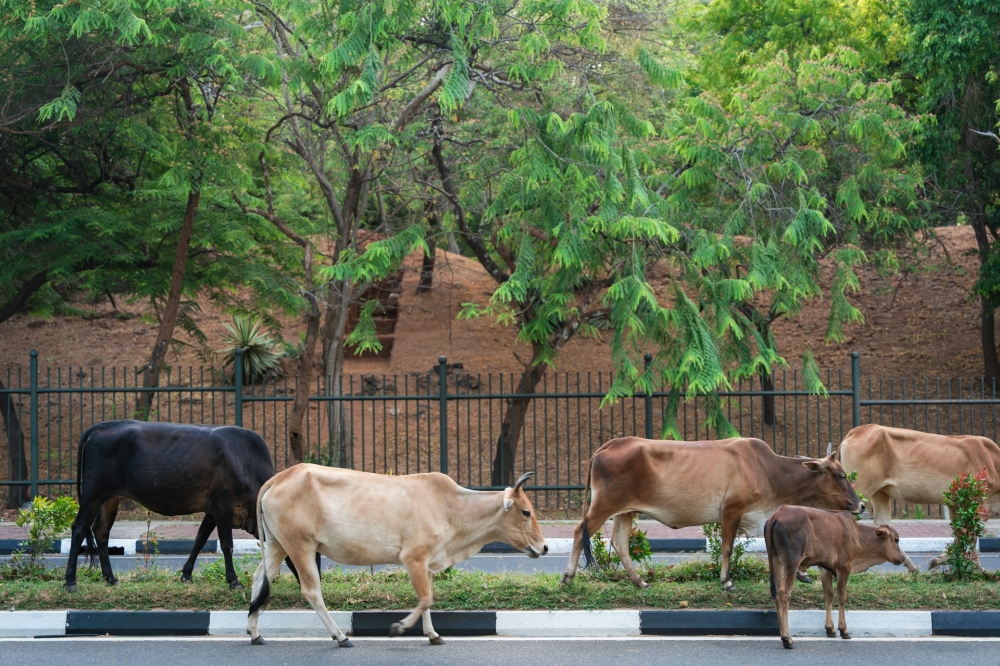
The Batu Gajah District Council (MDBG) has initiated a pilot project, becoming the first local authority in Malaysia to grant legal power to community agents for managing stray livestock, a frequent road hazard.
In collaboration with the Kinta District and Land Office, 16 representatives from various mukims have been appointed as Community Agents under the Local Government Act 1976 and MDBG By-Laws 2012.
The initiative, approved by the Perak State Executive Council, includes intensive training for the agents in animal capture techniques and uses a geotagging system for transparency.
MDBG aims to improve public safety and enforce regulations through community engagement, with financial support derived from fines and livestock auction proceeds.
BATU GAJAH, September 24 — The Batu Gajah District Council (MDBG) has become the first local authority in Malaysia to give communities legal power to rein in straying livestock — cattle, buffaloes and goats — animals that often wander into roads and pose serious danger to motorists.
MDBG secretary Muazatul Adawiyah Muhammad said the initiative allowed appointed community agents to act under the Local Government Act 1976 (Act 171) and the MDBG Licensing of Livestock and Stray Animals By-Laws 2012.
“This is a pilot project aimed at strengthening enforcement through the community, especially in areas where straying livestock have posed risks to public safety,” she told a press conference at the MDBG’s office here.
The initiative involves 16 representatives from the mukims of Tronoh, Lahat, Tanjung Tualang, Sungai Raya and Sungai Terap, who were appointed as MDBG Community Agents for Stray Animal Management.
Muazatul said their appointments would be for one year, from October 1 this year until September 30, 2027, in line with the JPKK appointment period.
“We see this as a pilot project and, if there are areas that need improvement, the appointments can be extended for another year,” she said.
She said the initiative received full approval from the Perak State Executive Council and was formalised through the presentation of appointment letters to the Village Development and Security Committee (JPKK) representatives.
Muazatul said the initiative began in July with the appointment and nomination process carried out in collaboration with the Kinta District and Land Office.
She said all appointed community agents were subsequently required to attend coordination meetings and intensive theoretical and practical training in August.
“The training was conducted with the cooperation of the Department of Veterinary Services and the Royal Malaysia Police, focusing on passive capture techniques without chasing the animals,” she said.
She said the approach was designed to comply with the Five Freedoms of Animal Welfare under the Animal Welfare Act 2015 (Act 772).
Muazatul added the agents, who have been delegated authority under By-law 112 of the relevant by-laws, underwent field operational tests at the end of August, with their work integrated with a live geotagging system to verify the location of each animal caught.
“The JPKK chairmen must be present with his team during their operation. Their role is to identify straying livestock, record their location through geotagging and immediately inform the relevant authorities.
“Once an animal is captured, they must also lodge a report with the police within 24 hours. The animal then will be transferred to MDBG’s seizure pound in Batu Gajah,” she said.
Muazatul said the geotagging system would improve transparency and prevent false claims.
She also warned livestock owners against allowing their animals to roam freely.
“Detained animals may be seized and their owners could be fined and charged management fees before release. Unclaimed animals may be auctioned to the public,” she added.
In order to avoid confusion, Muazatul said notices on the enforcement would be placed in all 16 localities to inform residents and livestock owners that the areas are supervised by the appointed community agents.
“Identification and uniforms for the agents may also be provided in future,”
Muazatul said the operating costs would be covered by fines and livestock auction proceeds.
“RM500 allowance for each animal caught would also be channelled to the JPKK or relevant association’s official account to fund community activities,” she said.
Cheras landslide displaces 80 residents; families wait on safety verdict before returning home
‘Many flowers make spring’: Anwar affirms Malaysia open to China’s digital investment
EC says 17 new Sarawak seats unlikely ready for next state election
峇都加惹县议会 (MDBG) 启动了一项试点项目,成为马来西亚第一个赋予社区代理人管理流浪牲畜(一种常见的道路隐患)的法律权力的当地政府。
与金塔地区和土地办公室合作,根据 1976 年地方政府法和 2012 年 MDBG 细则,任命了来自各个乡镇的 16 名代表担任社区代理人。
该方案已获霹雳州行政议会批准,其中包括对执法人员进行动物捕捉技术的强化培训,并采用地理标记系统以提高透明度。
MDBG 旨在通过社区参与来改善公共安全和执行法规,其财政支持来自罚款和牲畜拍卖所得。
峇都牙也,9月24日讯——峇都牙也县议会(MDBG)成为马来西亚第一个赋予社区法律权力来控制走失牲畜(牛、水牛和山羊)的地方政府。这些牲畜经常游荡到道路上,对驾车者构成严重危险。
MDBG秘书穆阿扎图尔·阿达维亚·穆罕默德表示,该举措允许指定的社区代理人根据1976年地方政府法(第171号法案)和2012年MDBG牲畜和流浪动物许可细则行事。
“这是一个旨在加强社区执法力度的试点项目,尤其是在走失牲畜对公共安全构成威胁的地区,”她在MDBG办公室举行的新闻发布会上说。
该计划包括来自 Tronoh、Lahat、Tanjung Tualang、Sungai Raya 和 Sungai Terap 等乡镇的 16 名代表,他们被任命为 MDBG 社区流浪动物管理代理人。
穆阿扎图尔表示,他们的任命期限为一年,从今年10月1日到2027年9月30日,与JPKK的任命周期一致。
“我们把这看作是一个试点项目,如果存在需要改进的地方,任期可以再延长一年,”她说。
她说,该倡议已获得霹雳州行政议会的全面批准,并通过向乡村发展与安全委员会(JPKK)代表递交委任书而正式确定下来。
穆阿扎图尔表示,该计划于7月启动,任命和提名过程是与金塔地区和土地办公室合作进行的。
她说,所有被任命的社区代理人随后都被要求参加8月份的协调会议和密集的理论和实践培训。
她说:“此次培训是在兽医服务部和马来西亚皇家警察的合作下进行的,重点是被动捕捉技术,而不是追逐动物。”
她表示,该做法旨在遵守 2015 年《动物福利法》(第 772 号法案)规定的五项动物福利自由。
穆阿扎图尔补充说,根据相关细则第 112 条获得授权的执法人员在 8 月底进行了实地操作测试,他们的工作与实时地理标记系统相结合,以验证每只被捕获动物的位置。
“JPKK主席必须与他的团队一起参与行动。他们的职责是识别走失的牲畜,通过地理标记记录它们的位置,并立即通知有关当局。
“一旦动物被捕获,他们必须在24小时内向警方报案。之后,该动物将被转移到位于峇都牙也的MDBG查扣动物收容所,”她说。
穆阿扎图尔表示,地理标记系统将提高透明度并防止虚假声明。
她还警告牲畜主人不要放任牲畜自由漫游。
她补充说:“被扣留的动物可能会被没收,其主人可能会被处以罚款并收取管理费,之后才能被释放。无人认领的动物可能会被公开拍卖。”
为避免混淆,穆阿扎图尔表示,将在所有 16 个地区张贴执法通知,告知居民和牲畜所有者这些地区由指定的社区代理人进行监督。
“未来可能还会为特工提供身份识别证件和制服。”
穆阿扎图尔表示,运营成本将由罚款和牲畜拍卖所得支付。
她表示:“每捕获一只动物,就会获得 500 令吉的补贴,这笔补贴将拨入 JPKK 或相关协会的官方账户,用于资助社区活动。”
蕉赖山体滑坡导致80名居民流离失所;家属们等待安全评估结果后才能返回家园。
“百花齐放才有春天”:安华重申马来西亚对中国数字投资持开放态度
选举委员会表示,砂拉越新增的17个议席不太可能为下届州选举做好准备。