Visitors To Area 51 Have To Wear “Foggles” That Severely Limit Vision When Moving About参观51区的游客必须佩戴“遮光镜”,这会严重限制他们在活动时的视线。
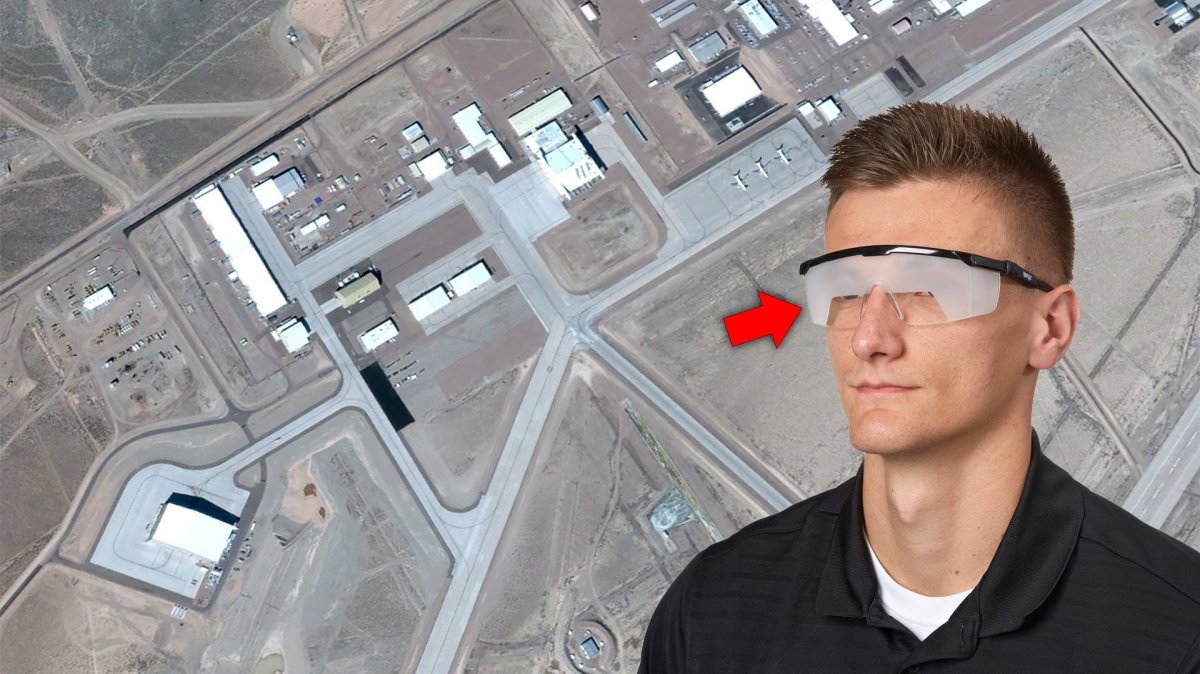
The frosted eyewear, which comes from the aerospace world, keeps a wearer from seeing anything aside from what is directly in front of and below them.
新闻视频
Published Dec 12, 2019 8:37 PM EST
The incredibly tight security measures at work at the Air Force’s clandestine flight test center most commonly referred to as Area 51, a place where the government goes to hide and is literally above the law , are legendary, both in lore and actuality. From its own army of private security contractor “camo dudes” to a pocket fleet of uniquely configured Black Hawk helicopters, maintaining the installation’s perimeter integrity is a big undertaking, especially as the locale has grown in prominence within pop culture . But inside the fence, things aren’t much more hospitable when it comes to accommodating visitors.
You have probably heard of the blue busses with blacked-out windows that move workers to and from the secretive facility or the requirement for passengers to leave their shades down when flying into and out of Groom Lake on one of the famous ‘Janet’ airliners that service it and other clandestine locales around America’s southwest. Even sci-fi-like hand scanners were a staple at highly secure sites on the Nevada Test And Training Range , and certainly Area 51 too, back in the 1980s. But have you ever heard of “foggles?”
The term refers to goggle-like eyewear that have fogged-out wrap-around lenses and a notch or bifocal-like area at the bottom that allows a wearer to see what is immediately in front of and below them. With the vast majority of the goggle’s viewing area frosted over, nothing can be made out at any meaningful distance. They also come in darkly tinted types and a few other formats, such as laboratory-style goggles that have similar modifications. They are basically blinders for humans, but ones that are far more restrictive than those that horses use.
Foggles do have a major aviation crossover, which probably explains their adaptation for security use. Their security role may very well have originated from a momentary burst of off-the-shelf genius by someone working on a clandestine aerospace program. Pilots wear similar if not identical devices for instrument training. Basically, it allows them to see just the instrument cluster so as to get accustomed to not relying on outside visual cues when flying the plane on instruments only. This also provides familiarity with the fact that their own instincts will try to trick them without those external visual cues being present. Other devices exist for this application, from ‘hoods’ to ‘visors,’ that do pretty much the same thing, but foggles are a bit less cumbersome than some of the other options that may be better suited to performing instrument upset attitude recovery drills and instrument approaches in the cockpit than walking across an unfamiliar aircraft parking ramp.
These devices are often used when infrequent visitors arrive at the installation. In some cases, foggles are put on while onboard the arriving aircraft or bus and are only taken off once inside a secure windowless building. Then, when moving to a destination on base directly related to the individual’s visit, such as a particular hangar where a project is being housed, the foggles go back on. Even inside certain hangar areas, they may be worn to keep contractors visiting one program from seeing a competing one or other unknown proprietary technology nearby, if even just by chance. The same can be said for VIP type visitors that don’t have the unique clearances required to work at the base.
It’s not clear if more regular workers have to wear the glasses under certain circumstances, as well, but it is likely that certain procedures have come and gone depending on changing operational concerns throughout the base’s long and bizarre history . The use of foggles may not even be native to just Area 51, either. Similar measures could be used at other highly sensitive sites under various circumstances, even if they are temporary in nature.
So, even if you do get the aerospace industry’s equivalent of Willy Wonka’s golden ticket and find yourself in a position to visit Area 51 for business, the chances that you will see anything but exactly what you are supposed to see are slim to none.
But maybe they will let you keep the commemorative foggles!
Contact the author: Tyler@thedrive.com
Comments couldn’t be loaded. Please refresh the page.
发布于 2019 年 12 月 12 日晚上 8:37(美国东部时间)。
空军秘密飞行测试中心,俗称“51区”,是政府的秘密基地,在这里,政府可以凌驾于法律之上。该中心的安保措施极其严密,无论是传说还是现实,都堪称传奇。从其庞大的私人安保承包商“迷彩服保安”队伍,到一支装备精良、配置独特的黑鹰直升机小队,维护该设施的周界安全是一项艰巨的任务,尤其是在其在流行文化中日益受到关注的情况下。然而,进入围栏之内,对于访客而言,情况也好不到哪里去。
你可能听说过那些车窗漆黑的蓝色巴士,它们负责接送工作人员往返于那个神秘的设施;也可能听说过,乘坐著名的“珍妮特”客机往返格鲁姆湖以及美国西南部其他一些秘密地点时,乘客必须拉下遮光帘。甚至在20世纪80年代,内华达州试验训练场以及51区等高度戒备的场所都配备了科幻电影里才会出现的手持扫描仪。但是,你听说过“遮光镜”吗?
这种眼镜类似于护目镜,镜片呈环绕式,表面起雾,底部有一个凹槽或类似双光镜片的区域,可以让佩戴者看到正前方和正下方的物体。由于护目镜的大部分视野都被磨砂覆盖,因此在任何有意义的距离都无法看清任何东西。这种眼镜也有深色镜片和其他一些款式,例如经过类似改造的实验室护目镜。它们本质上是人类的眼罩,但比马匹使用的护目镜限制性更强。
飞行眼镜在航空领域有着广泛的应用,这或许可以解释它们为何被应用于安保领域。它们的安保用途很可能源于某位参与秘密航空航天项目的人员灵光一闪的即兴设计。飞行员在仪表飞行训练中佩戴的装备与此类似,甚至完全相同。基本上,飞行眼镜可以让飞行员只看到仪表盘,从而习惯于在仅依靠仪表飞行时不依赖外部视觉线索。这也有助于飞行员熟悉这样一个事实:在没有外部视觉线索的情况下,他们的本能会试图欺骗他们。虽然还有其他一些用于此用途的装备,例如“遮光罩”和“护目镜”,它们的功能大同小异,但飞行眼镜比其他一些装备更轻便,更适合在驾驶舱内进行仪表姿态异常恢复演练和仪表进近,而不是在陌生的停机坪上行走。
这些设备通常用于接待不常到访的访客。在某些情况下,访客会在抵达的飞机或巴士上戴上隐形眼镜,只有在进入安全的无窗建筑物后才会摘下。然后,当他们前往基地内与此次访问直接相关的目的地,例如存放某个项目的特定机库时,会再次戴上隐形眼镜。即使在某些机库区域内,也可能佩戴隐形眼镜,以防止前来参观某个项目的承包商偶然看到附近的竞争对手项目或其他未知的专有技术。对于没有在基地工作所需特殊权限的贵宾级访客,也同样适用此规定。
目前尚不清楚普通工作人员是否在特定情况下也需要佩戴这种眼镜,但可以肯定的是,随着基地漫长而奇特的历史发展,某些程序可能随着运营需求的变化而有所改变。而且,使用这种眼镜的做法或许并非51区独有。在其他高度敏感的场所,即使只是临时性的措施,也可能在各种情况下使用类似的措施。
所以,即使你真的获得了航空航天领域相当于威利·旺卡的金奖券,并有机会因公事参观 51 区,你看到的东西与你应该看到的东西截然不同的可能性也微乎其微。
但也许他们会让你保留那副纪念眼镜!
联系作者:Tyler@thedrive.com
评论加载失败,请刷新页面。