CNA Explains: Smart glasses and the law in Singapore – when does filming a stranger cross the line?CNA解读:新加坡的智能眼镜与法律——拍摄陌生人何时会越界?
Filming in public is not automatically illegal, since a person generally has no expectation of privacy in that setting, a lawyer says.
Filming in public is not automatically illegal, since a person generally has no expectation of privacy in that setting, a lawyer says.
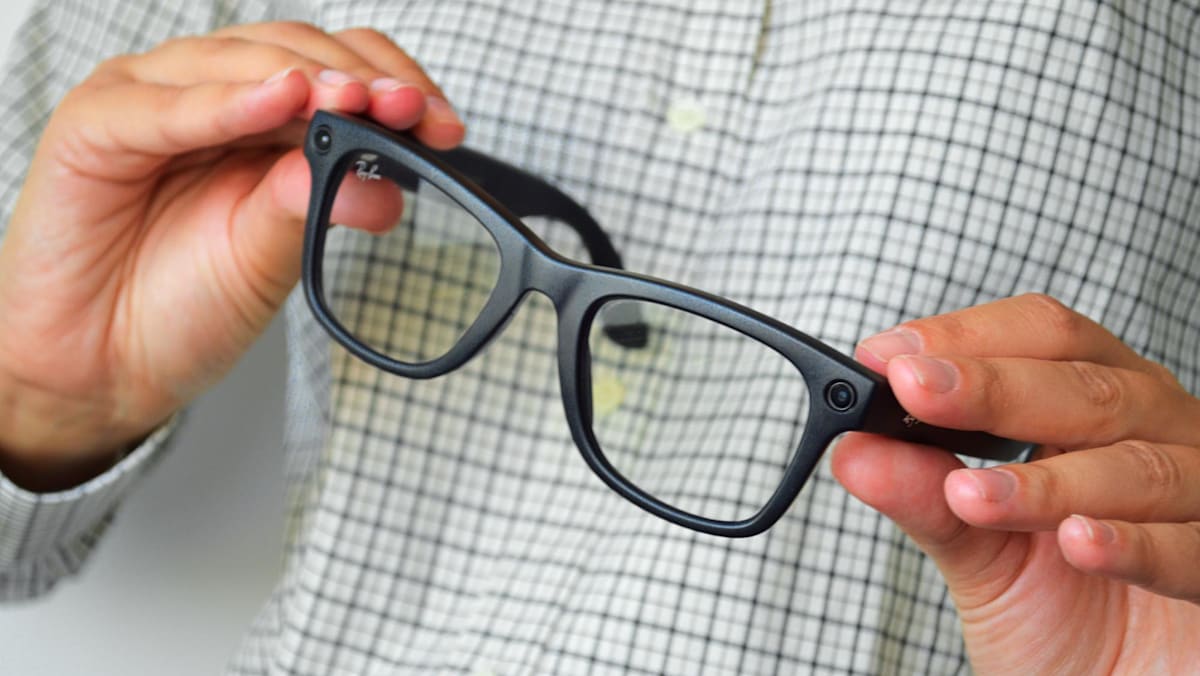
A person holds a pair of smart glasses equipped with a built-in camera on the frame. (File photo: iStock)
This audio is generated by an AI tool.
SINGAPORE: A video showing a man purportedly wearing smart glasses while trailing female students circulated on social media this week, prompting a police report and raising questions about the legality of filming strangers in public.
In the video, the man held his mobile phone close to his chest and, at one point, pressed the frame of his black-rimmed glasses.
He appeared to be wearing smart glasses, a type of wearable technology that lets users take photos, film videos and make calls, among other functions.
Such devices have fuelled growing concerns about privacy and filming without consent. On Wednesday, technology giant Meta released a camera-free version of its smart glasses amid the pushback.
As smart glasses continue to hit the shelves, CNA speaks to lawyers about when filming in public crosses the line.
Is it illegal to film others in public without their consent?
Filming in public is not automatically illegal, since a person generally has no expectation of privacy in that setting, said Ms Joyce Khoo, a senior associate lawyer at Quahe Woo and Palmer.
But filming may cross into illegality if it is done in a voyeuristic manner or intrudes on a person's privacy.
This could include filming a person's private areas, whether bare or clothed, or filming them during a private act such as showering or using the toilet, she said.
Filming in public may also become illegal if it is part of harassment or stalking, or accompanied by other unlawful conduct, such as entering the toilet of the opposite gender, she added.
Invictus Law director Cory Wong said the intent can be inferred from the filmer's actions.
If the filming occurs on two or more occasions, or is a single but protracted act, it could constitute stalking under the Protection from Harassment Act (POHA) .
“It is hard to argue that a voyeuristic, persistent or protracted act of filming was done without any ill intent. There is also the aggravating factor of vulnerable victims if minors are the ones being filmed,” he said.
What happens when the footage is posted online?
Even if the filming itself was lawful, posting footage online can cross the line into illegality if it causes harassment, defamation or misuse of personal data, Ms Khoo said.
Under POHA, a person may be liable if they post identifiable footage that causes someone “harassment, alarm or distress”, she said.
Under the Films Act, a person may also be liable for distributing obscene materials.
Ms Noelle Teoh, an associate lawyer at Gloria James-Civetta and Co, said no general rule requires a person's face to be blurred simply because they did not consent to being filmed in public.
But where identification serves no purpose, particularly in sensitive situations or where children are involved, blurring may be a "sensible precaution".
Publishing footage that identifies or allows others to identify the individual concerned may amount to doxxing in some cases, including where it is done with the intention of causing harassment, alarm, distress or humiliation, she said.
But not every post containing identifying details amounts to doxxing.
For example, someone who records a car being driven badly and posts the footage online showing the vehicle and its registration number would not necessarily be doxxing the driver, especially if the driver is not identified, she said.
“The position may be different if additional information is published which identifies the driver and the circumstances indicate an intention to subject that person to harassment or humiliation,” she said.
How do smart glasses play into legal and privacy concerns?
Lawyers noted that the rise of smart glasses has made covert recording harder to detect, allowing people to film for longer periods without being noticed.
Existing criminal laws here are broad enough to capture unlawful use of smart glasses and other wearable cameras, said Mr Wong.
But he added that using such technology to evade detection or conceal an offence is a long-recognised aggravating factor, one that can make an offence more serious.
Ms Teoh agreed that the technology itself is not inherently unlawful.
“Existing laws on matters such as voyeurism, harassment and data protection can apply regardless of the device used,” she said.
She added that as wearable recording technology becomes more discreet and sophisticated, it remains to be seen whether laws, regulations or industry practices will evolve to address the privacy concerns it raises.
She cited Japan, where many mobile phones are designed with a shutter sound that cannot be muted, to deter covert photography .
Similarly, smart-glasses manufacturers have incorporated visible recording indicators. For example, Ray-Ban Meta glasses have an outward-facing capture light that activates when photographs or videos are being taken.
“These examples show that the response to new recording technology may not necessarily come only through legislation, but also through product design, industry standards and other safeguards intended to make recording more apparent to those around the user,” she said.
What can I do if someone is filming me in public without my consent?
Mr Wong said the first step is to report the matter to the authorities or security personnel on site.
The person being filmed does not automatically have the right to "pry into the contents" of the suspect's recording device, he said, adding that the suspect can always refuse.
“However, once the authorities step in, the authorities then have the powers to investigate and to seize the suspect's handphone for digital forensic examination. At that point in time, the suspect's refusal to cooperate or to comply can subsequently be used against him in court,” he said.
Ms Teoh said it would be sensible to prioritise personal safety and avoid physically confronting the person or attempting to seize their device.
Where possible, the person being filmed should preserve evidence of what occurred, such as the time and location, a description of the suspect and screenshots or links to any subsequent online publication.
Such material may be relevant if they make a police report or take legal action, she said.
Can I seek protection under POHA?
To obtain a protection order under POHA, a person must show that harassment has occurred and is likely to continue or recur, and that the court considers it just and equitable to grant the order, said Mr Wong.
On when filming someone could amount to harassment under POHA, Ms Teoh said the court may consider factors including how often and how long the behaviour occurred, how it was carried out, the surrounding circumstances and its likely effects on the victim.
“So, the legal analysis may be quite different between a tourist inadvertently capturing another person in the background of a photograph and someone deliberately and repeatedly following a particular person while recording them.”
In cases where harmful footage is posted online, victims of certain online harms may also seek relief through the Online Safety Commission under the Online Safety (Relief and Accountability) Act.
Under the Act, the commissioner may order harmful content to be taken down or access to an offending account restricted, where the requirements are met.
Want an issue or topic explained? Email us at digitalnews [at] mediacorp.com.sg . Your question might become a story on our site.
Get our pick of top stories and thought-provoking articles in your inbox
Stay updated with notifications for breaking news and our best stories
Join our channel for the top reads for the day on your preferred chat app
律师表示,在公共场所拍摄并不必然违法,因为在这种场合下,人们通常没有隐私期待。
一名男子手持一副镜框上内置摄像头的智能眼镜。(图片来源:iStock)
这段音频由人工智能工具生成。
新加坡:本周,一段视频在社交媒体上流传,视频显示一名男子疑似戴着智能眼镜尾随女学生,这引发了警方的调查,并引发了人们对在公共场合拍摄陌生人是否合法的质疑。
视频中,该男子将手机紧贴胸前,并一度按压黑框眼镜的镜框。
他似乎戴着智能眼镜,这是一种可穿戴技术,可以让用户拍照、拍摄视频和打电话等。
此类设备引发了人们对隐私和未经同意拍摄的日益担忧。周三,科技巨头Meta在舆论压力下发布了一款不带摄像头的智能眼镜版本。
随着智能眼镜不断上架,CNA采访了律师,探讨在公共场合拍摄何时会越界。
在公共场合未经他人同意拍摄他人是否违法?
Quahe Woo and Palmer 律师事务所的高级助理律师 Joyce Khoo 女士表示,在公共场所拍摄并不一定会违法,因为人们在这种场合通常不会抱有隐私期望。
但如果以偷窥的方式拍摄,或者侵犯他人隐私,则可能构成违法行为。
她说,这可能包括拍摄一个人的私处,无论裸露还是穿着衣服,或者拍摄他们在淋浴或上厕所等私人行为时的视频。
她补充说,如果公共场所拍摄行为构成骚扰或跟踪,或者伴有其他非法行为(例如进入异性厕所),则该行为也可能违法。
《不屈不挠》导演黄冠雄表示,拍摄者的行为可以推断出其意图。
如果拍摄行为发生两次或两次以上,或者属于单一但持续时间较长的行为,则可能构成《防止骚扰法》(POHA) 所规定的跟踪行为。
他说:“很难说偷窥、持续或长时间的拍摄行为没有任何恶意。如果被拍摄的对象是未成年人,那么受害者的弱势地位就更加令人担忧了。”
如果这段视频被发布到网上会发生什么?
邱女士表示,即使拍摄本身是合法的,但如果将视频上传到网上造成骚扰、诽谤或滥用个人数据,则可能构成违法行为。
她说,根据《防止网络骚扰法》,如果发布可识别身份的视频片段,导致他人“受到骚扰、惊吓或痛苦”,则该人可能要承担法律责任。
根据《电影法》,传播淫秽物品也可能构成犯罪。
Gloria James-Civetta and Co 律师事务所的助理律师 Noelle Teoh 女士表示,没有任何一般规则要求仅仅因为某人没有同意在公共场合被拍摄就必须对其面部进行模糊处理。
但是,在识别无济于事的情况下,尤其是在敏感情况下或涉及儿童的情况下,模糊处理可能是一种“明智的预防措施”。
她表示,发布能够识别或允许他人识别相关人员的视频在某些情况下可能构成人肉搜索,包括意图造成骚扰、惊吓、痛苦或羞辱的情况。
但并非所有包含个人身份信息的帖子都构成人肉搜索。
她举例说,如果有人拍摄了一段汽车驾驶不当的视频,并将视频发布到网上,视频中显示了车辆及其车牌号码,这并不一定算是人肉搜索驾驶员,尤其是在驾驶员身份未被识别的情况下。
“如果公布更多信息,能够识别出肇事司机,并且情况表明肇事者意图骚扰或羞辱该人,那么立场可能会有所不同,”她说。
智能眼镜如何引发法律和隐私方面的担忧?
律师指出,智能眼镜的兴起使得秘密录像更难被发现,人们可以长时间录像而不被察觉。
黄先生表示,这里现行的刑法范围足够广,可以涵盖非法使用智能眼镜和其他可穿戴摄像头的行为。
但他补充说,利用这种技术来逃避侦查或掩盖犯罪行为是一个长期以来公认的加重情节,它会使犯罪行为更加严重。
张女士同意,这项技术本身并不违法。
“现行的关于偷窥、骚扰和数据保护等方面的法律,无论使用何种设备都适用,”她说。
她补充说,随着可穿戴录音技术变得越来越隐蔽和复杂,法律、法规或行业惯例是否会发展以解决由此引发的隐私问题,还有待观察。
她以日本为例,指出日本很多手机都设计成无法静音的快门声,以防止偷拍。
同样,智能眼镜制造商也加入了可见的录制指示灯。例如,雷朋Meta眼镜就配备了一个朝外的拍摄指示灯,当拍摄照片或视频时,该指示灯会亮起。
“这些例子表明,对新型录音技术的应对措施不一定仅仅依靠立法,还可以通过产品设计、行业标准和其他旨在让用户周围的人更容易察觉录音行为的保障措施来实现,”她说。
如果有人未经我同意在公共场合拍摄我,我该怎么办?
黄先生表示,第一步是向有关部门或现场保安人员报告此事。
他说,被拍摄者并没有自动获得“窥探”嫌疑人录像设备内容的权利,并补充说,嫌疑人始终可以拒绝。
“然而,一旦当局介入,他们就有权展开调查,并扣押嫌疑人的手机进行数字取证。届时,嫌疑人拒绝合作或不配合的行为可能会在法庭上被用作对其不利的证据,”他说道。
张女士表示,优先考虑人身安全是明智之举,应避免与对方发生肢体冲突或试图夺取其设备。
被拍摄者应尽可能保存事件证据,例如时间、地点、嫌疑人描述以及任何后续在线发布的屏幕截图或链接。
她说,如果他们向警方报案或采取法律行动,这些材料可能具有相关性。
我能否根据《防止虐待和侵犯人权法案》(POHA)寻求保护?
黄先生说,根据《防止骚扰法》,要获得保护令,当事人必须证明骚扰已经发生,并且可能会继续或再次发生,而且法院认为颁布该保护令是公正合理的。
关于拍摄他人何时可能构成《防止骚扰法》规定的骚扰行为,张女士表示,法庭可能会考虑以下因素:该行为发生的频率和持续时间、实施方式、周围环境以及可能对受害者造成的影响。
“因此,游客无意中在照片背景中拍到他人,和有人故意反复跟踪并拍摄某人,这两种情况的法律分析可能大相径庭。”
如果有害视频被发布到网上,某些网络伤害的受害者也可以根据《网络安全(救济和问责)法》向网络安全委员会寻求救济。
根据该法案,在满足相关要求的情况下,专员可以命令删除有害内容或限制对违规帐户的访问。
想了解某个问题或话题?请发送邮件至 digitalnews [at] mediacorp.com.sg。您的提问可能会成为我们网站上的报道内容。
订阅我们的邮件,即可获取精选热点新闻和引人深思的文章。
订阅通知,第一时间获取突发新闻和精彩报道。
加入我们的频道,即可在您常用的聊天应用上获取当日热门文章。