Pentagon to release Arctic strategy that outlines tech, presence needs五角大楼将发布北极战略,概述技术和存在需求。
The Pentagon and the services are considering how and how often they should operate in the Arctic and what gear they require to do that.
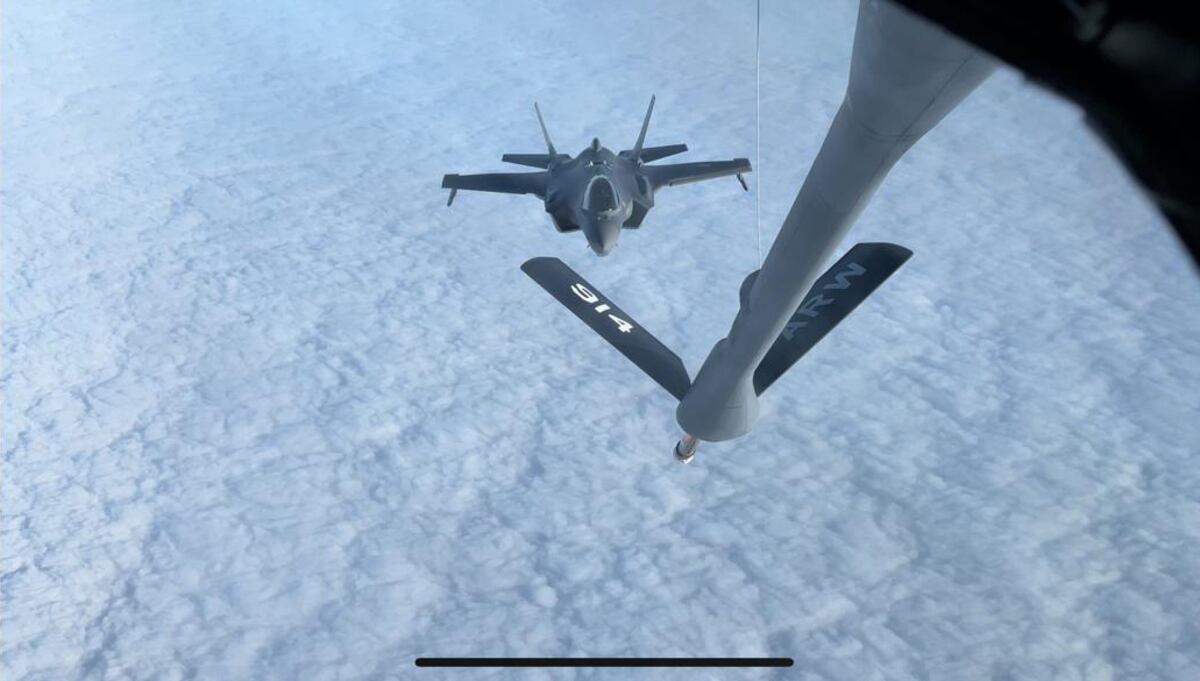
The U.S. military is staging at least three major exercises north of the Arctic Circle this month, even as the Defense Department seeks to define what its Arctic presence should be and the technology it needs to make it happen.
The Pentagon will release an updated DoD Arctic Strategy this spring to help answer these questions, Deputy Assistant Secretary of Defense for Arctic and Global Resilience Iris Ferguson told Defense News.
Not only do all the services have their own operational requirements and acquisition needs related to Arctic operations, but five combatant commands — U.S. Northern Command, European Command, Indo-Pacific Command, Transportation Command and Strategic Command — also have separate interests and priorities above the Arctic Circle.
The Arctic and Global Resilience Office, established in September 2022, is meant to be a home and a clearinghouse for these issues, Ferguson said in a Feb. 21 interview. One of the office’s first tasks was to understand which requirements overlap and which are distinct, and then to start to prioritize them.
An Arctic Campaign Team, led by O-5 and O-6 officers but also looping in top service leadership, resulted from this requirements integration process.
The DoD Arctic Strategy, which could be released by the end of April, will highlight how the Arctic has changed in the last five years, both in terms of climate change and its impact as well as Russia and China increasingly acting alone and together to destabilize the region.
A “ways and means” section, Ferguson said, will for the first time try to unpack all the services’ and combatant commands’ acquisition needs so industry can begin to understand where they can help out.
Each service’s needs will look a bit different: the Army’s 11th Airborne Division in Alaska needs additional cold-weather gear to operate in the Pacific side of the Arctic; the Air Force and Space Force are focused on homeland defense missions across the northern border; the Navy conducts submarine and anti-submarine patrols in European Arctic waters but is seeking ways to increase its surface ships’ ability to operate there.
What’s common, though, is the need for greater domain awareness and communications.
Ferguson said DoD and industry can help define what communications they need and what architectures are best suited for that difficult high-latitude environment — be it satellite communications, high frequency communications, ground-based communications or something else. They can also tackle what intelligence, surveillance and reconnaissance is needed to understand the full threat picture, from missiles coming across the top of the world to submarines lurking under the ice towards American shores.
Ferguson said the bottom line is that the U.S. military needs the ability to monitor and respond to any threat from the north, and that means having the ability to detect.
U.S. Air Force Tech. Sgt. Ed Judge, a 57th Rescue Squadron pararescueman, uses his ski poles as a weapon mount on a simulated personnel recovery mission during Nordic Response 24 in Moen, Norway, March 6, 2024. (Tech. Sgt. Justin Carnahan/US Air Force)
Once the strategy is released, and with it a prioritized list of acquisition and research needs, she said she intends to attend all the big trade shows this year to talk to industry about opportunities to tackle these challenges.
Ferguson said the strategy would highlight three main points: enhancing U.S. capabilities with a focus on domain awareness; engaging with allies and partners not only for collective operations but also collaborative capability development; and “calibrated presence” in the Arctic to create a deterrent effect.
These priorities nicely match what U.S. Fleet Forces Command wants for the Navy’s Arctic efforts: maintain an enhanced presence, strengthen cooperative partnerships, and build a more capable Arctic maritime force.
After giving a speech on the Artic at an American Society of Naval Engineers’ Arctic and Antarctic operations conference on March 6, Fleet Forces commander Adm. Daryl Caudle told reporters the Navy would need to take a look at its access, basing and overflight across the Arctic. He said the U.S. relies heavily on its European allies and partners for this, but the Navy needs to consider if it needs additional facilities to operate out of the Aleutian islands, for example, or how it may leverage a deep water port that’s coming to Nome , Alaska.
Caudle said the key is to be able to monitor the Arctic, conduct replenishment operations to sustain forces operating there, and have some sort of personnel recovery capability.
Today, the bulk of U.S. Navy Arctic presence comes from the submarine fleet that operates under the ice, and the P-8A Poseidon maritime patrol and anti-submarine warfare plane that flies above.
As such, he said, Naval Submarine Forces is the type commander with Arctic responsibilities, the undersea warfare directorate on the chief of naval operations’ staff (OPNAV N97) is the primary resource sponsor for Arctic operations, and the Undersea Warfare Development Center is in charge of Arctic doctrine.
“Is that correct? Does that get after the total picture? No, it does not,” Caudle told reporters, noting these efforts didn’t account for aircraft carriers, surface ships or amphibious ships with Marines operating in the region and what their needs were.
Sailors assigned to the Los Angeles-class attack submarine USS Hampton (SSN 767) raise the national ensign at Ice Camp Whale on the Arctic Ocean, on March 8 during Operation Ice Camp 2024. (MC1 Justin Yarborough/US Navy)
He suggested the Navy might need to consider standing up an Arctic office to work across communities, to ensure the Navy is investing in the full breadth of requirements to support Arctic presence.
Asked what that presence should look like from the surface ship community, the admiral said “nothing demonstrates presence better than a surface ship.”
Though the presence of U.S. submarines does deter adversaries’ military behavior, Caudle acknowledged surface ships flying the American flag sends a clearer signal.
Going forward, he said he’d like to see some portion of every deploying carrier strike group spend at least a little time north of the Arctic Circle.
“Zero [presence] is definitely not right, but I think a continuous presence is probably not right either,” he said. “I think the right amount is that amount necessary to build our strategic messaging campaign that we’re not going to cede the Arctic to anyone. We’re going to keep it free and open for the flow of commerce, we’re going to protect people’s [exclusive economic zones], and we’re going to have the capability to be in those waters at our timing and tempo.”
Megan Eckstein is the naval warfare reporter at Defense News. She has covered military news since 2009, with a focus on U.S. Navy and Marine Corps operations, acquisition programs and budgets. She has reported from four geographic fleets and is happiest when she’s filing stories from a ship. Megan is a University of Maryland alumna.
尽管美国国防部正在寻求明确其在北极的存在形式以及实现这一目标所需的技术,但本月美国军方仍在北极圈以北地区举行至少三项重大演习。
国防部负责北极和全球韧性的副助理部长艾里斯·弗格森告诉《防务新闻》,五角大楼将于今年春天发布更新的国防部北极战略,以帮助回答这些问题。
不仅所有军种都有各自的北极作战需求和采购需求,而且五个作战司令部——美国北方司令部、欧洲司令部、印太司令部、运输司令部和战略司令部——在北极圈以北也有各自的利益和优先事项。
弗格森在2月21日的采访中表示,北极和全球韧性办公室成立于2022年9月,旨在成为这些问题的集中讨论和信息交流中心。该办公室的首要任务之一是了解哪些需求相互重叠,哪些需求彼此独立,然后开始确定优先顺序。
通过这一需求整合过程,成立了一支由 O-5 和 O-6 级军官领导,并有高级军种领导参与的北极行动小组。
美国国防部北极战略可能会在四月底发布,该战略将重点介绍北极在过去五年中的变化,包括气候变化及其影响,以及俄罗斯和中国日益单独或联合行动破坏该地区稳定的现象。
弗格森表示,“筹资和手段”部门将首次尝试梳理所有军种和作战司令部的采购需求,以便业界能够开始了解他们可以在哪些方面提供帮助。
每个军种的需求都会有所不同:驻扎在阿拉斯加的陆军第 11 空降师需要额外的御寒装备才能在北极太平洋一侧作战;空军和太空军专注于北部边境的国土防御任务;海军在欧洲北极水域进行潜艇和反潜巡逻,但正在寻求提高其水面舰艇在该地区作战能力的方法。
不过,共同之处在于,都需要提高领域意识和沟通能力。
弗格森表示,国防部和业界可以帮助确定所需的通信方式以及最适合高纬度复杂环境的通信架构——无论是卫星通信、高频通信、地面通信还是其他方式。他们还可以共同探讨需要哪些情报、监视和侦察手段,以全面了解威胁态势,从飞越北极的导弹到潜伏在冰层下逼近美国海岸的潜艇。
弗格森表示,关键在于美国军方需要具备监控和应对来自北方任何威胁的能力,这意味着需要具备探测能力。
2024年3月6日,在挪威莫恩举行的“北欧救援24”演习中,美国空军第57救援中队伞降救援员、技术军士埃德·贾奇在模拟人员救援任务中使用滑雪杖作为武器支架。(技术军士贾斯汀·卡纳汉/美国空军)
她表示,一旦战略发布,并随之公布优先考虑的收购和研究需求清单,她打算参加今年所有的大型贸易展,与业内人士探讨应对这些挑战的机会。
弗格森表示,该战略将重点强调三个方面:增强美国的能力,重点是领域感知;与盟友和伙伴合作,不仅进行集体行动,而且进行合作能力发展;以及在北极地区进行“有控制的存在”,以产生威慑作用。
这些优先事项与美国舰队司令部对海军北极行动的期望非常吻合:保持增强的存在,加强合作关系,并建立一支更有能力的北极海上力量。
3月6日,舰队司令达里尔·考德尔海军上将在美国海军工程师协会北极和南极作战会议上就北极问题发表讲话后告诉记者,海军需要重新审视其在北极的进出通道、基地建设和飞越权限。他表示,美国在这方面严重依赖其欧洲盟友和伙伴,但海军需要考虑是否需要额外的设施才能在阿留申群岛开展行动,或者如何利用即将落成于阿拉斯加诺姆的深水港。
考德尔表示,关键在于能够监测北极地区,开展补给行动以维持在那里作战的部队,并具备某种人员救援能力。
如今,美国海军在北极的大部分兵力来自在冰下作业的潜艇舰队,以及在冰上飞行的 P-8A 海神海上巡逻和反潜作战飞机。
因此,他表示,海军潜艇部队是负责北极事务的司令部,海军作战部长参谋部的水下作战局(OPNAV N97)是北极行动的主要资源赞助方,而水下作战发展中心负责北极作战理论。
“是这样吗?这样就能了解全貌吗?不,不能,”考德尔告诉记者,并指出这些努力没有考虑到在该地区作战的海军陆战队使用的航空母舰、水面舰艇或两栖舰艇以及它们的需求。
3月8日,在2024年冰营行动期间,隶属于洛杉矶级攻击型核潜艇“汉普顿”号(SSN 767)的水兵在北冰洋的鲸鱼冰营升起美国国旗。(一级军士长贾斯汀·亚伯勒/美国海军)
他建议海军或许应该考虑设立一个北极办事处,与各界人士合作,以确保海军对支持北极存在的各项需求进行全面投资。
当被问及水面舰艇部队应该如何展现这种存在时,这位海军上将表示:“没有什么比水面舰艇更能展现存在感了。”
尽管美国潜艇的存在确实能威慑对手的军事行为,但考德尔承认,悬挂美国国旗的水面舰艇发出的信号更加明确。
他表示,展望未来,他希望每个部署的航母打击群都能有一部分成员至少在北极圈以北停留一段时间。
“完全不驻军肯定不对,但我觉得持续驻军可能也不合适,”他说。“我认为合适的驻军规模应该足以构建我们的战略宣传体系,表明我们不会将北极拱手让给任何人。我们将保持北极的自由开放,促进商业流通;我们将保护各国的专属经济区;并且我们将有能力按照我们自己的节奏和时间进入这些水域。”
梅根·埃克斯坦是《防务新闻》的海军作战记者。自2009年以来,她一直从事军事新闻报道,主要关注美国海军和海军陆战队的行动、采购项目和预算。她曾报道过四个不同地理区域的舰队,最喜欢在舰艇上进行新闻报道。梅根毕业于马里兰大学。