S’pore population rises 1.6% to 6.21 million, driven by construction workers for projects like T5新加坡人口增长1.6%,达到621万,主要原因是T5航站楼等项目需要大量建筑工人。
Read more at straitstimes.com.
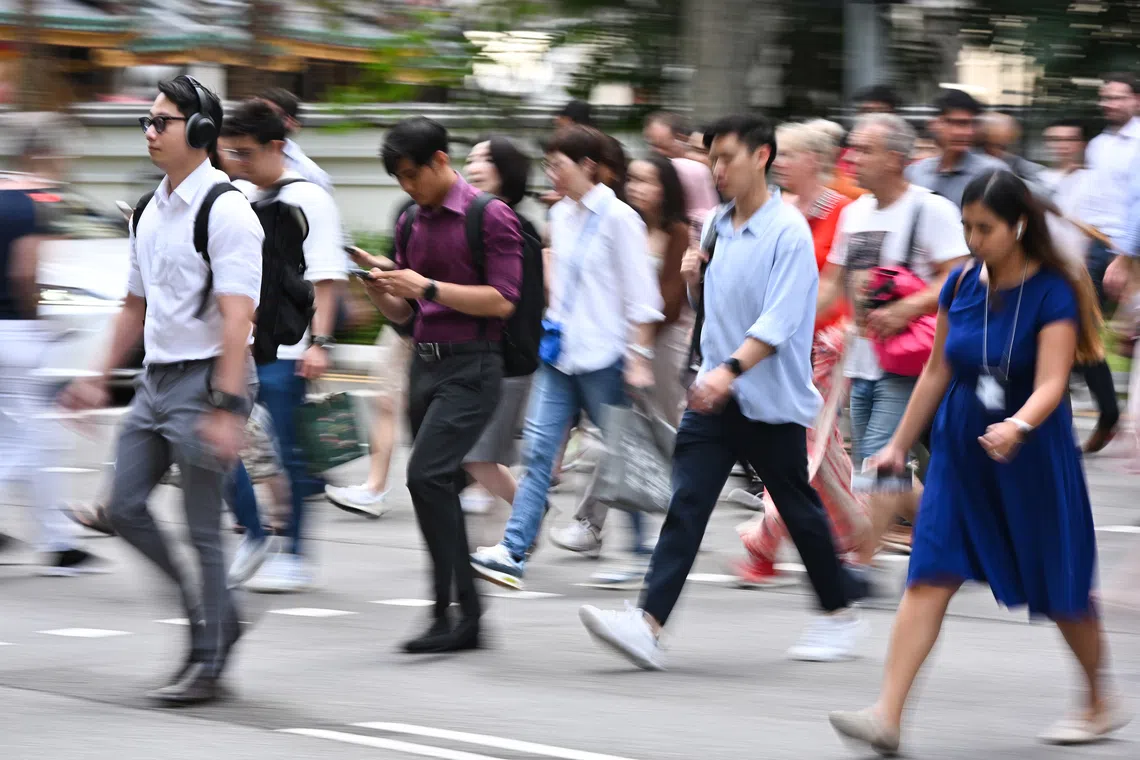
The citizen population increased by 0.7 per cent to 3.68 million in June 2026, from 3.66 million in June 2025.
ST PHOTO: LIM YAOHUI
Published Sep 25, 2026, 02:57 PM
Updated Sep 25, 2026, 02:59 PM
SINGAPORE – Singapore’s population has risen to 6.21 million as at June 2026, up from 6.11 million the year before.
The increase of 1.6 per cent was driven by more construction workers for key infrastructure projects such as Changi Terminal 5 and the ramp up of housing supply, said the National Population and Talent Division (NPTD) on Sept 25.
Meanwhile, the citizen population increased by 0.7 per cent to 3.68 million in June 2026, from 3.66 million in June 2025, said the NPTD in its annual Population in Brief 2026 report.
Singapore’s permanent resident population remained relatively stable at 0.55 million in June 2026, the report added.
In 2025, 25,094 were granted citizenship and another 35,352 individuals granted permanent residency, it added.
The average number of citizenships and permanent residencies granted per year from 2021 to 2025 rose compared to the five years before, it said.
In that time, Singapore granted an average of 22,400 citizenships and 34,600 permanent residencies, compared with an average of 20,600 citizenships and 31,200 permanent residencies between 2016 and 2020.
The non-resident population increased by 3.7 per cent to 1.98 million in June 2026 from 1.91 million in June 2025.
The increase came primarily from work permit holders and migrant domestic workers, the report added.
Foreign employment growth in Singapore was higher over the period of June 2025 to June 2026, compared to June 2024 to June 2025, primarily due to increases in the number of work pass holders, it said.
The report said Singapore’s non-resident population, which includes these two groups, is diverse and that its size and composition vary over time to support the country’s “evolving economic and social needs”.
Today, the foreign workforce, not including migrant domestic workers, makes up about two-thirds of the non-resident population, while the remaining one-third comprises mainly migrant domestic workers, dependents, and students, it added.
Meanwhile, Singapore’s citizen population continued to age, it said.
Singaporeans aged 65 and above now form more than a fifth of the citizen population at 21.4 per cent. This is up from 13.7 per cent 10 years ago.
The number of citizens aged 80 and above also increased by 60 per cent compared to a decade ago.
Singapore now has 152,000 people aged 80 and above, up from 95,000 in 2016, the report said.
The country’s annualised population growth rate between 2021 and 2026 was higher than the preceding five-year period between 2016 and 2021, the report noted.
“This was in part influenced by Covid-19 which contributed to a lower total population base in 2021 and subsequent higher growth registered on average over 2021 to 2026,” it said.
Singapore population
2026 年 6 月,公民人口增长 0.7%,达到 368 万,而 2025 年 6 月为 366 万。
ST 照片:林耀辉
发布于 2026 年 9 月 25 日下午 2:57
更新于2026年9月25日下午2:59
新加坡——截至2026年6月,新加坡人口已增至621万,高于前一年的611万。
国家人口与人才署(NPTD)于9月25日表示,1.6%的增长是由于樟宜机场5号航站楼等重要基础设施项目需要更多建筑工人以及住房供应增加所致。
与此同时,国家人口与发展局在其年度《2026 年人口简报》中表示,截至 2026 年 6 月,公民人口增长了 0.7%,达到 368 万,而 2025 年 6 月为 366 万。
报告还指出,到 2026 年 6 月,新加坡永久居民人口将保持相对稳定,为 55 万人。
报告还指出,到 2025 年,将有 25,094 人获得公民身份,另有 35,352 人获得永久居留权。
报告称,2021年至2025年每年授予的公民身份和永久居留权的平均数量比前五年有所增加。
在此期间,新加坡平均授予 22,400 个公民身份和 34,600 个永久居留权,而 2016 年至 2020 年期间,平均授予公民身份 20,600 个,永久居留权 31,200 个。
2026 年 6 月,非居民人口比 2025 年 6 月的 191 万人增加了 3.7%,达到 198 万人。
报告还指出,新增人口主要来自工作许可证持有者和外籍家庭佣工。
报告称,2025 年 6 月至 2026 年 6 月期间,新加坡的外国就业增长高于 2024 年 6 月至 2025 年 6 月期间,这主要是由于工作准证持有者人数的增加。
报告称,新加坡的非居民人口(包括这两个群体)构成多样,其规模和组成会随着时间推移而变化,以满足该国“不断变化的经济和社会需求”。
报告还指出,目前外籍劳工(不包括外籍家政工人)约占非居民人口的三分之二,其余三分之一主要由外籍家政工人、家属和学生组成。
报告指出,与此同时,新加坡公民人口老龄化趋势仍在加剧。
新加坡65岁及以上人口占公民总人口的21.4%,超过五分之一。这一比例高于10年前的13.7%。
与十年前相比,80岁及以上公民的数量也增加了60%。
报告称,新加坡目前有 15.2 万名 80 岁及以上的老年人,高于 2016 年的 9.5 万名。
报告指出,该国2021年至2026年的年均人口增长率高于2016年至2021年这五年。
报告称:“这在一定程度上受到了新冠疫情的影响,导致 2021 年总人口基数下降,随后在 2021 年至 2026 年期间平均增长率更高。”
新加坡人口