Online trading didn’t kill the remisier; it’s helping them make a comeback in S’pore在线交易并没有扼杀股票经纪人;它反而帮助他们在新加坡东山再起。
Discover how remisiers in Singapore are making a comeback by providing personalised investment advice alongside online trading platforms. Read more at straitstimes.com.
新闻视频
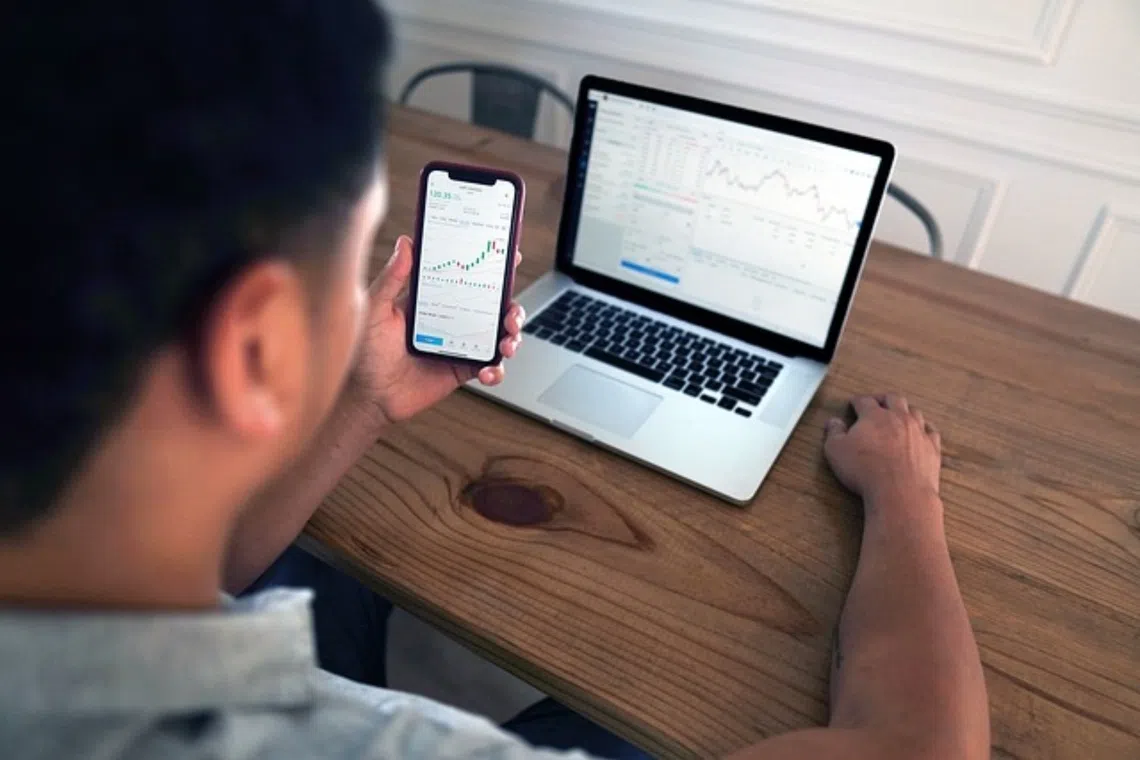
Digital brokerages are betting that investors still value something an app cannot easily provide – a human who knows their portfolio and understands their concerns.
PHOTO ILLUSTRATION: PIXABAY
Published Sep 25, 2026, 11:30 AM
Updated Sep 25, 2026, 12:57 PM
SINGAPORE – Remisiers, once the backbone of Singapore’s retail stock market, looked destined for extinction with the proliferation of online platforms that made it possible for investors to trade faster and more cheaply without a human intermediary. But the role is now making a comeback.
Digital brokerages such as Tiger Brokers Singapore, Saxo Markets, Moomoo Singapore, and Syfe are betting that investors still value something an app cannot easily provide – a trusted human who knows their portfolio, understands their concerns and can put a sudden market move into perspective. All boast of dedicated teams of representatives to help clients.
Listed companies like Nanofilm Technologies and Lendlease are also tapping a new generation of remisiers to cultivate their relationship with retail investors.
And instead of relying solely on investor-relations presentations and announcements, some companies are using remisiers to generate interest before an initial public offering (IPO) and keep investors engaged after the listing through briefings and their client networks.
A remisier is a licensed trading representative attached to a Singapore Exchange member securities firm. They receive a cut of about 40 per cent of transaction commissions.
Tiger Brokers is recruiting and training remisiers, recasting them not as order-takers but as investment representatives who help clients navigate a market overflowing with information.
As the app executes the trade, surfaces the data and delivers the headlines, a human can distil that information, provide context and help clients avoid making emotional decisions in volatile markets.
The execution role that remisiers once performed has largely disappeared since investors can now trade directly through an online platform or app.
With execution costs now near zero, the value of a human intermediary has shifted from order-taking to interpretation, said S Nallakaruppan, president of the Society of Remisiers in Singapore (SRS).
There are about 2,000 remisiers and dealers in Singapore, 420 of whom are members of SRS.
Remisiers using AI for research and stock screening can cover more clients, “like a private banker for equities”, added Nallakaruppan, who has more than 30 years of experience in the stockbroking industry.
With execution costs now near zero, the value of a human intermediary has shifted from order-taking to interpretation, said S Nallakaruppan, president of the Society of Remisiers in Singapore. PHOTO: THE SOCIETY OF REMISIERS
With execution costs now near zero, the value of a human intermediary has shifted from order-taking to interpretation, said S Nallakaruppan, president of the Society of Remisiers in Singapore.
PHOTO: THE SOCIETY OF REMISIERS
Raymond Chin, a senior director at Tiger Brokers, cited a Singapore study showing that while 89 per cent of investors use digital tools to gather information, only 37 per cent are comfortable relying on AI for personalised financial advice. During market volatility, half still prefer to speak face-to-face with a human.
Another study found that 69 per cent of young people prefer human advisers when making important insurance decisions.
“Technology has made information free, but it has also turned excessive information and emotional impulses into the biggest enemies of good investing. What our investment representatives do now is help clients filter noise, prevent panic selling, and provide context for why certain stocks are falling,” he said.
Chin said human representatives can provide three things AI cannot: accountability, personalised context and emotional support during market downturns.
While AI can analyse data, a human can understand a client’s circumstances over time, help them make sense of sudden market moves and provide perspective during periods of volatility.
Raymond Chin, senior director at Tiger Brokers, said human representatives can provide three things AI cannot: accountability, personalised context and emotional support during market downturns. PHOTO: TIGER BROKERS
Raymond Chin, senior director at Tiger Brokers, said human representatives can provide three things AI cannot: accountability, personalised context and emotional support during market downturns.
PHOTO: TIGER BROKERS
Young and mid-careers entering the fold
Some young people are drawn to the revitalised profession, said Nallakaruppan, as the industry sheds its image as a sunset sector amid a recovery in trading activity and liquidity.
Still, the profession faces a succession challenge, with two-thirds of SRS’ 420 members aged 60 and above at a time when there is renewed demand for human representatives.
For younger recruits, part of the job’s attraction is that they operate under agency arrangements rather than as conventional brokerage employees, giving the role an entrepreneurial “you are your own boss” character and flexibility.
Such remisiers are appointed by a stockbroking firm as independent, commission-based trading representatives to execute securities trades in the firm’s name.
They are left to build a client base, cultivate relationships and earn according to the business generated.
At Tiger Brokers, fresh graduates from polytechnics and universities, as well as mid-career switchers, receive training and obtain the necessary Capital Markets and Financial Advisory Services certifications. They will then establish a client book using Tiger’s infrastructure, said Chin, who heads the brokerage’s agency.
The revitalisation of Singapore’s stock market under the government’s Equity Market Development Programme (EQDP) may also have given the profession renewed attention by encouraging more trading interest and retail participation.
However, remisier Wang Han Hui at brokerage UOB Kay Hian said EQDP alone is not enough to make the profession sustainable. What really matters is consistent investor participation over the long term, rather than a single IPO or a temporary surge in the market.
“What is encouraging is that we are seeing more initiatives around the whole ecosystem, from IPOs, retail participation and new products to market access,” he said, adding that the profession would benefit if Singapore keeps attracting investors and encouraging them to stay invested in local stocks over the long term.
Whether the rejuvenated role translates into long-term career viability will depend on the individual and the value he or she brings, said remisier Sebastian Chan, who has been with UOB Kay Hian for six years.
To aspiring remisiers, he said “the sky is genuinely the limit” when it comes to earnings potential.
“I know remisiers in my company who earn seven figures, and others who earn less than $50,000 a year. It really comes down to the individual,” Chan said.
数字经纪公司押注投资者仍然重视应用程序难以提供的东西——了解他们的投资组合并理解他们的担忧的人。
图片说明:Pixabay
发布于2026年9月25日上午11:30
更新于2026年9月25日下午12:57
新加坡——曾经是新加坡零售股票市场支柱的股票经纪人,随着在线平台的普及,投资者无需人工中介即可更快、更便宜地进行交易,一度似乎难逃消亡的命运。但如今,这一角色正在复苏。
像Tiger Brokers Singapore、Saxo Markets、Moomoo Singapore和Syfe这样的数字券商认为,投资者仍然重视应用程序难以提供的服务——一位值得信赖、了解其投资组合、理解其顾虑并能理性分析突发市场波动的专业人士。所有这些券商都拥有专业的客户服务团队。
像 Nanofilm Technologies 和 Lendlease 这样的上市公司也在利用新一代的证券经纪人来培养与散户投资者的关系。
一些公司不再仅仅依靠投资者关系演示和公告,而是利用股票经纪人在首次公开募股 (IPO) 之前引起投资者的兴趣,并在上市后通过简报和客户网络与投资者保持联系。
证券经纪人是指隶属于新加坡交易所成员证券公司的持牌交易代表。他们可获得约40%的交易佣金。
Tiger Brokers 正在招募和培训投资经理,将他们重新定位为投资代表,而不是订单接收者,帮助客户驾驭信息过载的市场。
当应用程序执行交易、呈现数据并提供新闻标题时,人类可以提炼这些信息,提供背景信息,并帮助客户避免在波动的市场中做出情绪化的决定。
由于投资者现在可以通过在线平台或应用程序直接进行交易,经纪人曾经扮演的执行角色已基本消失。
新加坡证券经纪人协会 (SRS) 主席 S Nallakaruppan 表示,由于执行成本现在接近于零,人工中介的价值已经从接受订单转变为解释订单。
新加坡约有 2,000 家经纪商和经销商,其中 420 家是 SRS 的成员。
拥有 30 多年股票经纪行业经验的纳拉卡鲁潘补充说,使用人工智能进行研究和股票筛选的经纪商可以覆盖更多客户,“就像股票领域的私人银行家一样”。
新加坡证券经纪商协会主席S·纳拉卡鲁潘表示,由于执行成本已接近于零,人工中介的价值已从接收订单转变为解读订单。图片:证券经纪商协会
新加坡证券经纪人协会主席 S Nallakaruppan 表示,由于执行成本现在接近于零,人工中介的价值已经从接受订单转变为解释订单。
照片:投资协会
老虎证券高级董事Raymond Chin援引新加坡一项研究指出,虽然89%的投资者使用数字工具收集信息,但只有37%的投资者愿意依赖人工智能获取个性化理财建议。在市场波动期间,仍有半数投资者更倾向于与真人面对面交流。
另一项研究发现,69%的年轻人更喜欢在做出重要的保险决定时寻求人类顾问的帮助。
“科技让信息唾手可得,但也让信息过载和情绪冲动成为良好投资的最大敌人。我们现在的投资顾问所做的,是帮助客户过滤噪音,防止恐慌性抛售,并解释某些股票下跌的原因,”他说道。
Chin表示,人类代表可以提供人工智能无法提供的三件事:问责制、个性化的背景信息以及在市场低迷时期的情感支持。
虽然人工智能可以分析数据,但人类可以随着时间的推移了解客户的情况,帮助他们理解突发的市场波动,并在市场波动时期提供客观的视角。
老虎证券高级董事Raymond Chin表示,人类代表可以提供人工智能无法提供的三项服务:问责制、个性化背景信息以及在市场低迷时期的情感支持。图片:老虎证券
老虎证券高级董事雷蒙德·陈表示,人类代表可以提供人工智能无法提供的三件事:问责制、个性化的背景信息以及在市场低迷时期的情感支持。
图片来源:老虎证券
年轻和中年职业人士加入
纳拉卡鲁潘表示,随着交易活动和流动性的复苏,该行业正在摆脱夕阳行业的形象,一些年轻人被这个重焕生机的行业所吸引。
不过,该行业面临着继任挑战,SRS 的 420 名成员中有三分之二年龄在 60 岁及以上,而此时对人类代表的需求却在重新增长。
对于年轻的新员工来说,这份工作的吸引力之一在于,他们以代理机构的形式工作,而不是作为传统的经纪公司员工,这使得该职位具有创业精神,即“你是自己的老板”,并且具有灵活性。
证券经纪公司会委任此类证券经纪人作为独立的、按佣金计费的交易代表,以公司的名义执行证券交易。
他们需要自行建立客户群、维护客户关系,并根据业务量获得收入。
老虎证券为理工学院和大学的应届毕业生以及职业转型人士提供培训,并帮助他们获得必要的资本市场和金融咨询服务认证。该经纪公司负责人陈先生表示,之后他们将利用老虎证券的基础设施建立客户群。
新加坡政府的股票市场发展计划 (EQDP) 振兴了新加坡股市,这或许也通过鼓励更多交易兴趣和散户参与,重新引起了人们对该行业的关注。
然而,大华继显证券的股票经纪人王汉辉表示,仅靠EQDP不足以使该行业可持续发展。真正重要的是投资者长期持续参与,而不是单次IPO或市场的短暂飙升。
“令人鼓舞的是,我们看到整个生态系统中涌现出更多举措,从首次公开募股、散户参与和新产品到市场准入,”他说道,并补充说,如果新加坡继续吸引投资者并鼓励他们长期投资本地股票,那么整个行业将会受益。
在 UOB Kay Hian 工作了六年的财务经理 Sebastian Chan 表示,这种焕然一新的角色能否转化为长期的职业发展前景,将取决于个人及其带来的价值。
他告诉有志成为股票经纪人的人们,就盈利潜力而言,“天空才是真正的极限”。
“我知道我们公司有些经纪人年收入达到七位数,也有些经纪人年收入不到5万美元。这真的取决于个人能力,”陈说。