Are Some Of The UFOs Navy Pilots Are Encountering Actually Airborne Radar Reflectors?海军飞行员遇到的部分不明飞行物实际上是机载雷达反射器吗?
Submarine-launched, radar reflector-toting balloons used to stimulate enemy air defenses can be traced back to a Cold War era Skunk Works program.
新闻视频
Updated Dec 1, 2019 5:53 AM EST
Following the revelations that a series of bizarre encounters between Navy pilots and UFOs had occurred off the east coast of the United States from 2014 to early 2015 , The War Zone set out in search of any possible explanation for at least some of these incidents that don’t involve fantastic origins or extremely advanced technology. Over the last month, we have identified one possibility, in particular, that is worth mentioning. Instead of anti-gravitational propulsion or flying machines from space, this possibility—and that is all it is, a possibility—has to do with specially designed radar reflector balloons and submarines, as well as a historical precedent for an obscure operational electronic intelligence gathering concept that first came to be during one of the hottest moments of the Cold War.
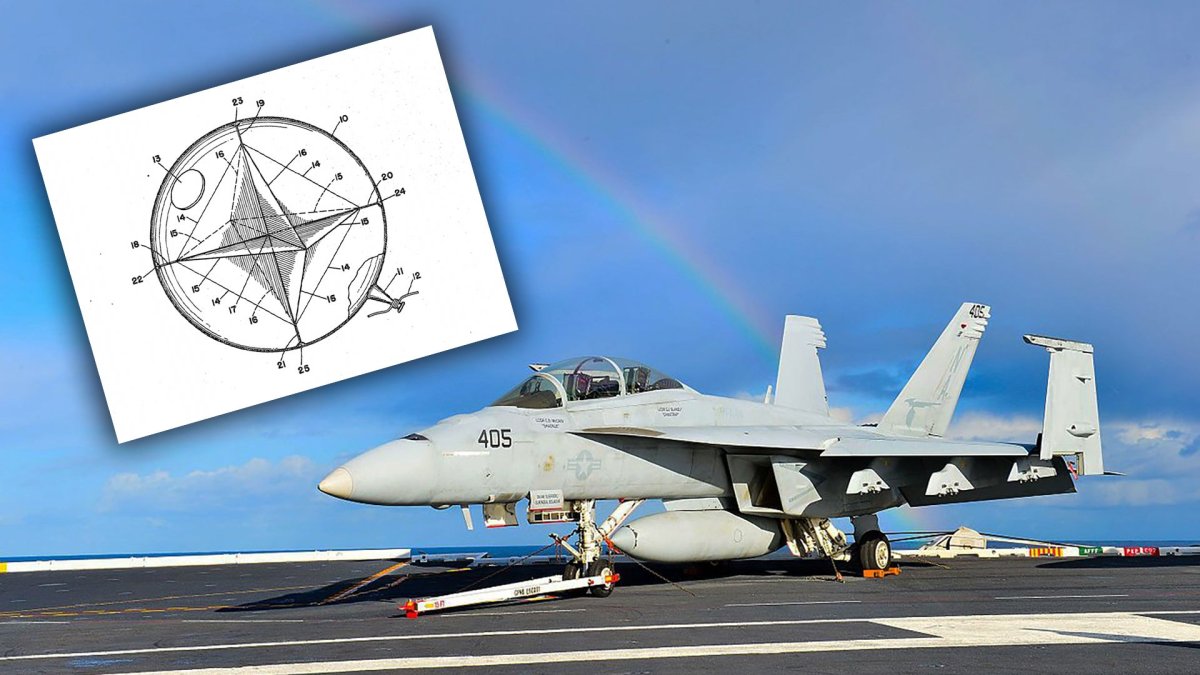
The description given of objects involved in numerous close UFO encounters with Navy pilots off America’s eastern seaboard during the 2014-2015 timeframe is akin to a ‘beachball’ or orb with a cube suspended inside of it with the cube’s corners touching or nearly touching its edges. This sounds amazingly bizarre and is more reminiscent of what we would expect from a sci-fi movie circa the 1980s than the classic flying saucer or even the large ‘Tic Tac’ that Navy pilots encountered back in 2004, but to me, it also sounded eerily familiar.
When I thought of round orbs with cubes inside them, balloons and radar reflector devices came immediately to mind. I began hashing out this possibility with my colleague Joseph Trevithick shortly after the reports came to light. The reality is that traditional high-altitude balloons and radar reflectors already go hand-in-hand.
Because a high-altitude balloon doesn’t have much, if any, of a radar cross-section, metallic radar reflectors, which come in a variety of geometric shapes, are strung below its gas envelope, thus providing a radar return so that it can be tracked. The combination can look pretty bizarre in and of itself and they are cumbersome and clumsy arrangements . But couldn’t this be simplified for more conducive deployment and better aerodynamics by just suspending the reflector inside the balloon itself? A similar arrangement is used for radar reflectors that float on the water or are strung up on ships, but what about one that has to travel through the atmosphere?
Just as I thought, an answer to that question has already been proposed. After searching sporadically over a number of days for what I envisioned in my mind, I found just that in U.S. Patent #2,463,517 , titled “Airborne Corner Reflector.”
Airborne Corner Reflector., USPTO
The patent was filed way back in 1945 and was granted in 1949. It is alarmingly similar in appearance to what the pilots had reported seeing multiple times over the Atlantic Ocean. In fact, a near miss encounter with one of these objects as described by Navy Super Hornet pilot Ryan Graves states that the object was likely standing still, floating in the air, when the Super Hornet blasted by at a too close for comfort distance. In other words, it wasn’t making any extreme performance maneuvers while within visual range. Instead, it was acting like, well, a balloon.
Hear Ryan Graves describe the encounter in a clip from History Channel’s To The Stars Academy -helmed show Unidentified :
Other statements from Graves and a squadronmate have pointed to the fact that these objects can stay in the air for many hours at a time. This is a characteristic also possessed by a balloon of some sort. Even the perceived threat from a collision with one of the objects and the Navy’s lack of interest in dealing with it at the time wouldn’t be as surprising as it is now if they were indeed balloons. Weather balloons and other high-altitude balloons are launched into the skies daily and fly among airliners without the ability to track or avoid them. You can read more about this reality here .
Getting back to the patent in question, it reads in part:
“While the invention is of paramount importance in ascending balloon assemblies, it may be used in fixed installations such as can be used for navigation. In the former case, the weight of a rain-soaked or ladened reflector adds to the drag of separate units and in the latter case the protection to the reflector afforded by the balloon multiplies its life several times. Upper wind velocities, i. e., at elevations of from 30,000 to 40,000 yards, heretofore unobtainable, may be recorded by use of the present invention. With prior devices such readings could not be obtained because these heights were not attained by the balloon and unit or at least not while it remained in recording range. As will be understood, the balloon is made of electrically non-conducting material. The device being collapsible can be packed into small space. The elasticity of the supports and/or the reflector unit itself provides for the usual expansion of the ascending balloon. The unit does not cut off the balloon into isolated sections and accordingly it may be filled with gas through a single port. I prefer to seal the balloon after the reflector unit is secured in position. The seal may be a separate piece as illustrated, or may include the intake port. A typical balloon will be about six (6) feet in diameter, although a such [sic] smaller or larger one may be used. The points of the reflector surfaces are joined by rubber bands, as by spot vulcanization. The use of rubber bands or elastic reflector surfaces is to allow for the usual expansion of a rubber balloon as it attains great height with the resulting low atmospheric pressure…”
“While the invention is of paramount importance in ascending balloon assemblies, it may be used in fixed installations such as can be used for navigation. In the former case, the weight of a rain-soaked or ladened reflector adds to the drag of separate units and in the latter case the protection to the reflector afforded by the balloon multiplies its life several times. Upper wind velocities, i. e., at elevations of from 30,000 to 40,000 yards, heretofore unobtainable, may be recorded by use of the present invention. With prior devices such readings could not be obtained because these heights were not attained by the balloon and unit or at least not while it remained in recording range. As will be understood, the balloon is made of electrically non-conducting material. The device being collapsible can be packed into small space.
The elasticity of the supports and/or the reflector unit itself provides for the usual expansion of the ascending balloon. The unit does not cut off the balloon into isolated sections and accordingly it may be filled with gas through a single port. I prefer to seal the balloon after the reflector unit is secured in position. The seal may be a separate piece as illustrated, or may include the intake port. A typical balloon will be about six (6) feet in diameter, although a such [sic] smaller or larger one may be used. The points of the reflector surfaces are joined by rubber bands, as by spot vulcanization. The use of rubber bands or elastic reflector surfaces is to allow for the usual expansion of a rubber balloon as it attains great height with the resulting low atmospheric pressure…”
What’s most interesting is how it describes the ability to be packed into a small space. Being able to launch something just like this in a pre-packaged, all-up canister from a submarine—especially a submerged one—would be highly beneficial. Today, submarines can release canisters to the surface that deploy small aerial drones and it is even possible that balloons could be released from very shallow depths without the use of a canister of any type. Regardless, there is actually a historic precedent for clandestine operations where submarines launched balloons carrying radar reflectors as part of intelligence gathering operations.
Documents released by the Central Intelligence Agency describe submarine-launched balloon tests that were conducted by the CIA and the USAF as far back in 1955. By 1963, submarines were executing complex, high-stakes, and secretive operations to gauge the abilities of enemy air defense systems by launching radar reflector-toting balloons. In the awesome book Lockheed Blackbird: Beyond the Secret Missions , one of these missions is described in remarkable and highly relevant detail.
A-12 Oxcart landing at Groom Lake. , Lockheed Martin
The A-12 Oxcart —the CIA’s precursor to the USAF legendary SR-71 Blackbird—possessed extreme speed and the first stealthy features ever intentionally deployed on an operational combat aircraft. But low-observable (stealth) design was in its infancy and the Skunk Works and the CIA needed a way to really gauge just how survivable the A-12 would be against the latest and greatest Soviet radar systems. The rest is history:
“During the Cuban Missile Crisis, the US intelligence community had monitored the construction of no less than 19 SA-2 SAM sites on the island and these provided the CIA, together with Oxcart [the codename for the A-12 spy plane program] planners, an ideal opportunity to determine the sensitivity of its associated radar receiver. One night, a US Navy destroyer equipped with a Palladium transmitter positioned itself beyond the detection range of a Soviet “Tall King” A-band early warning radar situated near Havana. With its antenna protruding just above the horizon the destroyer produced a signal that appeared to be emanating from a US fighter out of Key West, making a high-speed dash towards the capital, Havana. At a predetermined time, a US Navy submarine surfaced near Havana Bay, just long enough to time-releases a series of balloons carrying radar reflectors of varying sizes. The idea was that having detected the ‘aircraft’, the Soviets would switch on SA-2 target tracking radars in preparation for engaging the target. Release of the balloons ahead of the ‘target’ would produce a number of returns, of which the smallest reported would present the highest level of radar sensitivity. The operation worked like clockwork. Cuban interceptors were also scrambled to hunt down the ‘intruder’, and when one of their pilots told his ground controlled intercept (GCI) controller that he had acquired the ‘target’ on his radar, the technician on the destroyer flicked a switch and the ‘US fighter’ disappeared. After analyzing the intelligence data collected from this operation and by other means, the CIA’s concluded that Soviet radar capability would indeed be able to track and ‘lock on’ to an Oxcart, despite the aircraft’s radar attenuating design features. Despite these discouraging findings, flight test continued.”
“During the Cuban Missile Crisis, the US intelligence community had monitored the construction of no less than 19 SA-2 SAM sites on the island and these provided the CIA, together with Oxcart [the codename for the A-12 spy plane program] planners, an ideal opportunity to determine the sensitivity of its associated radar receiver.
One night, a US Navy destroyer equipped with a Palladium transmitter positioned itself beyond the detection range of a Soviet “Tall King” A-band early warning radar situated near Havana. With its antenna protruding just above the horizon the destroyer produced a signal that appeared to be emanating from a US fighter out of Key West, making a high-speed dash towards the capital, Havana.
At a predetermined time, a US Navy submarine surfaced near Havana Bay, just long enough to time-releases a series of balloons carrying radar reflectors of varying sizes. The idea was that having detected the ‘aircraft’, the Soviets would switch on SA-2 target tracking radars in preparation for engaging the target. Release of the balloons ahead of the ‘target’ would produce a number of returns, of which the smallest reported would present the highest level of radar sensitivity.
The operation worked like clockwork. Cuban interceptors were also scrambled to hunt down the ‘intruder’, and when one of their pilots told his ground controlled intercept (GCI) controller that he had acquired the ‘target’ on his radar, the technician on the destroyer flicked a switch and the ‘US fighter’ disappeared.
After analyzing the intelligence data collected from this operation and by other means, the CIA’s concluded that Soviet radar capability would indeed be able to track and ‘lock on’ to an Oxcart, despite the aircraft’s radar attenuating design features.
Despite these discouraging findings, flight test continued.”
It is unclear if the successful espionage tactics used in this operation became more commonplace later on as enemy air defense systems grew more complex and capable. It would be strange to imagine that it wouldn’t have, but the world of submarine warfare is a dark and murky domain that is shrouded in extreme secrecy.
Fast forward to today and modern submarines have highly advanced electronic intelligence gathering capabilities —it’s a primary mission set that is often overlooked or misunderstood by the public. At the same time, they don’t really have a way to stimulate enemy air defenses organically in order to record these emissions and even communications that go along with them without surfacing, and even that is speculative and based on what we know about the 1963 operation. Being able to deploy balloons with various sized radar reflectors while submerged could be a relatively low tech, but highly effective way of doing this. By sneaking in or near enemy territory, releasing these devices under the right weather conditions, and raising their low-observable electronic intelligence gathering masts, they could theoretically improve the quality of the intelligence gathered remarkably.
In addition, submarines could deploy these air defenses-stimulating balloons within enemy territory during operations that are executed in cooperation with other assets. These could include strategic surveillance aircraft operating at standoff ranges, or stealthy reconnaissance aircraft operating at closer ranges, either of which could better soak-up radar emissions and communications from an enemy’s air defense network over a broad area. Leveraging space-based capabilities is also another possibility. The submarine’s ability to do so is more localized as it is limited by the distance to the horizon in relation to its electronic intelligence gathering mast’s height, at least when it comes to detecting land and surface-based air defense-related emissions. Under this concept, the submarine would just be a delivery system for the airborne reflectors and could maintain maximum stealth at all times.
USS Hawaii transits Tokyo Bay. Virginia class submarines are just as much underwater spies as nothing else. , USN
Regardless, it is possible that the mission that occurred in 1963 in support of the CIA’s A-12 program was a progenitor of more mature capabilities that are in existence today, or maybe the tactic has been recently borrowed out of the intel community’s historic playbook. Testing how sensitive an enemy’s air defense capabilities actually are, let alone what the exact ‘electronic fingerprints’ are of its individual components and cataloging their geolocations, is far more important now than it was in 1963. Such intelligence would be extremely valuable, especially in an age of stealth technology where knowing exactly what your foe’s electronic order of battle is and what their integrated air defense system’s strengths and weaknesses are at any given time is absolutely key for the complex mission planning that allows assets to successfully penetrate enemy airspace and survive to do it again the next day.
Paired with modern materials science, one can imagine just how easily deployable and effective these balloons could be today. Radar reflector equipped balloons that are capable of being clandestinely launched from below the waves could also work in tandem with other similar balloons that carry small expendable electronic warfare payloads aloft instead of radar reflectors. These would confuse stimulated enemy radars even more and could potentially produce multiple ghost radar returns that exhibit extreme performance on a radar operator’s scopes. In other words, the large formations as described by radar operators in some of these encounters could be a mix of electronic warfare and radar reflector payload-carrying balloons. Such a capability could be used during a time of way to distract the enemy as well as for intelligence gathering.
In fact, during the Nimitz incident in 2004 , a bunch of targets appeared on radar over the Channel Islands and progressed south towards the carrier group at the speed of a Cessna, but at high altitudes, with some of those targets quickly dropping to sea level in an instant before shooting back up. Recently, I looked into a chaff cloud that originated from this exact locale and progressed to the same exact area where the Nimitz was operating at a speed of around 100-110 knots. The discovered the high velocity was due to the jetstream that was positioned directly overhead and pulling the mysterious cloud along at an impressive clip. The same could have been the case for a group of balloons launched during the Nimitz Carrier Strike Group’s training back in 2004.
In addition, the targets that appeared during the Nimitz encounters actively jammed the radars of fighter aircraft. Once again, this may have been an electronic countermeasures payload on some of these devices.
With this in mind, is it possible that what Nimitz Carrier Strike Group radar operators saw was a bunch of radar reflector and/or electronic warfare payload-carrying balloons? It seems at least worth considering, especially considering the alternative explanations.
Obviously, this doesn’t explain the Tic Tac encounter with Super Hornet pilots in any way, but they could be mutually exclusive events or were part of a coordinated event of some type to test multiple clandestine technologies against the very best air defense capabilities on the planet at the time.
Regardless of the Nimitz event, a hypothetical picture is emerging of what could be an extremely useful classified ecosystem of capabilities and tactics that could be employed to actively mine critical info on air defense systems located in an enemy’s own backyard or even distract the same enemy’s air defenses during a time of war. And here’s the catch—such a capability may not belong to the U.S. alone, or even at all, at least in current times.
It could belong to an adversary who needs a way to collect critical intelligence on American radar systems in areas that their most capable systems frequent for training. This is particularly relevant when it comes to observing a carrier strike group during spin-up operations before deployment and especially those that are packing new advanced air defense hardware, which was both the case during the Tic Tac incident in 2004 and some of the encounters in 2014-2015. You can read more about this peculiar similarity in this past exclusive of ours .
Diving deeper into our patent search, we discovered another balloon concept that was far more advanced—one that could be able to be actively controlled and make abrupt maneuvers.
U.S. Patent #7341224B1, which was filed in 2004 and awarded in 2008, describes a Miniature Robot Surveillance Balloon that has thrusters to control its flightpath and can carry an electrical-powered payload aloft.
Miniature Robot Surveillance Balloon, USPTO
The patent reads in part:
A miniature surveillance balloon system is described that can be used in military and public safety situations for real-time observations. They are low-cost and expendable, and typically are deployed in clusters. Balloons may act individually or alternately clusters may act robotically (in unison) without command input at times. Balloon systems may be deployed by dropping from aircraft or by some form of artillery or rocket launch mechanism. In some optional embodiments, balloons may have thruster mechanisms to facilitate lateral movement. Balloons may also be used individually or in clusters as a weapons system. … In general, the balloon system may be encouraged to travel in the vertical direction by releasing gas from the bag to descend and by either injecting gas from the compressed gas cylinder and/or jettisoning weight to ascend. The balloon system may optionally include some form of directional thrusters to allow it to travel in a specific horizontal direction and/or travel in a vertical direction at a rate faster than the effects of lift and weight would allow. Thrusters may be provided by solid rocket propellant, or alternately by miniature engines that burn hydrogen gas from the bag or from the gas cylinder.
A miniature surveillance balloon system is described that can be used in military and public safety situations for real-time observations. They are low-cost and expendable, and typically are deployed in clusters. Balloons may act individually or alternately clusters may act robotically (in unison) without command input at times. Balloon systems may be deployed by dropping from aircraft or by some form of artillery or rocket launch mechanism.
In some optional embodiments, balloons may have thruster mechanisms to facilitate lateral movement. Balloons may also be used individually or in clusters as a weapons system.
In general, the balloon system may be encouraged to travel in the vertical direction by releasing gas from the bag to descend and by either injecting gas from the compressed gas cylinder and/or jettisoning weight to ascend. The balloon system may optionally include some form of directional thrusters to allow it to travel in a specific horizontal direction and/or travel in a vertical direction at a rate faster than the effects of lift and weight would allow. Thrusters may be provided by solid rocket propellant, or alternately by miniature engines that burn hydrogen gas from the bag or from the gas cylinder.
The patent for the swarming balloons goes on to describe its fuel cell, data-link, and other components that are quite interesting.
We have no idea if something like this was ever actually developed, but it is another good reminder that somewhat exotic applications for older technological concepts could result in capabilities that seem alien at first glance. And really, that is the beauty of these balloon concepts, they have a cover story built-in—they would appear somewhat out of this world to even a trained observer. Throw in an LED light and you are talking about something that can look extremely strange, especially to a fighter pilot moving past it at high speed. Its small size would also make it hard to spot in the first place and depending on its radar reflector configuration, it could exhibit a highly variable radar cross-section.
If anything else, a submarine-launched balloon system designed to catalyze clandestine electronic intelligence gathering is a remarkably creative, but obscure concept that existed nearly 60 years ago. Does it explain every aspect of every detail of every incident Navy personnel have described over the last 15 years? No. But nothing else does without jumping to some extremely reality-warping conclusions. At the same time, as I have stressed repeatedly, it is entirely possible, if not probable, that there isn’t a monolithic answer to the UFO question and that multiple truths exist regarding the topic as a whole and even regarding the individual cases that are making headlines today.
F/A-18F Super Hornet. , USN
In the end, we have to look at every single possibility and evaluate each one of them with an open mind. I promised my readers that I would dig as deep as possible to find any potential existing technological answers that could address even parts of what highly-trained and credible witnesses are seeing, regardless of what or whose narrative it may fit. At this time, without going into the well-established and frankly, at this point, still relevant theories that include government cover-ups of world-changing technologies or even craft visiting the Earth from other worlds, this is the closest I have come to a valid answer.
And yes, I do realize that even implying that what people describe as unexplained objects could be ‘balloons’ is highly inconvenient considering the stigma surrounding that explanation. But in this case, that doesn’t make it any less worthy of examination considering we aren’t talking about some garden variety weather balloons here and there would be a real reason for any military power to keep such a capability secret. The fact that there is an actual precedent for employing a similar concept secretly during the Cold War also adds significant weight to the possibility.
In the end, that’s all this is, a possibility. One of a number to mull over as we all continue on what has become an increasingly historic and bizarre quest for the truth.
What do you think? Let us know in the comments below.
Contact the author: Tyler@thedrive.com
Comments couldn’t be loaded. Please refresh the page.
更新于美国东部时间2019年12月1日凌晨5:53
2014年至2015年初,美国东海岸发生了一系列海军飞行员与不明飞行物(UFO)的离奇遭遇事件,此后,《战区》栏目开始寻找任何可能的解释,以解释至少部分事件的发生,而不仅仅是那些离奇的起源或极其先进的技术。过去一个月,我们发现了一种值得一提的可能性。这种可能性并非反重力推进或来自太空的飞行器,而是——仅仅是一种可能性——与特制的雷达反射气球和潜艇有关,并且与一种鲜为人知的电子情报收集概念的历史先例有关,该概念最早出现于冷战最激烈的时期之一。
2014年至2015年间,美国东海岸发生多起海军飞行员近距离遭遇不明飞行物事件,相关描述称,这些物体类似于一个“沙滩球”或球体,内部悬浮着一个立方体,立方体的角与球体边缘接触或几乎接触。这听起来极其怪异,更像是上世纪80年代科幻电影里的场景,而不是经典的飞碟,甚至也不是海军飞行员在2004年遇到的大型“Tic Tac”形状的物体。但对我而言,这听起来却又似曾相识。
当我想到内部装有立方体的圆形球体时,脑海中立刻浮现出气球和雷达反射器。相关报道出现后不久,我便开始与同事约瑟夫·特雷维西克探讨这种可能性。事实上,传统的高空气球和雷达反射器早已密不可分。
由于高空气球的雷达反射截面很小(甚至可以忽略不计),因此需要在其气囊下方悬挂各种几何形状的金属雷达反射器,以产生雷达回波,从而实现对高空气球的追踪。这种组合本身看起来就相当奇特,而且装置笨重不堪。但是,如果将反射器直接悬挂在气球内部,岂不是可以简化装置,使其更易于部署并具有更好的空气动力学性能吗?类似的装置也用于漂浮在水面上或悬挂在船上的雷达反射器,但对于需要在大气层中飞行的反射器来说,又该如何实现呢?
正如我所料,这个问题已经有了答案。经过几天的断断续续的搜索,我终于在美国专利号 2,463,517 中找到了我脑海中设想的东西,该专利名为“机载角反射器”。
机载角反射器,美国专利商标局
这项专利早在1945年就已提交申请,并于1949年获得批准。它的外观与飞行员多次在大西洋上空目睹的物体惊人地相似。事实上,海军超级大黄蜂战斗机飞行员瑞恩·格雷夫斯曾描述过一次与此类物体的近距离接触:当时,超级大黄蜂战斗机以近到令人不安的距离呼啸而过,而该物体很可能静止不动,漂浮在空中。换句话说,在目视范围内,它并没有进行任何极限机动。相反,它就像一个气球一样静止不动。
在历史频道《星际学院》节目“不明身份”的片段中,听听瑞恩·格雷夫斯如何描述这次遭遇:
格雷夫斯和一位中队战友的其他证词也指出,这些物体可以在空中停留数小时之久。某种气球也具备这种特性。如果这些物体真的是气球,那么即使当时人们认为与这些物体相撞会构成威胁,而海军却对此漠不关心,也就不像现在这样令人惊讶了。气象气球和其他高空气球每天都在升空,它们在客机之间穿梭飞行,而人们却无法追踪或避开它们。您可以在这里阅读更多相关信息。
回到这项专利本身,其部分内容如下:
“本发明对于上升气球组件至关重要,但也可用于固定装置,例如导航装置。在前一种情况下,被雨水浸湿或装载重物的反射器的重量会增加独立单元的阻力;而在后一种情况下,气球对反射器的保护可使其使用寿命延长数倍。利用本发明,可以记录此前无法获得的高空风速,即30,000至40,000码高度的风速。使用先前的设备无法获得此类读数,因为气球和装置无法达到这些高度,或者至少无法在记录范围内达到这些高度。如前所述,气球由不导电的材料制成。该装置可折叠,因此可以压缩到很小的空间。支撑件和/或反射器单元本身的弹性足以适应上升气球的正常膨胀。该装置不会将气球分割成孤立的部分,因此可以通过单个充气口进行充气。端口。我倾向于在反射器单元固定到位后再密封气球。密封件可以是如图所示的独立部件,也可以包含进气口。典型的气球直径约为六(6)英尺,但也可以使用更小或更大的气球。反射面的尖端通过橡皮筋连接,类似于点硫化工艺。使用橡皮筋或弹性反射面是为了适应橡胶气球在高空飞行时因大气压力降低而产生的正常膨胀……
“本发明对于上升气球组件至关重要,但也可用于固定装置,例如导航装置。在前一种情况下,被雨水浸透或装载重物的反射器的重量会增加独立单元的阻力;而在后一种情况下,气球对反射器的保护可使其使用寿命延长数倍。本发明能够记录此前无法获取的高空风速,即30,000至40,000码高度的风速。使用先前的设备无法获得此类读数,因为气球和装置无法达到这些高度,或者至少无法在记录范围内达到这些高度。如前所述,该气球由不导电的材料制成。该装置可折叠,因此可以压缩收纳。”
支撑件和/或反射器单元本身的弹性足以适应上升气球的正常膨胀。该单元不会将气球分割成独立的节段,因此可以通过单个端口充气。我倾向于在反射器单元固定到位后密封气球。密封件可以是如图所示的独立部件,也可以包含进气口。典型的气球直径约为六(6)英尺,但也可以使用更小或更大的气球。反射面的尖端通过橡皮筋连接,类似于点硫化工艺。使用橡皮筋或弹性反射面是为了适应橡胶气球在高空低气压环境下的正常膨胀……
最有趣的是它对小型化能力的描述。如果能从潜艇(尤其是水下潜艇)发射这种预先包装好的、完整的容器,将大有裨益。如今,潜艇可以向水面释放容器,用于部署小型无人机;甚至有可能在极浅的深度释放气球,而无需使用任何类型的容器。无论如何,历史上确实有潜艇发射携带雷达反射器的气球进行情报收集行动的先例。
中央情报局公布的文件描述了早在1955年,中情局和美国空军就曾进行过潜艇发射气球的测试。到了1963年,潜艇已经开始执行复杂、高风险且高度保密的行动,通过发射携带雷达反射器的气球来评估敌方防空系统的能力。在精彩的著作《洛克希德黑鸟:秘密任务之外》中,对其中一次任务进行了详尽而又极具参考价值的描述。
A-12“牛车”攻击机在格鲁姆湖着陆。,洛克希德·马丁公司
A-12“牛车”——美国中央情报局为美国空军传奇的SR-71“黑鸟”侦察机研制的前身——拥有极高的速度,并且首次在作战飞机上应用了隐身技术。但当时的低可探测性(隐身)设计尚处于起步阶段,臭鼬工厂和中央情报局需要一种方法来真正评估A-12在面对苏联最新最先进的雷达系统时的生存能力。剩下的故事,大家都知道了:
在古巴导弹危机期间,美国情报部门监测到岛上至少有19个SA-2地空导弹阵地正在建设中。这些阵地为中央情报局(CIA)和“牛车”(A-12侦察机项目的代号)策划者提供了一个绝佳的机会,来测试其配套雷达接收器的灵敏度。一天晚上,一艘配备“钯”式发射机的美国海军驱逐舰驶入哈瓦那附近苏联“高王”A波段预警雷达的探测范围之外。驱逐舰的天线略高于地平线,发出一个信号,该信号似乎来自一架从基韦斯特起飞、高速冲向首都哈瓦那的美国战斗机。在预定的时间,一艘美国海军潜艇浮出水面,在哈瓦那湾附近停留足够长的时间,释放出一系列携带不同尺寸雷达反射器的气球。其目的是,苏联在探测到“飞机”后,会启动SA-2目标跟踪雷达,准备攻击目标。气球提前释放。目标会产生一系列回波,其中最小的回波代表雷达灵敏度最高。整个行动进行得非常顺利。古巴拦截机也紧急升空追击“入侵者”,当其中一名飞行员向地面控制拦截(GCI)管制员报告雷达已锁定“目标”时,驱逐舰上的技术人员拨动了一个开关,“美国战斗机”便消失了。中央情报局分析了从这次行动和其他途径收集到的情报数据后得出结论:尽管“牛车”战斗机采用了雷达衰减设计,但苏联的雷达确实能够追踪并“锁定”它。尽管有这些令人沮丧的发现,飞行测试仍在继续。
“在古巴导弹危机期间,美国情报界监测到该岛上至少有 19 个 SA-2 地空导弹阵地的建设,这为中央情报局和“牛车”(A-12 侦察机计划的代号)策划者提供了一个理想的机会,来确定其相关雷达接收器的灵敏度。
一天晚上,一艘配备钯式发射机的美国海军驱逐舰驶入苏联“高王”A波段预警雷达(位于哈瓦那附近)探测范围之外。驱逐舰的天线略高于地平线,发出的信号看起来像是来自一架从基韦斯特起飞、正高速冲向首都哈瓦那的美国战斗机。
在预定时间,一艘美国海军潜艇在哈瓦那湾附近浮出水面,短暂停留后释放了一系列携带不同尺寸雷达反射器的气球。其目的是让苏联方面在探测到“飞机”后,启动SA-2目标跟踪雷达,准备攻击目标。在“目标”到达之前释放这些气球会产生一系列雷达反射信号,其中最小的信号代表了最高的雷达灵敏度。
行动进行得非常顺利。古巴拦截机也紧急升空追击“入侵者”,当其中一名飞行员向地面控制拦截(GCI)管制员报告说他在雷达上发现了“目标”时,驱逐舰上的技术人员拨动了一个开关,“美国战斗机”就消失了。
在分析了从这次行动和其他途径收集到的情报数据后,中央情报局得出结论:尽管“牛车”飞机采用了雷达衰减设计,但苏联的雷达能力确实能够跟踪并“锁定”它。
尽管发现了这些令人沮丧的结果,但飞行测试仍在继续。
目前尚不清楚,随着敌方防空系统日益复杂和强大,此次行动中成功的间谍策略是否后来变得更加普遍。如果说没有普遍采用,那才奇怪,但潜艇战的世界是一个黑暗而神秘的领域,始终笼罩在极度的保密之中。
如今,现代潜艇拥有高度先进的电子情报收集能力——这是一项常被公众忽视或误解的主要任务。与此同时,它们实际上并没有办法在不浮出水面的情况下,主动干扰敌方防空系统,从而记录这些信号以及与之相关的通信。即便如此,这种可能性也只是基于我们对1963年行动的了解而推测出来的。在水下部署带有不同尺寸雷达反射器的气球或许是一种技术含量相对较低但非常有效的方法。通过潜入或靠近敌方领土,在合适的天气条件下释放这些装置,并升起低可探测性的电子情报收集桅杆,理论上可以显著提高情报收集的质量。
此外,潜艇可以在与其它作战力量协同作战时,在敌方领土内部署这些用于干扰防空系统的气球。这些协同作战力量包括远距离作战的战略侦察机,或近距离作战的隐形侦察机,它们都能更好地吸收敌方防空网络在大范围内的雷达辐射和通信信号。利用天基作战能力也是一种可能。潜艇利用天基作战能力的能力较为局限,因为其探测能力受限于电子情报收集桅杆的高度和地平线距离,至少在探测陆基和水面防空相关辐射方面是如此。在这种设想下,潜艇仅作为空中反射器的投放平台,并能始终保持最大限度的隐蔽性。
夏威夷号巡洋舰穿越东京湾。弗吉尼亚级潜艇与其说是潜艇,不如说是水下间谍。——美国海军
无论如何,1963年为支持中央情报局A-12计划而执行的任务,很可能是如今更成熟能力的雏形,或者这种战术是近期从情报界的历史经验中借鉴而来。如今,测试敌方防空能力的敏感程度,更不用说获取其各个组件的精确“电子指纹”并记录其地理位置,远比1963年重要得多。此类情报极其宝贵,尤其是在隐身技术时代,准确掌握敌方的电子作战序列及其一体化防空系统在任何特定时刻的优势和劣势,对于复杂的任务规划至关重要,而这些规划能够确保行动力量成功突破敌方空域,并在第二天再次执行任务。
结合现代材料科学,不难想象这些气球如今部署起来会多么便捷高效。配备雷达反射器的气球可以从水下秘密发射,还可以与其他携带小型一次性电子战载荷(而非雷达反射器)的类似气球协同作战。这些气球能够进一步干扰敌方雷达,并可能产生多个虚假雷达回波,在雷达操作员的显示器上呈现出极高的性能。换句话说,雷达操作员在某些遭遇战中描述的大型编队,很可能是由携带电子战载荷和雷达反射器载荷的气球组成的混合体。这种能力可以在交战间隙用于分散敌人注意力以及情报收集。
事实上,在2004年的“尼米兹”号事件中,一大群目标出现在海峡群岛上空的雷达屏幕上,并以塞斯纳飞机的速度向南移动,但飞行高度很高,其中一些目标瞬间下降到海平面,然后又迅速上升。最近,我研究了一团源自同一地点并以大约100-110节的速度移动到“尼米兹”号航母作战区域的箔条云。我发现,如此高的速度是由于正上方的急流以惊人的速度牵引着这团神秘的箔条云前进。同样的情况也可能发生在2004年“尼米兹”号航母打击群训练期间放飞的一组气球上。
此外,在尼米兹号航母遭遇战中出现的目标还主动干扰了战斗机的雷达。这很可能是某些目标搭载的电子对抗载荷。
考虑到这一点,尼米兹号航母打击群的雷达操作员看到的会不会是一堆携带雷达反射器和/或电子战有效载荷的气球?这至少值得考虑,尤其是在考虑到其他解释的情况下。
显然,这并不能解释 Tic Tac 与超级大黄蜂飞行员的遭遇,但它们可能是互不相干的事件,也可能是某种协调事件的一部分,目的是测试多种秘密技术对抗当时地球上最先进的防空能力。
撇开尼米兹事件不谈,一种假想的图景正在浮现:一个极其有用的机密能力和战术体系,可以用来主动挖掘敌方后院防空系统的关键信息,甚至在战争时期干扰敌方的防空系统。而关键在于——这种能力可能并非美国独有,甚至可能根本不属于美国,至少在目前是这样。
它可能属于某个敌方,该敌方需要一种手段来收集有关美国雷达系统在训练区域的关键情报,尤其是在其最先进系统经常进行训练的区域。这在部署前对航母打击群进行预演时尤为重要,特别是对于那些配备了新型先进防空设备的航母打击群而言,这种情况在2004年的“Tic Tac”事件以及2014-2015年的一些遭遇战中都曾出现过。您可以在我们之前的独家报道中阅读更多关于这种奇特相似之处的内容。
深入进行专利检索后,我们发现了一种更先进的气球概念——一种可以主动控制并进行突然机动的气球。
美国专利号 7341224B1 于 2004 年提交申请,并于 2008 年获得授权,该专利描述了一种微型机器人监视气球,该气球带有推进器以控制其飞行路径,并且可以携带电动有效载荷升空。
微型机器人监控气球,美国专利商标局
专利文件中部分内容如下:
本文介绍了一种微型监视气球系统,可用于军事和公共安全领域的实时观测。该系统成本低廉且为消耗品,通常成组部署。气球可以单独行动,也可以交替地以机器人方式(协同)行动,有时无需指令输入。气球系统可以通过飞机投放,也可以通过某种火炮或火箭发射装置进行部署。在一些可选实施例中,气球可以配备推进器以辅助横向移动。气球也可以单独或成组用作武器系统。……通常,可以通过释放气囊中的气体使气球系统垂直下降,并通过注入压缩气瓶中的气体和/或抛弃配重使气球系统上升。气球系统还可以选择性地配备某种形式的定向推进器,使其能够沿特定水平方向移动和/或以高于升力和重力作用的速度垂直移动。推进器可以由固体火箭推进剂提供,或者也可以由燃烧气袋或气瓶中氢气的微型发动机提供。
本文介绍了一种可用于军事和公共安全领域的微型监视气球系统,用于实时观测。该系统成本低廉且可消耗,通常以集群形式部署。气球可以单独行动,也可以轮流行动;有时,气球集群无需指令输入即可实现自动化(协同)行动。气球系统可以通过飞机投放,也可以通过某种火炮或火箭发射装置进行部署。
在一些可选实施例中,气球可以配备推进器机构以方便横向移动。气球也可以单独或成组用作武器系统。
通常,可以通过释放气囊中的气体使气球系统垂直下降,并通过注入压缩气瓶中的气体和/或抛弃配重使气球系统上升。气球系统还可以选择性地配备某种形式的定向推进器,使其能够沿特定水平方向运动和/或以高于升力和重力作用的速度垂直运动。推进器可以由固体火箭推进剂提供动力,也可以由燃烧气囊或气瓶中氢气的微型发动机提供动力。
该集群气球的专利还描述了其燃料电池、数据链路和其他一些非常有趣的组件。
我们无从得知类似的东西是否真的被研发出来,但这再次提醒我们,将一些老旧的技术概念应用于一些看似奇特的领域,可能会产生一些乍看之下匪夷所思的功能。而这正是这些气球概念的妙处所在:它们自带掩饰——即使是训练有素的观察者也会觉得它们超乎寻常。再加上一个LED灯,它看起来就非常怪异了,尤其是在战斗机飞行员高速飞过时。它体积小巧,本身就难以被发现,而且根据雷达反射器的配置,它的雷达反射截面也会变化很大。
如果说还有什么值得一提的话,那就是潜射气球系统——旨在促进秘密电子情报收集——是一个极具创意但却鲜为人知的概念,它存在于近60年前。它能解释海军人员在过去15年中描述的每起事件的方方面面吗?不能。但除此之外,没有任何其他解释能够做到这一点,除非得出一些极其扭曲现实的结论。与此同时,正如我反复强调的那样,UFO问题很可能并不存在一个单一的答案,关于这个话题,甚至关于如今频频登上新闻头条的个别案例,都可能存在多种真相。
F/A-18F 超级大黄蜂战斗机,美国海军
最终,我们必须审视每一种可能性,并以开放的心态评估每一种可能性。我曾向读者承诺,我会尽我所能深入挖掘,寻找任何可能存在的技术答案,以解释那些训练有素、可信的目击者所看到的现象,无论这些答案符合何种叙述或出自何人之口。目前,暂且不谈那些已被广泛接受且坦白说至今仍然适用的理论,例如政府掩盖改变世界的科技,甚至是来自其他星球的飞行器造访地球,这便是我所能找到的最接近有效答案的解释。
是的,我明白,即使只是暗示人们所说的那些无法解释的物体可能是“气球”,考虑到这种解释本身就带有污名,也是非常不妥的。但就目前的情况而言,这并不妨碍我们对此进行深入研究,因为我们讨论的并非普通的气象气球,任何军事强国都有充分的理由将这种能力保密。事实上,冷战时期曾有秘密使用类似概念的先例,这也大大增加了这种可能性。
归根结底,这仅仅是一种可能性。在我们继续这场日益离奇古怪、充满历史意义的真相探寻之旅时,这只是众多可能性之一。
你觉得怎么样?请在下方评论区留言。
联系作者:Tyler@thedrive.com
评论加载失败,请刷新页面。