More S’pore parents value non-academic development but stress over children’s future: IPS study新加坡教育政策研究所(IPS)研究显示,更多新加坡家长重视子女的非学术发展,但同时也担忧子女的未来。
More parents are arguing with their spouses over their children’s education and feeling stressed. Read more at straitstimes.com.
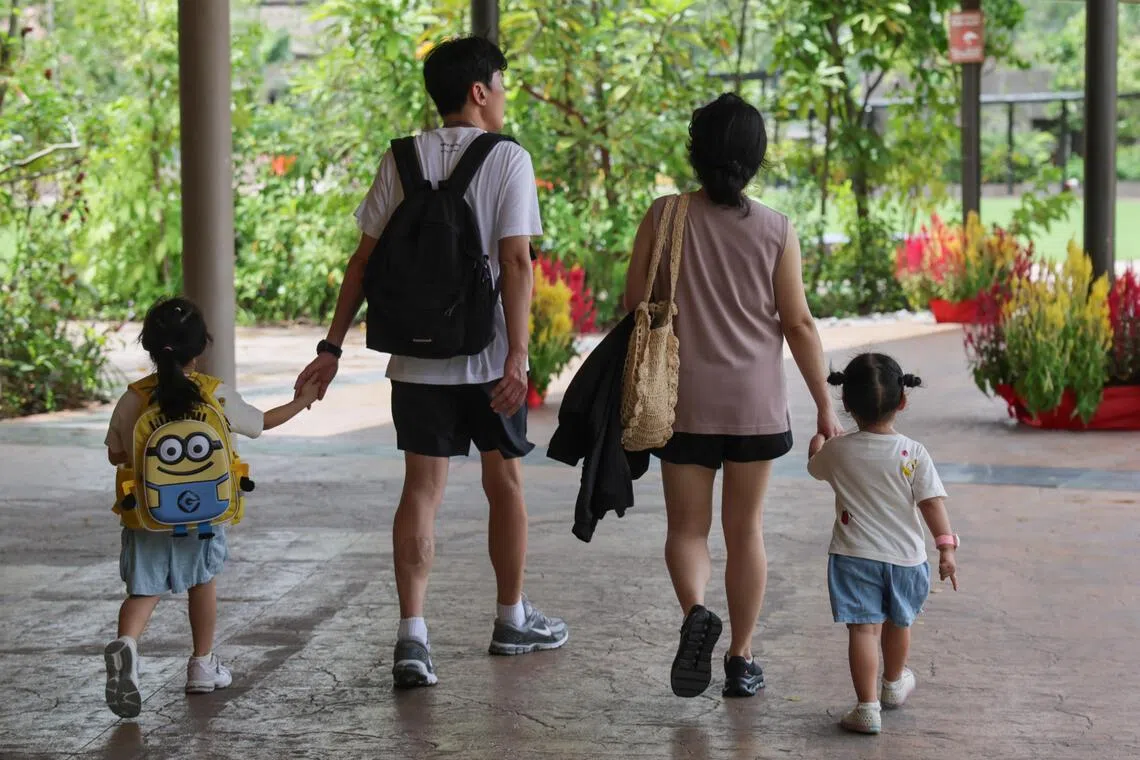
A 2026 IPS study found that while parents value non-academic development, more are stressed about their children’s future.
Published Sep 25, 2026, 05:00 PM
Updated Sep 25, 2026, 05:00 PM
More Singaporean parents value holistic development but feel increased stress and anxiety about their children’s future and education competition.
Despite education reforms like broader achievement bands and no mid-year exams, parents report unchanged or shifted stress towards long-term academic outcomes.
Parents spend more on tuition and enrichment, consider PSLE essential, but many seek further reforms to reduce stress and improve fairness.
SINGAPORE - More parents of primary school children in Singapore feel stressed and anxious about their children’s future, and whether they will fall behind in the long run.
Though most increasingly value holistic or broader development and see Singapore’s education system as among the best in the world, more than two-thirds of parents say it still causes their children unnecessary stress.
Compared to 2016, the proportion of parents who reported arguing with their spouses over their children’s education rose from 42.8 per cent to 59.7 per cent in 2026. Those who reported feeling stressed rose from 73.1 per cent to 87.9 per cent.
These were findings from a 2026 Institute of Policy Studies (IPS) study on parents’ attitudes and perceptions of Singapore’s education system from May to August. The results build on insights from its last study on the same topic in 2016.
The latest edition surveyed 1,500 parents - Singaporeans and permanent residents - between the ages of 21 and 65, who have at least one child attending a local primary school during the study period.
Mathew Mathews, the principal research fellow at IPS, said the latest study was conducted following major reforms over the past decade. These include using broader achievement bands instead of numeric T-scores for the PSLE, phasing out mid-year examinations and implementing full subject-based banding.
Yet he said these changes have not translated into significantly less pressure for families.
“This is a concern... despite the fact that we do have shifts within the education system… you still see that the stress has broadened into newer areas,” said Mathews, one of three researchers involved in the stu dy.
He was speaking on Sept 25 at a media briefing held at the IPS building at Cluny Road. The other two researchers were IPS research fellow Melvin Tay and IPS senior research fellow Teo Kay Key.
Mathew Mathews, the principal research fellow at IPS, said the latest study was conducted following major reforms over the past decade. ST PHOTO: CHONG JUN LIANG
Mathew Mathews, the principal research fellow at IPS, said the latest study was conducted following major reforms over the past decade.
ST PHOTO: CHONG JUN LIANG
“We do notice that parents are reporting less anxiety or less stress about homework, and being there to prepare the child for examinations,” said Mathews, adding that these were the top concerns for parents surveyed back in 2016.
Parents now are concerned that their children are not obtaining the grades they are capable of, may lose out in the education system in the long run, and not keeping up with what is taught in school.
Though children spend less time on homework compared to ten years ago - 4.3 hours in 2026 down from 6.46 hours in 2016 - findings show that they now spend more time on tuition and enrichment outside of school.
This corresponds with higher spending in these areas. Parents in 2026 spent a median monthly sum of $500 on private tuition, compared to $242 in 2016. Similarly, spending for enrichment has risen from $48 to $260. The 2016 figures have been adjusted for inflation.
Parents say PSLE essential, but more reforms needed
While parents wanted lower-stakes assessments and broader recognition of strengths, findings show that they remain attached to familiar markers of merit and certainty.
For example, more than half of the parents said the new PSLE scoring system still contributes to significant stress for their children. It also makes it harder for them to get into the school of their choice and gauge how well they are doing against their peers, they say.
The study found that more than eight in 10 of parents view the PSLE as an important milestone for children to learn how to set goals and work hard, and consider the national examination necessary to assess students fairly.
Those living in one to three-room HDB flats felt the most positive about the PSLE, with only 4.6 per cent in favour of postponing it. On the other hand , private property owners were the least supportive of the PSLE, with 20.4 per cent wanting it postponed.
Tay said this could be because smaller households with less financial resources may feel that they are not as able to cope with change and adjusting to preparing their children for a later PSLE sitting .
The researchers said the findings reflect a wider uncertainty about the future.
Mathews said the study indicates that parental stress has shifted from immediate examination pressure to broader uncertainty about children’s longer-term educational prospects, especially in the ever-increasing global competition for jobs.
He added that many parents increasingly want both academic success and holistic development, and tensions arise when they perceive trade-offs between the two.
“Holistic development must not become an additional arena for competition,” said Mathews, adding that access to developmental opportunities should not depend disproportionately on family resources.
Elisha Tushara is a correspondent at The Straits Times, specialising in Singapore’s education landscape.
Education and schools
IPS/Institute of Policy Studies
2026 年 IPS 的一项研究发现,虽然家长重视非学术发展,但更多的家长对孩子的未来感到焦虑。
发布于2026年9月25日下午5:00
更新于2026年9月25日下午5:00
越来越多的新加坡家长重视孩子的全面发展,但同时也感到越来越大的压力和焦虑,因为他们担心孩子的未来和教育竞争。
尽管教育改革采取了更宽泛的成绩等级划分和取消期中考试等措施,但家长们反映,压力依然存在,甚至转移到了长期的学业成绩上。
家长们在补习和课外活动上花费更多,认为小学离校考试(PSLE)至关重要,但许多家长希望进行进一步改革以减轻压力并提高公平性。
新加坡——越来越多的新加坡小学生家长对孩子的未来感到压力和焦虑,担心孩子长远来看是否会落后。
尽管大多数人越来越重视全面或更广泛的发展,并将新加坡的教育体系视为世界上最好的体系之一,但超过三分之二的家长表示,新加坡的教育体系仍然给他们的孩子带来了不必要的压力。
与 2016 年相比,2026 年报告称因子女教育问题与配偶发生争吵的父母比例从 42.8% 上升至 59.7%。报告称感到压力的父母比例从 73.1% 上升至 87.9%。
这些发现来自新加坡政策研究所 (IPS) 2026 年 5 月至 8 月期间开展的一项关于家长对新加坡教育体系的态度和看法的研究。该研究结果建立在 2016 年就同一主题开展的上一项研究的成果之上。
最新版调查了 1500 名年龄在 21 岁至 65 岁之间的新加坡公民和永久居民家长,他们在调查期间至少有一个孩子在当地小学就读。
IPS首席研究员马修·马修斯表示,这项最新研究是在过去十年进行重大改革之后开展的。这些改革包括:在小学离校考试(PSLE)中使用更广泛的成绩等级划分,而不是使用数值T分数;逐步取消年中考试;以及全面实施基于科目的等级划分。
但他表示,这些变化并没有显著减轻家庭面临的压力。
“这是一个令人担忧的问题……尽管教育系统内部确实发生了一些变化……但你仍然可以看到压力已经扩展到了新的领域,”参与这项研究的三名研究人员之一马修斯说道。
他于9月25日在克鲁尼路IPS大楼举行的新闻发布会上发表了讲话。另外两位研究人员分别是IPS研究员梅尔文·泰和IPS高级研究员张凯基。
IPS首席研究员马修·马修斯表示,这项最新研究是在过去十年重大改革之后进行的。(海峡时报照片:梁崇俊)
IPS首席研究员马修·马修斯表示,这项最新研究是在过去十年进行重大改革之后开展的。
《海峡时报》照片:梁崇俊
“我们注意到,家长们反映,他们对家庭作业的焦虑或压力有所减轻,也更容易辅导孩子备考,”马修斯说,并补充说,这些是 2016 年调查中家长们最关心的问题。
家长们现在担心他们的孩子没有取得他们应有的成绩,从长远来看可能会在教育体系中处于劣势,并且跟不上学校的教学进度。
虽然与十年前相比,孩子们花在家庭作业上的时间减少了——2026 年为 4.3 小时,低于 2016 年的 6.46 小时——但调查结果显示,他们现在花在课外辅导和课外活动上的时间更多了。
这与这些领域支出增加相符。2026年,家长每月在课外辅导上的支出中位数为500美元,而2016年为242美元。同样,课外活动的支出也从48美元增加到260美元。2016年的数据已根据通货膨胀进行调整。
家长们认为小学离校考试(PSLE)至关重要,但仍需更多改革。
虽然家长们希望评估结果风险较低,并且更广泛地认可孩子的优势,但调查结果表明,他们仍然执着于熟悉的优秀和确定性的标志。
例如,超过半数的家长表示,新的小六会考评分制度仍然给他们的孩子带来了巨大的压力。他们还说,这使得孩子们更难进入理想的学校,也更难衡量自己与同龄人相比的水平。
该研究发现,超过十分之八的家长认为小学离校考试是孩子学习如何设定目标和努力学习的重要里程碑,并认为全国性考试对于公平地评估学生是必要的。
居住在一至三房式组屋的居民对小学离校考试(PSLE)持最积极态度,只有4.6%的人赞成推迟考试。另一方面,私人住宅业主对PSLE的支持度最低,20.4%的人希望推迟考试。
Tay表示,这可能是因为经济资源较少的小家庭可能觉得他们没有能力应对变化,也没有能力调整以准备孩子参加较晚的小六会考。
研究人员表示,这些发现反映了人们对未来普遍存在的不确定性。
马修斯表示,这项研究表明,父母的压力已经从眼前的考试压力转移到对孩子长期教育前景的更广泛的不确定性,尤其是在日益激烈的全球就业竞争中。
他还补充说,许多家长越来越希望孩子既取得学业上的成功,又能全面发展,但当他们意识到这两者之间存在取舍时,就会产生矛盾。
“全面发展绝不能成为额外的竞争领域,”马修斯说,并补充说,获得发展机会不应过度依赖于家庭资源。
Elisha Tushara 是《海峡时报》的记者,专门报道新加坡的教育领域。
教育和学校
IPS/政策研究所