S’pore parents spending more on tuition and enrichment; peer pressure cited as reason: Survey调查显示,新加坡家长在子女补习和课外活动上的支出增加,同辈压力是主要原因:调查显示,同辈压力是造成这一现象的原因。
Half of the parents cite peer pressure as the reason for sending their children for extra classes. Read more at straitstimes.com.
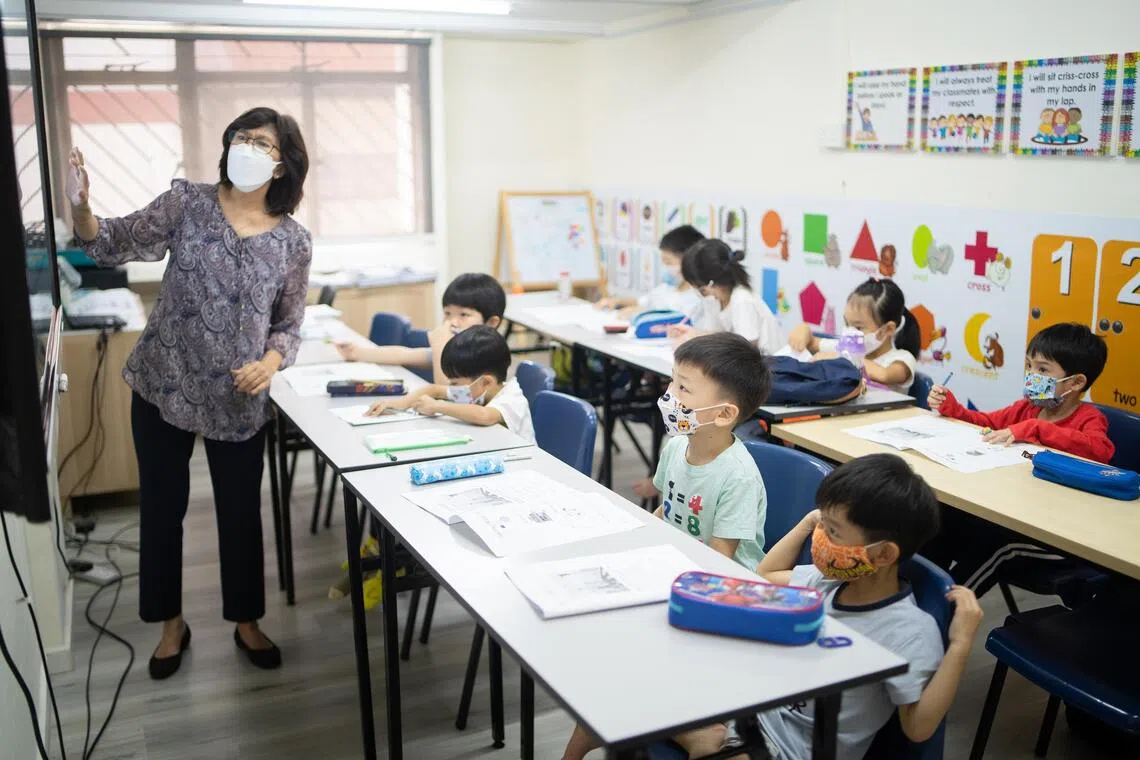
An IPS study found that although children spent less time on homework now than they did a decade ago, more time is spent on tuition and enrichment.
Published Sep 25, 2026, 05:19 PM
Updated Sep 25, 2026, 05:19 PM
Singapore parents increased spending on tuition to $500 and enrichment to $260 monthly from 2016 to 2026 despite concerns over excessive time spent on these activities.
Parents cited peer pressure and helping children reach their full potential as main reasons for extra classes; children in private homes spent more time in tuition and enrichment than those in smaller flats.
Most parents believe tuition advantages children in PSLE; while DSA is seen positively, 75.8% prefer secondary school admission based on PSLE results, valuing holistic fit and academic factors in school choice.
SINGAPORE – Families’ tuition and enrichment expenses have risen in the past decade, with those in private homes spending more money on such extra classes outside school.
Parents spent $500 monthly on private tuition in 2026, compared to $242 in 2016. Similarly for enrichment classes, spending increased from $48 to $260 during the same period. The 2016 figures have been adjusted for inflation.
They spent more in tuition and enrichment even though nearly nine in 10 parents (89.8 per cent) agreed that children in Singapore spent too much time in these areas, according to a 2026 study conducted by the Institute of Policy Studies (IPS).
Yet seven in 10 said they would spend more on tuition and enrichment, with about half citing peer pressure as a reason for sending their children for extra classes.
Parents said their main motivation for tuition was not to address their children’s weaknesses, but to help them reach their full potential.
The study also showed that tuition and enrichment time varied by housing type.
Children living in one- to three-room HDB flats spent an average of 2.53 hours a week on tuition and enrichment, compared with 5.01 hours for those in landed homes and 4.29 hours for those in condominiums or private apartments.
However, the amount of time family members spent on academic coaching did not follow the same pattern.
Parents living in one- to three-room flats spent the most time on academic coaching, at 4.50 hours a week. Those in four-room and five-room flats spent 4.12 and 3.87 hours respectively.
Academic coaching was also relatively high among condominium or private-apartment households and landed households, with parents spending 4.30 and 4.70 hours respectively.
The researchers said this suggests that greater use of paid tuition and enrichment among private-housing households does not necessarily replace academic support provided within the family.
A large majority of parents (84.9 per cent) agreed that tuition gave their children an advantage in the Primary School Leaving Examination (PSLE), while three-quarters said their children needed it to keep up with schoolwork and, more importantly, to prepare for exams.
The study was conducted from May to August 2026 and involved 1,500 Singaporeans and permanent residents aged 21 to 65 who had at least one child in a local primary school during the study period.
It builds on an IPS study in 2016 examining parents’ attitudes and perceptions of Singapore’s education system.
Although children spent more time on tuition and enrichment outside school, they spent less time on homework than they did a decade ago – 4.3 hours a week in 2026, down from 6.46 hours in 2016.
The study also examined parents’ views on schooling choices, the PSLE and the Direct School Admission (DSA) exercise.
While DSA was viewed positively by more than four in 10 parents, 75.8 per cent said they would prefer their child to enter secondary school based on PSLE results. Some 57.5 per cent said DSA was a possible option for their child and that it better recognised their child’s strengths.
When choosing schools, parents increasingly valued holistic fit, but academic signals remained important.
For primary schools, parents rated teachers who cared for students’ social and emotional development as the most important . Other factors included the history of students enrolling in reputable secondary schools, the competitiveness of the environment, the alumni network and records of good PSLE scores.
When selecting secondary schools, parents prioritised the holistic fit of the school for their child.
Factors such as character and values, discipline and the child’s own preference were rated very highly, with more than 88 per cent of parents placing importance on each of them.
Elisha Tushara is a correspondent at The Straits Times, specialising in Singapore’s education landscape.
Education and schools
IPS 的一项研究发现,虽然现在孩子们花在家庭作业上的时间比十年前少了,但他们花在补习和课外活动上的时间却更多了。
发布于 2026 年 9 月 25 日下午 5:19
更新于2026年9月25日下午5:19
尽管担心花费过多时间在这些活动上,新加坡家长在 2016 年至 2026 年期间,每月在补习上的支出增加到 500 美元,在课外活动上的支出增加到 260 美元。
家长们表示,同伴压力和帮助孩子充分发挥潜力是孩子参加课外辅导的主要原因;住在私立学校的孩子比住在小公寓里的孩子花更多的时间参加辅导和课外活动。
大多数家长认为补习对孩子在小学离校考试 (PSLE) 中更有优势;虽然直接入学计划 (DSA) 受到好评,但 75.8% 的家长更倾向于根据小学离校考试 (PSLE) 成绩录取中学,重视择校时的全面匹配度和学术因素。
新加坡——过去十年,家庭的学费和课外辅导费用有所增加,私立家庭的孩子在校外此类额外课程上的花费也更多。
2026年,家长每月在课外辅导上的花费为500美元,而2016年为242美元。同样,同期课外辅导班的支出也从48美元增加到260美元。2016年的数据已根据通货膨胀进行调整。
根据政策研究所 (IPS) 2026 年进行的一项研究,尽管近九成 (89.8%) 的家长认为新加坡的孩子在这些方面花费了太多时间,但他们仍然在补习和课外活动上花费了更多钱。
然而,十分之七的人表示他们愿意在学费和课外活动上花费更多,其中约有一半人表示,同伴压力是他们送孩子参加额外课程的原因。
家长们表示,他们让孩子上补习班的主要动机不是为了弥补孩子的不足,而是为了帮助他们充分发挥潜力。
该研究还表明,学费和课外活动时间因住房类型而异。
居住在一至三房式组屋的儿童平均每周花 2.53 小时参加补习和课外活动,而居住在有地住宅的儿童平均每周花 5.01 小时参加补习和课外活动,居住在公寓或私人住宅的儿童平均每周花 4.29 小时参加补习和课外活动。
然而,家庭成员花在学业辅导上的时间并没有遵循同样的规律。
居住在一至三房式组屋的家长每周花在孩子学习辅导上的时间最多,为 4.50 小时。居住在四房式和五房式组屋的家长分别花 4.12 小时和 3.87 小时。
在公寓或私人住宅家庭和有地住宅家庭中,学业辅导的比例也相对较高,家长分别花费 4.30 小时和 4.70 小时进行辅导。
研究人员表示,这表明,私立学校家庭更多地使用付费辅导和课外活动并不一定会取代家庭内部提供的学业支持。
绝大多数家长(84.9%)认为补习能让他们的孩子在小学离校考试(PSLE)中获得优势,而四分之三的家长表示,他们的孩子需要补习才能跟上学校的功课,更重要的是,才能为考试做好准备。
该研究于 2026 年 5 月至 8 月进行,研究对象为 1500 名年龄在 21 至 65 岁之间的新加坡公民和永久居民,他们在研究期间至少有一个孩子在当地小学就读。
它以 2016 年 IPS 的一项研究为基础,该研究调查了家长对新加坡教育体系的态度和看法。
尽管孩子们在课外辅导和课外活动上花费的时间更多,但他们花在家庭作业上的时间却比十年前少了——2026 年每周 4.3 小时,低于 2016 年的 6.46 小时。
该研究还调查了家长对择校、小学离校考试 (PSLE) 和直接入学计划 (DSA) 的看法。
虽然超过四成的家长对直接入学计划(DSA)持积极态度,但仍有75.8%的家长表示,他们更希望孩子根据小学离校考试(PSLE)成绩进入中学。约57.5%的家长认为DSA是孩子可行的选择,并且更能体现孩子的优势。
在选择学校时,家长越来越重视学校的全面匹配度,但学术成绩仍然很重要。
对于小学而言,家长们认为最重视教师对学生社交和情感发展的关注程度。其他因素包括学生以往升入知名中学的记录、学校环境的竞争程度、校友网络以及小学离校考试(PSLE)的优异成绩。
在选择中学时,家长们优先考虑学校是否全面适合自己的孩子。
性格和价值观、纪律以及孩子自身的喜好等因素都获得了很高的评价,超过 88% 的家长认为这些因素都很重要。
Elisha Tushara 是《海峡时报》的记者,专门报道新加坡的教育领域。
教育和学校