Germany unveils strategy for becoming Europe’s strongest military by 2039德国公布战略,力争在2039年成为欧洲最强大的军队
The Bundeswehr will move away from rigid hardware quotas − the number of tanks, aircraft or ships − toward a flexible, effects-based planning model.
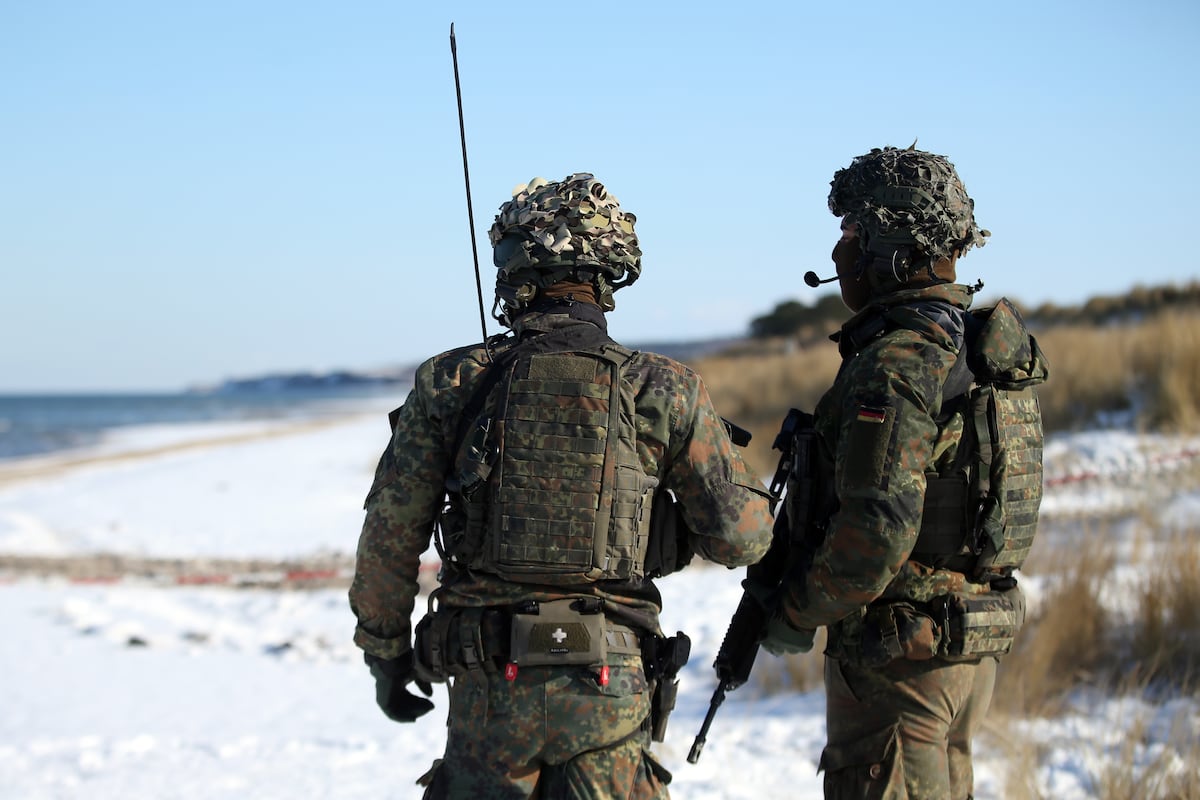
VIENNA — Germany revealed a package of foundational strategic documents for its armed forces on Wednesday, including the country’s first standalone military strategy, a new capability profile, a personnel growth plan and a redesigned reserve strategy — the most comprehensive overhaul of Bundeswehr planning in decades.
Defense Minister Boris Pistorius first announced the package at the annual armed forces conference in November, framing the plans as a historic turning point. Defense leaders presented the finished documents to lawmakers this week, offering unclassified outlines for public consumption at an April 22 press conference in Berlin.
“Rarely has a military strategy been as necessary as in this historical phase,” he told reporters. The documents, which the ministry describes as classified “living documents” subject to ongoing revision, will serve as the strategic foundation for the Bundeswehr for the next 20 years.
Titled “Verantwortung für Europa” − Responsibility for Europe − the military strategy identifies Russia as the primary threat and sets out scenarios for potential attacks on NATO territory. Pistorius declined to detail the classified threat assessments, quipping that releasing them would be tantamount to “adding Vladimir Putin to our email distribution list.” The strategy also marks a doctrinal shift toward a “one theater approach,” treating NATO territory, the Middle East and the Indo-Pacific as interconnected security spaces rather than discrete theaters.
The accompanying capability profile moves away from rigid hardware quotas − the number of tanks, aircraft or ships − toward a flexible, effects-based planning model. The question is not how many battalions the German army needs, but what effects it must be able to produce, said the defense minister. He cited deep precision strike, air defense against hypersonic missiles, and drone capabilities as priority areas, stressing that Germany was essentially starting from scratch on long-range strike.
The personnel growth plan foresees expanding from 185,420 active-duty soldiers today to 260,000 by the mid-2030s, alongside a parallel reserve buildup from around 60,000 currently assigned reservists to at least 200,000, for a combined total of 460,000 combat-ready troops. The plan runs in three phases: a rapid buildup through 2029, a capability-focused expansion through 2035, and a longer-term technology-driven phase through 2039 and beyond. New legislation in force since January 2026 enshrines the milestones in law, with conscription (already embedded in the new military service law as a fallback) becoming an option if recruitment targets are missed.
For now, Nicole Schilling, the military’s deputy inspector-general, said recruitment is running 10% above last year’s pace and applications are up 20%.
The stated aim of the German military is to become the strongest conventional fighting force in Europe by 2039 .
The reserve, long treated as a secondary force to be activated only in emergencies, is now explicitly positioned “on par with the active force,” with a dedicated strategy that envisions reservists taking on homeland defense and ensuring Germany functions as a logistics hub for allied forces moving east in a crisis. Pistorius called the reserve “the hinge between the military and civil society.”
Rounding out the package is an agenda for debureaucratizing and modernizing the military, dubbed Entbürokratisierungs- und Modernisierungsagenda 2026 ( EMA26 ): 153 concrete measures and 580 implementation steps to cut bureaucracy, digitize workflows and deploy artificial intelligence in routine administrative tasks. A key novelty is that all internal regulations will be assigned automatic expiry dates.
Pistorius acknowledged the risks to his ambitious timetables, noting that surging Middle Eastern demand for air defense systems has already compressed global production capacity.
“We have the money and we’ve triggered procurement,” he said. “But we don’t control all the variables.”
Linus Höller is Defense News' Europe correspondent and OSINT investigator. He reports on the arms deals, sanctions, and geopolitics shaping Europe and the world. He holds master’s degrees in WMD nonproliferation, terrorism studies, and international relations, and works in four languages: English, German, Russian, and Spanish.
维也纳——德国周三公布了一系列针对其武装部队的基础性战略文件,其中包括该国首个独立的军事战略、新的能力概况、人员增长计划和重新设计的预备役战略——这是几十年来联邦国防军规划最全面的改革。
国防部长鲍里斯·皮斯托瑞斯于去年11月在年度武装部队大会上首次公布了这项计划,并将其称为历史性的转折点。本周,国防部领导人向议员们提交了最终文件,并在4月22日于柏林举行的新闻发布会上向公众提供了非机密概要。
他告诉记者:“很少有军事战略像在当前这个历史阶段这样必要。” 这些文件被国防部称为机密“动态文件”,会不断修订,将作为德国联邦国防军未来20年的战略基础。
这份名为《欧洲责任》(Veranttwortung für Europa)的军事战略将俄罗斯列为主要威胁,并列出了针对北约领土的潜在攻击情景。皮斯托瑞斯拒绝透露这些机密威胁评估的细节,并打趣说,公布这些评估就好比“把弗拉基米尔·普京加到我们的邮件列表里”。该战略也标志着军事理论向“单一战区”模式的转变,将北约领土、中东和印太地区视为相互关联的安全空间,而非彼此独立的战区。
与之配套的能力规划摒弃了僵化的硬件配额——例如坦克、飞机或舰艇的数量——转而采用灵活的、基于效果的规划模式。国防部长表示,问题不在于德国陆军需要多少个营,而在于它必须能够产生什么样的效果。他列举了纵深精确打击、高超音速导弹防空以及无人机能力作为优先发展领域,并强调德国在远程打击方面基本上是从零开始。
人员增长计划预计,到2030年代中期,现役士兵人数将从目前的185,420人增加到260,000人,同时,预备役人员也将从目前的约60,000人增加到至少200,000人,总计将达到460,000名具备作战能力的士兵。该计划分三个阶段实施:2029年之前的快速扩充阶段;2035年之前的以能力建设为重点的扩充阶段;以及2039年及以后的长期技术驱动阶段。自2026年1月起生效的新法律将这些里程碑事件写入法律,如果未能达到征兵目标,征兵(已作为备选方案纳入新的兵役法)将成为一种选择。
目前,军方副监察长妮可·席林表示,征兵速度比去年同期增长了 10%,申请人数增长了 20%。
德国军方的既定目标是到 2039 年成为欧洲最强大的常规作战力量。
长期以来,预备役部队一直被视为仅在紧急情况下才启动的辅助力量,如今,它被明确地定位为“与现役部队同等重要”,并制定了专门的战略,设想由预备役人员承担国土防御任务,确保德国在危机时期能够作为盟军东进的后勤枢纽。皮斯托瑞斯称预备役部队是“军队与公民社会之间的桥梁”。
该方案还包括一项旨在精简军队官僚机构和实现军队现代化的议程,名为“2026年精简和现代化议程”(EMA26):包含153项具体措施和580个实施步骤,旨在减少官僚主义、实现工作流程数字化,并在日常行政工作中部署人工智能。一项关键创新是,所有内部规章制度都将自动设定失效日期。
皮斯托瑞斯承认他雄心勃勃的计划时间表存在风险,并指出中东对防空系统的需求激增已经压缩了全球产能。
他说:“我们有资金,也启动了采购程序。但我们无法控制所有变量。”
林努斯·霍勒是《防务新闻》的欧洲记者和开源情报调查员。他报道影响欧洲乃至全球的军火交易、制裁和地缘政治。他拥有大规模杀伤性武器不扩散、恐怖主义研究和国际关系三个硕士学位,并精通英语、德语、俄语和西班牙语四种语言。