Singapore’s shops and restaurants scoring quick wins with AI新加坡的商店和餐馆利用人工智能迅速取得成功
Singapore’s retail and F&B sectors use AI to boost productivity, optimise operations, and enhance customer service with practical, data-driven solutions. Read more at straitstimes.com.
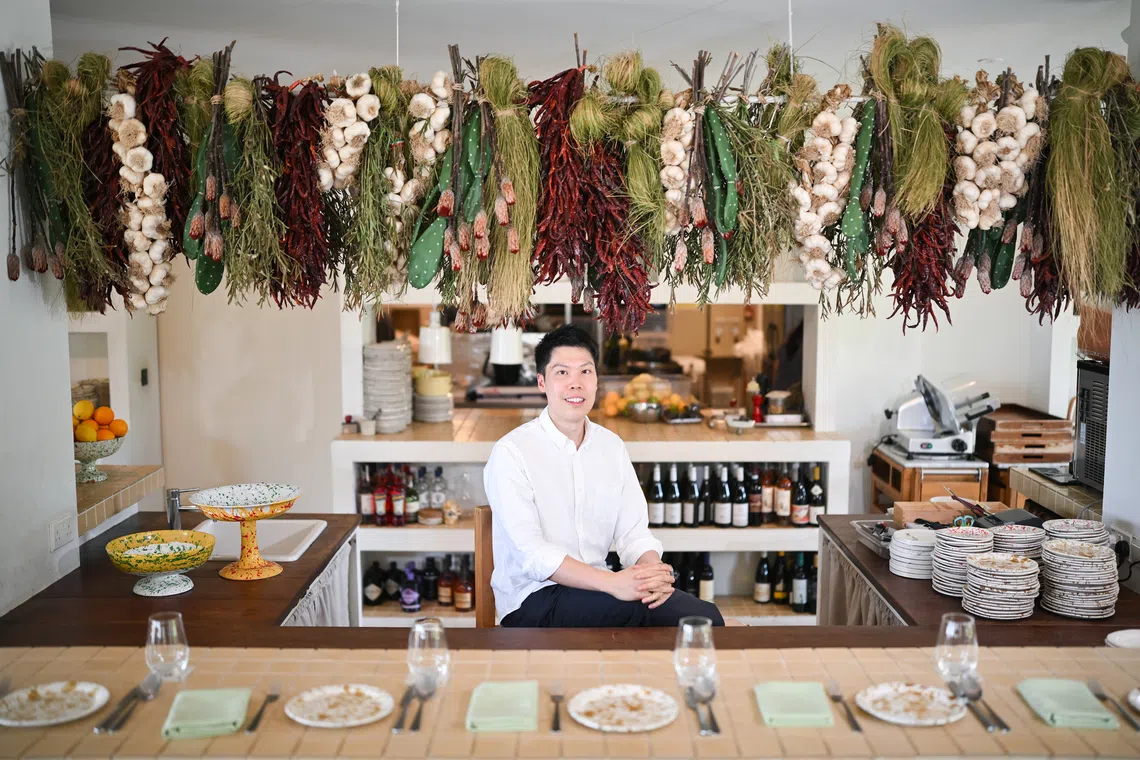
Rifeng Gao, The Lo & Behold Group’s chief operating officer, said using AI to analyse data allowed restaurant Fico to maximise table turnover.
ST PHOTO: LIM YAOHUI
Published Sep 26, 2026, 05:00 AM
Updated Sep 26, 2026, 05:00 AM
SINGAPORE – Beachside Italian restaurant Fico is pushing its boundaries.
Operator The Lo & Behold Group had held back on overbooking the restaurant’s capacity at East Coast Park as it was worried about long waiting times. But this changed in May when it tapped artificial intelligence (AI) to maximise table turnover.
Using Anthropic’s Claude Code, a special project team built an AI tool to analyse historical reservation data, dining durations and guest habits to safely predict periods when Fico could accept more bookings than its capacity allows.
The strategy has yielded some initial results, boosting Fico’s weekend revenue by 2 per cent within the very first month of its June roll-out.
Rifeng Gao, The Lo & Behold Group’s chief operating officer, said that maximising table turnover involves analysing data far too granular for a human to track manually. “But with AI, we can be 90 per cent confident that one reservation will not run into the next,” he said.
Previously, operator The Lo & Behold Group had held back on overbooking the restaurant’s capacity at East Coast Park as it was worried about long waiting times. ST PHOTO: LIM YAOHUI
Previously, operator The Lo & Behold Group had held back on overbooking the restaurant’s capacity at East Coast Park as it was worried about long waiting times.
Its special project team comprises five employees, who have since created other tools to plan rosters and analyse the service quality of its customer hotline.
The AI tools provided the restaurant with quick solutions at a fraction of the cost of traditional software development. Gao estimated that a third-party developer would have charged between $30,000 and $75,000 and taken three to six months to develop similar tools to optimise restaurant reservation slots or measure customer satisfaction.
Customer service evaluation for Fico restaurant. ST PHOTO: LIM YAOHUI
Customer service evaluation for Fico restaurant.
The Lo & Behold Group’s approach, like many other AI implementations in the retail and food and beverage sectors, has centred on standard AI quick wins. These projects include automated staff rostering, reservation management, customer helpdesk management, marketing content generation and filling out administrative paperwork.
Roster scheduling for Fico restaurant. ST PHOTO: LIM YAOHUI
Roster scheduling for Fico restaurant.
Its pragmatism stands in stark contrast to the sci-fi stereotypes of automated stir-fry meal preparation machines in China, beauty kiosks manned by AI avatars in South Korea and Japan’s smart mirrors that offer make-up suggestions to shoppers.
Nevertheless, the practical implementation of AI in Singapore’s retail and F&B sectors can make a difference as these two sectors are large and labour-intensive, said Johnson Poh, assistant chief executive of the enterprise transformation and innovation group at the Infocomm Media Development Authority.
He added that AI is most valuable when it solves a clear and immediate business problem, such as allowing an F&B business to reduce time spent reconciling documents or allowing a lean retail team to respond to customers more quickly.
Resto optimiser for Fico restaurant. ST PHOTO: LIM YAOHUI
Resto optimiser for Fico restaurant.
In Singapore, more than 24,500 retail firms hired about 142,000 workers in 2023, according to a 2025 report on the progressive wage model for the retail sector.
Separately, there were over 53,000 licensed food establishments, hiring about 111,600 employees, as at December 2024, according to a 2026 report on the progressive wage model for the food services sector.
Stephen Sing, executive director of the Singapore Retailers Association, said that retail businesses face manpower constraints and supply chain disruptions, which leave them with little energy to explore more sophisticated AI experiments and pilots.
Even so, focusing on productivity can free up human capital, scale operations and help retailers protect their margins, he said. “That is still a massive, tangible win.”
Furniture retailer Castlery has bagged these exact productivity wins. Through AI, Castlery has cut its average response time for online customer inquiries by 34 per cent.
Through AI, Castlery has cut its average response time for online customer inquiries by 34 per cent. PHOTO: CASTLERY
Through AI, Castlery has cut its average response time for online customer inquiries by 34 per cent.
The Singapore-headquartered firm sells to five markets – Singapore, the United States, Australia, the United Kingdom and Canada. It faces a deluge of customer inquiries that used to be handled by a team of about 70 customer-service agents daily from noon to 9pm Singapore time.
Since June 2025, its web-based personal shopping assistant, Casa AI, has taken on the bulk of routine inquiries, such as delivery status and product recommendations based on text or photos, round the clock.
Casa AI is connected to Castlery’s e-commerce platform, and order-management and customer-service systems. Customers type their query in a chat box on the website. In the past, they could only navigate through a list of frequently asked questions divided by topics.
“Furniture shopping tends to generate open-ended questions which do not fit neatly into a fixed decision tree,” said co-founder of Castlery Declan Ee, adding that the AI assistant can interpret such questions even when they are phrased in different ways.
Cases that require human judgment are handed off to a human agent. These include instances when an order needs to be modified, or when the customer is unhappy and has complaints about damaged goods.
“The team is able to focus on conversations where their human touch and judgment add the greatest value,” said Ee.
In the US, home-improvement retail giant The Home Depot has also introduced AI voice agents that can help with phone queries, ranging from simple administrative matters to advice on the best materials to buy for a project. Trained on the firm’s home improvement knowledge database, the voice agent helps to free up in-store associates to handle more complex interactions.
Similarly, AI helped digital flower and gift retailer FarEastFlora.com create its marketing campaign of 20 to 30 flower arrangements and gifts in a few hours, saving what would have taken three to four people several days to produce. Its marketing team also uses AI for design and copywriting.
AI helped digital flower and gift retailer FarEastFlora.com create its marketing campaign of 20 to 30 flower arrangements and gifts in a few hours. ST PHOTO: JASON QUAH
AI helped digital flower and gift retailer FarEastFlora.com create its marketing campaign of 20 to 30 flower arrangements and gifts in a few hours.
ST PHOTO: JASON QUAH
Digital data advantage
At the forefront of the AI race are e-retail giants such as Lazada, Shopee and Amazon, which have gone beyond picking the low-hanging fruit of AI productivity.
They are harnessing their massive repositories of consumer data, transaction histories and logistical networks to provide targeted recommendations, eliminate fraudulent claims and shorten delivery windows.
“These platforms can track what customers search for, what they click on, what they purchase and what they leave in their shopping carts,” said Angie Phang, senior manager at Ngee Ann Polytechnic’s School of Business and Accountancy.
Feeding AI with all this data will produce useful insights such as product recommendations, pricing search results, promotions and logistics planning, she said.
E-commerce platform Lazada’s AI refund agent illustrates this. The Alibaba-owned platform, which serves six South-east Asian markets, can draw on several records to assess a claim.
Lazada’s AI agent now handles over 35 per cent of refund requests with over 99 per cent accuracy. PHOTO: LAZADA
Lazada’s AI agent now handles over 35 per cent of refund requests with over 99 per cent accuracy.
When a shopper complains about being delivered a damaged item, Lazada’s AI tool can examine submitted photos of the damage and automatically process the refund within the same day after looking at the order details, refund policy and the customer’s return history.
Customers used to wait for up to five days to have their refund request manually verified.
“The refund agent handles standard cases automatically, but human judgment is still needed to handle cases where a buyer ordered the wrong item,” said Freya Dong, head of AI-powered seller centre and e-commerce operations at Lazada Group.
The AI agent now handles over 35 per cent of refund requests with over 99 per cent accuracy , Dong said .
Shopee uses shoppers’ purchase history and browsing patterns to serve targeted advertisements. Its AI advertising tool lets a seller set his advertising budget and sales targets. The tool then analyses customer activity to predict the groups of customers most likely to make a purchase. The tool also suggests where advertisements should be placed to maximise returns.
“This has delivered up to 20 per cent higher conversion rates and reduced advertising cost per order by up to 25 per cent for businesses,” said Geraldine Ho, head of marketing at Shopee Singapore.
What hurdles must be overcome?
Overall, the retail sector in Singapore still has much catching up to do to maximise the gains from AI, said experts.
First, bricks-and-mortar businesses need to break down the silos between their inventory, manpower scheduling and customer data systems.
A June 2026 UOB AI and Digitalisation survey of F&B businesses in Singapore revealed that three in five F&B operators have most of their digital solutions operating as standalone systems.
“The difficulty is that many businesses do not yet have sufficiently complete, connected and timely data across sales, inventory, delivery platforms and customer channels,” said Phang from Ngee Ann Polytechnic.
The lack of connected data creates crucial gaps which AI alone cannot bridge. Without inventory records or details of past promotions, companies may still struggle to tell whether falling sales are because of stock shortages or if a particular sales channel is underperforming.
Jeannie Lim, assistant managing director for services and growth enterprises at Enterprise Singapore , said integrating digital systems across business functions will reduce the manual effort to extract and reconcile data spread across siloed systems.
Currently, most SMEs lack the in-house technical expertise and data infrastructure needed to deploy AI effectively, added Lim.
But business need not connect all their systems at once.
“They can start with one clear business problem, connect only the relevant data, measure the results and expand gradually,” said Phang, adding that employees also need to be trained to handle AI systems as well.
Support is also available.
Businesses starting out on their AI adoption journey can refer to sector-specific digital guides on IMDA’s SMEs Go Digital website . Jointly developed by IMDA and Enterprise Singapore, the guides identify ready-made AI tools for tasks such as answering customer inquiries and producing marketing content.
F&B operators can also get advice on choosing AI tools and help connecting their existing systems through a joint programme by EnterpriseSG and bank UOB. Eligible tools and integration services come at preferential rates, with funding covering up to 50 per cent of their costs.
Businesses undertaking larger projects, including integrating multiple internal systems, can seek support through the Enterprise Development Grant, which covers up to 50 per cent of eligible project costs for SMEs.
Going forward, even as AI adoption broadens across retail and F&B, do not expect flashy AI avatars, AI-run unmanned stores or robotic chefs to be commonplace, said experts.
“So, the future store may not necessarily look highly automated. It may simply feel like a better-run store,” said Phang.
Customer service is, after all, the front and centre of a good experience at a clothing store or an upscale eatery, she said, adding that taking manual, repetitive tasks off employees’ hands could leave more room for customer attention.
“AI is not a replacement for human capital. Instead, it automates administrative friction, buying breathing room for staff to refocus on genuine hospitality,” said a Restaurant Association of Singapore spokesperson.
AI/artificial intelligence
Artificial Intelligence
Food and beverage sector
Lo & Behold 集团首席运营官高日峰表示,利用人工智能分析数据,使餐厅 Fico 能够最大限度地提高餐桌周转率。
ST 照片:林耀辉
发布于 2026 年 9 月 26 日上午 5:00
更新于2026年9月26日上午5:00
新加坡——海滨意大利餐厅Fico正在突破界限。
由于担心顾客等待时间过长,Lo & Behold 集团此前一直没有超额预订东海岸公园店的座位。但这种情况在五月份发生了改变,当时他们引入了人工智能(AI)技术来最大限度地提高餐桌周转率。
利用 Anthropic 的 Claude Code,一个特别项目团队构建了一个人工智能工具,用于分析历史预订数据、用餐时长和顾客习惯,从而安全地预测 Fico 何时可以接受超过其容量的预订。
该策略已取得一些初步成效,在 6 月份推出后的第一个月,Fico 的周末收入就增长了 2%。
Lo & Behold集团首席运营官高日峰表示,要最大限度地提高餐桌周转率,需要分析极其细致的数据,而这些数据人工难以追踪。“但借助人工智能,我们可以有90%的把握确保预订之间不会出现冲突。”他说道。
此前,由于担心顾客等待时间过长,Lo & Behold 集团一直没有超额预订东海岸公园店的座位。ST PHOTO:林耀辉
此前,由于担心等待时间过长,运营商 Lo & Behold 集团一直没有超额预订东海岸公园餐厅的座位。
其特别项目团队由五名员工组成,他们此后开发了其他工具来规划排班和分析客户热线的服务质量。
人工智能工具为餐厅提供了快速解决方案,成本仅为传统软件开发成本的一小部分。高估计,第三方开发商开发类似的工具来优化餐厅预订或衡量顾客满意度,收费在 3 万至 7.5 万美元之间,耗时三到六个月。
Fico餐厅顾客服务评价。ST摄影:林耀辉
对Fico餐厅的客户服务进行评价。
与零售、餐饮等行业的许多其他人工智能应用一样,Lo & Behold 集团的做法也侧重于实现标准的、可快速见效的人工智能功能。这些项目包括自动排班、预订管理、客户服务台管理、营销内容生成以及填写行政文书。
Fico餐厅排班表。ST摄影:林耀辉
Fico餐厅的员工排班表。
它的实用主义与科幻小说中描绘的中国自动炒菜机、韩国由人工智能虚拟形象操控的美容亭以及日本为顾客提供化妆建议的智能镜子形成了鲜明的对比。
尽管如此,新加坡资讯通信媒体发展局企业转型与创新集团助理首席执行官Johnson Poh表示,人工智能在新加坡零售和餐饮行业的实际应用可能会产生影响,因为这两个行业规模庞大且劳动密集。
他还补充说,人工智能最有价值的地方在于它能够解决明确而直接的业务问题,例如帮助餐饮企业减少核对文件所花费的时间,或者帮助精简的零售团队更快地响应客户需求。
Fico餐厅的餐厅优化器。ST摄影:林耀辉
Fico 餐厅的 Resto 优化器。
根据一份关于零售业渐进式工资模式的 2025 年报告,新加坡 2023 年有超过 24,500 家零售企业雇佣了约 142,000 名员工。
另外,根据 2026 年食品服务行业渐进式工资模式报告,截至 2024 年 12 月,共有超过 53,000 家持证食品企业,雇佣了约 111,600 名员工。
新加坡零售商协会执行董事史蒂芬·辛格表示,零售企业面临人力限制和供应链中断,这使得他们几乎没有精力去探索更复杂的人工智能实验和试点项目。
即便如此,他表示,专注于提高生产力可以释放人力资本,扩大运营规模,并帮助零售商保护利润率。“这仍然是一项巨大的、实实在在的胜利。”
家具零售商 Castlery 正是凭借人工智能技术,在提高生产力方面取得了显著成效。通过人工智能,Castlery 将在线客户咨询的平均响应时间缩短了 34%。
通过人工智能技术,Castlery 将在线客户咨询的平均响应时间缩短了 34%。图片:Castlery
通过人工智能,Castlery 将在线客户咨询的平均响应时间缩短了 34%。
这家总部位于新加坡的公司向五个市场销售产品——新加坡、美国、澳大利亚、英国和加拿大。该公司每天中午至晚上9点(新加坡时间)都会收到大量客户咨询,而过去这些咨询通常由约70名客服人员组成的团队处理。
自 2025 年 6 月起,其基于网络的个人购物助手 Casa AI 全天候处理了大部分日常查询,例如根据文本或照片查询送货状态和产品推荐。
Casa AI 与 Castlery 的电子商务平台、订单管理系统和客户服务系统相连。客户可以在网站的聊天框中输入问题。过去,他们只能浏览按主题分类的常见问题解答列表。
Castlery 的联合创始人 Declan Ee 表示:“购买家具往往会产生一些开放式问题,这些问题无法简单地归入固定的决策树中。”他还补充说,即使问题以不同的方式表述,人工智能助手也能理解这些问题。
需要人工判断的案件将转交给人工客服处理。这些情况包括需要修改订单,或者客户对收到的货物不满意并提出投诉。
“团队能够专注于那些能体现他们的人文关怀和判断力的对话,从而创造最大的价值,”Ee说道。
在美国,家装零售巨头家得宝(The Home Depot)也推出了人工智能语音助手,可以帮助处理电话咨询,从简单的行政事务到为项目选购最佳材料的建议,无所不包。这款语音助手基于公司自有的家装知识库进行训练,能够帮助店内员工腾出时间处理更复杂的客户互动。
同样,人工智能帮助线上鲜花礼品零售商 FarEastFlora.com 在几个小时内制作了 20 到 30 款鲜花和礼品组合,完成了营销活动,这相当于节省了三四个人几天才能完成的工作量。该公司的营销团队还利用人工智能进行设计和文案撰写。
人工智能助力线上鲜花礼品零售商 FarEastFlora.com 在短短几小时内打造了包含 20 至 30 款鲜花和礼品的营销活动。(海峡时报摄影:JASON QUAH)
人工智能帮助数字鲜花礼品零售商 FarEastFlora.com 在几个小时内创建了包含 20 到 30 个鲜花和礼品的营销活动。
《海峡时报》摄影:JASON QUAH
数字数据优势
在人工智能竞赛中处于领先地位的是 Lazada、Shopee 和亚马逊等电商巨头,它们已经超越了仅仅获取人工智能生产力这一容易实现的成果。
他们利用其庞大的消费者数据、交易历史记录和物流网络,提供有针对性的建议,消除欺诈性索赔,并缩短交货时间。
“这些平台可以追踪顾客搜索的内容、点击的内容、购买的内容以及留在购物车中的商品,”义安理工学院商业与会计学院高级经理 Angie Phang 说。
她表示,将所有这些数据输入人工智能系统,将产生有用的见解,例如产品推荐、价格搜索结果、促销和物流规划。
电商平台 Lazada 的人工智能退款代理就体现了这一点。这家阿里巴巴旗下的平台服务于东南亚六个市场,它可以利用多项记录来评估退款申请。
Lazada的AI代理目前处理超过35%的退款申请,准确率超过99%。图片来源:Lazada
Lazada 的人工智能代理现在处理超过 35% 的退款请求,准确率超过 99%。
当购物者投诉收到损坏的商品时,Lazada 的人工智能工具可以检查提交的损坏照片,并在查看订单详情、退款政策和客户的退货历史记录后,在当天自动处理退款。
过去,客户需要等待长达五天的时间才能获得人工审核的退款申请。
Lazada集团人工智能卖家中心和电子商务运营负责人董芙蓉表示:“退款代理会自动处理标准案例,但对于买家订购错误商品的情况,仍然需要人工判断。”
董先生表示,人工智能代理现在处理超过 35% 的退款请求,准确率超过 99%。
Shopee利用消费者的购买历史和浏览习惯来投放定向广告。其人工智能广告工具允许卖家设定广告预算和销售目标。该工具随后分析客户行为,预测最有可能购买的客户群体。此外,该工具还会建议广告投放位置,以最大化收益。
Shopee新加坡市场营销主管Geraldine Ho表示:“这为企业带来了高达20%的转化率提升,以及高达25%的单笔订单广告成本降低。”
需要克服哪些障碍?
专家表示,总体而言,新加坡零售业在最大限度地利用人工智能方面仍有许多工作要做。
首先,实体企业需要打破库存、人力调度和客户数据系统之间的信息孤岛。
2026 年 6 月,大华银行对新加坡餐饮企业进行的人工智能和数字化调查显示,五分之三的餐饮运营商的大多数数字化解决方案都是作为独立系统运行的。
“困难在于,许多企业在销售、库存、配送平台和客户渠道方面还没有足够完整、互联和及时的数据,”义安理工学院的 Phang 表示。
缺乏关联数据会造成关键性差距,而仅靠人工智能无法弥补这些差距。如果没有库存记录或过往促销活动的详细信息,企业可能仍然难以判断销售额下降是由于库存短缺还是某个特定销售渠道表现不佳。
新加坡企业发展局服务和成长型企业助理总经理Jeannie Lim表示,将数字系统整合到各个业务职能部门将减少从分散的系统中提取和协调数据所需的人工工作量。
林补充说,目前大多数中小企业缺乏有效部署人工智能所需的内部技术专长和数据基础设施。
但企业无需一次性连接所有系统。
Phang表示:“他们可以从一个明确的业务问题入手,只连接相关数据,衡量结果,然后逐步扩展。”他还补充说,员工也需要接受培训才能操作人工智能系统。
我们还提供技术支持。
刚刚开始采用人工智能的企业可以参考新加坡资讯通信媒体发展局 (IMDA) 的“中小企业数字化转型”网站上的行业专属数字化指南。这些指南由 IMDA 和新加坡企业发展局 (Enterprise Singapore) 联合开发,列出了可用于回答客户咨询和制作营销内容等任务的现成人工智能工具。
餐饮运营商还可以通过新加坡企业发展局 (EnterpriseSG) 和新加坡大华银行 (UOB) 的联合项目,获得选择人工智能工具的建议以及现有系统对接方面的帮助。符合条件的工具和集成服务可享受优惠价格,最高可获得 50% 的费用补贴。
企业若要开展规模较大的项目,包括整合多个内部系统,可以申请企业发展补助金,该补助金可覆盖中小企业符合条件的项目成本的 50%。
专家表示,展望未来,即使人工智能在零售和餐饮行业的应用范围不断扩大,也不要指望炫目的人工智能化身、人工智能运营的无人商店或机器人厨师会变得司空见惯。
“所以,未来的商店未必看起来高度自动化,它可能只是感觉像是一家运营更高效的商店,” Phang说道。
她表示,毕竟,客户服务是服装店或高档餐厅良好体验的核心,并补充说,将体力劳动和重复性工作从员工手中转移出去,可以腾出更多时间来关注客户。
新加坡餐饮协会发言人表示:“人工智能并不能取代人力资本。相反,它能自动减少行政上的繁琐工作,让员工有更多时间专注于真正的待客之道。”
人工智能
人工智能
食品和饮料行业