Berlin gets a front-row seat to German weapons’ performance in Ukraine柏林得以近距离观察德国武器在乌克兰的作战表现。
A new bilateral agreement covers data sharing from engagements of the Panzerhaubitze 2000, RCH-155 artillery and the IRIS-T air-defense weapon.
VIENNA — Germany is formalizing a system under which its defense industry will receive unprecedented access to combat performance data from its own weapons fighting in Ukraine, as part of a sweeping €4 billion ($4.72 billion) defense package signed in Berlin on Tuesday.
The battlefield data memorandum, described by Ukrainian Defense Minister Mykhailo Fedorov as the first agreement of its kind for Ukraine, covers performance data from the PzH 2000 self-propelled howitzer, the RCH 155 wheeled artillery system and the IRIS-T air defense launcher. Ukraine also provides Germany access to its real-time DELTA battlefield management system and other digital platforms for developing AI models and analytical tools.
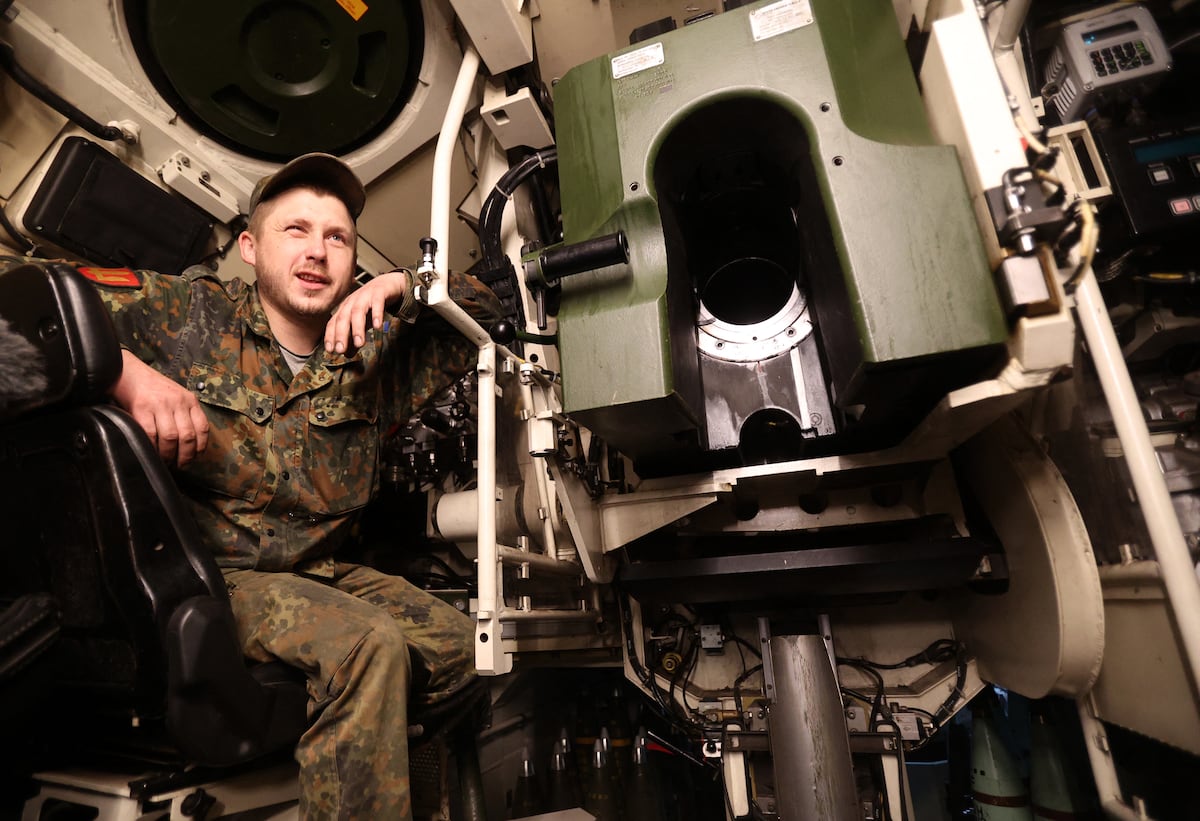
The deal formalizes what has until now been a largely informal feedback loop. German defense firms have quietly incorporated Ukrainian combat data into next-generation upgrades: the PzH 2000, for example, faced barrel wear issues caused by Ukraine’s higher-than-NATO fire rate that have been a valuable learning experience, and the integration of the Israeli-made Trophy active protection system into the new Leopard 2A8 has likewise been attributed to lessons learned in Ukraine.
In return, Germany will continue to serve as Ukraine’s most important partner, as Chancellor Friedrich Merz called his country. Germany is financing a contract between Ukraine and Raytheon for several hundred Patriot PAC-2 interceptors, and a separate deal with Diehl Defence for 36 additional IRIS-T launchers. A further €300 million ($354 million) is earmarked for Ukraine’s long-range strike capabilities, alongside joint production of 5,000 AI-enabled mid-range strike drones under the “Build with Ukraine” initiative.
Oleksii Makeiev, Ukraine's ambassador to Germany, speaks at a handover ceremony for the first RCH-155 wheeled howitzer given to Ukraine at the KNDS Germany production plant in Kassel on Jan. 13, 2025. (Michael Kappeler/picture alliance via Getty Images)
IRIS-T has been Germany’s most unambiguous success story in Ukraine, with Ukrainian forces reporting an interception rate of roughly 99% in deployed sectors and more than 250 confirmed combat kills. Kyiv has separately ordered 18 more launchers on its own.
German defense firms are, in effect, developing next-generation systems on the back of Ukraine’s wartime experience — paid for, in part, by German taxpayers. Zelenskyy struck an optimistic note, saying Ukraine’s battlefield know-how would be integrated “into the European security system.” Merz framed it as straightforwardly mutual.
The agreement continues a trend toward two-way deals in Western countries’ support for Ukraine as the war drags on. While in the first years of the Russian invasion, the ethos of defending Ukraine − and by extension, sending a firm signal to Moscow − were touted by European leaders as a worthy goal in and of itself, the supply of aid has become somewhat more transactional recently.
Conspicuously absent from the latest German weapons was the Taurus cruise missile, which Merz again ruled out. His reasoning − that Ukraine’s own technology has rendered Taurus unnecessary − sits uneasily alongside the €300 million for long-range strike capabilities included in the very same deal.
Linus Höller is Defense News' Europe correspondent and OSINT investigator. He reports on the arms deals, sanctions, and geopolitics shaping Europe and the world. He holds master’s degrees in WMD nonproliferation, terrorism studies, and international relations, and works in four languages: English, German, Russian, and Spanish.
维也纳——德国正在正式建立一套体系,根据该体系,德国国防工业将以前所未有的方式获取其在乌克兰作战的武器的作战性能数据。这是周二在柏林签署的一项总额达 40 亿欧元(47.2 亿美元)的全面国防计划的一部分。
乌克兰国防部长米哈伊洛·费多罗夫称,这份战场数据备忘录是乌克兰签署的首份此类协议,内容涵盖PzH 2000自行榴弹炮、RCH 155轮式火炮系统和IRIS-T防空导弹系统的性能数据。乌克兰还向德国开放其实时DELTA战场管理系统和其他数字平台,用于开发人工智能模型和分析工具。
这项协议正式确立了此前主要处于非正式状态的反馈机制。德国国防企业已悄然将乌克兰的作战数据融入到下一代装备的升级改造中:例如,PzH 2000坦克曾因乌克兰高于北约的射速而出现枪管磨损问题,这为德国国防企业提供了宝贵的经验教训;同样,以色列制造的“战利品”(Trophy)主动防护系统被集成到新型豹2A8坦克上,也得益于在乌克兰战场上汲取的经验。
作为回报,德国将继续扮演乌克兰最重要的伙伴角色,正如德国总理弗里德里希·默茨所称。德国正在资助乌克兰与雷神公司签订的数百枚“爱国者”PAC-2拦截导弹合同,以及与迪尔防务公司签订的36套IRIS-T导弹发射装置合同。此外,德国还拨款3亿欧元(约合3.54亿美元)用于提升乌克兰的远程打击能力,并根据“与乌克兰共同建设”倡议,与乌克兰联合生产5000架人工智能中程攻击无人机。
2025年1月13日,乌克兰驻德国大使奥列克西·马凯耶夫在德国卡塞尔KNDS生产厂举行的乌克兰首门RCH-155轮式榴弹炮交接仪式上发表讲话。(图片来源:Michael Kappeler/picture alliance via Getty Images)
IRIS-T系统是德国在乌克兰取得的最显著成功案例,乌克兰军队报告称,在部署区域内,该系统的拦截率约为99%,并确认击落敌机超过250架。基辅方面已单独订购了18套发射装置。
事实上,德国国防企业正在利用乌克兰的战争经验开发下一代系统——部分资金来自德国纳税人。泽连斯基表达了乐观态度,称乌克兰的战场经验将被“融入欧洲安全体系”。梅尔茨则认为这完全是互惠互利的。
随着战争持续,西方国家对乌克兰的支持日益趋向双向交易,而这项协议也延续了这一趋势。在俄罗斯入侵乌克兰的最初几年,欧洲领导人曾将保卫乌克兰——进而向莫斯科发出强硬信号——视为一项崇高的目标,但近来援助的提供方式已变得更加功利化。
在最新的德国武器装备清单中,最引人注目的是“金牛座”巡航导弹的缺席,梅尔茨再次否认了这一说法。他的理由是乌克兰自身的技术已经使“金牛座”导弹变得多余,但这一理由与同一笔交易中包含的价值3亿欧元的远程打击能力采购计划之间存在着明显的矛盾。
林努斯·霍勒是《防务新闻》的欧洲记者和开源情报调查员。他报道影响欧洲乃至全球的军火交易、制裁和地缘政治。他拥有大规模杀伤性武器不扩散、恐怖主义研究和国际关系三个硕士学位,并精通英语、德语、俄语和西班牙语四种语言。