EU pumps over $1 billion into defense R&D, centered around Ukraine war lessons欧盟投入超过10亿美元用于国防研发,重点关注乌克兰战争的教训。
The choice of funded projects marks a shift to 21st-century warfare, with loitering munitions and affordable mass drone production high on the agenda.
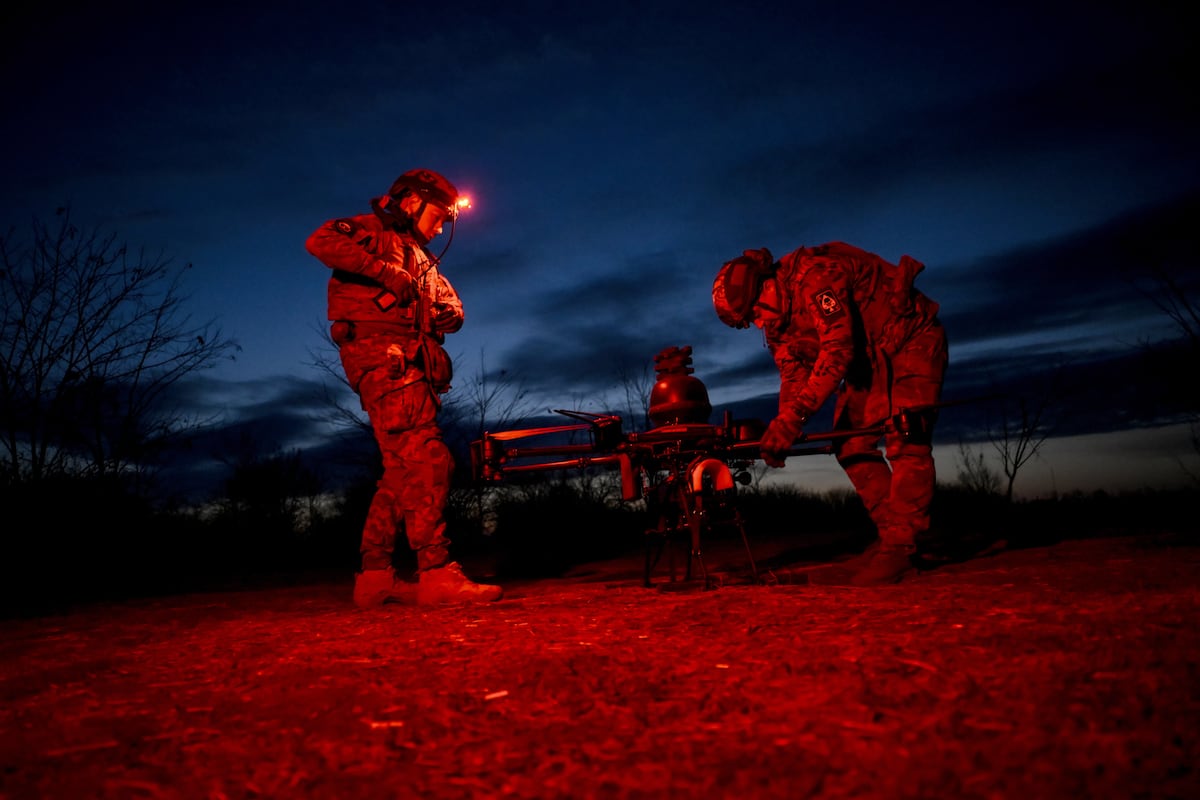
GRAZ, Austria — The European Commission this week unveiled the results of its 2025 European Defence Fund call for proposals, selecting 57 collaborative research and development projects for a combined €1.07 billion ($1.26 billion) in EU funding − a package that makes clear where the bloc’s defense priorities lie: drones, autonomy, and an increasingly institutionalized partnership with Kyiv.
Of the total, €675 million ($796 million) will support 32 capability development projects, and €332 million ($391 million) will go to 25 research initiatives. The selected projects involve 634 entities from 26 EU member states plus Norway, with small and medium-sized enterprises making up more than 38% of participants and receiving over 21% of the total funding, according to a summary of the spending plan.
The most striking cluster of projects marks a shift to 21st-century warfare, with at least four separate initiatives − EURODAMM, LUMINA, SKYRAPTOR, and TALON − devoted specifically to loitering munitions and affordable mass drone production.
The concentration reflects an uncomfortable lesson absorbed from the war in Ukraine: cheap, expendable strike drones have reshaped the battlefield, and Europe’s defense industry has been slow to catch up. Lessons learned in Ukraine are referenced repeatedly throughout the EDF’s materials on the funding round and individual projects.
That battlefield knowledge is now being plugged into the fund’s architecture. For the first time, Ukrainian entities are eligible to participate in EDF projects as subcontractors and third-party recipients, marking a significant step toward integrating Ukraine’s defense-technological and industrial base into the European ecosystem. In the coming months, Kyiv and Brussels are expected to complete the required association agreement to allow Ukraine full participation on equal terms with EU member states in the future.
The EU Defence Innovation Office in Kyiv, established under the European Defence Industrial Strategy in 2024, has been the institutional engine behind that push. One flagship project, STRATUS, will develop an AI-powered cyber defense system for drone swarms and includes a Ukrainian subcontractor, a model the Commission explicitly frames as bringing “direct battlefield experience” into EU-funded R&D.
More than 15 of the 57 projects are tied to the Commission’s four European Readiness Flagships, a set of priority capability areas the bloc identified last year as critical to near-term operational readiness. Project AETHER, for instance, will develop propulsion and thermal management systems in support of the Drone Defence Initiative.
To widen the industrial base, several projects focused on mass-producible drone munitions will launch sub-calls specifically for startups as well as small and medium-sized firms, including Ukrainian ones, that can receive up to €60,000 each to integrate innovations into larger consortia. It is a modest sum, but the intent is structural: to lower the barrier to entry for firms without prior defense experience at a moment when the Commission is under pressure to demonstrate that its defense spending is generating real industrial capacity outside of the usual suspects of established prime contractors.
The 2025 funding awards are separate from both the 2026 EDF Work Programme, which carries a €1 billion ($1.18 billion) budget adopted last December, and the European Defence Industry Programme, whose €1.5 billion ($1.77 billion) work program was adopted in March. Taken together, the three tranches reflect an EU defense funding environment that has expanded dramatically in scale and ambition since Russia’s full-scale invasion of Ukraine and one that is now deliberately building Kyiv into its foundations.
Linus Höller is Defense News' Europe correspondent and OSINT investigator. He reports on the arms deals, sanctions, and geopolitics shaping Europe and the world. He holds master’s degrees in WMD nonproliferation, terrorism studies, and international relations, and works in four languages: English, German, Russian, and Spanish.
奥地利格拉茨——本周,欧盟委员会公布了 2025 年欧洲防务基金提案征集结果,选定了 57 个合作研发项目,欧盟将提供总计 10.7 亿欧元(12.6 亿美元)的资金——这一方案明确表明了欧盟的防务优先事项:无人机、自主性以及与基辅日益制度化的伙伴关系。
其中,6.75亿欧元(7.96亿美元)将用于支持32个能力发展项目,3.32亿欧元(3.91亿美元)将用于25项研究计划。根据支出计划概要,入选项目涉及来自26个欧盟成员国和挪威的634个实体,其中中小企业占参与者的38%以上,获得的资金占总资金的21%以上。
最引人注目的项目群标志着战争向 21 世纪战争的转变,其中至少有四个独立的计划——EURODAMM、LUMINA、SKYRAPTOR 和 TALON——专门致力于巡飞弹和价格低廉的大规模无人机生产。
这一集中体现了从乌克兰战争中汲取的一个令人不安的教训:廉价且消耗性强的攻击无人机重塑了战场格局,而欧洲国防工业却迟迟未能跟上。在欧洲防务基金会(EDF)关于本轮融资和各个项目的资料中,反复提及了乌克兰战争的教训。
这些战场经验正被融入到基金的架构中。乌克兰实体首次有资格以分包商和第三方受益人的身份参与欧洲发展基金(EDF)项目,这标志着乌克兰国防技术和工业基础融入欧洲体系迈出了重要一步。预计在未来几个月内,基辅和布鲁塞尔将完成必要的联系国协议,以便乌克兰未来能够与欧盟成员国享有同等的参与资格。
欧盟国防创新办公室(位于基辅)是根据2024年欧洲国防工业战略设立的,一直是推动这一进程的机构引擎。其中一个旗舰项目STRATUS将开发一套用于无人机集群的人工智能网络防御系统,该项目包含一家乌克兰分包商。欧盟委员会明确指出,这种模式旨在将“直接战场经验”引入欧盟资助的研发项目中。
在57个项目中,超过15个与欧盟委员会的四大“欧洲战备旗舰计划”相关。这四大计划是欧盟去年确定的一系列优先能力领域,对近期作战准备至关重要。例如,AETHER项目将开发推进和热管理系统,以支持无人机防御计划。
为了扩大产业基础,多个专注于大规模生产无人机弹药的项目将专门面向初创企业以及中小企业(包括乌克兰企业)发起子项目征集,每家企业最高可获得 6 万欧元的资助,用于将创新成果整合到更大的联合体中。这笔资金数额不大,但其目的在于结构性地降低缺乏国防经验的企业进入该领域的门槛。目前,欧盟委员会正面临压力,需要证明其国防开支正在传统主承包商之外创造真正的产业能力。
2025年的拨款与去年12月通过的预算为10亿欧元(11.8亿美元)的2026年欧洲防务基金工作计划,以及今年3月通过的预算为15亿欧元(17.7亿美元)的欧洲防务工业计划均相互独立。这三笔拨款共同反映了自俄罗斯全面入侵乌克兰以来,欧盟防务资金规模和雄心都显著扩大,并且如今正蓄意将基辅纳入其发展基石。
林努斯·霍勒是《防务新闻》的欧洲记者和开源情报调查员。他报道影响欧洲乃至全球的军火交易、制裁和地缘政治。他拥有大规模杀伤性武器不扩散、恐怖主义研究和国际关系三个硕士学位,并精通英语、德语、俄语和西班牙语四种语言。